
Hot Off The Press – New Titles This Week
Published on 7 July 2025 by Rose Staveley-Wadham
This week at The Archive we’re delighted to have added eight brand new newspaper titles, including ‘Journal of General Society’ Life and early trade union record the Trade Unionist to our collection. Meanwhile, we have added 202,203 brand new pages in total, whilst we have surpassed the 93 million page mark.
Furthermore, we’ve updated ten of our existing titles, from Cambridge to Cork, from Grays to Glasgow. So read on to discover more about our new and updated titles of the week, and also to learn about industrial unrest and strike action in 1892 across the United Kingdom through the pages of our new title the Trade Unionist.
Register now and explore the Archive
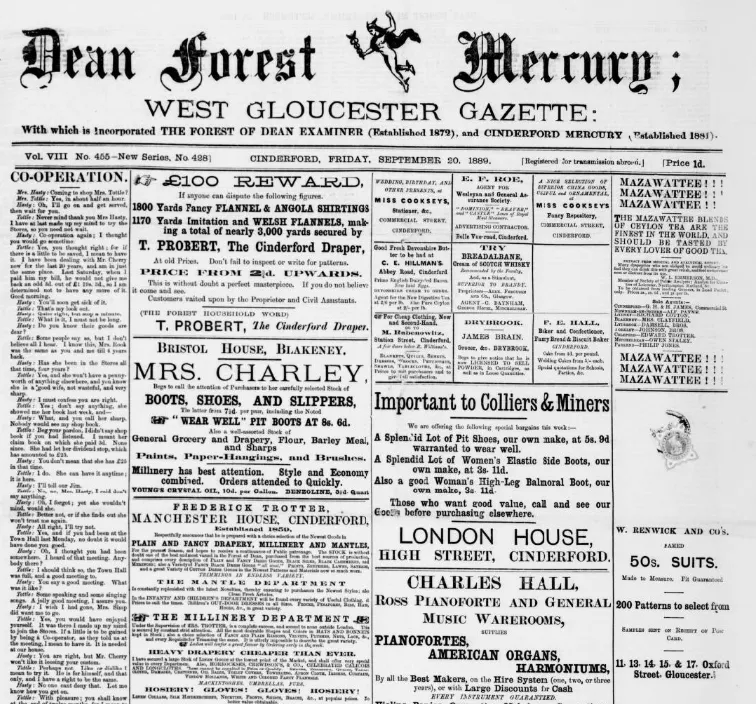
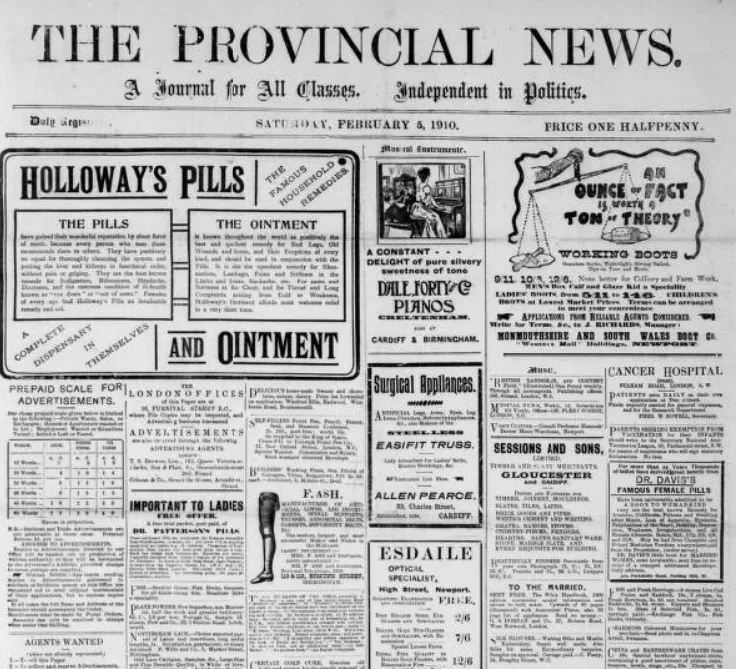
The Dean Forest Mercury and the Provincial News (Lydney)
We begin our survey of new newspaper titles this week in Gloucestershire. First up is the Dean Forest Mercury, which was established in 1881 in the town of Cinderford, which lies on the eastern edge of the Forest of Dean. A year later, the title incorporated two other local newspapers, namely the Forest of Dean Examiner (established 1872) and the Cinderford Mercury (also established 1881).
Appearing every Friday at the cost of one penny, the Dean Forest Mercury filled eight pages with news from the local area, reporting on the latest from the likes of the Littledean Petty Sessions and the Awre and Blakeney Local Board. The title, which was later owned by Liberal M.P. Sir Harry Webb (1866-1940), also published serialised fiction, a ‘lady’s letter,’ news from London and correspondence from readers.
Our second new Gloucestershire title of the week is the Provincial News (Lydney), which styled itself as a ‘Journal for All Classes.’ Established in 1884 in Lydney, a town on the west bank of the River Severn, the Provincial News appeared every Saturday at the cost of one penny.
‘Independent in politics,’ the eight-page newspaper carried news from across Gloucestershire and South Wales, whilst featuring a ‘serial story,’ ‘home hints,’ a London letter, rugby news and illustrations.
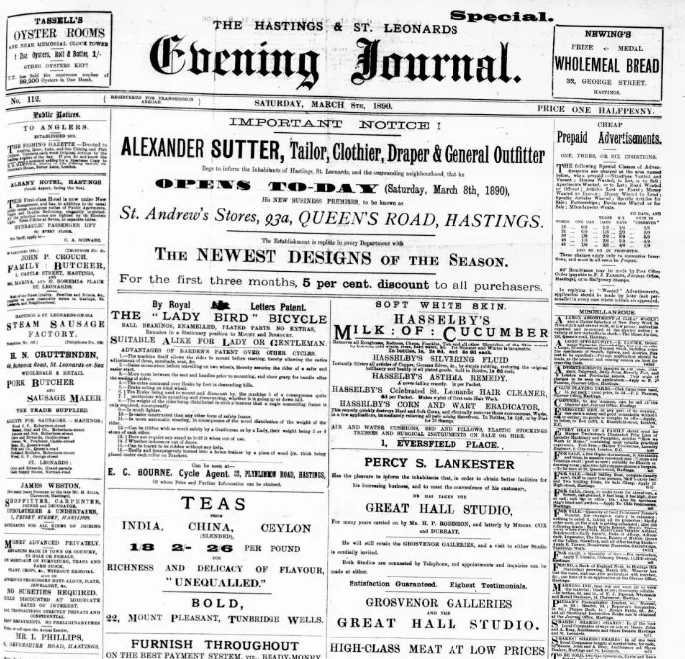
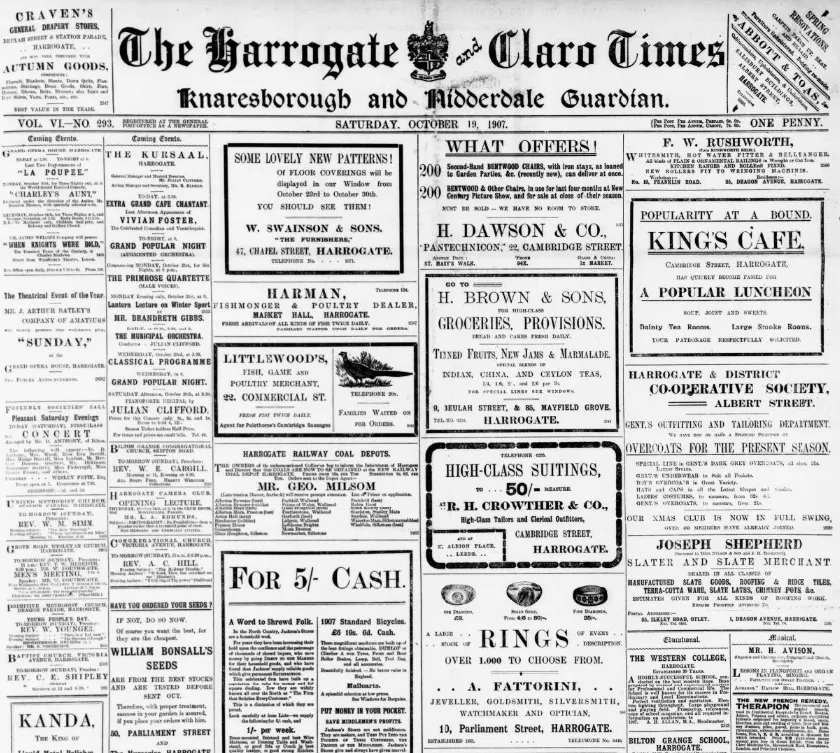
The Evening Journal and the Harrogate and Claro Times and Knaresborough Guardian
Our next two new titles of the week span both the north and south of England, and we start in the south with the Evening Journal. The Evening Journal was a daily newspaper published in the Sussex seaside town of Hastings. ‘A Daily Paper for Kent and Sussex,’ the title only cost one halfpenny, and mainly concentrated on the news from Hastings, reporting on police news and religious work in the town.
We go north to Harrogate now to introduce the Harrogate and Claro Times and Knaresborough Guardian. This independent title was established in the North Yorkshire spa town of Harrogate in 1902. Filling eight pages, the Harrogate and Claro Times and Knaresborough Guardian appeared every Saturday at the cost of one penny.
The paper’s eight pages were filled with news from the likes of the Harrogate Education Committee, the Knaresborough Borough Court, and the Knaresborough Petty Sessions, with the paper featuring ‘jottings’ from Nidderdale. The Harrogate and Claro Times and Knaresborough Guardian also published an illustrated page, pieces on music and drama, a London letter, church news, and football reports.
The Leyland Guardian
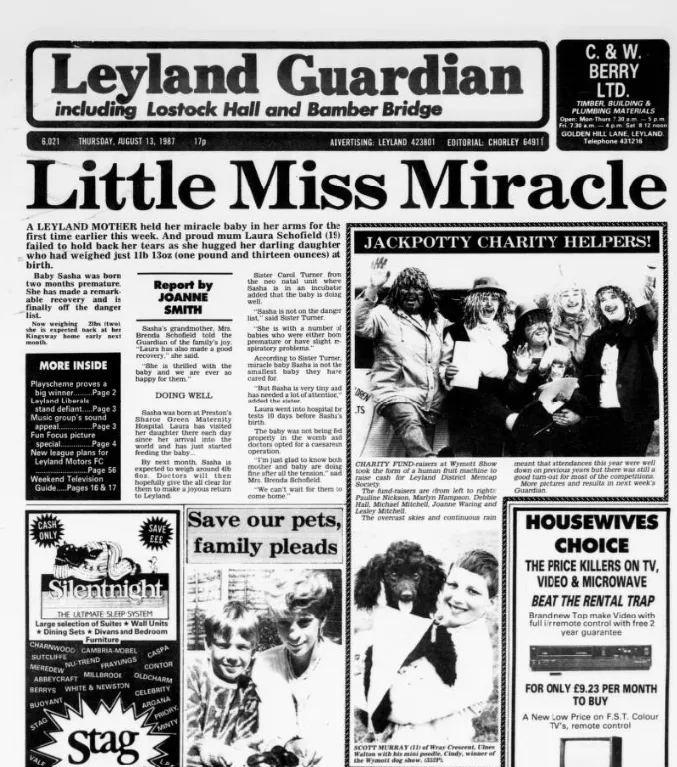
Our next new title of the week is Lancashire’s Leyland Guardian, which was launched in the town of Leyland in 1959 as a separate edition of the Chorley Guardian and Leyland Advertiser. A ‘weekly newspaper covering news and events from Leyland and South Ribble,’ the Leyland Guardian appears every Thursday, and also reports on the latest from Lostock Hall and Bamber Brdige.
In 1990 the title changed its name to the South Ribble Guardian, becoming a year later in 1991 the Leyland and South Ribble Guardian. Change was in the air once again in 1992, as the title reverted to its original moniker of the Leyland Guardian. The newspaper is still in print to this day.
Life
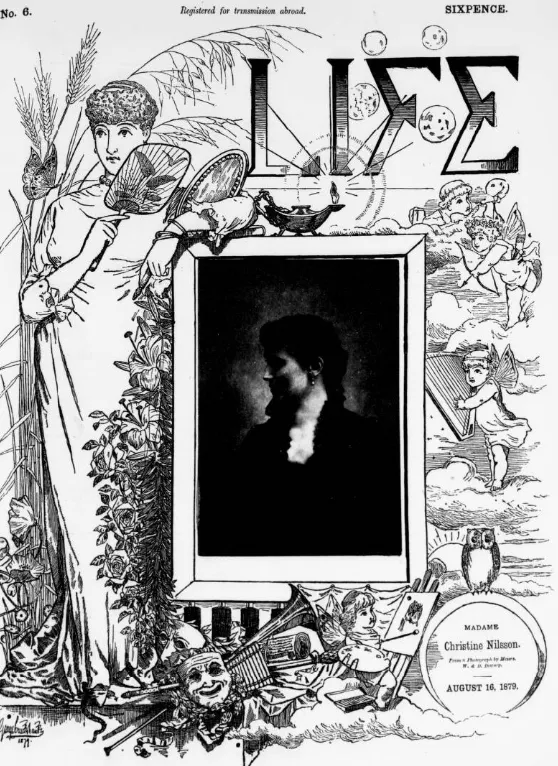
Our next new title this week is Life, a ‘Journal of General Society,’ which was first published on 12 July 1879. Featuring illustrations and photographs, the producers of Life aimed to showcase a ‘liveliness of style, and refinement of tone.’ Indeed, the first edition of Life stated how the publication would ‘bring the bright side of the world uppermost, and show the wisdom of seeking the sunbeam, rather than tracking the shadow.’
Published from London every Saturday, filling around twenty pages, Life featured pieces on art, plays, and exhibitions. It printed profiles of famous people, the first edition, for example, taking a look at French actress Sarah Bernhardt. Meanwhile, Life published poetry, and thought pieces with titles like ‘The Girl of the Period.’
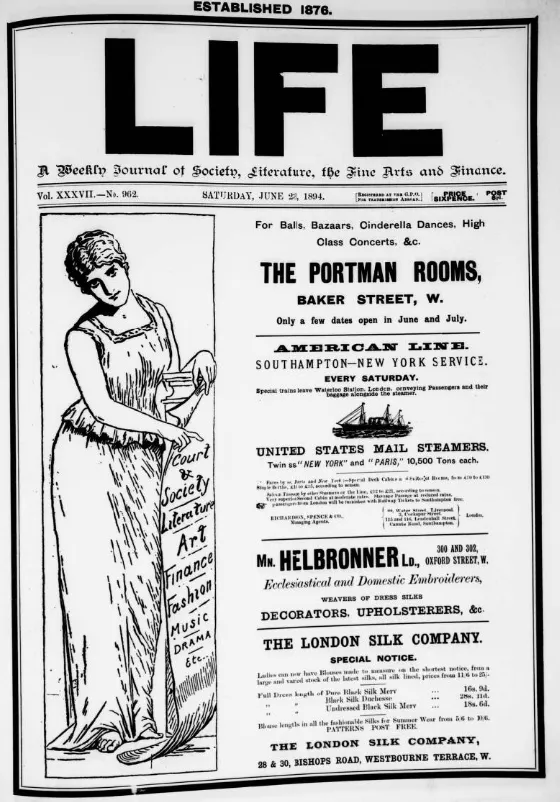
Later describing itself as a ‘weekly journal of society, literature, the fine arts and finance,’ Life latterly styled itself as a ‘Weekly Journal of Interesting Events.’ It grew to incorporate pieces like ‘Life on the Riviera’ and ‘Life on the Continent,’ containing a host of ‘travelling notes.’
The St. Andrews Gazette
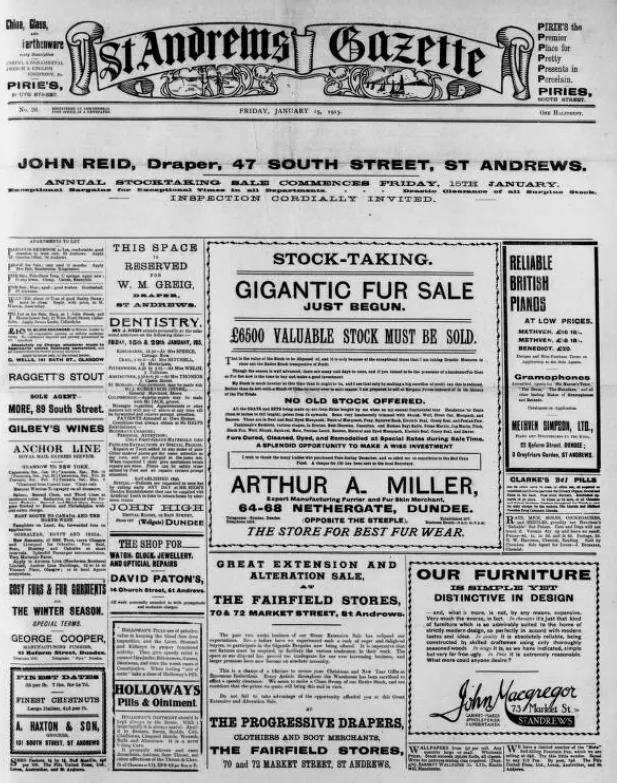
Our penultimate new title this week is the St. Andrews Gazette, which was first published in the Fife university town of St. Andrews on 24 July 1914 at the cost of penny. A lively and informative newspaper, complete with illustrations, the title noted how there was a previous incarnation of the St. Andrews Gazette ‘many years ago,’ and this version would ‘feature in a proper journalistic fashion the interests of the town.’
Indeed, the St. Andrews Gazette promised to be ‘non-political in character,’ only expressing its own ‘views on matters municipal, or in other words, local affairs.’ Its eight pages, as well as featuring local news from the likes of churches in the town, St. Andrews Police Court and the Boy Scouts, contained a range of interesting articles, with titles like ‘An Examination of Socialism,’ and ‘John Knox and St. Andrews.’
Furthermore, the St. Andrews Gazette provided practical knowledge with sections about dressmaking, with this portion including illustrations of dress patterns, gardening, and hints for the home. The Scottish title also printed a London letter, serialised fiction, and sporting news.
The Trade Unionist
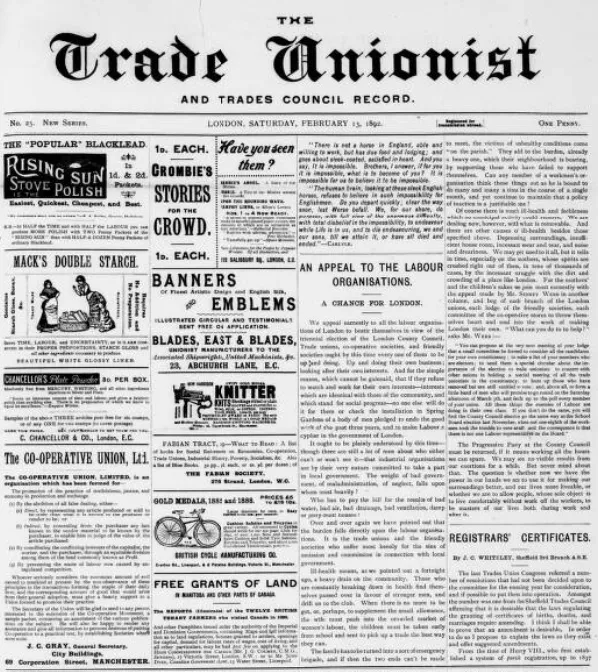
Last but not least this week is the Trade Unionist, or to give it its full name, the Trade Unionist and Trades Council Record. Published in London every Saturday at the cost of one penny, the Trade Unionist was published at the height of the New Unionism movement. New Unionism saw the expansion of existing unions to serve a wider range of workers, with previous unions being made up of exclusive groups of skilled labourers.
New Unionism looked to bring in semi-skilled and unskilled workers, such as dockworkers, general labourers, seamen, and gas workers. The unions formed in this period, from 1889 onwards, were initially much more likely to take industrial action, something that is evident through the pages of the Trade Unionist.
Published every Saturday at the cost of penny, the Trade Unionist covered news from different unions, such as the Shop Assistants’ Union and the General Railway Workers’ Union. It printed pieces by the likes of social reformer Charles Booth (1840-1916), and detailed the strikes that were underway both in the United Kingdom and abroad.
The Trade Unionist was known for its coverage of issues in South Wales, with reports focussed on the coal trade and wages in the area. Indeed, the paper even had a Welsh language section.
Our Updated Titles
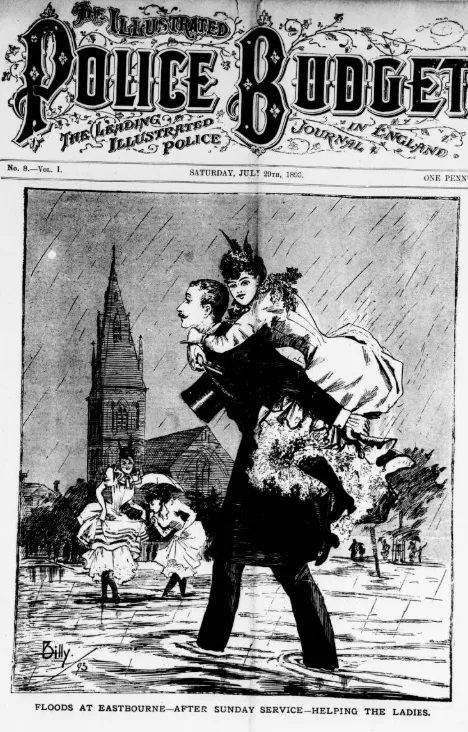
This week we’ve updated ten of our existing updates. Notable updates are to one of the world’s oldest news publications, the Morning Advertiser, which sees over 21,000 brand new pages join its ranks. Other significant updates are to the Salisbury Times, the Cork Examiner and the Glasgow Evening Times. Meanwhile, for your true crime hit, we’ve added more pages to the Illustrated Police Budget.
The Trade Unionist and Industrial Unrest
On 19 March 1892 our new title the Trade Unionist published a monthly memorandum from the labour correspondent for the Board of Trade, which ran as follows:
The condition of the skilled labour market still remains very disturbed. There is, it is true, a falling off in the number of strikes recorded during the month, the total having fallen from 63 in the previous month to 48. Unfortunately, however, there is no decrease in the number of persons involved, some of the disputes now raging being of considerable magnitude, and affecting indirectly a gradually augmenting total of workpeople in connected industries.
Which groups then were involved in these strikes? The Trade Unionist covered strike action in great detail, for example on 2 January 1892 reporting on the nailmakers strike at Bromsgrove, Worcestershire:
Some eight hundred men and women have been out on strike during the past two months at Bromsgrove for a rise of 50 per cent in their miserable wages. The men ask for their wage of 10s for a working week of 70 hours to be raised 15s, and the women want 7s 6d instead of 5s as formerly.
Two months in, and the Trade Unionist reported how ‘against these demands the employers have set their faces firmly.’ The Trade Unionist reported on a demonstration held in late December 1891 ‘in the bitter frost’ by the striking nailmakers. The ‘great crowd’ was addressed by May Abraham, of the Women’s Trade Union Association, with the Trade Unionist observing how:
The union revival, it was clear, had reached Bromsgrove, for the submissive despairing nailmakers were transferred into a body of men and women, doomed, it is true, to sell their lives in hard debasing work, but pledged to sell them dearer in the future.
On 23 January 1892 the Trade Unionist carried an update on the nailmakers’ strike. Three months on, and striking nailmakers in South Staffordshire and East Worcestershire were described as ‘starving.’
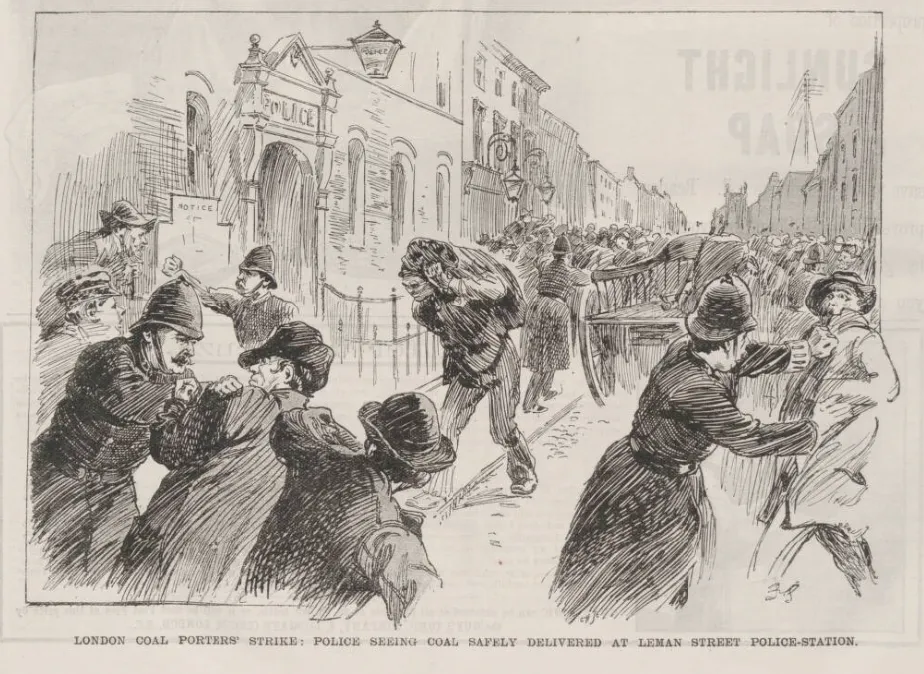
The nailmakers’ strike wasn’t the only strike taking place in Britain during this time. On 13 February 1892 the Trade Unionist described how a strike had ‘suddenly broken out amongst London Coal Porters’, whilst on 12 March 1892 the newspaper reported how ‘the London bookbinders are still fighting on against heavy odds’ in their own strike.
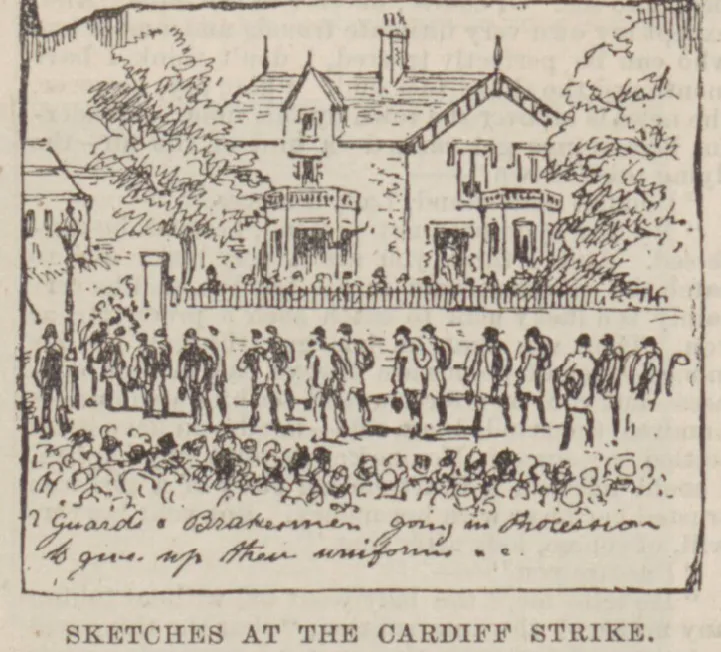
A week later, and the Trade Unionist turned its attention to North Wales, where ‘upwards of 10,000 miners employed at North Wales Collieries struck work on Saturday.’ The newspaper described how this was the ‘most widespread strike in the Principality for ten years,’ with 5,000 miners striking from collieries in Ruabon, Rhosllanerchrugog, Cefn, and Chirk districts, and between 5,000 to 6,000 miners striking in the Wrexham, Brymbo, Broughton, Gwersyltt, Hawarden, and Buckley districts.
We also found mentions within the pages of the Trade Unionist of 350 ‘girl weavers’ striking in Glasgow, and a strike at the Malago Vale Colliery in Bristol.
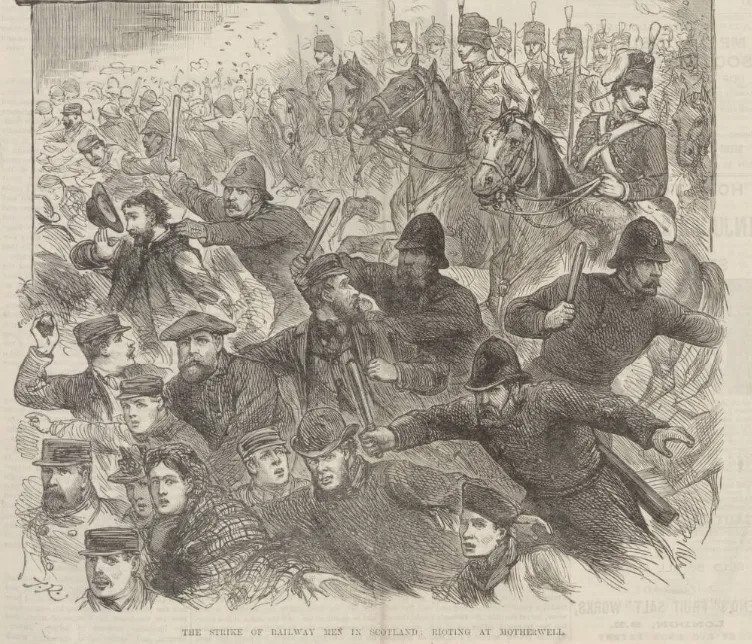
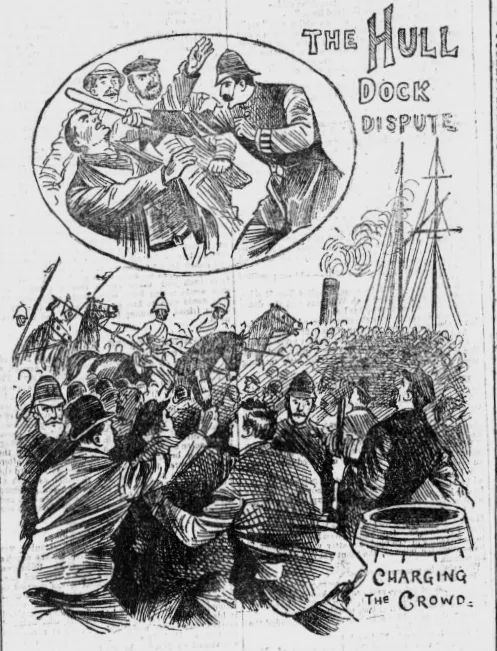
The Trade Unionist therefore provides an incredible insight into industrial unrest in the early 1890s. Discover more about strike history, the history of trade unions, and much more besides, in the pages of our newspapers today.
New Titles
Title | Years Added |
1889 | |
1890 | |
1907 | |
1986-2004 | |
1879-1905 | |
1910 | |
1914-1915 | |
1892 |
Updated Titles
This week we have updated ten of our existing titles.
You can learn more about each of the titles we add to every week by clicking on their names. On each paper’s title page, you can read a free sample issue, learn more about our current holdings, and our plans for digitisation.
Title | Years Added |
1905 | |
Cheltenham Journal and Gloucestershire Fashionable Weekly Gazette. | 1824 |
1856, 1877-1880, 1887-1893 | |
1862-1865, 1867, 1869, 1873, 1877, 1897, 1900, 1923-1942 | |
1882-1883, 1885-1887, 1889-1893 | |
1884-1888, 1890-1896, 1898, 1909-1911, 1913-1920 | |
1893-1896, 1908-1909, 1911-1912 | |
1930-1938, 1958 | |
1873-1876, 1892-1895, 1899 | |
1910-1937, 1940-1949, 1960-1962 |
You can keep up to date with all the latest additions by visiting the recently added page. You can even look ahead to see what we’re going to add tomorrow.
More on this topic:
Share this article
About the author

Rose Staveley-Wadham
Newspaper Licensing Manager
Published on Mon, 7 July 2025.