Your new edition of the British Newspaper Archive
Published on 22 July 2026 by The BNA
Welcome to your NEW British Newspaper Archive which has been quietly but meaningfully evolving. This new site is less about surface‑level changes and more about reshaping how research actually works, from the first search to long‑term projects built over time.
Taken together, three areas stand out:
- A more powerful search experience
- The shift from bookmarks and saved searches to Workspaces
- New tools for organising clippings into collections and structured research.
At a glance here’s what’s changed, and why it matters.
Search that works the way newspapers do
Searching historic newspapers has always been challenging. Language changes, spelling varies, and OCR isn’t perfect. The new British Newspaper Archive search is designed to reduce that friction and help you find more of what matters, without needing specialist tricks.
The biggest change is clarity. Search is now split into two distinct inputs:
- The Names box is designed specifically for people. It understands how names work in newspapers, first names, surnames, titles and helps avoid irrelevant results.
- The Keywords box handles everything else: places, events, occupations, organisations, themes, and issues.

This separation makes it clearer how to search and significantly improves relevance, especially for genealogists and anyone tracing individuals through time.
Behind the scenes, search has also become more forgiving. Phrase flexibility means the Archive can recognise articles that refer to the same event or idea using different wording or sentence structures. You no longer need the exact phrase to surface relevant coverage, making it far easier to explore topics when you don’t yet know the “right” terms.
Read more here.
Crucially, search is no longer a dead end. From results, you can clip articles straight into your research space, ready to organise and build on.
From bookmarks to Workspaces: why things moved (and improved)
If you’re returning to the Archive and wondering where your bookmarks or saved searches went, the short answer is: they’re all in Workspaces.
When the new site launched, everything you’d saved was preserved and migrated. But it didn’t just move, it evolved.
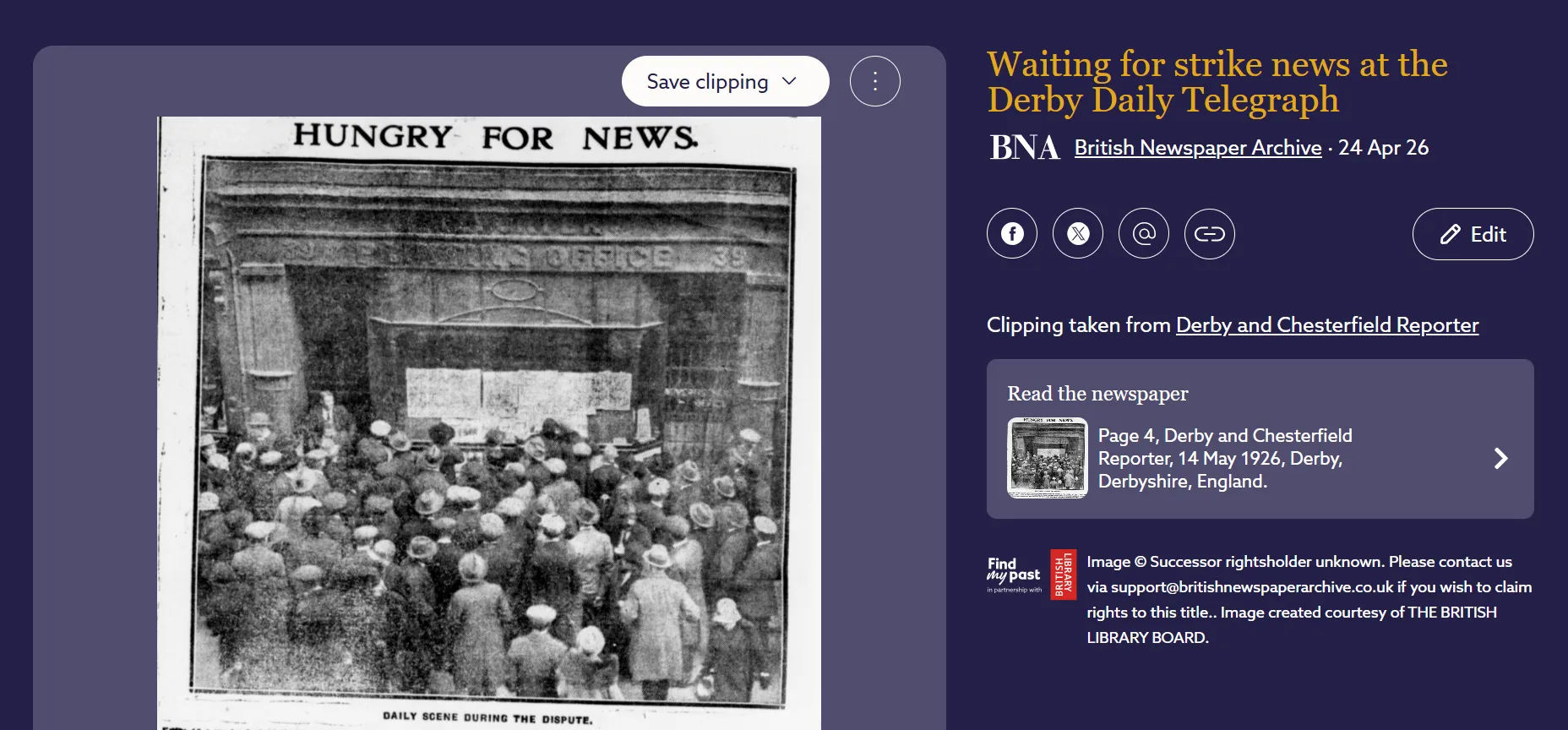
- Bookmarks are now full clippings.
Instead of being simple flags, saved articles are now proper research items. You can revisit them, add notes, organise them into collections, and share them with others.
- Saved searches are available, but no longer central.
Usage data showed that saved searches were rarely reused. Most people preferred rerunning or refining searches instead. With the new, faster search experience, that’s even easier. Saved searches remain accessible as records of past intent, but the emphasis has shifted to saving evidence, not queries.
This change reflects a simple principle: research progress comes from what you find and how you interpret it, not from preserving old search strings.
Turning clippings into collections and collections into insight
Search is only the beginning. The real value of newspaper research emerges when individual articles are brought together, compared, and interpreted.
That’s where collections and workspaces come in.
- Collections let you group clippings around a shared idea, person, place, or question, while you’re discovering, not after the fact. This encourages active curation and helps patterns surface naturally.
- Workspaces give you room to think. You can bring multiple collections together, add notes and observations, and shape material into something more structured, whether that’s a family narrative, a local history project, or a longer research piece.
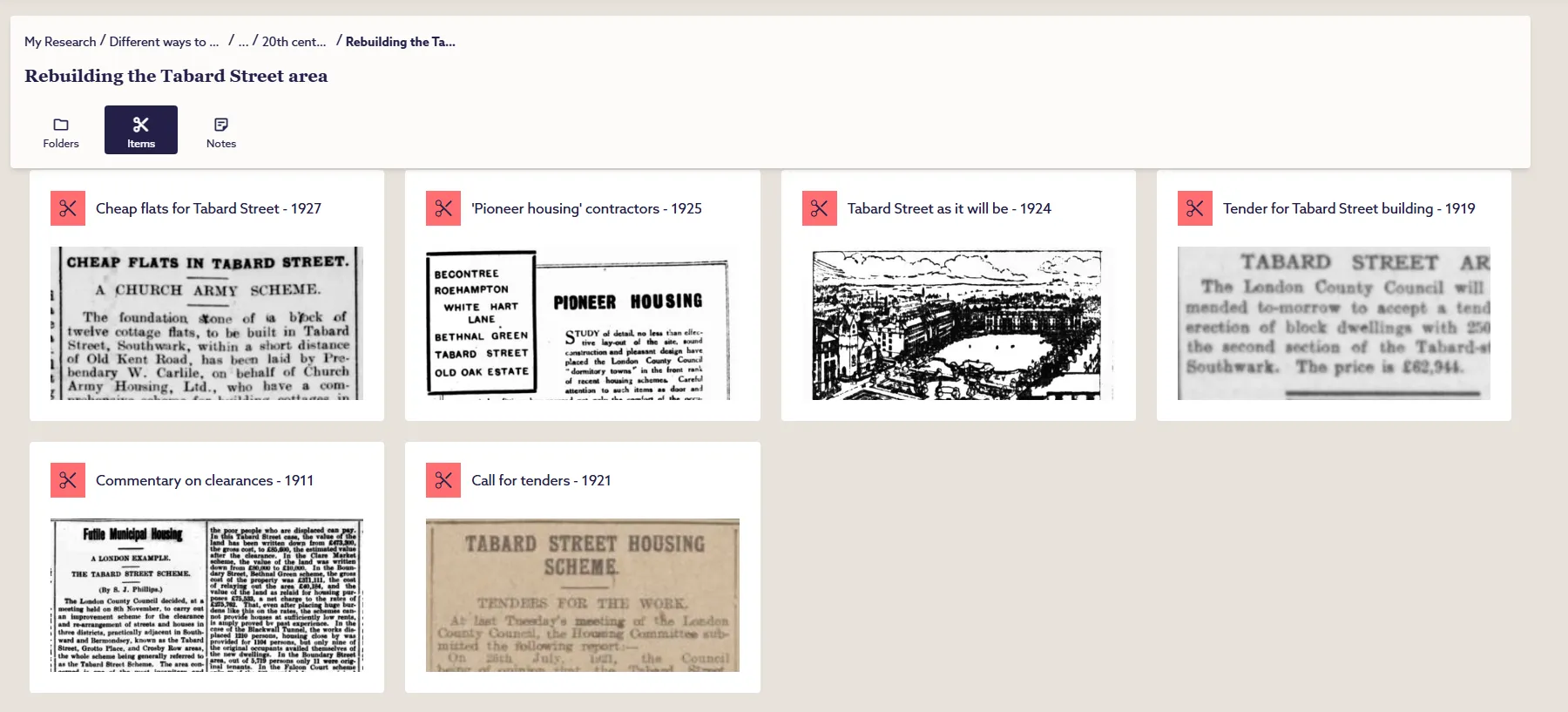
Instead of scattering articles across bookmarks, you build a connected body of evidence that reflects how your understanding develops over time.
This approach is particularly powerful for genealogists, local historians, students, and anyone working across multiple sessions or long time periods. It also makes collaboration and sharing far easier, turning private research into something presentable and reusable.
Read more here.
A more complete research journey
Individually, each of these updates improves a specific part of the experience. Together, they form a clearer research journey:
- Search smarter - with tools designed around how newspapers were written.
- Save what matters clippings with context, not disconnected bookmarks
- Organise deliberately using collections.
- Develop insight over time in Workspaces that grow with your research.
The goal isn’t just to help you find articles, it’s to help you turn millions of pages into something focused, personal, and meaningful.
Search widely. Save thoughtfully. Structure what you find.
That’s how stories emerge from the British Newspaper Archive.
More on this topic:
Share this article
About the author

The BNA
News from the British Newspaper Archive
Published on Wed, 22 July 2026.