



Brand new titles for our brand new platform
Published on 24 July 2026 by Rose Staveley-Wadham
Fittingly for our brand new platform, this week we are delighted to welcome five brand new titles to The Archive, with a total of 261,496 pages joining us in all. That's not it either, from across the UK and Ireland and even further afield, we've updated 46 of our existing titles. And as we voyage into these new waters, using our brand new shipping title, we explore the launches of some notable liners and merchant vessels from the late 19th and early 20th centuries.
So read on to discover more about our new and updated titles of the week, and to learn more about some legendary ship launches from history.
The Carlow Weekly News
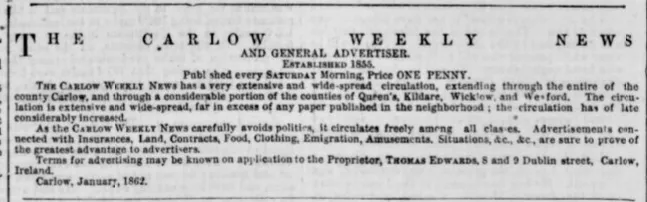
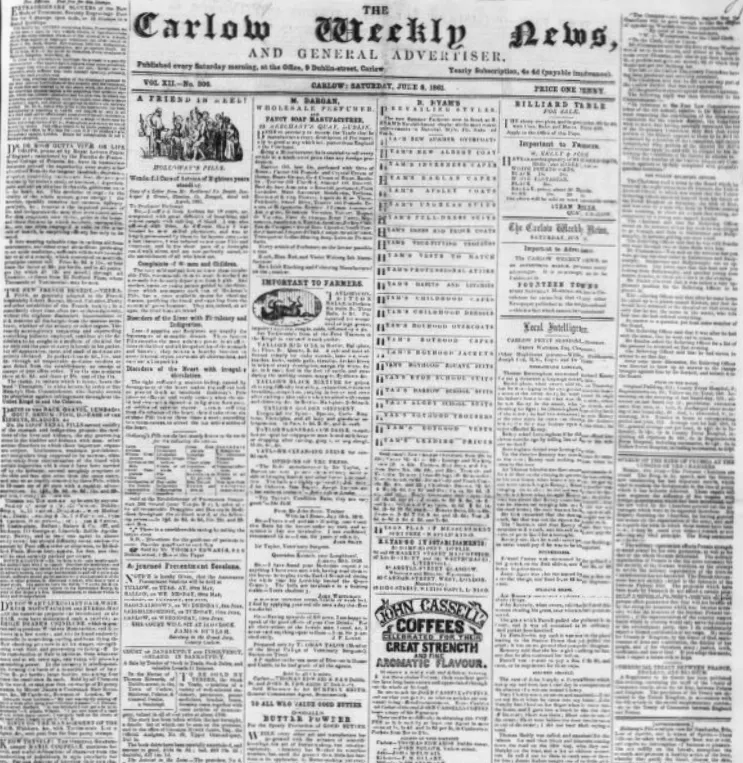
Our first new title of the week is the Carlow Weekly News, which was established in 1855 in Carlow, the county town of County Carlow, which served as the Irish capital in the 14th century. Initially costing 1 1/2 d, the Carlow Weekly News later lowered its price to just 1 d, and by February 1862 it was being reported by the Dublin Advertising Gazette that the paper had a 'very extensive and wide-spread circulation, extending through the entire of the county Carlow, and through a considerable portion of the counties of Queen’s, Kildare, Wicklow, and Wexford.'
Indeed, this particular advertisement claimed that the circulation of the Carlow Weekly News was 'far in excess of any paper published in the neighbourhood.' So what was behind its success? Well, as the Carlow Weekly News 'carefully' avoided politics, it was able to 'circulate freely among all classes.'
Owned by Thomas Edwards, the paper appeared every Saturday, and featured an array of local and general news. From the local side of things, the Carlow Weekly News reported from the Carlow Spring Assizes, the Carlow Town Commission, the Kildare Assizes, and the Carlow markets. The newspaper also featured an array of national and international news, with updates from London and from Scotland, which were printed alongside details of local accidents and offences, as well as obituaries and poetry.
The Investment Register
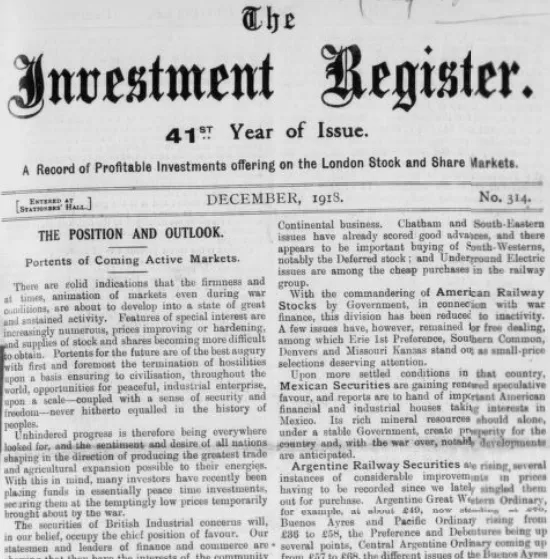
We travel now to London for our next new title of the week, which is the Investment Register. 'A Record of Profitable Investments offering on the London Stock and Share Markets,' this title was established in 1877, and appeared every month, filling 12 pages.
The Investment Register was essentially a guide to investments on the London Stock Exchange, with details regarding companies and investment opportunities. For example, the paper provided a look a the 'Position and Outlook' of 'Coming Active Markets,' which included home railway stocks, Argentine railway securities, and the Cordoba Central Railway.
Furthermore, the Investment Register printed profiles of different companies, like Henry Berry & Company Limited, who traded in 'hydraulic and other machinery.' The paper described the company as 'an old-established undertaking in a strong position, the business expanding and prospects most promising,' going on to provide details about investing in it.
A fantastic guide to the economic world at the time, the Investment Register also provided looks at the 'industrial world,' and 'aircraft manufacturing,' and according to a piece in the Financial News, November 1895, it was effective in its guidance:
Those who bought frequently remind us, when they write or call, how they have profited by attention to our recommendations. On the other hand, there are many of our clients who allowed these industrial bargains to pass them, and are not slow in expressing their regret. We do our part: we draw attention, we place in review all the facts, we argue out the whole position of an enterprise, we inspire confidence in others when we ourselves are confident. No one can take more trouble than we do in thoroughly investigating the position and prospects of every company to whose securities we direct attention.
The Shipping World and Herald of Commerce
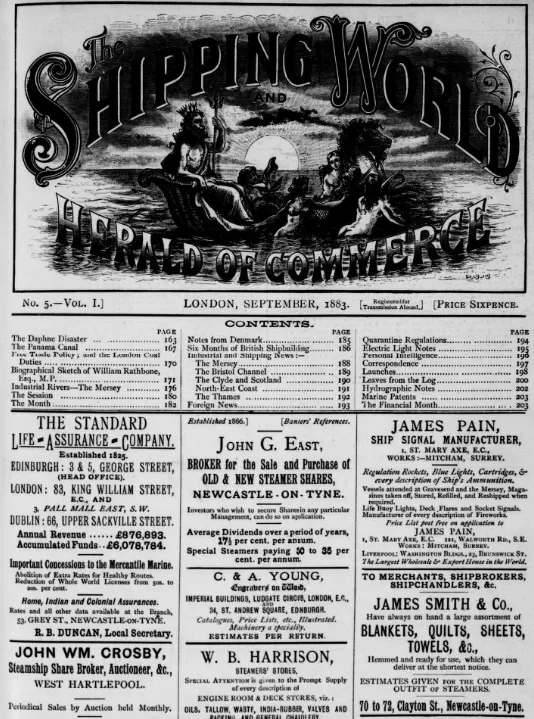
Established in London in 1883, the Shipping World and Herald of Commerce was published to 'record the progress of shipbuilding and auxiliary industries, promote the true interests of our Merchant Navy, and to extend the markets and guard the welfare of trade and commerce at home and abroad.' Appearing on the first of every month, and typically filling over 40 pages, this wonderfully thorough title therefore focused on the ship building industry in Britain, alongside such themes as navigation and the commercial shipping trade.
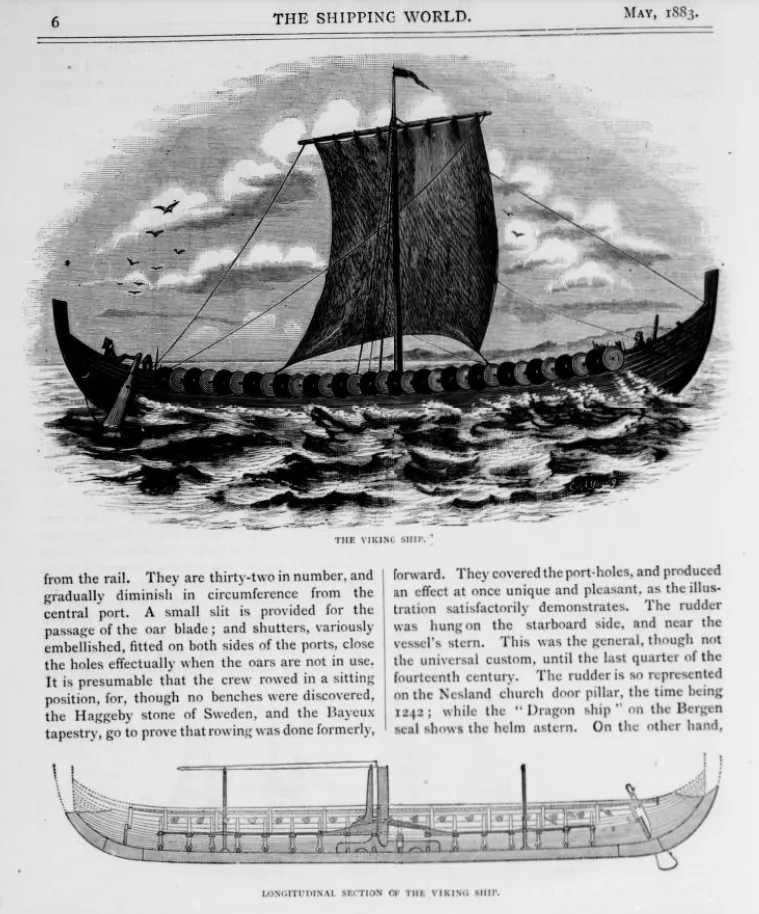
Indeed, the Shipping World and Herald of Commerce provided a high technical level of information, often featuring drawings and diagrams, with articles focused on engines and mechanical topics. Furthermore, the title gives a fascinating insight into Britain's shipbuilding towns, with a series of articles appearing in the journal about the shipbuilding industry along the Mersey, the Tyne, the Tawe, the Clyde and the Thames rivers.
And so, within the pages of the Shipping World and Herald of Commerce you could find articles like 'British Commerce and Social Progress,' 'Decline of American Shipping,' 'French Bounty System,' and 'A Suez Canal for British Shipping.' There were also pieces on historical subjects, such as an article entitled 'The Viking Ship of Gokstad,' which was penned by Evan R. Jones and was accompanied by illustrations.
Regular columns looked at shipbuilding in Britain, with tables depicting the output of the industry, with other regular features including details of 'wrecks and rescues,' launches of new vessels, 'trial trips' of new ships, and 'Leaves from the Log.'
We'll return to the Shipping World and Herald of Commerce to discover some landmark launches from British and Irish shipbuilding history.
The Tyrawly Herald
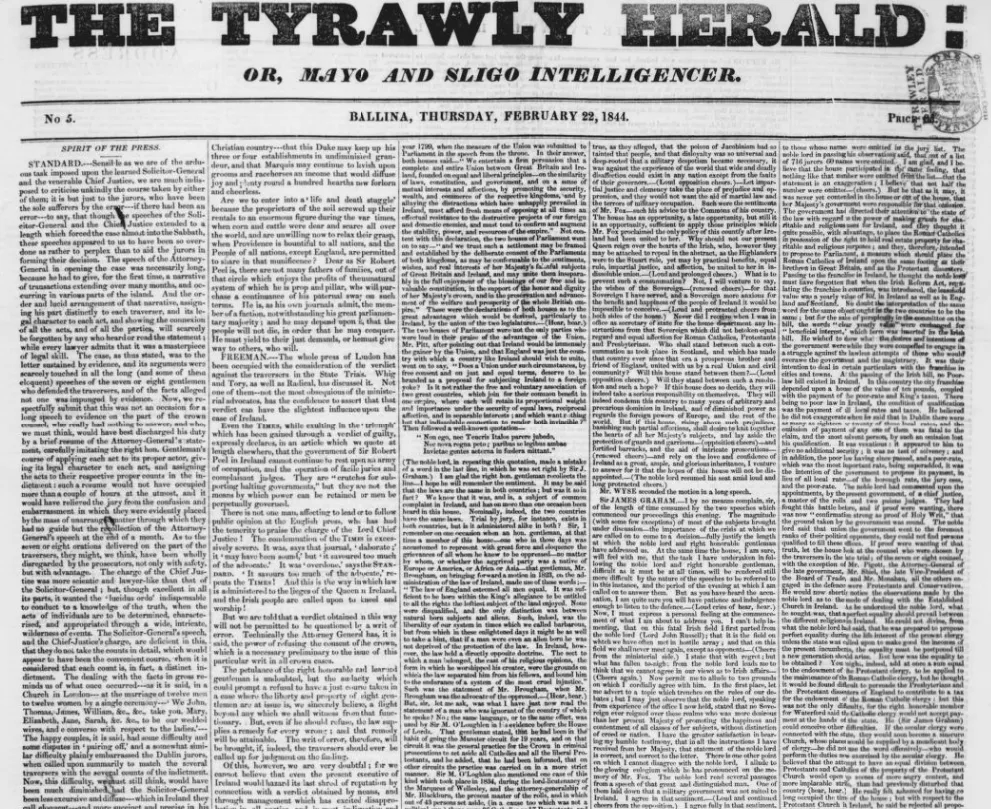
Next up is the second of our new Irish titles this week, and this County Mayo title was published with something of a social conscience. First appearing on 25 January 1844 as the Tyrawly Herald or Mayo and Sligo Intelligencer, the title took its name from the historic barony of Tyrawly in County Mayo, the second-largest barony in Ireland. It was published in Ballina, a town in the north of County Mayo.
The first edition of the Tyrawly Herald firmly stated its mission of support for the improvement of life in Ireland, its debut editorial boldly declaring how 'the state of things should be changed, and that the interests of individuals should not be preferred to those of the public.' Fundamentally, the new paper would 'belong to no party,' although it would support measures that 'we...conscientiously believe to be calculated to benefit the nation.'
Filling the four pages of the Tyrawly Herald, then, which appeared every Thursday, was a range of local news from the likes of the Ballina Charitable Loan Fund Society, the Mayo Savings Bank in Castlebar, the Ballina Union and the Ballina Quarter Sessions. True to the paper's social mission, it printed such pieces as the 'Condition of the Agricultural Classes,' alongside news from further afield, from across Ireland, Britain and beyond.
First published just a year before the Great Famine, the Tyrawly Herald provides fascinating coverage of this devastating period of starvation, sickness and emigration. Indeed, the area around Ballina was heavily dependent on the potato crop, and so the reporting provided by the Tyrawly Herald gives us a unique insight into this dreadful time.
The Wakefield Saturday Night
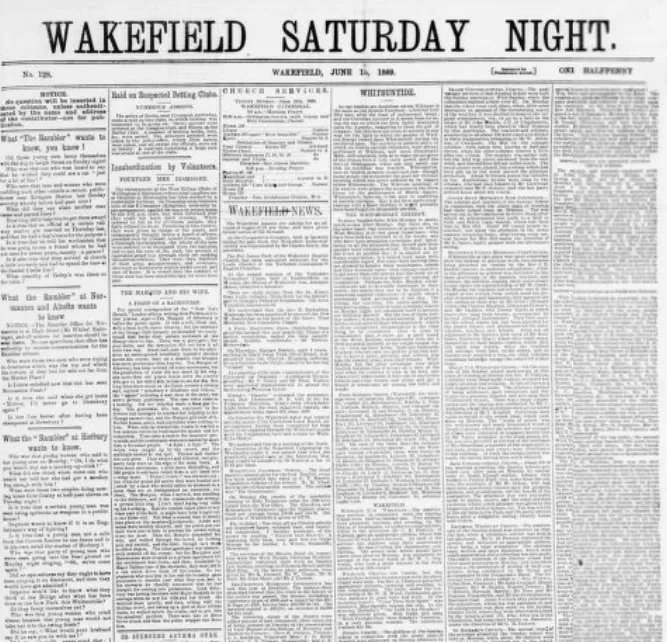
Our final new title of the week is the Wakefield Saturday Night, which was published from the offices of the Wakefield Free Press every Saturday. Featuring ‘reports of the day’s local cricket matches and latest news,' this title could be 'had of boys in the streets' of Wakefield, Normanton and Horbury.
Filling four pages, and costing only one halfpenny, the Wakefield Saturday Night covered local news from the likes of Horbury, Ossett, Castleford, Stanley, Sandal, Altofts, Streethouse, Sharlston, Normanton, Featherstone, Snydale, and of course Wakefield. It included updates from the Wakefield Board of Guardians, the local police courts, and from the Wakefield corn and cattle markets.
Sport was an important part of the Wakefield Saturday Night, as it had a dedicated 'Cricket and Athletic Notes' section, as well as detailing all the latest cricket scores. Meanwhile, the title also featured short stories and notices of births, marriages and deaths.
Our updated titles
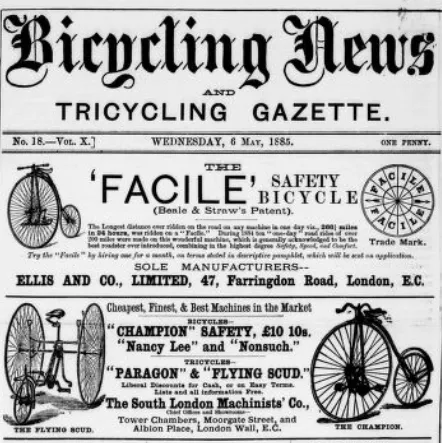
That may be it from our brand new titles but we've got a wonderful array of 46 updated titles for you to enjoy this week. With over 69,000 brand new pages added over the last seven days is the Gloucester Citizen, whilst those cycling enthusiasts amongst you will enjoy the additions to the Bicycling News and the Cycle Record. If it's the history of travel you enjoy, you'll be buoyed by the new pages added to Herapath's Railway Journal, of if you want to dig into the history of the cooperative movement, the pages added to the Co-operative News will be right up your street.
Looking across the UK and beyond, we've updated four of our Scottish titles, with over 24,000 brand new pages joining the Highland News. Across the Irish Sea, we've likewise added pages to four of our Irish titles, including to the Belfast Commercial Chronicle and to the Connaught Telegraph. Even further afield, new pages also join the Trinidad Royal Gazette, and we've also updated the Isle of Man Times.
Our last honourable mentions amongst our updated titles go to the wonderful Penny Illustrated Paper, and the 18th century additions we've made to the historic Salisbury and Winchester Journal, from 1745 to 1746, and 1750.
Notable ship launches
As we launch our new platform here at the British Newspaper Archive, we thought we'd delve into the pages of the Shipping World and Herald of Commerce and discover some notable ship launches from history, from across the United Kingdom.
1. SS Eider - launched 15 December 1883
Launched on 15 December 1883, the SS Eider was a major German transatlantic liner, travelling from Bremen to New York city. It is featured in the Shipping World and Herald of Commerces' list of launches from January 1884, with the vessel having been produced by John Elder & Co., of Govan. It was later wrecked off the Isle of Wight.
2. Santiago - launched 17 January 1885
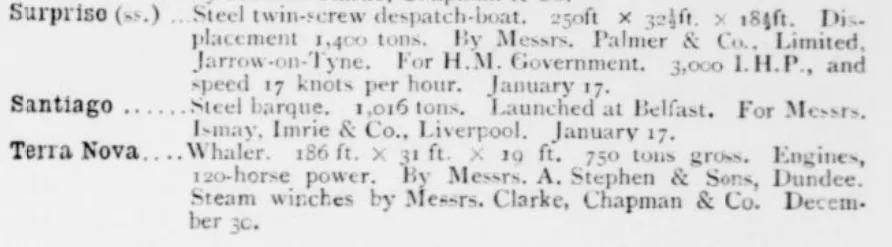
The first of our Harland & Wolff of Belfast entries, the Santiago was an iron sailing vessel built for Messrs. Ismay, Imrie & Co., Liverpool. Ismay is a name you might recognise, with Santiago sailing long-distance routes under the White Star Line. Renamed Callao, she was lost off the cost of Chile in 1907
3. Doris - launched 8 February 1887
An important example of a Dundee-built merchant sailing vessel, Doris was launched on 8 February 1887, having been built by Alexander Stephen & Sons, of Dundee. As the Shipping World and Herald of Commerce details, she would be owned by Alexander Stephen & Sons, and 'employed in the general carrying trade.'
4. SS City of New York - launched 15 March 1888
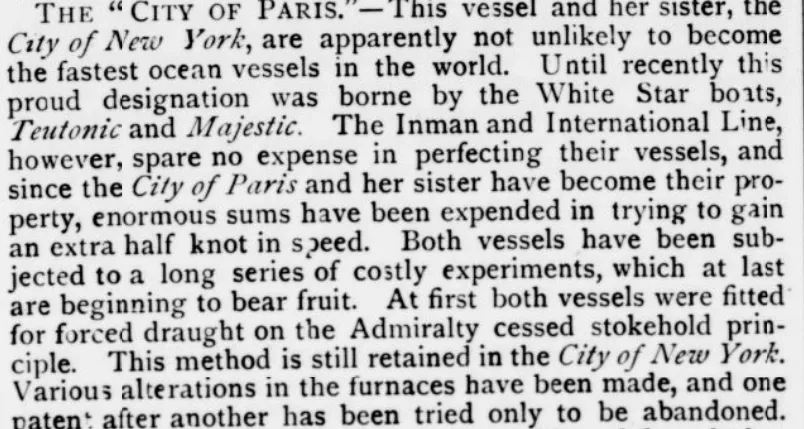
Built by J & G Thomspon of Clydebank, the SS City of New York was designed to be the Atlantic's largest and fastest liner. Built for the Inman Line, by 1892 the Shipping World and Herald of Commerce reported how her and her sister ship the SS City of Paris were 'not unlikely to become the fastest ocean vessels in the world.' Indeed, the SS City of New York would go on to hold the Atlantic eastbound record speed from August 1892 to May 1893.
5. Bluebell - launched 27 August 1889
Representing Sunderland's shipbuilding industry we have the steel clipper barque Bluebell, who was built by Wm. Pickersgill & sons of Southwick, Sunderland. The Bluebell later ran aground off the coast of Peru on 14 June 1908.
6. Kirkhill - launched 20 August 1891

Shipping World and Herald of Commerce | 1 September 1891
Back to Dundee now with the launch of Kirkhill, a large merchant vessel, which was built by Alexander Stephen & Sons. The Kirkhill would go on to carry bulk loads like coal, coke and wheat across the world, and was shipwrecked off the coast of the Falkland Islands in September 1905 whilst travelling from South Shields to San Francisco. The crew were thankfully all rescued.
7. RMS Campania - launched 8 September 1892
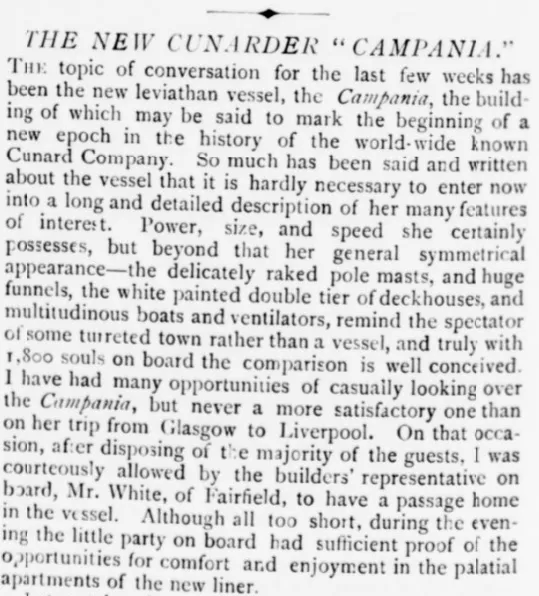
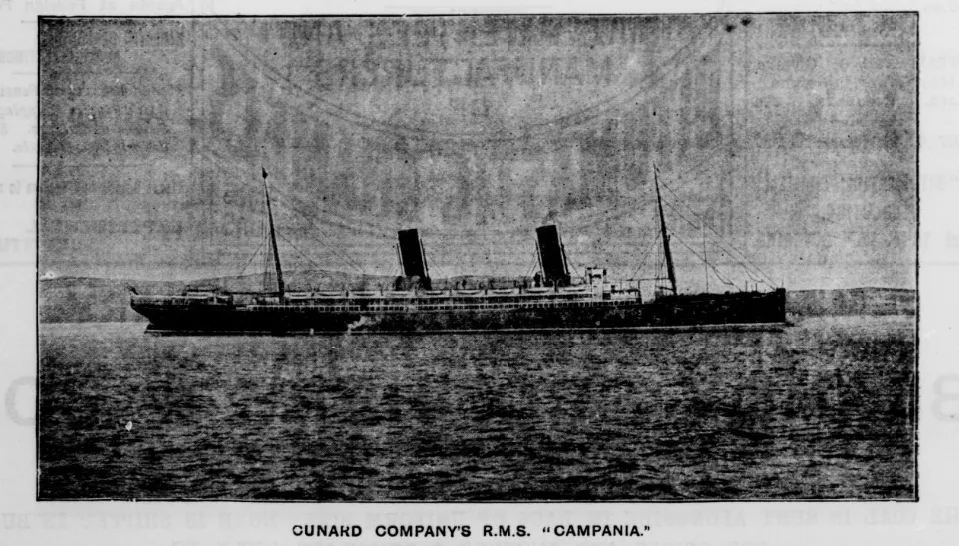
It's time for another record breaker now, and this comes in the form of the RMS Campania, which was built by the Fairfield Shipbuilding and Engineering Company of Govan for the Cunard Line, and launched on 8 September 1892. As the Shipping World and Herald of Commerce discusses in May 1892, she was a 'leviathan,' marking 'a new epoch in the history of the world-wide known Cunard Company.' On only her second voyage, RMS Campania won the Blue Riband, the accolade given to passenger liners crossing the Atlantic at record speed.
8. SS Gothic - launched 28 June 1893
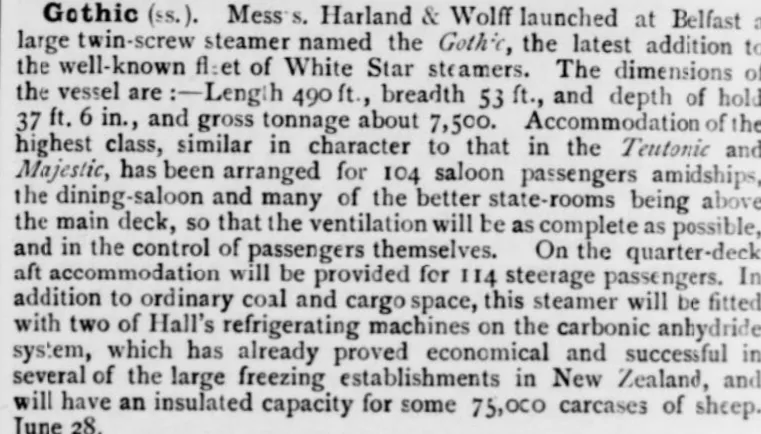
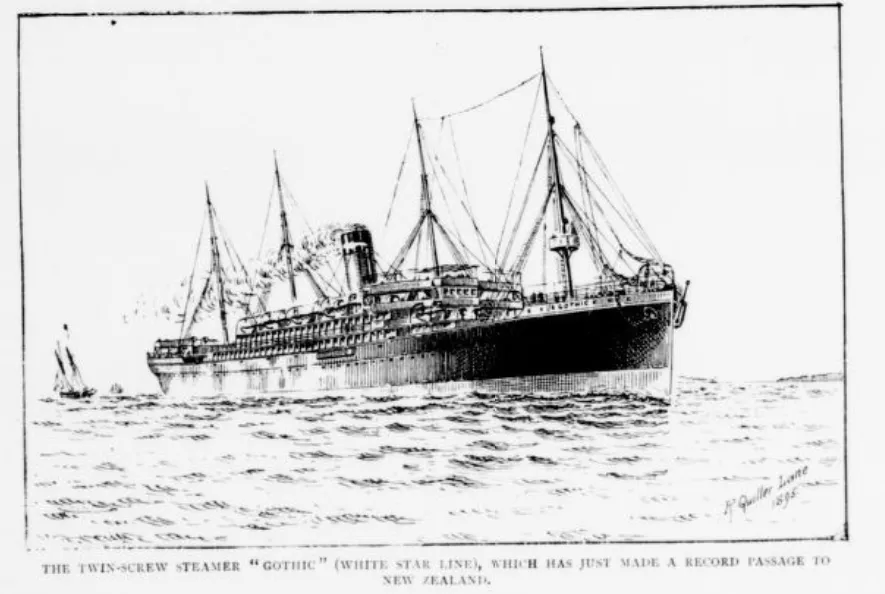
Let's get back to Belfast now with the launch of the SS Gothic. This large twin-screw steamer was built by Harland & Wolff for the White Star Line, and as the Shipping World and Herald of Commerce relates, in its now extended launch section, in August 1893, she was built to carry both passengers as well as produce, having 'insulated capacity for some 75,000 carcasses of sheep,' allowing British diners to enjoy New Zealand lamb.
9. SS Amerika - launched 20 April 1905
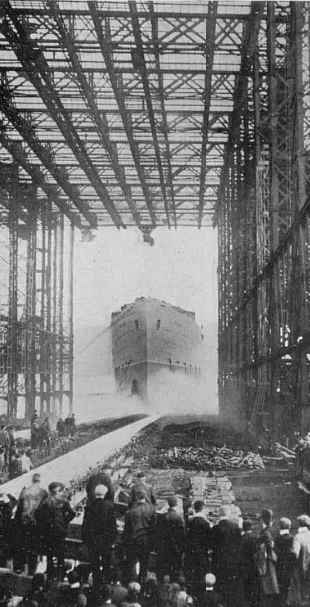
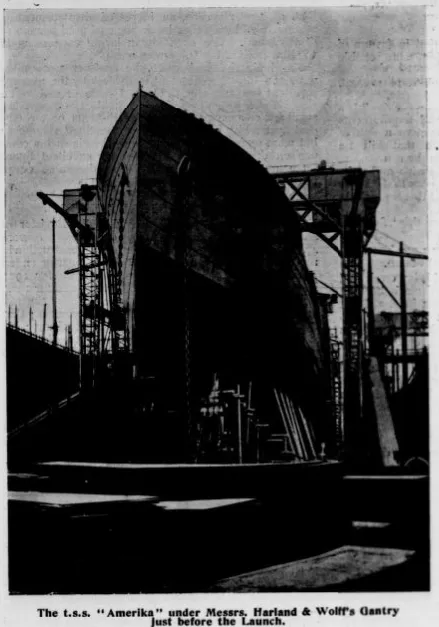
Fast forward to 1905, and the launch of SS Amerika, and now the Shipping World and Herald of Commerce actually had photographs of vessels before their launches. Built by Harland & Woolf in Belfast, she went into service under the Hamburg America Line of Germany, sailing between Hamburg and New York. Just before America entered the First World War, she was seized by the United States Shipping Board and became a troop transport ship for the U.S. Navy, under the name America.
10. RMS Lusitania - launched 7 June 1906
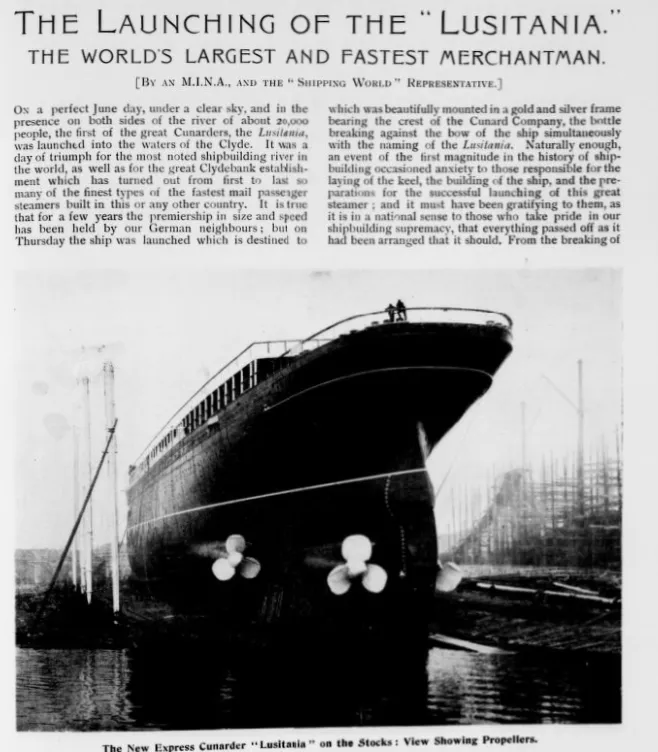
Our final notable launch is that of RMS Lusitania, who was built by John Brown & Co of Clydebank. At the time, she was the largest passenger ship in the world, and she won the Blue Riband in 1907. Tragically, the RMS Lusitania, who remained as a passenger liner, was torpedoed by a German submarine in May 1915, with the loss of 1,197 lives.
Discover more notable ship launches in the pages of our ArchiveNew titles
Title | Years added |
|---|---|
1858-1863 | |
1918 | |
1883-1896, 1904-1908 | |
1844-1870 | |
1889 |
Updated titles
This week we have updated 46 of our existing titles.
You can learn more about each of the titles we add to every week by clicking on their names. On each paper’s title page, you can read a free sample issue, learn more about our current holdings, and our plans for digitisation.
Title | Years added | |
|---|---|---|
1854 | ||
2005 | ||
1848-1852 | ||
1877, 1885, 1887 | ||
2005 | ||
1861, 1889, 1891, 1894, 1911 | ||
1900 | ||
1906 | ||
2005 | ||
1896, 1901 | ||
1989 | ||
1913, 1918-1922 | ||
1876, 1881, 1885, 1888 | ||
1830-1849, 1861-1870 | ||
1884, 1886, 1888, 1890 | ||
1891-1892 | ||
1837 | ||
2002-2004 | ||
1842 | ||
1877-1899 | ||
1835-1836 | ||
1803, 1805 | ||
1991-1992, 1995-1999 | ||
1876-1877, 1879, 1889, 1893-1895, 1897-1898, 1901, 1912 | ||
1871, 1910 | ||
1881, 1889 | ||
1978, 1980 | ||
1898, 1910, 1913-1919, 1921-1928 | ||
1997 | ||
2005 | ||
1966 | ||
1798-1799 | ||
1978 | ||
1869-1870, 1872-1877 | ||
1898 | ||
1911 | ||
1986-1987, 1989-1990 | ||
2005 | ||
2005 | ||
1745-1746, 1750 | ||
2005 | ||
1892 | ||
1887-1889, 1891-1892 | ||
1998-1999 | ||
1915-1920 | ||
1870, 1890, 1897 |
More on this topic:
Share this article
About the author

Rose Staveley-Wadham
Newspaper Licensing Manager
Published on Fri, 24 July 2026.