
Five nineteenth-century newspapers expand The Archive
Published on 14 July 2026 by Molly Pearce
This week at The Archive, we’re bringing you five fabulous new titles from the nineteenth century. We will uncover a period of rapid expansion and industrialisation as we navigate across Britain and Ireland. From Sheffield and Birmingham to Carlow and Clonmel, we’ll reveal how local papers dealt with turbulent political, economic, and religious transformations. With 300,944 new pages added, and updates to thirty-two of our pre-existing titles, we guarantee something will suit your taste this week.
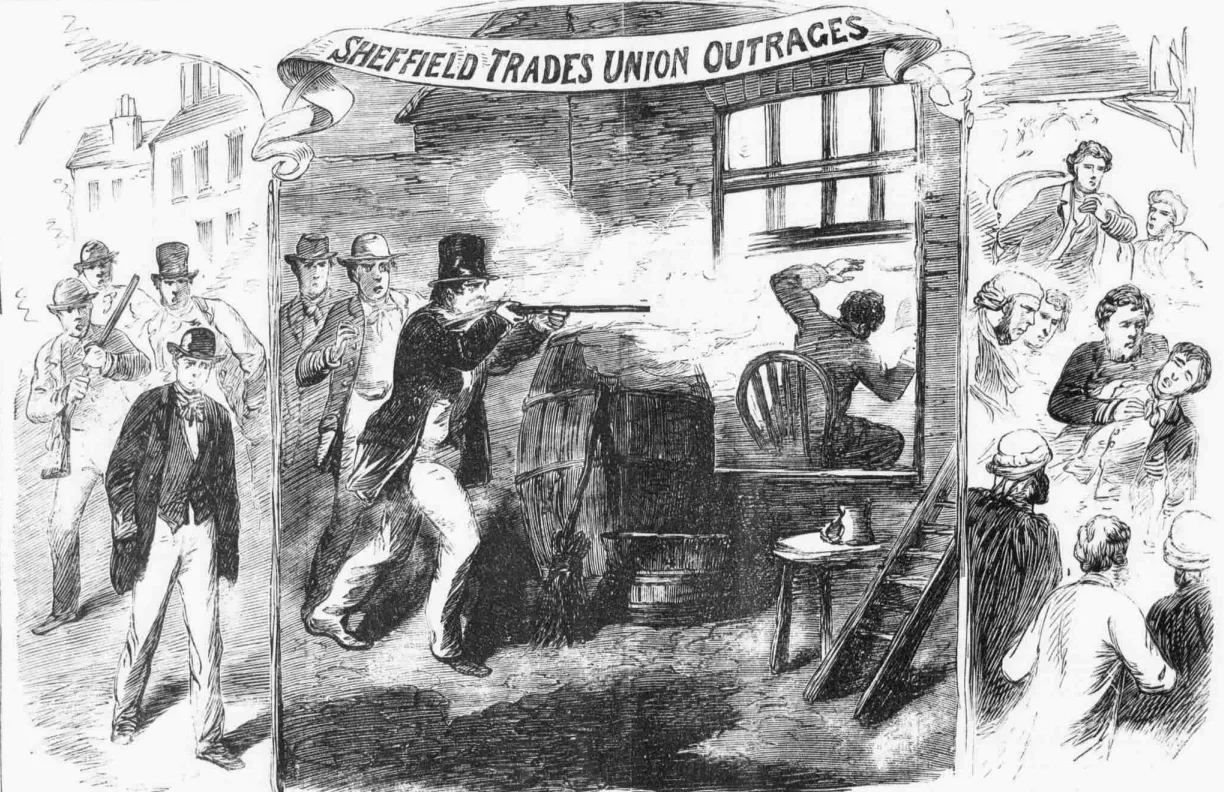
Illustrated Police News | 29 June 1867
Join us as we investigate each of our five new titles, and unearth newspaper coverage of the Sheffield Outrages.
Register now and explore The Archive
Birmingham Mercury
First up this week is the insightful Birmingham Mercury. This title ran from 1848-1858 before being incorporated with the Birmingham Weekly Press.
Its morals and policies were clearly stated for it readers, outwardly rejecting the terms ‘Journalists, Political Economists, Politicians, Pamphleteers’, instead offering themselves as ‘guides’. This title promised to advocate for Free Trade, and expose political corruption at every possible turn.
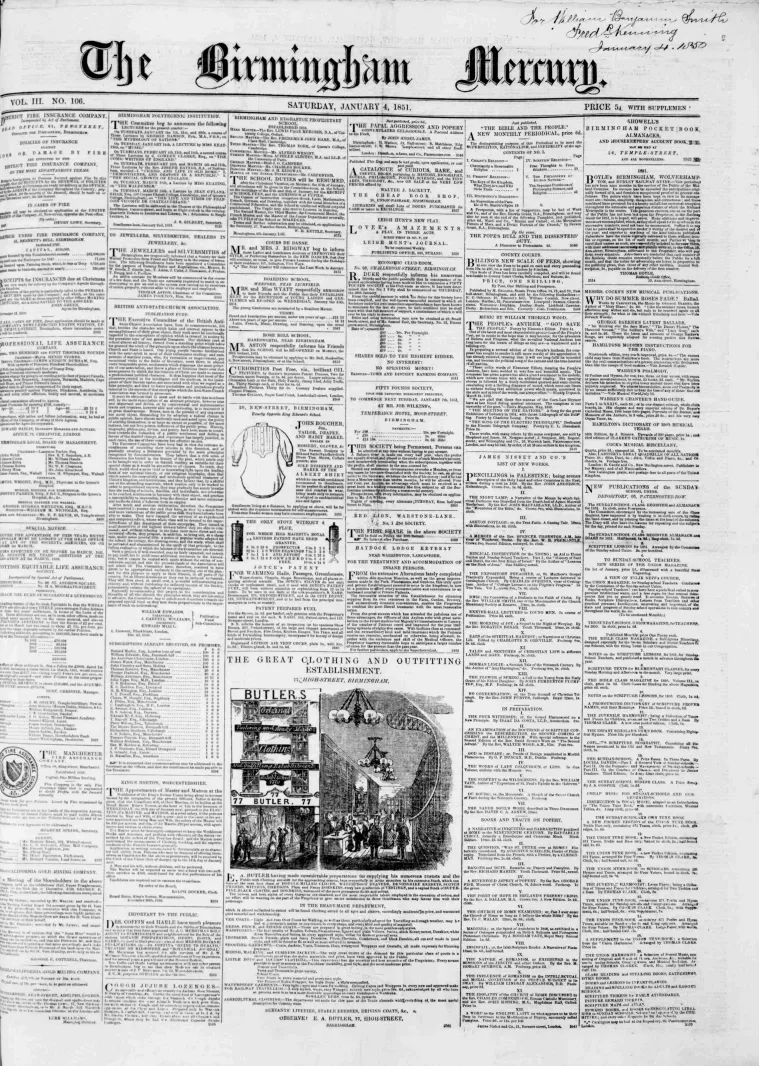
Birmingham Mercury | 04 January 1851
Also during this address, the Birmingham Mercury summed up its home politics, stating:
It also endeavoured to better understand foreign politics, as ‘Better knowledge will lead to better feeling, and this to brotherhood and peace.’
The Birmingham Mercury would stick to its principles, covering the latest foreign and local intelligence, financial reform, business performances, and political meetings.
It also carved our space for the literary-minded reader, featuring several poems, extracts, and reviews towards the end of each issue. This title was the perfect place to go if you wanted a well-informed, trade-focused newspaper operating outside of London and Manchester. It cost five pence and was published every Saturday.
Bishop Auckland Herald
We travel now up to County Durham for our next title, the Bishop Auckland Herald. It was established in 1854 and was the first newspaper ever to be published in Bishop Auckland, paving the way for future publications such as the Auckland Times, the short-lived Auckland Mercury, and the Auckland Chronicle.
Eventually, the Bishop Auckland Herald was amalgamated with the Auckland Times, and subsequently published as the Auckland Times and Herald.
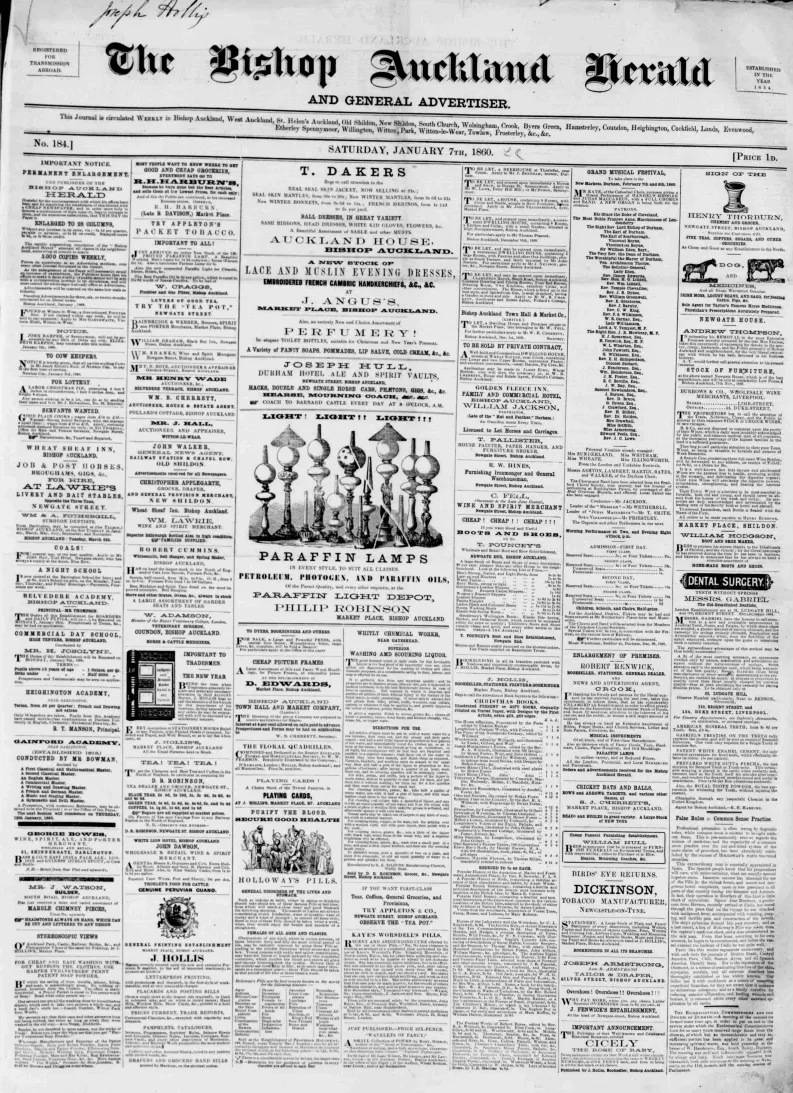
Bishop Auckland Herald | 07 January 1860
Calling itself ‘a Weekly Newspaper of General Interest’, the Bishop Auckland Herald was a loyal and devoted snapshot of Victorian life in County Durham. It was circulated across numerous towns and villages, listing these on the front page of each issue.
This title maintained a correspondent in London, and frequently reported on national political updates alongside a review of foreign affairs. Politics aside, the Bishop Auckland Herald consistently covered local news and miscellaneous general news.
Throughout its life, this paper chronicled rapid railway expansion during the nineteenth century, as multiple railway lines were built to support transportation of coal from the Durham Coalfield. In 1854, construction of a new railway began, connecting Bishop Auckland with Durham to the east. The Bishop Auckland and Durham Branch was built by the North Eastern Railway and was completed in 1857.
This four-page title cost one penny and was circulated across its numerous towns every Saturday.
Carlow Morning Post
Travelling across the water to Ireland, we turn now to the third title on our list this week – the Carlow Morning Post. Published in County Carlow, this title was widely circulated across Carlow, Wicklow, Kildare, and Queen’s County (now known as Laois), ‘in which there is not another Paper Printed.’ As such, our next title was read by a great many people, monopolising news reporting until it ceased publication in 1835.
The Carlow Morning Post covered local politics, agricultural news, and the Tithe War period. It aimed to appeal to its wide audience, balancing Irish stories with foreign intelligence coverage.
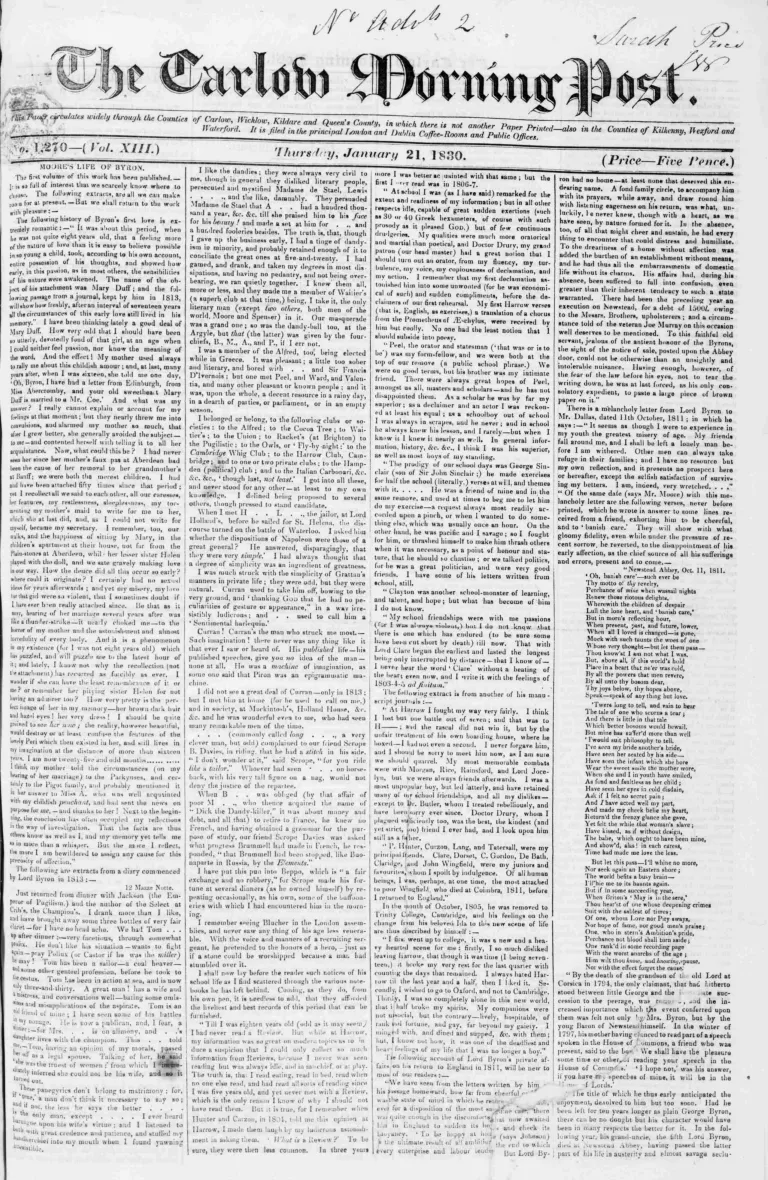
Carlow Morning Post | 21 January 1830
This title was published and printed by Richard Price, who operated out of Dublin Street, Carlow. He also ran a bookselling and stationary business, and managed the release of various Carlow newspapers from 1817 up until his death in 1875.
This title was published every Monday and Thursday for the entire length of its publication and cost five pence per issue.
Clonmel Advertiser
We’re staying in Ireland for our next new title, heading over to County Tipperary for the Clonmel Advertiser.
This title covered local political and religious news, as well as local births, deaths and marriages in the local community.
The religious foundation of this paper underwent a controversial religious shift during its publication. During the 1830s, the Clonmel Advertiser transitioned from a pro-Catholic Emancipation paper under founder William Carson into a strictly Protestant publication under proprietor John Kempston, who purchased the paper in December 1832.
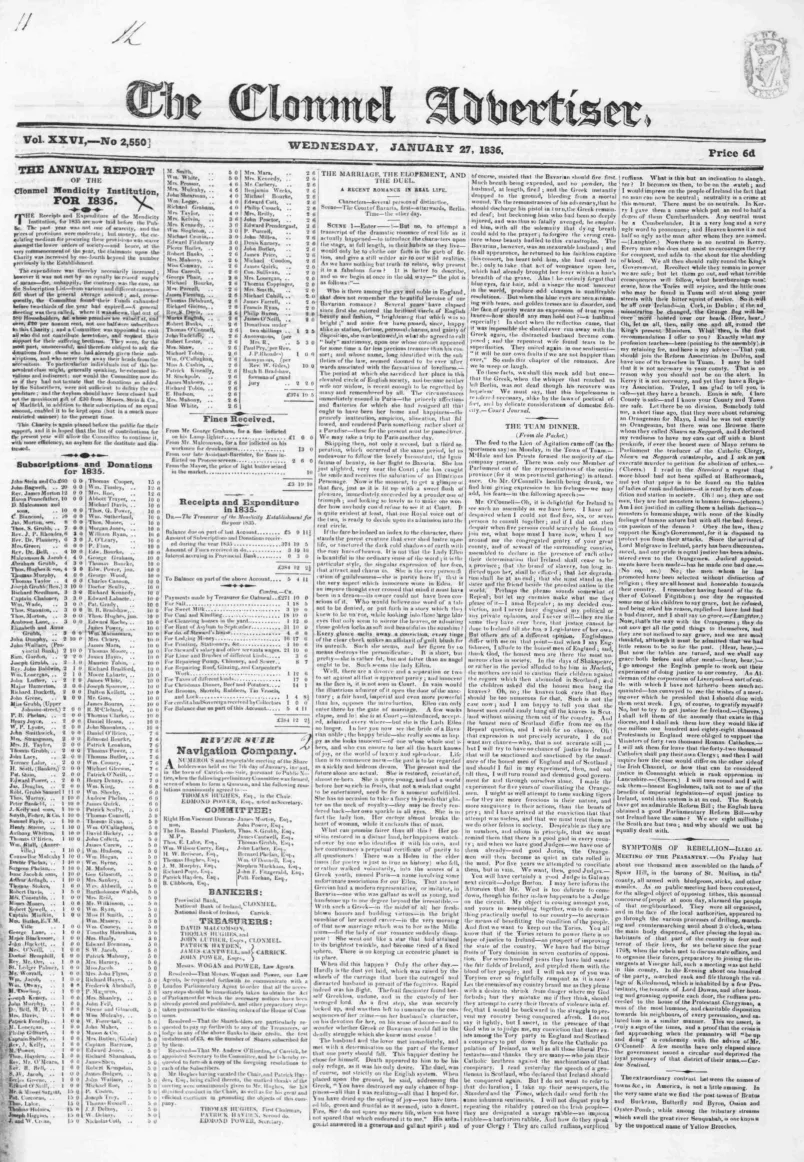
Clonmel Advertiser | 27 January 1836
The subsequent editorial overhaul ignited a controversy among readers, as new ownership brought with it shifting attitudes towards the ongoing Tithe War.
In 1838, the Clonmel Advertiser was bought by John Hackett, printer of the Tipperary Free Press. Hackett would cement the Pro-Catholic sentiment echoed in the earlier era of the paper, angering John Kempston’s son, who would go on to establish The Nenagh Guardian in the same year.
This paper cost five pence and was released to the people of Clonmel every Wednesday and Saturday.
Sheffield Times
Last on our list for this week is the Sheffield Times. Published from 1846-1873, this new title covered a period of rapid industrialisation during the mid-nineteenth century, as the city became a steel, glass, and cutlery manufacturing powerhouse. As the railway services entered Sheffield in the 1840s, industry began to increase at a fast pace, while working conditions continued to plummet.
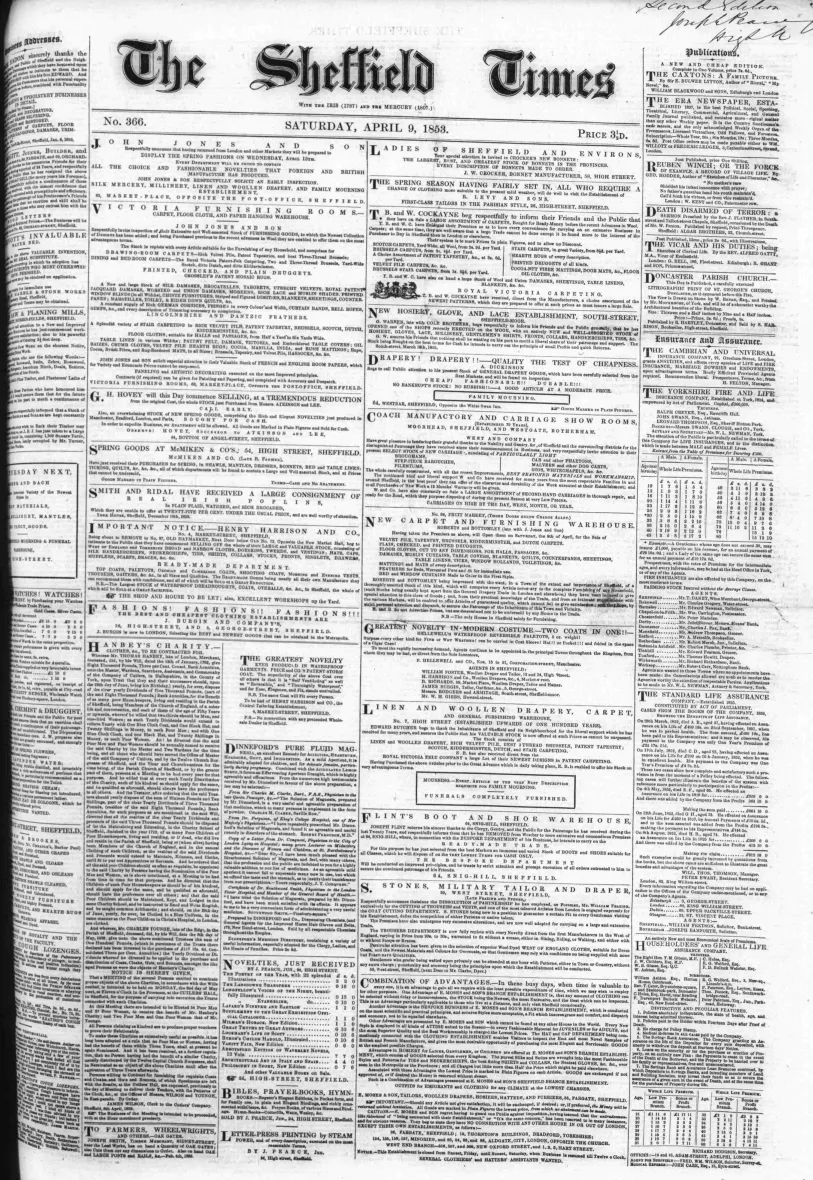
Sheffield Times | 09 April 1853
With no sign of successfully enforced safety regulations, Sheffield workers paid the price of increased demand. In the 1860s, a member of the cutlery trade would easily work until he was 35, and before the age of 40 he would be dead.
The Sheffield Times documented the rising growth in manufacturing, covering local political and business developments alongside wider foreign affairs. The title was also competing with rival publications such as the Sheffield Independent and Sheffield Daily Telegraph.
This title was published every Saturday and cost one penny.
Our Updated Titles
That’s all for our new titles, but we have plenty of updates to our pre-existing titles. With a grand total of thirty-two updates made, we’re certain we’ve got something to interest you this week at The Archive.
Our biggest update was made to the Hull Daily Mail, with a whopping 139,326 new pages available to browse. As of this week, we’ve added the years 2001-2005, covering all your early 2000s nostalgia. Our second largest update comes to the Faversham News, with 51,194 new pages.
On top of this, we’ve made exciting updates to some special titles. More pages have been added to the Illustrated Sporting and Dramatic News, Pictures, and the Farmer’s Gazette & Journal of Practical Horticulture. Whether you’re a cinema fanatic, or love to grow your own food, we recommend you take a look at our updated titles this week.
The Sheffield Outrages
While researching our five nineteenth century titles this week, we uncovered a world of overworked, underpaid workers. As trade unions continued to grow in popularity, workers were actively opposing the unsafe conditions and inhumane treatment thrust upon them by avaricious employers. During this search, we stumbled across the Sheffield Outrages – a series of violent crimes carried out by a small group of trade members against employers and rival workers.
These crimes, which included shootings, bombings, assaults, and instances of verbal abuse, occurred in Sheffield during the 1850s and 1860s, as the city became a centre of the steel, glass, and cutlery industries.
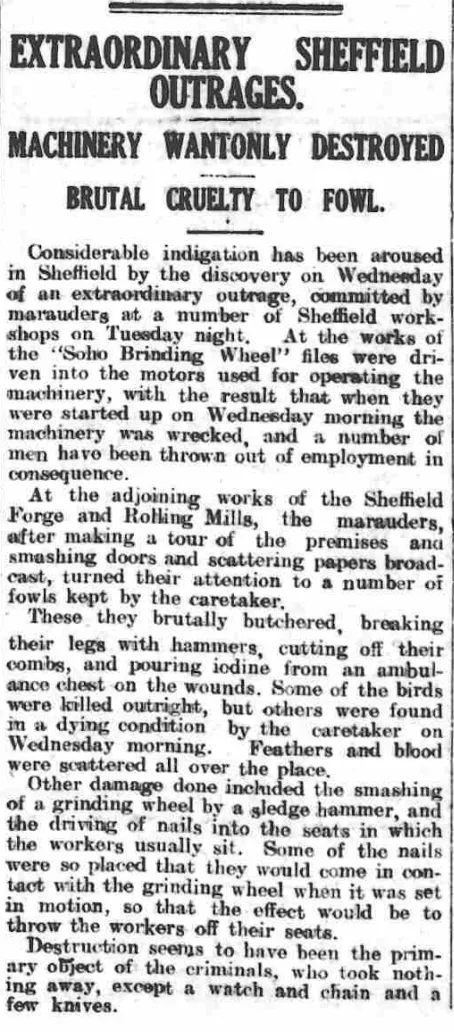
As worker tensions grew alongside demand, safety regulations and improved working conditions were consistently neglected. A process known as ‘rattening‘ was carried out by many angry union members – damaging or removing crucial tool, machinery, and resources to draw the attention of employers.
This act became an accepted aspect of Sheffield life during the mid-nineteenth century, as the feared ‘grinders’ disease‘, silicosis, claimed the lives of many innocent industry workers.
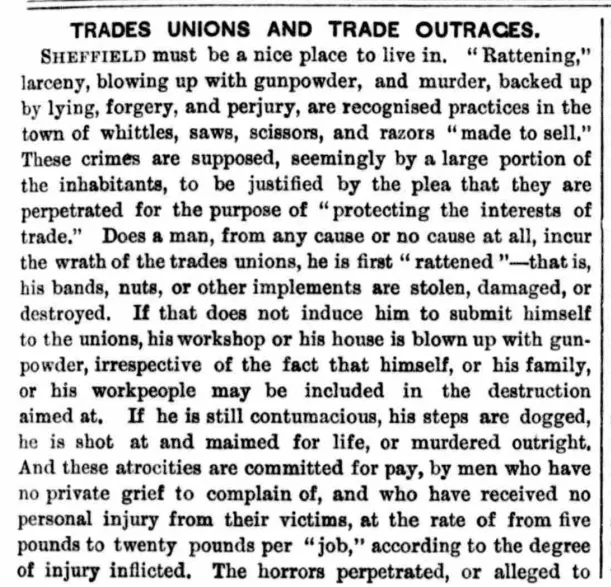
Illustrated Times | 29 June 1867
The Sheffield Outrages varied in severity; some acts came to nothing, while others had significant consequences. One disastrous example came in 1859, with the shooting of saw-grinder, James Linley, who was shot dead for employing too many ‘unlawful apprentices’.
Another act of severe violence occurred in 1866, when the cellar of saw-grinder Thomas Fearnehough’s home exploded. An investigation revealed that a can of gunpowder had been thrown inside by angry union workers.
Further explosions were planned and attempted over the next year, causing increasing public concern. In 1867, a major government enquiry was eventually carried out in response. William Broadhead, otherwise known as “Old Smite Em‘”, was a leading trade union figure, and admitted to paying men to commit the attacks.
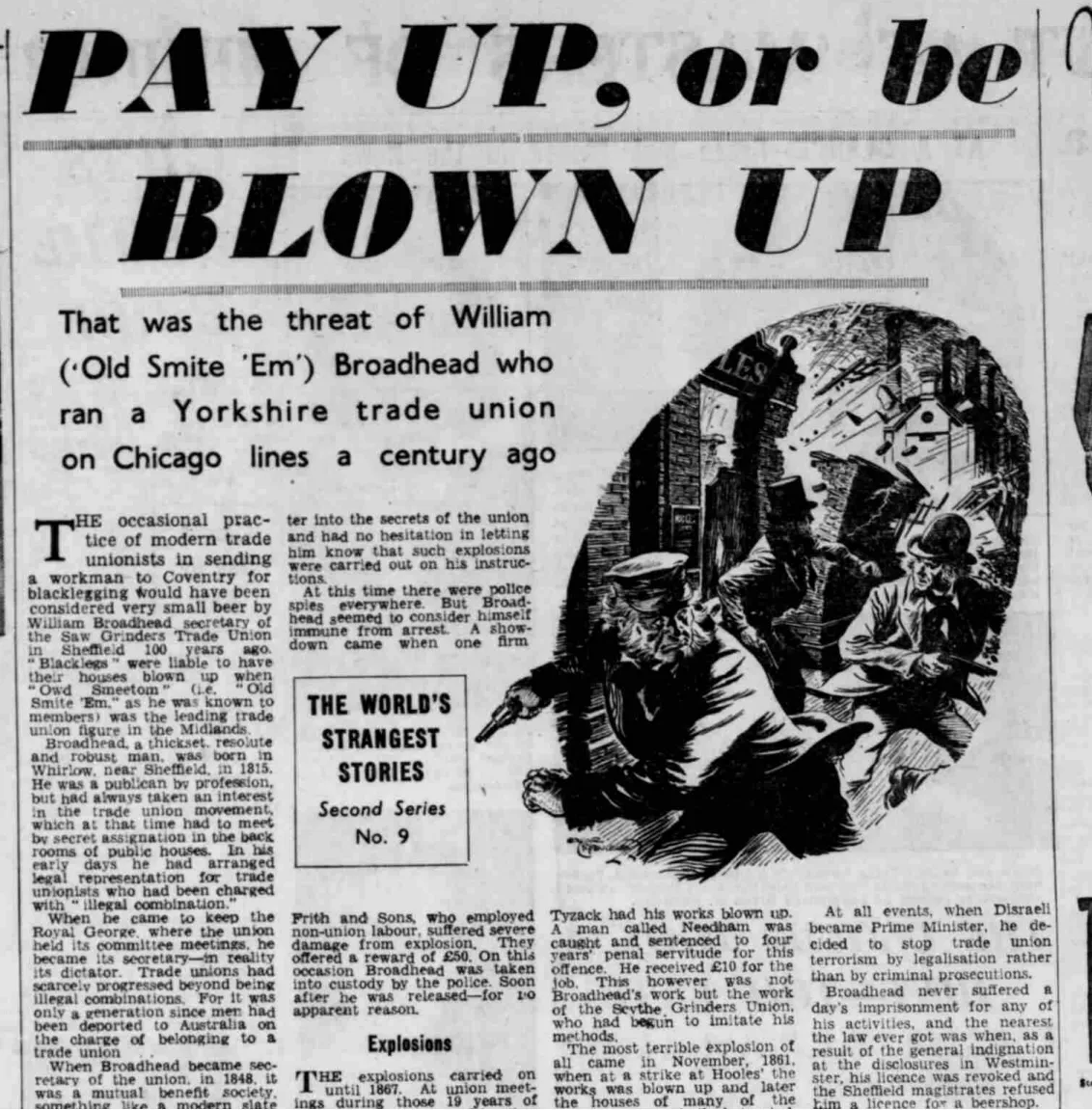
Evening News (London) | 05 October 1955
The Sheffield Outrages were not in vain – in 1871, Parliament passed the Trade Union Act, which gave legal recognition to trade unions. The attacks in the Midlands, though violent, contributed to a national shift in worker’s rights. They helped expose the gruelling conditions brought about by rapid industrial expansion, helping to pave the way for a better future.
New Titles
Title | Years Added |
1848-1849, 1851-1853 | |
1857-1865 | |
1828-1835 | |
1828-1838 | |
1852-1856, 1858-1863, 1865-1872 |
Updated Titles
This week we have updated 32 of our existing titles.
You can learn more about each of the titles we add to every week by clicking on their names. On each paper’s title page, you can read a free sample issue, learn more about our current holdings, and our plans for digitisation.
Title | Years Added |
1911, 1913 | |
1897, 1918 | |
1877-1880 | |
1874, 1876, 1878-1881, 1920 | |
1914-1916 | |
1853-1858, 1860 | |
1737-1741 | |
1990, 1992-1993 | |
1857-1858, 1860, 1865 | |
1962 | |
1988, 1990-1999 | |
1895-1915 | |
1999 | |
1853-1857, 1896-1897, 1911 | |
1912, 1917, 1924, 1936, 1952 | |
1877 | |
2001-2005 | |
1919-1920 | |
1887 | |
1909-1910 | |
1875-1876, 1878-1880 | |
1888 | |
1792-1794 | |
1901-1910 | |
1912 | |
2003-2005 | |
1871 | |
1970-1973 | |
1872-1873 | |
1870 | |
1881, 1883, 1885 | |
1831-1835 |
You can keep up to date with all the latest additions by visiting the recently added page. You can even look ahead to see what we’re going to add tomorrow.
More on this topic:
Share this article
About the author

Molly Pearce
Data Operations Executive
Published on Tue, 14 July 2026.