
Five fantastic new titles join The Archive
Published on 7 July 2026 by Rose Staveley-Wadham
This week at The Archive we are delighted to be joined by five fantastic new titles from across Britain and Ireland, as we turn the clock back 165 years to remember a devastating outbreak of yellow fever that swept through HMS Firebrand. That’s not all, as we’ve added a grand total of 100,308 brand new pages to our collection, with 29 of our existing titles being updated over the last seven days.
So read on to discover more about our new and updated titles of the week, which feature new newspapers from important maritime locations in Britain, Sunderland and Devonport, which help us to tell the story from a tragic period in Royal Naval history, HMS Firebrand’s deadly voyage to the West Indies.
Register now and explore The Archive
The Barking Gazette and South Essex Mercury
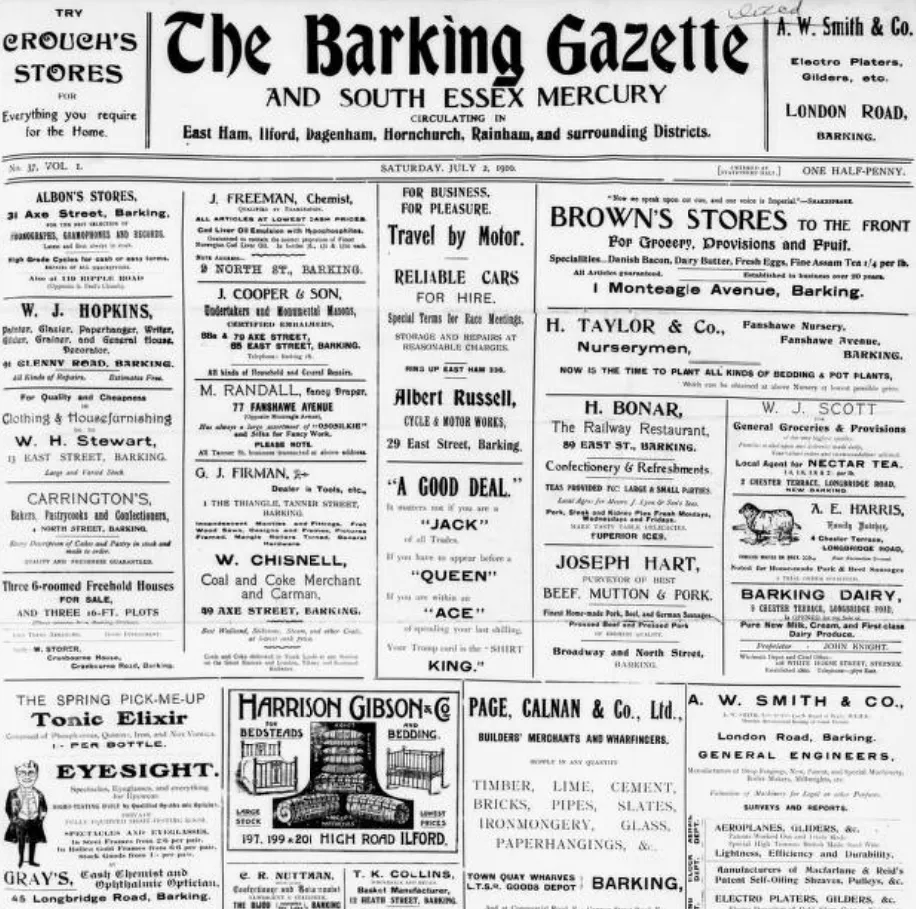
We begin in the ancient parish of Barking for our first new title of the week, the Barking Gazette and South Essex Mercury. Barking, historically a part of the county of Essex and now in East London, played host to the debut of the Barking Gazette and South East Mercury on 23 October 1909, with the new newspaper being cheaply priced at one halfpenny.
Circulating in ‘East Ham, Ilford, Dagenham, Hornchurch, Rainham, and surrounding Districts,’ the Barking Gazette and South Essex Mercury promised that its policy would be ‘Progress for the Town and its people,’ ensuring that it would take ‘an unbiased view of matters discussed by our local government and other public bodies.’ Meanwhile, the paper promised to be a ‘newsy and readable sheet’ that would be ‘popular in every home.’
Filling eight pages, the Barking Gazette and South Essex Mercury gave detailed updates from the local area, reporting from the likes of the Barking Brotherhood, the Barking Ratepayers’ Association and the Barking Cycle and Motor Club, as well as from the local police. Furthermore, the paper printed a range of lively articles devoted to different interests, with a column entitled ‘Rural Life’ by a ‘Son of the Soil,’ complete with illustrations, a ‘Health and Home’ column penned by W. Gordon-Stables M.D., which discussed such topics as ‘Men and Fashion, ‘Flatulence or Wind,’ and the ‘Drains,’ as well as advising readers not to catch a cold in October.
Meanwhile, the Barking Gazette gave a lot of space to football matters, covering the local Barking and District Football League, as well as providing ‘Football Gossip’ in a column penned by B. Bennison with illustrations by Jack Dodworth. The paper also printed news from parliament, serialised fiction, and special ‘talks for a quiet hour,’ which covered topics like ‘The Christian and the Social Wrong’ and ‘Socialism and Collectivism.’
The Devonport Independent
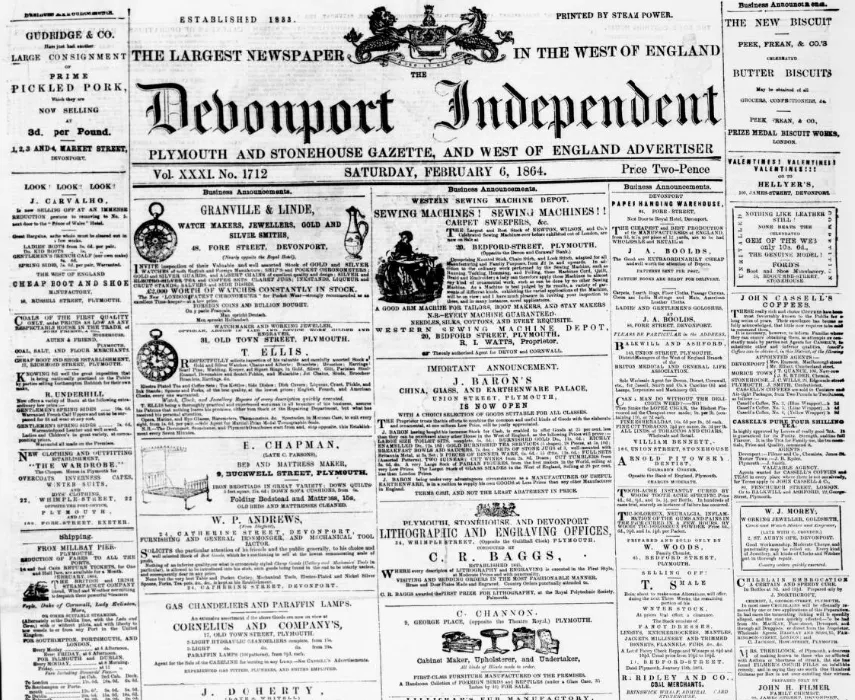
We travel now to Devonport for our next new title of the week, the Devonport Independent. Founded in the Devon town of Devonport, which was one of ‘Three Towns’ alongside Plymouth and East Stonehouse, which in 1927 combined to become the city of Plymouth, in 1833, by 1864 the paper was dubbing itself ‘the largest newspaper in the west of England.’
As James Grant wrote in his 1871 survey of The Newspaper Press, ‘the title ‘Independent’ would imply that the paper would be sometimes with one of the political parties of State, and sometimes with another; but in addition to the word ‘Independent,’ we find the adjective ‘Liberal,’ from which the natural inference would be that it is always on the Liberal side. And this, I believe, is the case.’ Indeed, the Devonport Independent was Liberal in its politics, adopting the ‘medium price of twopence.’
Owned by Messrs Byers and Sons, this Saturday paper filled eight pages, and printed railway timetables, the latest from the markets, poetry, and notices of births, marriages and deaths. With regards to local news, the Devonport Independent reported on the latest in the Plymouth theatrical world, the police world, with updates from both the Devonport and the Plymouth police, the Plymouth Guardians, and news of accidents and offences in the area.
Meanwhile, as James Grand noted, the Devonport Independent included ‘one feature peculiar… so far as regards Provincial Press,’ which was a weekly report ‘of sermons preached in the district in which it chiefly circulates.’ Despite the newspaper being Unitarian in its theology, ‘it was perfectly unsectarian and impartial in its reports of the sermons so delivered.’
The Irish Presbyterian
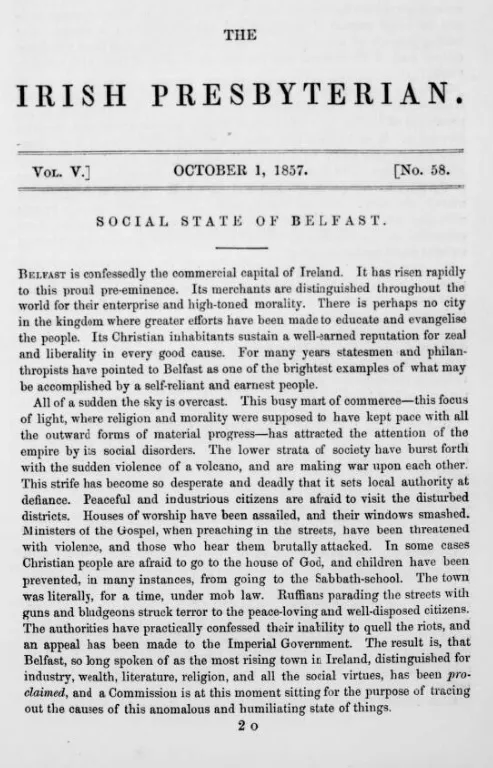
We hop across the Irish Sea to introduce our next new title this week, which is the Irish Presbyterian. Established in Belfast in 1853, the Presbyterian denomination of Christianity had grown to become the largest Protestant denomination in the region of Northern Ireland, something that dates back to the Plantation of Ulster in 1610, Scottish Presbyterians bringing their faith with them.
Printed by McCormick and Robie on Donegall Street, the Irish Presbyterian appeared every month, generally filling over 30 pages. Reflecting on its early success, the paper reaffirmed its strong anti-Catholic stance, writing how:
The grand object of these men is to wrap Ireland in the winding-sheet of medieval darkness and death, and to reduce her to unexceptional subserviency to the Papacy…Our own Church has girded herself to meet the obligations of her position, and, beyond all doubt, the brightest page in her career will be the record of her present contendings with the double serfdom which Popery imposes.
Costing four pence, the Irish Presbyterian covered news from the Presbyterian Church in Ireland, for example covering meetings of the General Assembly, and detailing the ‘Church and Manse Building Fund.’ It provided ‘Intelligence’ from the church, reporting on ordinations, ministers moving to new positions, public events and Presbyterian news from further afield. Furthermore, the Irish Presbyterian printed articles on religious themes like ‘Spirituality in Ministers’ and the ‘Moral and Spiritual Condition of London,’ whilst also featuring poetry and correspondence.
The Lichfield Mercury, Tamworth, Burton and Walsall Gazette
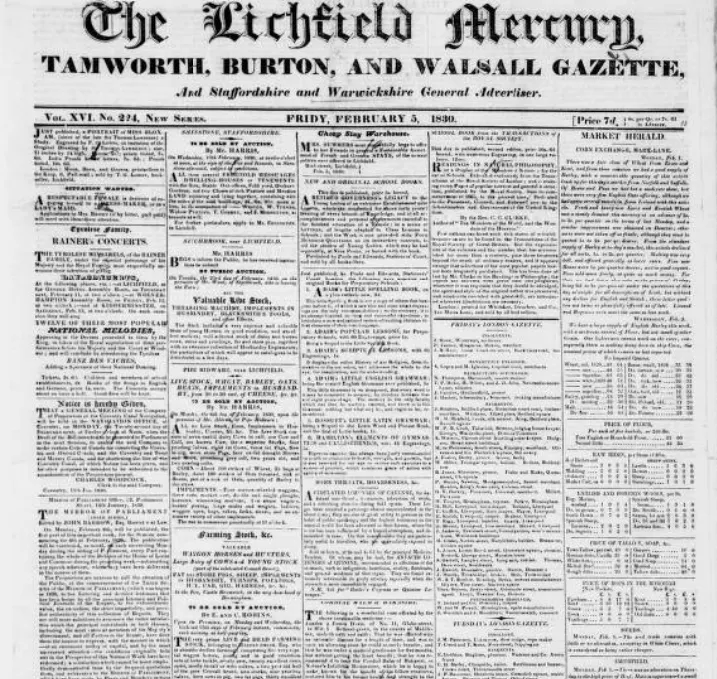
Our next stop is the cathedral city of Lichfield, and the Lichfield Mercury, Tamworth, Burton and Walsall Gazette. This paper was established on 7 July 1815 by printer and publisher James Amphlett, with the title the Lichfield Mercury and Midland Chronicle.
However, the early reviews were not promising, at least from the perspective of the New Monthly Magzine:
The first number of a new provincial paper, under the title of the Lichfield Mercury and Midland Chronicle, appeared at Lichfield on the 7th of July. It is published by James Amphlett, whom we understand to have been the conductor of the infamous Staffordshire Mercury. We presume that it is destined to supersede that organ of disaffection; but notwithstanding its tone of moderation, it does not seem to promise stability.
From 1829 onward, the title was printed as the Lichfield Mercury, Tamworth, Burton and Walsall Gazette and Staffordshire and Warwickshire General Advertiser, and by 1830 it was printed and published by George Walker Hinde. Costing 7 d., the Lichfield local appeared every Friday, and filled four pages, with a mix of general news, sporting updates and the latest from the markets. The paper also featured original poetry and notices of births, marriages, and deaths.
In 1877 a new version of the Lichfield Mercury was established by Frederic Brown. A Conservative, this new version of the Lichfield Mercury superseded the Lichfield Mercury, Tamworth, Burton and Walsall Gazette, and was intended to opposed the Lichfield Chronicle, which Brown had previously owned.
The Sunderland Herald
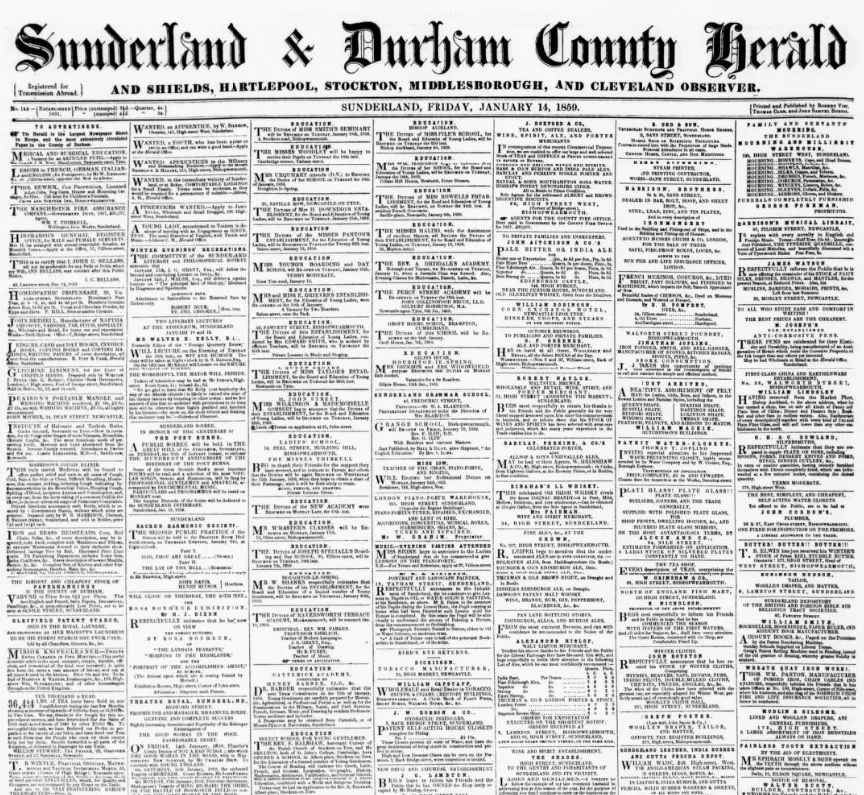
Our final new title of the week is the Sunderland Herald. Published in Sunderland, once a part of County Durham, and now in the ceremonial county of Tyne and Wear, from 1831 onward, the Sunderland Herald was published with the full name of the Sunderland & Durham County Herald, and Shields, Hartlepool, Stockton, Middlesborough, and Cleveland Observer.
Initially appearing weekly on a Friday, it filled eight pages with a special one page supplement, as one advert from 1870 explained:
The Herald is the only paper published in Sunderland which contains in a single sheet the complete news of the week, and is therefore most suitable for families and posting to shipmasters and others at a distance.
Indeed, as you’ll see when browsing the Sunderland Herald, there is an extra page after the initial eight pages, which was a summary of the news of the week.
So what sort of content did this paper print? ‘The recognised vehicle for shipping news and announcements, the best municipal and local news; the fullest football, cricket, and other athletic and sporting news,’ the Sunderland Herald printed general news alongside news from the likes of the Durham Winter Sessions, the Sunderland Police Court, and the Northumberland and Durham District Bank.
As befits a title that represented what was once ‘the largest shipbuilding town in the world,’ the Sunderland Herald also printed news of ‘foreign arrivals and sailings,’ alongside nautical themed advertisements. Furthermore, the paper printed poetry, gardening advice, fashion news, literary extracts, and notices of births, marriages and deaths. It later became a daily evening paper, costing just one halfpenny.
Our updated titles
We’ve updated 32 of our existing titles this week, with our largest update coming to Nottinghamshire’s Eastwood & Kimberley Advertiser, with over 31,000 brand new pages joining its ranks. For those of you with an interest in railway or perhaps transport history, we’ve added new pages to Herapath’s Railway Journal, whilst for those researching the historical relationship between Britain and China, the new additions to the London and China Telegraph will be of interest.
Meanwhile, we’ve updated five of our titles from Scotland, which includes updates to the Glasgow Evening Times and to the Edinburgh Evening News. We’ve added new pages to Wales’s Wrexham Guardian and Denbighshire and Flintshire Advertiser, and to the Dublin Mercantile Advertiser.
Yellow fever strikes HMS Firebrand
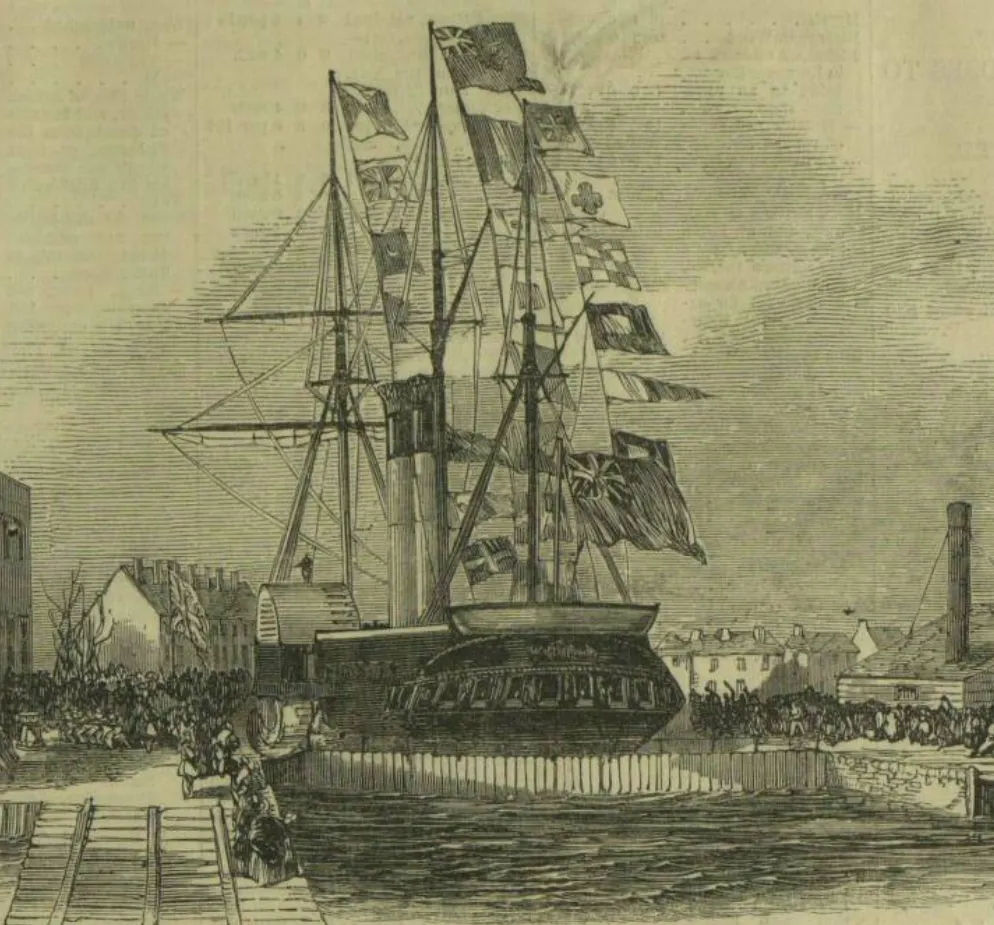
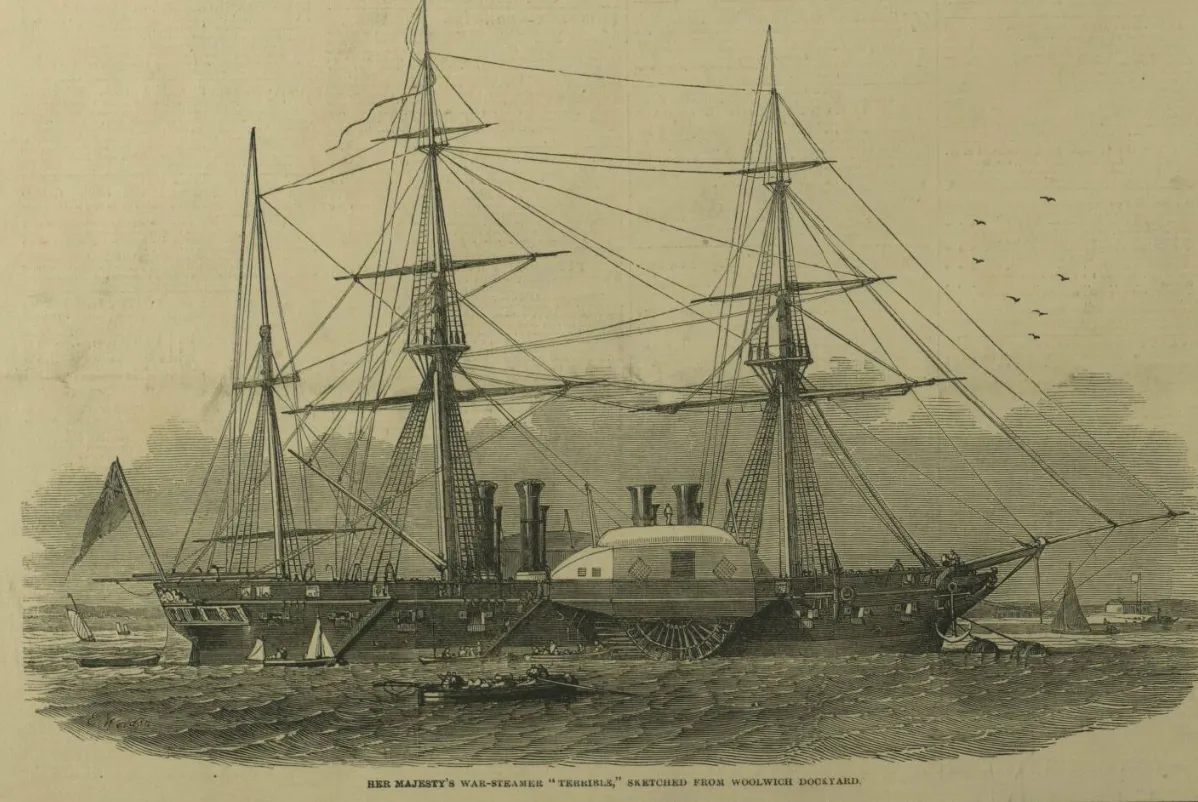
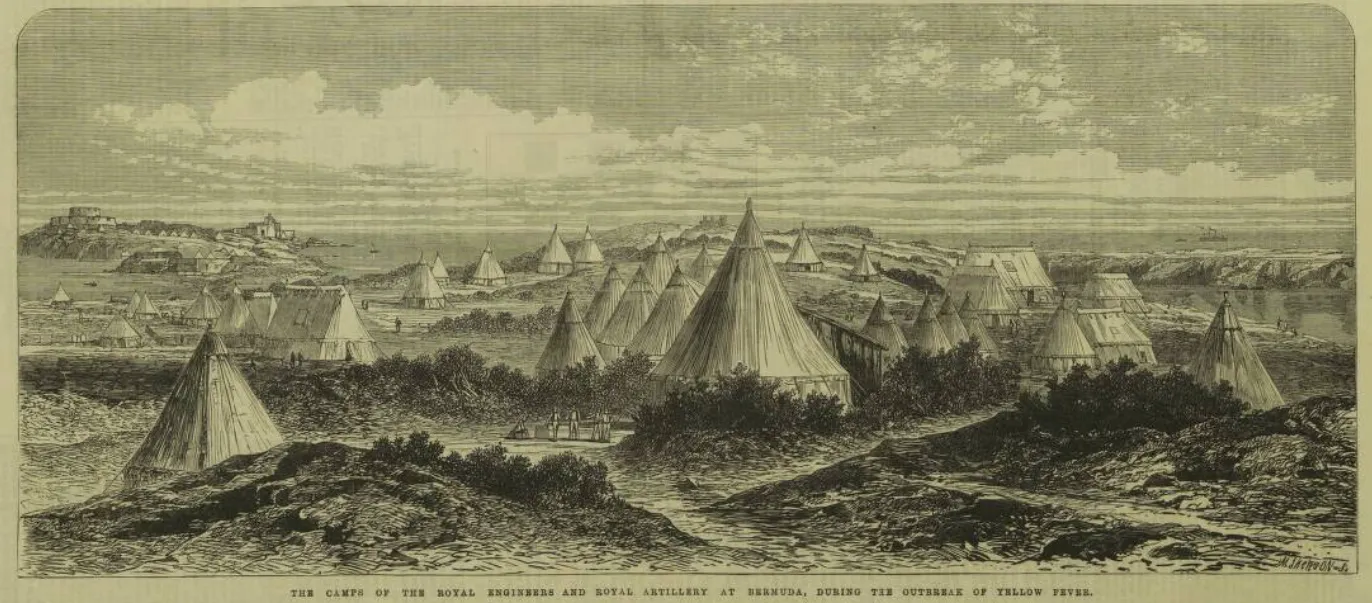
165 years ago, in July 1861, news started to filter back from the West Indies about an outbreak of yellow fever aboard paddle frigate HMS Firebrand. A serious viral disease, spread by mosquitoes, yellow fever had taken hold, and pages from our new title the Sunderland Herald detail the terrible impact upon HMS Firebrand.
In a column devoted to ‘Army and Navy’ news on 26 July 1861, the Sunderland Herald reported how:
The Admiralty have received information that thirty-eight of the crew of H.M. steam sloop Firebrand, in the West Indies, died of fever between June 6th and 10th.
It was an alarming report. A steam frigate like the HMS Firebrand would likely have had a crew of some 200 souls, and so nearly 20% of those on board the ship had passed away from the disease.
The Royal Cornwall Gazette from the same day, 26 July 1861, contained more news on the outbreak:
Melancholy accounts have been received from H.M. steam-sloop ‘Firebrand,’ in the West Indies. Between June 6th, and July 10th, 35 days, no less than 37 of her crew died of fever, 12 of them in the last three days. One June 6, one died; 19, three; 20, three; 21, three; 29; one; July 1, four; 3, two; 5, two; 6, two; 7, one; 8, four; 9, three; and 10, five! On the 8th, died George Harris, gunner’s mate, aged 41, a pensioner, of Falmouth. No officer had died of higher rank than the boatswain.
The slow creep of the disease through the crew is terrifying. But not all crew members, it seems, were affected equally. Despite this, the Globe on 6 August 1861 gave the names of those who had ‘died of yellow fever on board H.M.S. Firebrand, between the 13th and 24th of July:-‘
John McCarthy, second master; Adolphus D’Albertonson, assistant paymaster (second class); Richard Leary, R.M.L.I; Thomas Levering and Thomas A. Green, stokers; Edward L. Townsend and John G. Rogers, ordinary seamen; Daniel Oakley and James Adams, carpenters’ crew; John Carter, alias Kellett, coxswain’s launch, Howard C. Simpson, ship steward’s boy; William Hill, boy (first class); James Pearman, boy (second class).
The Dundee Advertiser, meanwhile, on 7 August 1861 was reporting how ‘there have been 130 more deaths from fever on board H.M.S. Firebrand,’ although this number is thought to have been around 52, still a devastating amount of loss to come from one ship, neither as a result of shipwreck or enemy action.
Finally, our new title the Sunderland Herald picked back up on the tragedy of HMS Firebrand, reporting on 16 August 1861 how:
Owing to the terrible mortality on board the steam sloop Firebrand, she has been ordered home. In future, when fever appears in ships in the West Indies, they are to remove to a temperate latitude. The Jean d’Acre is also ordered home owing to her band sanitary state.
The ravages of the infection onboard the HMS Firebrand had, then, brought about a change of policy. Crews would not languish in the West Indies, where risk of infections like yellow fever were rife, instead, they would be brought home. And although this incident may be little remembered in the annals of British naval history, it is an important example of the risks of disease and infection at this time, and the devastating impact they had on so many lives, the fathers, the husbands, the sons, who would never return home.
New titles
Title | Years added |
1909-1910 | |
1864-1865, 1889, 1891 | |
1853-1858 | |
1830-1833 | |
1859, 1861, 1873, 1897 |
Updated titles
This week we have updated 29 of our existing titles.
You can learn more about each of the titles we add to every week by clicking on their names. On each paper’s title page, you can read a free sample issue, learn more about our current holdings, and our plans for digitisation.
Title | Years added |
1874-1875, 1878-1879 | |
2000 | |
2005 | |
1879 | |
2001 | |
1847-1849 | |
1877 | |
1983-2004 | |
1958 | |
2000-2001 | |
1881, 1888 | |
1885, 1887 | |
1860, 1908-1913 | |
1859, 1874, 1952 | |
1836 | |
2002 | |
1914, 1950 | |
1912 | |
1877 | |
1900 | |
1950 | |
1903, 1910, 1912 | |
1876, 1879, 1881, 1889 | |
1750, 1753-1755, 1761 | |
1916-1919 | |
2002 | |
1919 | |
1910 | |
1889, 1911 |
You can keep up to date with all the latest additions by visiting the recently added page. You can even look ahead to see what we’re going to add tomorrow.
More on this topic:
Share this article
About the author

Rose Staveley-Wadham
Newspaper Licensing Manager
Published on Tue, 7 July 2026.