Hot Off The Press – New Titles This Week
Published on 30 June 2025 by Rose Staveley-Wadham
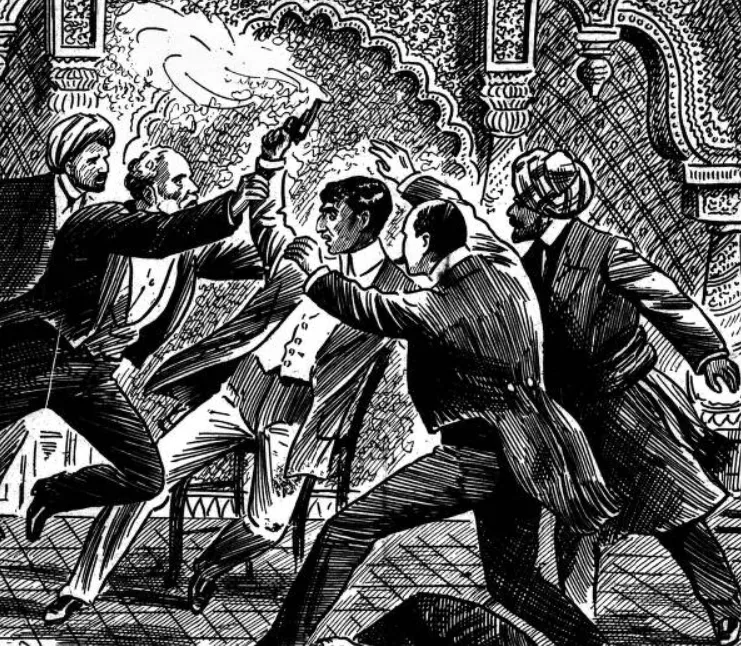
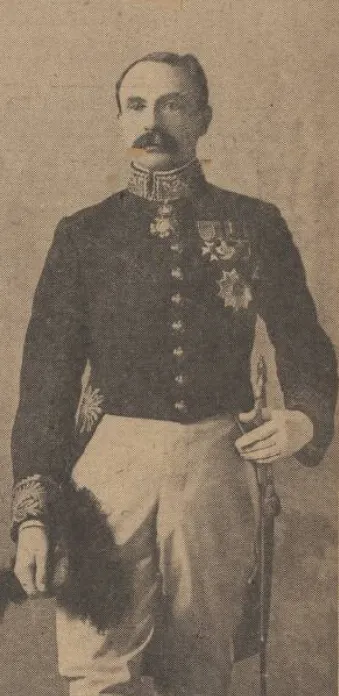
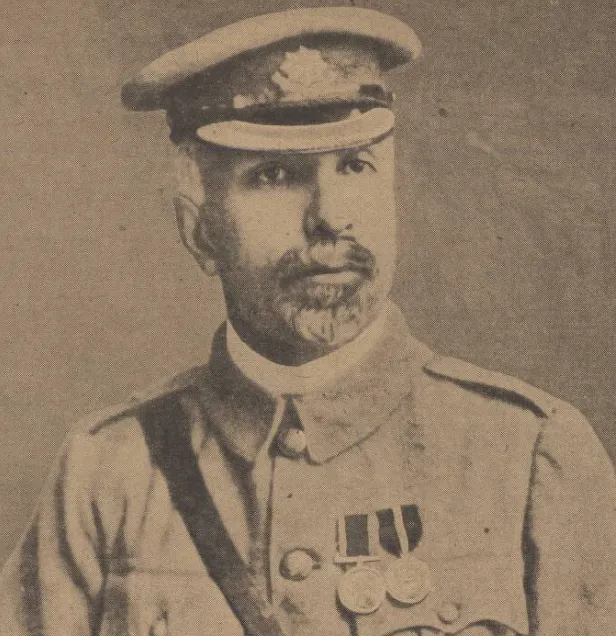
At The Archive this week we’re delighted to welcome eight brand new titles from across England and Ireland, as we investigate the assassination of Sir William Curzon Wyllie, a British Indian government official, by Indian nationalist student Madan Lal Dhingra, which occurred on 1 July 1909.
Meanwhile, we’ve added 168,930 brand new pages to The Archive in all over the last seven days, with updates to 33 of our existing titles from across the United Kingdom and Ireland. So read on to discover more about our new and updated titles of the week, and also to learn more about the death of Sir William Curzon Wyllie, which occurred 116 years ago this week.
Register now and explore the Archive
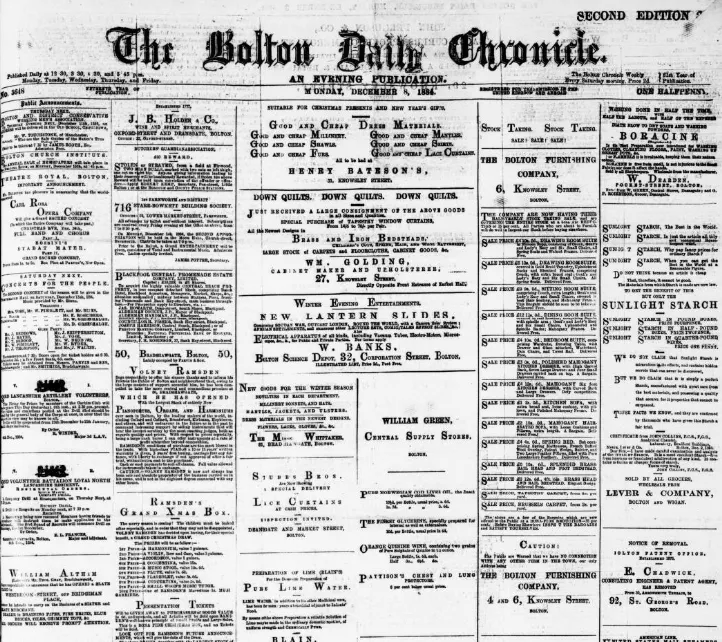
The Bolton Daily Chronicle
Our first new title of the week is the Bolton Daily Chronicle, which was ‘established as a permanent evening publication in 1870.’ It followed behind the first Bolton Daily Chronicle, which was launched on 8 September 1868 to cover the 1868 general election.
An ‘evening publication,’ this new incarnation of the Bolton Daily Chronicle cost just one halfpenny and filled four pages. Extensively circulated ‘throughout the Bolton Union and its adjoining townships,’ it was reported how ‘the fairness, fulness, and accuracy of the local reports have secured for the Daily Chronicle a wider circulation in Bolton than that of any other daily paper.’
Serving the town of Bolton, which lies in the historic county boundaries of Lancashire, the Bolton Daily Chronicle printed local and district news, selections from London letters, as well as sporting news, with a particular focus on football.
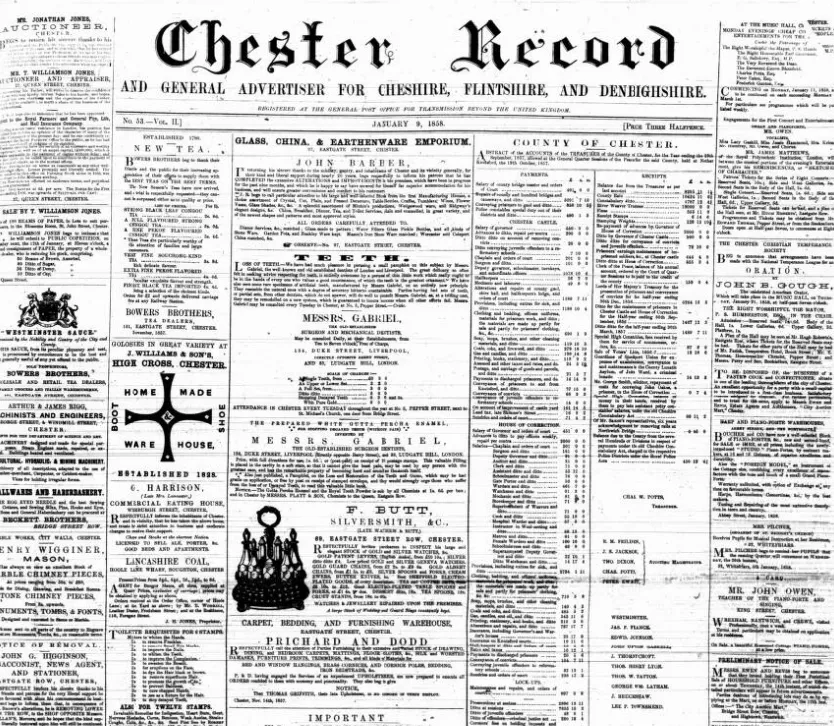
The Chester Record
We travel to the cathedral city of Chester for our next new title of the week, which is the Chester Record. This popular Liberal paper was launched on 3 January 1857 at the price of one penny, and represented a relaunch of the Home Gazette. Published by R.M. Thomas, whose brother was the former proprietor of the Home Gazette, the Chester Record was established ‘under a more attractive title, the contents also being considerably altered, so as to be truly a Local Newspaper, expressly written and selected with a view to interest and entertain the inhabitants of this, our ‘ancient citie,’ and its vicinity.’
Featuring an array of local, district, national and international news, alongside serialised fiction and railway timetables, the Chester Record filled four pages. In 1868 it was taken over by the Chester News and Guardian, the Chester News having been founded in 1866, the Chester Guardian in 1867. The title then became known as the Chester Guardian and Record, and it circulated through the districts of Chester and North Wales. Known for ‘taking no part in politics,’ and for reporting ‘the local and general news very fully,’ the title again changed its name in 1946 to the Chester Guardian.
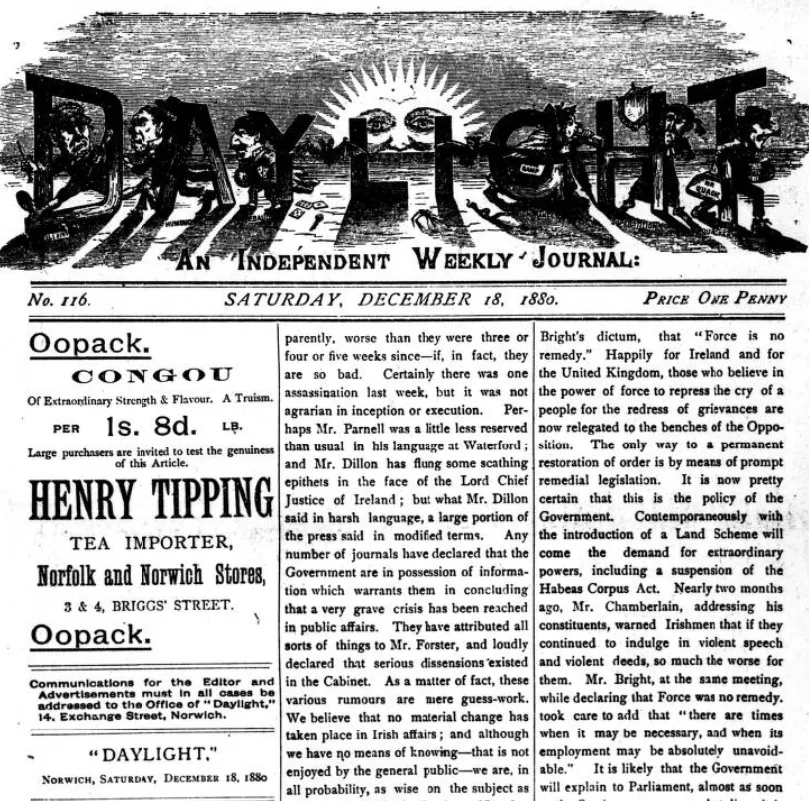
Daylight
Next we shine a light on Daylight, the first of our two new titles to hail from the cathedral city of Norwich. ‘An independent weekly journal,’ Radical title Daylight was established in 1878 at the cost of one penny. A ‘political, local, and satirical journal,’ Daylight offered ‘free and open’ criticisms of passing events across its twenty pages.
Offering news from Norwich, encompassing reports on deaths in the city and updates on court cases, a London letter, a look at concerts and theatre shows in the local area, Daylight printed often in depth articles on a range of subjects, such as ‘Our Places of Worship and Their Preachers,’ and ‘A Peep Into the County Court.’
It seemed to be a successful venture. By the 1880s Daylight was ‘believed to have a Large Circulation in the Eastern Metropolis than any other Weekly Paper.’ Labelling itself ‘a Newspaper for the People,’ by 1886 the title boasted of a ‘large sale in the surrounding towns and villages’ of Norwich.
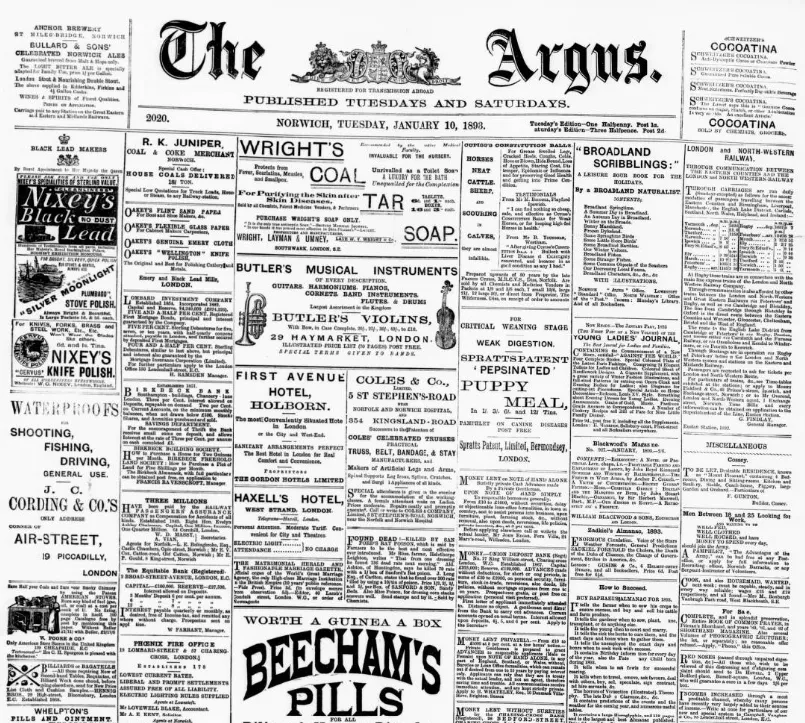
The Norwich Argus
The second of our two new Norwich newspapers this week is the Norwich Argus, which was first published on 10 January 1863. This Conservative newspaper appeared biweekly on Tuesdays and Saturdays, the Tuesday edition costing just one halfpenny, and the Saturday edition costing three halfpence.
A thorough local paper, the Norwich Argus included the latest from the likes of Aldeburgh-on-Sea, Aylsham, Blickling, Booton, Cawston, Cromer, Holt, Lowestoft, Mundesley, North Walsham, and Wells. It printed updates from the Yarmouth and Norwich Police and the Norwich County Court, as well as providing details of inquests in Norwich. A particularly interesting section of the Norwich Argus was its Norwich Cemetery section, which provided details of internments due to be taking place every week.
The Norwich Argus also reported on domestic and foreign news, as well as printing notices of births, marriages and deaths.
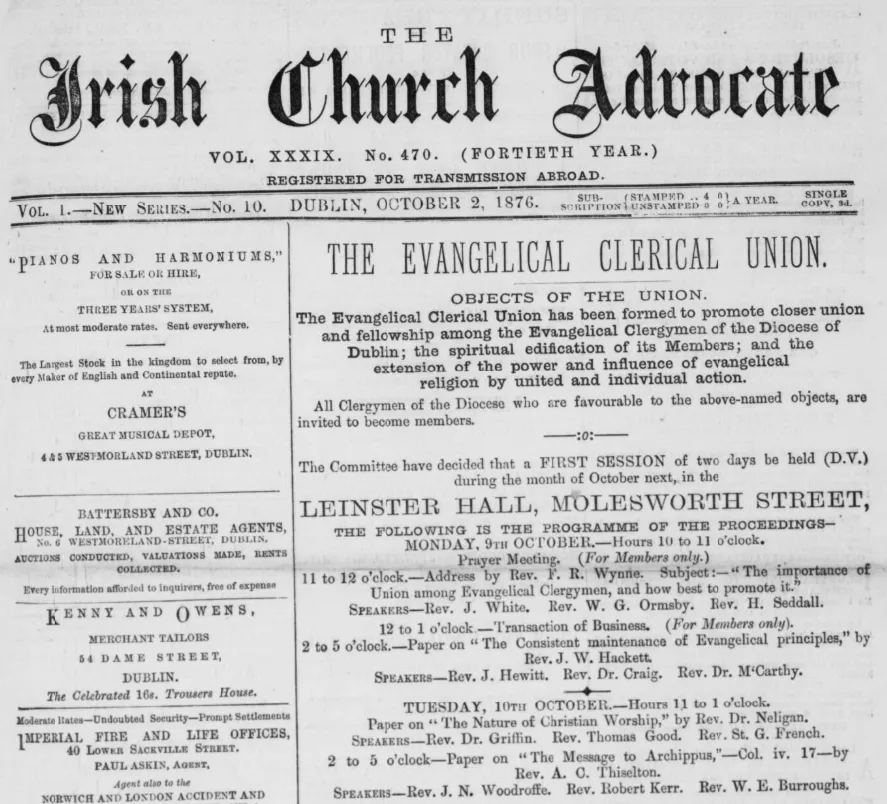
The Irish Church Advocate
We travel across the Irish Sea now to welcome our next new title of the week, which is Dublin’s Irish Church Advocate. This monthly Church of Ireland title was established in 1837 to showcase religious and missionary news, all through the lens of the Anglican Church of Ireland.
Notably prejudiced against Roman Catholicism, with such observations as ‘popery is indeed the Upas tree of our country, and we rejoice in every instance of righteous resistance to its superstition and its frauds,’ the title took at look at ‘Irish Church missions to the Roman Catholics.’
Costing three pence, the twenty pages of the Irish Church Advocate also published religious news from across the world, Biblical commentaries, ‘critical and expository readings,’ missionary news, surveys of the Church of Ireland, poetry, and even a children’s column, which urged youngsters to ‘look higher for happiness.’ Meanwhile, the religious paper published deep dives on the ‘Present State of the Church Throughout Ireland,’ which took a detailed look at individual churches within the Church of Ireland.
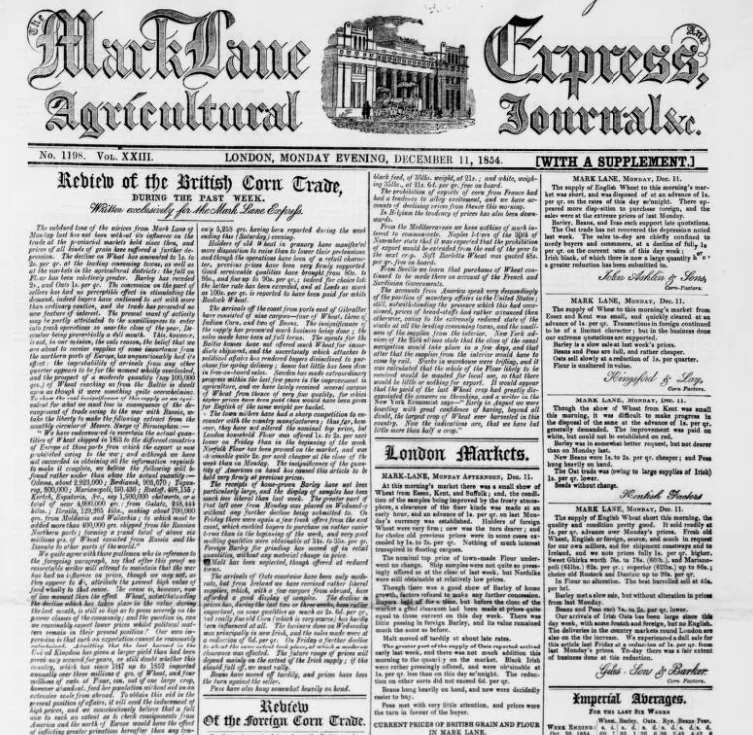
The Mark Lane Express
We’re travelling back across the Irish Sea now to London, to introduce special agricultural title the Mark Lane Express, or to give it its full name, the Mark Lane Express and Agricultural Journal. With a focus on agriculture, farming and markets, this title took its name from Mark Lane, which was a metonym for London’s corn and grain markets, the London Corn Exchange having been established on the City of London street in 1747.
Established in 1832, the Mark Lane Express appeared every Monday and filled sixteen pages with reviews of the corn trade both at home and abroad, whilst giving details of the different grain markets in cities and towns across Britain. The Mark Lane Express also examined different provision markets, the Smithfield Cattle Market, the Covent Garden Market, the Leadenhall Leather Market and Irish agricultural produce.
Meanwhile, the Mark Lane Express provided practical advice in its ‘Agricultural and Horticultural Operations for the Week’ section, whilst more general news was provided through its ‘Foreign News’ and ‘Latest Intelligence’ columns.
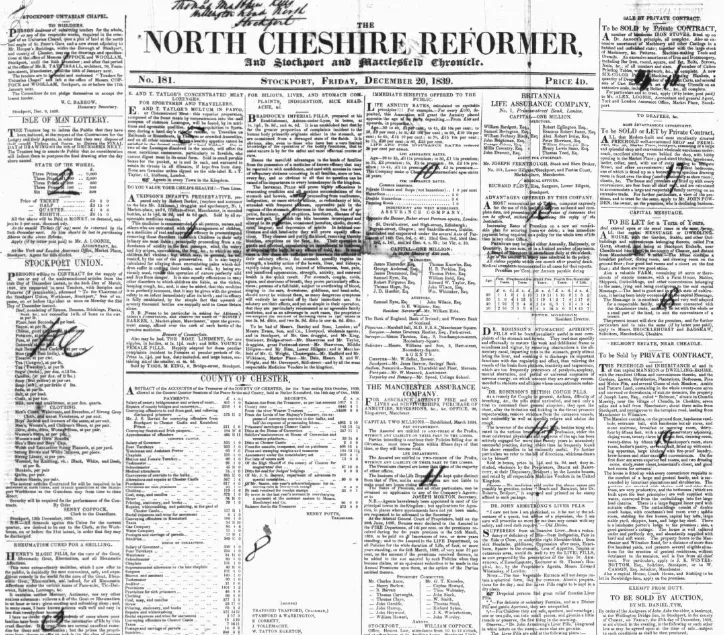
The North Cheshire Reformer
We finish our journey through our eight new titles of the week in Stockport, which is home to our two of final new newspaper titles. First up is the North Cheshire Reformer, which was first published on 8 July 1836 as the North Cheshire Reformer and Stockport and Macclesfield Chronicle at the price of seven pence.
The debut editorial of the North Cheshire Reformer noted how a ‘newspaper, that should represent and advocate the principles of the great majority of the people of North Cheshire, has long been desired.’ The North Cheshire Reformer was set to be such a paper, with a focus on news from the likes of Stockport, Macclesfield and Congleton, alongside reports on parliamentary proceedings, foreign and domestic news, the markets, and notices of births, marriages and deaths.
The North Cheshire Reformer was edited for a year by Thornton Leigh Hunt (1810-1873), the son of poet and essayist Leigh Hunt (1784-1859). According to the Dictionary of Nineteenth-century Journalism in Great Britain and Ireland, Thornton Leigh Hunt, who edited the North Cheshire Reformer from 1838 to 1839, made ‘considerable contribution to the liberal intellectual press from the 1830s to his death.’ Thornton Leigh Hunt was perhaps best known for being ‘the influential second editor of the Daily Telegraph.’
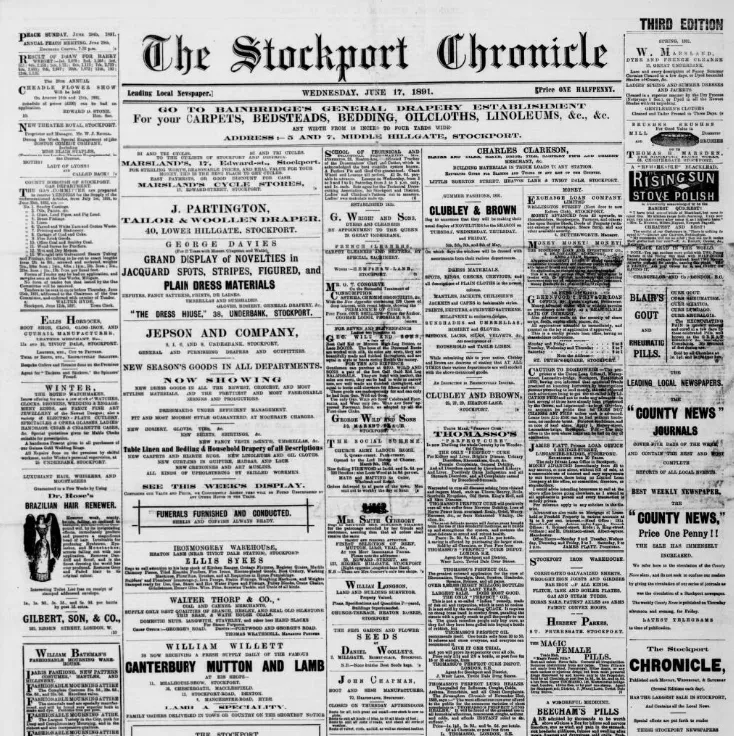
The Stockport Chronicle
Our final new title of the week is the Stockport Chronicle, which was established as a weekly paper in 1874 by sister title the Stockport and Cheshire County News. This ‘leading local newspaper’ was relaunched as a triweekly title on 11 February 1891, meaning that the paper now appeared every Monday, Wednesday, and Saturday.
Liberal in its politics, the Stockport Chronicle cost just one halfpenny. Its four pages were filled with news of local events, such as concerts in the area, or coverage of funerals of local notable residents. The title printed the latest from the likes of the Stockport Union Board of Guardians, and the Macclesfield Borough Police Court. The Stockport Chronicle also had a particular affinity for sport, with reports on football, chess, hockey and lacrosse filling its pages.
Our Updated Titles
That’s it from our new titles of the week, but before we take a look at the assassination of Sir William Curzon Wyllie in July 1909, let’s explore some of our 33 existing titles we’ve updated this week. Leading the charge is Inverness title the Highland News with over 37,000 brand new pages added this week, with West Sussex title the Horsham Advertiser seeing over 13,000 brand new pages join its ranks.
We’ve also updated a duo of our Welsh titles this week, namely the Holyhead Mail and Anglesey Herald, and the Monmouthshire Beacon. Meanwhile, we’ve added new pages to County Westmeath title the Midland Reporter and Westmeath Nationalist, as well as to County Down title the Newry Telegraph.
The Assassination of Sir William Curzon Wyllie – July 1909
On 9 July 1909 our new title the Norwich Argus reported how:
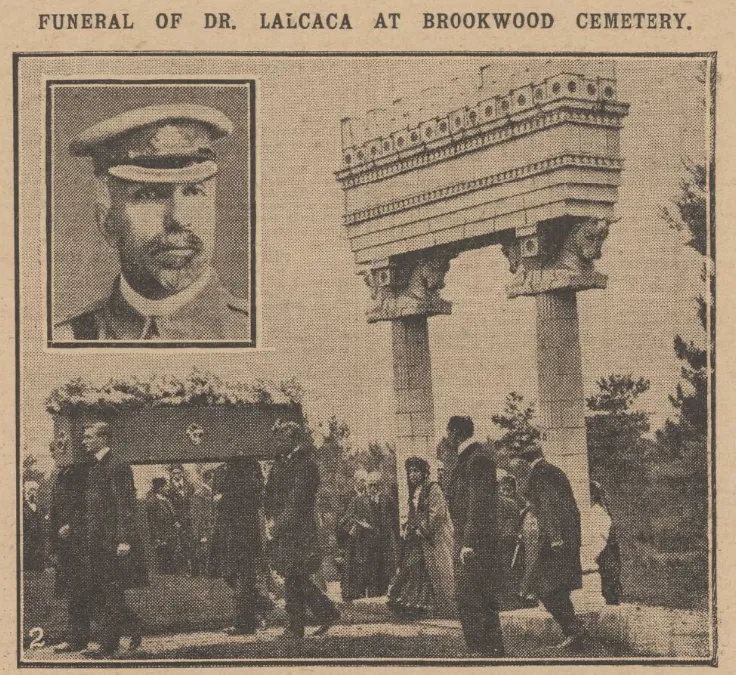
Shortly before 11 o’clock on Thursday night last week, at the Imperial Institute, at the conclusion of a public gathering, an Indian student shot dead Lieutenant-Colonel Sir William Curzon Wyllie, K.C.I.E., and Dr. Cawas Lalcaca, of Shanghai. He was immediately seized by those about him.
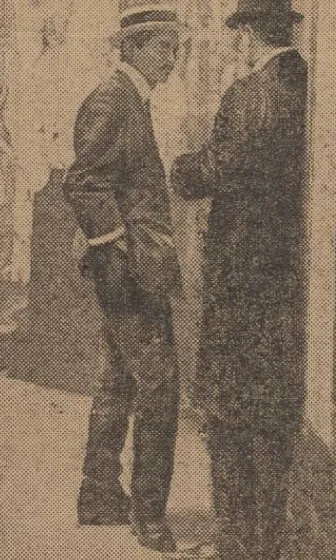
Who was Sir William Curzon Wyllie, Dr. Cawas Lalcaca, and the Indian student accused of assassinating them on a July day in central London? The Norwich Argus explained how Sir Curzon Wyllie had a ‘distinguished Indian career,’ and was now serving as aide-de-camp to the Secretary of State for India. Dr. Cawas Lalcaca was described as a Parsi medical doctor living in Shanghai. Meanwhile, the Indian student was named as Madan Lal Dhingra. Dhingra had been ‘brought up at Westminster Police-court on Friday morning, and, after evidence had been given of his arrest, was remanded for eight days.’
The inquest into the death of Sir William Curzon Wyllie was held on 5 July 1909, where witness testimony was heard. One of the witnesses was law student Madai Mohan Sinha, who related how he had been at the Imperial Institute on 1 July 1909:
About ten minutes past eleven he heard shots in a room adjoining where he was listening to some singing. There were four or more shots. He looked and saw a man with a revolver actually shooting Sir Curzon Wyllie. He saw Sir Curzon move his head from side to side, and then fell heavily. Witness rushed for the man, who then levelled the revolver straight at him, when all of a sudden he changed its direction and pointed it to his right ear. As witness caught hold of his arms and gave him a push, he collided with the chairs and lost his balance.
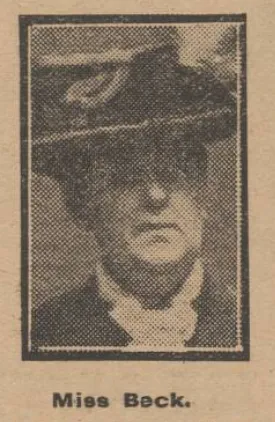
Meanwhile, Emma Beck, secretary of the National Indian Association, vouched for the accused killer Madan Lal Dhingra. As Sir Curzon Wyllie laid dying, he asked for Dhingra’s address, which Beck gave as University College. She told of how he ‘was a sober man, so far as she knew,’ and of how he was set to go back to India in October. In a fascinating twist, Dhingra’s brother had actually written to Sir Curzon Wyllie, as he was afraid he ‘had got into some bad company.’
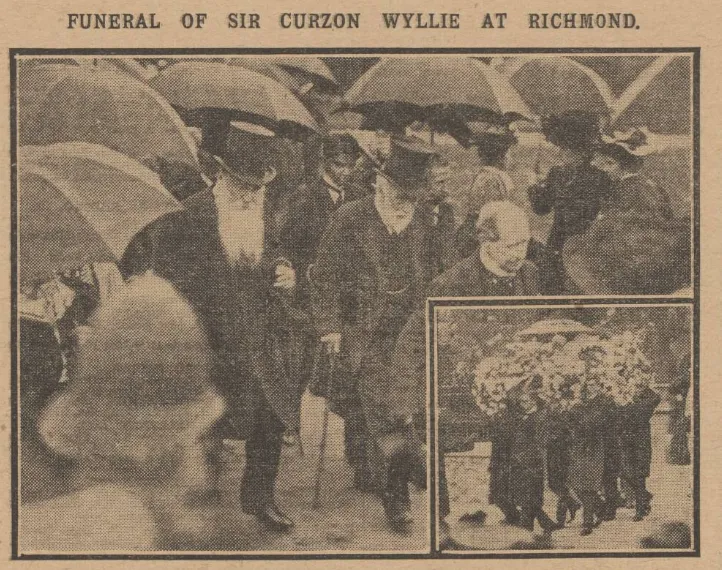
Next, P.C. Nicholls told the inquest that by the time the doctor arrived, Sir Curzon Wyllie had passed away. The police surgeon also addressed the inquest jury, after which they ‘intimated that no further evidence was necessary, and returned a verdict of wilful murder against Madan Lal Dhingra, expressing also their sympathy with Lady Wyllie in her bereavement.’
The article in the Norwich Argus also covered the inquest into the death of Dr. Cawas Lalcaca. According to witness Captain Charles Rolleston, a retired Army officer:
Dr. Lalcaca was standing near, and when he made towards the young Indian, the latter took deliberate aim at him and fired, the bullet entering the middle of his body. Witness questioned the Indian in Hindustani as to his motive to the crime, but all he replied was ‘I will tell the police.’ Witness thought from the Indian’s appearance that he had been drugged, probably with bhang. He was in a half-dazed, dreamy condition.
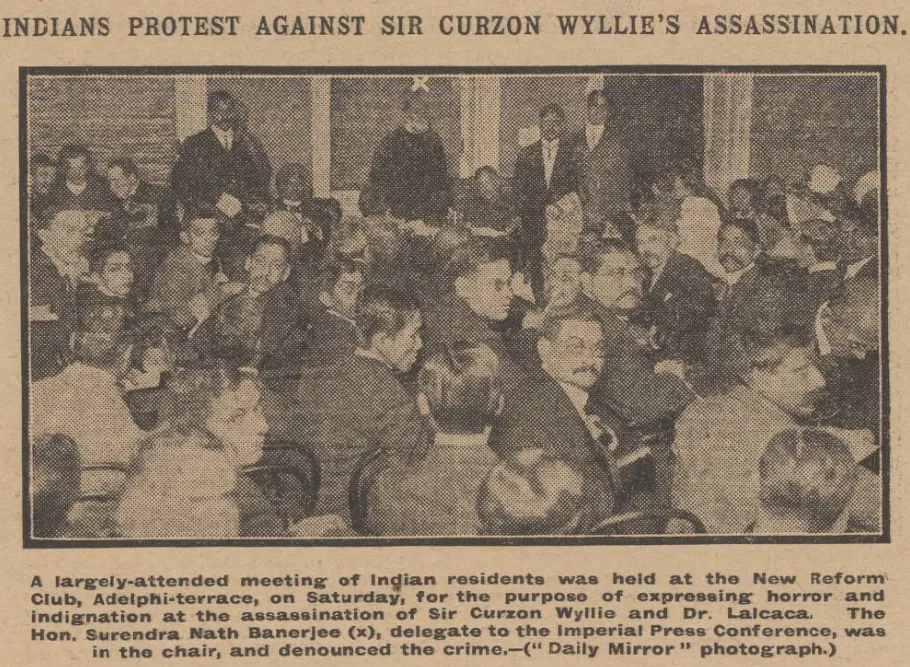
As per the Norwich Argus, Indians in London came together to condemn the killing. At a meeting at the New Reform Club, mainly of Indian students, speaker Surendranath Banerjee expressed how ‘Indians were wedded to the loftiest traditions of morality, and, according to their ideas, murder was murder, no matter what might be its determining motives.’
It was later revealed that Madan Lal Dhingra was part of the Indian nationalist movement. He was a frequent visitor to India House, a student residence in Highgate, which was a hub of political activism and known for its prominence in the revolutionary Indian nationalist cause.
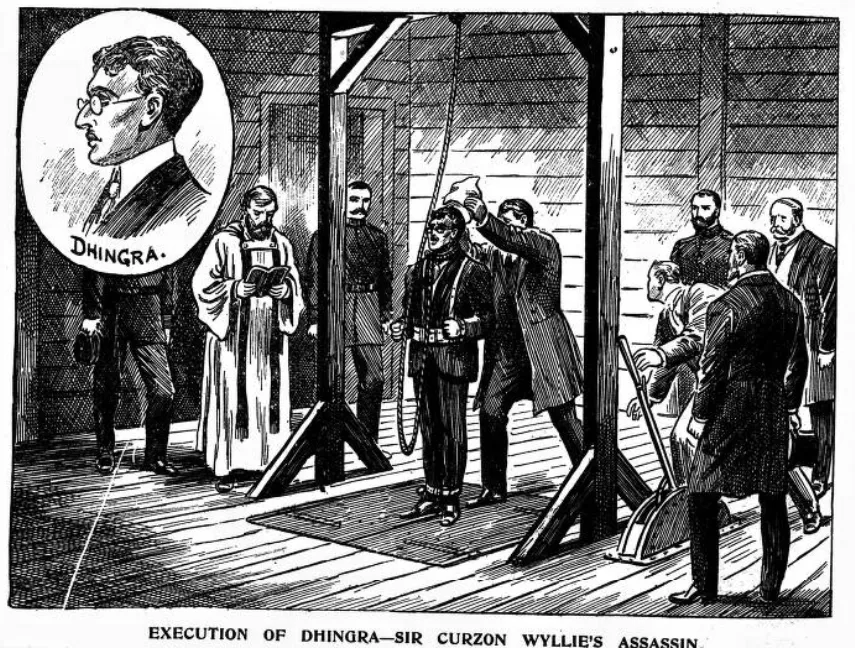
For the assassination of Sir William Curzon Wyllie and Dr. Cawas Lalcaca, Dhingra was sentenced to death. The Norwich Argus on 20 August 1909 described the student’s ‘final scene,’ as he was executed at Pentonville on 17 August 1909. The newspaper reported how:
After his conviction Dhingra spent most his time in reading books from the prison library, while one hour each day was devoted to exercise in the open air, when he was allowed cigarettes… Dhingra, who showed no signs of fear at his approaching doom, was at nine o’clock brought from his cell, pinioned, and conducted to the scaffold bareheaded and collarless. He walked without any assistance. The execution was soon over, death being instantaneous. Pierrepoint was the executioner.
Madan Lal Dhingra is widely remembered in India today as revolutionary freedom fighter. During his trial, he refused to acknowledge the legitimacy of the court, and stated that he had not intended to kill Dr. Cawas Lalcaca.
Discover more about the assassination of Sir William Curzon Wyllie, Madan Lal Dhingra and the revolutionary Indian nationalist cause, and much more besides, in the pages of our newspapers today.
New Titles
Title | Years Added |
1884-1895 | |
1857-1866 | |
1880-1881, 1888 | |
1876-1878 | |
1854-1855 | |
1836-1842 | |
1893-1895, 1898-1913 | |
1891-1892, 1894-1896, 1898-1906 |
Updated Titles
This week we have updated 33 of our existing titles.
You can learn more about each of the titles we add to every week by clicking on their names. On each paper’s title page, you can read a free sample issue, learn more about our current holdings, and our plans for digitisation.
Title | Years Added |
1986 | |
1803, 1809 | |
1956 | |
1983 | |
1895, 1903-1904, 1909, 1917 | |
1791, 1793 | |
1984 | |
1989 | |
1986-1989 | |
1963-1977, 1979-1985, 1987-1990 | |
1948 | |
1932 | |
1992-1995, 2002-2003 | |
1889, 1897 | |
1768-1788, 1791-1793 | |
1908, 1920-1925, 1940-1949 | |
1870 | |
1970 | |
1897-1910, 1916, 1920-1927, 1937-1939 | |
1878-1887, 1901-1908 | |
1923, 1926, 1929, 1945-1949 | |
1914-1918 | |
1827 | |
1890-1891, 1901-1904 | |
1923, 1948, 1973 | |
1921-1928 | |
1800-1801, 1847-1850, 1872 | |
1773, 1806 | |
1949, 1951, 1957 | |
1920 | |
1927, 1969 | |
1874 | |
1890-1892, 1897, 1899 |
You can keep up to date with all the latest additions by visiting the recently added page. You can even look ahead to see what we’re going to add tomorrow.
More on this topic:
Share this article
About the author

Rose Staveley-Wadham
Newspaper Licensing Manager
Published on Mon, 30 June 2025.