
Hot Off The Press – New Titles This Week
Published on 14 July 2025 by Rose Staveley-Wadham
This week at The Archive we are delighted to welcome another 202,482 brand new pages to our collection, with new titles including the Children’s Newspaper and the Nottinghamshire Weekly Express joining us over the last seven days. Meanwhile, we have updated eleven of our existing titles from across the United Kingdom.
So read on to discover more about our five new titles of the week, and also to learn which of our existing titles we have updated. Also, read about the four young people who were highlighted as sport stars of the future by the Children’s Newspaper in 1957, and whether or not they lived up to expectations.
Register now and explore The Archive
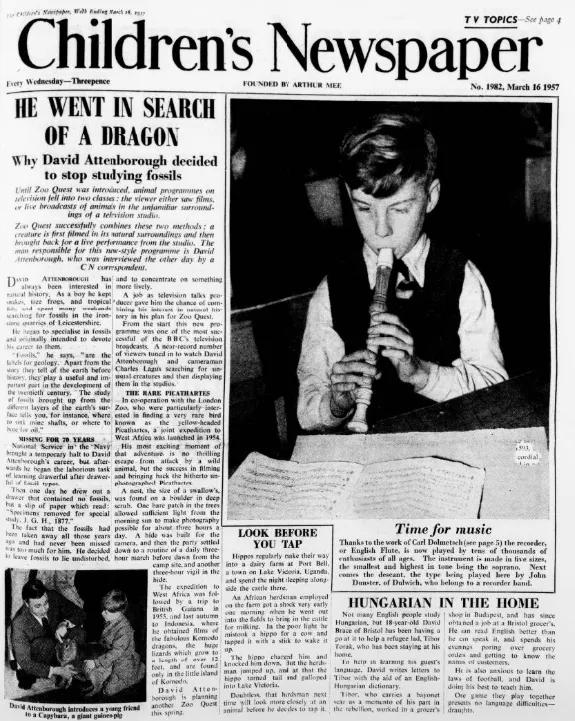
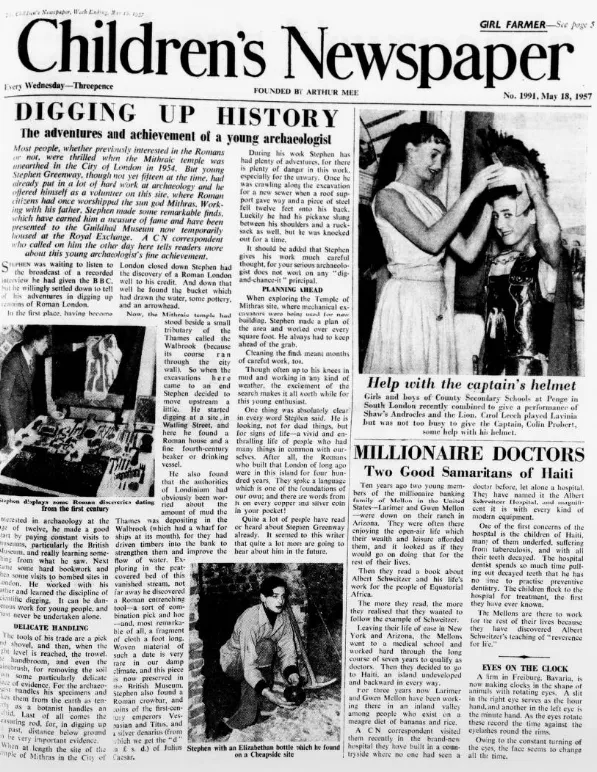
The Children’s Newspaper
The Children’s Newspaper was founded in 1919 by English writer, journalist and educator Arthur Mee (1875-1943), following the success of his Children’s Encyclopaedia series. Subtitled ‘The Story of the World Today for the Men and Women of Tomorrow,’ the Children’s Newspaper aimed to equip children with a good understanding of history, geography, science, and other practical subjects.
Indeed, the Children’s Newspaper epitomised Arthur Mee’s particular values of Christian ethics and British imperialism. The formula was a hugely successful one; at its peak the Children’s Newspaper sold 500,000 copies a week.
Appearing every Saturday and filling twelve pages, upon Arthur Mee’s death in 1943 editorship of the title was taken over by Hugo Tyerman (1880-1977). Known as the ‘doyen of Fleet Street Educational Journalists,’ unfortunately under Tyerman sales of the Children’s Newspaper began to drop off, largely due to increased competition from other titles like the Eagle, the Junior Mirror and the Junior Express.
During the 1950s the Children’s Newspaper contained a buzzy mix of articles about scientific achievements, such as the launch of the first satellite into space, and current affairs, with pieces about the incorporation of Saarland into Germany. Aimed primarily at pre-teens, the Children’s Newspaper featured pieces about pets, news about the achievements of remarkable youngsters, short stories, sports news and puzzles.
Featuring an array of photographs, latterly the Children’s Newspaper introduced a ‘Pop Spot’ section in order to boost sales. After running for some 2,397 issues, the Children’s Newspaper merged with rival educational title Look and Learn.
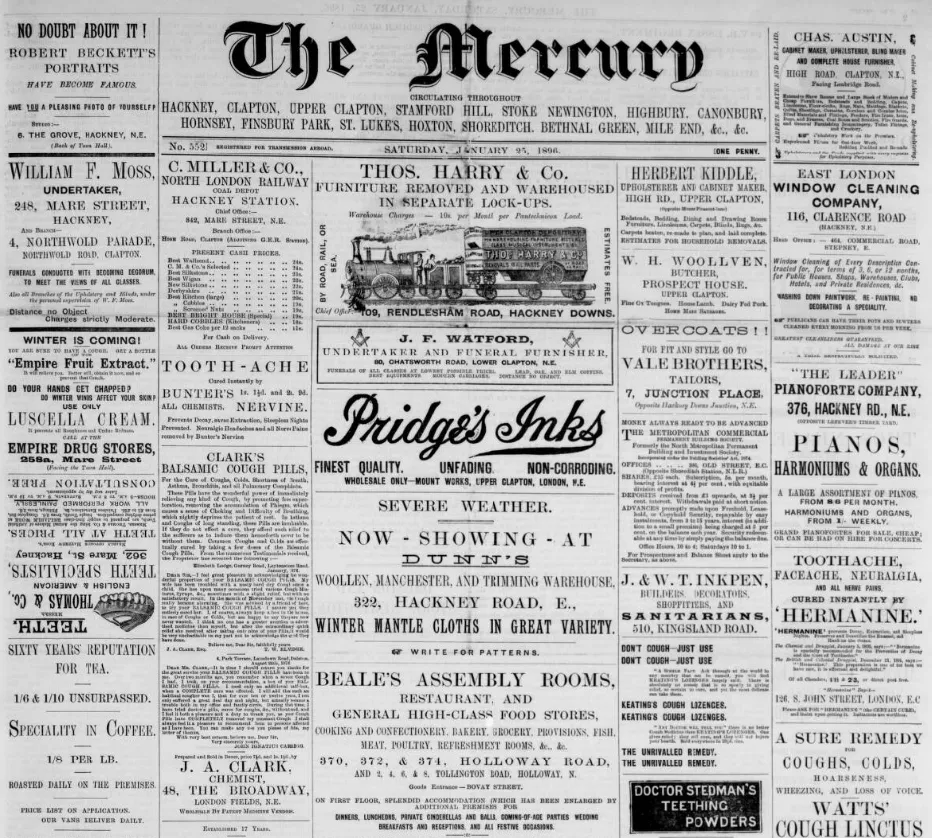
The Hackney Mercury
‘Circulating through Hackney, Clapton, Upper Clapton, Stamford Hill, Stoke Newington, Highbury, Canonbury, Hornsey, Finsbury Park, St. Luke’s, Hoxton, Shoreditch, Bethnal Green, and Mile End’ in London’s east, the Hackney Mercury was first published on 4 July 1885.
A Conservative newspaper, the Hackney Mercury appeared every Saturday priced at one penny. Its eight pages were filled with news from the area, with reports from the likes of the Hackney Conservative Club, the Bethnal Green Board of Guardians, and the Shoreditch Vestry. The paper also printed news of inquests, descriptions of forthcoming church services and theatre productions, and notices of births, marriages and deaths.
From 1887 onwards the paper became known as simply the Mercury.
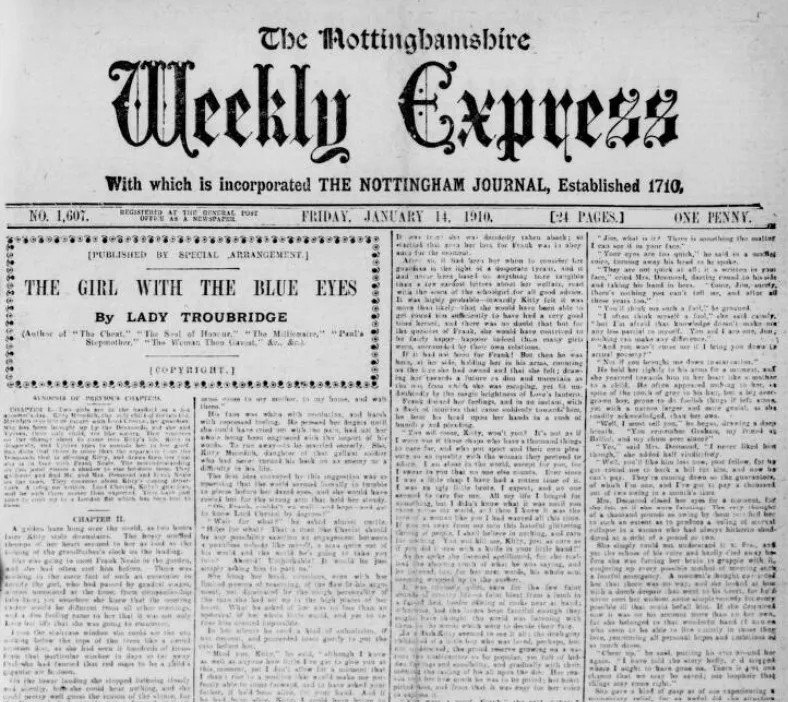
The Nottinghamshire Weekly Express
Our next new title this week is the Nottinghamshire Weekly Express. A sister paper of the Nottingham Journal, the Nottingham Weekly Express was first published in the city of Nottingham on 16 April 1886. Costing just one penny, the paper appeared every Friday and its eight pages were packed with a mixture of local, national and international news.
Indeed, the Nottingham Weekly Express went further than simply reporting on the news. It provided household hints alongside literary gleanings and serialised fiction, as well as reporting on agricultural items and society gossip.
Meanwhile, the Nottingham Weekly Express reported extensively on local matters, publishing the latest from the Nottingham Divisional Petty Sessions and the Newark and Retford Quarter Sessions. The title featured the news, meanwhile, from the likes of Beeston, Arnold, Hucknall Torkard, Mansfield, Heanor, Ilkeston, Alfreton, Leicester, Retford, Kimberley, Lincoln, Worksop, and Derby. You can also find details of wills and bequests, bankrupts and sporting news within its pages.
The Queenstown Gazette
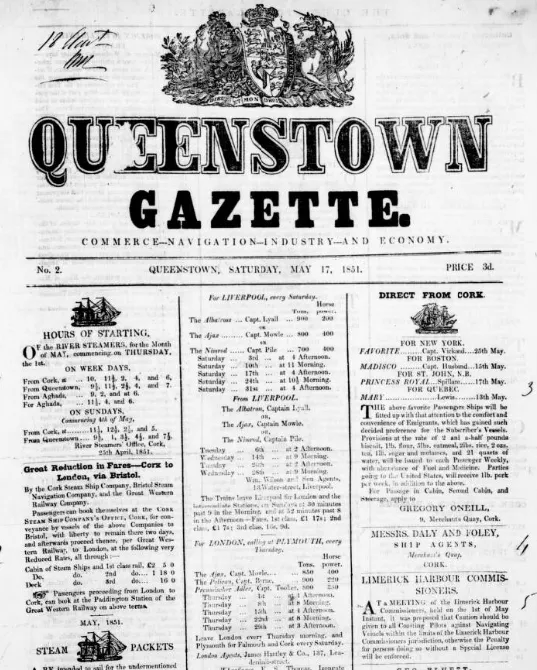
Our penultimate new title of the week is an Irish one, and it is the Queenstown Gazette. Published in the seaport town of Cobh, which was known as Queenstown until 1920, in County Cork, the Queenstown Gazette first appeared on 10 May 1851 at the cost of four pence.
Published by W.C. Seymour of 2 Lynch’s Quay, who was ‘anxious to promote the welfare of his Native town’ through his newspaper title, the Queenstown Gazette aimed to provide ‘much useful and general, as well as local information.’
Indeed, true to the paper’s motto of ‘Commerce – Navigation – Industry – And Economy,’ and Queenstown’s position as one of Ireland’s key ports, the Queenstown Gazette’s four pages were mainly filled with lists of shipping departures and arrivals, with details of the steam packets travelling to and from Liverpool and Bristol. The paper also printed poetry, alongside news from abroad.
The Swanage and Wareham Guardian
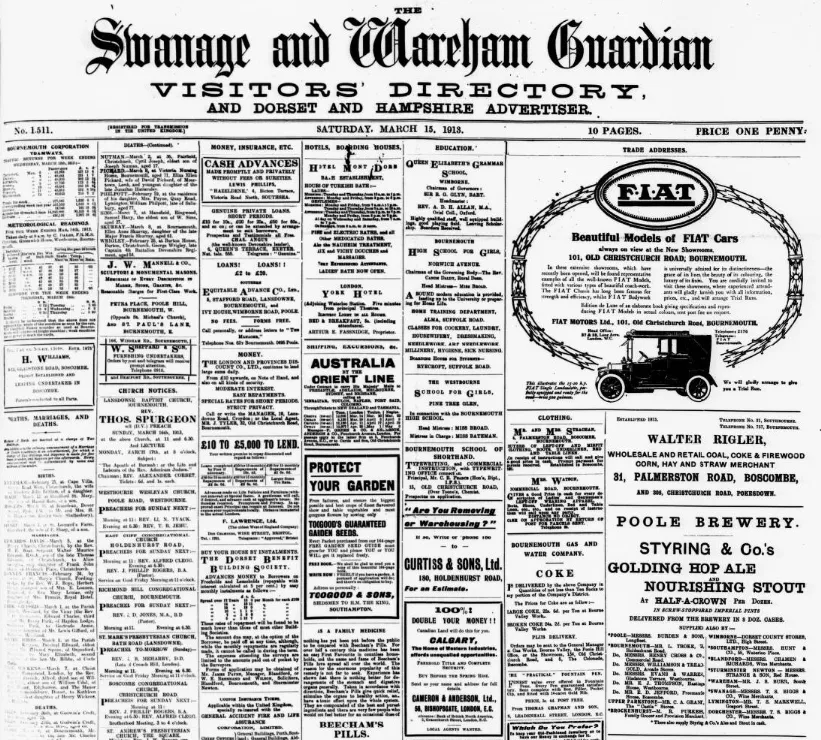
We travel to another seaside town for our final new title of the week, which is the Swanage and Wareham Guardian. One of the Bournemouth Guardian series of newspapers, this title was founded in the Dorset seaside town of Swanage in 1883.
Politically neutral, the Swanage and Wareham Guardian was ‘a weekly newspaper circulating in the towns and villages of Hants and Dorset.’ Appearing every Saturday at the cost of one penny, the title filled its eight pages with mainly local news. For example, the Swanage and Wareham Guardian reported on the latest from the Bournemouth Post Office, the Dorset Quarter Sessions, the Bournemouth Police Court, the Wimborne Petty Sessions, the Poole Town Council and the Christchurch Petty Sessions.
Meanwhile, the Dorset newspaper devoted space to local railway timetables, gardening, serialised fiction, society gossip, sport, and notices of births, marriages and deaths.
Our updated titles
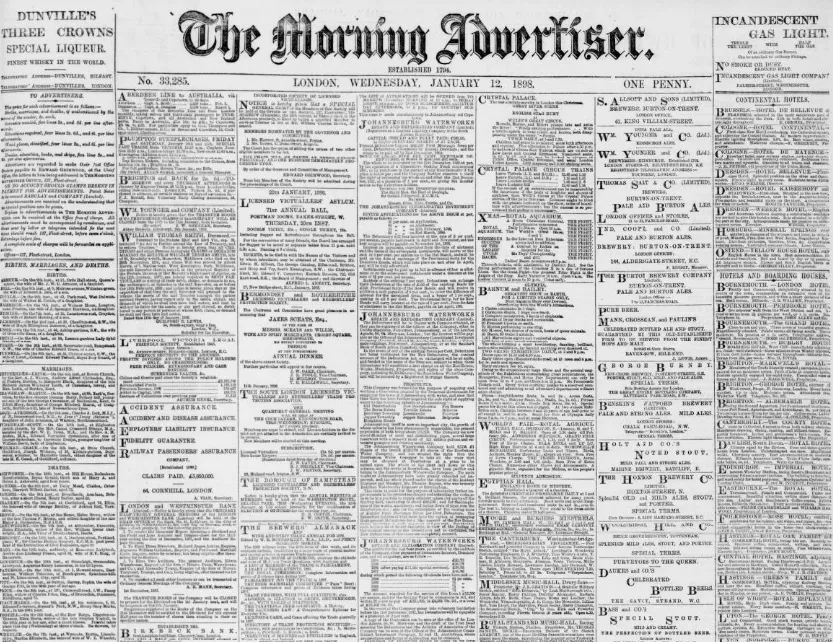
We’ve updated eleven of our existing titles this week. We continue to augment our holdings of one of the world’s oldest newspapers, the Morning Advertiser, with over 42,000 brand new pages being added to its ranks. Just about equalling this total are our updates to the Northern Scot and Moray & Nairn Express, which sees over 41,000 brand new pages added this week. Meanwhile, another Scottish title the Linlithgowshire Gazette also sees significant updates this week, with over 27,000 brand new pages joining the paper.
Elsewhere, we’ve updated one of our Welsh titles, the South Wales Daily News, and five of our titles from the Republic of Ireland. The most significant update to our Irish titles is to the Farmer’s Gazette and Journal of Horticulture, with over 26,000 brand new pages joining its ranks.
Sports Stars of the Future
Browsing through the pages of the Children’s Newspaper, we were intrigued to find mentions of young sportspeople touted as stars of the future. Did these athletes find success later in their career? Let’s find out.
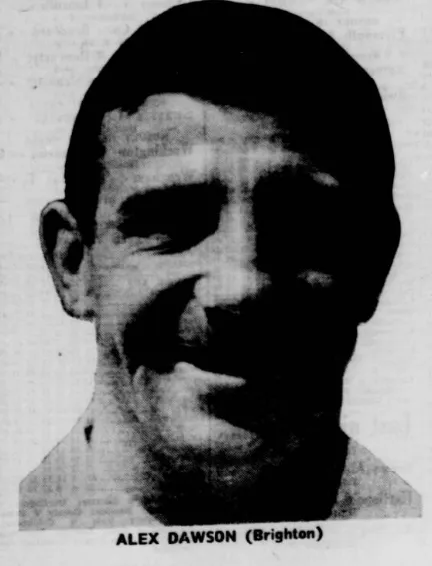
We start with Alex Dawson, who was mentioned by the Children’s Newspaper in its regular column ‘Sports Shorts’ on 2 March 1957:
Two years ago Alex Dawson was a Hull schoolboy footballer winning English international honours. Today he is a leading goalscorer with Manchester United reserves, and is ready to step into the League XI when the opportunity comes. Young Alex may yet become Scotland’s centre-forward for although he played for England’s schoolboys, this son of a Hull trawlerman was born in Scotland.
Although Alex Dawson did not play international senior football, he went on to have a long and successful footballing career, playing for Manchester United, Preston North End, Bury, Brighton & Hove Albion, Brentford and Corby Town. He retired in 1973 having made 394 appearances.
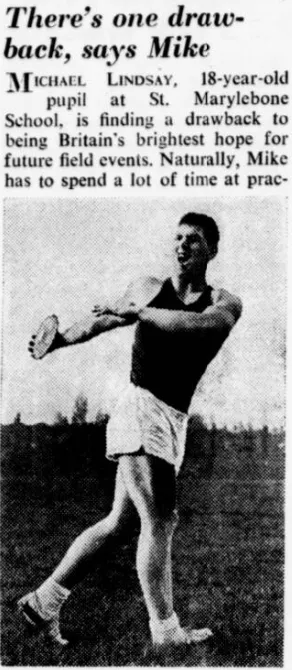
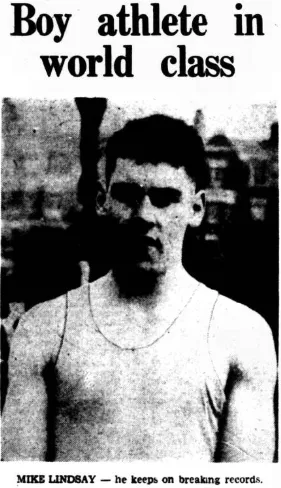
Our next bright hope featured by the Children’s Newspaper was then 18-year-old Mike Lindsay, who was described as being ‘Britain’s brightest hope for future field events.’ A student at St. Marylebone School, Mike described a ‘drawback’ of being touted as a future athletic star: not having enough time to study, because he had to ‘spend a lot of time at practice – and that means a lot of hard work to catch up on his studies.’
The Children’s Newspaper goes on to relate how in the London versus Paris schools event Mike had ‘sent up a new junior world record when he whirled his discus 193 feet 5 inches. During practice he reached 212 feet.’
So what of Mike Lindsay? He became one of Great Britain’s leading throwers, competing at both the 1960 and 1964 Summer Olympics. Representing Scotland at the 1962 Commonwealth Games, he took home silver in both the discus and shot put events.
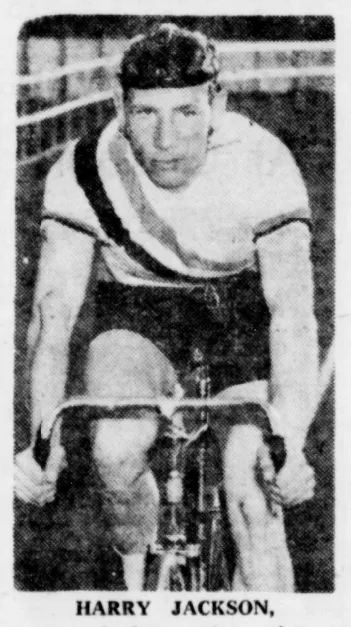
We turn now to the world of cycling, with the Children’s Magazine on 1 June 1957 relating how ‘experts are predicting a bright future for 16-year-old Harry Jackson of Portsmouth, who recently won the Meon Valley Road Cycling Race.’ Harry won the race, ‘in spite of crashing during the event,’ the paper detailing how ‘although he lost two minutes because of the accident, he remounted, set off in pursuit of the leaders, and just got his wheel in front at the finishing line.’
Like Mike Lindsay, Harry went on to compete at Olympic level, representing Britain at both the 1964 and 1968 Summer Olympics. At the 1962 Commonwealth Games he took home a bronze medal in the 4000m pursuit, and continues to cycle well into his later life.
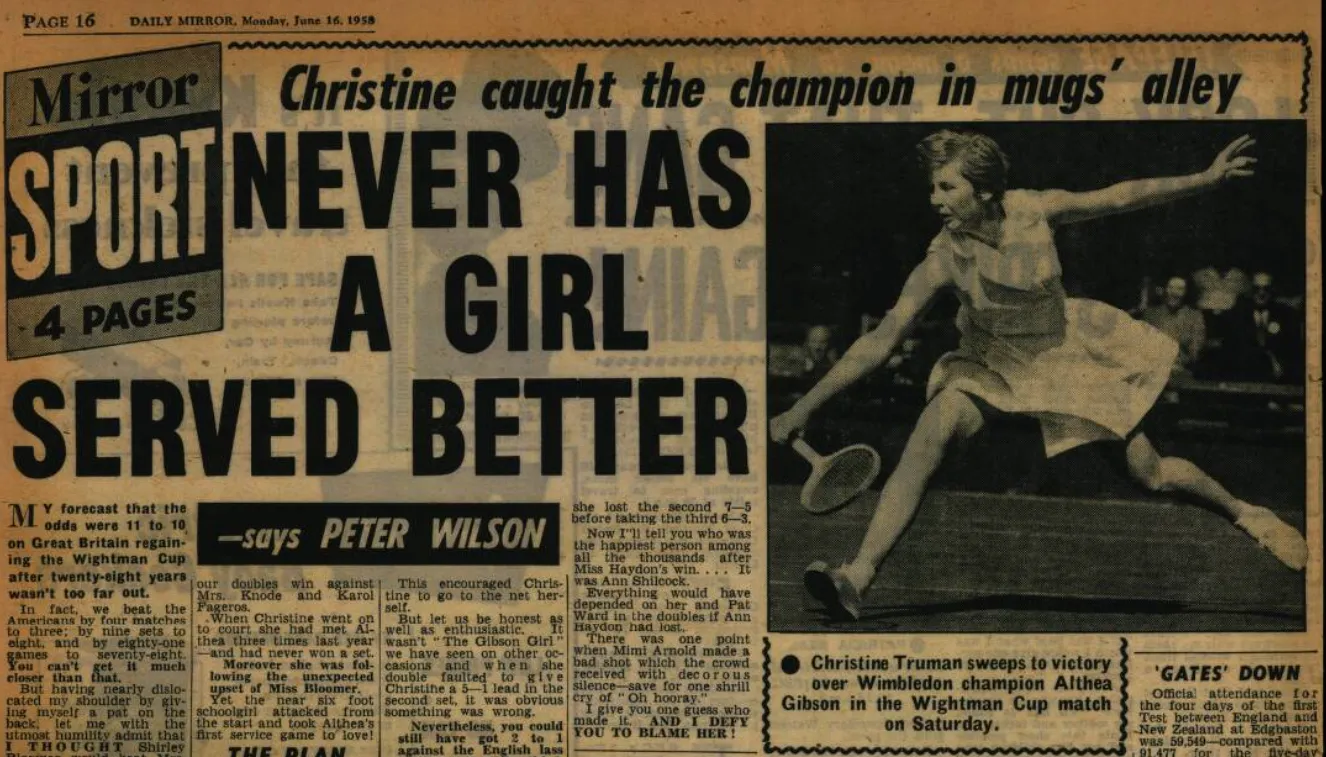
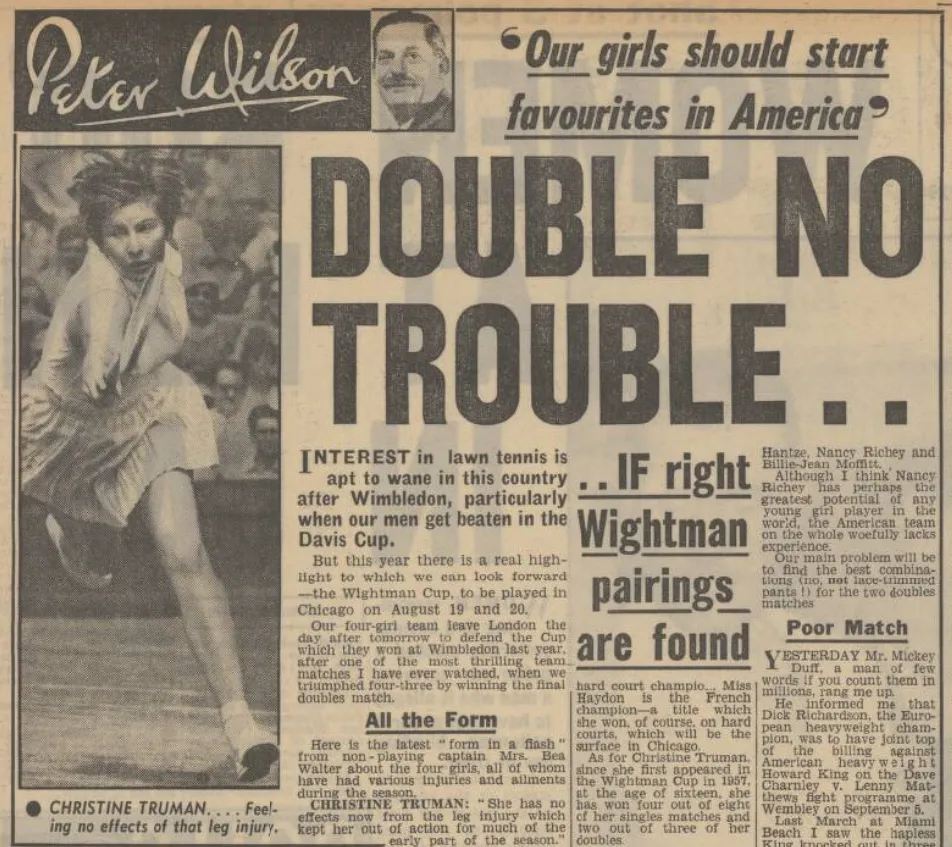
Our final potential sports star of the future is Christine Truman. On 14 September 1957 the Children’s Newspaper named her as a ‘future Wimbledon champion.’ From a talented family of tennis platers, the paper described how Christine was at Wimbledon that week, ‘defending the British Junior title she won last year.’ Indeed, the Children’s Newspaper described how Christine was ‘a firm favourite to win again.’
Christine did indeed go on to win to become British junior champion. Only a few years later in 1959, aged 18, she became the youngest women’s single champion at the French Open. In 1960 she won the Australian Open doubles with Brazilian tennis player Maria Bueno, before reaching the Wimbledon final in 1961, where she was defeated by fellow British player Angela Mortimer.
Discover more about the remarkable achievements of young sportspeople, the history of sport itself, and much more besides, in the pages of The Archive today.
New Titles
Title | Years Added |
1957 | |
1896-1910 | |
1886-1888, 1890-1895, 1900-1917 | |
1851 | |
1890-1895, 1898-1909, 1913-1919 |
Updated Titles
This week we have updated eleven of our existing titles.
You can learn more about each of the titles we add to every week by clicking on their names. On each paper’s title page, you can read a free sample issue, learn more about our current holdings, and our plans for digitisation.
Title | Years Added |
1872-1874 | |
1847, 1850 | |
1871-1887, 1890-1896 | |
1769-1770, 1772-1774 | |
1863-1864, 1869, 1876, 1880, 1908-1909, 1911-1912, 1916-1918 | |
1954-1966, 1968-1980, 1986-1989, 1991, 1993 | |
1877-1888, 1890-1891, 1896-1898 | |
1917-1946, 1948-1978, 1980-1985, 1987 | |
1914-1915 | |
1911 | |
1821-1831, 1838-1840 |
You can keep up to date with all the latest additions by visiting the recently added page. You can even look ahead to see what we’re going to add tomorrow.
More on this topic:
Share this article
About the author

Rose Staveley-Wadham
Newspaper Licensing Manager
Published on Mon, 14 July 2025.