
Pedalling Through new titles on The Archive
Published on 26 May 2026 by Molly Pearce
We’re rounding off the month of May at The Archive with six brand new titles, as we take you from the flourishing seaside resort of Rhyl and into the heart of the Victorian tricycle craze, remembering those who helped cement its place in motoring history. This week we have added 360,654 brand new pages, and have updated twenty-five of our pre-existing titles.
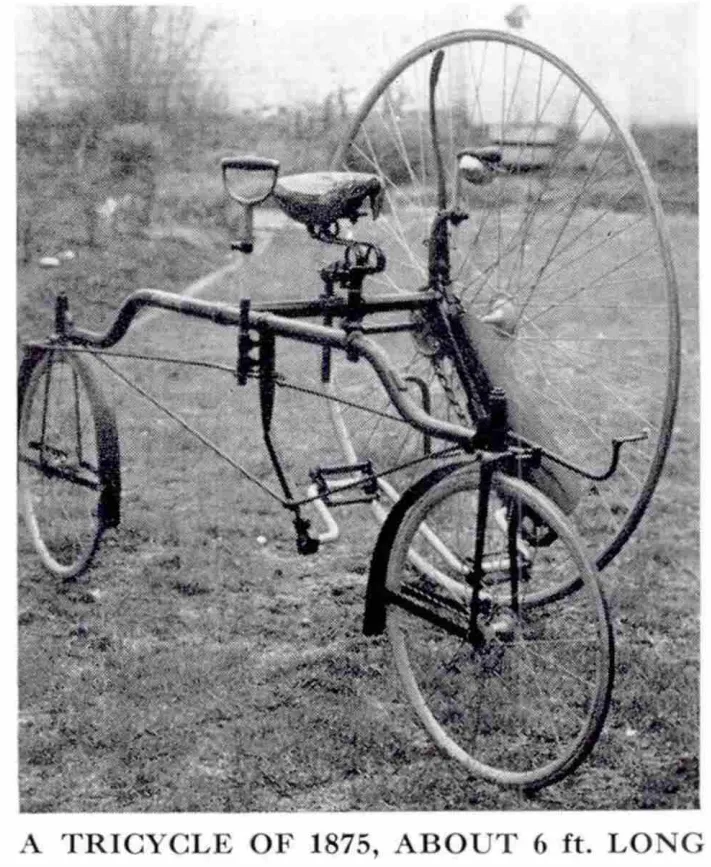
So keep reading to uncover hidden secrets buried within our new titles, and to learn more about the Victorian tricycle craze.
Register now and explore The Archive
Accrington Advertiser
First on our list of new titles for this week is the Accrington Advertiser. Although nowadays a modest and rather unassuming town, Accrington was once a thriving hub of textile and cotton machinery industries in the nineteenth century. This four page title chronicled updates to growing industry in the region, alongside local council meetings and general community life. If you wanted to be kept in the loop on Accrington’s booming business, this title cost one half-penny and was made available to its readers every Saturday.
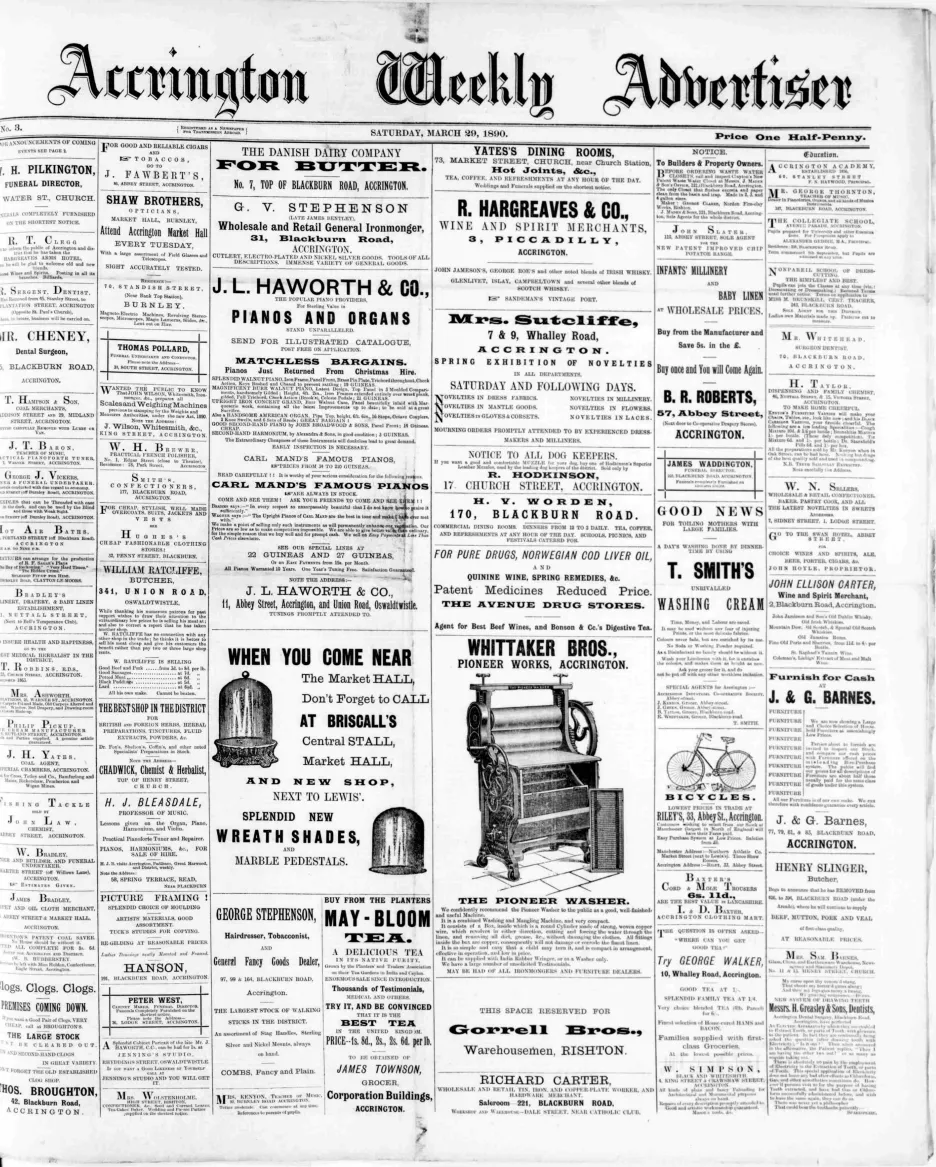
Accrington Advertiser | 29 March 1890
The quality and tirelessness of Accrington’s rich industrial economy was noticed internationally, thanks to the manufacturing of what was thought to be the world’s densest and hardest bricks. These were known as ‘Nori’ bricks and were frequently promoted in the Accrington Advertiser. It is widely speculated that ‘Nori’ bricks got their name after a mistake was made during the moulding process, wherein the word ‘iron’ was placed backwards. However, others believe that this was instead a deliberate choice aimed at distinguishing them from ‘REDAC’ bricks, which were based in the nearby village of Huncoat.
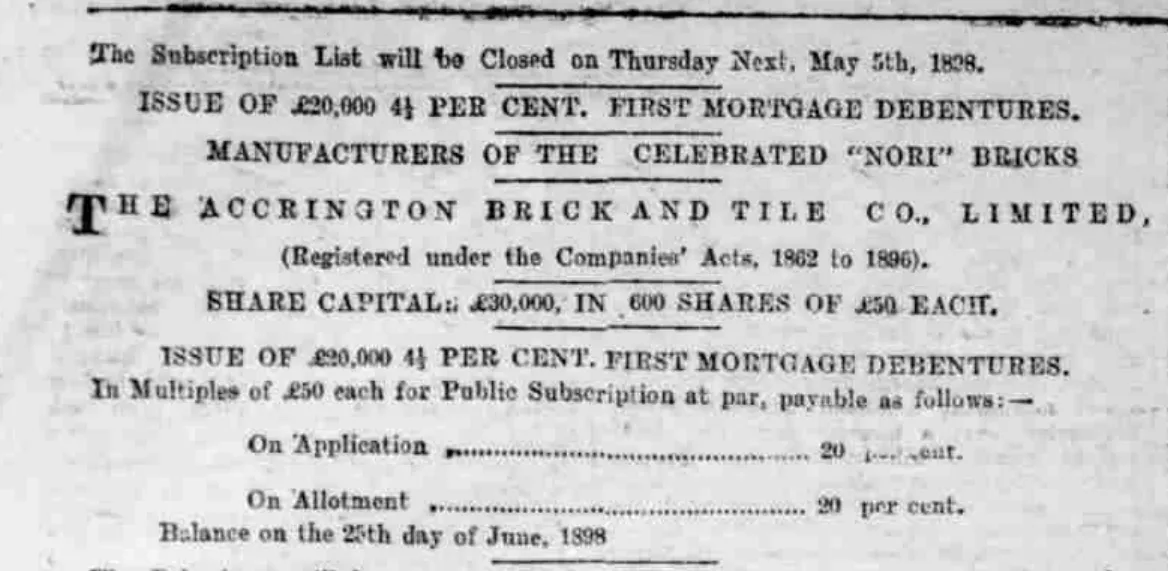
Accrington Advertiser | 03 May 1898
The ‘Nori’ bricks were resistant to acid, making them an excellent choice for lining chimneys, pipes, and ducts. The strength and hardness of the bricks garnered them acclaim globally, and ‘Nori’ bricks were used as part of the foundations of the Empire State Building, as well as Blackpool Tower and thousands of houses, schools, and factories across England.
County Herald
Next on our list for this week is the County Herald. This title brought its readers news from ‘Surrey, Bucks. and Essex’, covering a large area of South East England. It is no wonder that this title’s eight pages are densely packed with economic and political updates, local business advertisements, and council meeting outcomes.
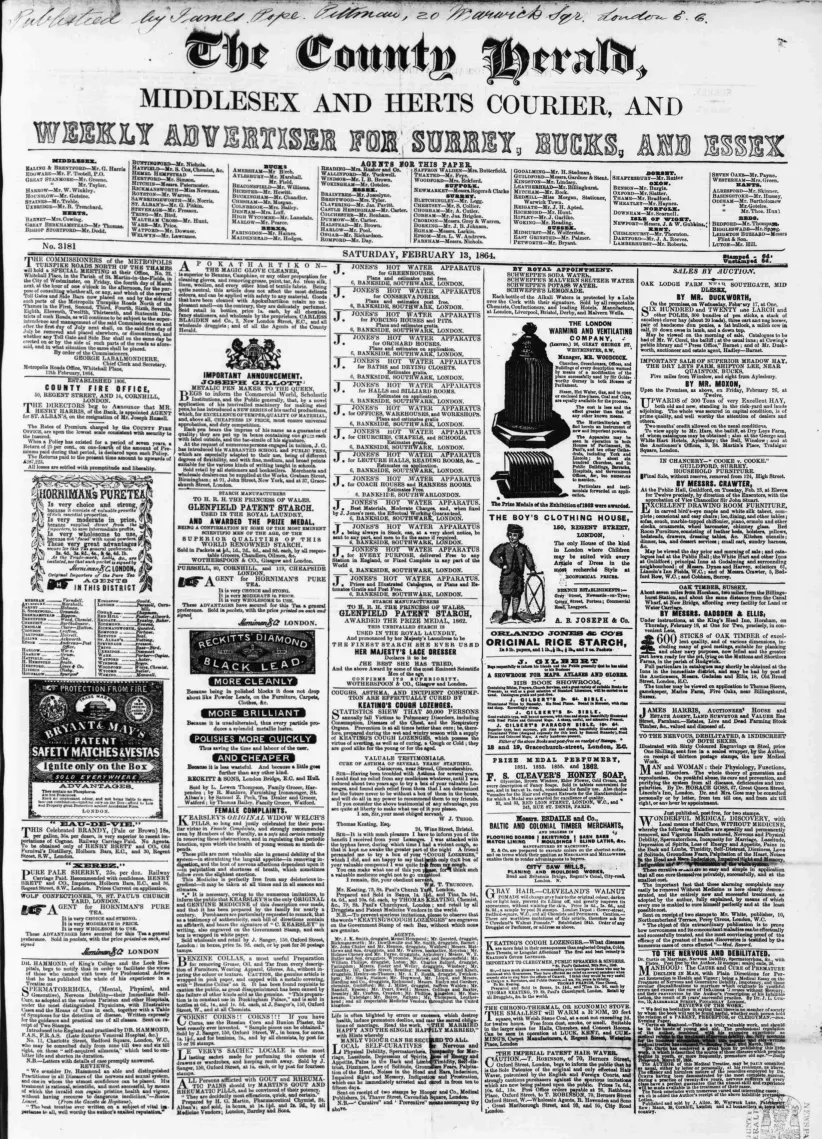
County Herald | 13 February 1864
The County Herald also published information on the latest foreign intelligence from across Europe, and even had a section on America. Its simple yet informative layout helped readers stay up to speed on parliamentary and political proceedings. A stamped edition of the County Herald would have set you back 6d, while an unstamped edition came in slightly less at 5d.
Hednesford Advertiser
We’re taking you to Staffordshire for our next newest title, the Hednesford Advertiser. This market town borders the edge of Cannock Chase, mainland England’s smallest National Landscape. Our title emerged at a time when Hednesford was being developed as a coal mining town, having previously been known for its agriculture. The town experienced rapid population growth, and by 1881, over 50|% of the male workers were employed in the coal mines.
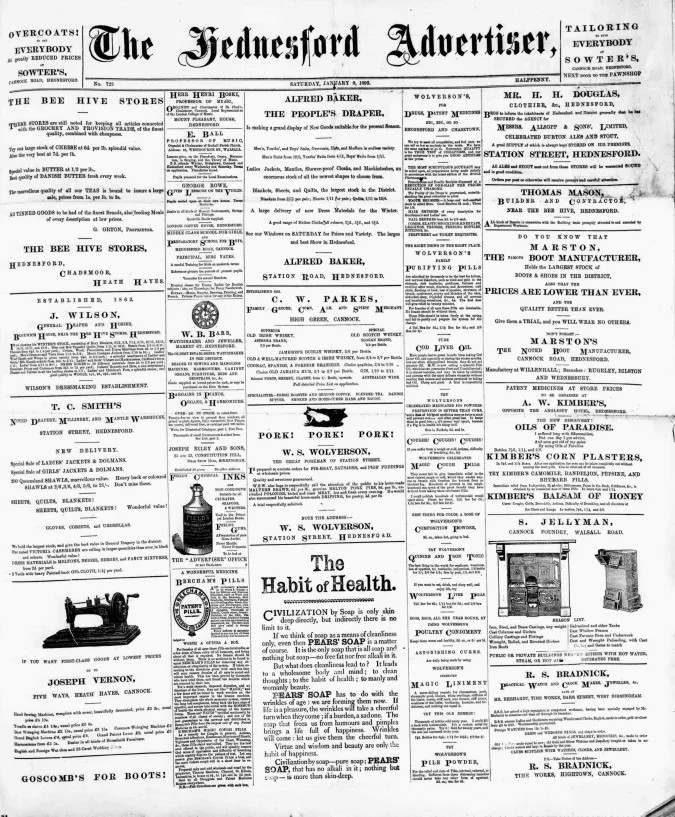
Hednesford Advertiser | 09 January 1892
This local paper was suited to a wide range of readers, covering everything from evening concerts and exhibitions, to advertisements of bootmakers and undertakers. Each issue was just four pages long and cost one halfpenny. It fell into the hands of Hednesford residents every Saturday.
Jackson’s Woolwich Journal and Army and Navy Gazette
We shift now to our third new title this week, Jackson’s Woolwich Journal and Army and Navy Gazette. As its aptly-named title suggests, it covered the latest military intelligence, reporting on promotions and changes across the Royal Engineers, Marines, and Navy, listing officers, lieutenants, and commanders alongside where they served. This list format made up half of the journal, with the second half delivering a wide variety of detailed military updates. Jackson’s Woolwich Journal was published on the first of every month, at the office, Thomas Street, Woolwich.
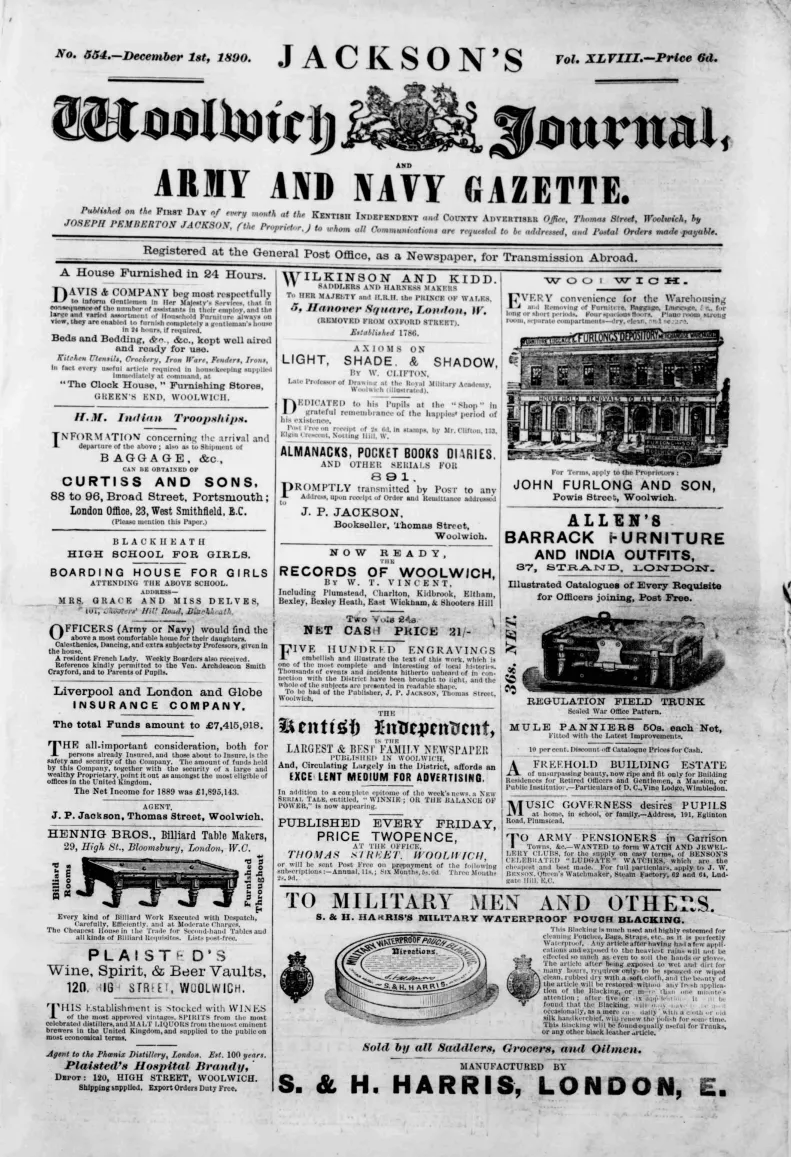
Jackson’s Woolwich Journal and Army and Navy Gazette | 01 December 1890
This title became Jackson’s Woolwich Journal in 1853, but before that it was named Jones’s Woolwich Journal. It was taken over and published by the affluent Jackson family, being first tied to successful businessman and local politician, William Parry Jackson. He was chairman of the Woolwich Steam Packet Company until 1874 when it was incorporated into the London Steamboat Company and he became deputy chairman. His passing on November 12, 1881, saw the December issue of Jackson’s Woolwich Journal list the Proprietors as brothers Alexander William and Joseph Pemberton Jackson, before the latter took over as the sole Proprietor from March 1886 onwards.
The March issue of Jackson’s Woolwich Journal contained a statement from both brothers;
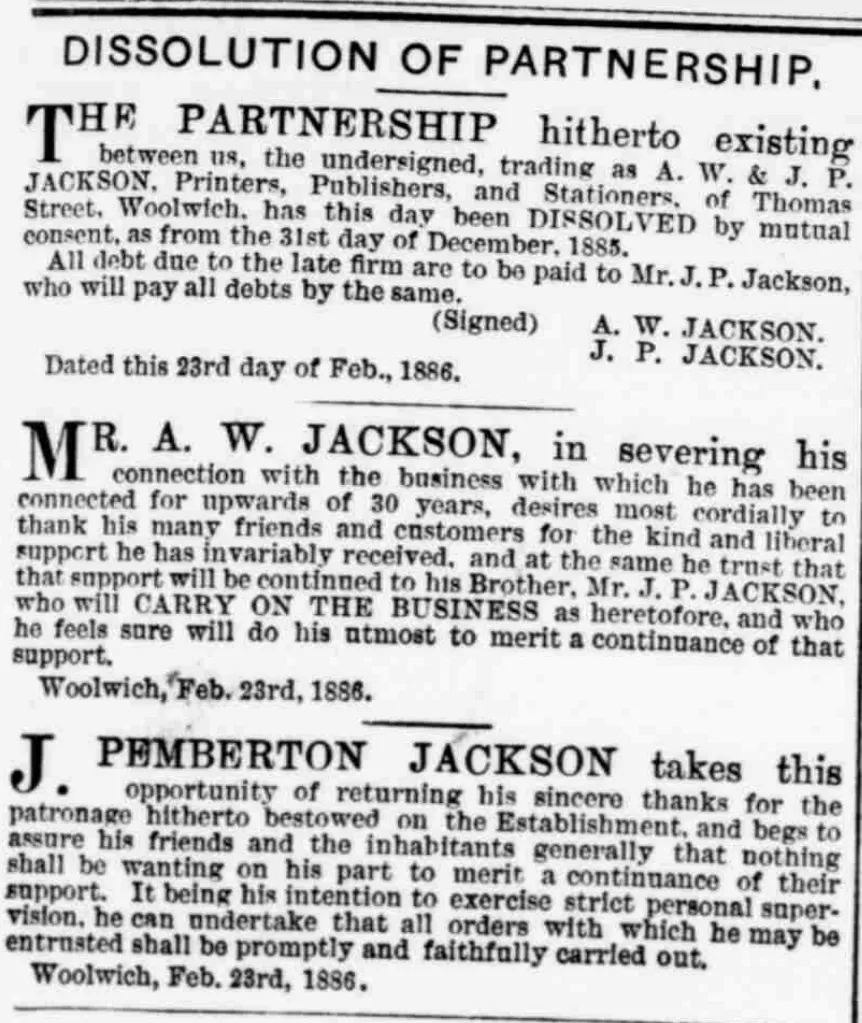
Jackson’s Woolwich Journal and Army and Navy Gazette | 01 March 1886
Despite a dissolution of partnership, Jackson’s Woolwich Journal would continue just as before, for several more years, with very few changes made to its format or content style. It remained a consistent and valued consolidation of military operations, published monthly and costing sixpence.
Rhyl Record & Advertiser
We travel across to North Wales for our next title, making it our only brand new title this week that was produced outside of England. The Rhyl Record & Advertiser was initially published every Thursday and contained four pages, although its page count and publication date varied significantly throughout the years.
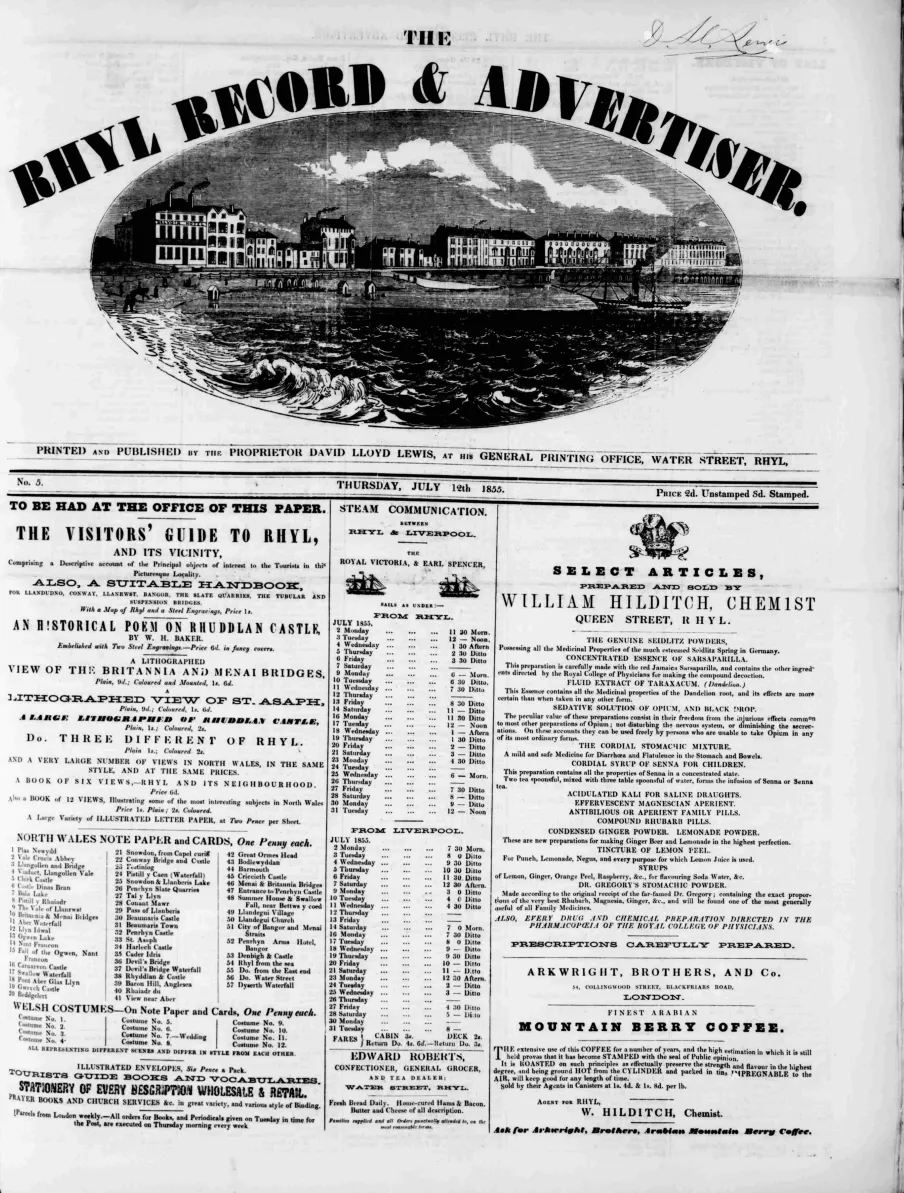
Rhyl Record & Advertiser | 12 July 1855
The paper’s printer and publisher, David Lloyd Lewis, dedicated much of his time to producing ‘descriptive accounts of the Principal objects of interest to the Tourists in this Picturesque Locality‘ that made up the Victorian seaside town of Rhyl. Throughout his life, he wrote and published several guidebooks, such as Lewis’s visitor’s guide to Rhyl and its vicinity in 1852 and Lewis’s sixpenny guide to Rhyl around the same time, although the specific date is unknown.
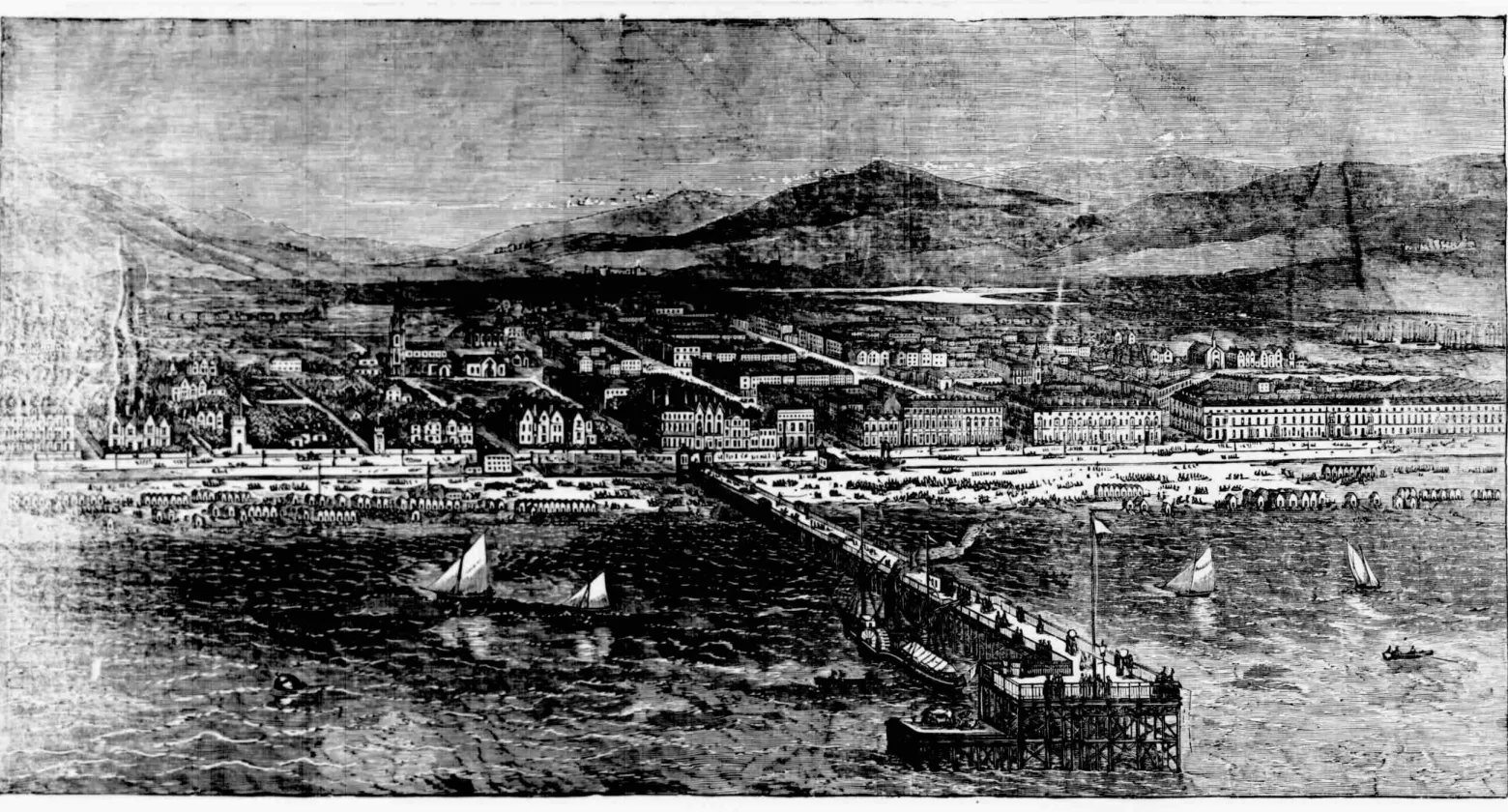
Birdseye view of Rhyl | Rhyl Record & Advertiser | 13 January 1877
Upon taking a look at the early issues of the Rhyl Record & Advertiser, one can clearly recognise Lewis’s ingrained appreciation for the work tourism played in improving the local economy. The second page featured a ‘Visitor’s List’, with each street in the town displayed separately. It’s fourth page held the ‘Time and Fare Table’ for the Chester and Holyhead Railway – an early, expansive system designed to improve government and public connections between London and Ireland.
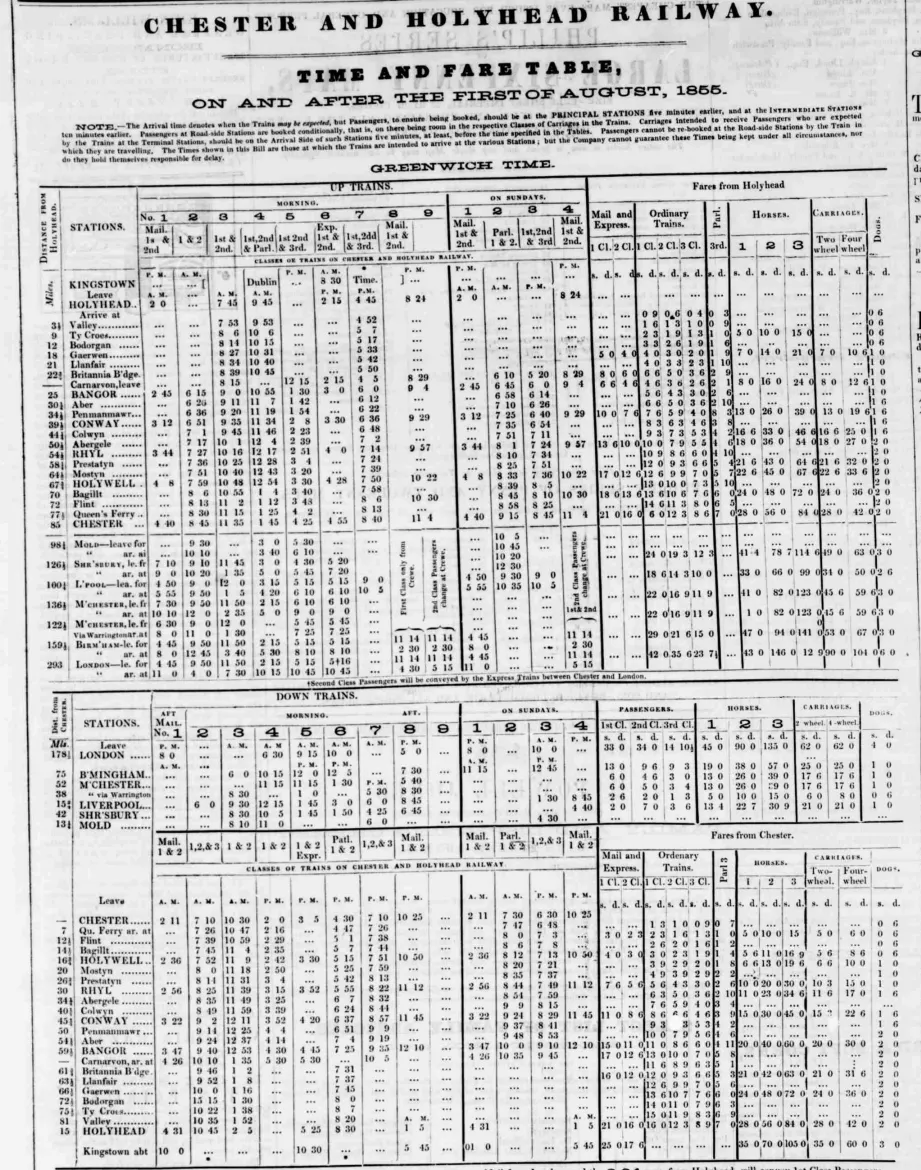
Rhyl Record & Advertiser | 16 August 1855
The Rhyl Record & Advertiser thus offers a fascinating glance at the evolution of tourism in Rhyl throughout the latter half of the nineteenth century, as improvements to transport systems and locally-produced guidebooks led to a rapid growth in tourism. This expansion put Rhyl on the map, alongside other popular locations such as Llandudno and Bangor.
The Tricyclist
We have reached our final new title for this week and it does not disappoint. The Tricyclist presented its readers with a weekly rundown of the latest mechanical, design, and commercial advertisements available within the tricycling market. This title emerged at a time when Great Britain was producing more tricycles than bicycles, thought of by the upper classes as a more expensive, therefore more genteel, alternative to regular cycling.
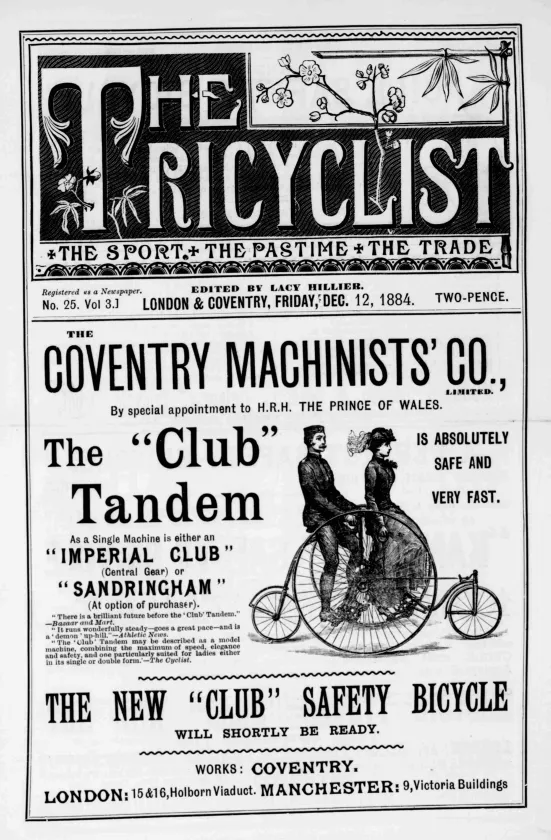
The Tricyclist | 12 December 1884
The Tricyclist was packed full of illustrations and captivating headlines aimed at enticing the sale of the brand new tricycle design. As can be seen in the 12 December issue, the sport was designed for both men and women, satiating the Victorian cycling craze that engulfed the world during the latter half of the nineteenth century.
This title did not stop at selling complete bikes; it also sold separate gears, ball bearings, and various bicycle and tricycle fittings, as well as ‘The Cyclist Wheel World Annual‘ that was ranked as Book of the Year and cost one shilling.
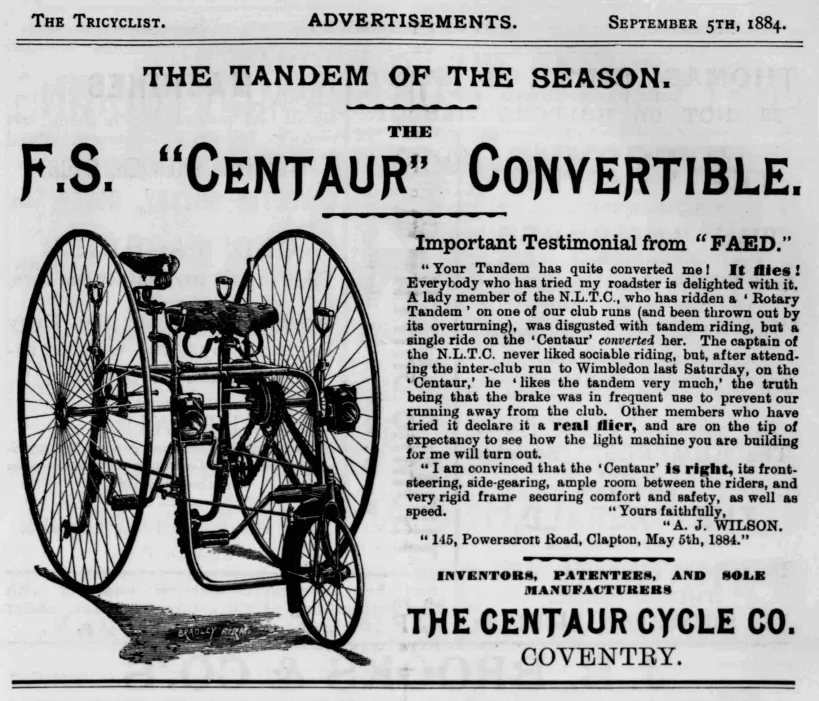
The Tricyclist | 05 September 1884
The January 1884 edition of The Tricyclist spoke to the ever-increasing popularity of the sport, stating,
‘The past year is one which all cyclists – and especially all tricyclists – can regard with pleasure, for it shows us very clearly that our sport, and especially our branch of it, is growing in strength and vitality daily. The advances made by the tricycle, as a machine, in 1883 are considerably more in proportion than those made by it in 1882…
The competition between the tricycle and the bicycle was strong, with the tricycle being thought of as a more sophisticated and fashionable mode of transport. Doctors conducted visits on them, tradesmen sold their goods from them, and women rode them without having to lift or tie up their dresses. The appeal of the tricycle among women was only further cemented when, in 1881, Queen Victoria purchased two tricycles (although she did not ride them herself). The royal endorsement was enough, however, to spark a large increase in female riders. The convenient structure of the tricycle distinguished it from the more sporty style of the bicycle, wherein travelling could be thought of as sociable and relaxing.
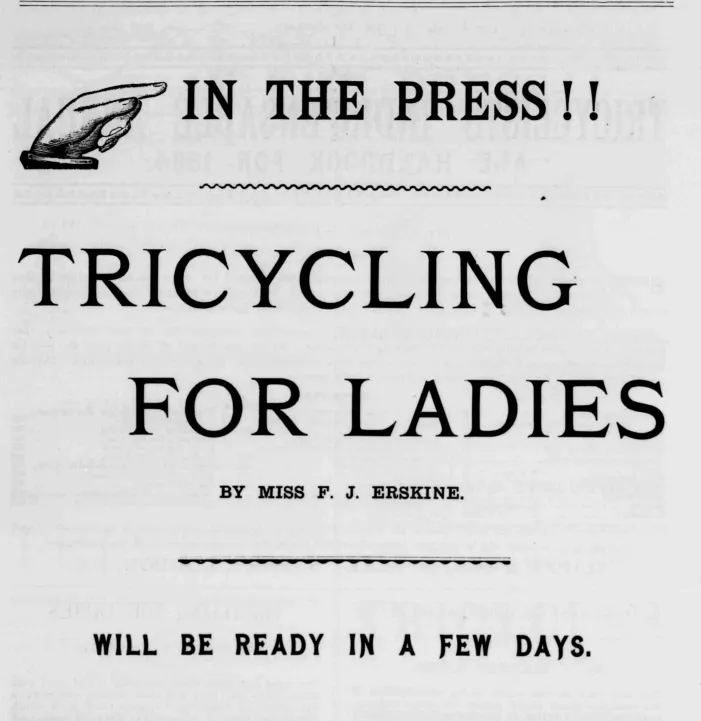
The Tricyclist | 22 August 1884
The Tricyclist would be incorporated with the Bicycling News, and as cycling would slowly morph into what we know today as the traditional motorbike, the title would change to the Bicycling News and Motor Review. Such title changes reflect the shifting developments in two-wheeled transportation throughout history.
Our Updated Titles
We’ve covered all of our new titles for this week, but we’ve still got plenty to update you on. We’ve added 48,350 pages to the Birmingham Daily Post, as well as 40,024 new pages to the Chester Chronicle (Frodsham & Helsby edition).
We also bring you updates to our Scottish titles, with the Aberdeen Herald and Edinburgh Evening Courant receiving new pages this week. From Ireland, we’ve updated the Belfast Mercantile Register and Weekly Advertiser, the Galway Vindicator, and Allnut’s Irish Land Schedule.
If you’re after something a bit different, we now have 1905-1914 of the Trinidad Royal Gazette available on The Archive.
George Lacy Hillier
While reading through our new specialist title for this week, The Tricyclist, we uncovered that its editor, Lacy Hillier, was the known English racing cyclist, George Lacy Hillier. Hillier was a renowned athlete and a pioneer of the British cycling scene. He competed in many competitions and set many milestones for the bicycle racing sport. In 1885, he completed a 10,000 metre race in Leipzig, winning first place ahead of the former German champion, John Pundt, subsequently breaking his record.
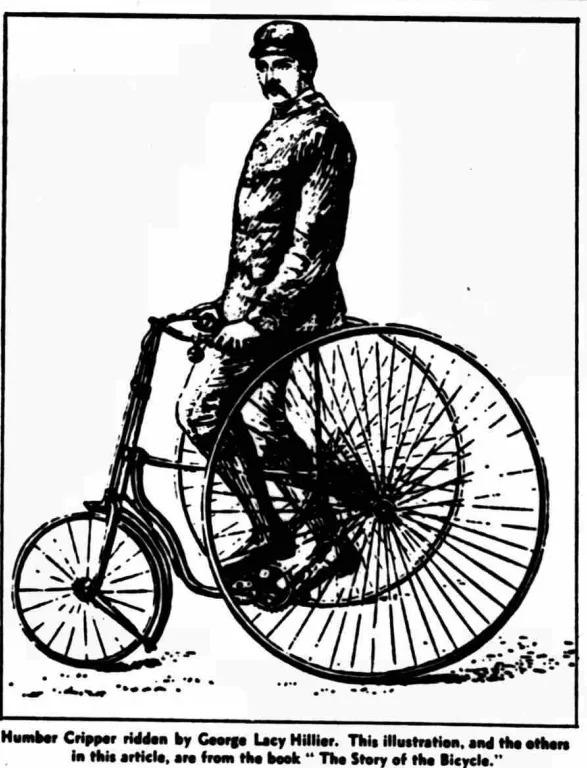
Birmingham Daily Post | 10 October 1970
As well as racing, Hillier was avidly involved in various cycling clubs across England. He was one of the founders of the Chichester and District Motorcycle Club, serving as its president. Alongside this, he was racing secretary of the London County Cycling and Racing Club. In 1891, Hillier played a large part in raising funds and constructing the Herne Hill Velodrome, one of the last standing Victorian cycle tracks.
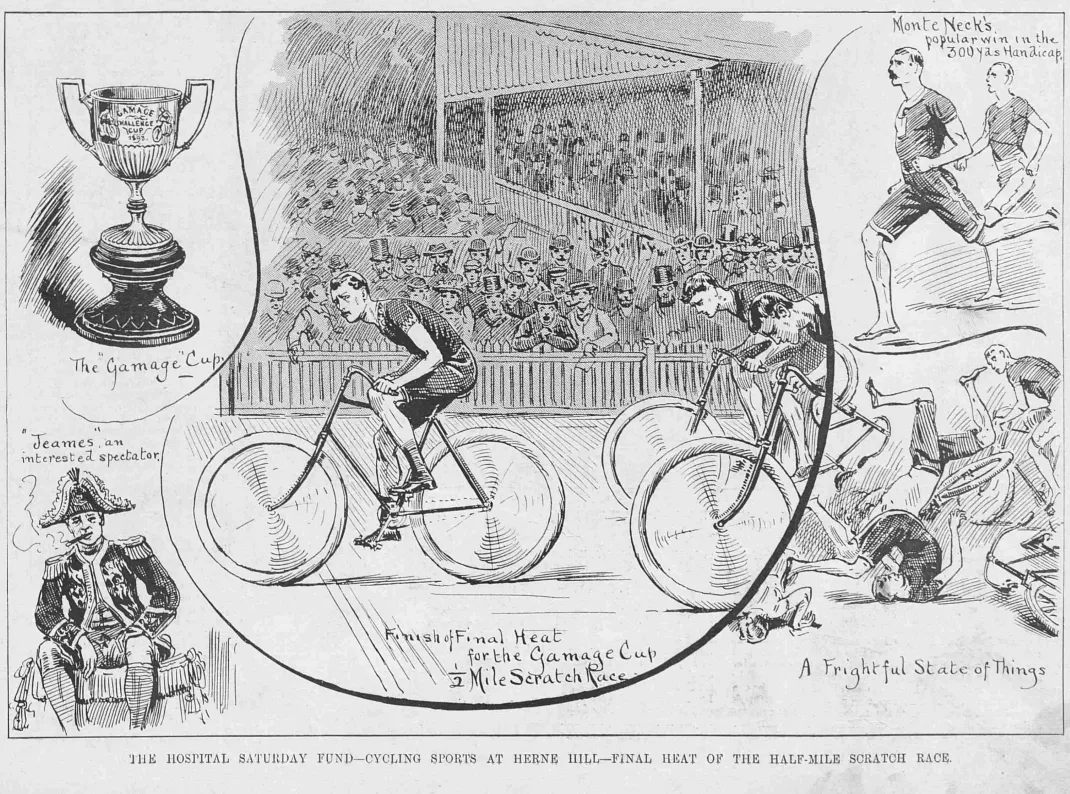
Illustrated Sporting and Dramatic News | 03 June 1893
Hillier was not only a bicycle racer; he also used his vast knowledge to edit magazines and publish books throughout his long career. One of his many works included a five-hundred-page book, ‘Cycling‘, which he co-authored for the Badminton Library. In 1898, he published a book entitled ‘The Art of Cycling‘, demonstrating in depth just how cycling works in relation to the body. An issue of The Sketch from 07 December 1898 gave a review of Hillier’s fascinating new book.
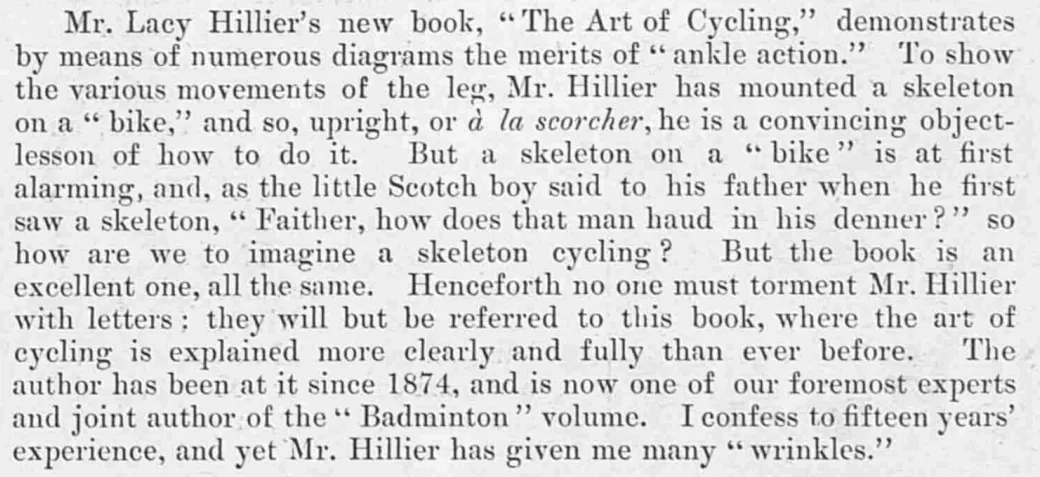
Hillier used new methods in order to demonstrate the magic of cycling and its effect on the body. His role was not to simply sell the sport of cycling, but to educate and inspire. Indeed, Hillier played a large role in promoting increased usage of tricycles at the height of their popularity, and his expertise made him the perfect editor for cycling magazines such as The Tricyclist.
Although tricycles would eventually die out, their widespread influence on the British public is forever felt and remains a crucial stepping stone in the history of motoring.
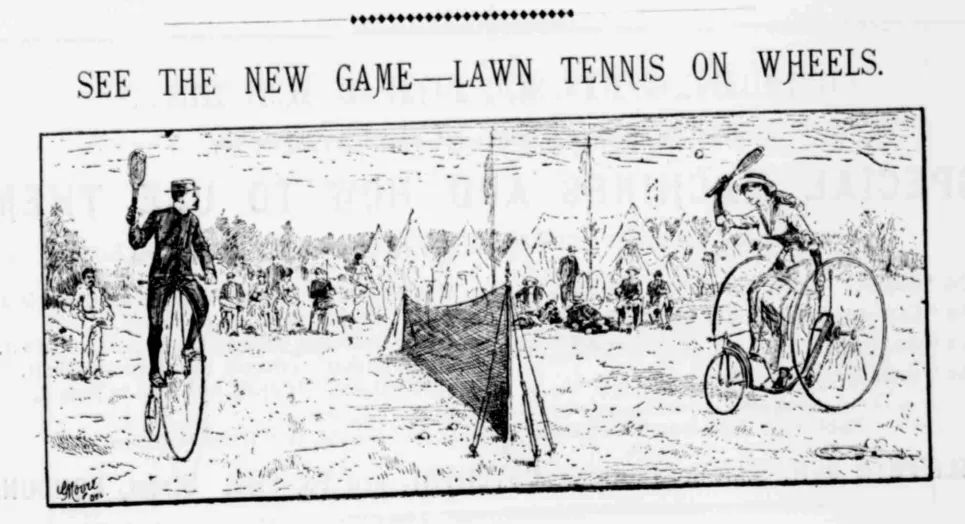
The Tricyclist | 26 December 1884
New Titles
Title | Years Added |
1889-1896, 1898-1902 | |
1818-1843, 1858-1860, 1862-1864 | |
1884-1896, 1899 | |
1877-1878, 1881-1882, 1885-1887, 1890 | |
1855-1869, 1874-1877 | |
1884 |
Updated Titles
This week we have updated twenty-five of our existing titles.
You can learn more about each of the titles we add to every week by clicking on their names. On each paper’s title page, you can read a free sample issue, learn more about our current holdings, and our plans for digitisation.
Title | Years Added |
1863-1875 | |
1871-1872 | |
1911-1919 | |
1875-1877, 1879 | |
1878, 1880-1888 | |
1893-1894 | |
2001-2005 | |
2000, 2003-2004 | |
1892, 1896, 1911, 1918, 1924-1925 | |
2000-2004 | |
1897-1917 | |
1878-1894, 1901-1902, 1904-1906 | |
1853, 1863, 1871 | |
1871-1872 | |
2005 | |
1877, 1882, 1884, 1887, 1889-1890 | |
2000-2005 | |
2001-2002, 2005 | |
2000-2001, 2003, 2005 | |
1807-1808, 1818-1820 | |
1878-1879, 1889, 1892 | |
1861-1870 | |
1915-1919 | |
1905-1914 | |
1845-1849 |
You can keep up to date with all the latest additions by visiting the recently added page. You can even look ahead to see what we’re going to add tomorrow.
More on this topic:
Share this article
About the author

Molly Pearce
Data Operations Executive
Published on Tue, 26 May 2026.