Skip to content

Search the blog

Tag: murderTag: blitzTag: irelandTag: colindale
With one week to go until St Patrick’s day, we at The Archive are turning our focus across the water to Ireland for this week’s titles. We will uncover how Cork Free Press was involved in a printing disgrace following an editorial disagreement, with the paper eventually being brought to an end following an act of suppression by the British authorities. Additionally, newly added pages from the Belfast Telegraph allow us to dive into the passage of the Thirty-fourth Amendment
This week, we have added another 203,028 pages of historical newspapers from 1884 to 2004.  We have introduced two new titles, including the literary Shamrock from Ireland and the Rushcliffe Advertiser from the East Midlands.We’ve also added 185,884 pages to two of our existing titles. Dive into stories of revolt and German royalty, then journey back 145 years to witness the hanging of Ned Kelly, the notorious outlaw celebrated by some as Australia’s Robin Hood.Register now and explore The ArchiveShamrockThe Shamrock | 2
This week, we’re celebrating Saint Patrick’s Day with a bumper Irish update.You’ll be pleased to hear that we’ve added eleven new titles and updated 32 existing publications.156,095 brand new pages take our total count to 90,498,563, so there are more fascinating stories to explore than ever.Register now and explore The ArchiveFrom a Cork weekly title to specialist newspapers like the Irish Textile Journal, read on to discover all that’s been added.One of this week’s largest new titles is
With four new titles and an update to one existing publication, 122,625 pages joined the archive this week, taking our total page count to an impressive 90,342,468.Register now and explore The ArchiveThis week’s new pages come from the Emerald Isle – so it’s never been easier to uncover rich stories about Ireland and its people.Our new Irish titles cover intermittent years between 1870 and 1916. This key period in Ireland’s history saw several momentous social and political shifts, including the rise of
This week at The Archive we are delighted to welcome a brand new title from the sunny south coast, the Bournemouth Times and Directory, as we take a moment to remember the devastating Bournemouth Blitz. In all, over the last seven days, we’ve added 366,686 brand new pages to our collection, whilst we’ve updated 25 of our existing titles from across England, Scotland and Northern Ireland.So, from Buckingham to Burnley, from Dingwall to Driffield, from Mid Sussex to Mid Ulster, read
Here at The Archive, we love to learn of the discoveries you have made through our newspaper pages, and how you have used them, whether they have influenced novels, or provided information for dissertations. We were incredibly grateful, therefore, when crime writer and athletics historian Peter Lovesey contacted us with his account of sixty years of researching newspapers. From accessing historical newspapers in their original form, to scrolling through microfilm reels, and finally to searching newspapers digitally on the British
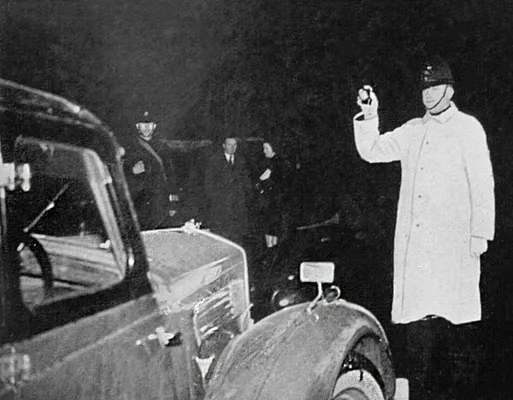
A walk along Piccadilly in the black-out is one of the many queer experiences of this war. The once brilliant centre of London’s night life is now as dark as any forest, and indeed, like a forest, the darkness is full of rustlings and whisperings, of half-seen shapes, and of a sinister feeling of eager, but invisible, life.So began a Daily Herald article on blackout crime in London during the Second World War. With blackouts imposed across the United
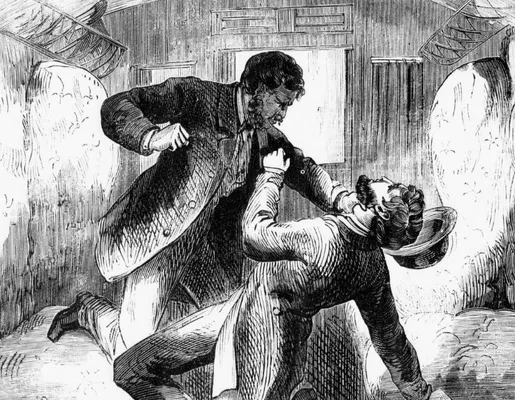
Long before Agatha Christie envisioned murder on the Orient Express, or before she wondered what might have taken place on the 4.50 from Paddington, murder, mystery and mayhem were already well established on the railways of Britain and beyond.The first victim of murder on British railways was 70-year-old Thomas Briggs. In this special blog, we will take a look at his story, as well as nine others sourced from the pages of our newspaper Archive, which tell the strange, the
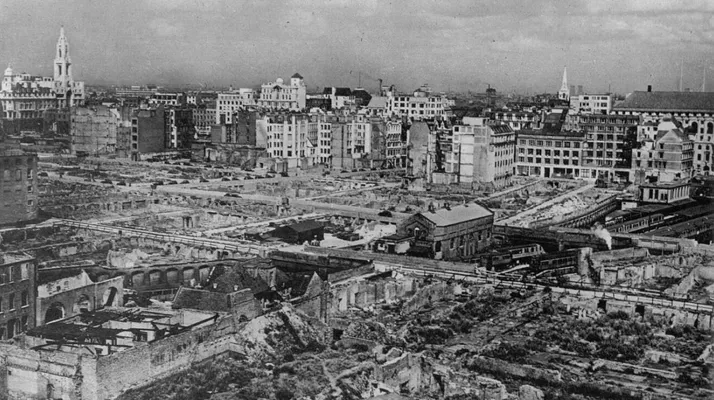
In the decade after the Second World War had come to an end, and indeed beyond, many communities across the United Kingdom were faced with very vivid reminders of the conflict: bomb sites, the country’s ‘war scars.’In this blog, we will examine how people in Britain lived alongside bomb sits in the 1950s, using newspapers taken from The Archive. We will explore how communities adapted to live beside bomb sites, and how they transformed them into gardens and playgrounds.
We may be on the run up to Christmas now, but here at The Archive we have been as busy as ever, adding 140,040 brand new newspaper pages over the past seven days, with the addition of eight brand new titles from the Republic of Ireland and Northern Ireland over the last week. Meanwhile, we have updated fifteen of our existing titles, including updates to some of our recently added titles too.So read on to discover more about all of