Hot Off The Press – New Titles This Week
Published on 12 May 2026 by Rose Staveley-Wadham
This week at The Archive we are delving into the history of nursing with the addition of brand new title the Nursing Times, as we mark both the anniversary of Florence Nightgale’s birth on 12 May 1820, and the anniversary of Mary Seacole’s death on 14 May 1881. We’re also exploring an important part of the UK’s religious history this week, with the addition of what is thought to be the country’s first Muslim newspaper. In what is a bumper week, we’ve added a total of six brand new titles, with 302,967 brand new pages joining our collection in all. And if that wasn’t enough, we’ve updated 31 of our existing titles from across the UK, Ireland and even from the Channel Islands.
So read on to discover more about the Nursing Times, as we take a look at the nursing efforts on the front lines during the First World War, as well as our other new and updated titles this week.
Register now and explore The Archive
The Huddersfield Boro’ Advertiser
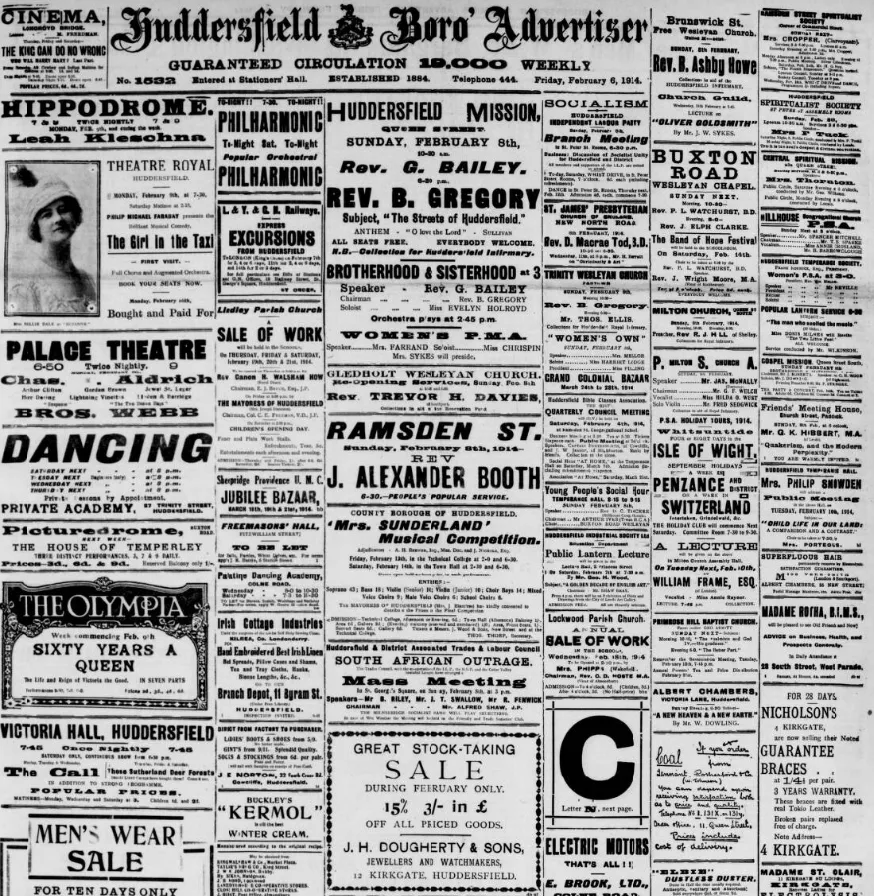
We start, however, in Huddersfield this week, with the Huddersfield Boro’ Advertiser. Established in 1884, and appearing every Friday, before moving to a Tuesday publication schedule, the Huddersfield Boro’ Advertiser did exactly what it said on the tin. Politically neutral, and distributed gratis, it consisted of four pages of advertisements for entertainment and businesses in the Huddersfield area.
With a guaranteed circulation of 19,000 copies, the Huddersfield Boro’ Advertiser is a rich repository of Huddersfield history, painting a detailed pictures of the goods and services available in the West Yorkshire town, as well as the entertainment on offer, such as plays and dances.
For example, the Huddersfield Boro’ Advertiser featured adverts for the likes of H. Bennet & Co., a glass and China merchant, H. Laycock, a hatter and a hosier, and Mr. H. Mitchell’s dental surgery. Using its pages, you can build up a picture of the people of Huddersfield, and the businesses they would have patronised.
Meanwhile, this title also featured some small paragraphs of comment on fashion and the local theatre.
The Maldon Express
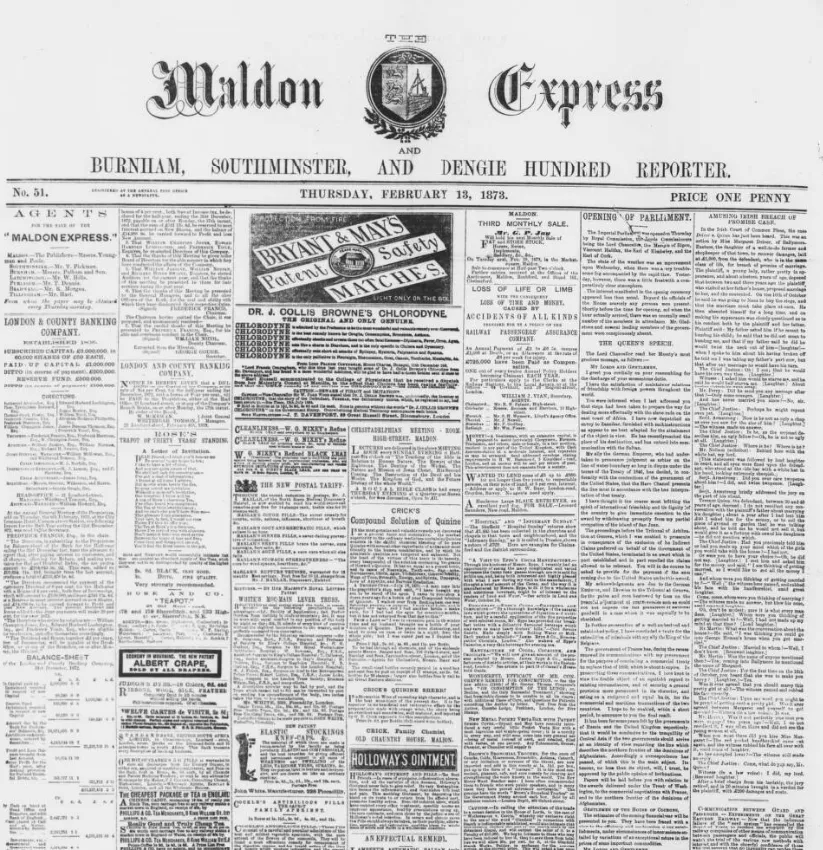
We travel to Essex for our next new title of the week. A sister paper of the Chelmsford Chronicle, the Maldon Express was established in 1872 as a ‘new penny paper’ for the Maldon area. As the Chelmsford Chronicle reported on 23 February 1872, ‘in the whole of the Dengie Hundred, a large, fertile and wealthy district of Essex, and containing, among other towns, such populous places as Maldon and Burnham, there is not a Newspaper published.’ The Maldon Express was set up to change this when it was first published on 29 February 1872.
With its head offices in Chelmsford, the Maldon Express appeared weekly on a Thursday, before moving to a Saturday publication date. Under the full name of the Maldon Express and Burnham, Southminster, & Dengie Hundred Reporter, this title filled four pages and cost just one halfpenny.
Due to the region’s reliance on agriculture, the Maldon Express published a range of columns focussing on the agricultural industry, with reports from the Essex Agricultural Society and the Essex Chamber of Agriculture. Meanwhile, the newspaper reported on the latest from the Crown County Court and the Essex Quarter Sessions, whilst providing an array of local, national and international news. Within its pages you can also find features on fashion, correspondence, poetry, and notices of births, marriages and deaths.
The Musical Transcript
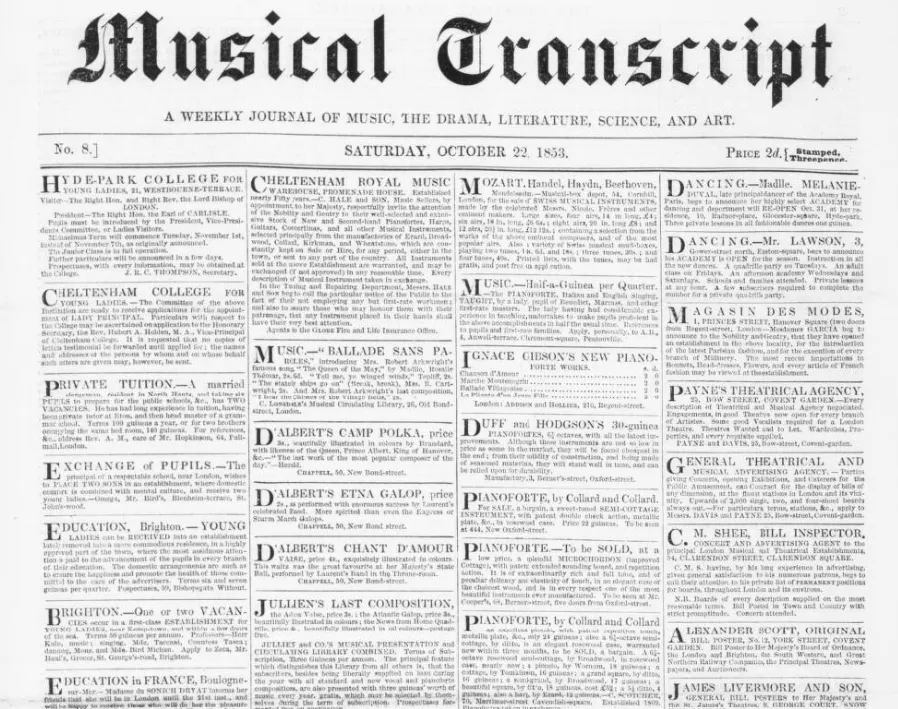
Our next new title hails from London and it is the Musical Transcript. Established in 1853, this weekly publication was, rather unsurprisingly, dedicated to all things music, as well as drama, science, and literature. Within its eight pages you can find a range of ads for musical works, such as books on music and sheet music. The publication also featured reviews of the latest musical compositions, biographies of composers like Mozart, and articles with titles like ‘Music: Its Rise and Progress.’
Costing 2 d., the Musical Transcript had a circulation of some 3,500 copies. It also covered works of drama, with the ‘Dramatic Transcript’ reporting on theatre productions in London. The paper, meanwhile, looked further afield, printing a ‘Foreign Musical Transcript,’ as well as reporting on ‘theatricals and music’ in America.
By December 1854 the Westmorland Gazette was reporting how the Musical Transcript had ‘achieved quite a success in dramatic circles.’ However, it was rumoured that was to be ‘amalgamated’ with the Sunday Times ‘in some way.’
The Nursing Times
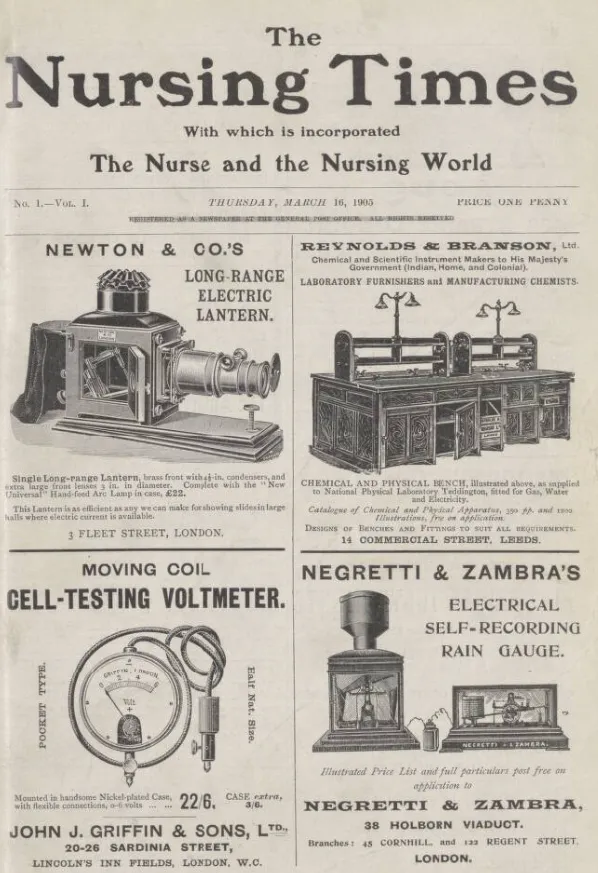
We’re delighted now to welcome the Nursing Times to our Archive. Published to keep nurses up to date on news from the nursing industry and clinical issues, it first appeared on 16 March 1905, priced at one penny. Edited by German-born journalist Swanhilde Bulan, the paper promised to keep nurses informed on the latest within the medical profession, all the while remaining unbiased, whilst also being a forum for nurses to express their views.
The first edition, which filled sixteen pages, is a good example of the range of articles the Nursing Times covered. It incorporated articles on a range of different nursing specialties, such as ophthalmic nursing and midwifery. The paper also looked at the treating of different conditions, such as throat diseases, lumbago, and the treatment of patients post surgery.
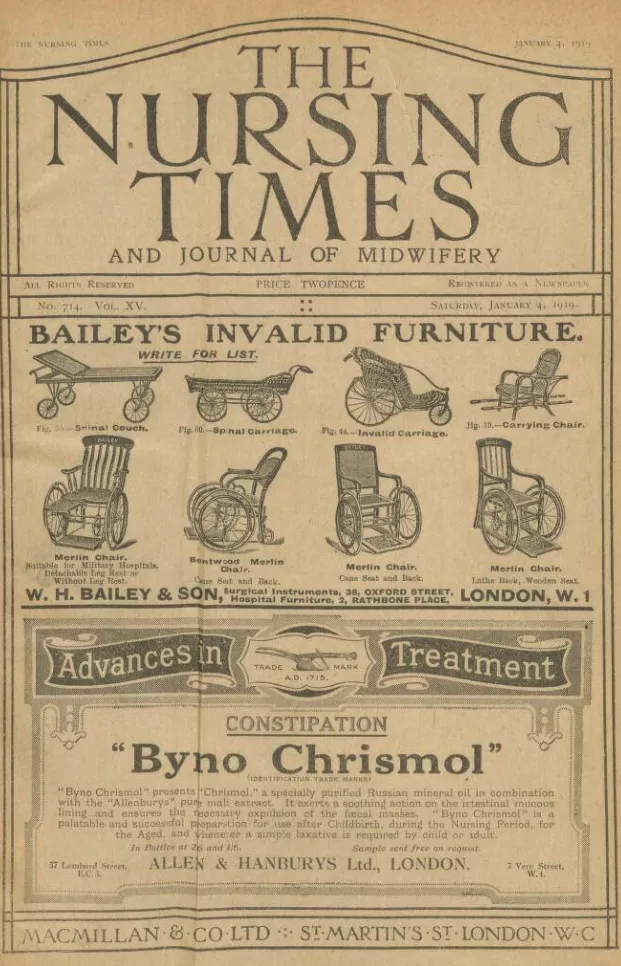
Indeed, what is fascinating about the Nursing Times is its reflection of the major health issues of the day. For example, during the First World War the treating of wounded servicemen and civilians becomes front and centre, whilst in the post-war period, the influenza epidemic takes an important role in the publication.
Furthermore, as nursing was mainly a woman-led industry during the early 20th century, the Nursing Times provides an important perspective on the position of women in society. From covering women’s roles in the First World War, to reporting on the struggle for women’s suffrage, the Nursing Times is a fascinating resource for the study of women’s history.
However, in the early 20th century, it did have some limitations. We’ve published the Nursing Times this week, as the anniversary of Florence Nightingale’s birth falls on 12 May, and the anniversary of Mary Seacole’s death falls on 14 May. Both were pioneering nurses, known for their work in the Crimean War. Searching the Nursing Times, there are over 700 results for Florence Nightingale, but none for Mary Seacole. It took many, many decades for Mary Seacole, a Black woman, to receive the credit and attention she was due, and the Nursing Times, from 1905 to 1919, was also guilty of erasing her from the historical narrative.
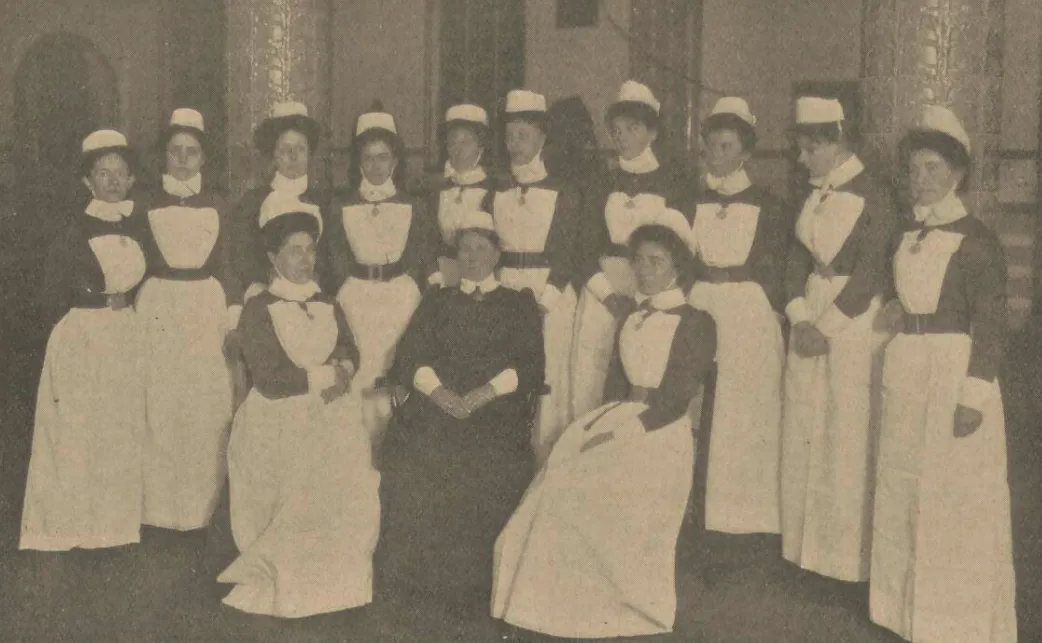
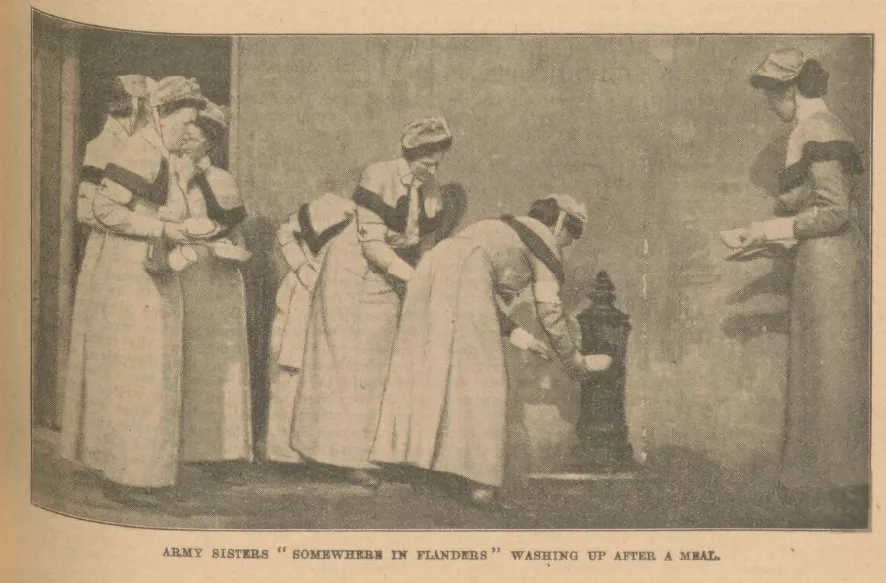
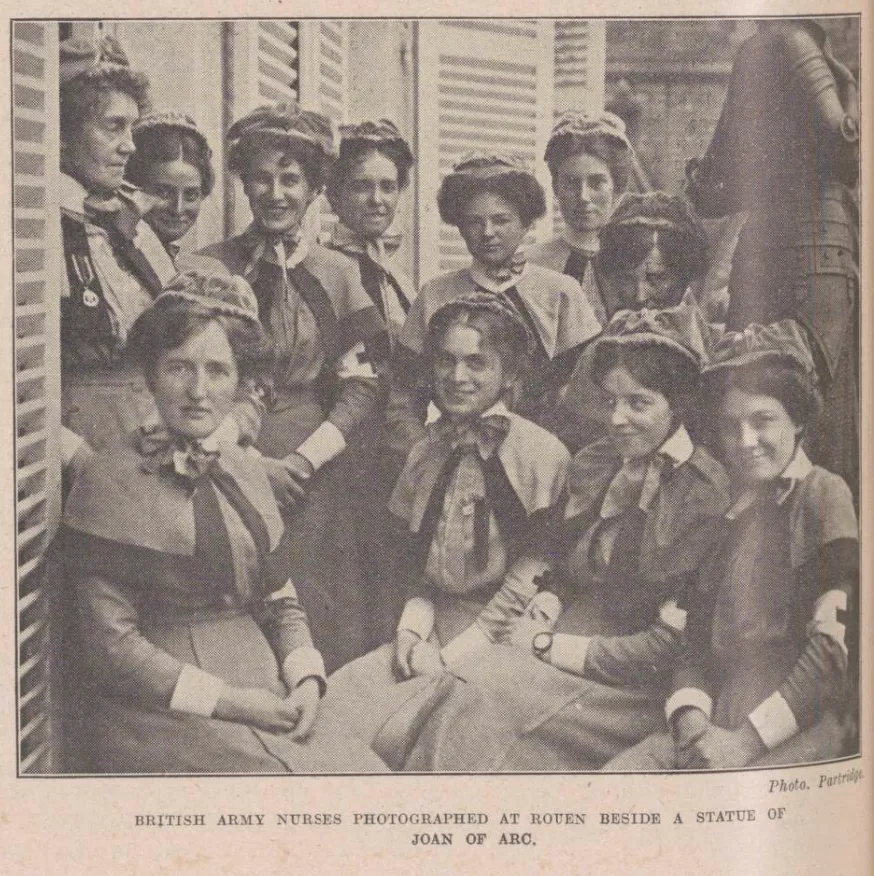
As the Nursing Times went on, it grew to fill some 40 pages, and it began to incorporate photography. Indeed, as we shall see, it provides an important photographic record of nursing during the First World War.
The Nursing Times lives on today as the largest nursing website outside of the United States, having ceased publication of its printed version in 2025.
The Crescent
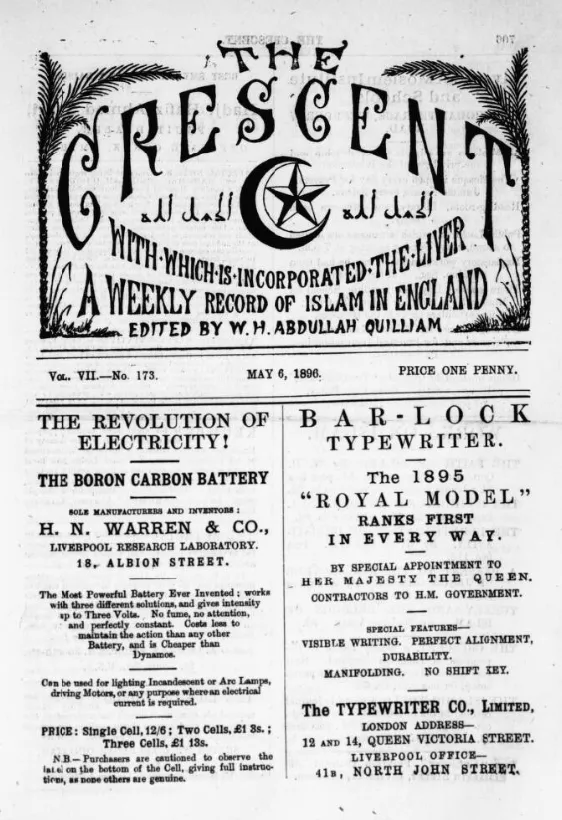
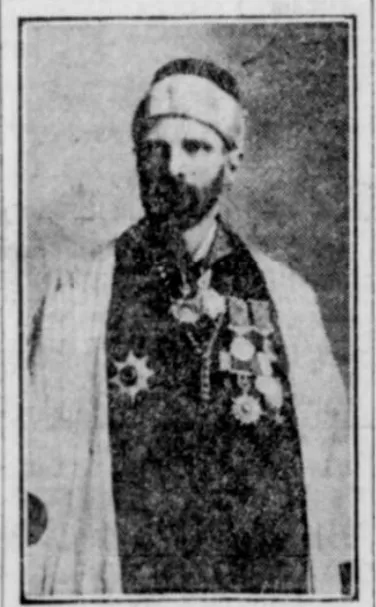
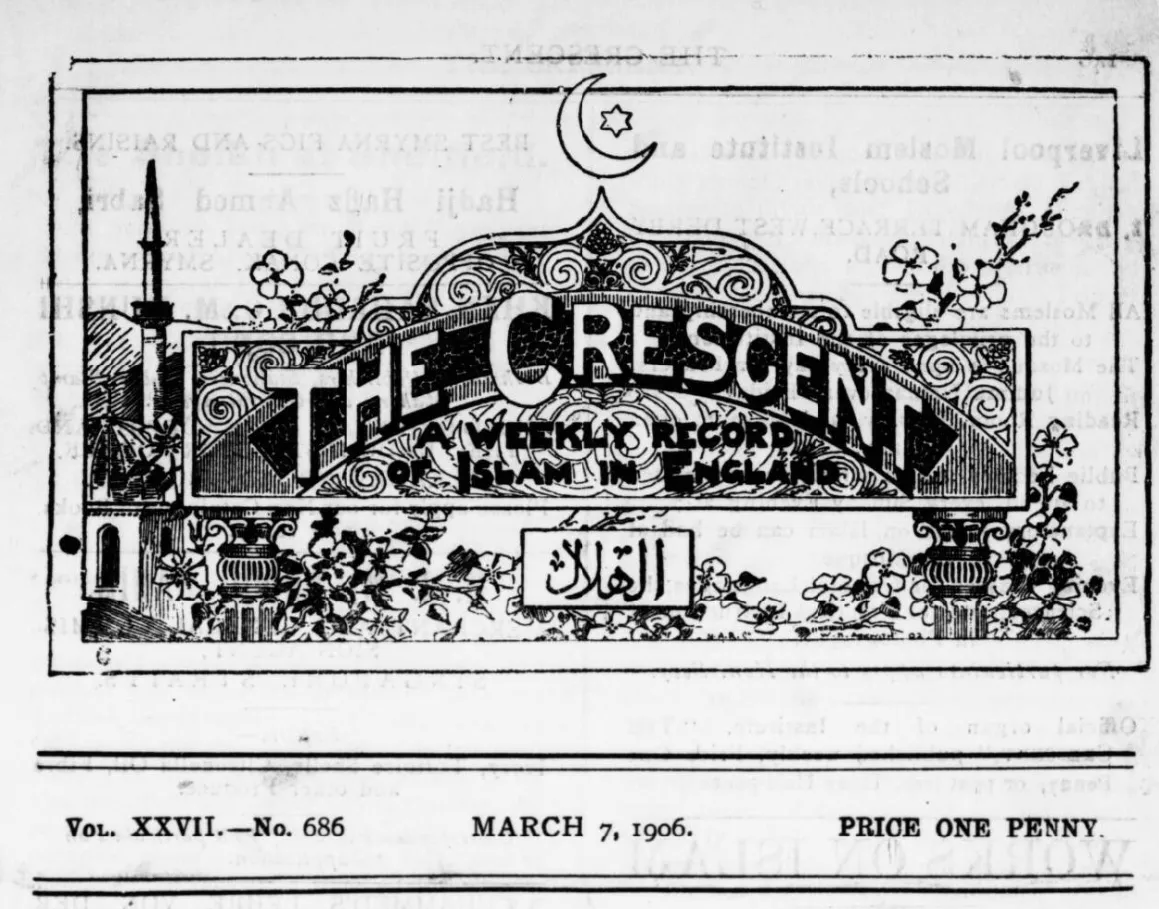
Next up is the groundbreaking title, The Crescent. ‘A weekly record of Islam in England,’ it is thought to be the oldest and first regular publication covering Britain’s Muslim population. It was first published in Liverpool on 14 January 1893, and was edited by W.H. Abdullah Quilliam, a pivotal figure in Britain’s late nineteenth century Muslim community.
Born in 1856 as William Henry Quilliam, Quilliam worked as a solicitor in Liverpool, and as part of his career, acted for the defence in high profile murder trials. However, after a visit to Morocco in 1887 in order to recover from an illness, he converted to Islam and became known as W.H. Abdullah Quilliam. Indeed, Quilliam would go to found England’s first mosque and Britain’s oldest Muslim association, the Association of British Muslims, as well as leading the Liverpool Muslim Institute.
It is estimated that thanks to Quilliam’s work some 600 people converted to Islam. The Crescent, therefore, became an important mouthpiece for these British Muslim converts. Indeed, some prominent British converts even wrote for The Crescent, including one of the first British women to convert to Islam, Fatima Cates (1865-1900), and Scottish Muslim poet Yahya Nasser Parkinson (1874-1918).
So what did the sixteen pages of The Crescent contain? More locally, The Crescent reported on Liverpool’s Muslim community, often including snippets from the Liverpool papers detailing the community’s activities, and news from the Liverpool Moslem College. It also featured detailed reporting on W.H. Abdullah Quilliam, for example, one article reporting on his lecture about ‘Manx Antiquities.’
Furthermore, The Crescent, which cost one penny, reported on global Muslim affairs, with articles like ‘The Anti-Moslem Marriage Legislation of Ceylon.’ It also printed the Muslim calendar, detailing upcoming fasts and festivals. A particularly prominent feature of the paper was the serialised fiction written especially for it.
By 1896 The Crescent was relaying how it had ‘made rapid strides both in size and extent of circulation,’ as it hoped to reach a circulation of 5,000 copies. Indeed, during its publication run, it was recorded that the title was sent across Europe and beyond, to the likes of Afghanistan, China, Egypt, India, Singapore, Trinidad, and the United States.
However, the fate of The Crescent was so closely entwined with that of its editor, that it ceased publication in 1908 when Quilliam had to flee the country. Quilliam had been struck off the Roll of Solicitors for unprofessional conduct, which consisted of fabricating certain details to make divorce legally acceptable. He fled to Türkiye, but returned to Britain in 1910 under the name Henri Mustapha de Léon. He founded magazines The Philomath in 1913, and The Physiologist in 1917. He passed away in 1932.
The Voice of the People 1848
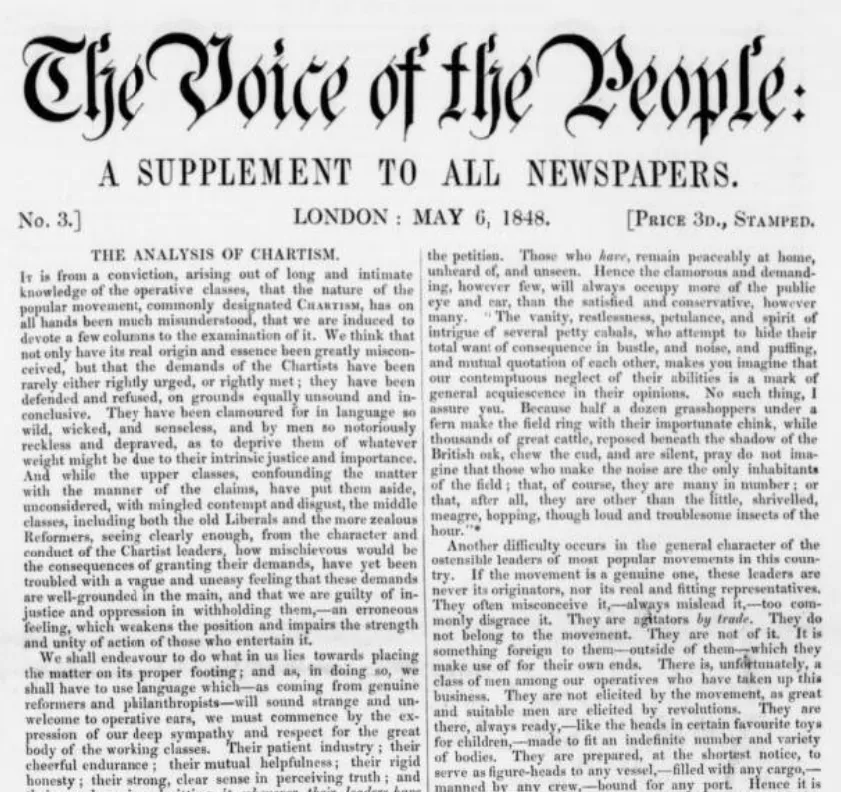
Our final new title of the week is a radical one, and it is the Voice of the People 1848. First published in 1848 in London, and seemingly only having a short run, it dubbed itself as ‘A Supplement to All Newspapers.’ An alternative, then, to the mainstream press, the Voice of the People put forward a radical and reformist policy, that was based on just that, the voice of the people.
In the newspaper’s first edition, which was published on 22 April 1848 at the cost of 3 d., the debut editorial discussed at length the meeting of the French Third Estate in June 1789, and the proposition that the group be called the ‘representatives of the French People.’ This anchoring within the dialogue of the French Revolution was quite typical of British radical groups of the time. Articles like ‘The Social Principle for Man’s Regeneration’ and ‘Co-operation for Consumption,’ which used the Aberdeen flax factories as an example, firmly tie the Voice of the People within the reforming and also cooperative movements, the latter of which was growing throughout the 1840s.
Our updated titles
We have an exciting array of updated titles for you this week. First, we wanted to highlight the specialist titles to which we have added new pages. These updated titles are women’s paper The Queen, and duo of sports-focussed titles, Sporting Life and the Field, the latter seeing over 32,000 brand new pages join its ranks from 1912 to 1920.
Other substantial updates this week are to the Cambridge Daily News (over 79,000 brand new pages), the Dundee Evening Telegraph (over 53,000 brand new pages), and the Reading Evening Post (over 31,000 brand new pages). We’ve updated two further Scottish titles (the Broughty Ferry Guide and Advertiser and the Inverness Courier), with extensive updates to early Irish title the Dublin Journal (years spanning 1782 to 1824), and updates to the Belfast Mercantile Register and Weekly Advertiser. Finally, we’ve added new pages to a duo of Welsh titles, the Carmarthen Journal and the Monmouthshire Beacon, as well as to the Channel Islands’s Guernsey Star.
The Nursing Times and nursing in the First World War
The pages of the Nursing Times that we have published this week shine an important light on nursing work during the First World War. As such, it is a fascinating record of women’s work during this tumultuous period in history. Indeed, as the Nursing Times declared on 12 December 1914, the paper dealt with the subject of nurses and the war ‘more full and pictorially’ than ‘any other Nursing Journal.’ It furthermore urged:
…read the Nursing Time every week if you wish to know how the work of Nurses in the War is being carried out and what opportunities there are for offering your own services to your Country.
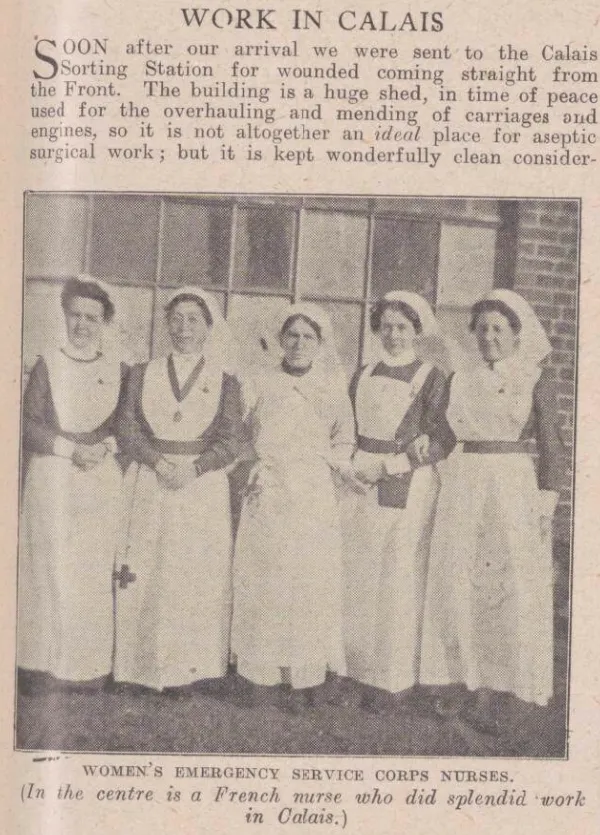
So what kind of features about nursing and the war did the Nursing Times print? Well, the title published a regular ‘Letters and News from The Front’ section, which showcased nursing on the front line. On 5 December 1914 the Nursing Times printed an account from an Emergency Service Corps nurse, who was station in Calais. She reported how:
The wounded who come to us are chiefly French and German, the latter generally in a dreadful state of dirt and hunger, having been days without food, and exposed to cold and rain. Their wounds can better be imagined than described.
Moreover, this nurse’s account and others featured in the Nursing Times give an impression of what daily life was like for these nurses stationed away from home, as well as a sense of the work they were undertaking. The Emergency Service Corps nurse tells of how she and her fellow nurses live in railway carriages, which she describes as being ‘warmed and comfortable.’ However, the nurses ‘greatly’ missed baths, ‘which can be had for two francs at a Hôtel!’
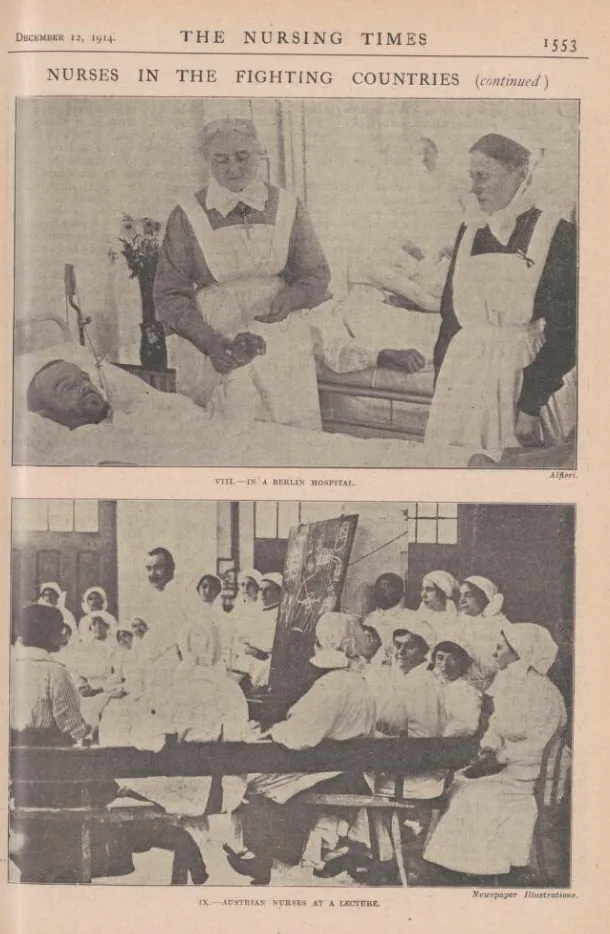
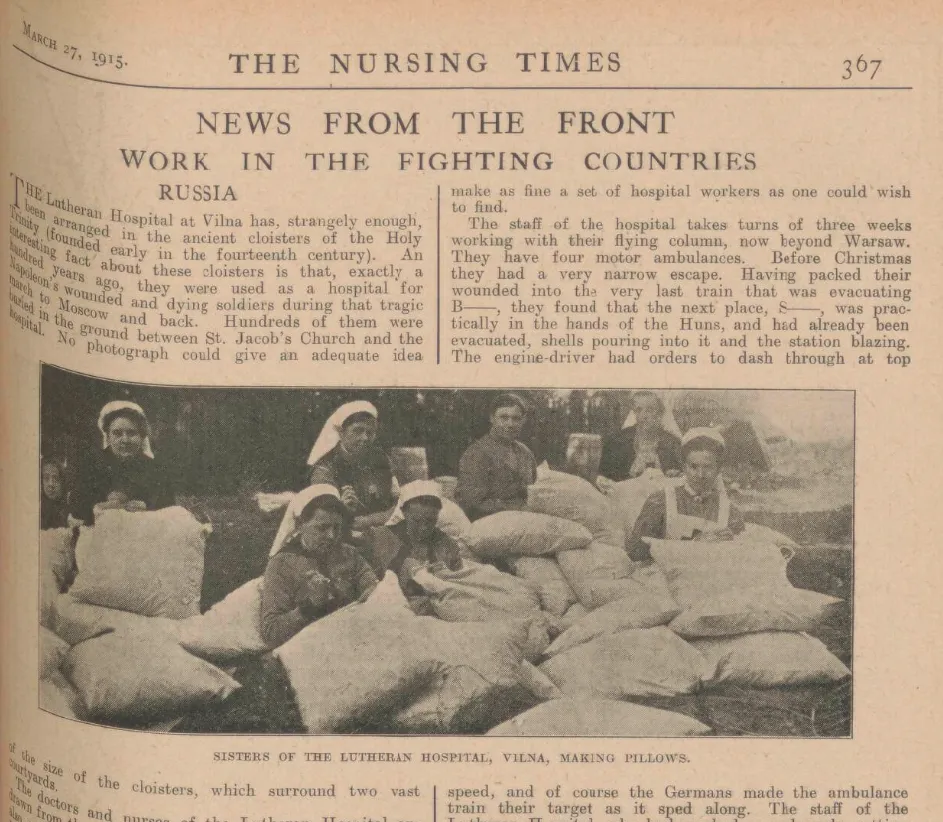
Wonderfully, the Nursing Times often included photos alongside these accounts, and the paper did not just focus on British nurses. On 12 December 1914 the publication printed a spread entitled ‘Nurses in the Fighting Countries,’ which showed nurses at work across the sphere of conflict. One page, for example, shows nurses working in a Berlin hospital and Austrian nurses attending a lecture, whilst another goes into great detail about the Lutheran Hospital in Vilna (now Vilnius, Lithuania). The Nursing Times relates how the ‘doctors and nurses of the Lutheran Hospital are drawn from the Lutheran Community in Petrograd,’ and how the ‘hospital is fitted up with every up-to-date appliance.’
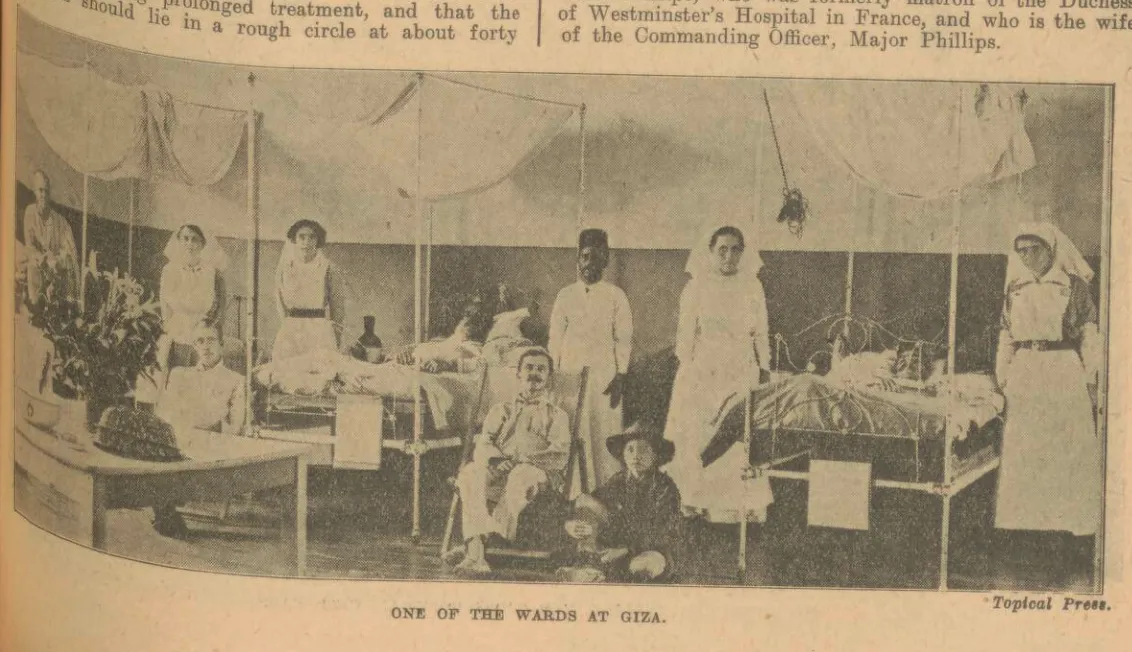
Such details illuminate the work of nurses across Europe, from the Western to the Eastern front and beyond. On 4 December 1915 the Nursing Times featured an update from Miss Pease, who was a nurse supported by the publication’s ‘Nurses’ Nurse Fund.’ She wrote as follows from the Red Cross Hospital in Giza, Egypt:
This hospital is beautifully situated. For the last two months we have been having all medical cases, principally dysentery. It is wonderful how they pick it up in this hospital… We are having a week’s holiday in turn at Alexandria at the British Red Cross and St. John Ambulance Rest Home for Nurses, and it is the most delightful place. All the bedrooms have balconies, and everyone has breakfast in bed and the luxury of an early cup of tea at 7 a.m. The bathing is excellent, and we have two huts on the beach.
Miss Pease’s is certainly a fascinating account, with the juxtaposition of the dysentery cases and bathing in Alexandria. Moreover, it provides insight to the actual experience of nurses during the First World War, revealing not only how they worked, but how they rested too.
Meanwhile, the Nursing Times printed lists of names of nurses posted abroad, and where they were being sent to, as well as the names of those nurses being sent to ‘home hospitals,’ also with the locations of those hospitals. If you have a nursing ancestor, or are researching a particular individual, these lists are a great repository for understanding the movement of nurses throughout the First World War.
So what are you waiting for? Delve into the pages of the Nursing Times, and see what you can uncover today.
New Titles
Title | Years Added |
1913-1917, 1922-1942 | |
1873, 1877, 1880, 1889, 1893, 1932 | |
1853-1854 | |
1905-1919 | |
1896-1908 | |
1848 |
Updated Titles
This week we have updated 31 of our existing titles.
You can learn more about each of the titles we add to every week by clicking on their names. On each paper’s title page, you can read a free sample issue, learn more about our current holdings, and our plans for digitisation.
Title | Years Added |
1912, 1914-1941, 1943-1946, 1966 | |
1871-1887, 1889-1893 | |
1877, 1883-1884, 1890, 1894, 1950 | |
1994-2005 | |
2000-2002, 2004 | |
2001 | |
2005 | |
1885 | |
2003-2005 | |
1782-1784, 1792-1793, 1796, 1798-1799, 1804-1816, 1820-1821, 1823-1824 | |
1990, 1996, 1999-2002, 2004-2005 | |
1912-1920 | |
1910-1919 | |
1897, 1912 | |
1878 | |
1912, 1918 | |
1939-1941 | |
1883 | |
1911-1919 | |
1891 | |
1912-1919 | |
1876, 1880, 1894 | |
2001-2002 | |
1880-1893 | |
1916-1919 | |
1912-1915, 1917-1919, 1922, 1926, 1928-1929, 1931-1936, 1938-1945 | |
1875-1885 | |
1917-1919 | |
1913-1919 | |
1879, 1885 | |
1913 |
You can keep up to date with all the latest additions by visiting the recently added page. You can even look ahead to see what we’re going to add tomorrow.
More on this topic:
Share this article
About the author

Rose Staveley-Wadham
Newspaper Licensing Manager
Published on Tue, 12 May 2026.