
Hot Off The Press – New Titles This Week
Published on 6 May 2026 by Rose Staveley-Wadham
This week we are stepping into the history of a royal abode, namely Highgrove House, the private family residence of King Charles III and Queen Camilla. As we open the doors of Highgrove, thanks to the addition of local Gloucestershire newspaper the Tetbury Advertiser, we welcome a total of six brand new titles to our Archive, as well as the updating of 52 of our existing titles, one for every week of the year. Meanwhile, in all, we’ve added 298,344 brand new pages to our collection over the last seven days.
So read on to discover more about the history of Highgrove, which involves fetes and what could have been a near fatal accident, as well as to learn about our new and updated titles of the week.
Register now and explore The Archive
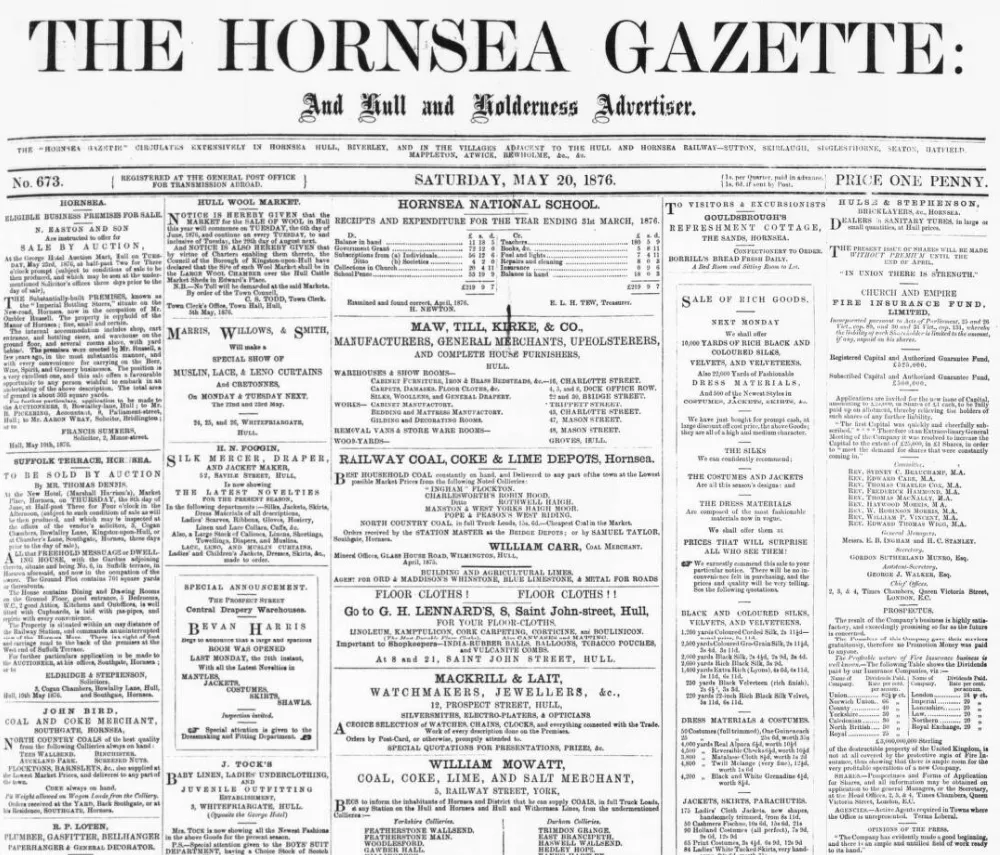
The Hornsea Gazette
But we begin not in Highgrove, but in Hornsea, as we introduce the first of our duo of new Yorkshire titles this week, the Hornsea Gazette. With the full name of the Hornsea Gazette and Hull and Holderness Advertiser, this publication was established in 1863, and it was Liberal in its politics.
The Hornsea Gazette circulated ‘extensively’ in Hornsea, Hull, Beverley, and ‘in the villages adjacent to the Hull and Hornsea Railway, Sutton, Skirlaugh, Sigglesthorne, Seaton, Hatfield, Mappleton, Atwick, and Bewholme.’ The development of the railway was incredibly important to the town of Hornsea. It became a flourishing seaside resort in the Victorian era, following the expansion of the Hull and Hornsea Railway, and the Hornsea Gazette reflects this in its special ‘List of Visitors.’ This list detailed the names of those staying in the seaside town, alongside the names of the hotels at which they were staying.
Alongside the visitors lists, within the pages of the Hornsea Gazette you can find local and district news, alongside national and international news stories, the latest from the markets, correspondence and updates from parliament. Costing just one penny, the Hornsea Gazette appeared every Saturday and filled four pages.
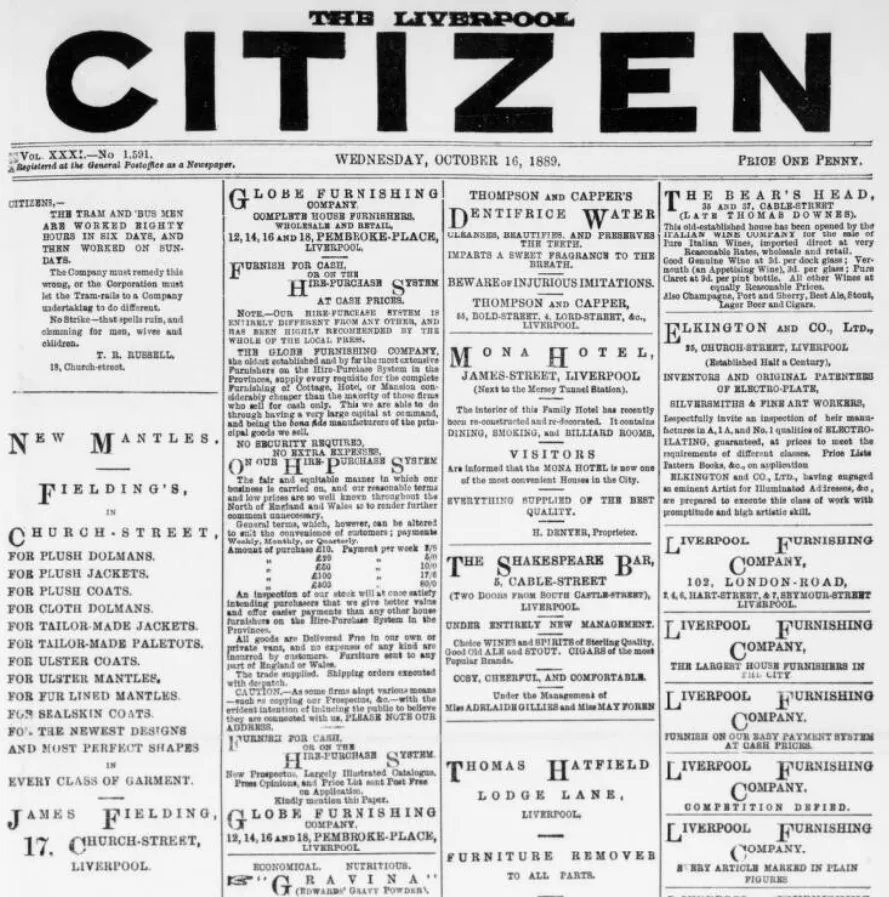
The Liverpool Citizen
Crossing the Pennines now to introduce our next new title of the week, which is the Liverpool Citizen. First published in 1887, the Liverpool Citizen was a ‘Journal of Current Events.’ Incorporating the themes of politics, society and satire, this title appeared every Saturday priced at one penny.
Filling some sixteen pages, the Liverpool Citizen was an interesting read, with roots firmly in the city of Liverpool. Within its pages, you can read articles like ‘Men in Blue: or Reminiscenes of a Police Life’ by a former officer, or ‘Celebrities I Have Known,’ which was penned by an ‘old Liverpudlian.’ Furthermore, the paper incorporated news from local churches and chapels, looks at old Liverpool businesses and ‘sporting gossip.’
Away from Liverpool, the publication printed ‘notes from London,’ alongside cartoons and poems.
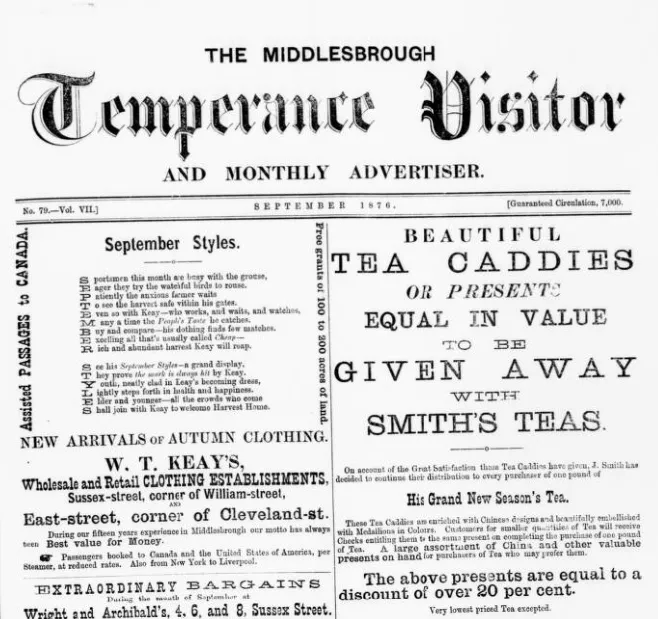
The Middlesbrough Temperance Visitor and Monthly Advertiser
Our next new title takes us back to Yorkshire, and the port town of Middlesbrough. First published in 1870, the Middlesbrough Temperance Visitor and Monthly Advertiser was the organ of the Middlesbrough Temperance Society, which itself was formally established in 1836. In the 1830s, the port of Middlesbrough was rapidly growing thanks to the establishment of the Stockton and Darlington railway, Middlesbrough becoming an important coal port.
It was in this environment that in 1834 the first meeting of the Middlesbrough Temperance Society was formed, with the group organised to tackle the consumption of alcohol, opium and tobacco. Teesside Live tells us how between 1847 and 1850 2,000 temperance pledges were taken in a town of only some 8,000 inhabitants.
Therefore, the Middlesbrough Temperance Visitor and Monthly Advertiser aimed to continue the good work of the society. Available for free, 6,000 copies of this publication circulated throughout Middlesbrough, and indeed, more specifically, in ‘the homes of the working-classes of Middlesbrough.’
A year after the Middlesbrough Temperance Visitor and Monthly Advertiser made its debut, the paper reflected on its progress:
Band of Hope meetings have been conducted with the view of training the young and rising generation to resist the allurements of fashionable drinking customs; a Free Temperance Reading Room has been opened, and well patronised by the class for whom it was intended; the missionary has been actively engaged in visiting and holding meetings; societies in the district have been re-organized and are flourishing; the town can at present boast of a larger number of abstaining ministers of the Gospel than ever it could before…
So what did the eight pages of the Middlesbrough Temperance Visitor and Monthly Advertiser contain? It printed a list of the meetings of the Middlesbrough Temperance Society, moralising fictional tales with titles like ‘Harry Thorpe’s Temptation,’ pieces on the temperance movement, and items of poetry.
The Middlesbrough Temperance Society lasted into the 21st century, with Teesside Live reporting that the organisation closed its doors in 2013.
The North London Guardian, Stoke Newington Chronicle
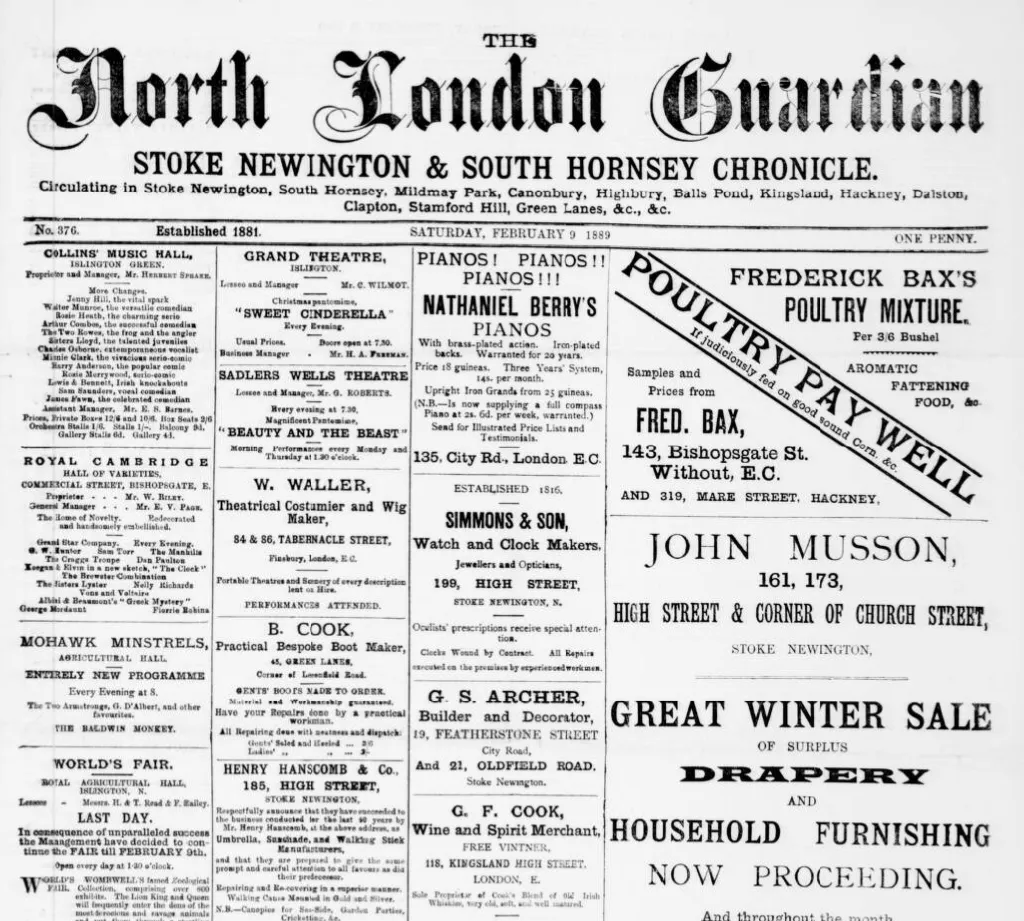
We travel to the capital now for our next new title of the week, the North London Guardian, Stoke Newington Chronicle. This suburban London title was established in 1881 by W. Thompson, of Allen Road, Stoke Newington. Stoke Newington is an area of North London that would become its own Metropolitan Borough between 1900 and 1965, before becoming a part of the London Borough of Hackney.
As for the North London Guardian, Stoke Newington Chronicle, it was neutral in its politics, and it appeared every Saturday, priced at one penny. Circulating throughout areas of North and North East London, including Stoke Newington, South Hornsey, Mildmay Park, Canonbury, Highbury, Balls Pond, Kingsland, Hackney, Dalston, Clapton, Stamford Hills, and Green Lanes, this title filled eight pages with mainly local news.
Indeed, the pages of the North London Guardian, Stoke Newington Chronicle printed the latest from local societies, such as the Amethyst Dramatic Club, the Dalston and De Beauvoir Reform Club, and the Wesleyan Band of Hope, as well as news from the West Hackney Ratepayers’ Association and from Dalston Police Court. The paper also published a mix of national and international news, alongside serialised fiction, a ‘lady’s letter,’ and sermons given in the local churches.
The Oldham Evening Express
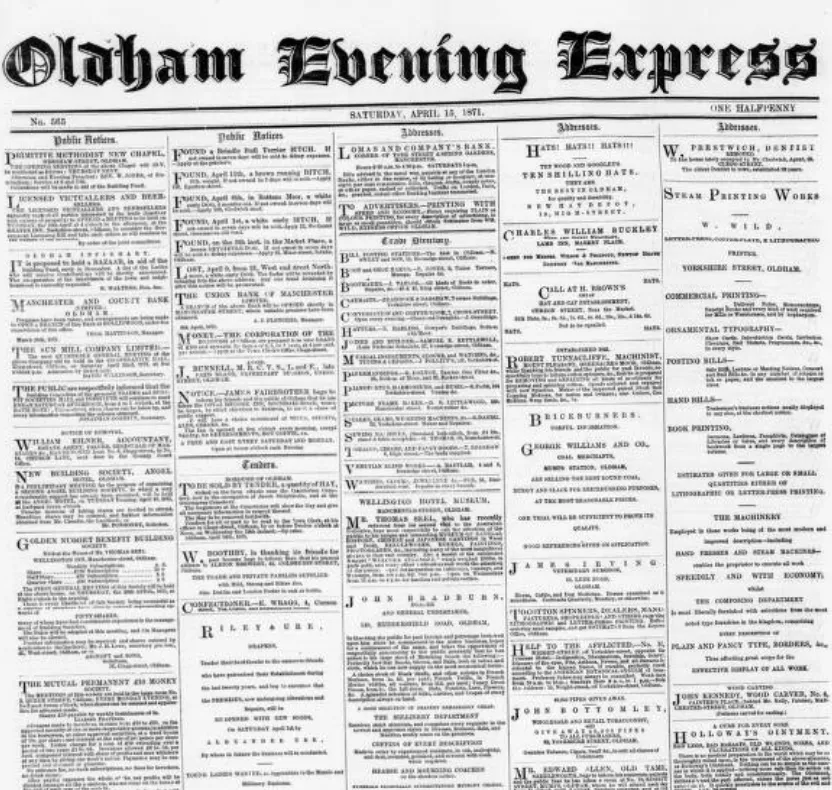
We return to the north now with our penultimate new title of the week, the Oldham Evening Express. ‘Non-political’ by nature, the Oldham Evening Express was established in the Lancashire town of Oldham in 1867. By 1875 it was ‘the only daily paper in Oldham,’ and it was printed by proprietor William Wild.
Indeed, in an advert published in 1875, it was related how the Oldham Evening Express was ‘printed on one of Hoe’s four-feeder rotary machines, at the rate of 8,000 to 10,000 per hour.’ Meanwhile, the Oldham Evening Express, which appeared every weekday at 4.30 pm, had a circulation of some 10,000 copies.
The four pages of the paper, which only cost one halfpenny, featured the ‘latest intelligence’ from home and abroad, alongside ‘local and general news.’ Furthermore, the Oldham Evening Express published extensive ‘Wanted’ and ‘To Be Let’ advertisements, alongside letters to the editor, news from parliament, and sporting news.
The Tetbury Advertiser
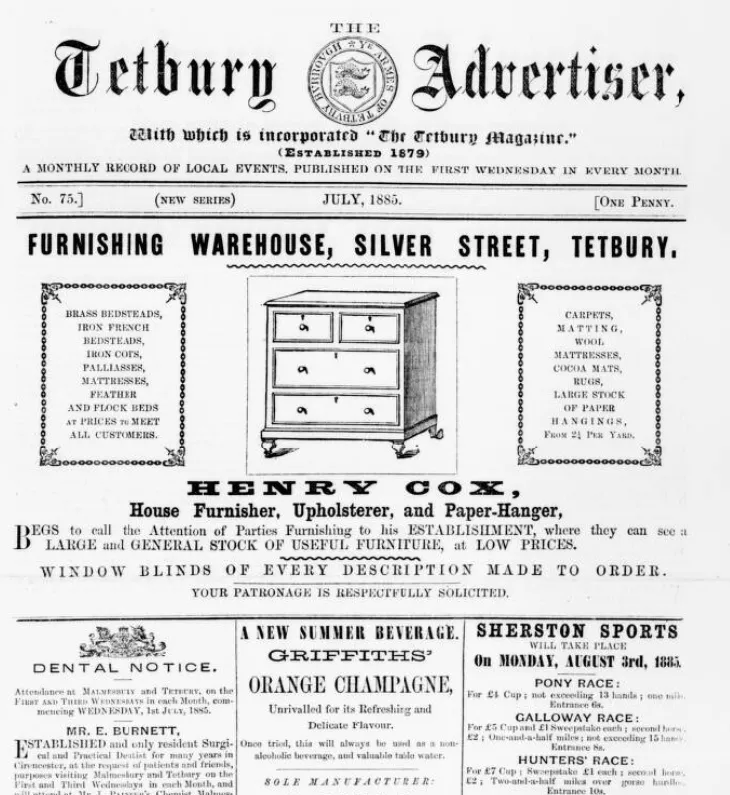
Our final new title of the week is the one that leads us to unlocking the history of Highgrove. Established in 1879 as the Tetbury Magazine, on 18 May 1883 this title became known as the Tetbury Advertiser. Published by T. Hill of Long Street, Tetbury, a town in Gloucestershire’s Cotswolds, the Tetbury Advertiser was ‘a monthly record of local events.’
Published on the first Wednesday of every month, and costing one penny, this Conservative title filled between eight and ten pages. The Tetbury Advertiser, which became known as the Tetbury Advertiser and Malmesbury Chronicle in July 1889, published a range of local and district news, from the likes of Long Newnton, Sherston, Westonbirt, and Shipton Moyne. The title, meanwhile, published correspondence, serialised fiction, poetry, news of new books and periodicals, railway timetables, news from the Tetbury Petty Sessions, and notices of births, marriages and deaths.
Our updated titles
We have 52 updated titles for you this week, and they hail from across Britain, Ireland and beyond. Our largest update of the week is to ‘Scotland’s favourite paper,’ the Sunday Post, to which we have added over 63,000 brand new pages. Other sizeable updates this week are to the Cambridge Daily News (over 57,000 brand new pages), the Lancashire Evening Post (over 30,000 brand new pages) and the Dundee Evening Telegraph (over 21,000 brand new pages).
Meanwhile, for Wales, we have updated two of our newspaper titles, the North Wales Times and Y Clorianydd, whilst we have updated four of our Scottish publications, including the Barrhead News and the Ardrossan and Saltcoats Herald. Across the Irish Sea, we’ve updated six of our titles from the Republic of Ireland, including the Irish Field and the Limerick Leader, and we’ve updated four of our Northern Irish titles, including the Tyrone Constitution and the Coleraine Chronicle.
Finally, in terms of our regional titles, we’ve made updates to two titles from the Isle of Man, the Isle of Man Daily Times and the Isle of Man Courier. With regards to our specialist titles, you can enjoy updates to Boxing, the Financial News, The Sportsman, and World’s Fair.
The history of Highgrove – the home of King Charles III
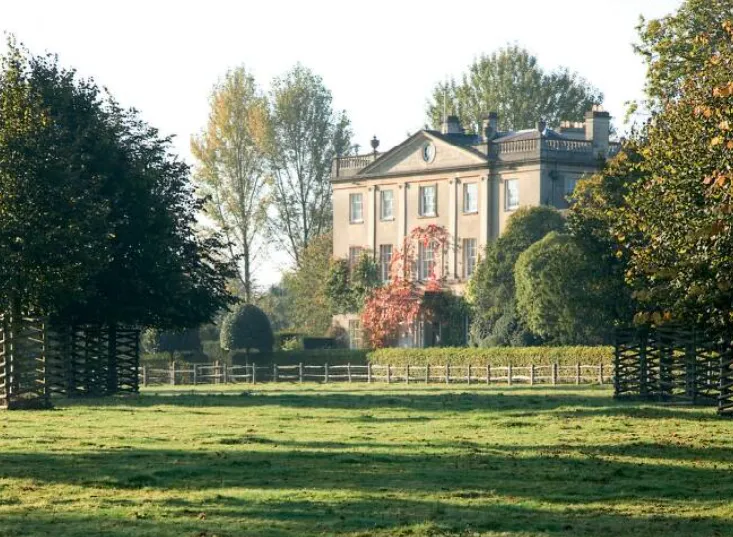
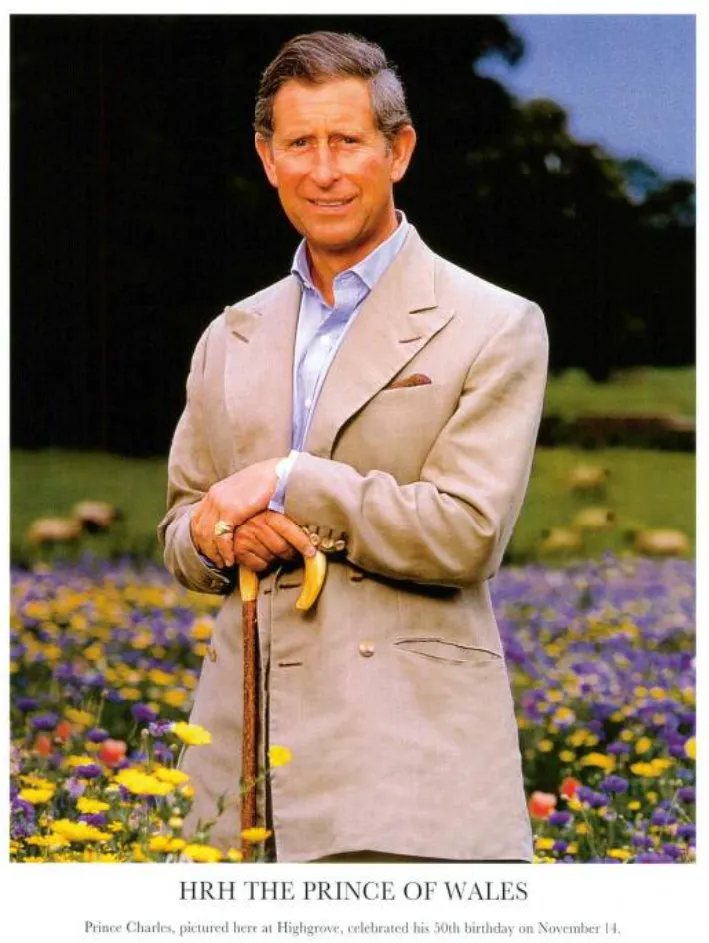
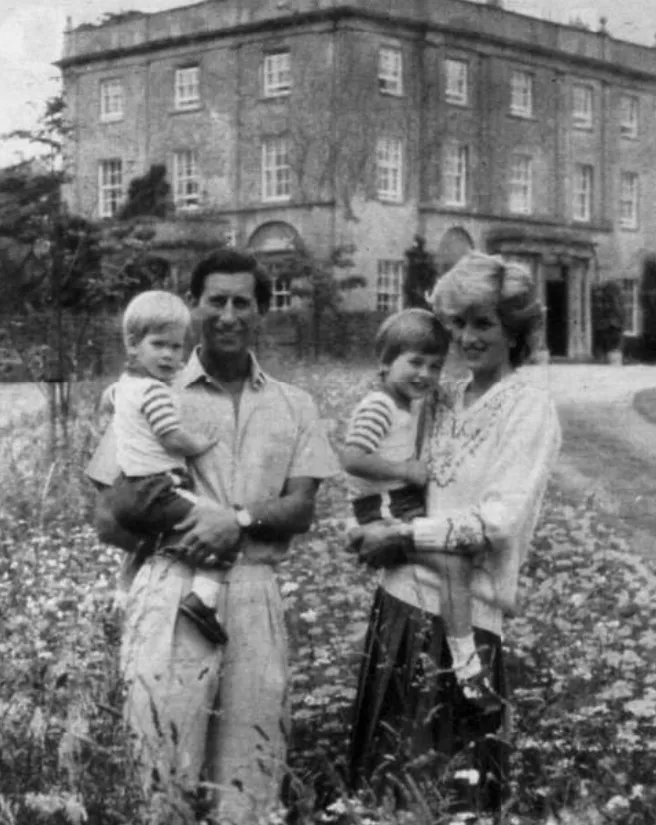
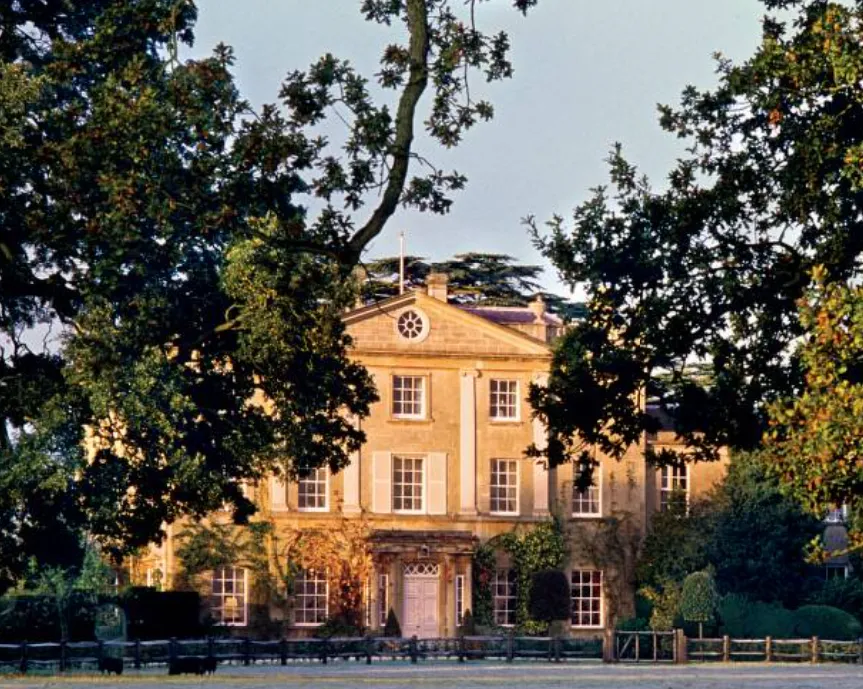
The town of Tetbury in Gloucestershire lies to the southwest of Highgrove House. Now the family residence of King Charles III and Queen Camilla, we delved into the pages of one of this week’s new titles, the Tetbury Advertiser, to discover more about the history of what would become a royal residence.
From the Tetbury Advertiser on 1 July 1885, we learn that one W. Hamilton Yatman, Esquire, was living at Highgrove. Alongside the Duke of Bedford, he is reported as being one of the patrons of the Collegiate School at Tetbury, where pupils were ‘prepared for the Universities, Civil Service, Oxford Local, and other Examinations.’
W. Hamilton Yatman and his home of Highbury again appear in the Tetbury Advertiser, this time under the headline of ‘Tetbury Horticulutral and Floral Society,’ which was published in September 1885. We learn that Yatman, of Highgrove, exhibited a ‘splendid collection of plants,’ alongside S. Holford, Esq., of Westonbirt. These flowers were ‘staged down the centre of the tent and were very much admired, and added greatly to the decorations of the exhibition.’
Meanwhile, Highgrove’s own gardener, Mr. King, was part of the prize giving committee, who ‘did their work in a satisfactory manner giving cause for very few complaints.’
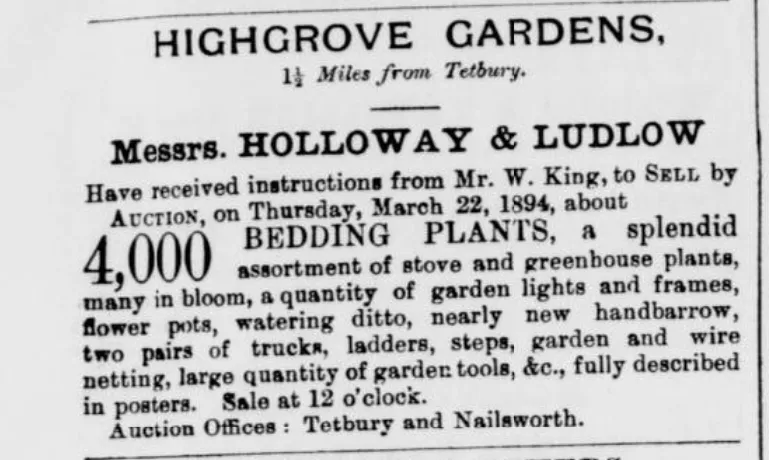
Given King Charles’s affinity for all things horticulture, it is fitting that his home has a long history of growing plants. We see this link again in the Tetbury Advertiser, March 1894, which describes how ‘4,000 bedding plants, a splendid assortment of stove and greenhouse plants, many in bloom,’ were to be sold from Highgrove Gardens.
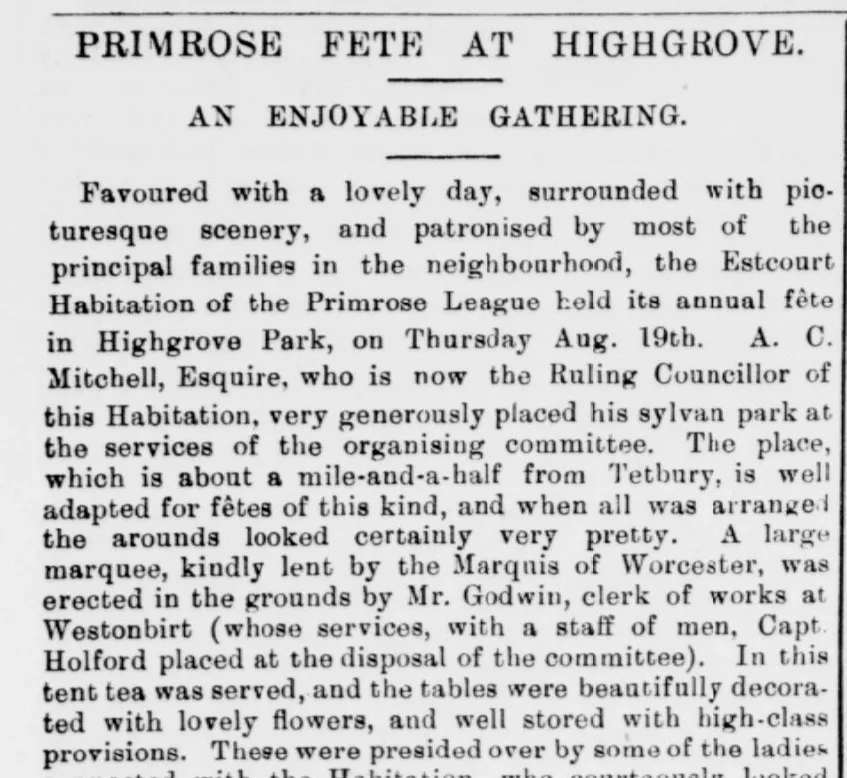
Fast forward to 1897 and the grounds of Highgrove were to be thrown open for a ‘primrose fete,’ which was set to be held on 19 August 1897. The member of parliament for the area was due to attend, and there was set to be ‘a good programme of athletic sports,’ alongside ‘various other diversions.’ Indeed, ‘in short, politics and amusements will be well sandwiched on that day.’
The lovely thing about our newspapers is that one can follow up on such announcements. In the Tetbury Advertiser of September 1897 we learn about the ‘enjoyable gathering’ that was the primrose fete at Highgrove. ‘Favoured with a lovely day, surrounded with picturesque scenery, and patronised by most of the principal families in the neighbourhood,’ Highgrove’s new owner A.C. Mitchell hosted the Primrose League’s annual picnic, the Primrose League being an organisation for spreading Conservative beliefs in Britain.
Tents were set up around the grounds, the Stroud Town Band played, there were shooting saloons, swing boats, and dancing in the evening. Additionally, various races were run, including a half-mile donkey race, a two mile bicycle race and a one mile flat race for ponies.
A year later, in September 1898 and we learn of an accident to Edward March, the son of Highgrove’s head gardener, in the Tetbury Advertiser. The article tells of how he had had ‘the misfortune to be shot through the hand by an air pistol, the pellet passing right through.’ Thankfully, it was reported how ‘the lad’ was ‘getting on satisfactorily.’
An important Highgrove figure that arises at the turn of the century is Mrs. Mitchell, the wife of owner A.C. Mitchell. In February 1900 the Tetbury Advertiser reports how she hosted a meeting of the Girls’ Friendly Society at Highgrove, where ‘a most enjoyable time was spent by all.’ Furthermore, in the early 1900s the paper represents a record of Mrs. Mitchell’s charitable giving, providing eggs, for example, in April 1904, for the Tetbury Cottage Hospital.
The Tetbury Advertiser is, therefore, a fantastic record of the history of Highgrove, not only outlining those who lived and worked there, but demonstrating how it was an important part of the community and a site of horticultural significance, things it remains to this day.
Discover more about the history of Highgrove, other royal residences, and much more besides, in the pages of our Archive today.
New Titles
Title | Years Covered |
1869-1871, 1874-1884, 1886-1895, 1897-1901 | |
1887, 1889, 1891 | |
1871, 1873, 1875-1883 | |
1888-1916 | |
1869, 1871, 1889 | |
1885-1892, 1894, 1896-1911 |
Updated Titles
This week we have updated 52 of our existing titles.
You can learn more about each of the titles we add to every week by clicking on their names. On each paper’s title page, you can read a free sample issue, learn more about our current holdings, and our plans for digitisation.
Title | Years Covered |
1943-1946, 1966 | |
1919 | |
1919 | |
1966 | |
1876, 1883-1889 | |
1919 | |
1919 | |
1919 | |
2005 | |
1911, 1919 | |
2000-2002 | |
2002-2005 | |
1919 | |
1919 | |
1919 | |
1919 | |
1996, 1999-2000 | |
1962, 1966 | |
1884-1887, 1919 | |
1919 | |
1910-1911, 1919 | |
1966 | |
1993, 2005 | |
1919 | |
1893-1905, 1909, 1919 | |
1919 | |
1966 | |
1919 | |
1919 | |
1913-1920 | |
1912, 1919 | |
1919 | |
1919 | |
1919 | |
1919 | |
1919 | |
1919 | |
1919 | |
1986-2005 | |
1919 | |
1920-1922 | |
1919 | |
1919 | |
1919 | |
1919 | |
1911-1916, 1919 | |
1919 | |
1877, 1919 | |
1955, 1966 | |
1919 | |
1918-1919 | |
1966 |
You can keep up to date with all the latest additions by visiting the recently added page. You can even look ahead to see what we’re going to add tomorrow.
More on this topic:
Share this article
About the author

Rose Staveley-Wadham
Newspaper Licensing Manager
Published on Wed, 6 May 2026.