
Hot Off The Press – New Titles This Week
Published on 21 April 2026 by Molly Pearce
This week at The Archive, we’re rolling out the red carpet for the release of our newest national title, the Daily Star. Established in 1978, this newspaper speaks to decades of social, cultural, and economic fluctuations that help define the trajectory of British history. Exploration of the 236,096 brand new pages now available on The Archive unveil what the British public were loving, despising, ridiculing, and chortling at in the latter half of the twentieth century. From celebrity scandals, to royal anniversaries, and pop-culture landmarks, the Daily Star unapologetically pulls back the curtain on Britain’s contentious history, exposing its gritty reality.
So whether you’re looking for a family member, researching a particular cultural event, or simply nostalgic for a Britain of the past, explore the new pages from 1978-1999 of the Daily Star today.
Register now and explore The Archive
The (not so) humble beginnings of the Daily Star.
In November 1978, a paper would emerge in Manchester and spread rapidly throughout the Midlands and the North of England, with the intention of winning over loyal readers of The Sun and the Daily Mirror. Within six years of its initial publication, circulation of the Daily Star would rise to over 1.7 million copies a day, firmly cementing its place in British journalism history.
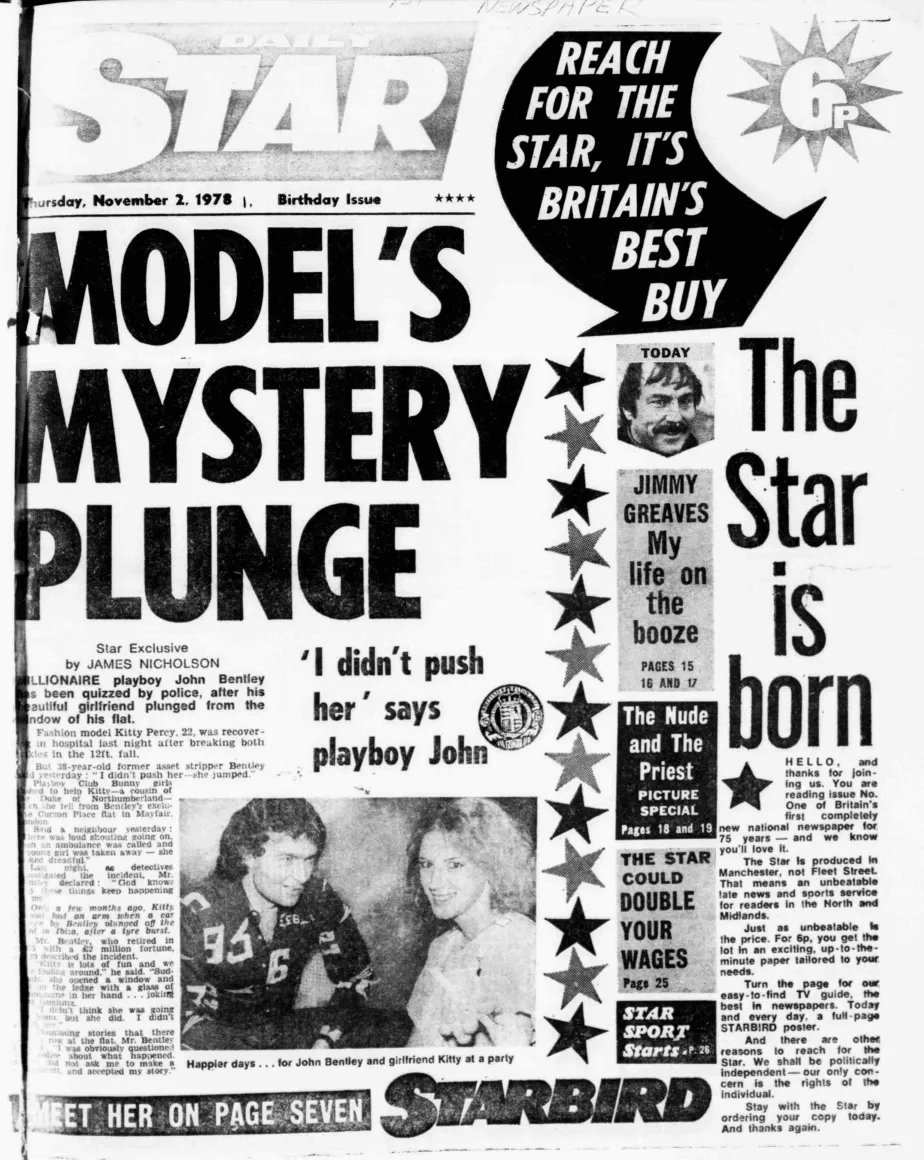
The popularity of Daily Star sprang from its tactical decision to speak directly to the reader. On the front page of its first ever issue, the paper addressed the individual, purporting to place their newspaper desires before those of the political masses. It’s manner was informal, friendly, and welcoming:
Hello, and thanks for joining us. You are reading issue no. One of Britain’s first completely new national newspaper for 75 years – and we know you’ll love it
We shall be politically independent – our only concern is the rights of the individual. Stay with the Star by ordering your copy today. And thanks again.
Additionally, the paper was affordable, at only six pence per issue. This low price granted diverse readers daily, unfiltered access to unfiltered, bold narratives that would underpin British social history throughout the 1980s and 90s.
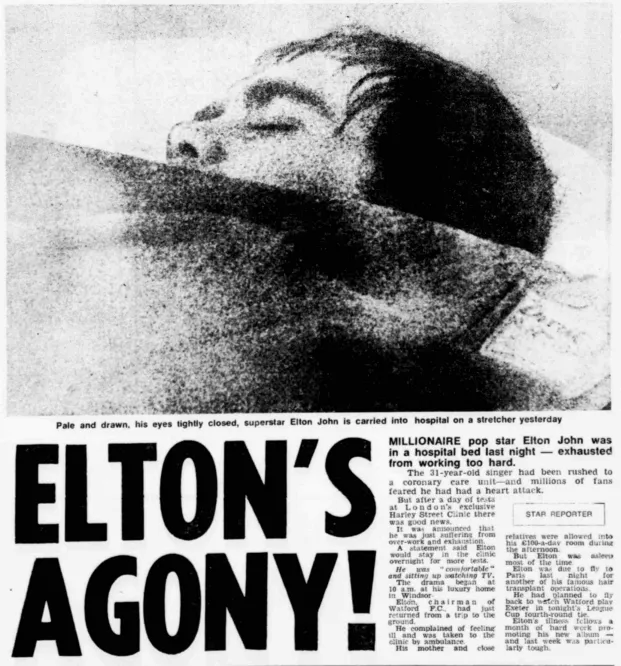
The Daily Star would continue to entice increasing numbers of the general public, and by 1980, the paper could be found in every corner shop, newsagents, petrol station, and train station across Britain. Its ability to tell current and pressing stories without sacrificing entertainment or humour attracted the every day reader – he who wished not to feel overwhelmed and confused by factual, objective reporting. Although produced in Manchester, the paper was printed in the Daily Express Building on Fleet Street, London.
Upon its initial launch, the Daily Star flirted with left-leaning politics, and in March 1979, its Political Editor would report on the death of one of the Labour Party’s ‘bravest and most colourful characters‘, Tom Swain, with ‘”deep sorrow.”‘ However, these hints at political affiliation were few and far between, with the Daily Star endeavouring to maintain an altogether non-partisan stance. It became increasingly clear that the paper’s primary goal was to entertain, with editor-in-chief, Derek Jameson, and first editor, Peter Grimsditch, cementing this decision early on.
The Daily Star represented many ‘firsts’ for contemporary British journalism. It was the first national UK tabloid to introduce bingo, and was also the first advertiser to appear on the side of black taxis in London in 1982, following an amendment to the Royal Parks Act, which reinstated commercial advertising.
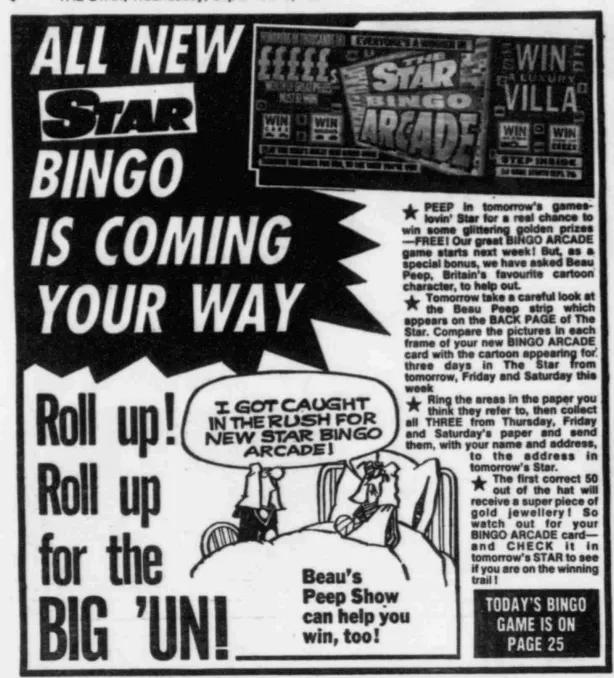
Daily Star | 02 September 1987
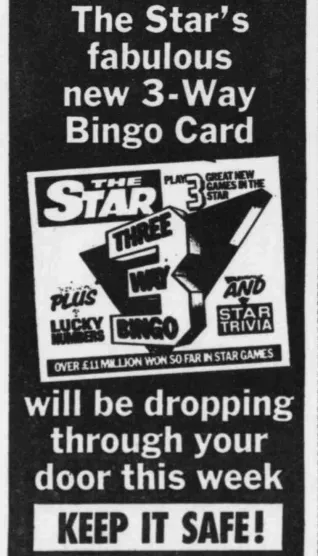
The Daily Star‘s rapid growth in popularity permitted an extension of its paper trail, delivering bingo cards straight to the doors of its readers. This encompassed the paper’s commitment to a personalised experience, and allowed its daring, opinion-based reporting style to influence public opinion, showcasing the transformative power of journalism.
Controversial journalism in the Daily Star
The type of journalism undertaken at the Daily Star was not without its controversies. The raw and unfiltered perspective promised to its readers frequently caused distress and anger from both those related to the reports, and from members of the public. While some praised the paper for its honesty, others questioned the validity of its existence, calling its sensationalism into question.
The Daily Star centred heavily on showbusiness and pop-culture coverage, actively encouraging its readers to comment on ongoing events. The paper featured, “Wired”, a space for daily gossip, and a participation-led, “Fans Forum”, wherein readers themselves could comment on pressing news stories.
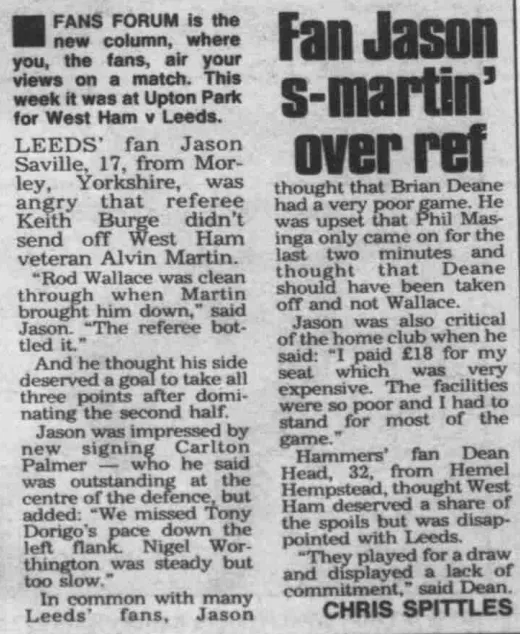
This interactive aspect of the paper only further illustrated its ethos of placing the individual at the centre of reporting. Through allowing the public to participate in conversations, narratives could be drawn that fell in line with the overwhelming British response. As such, readers could feel as though the paper was an extension of their own voice; a written vocalisation of their thoughts and feelings.
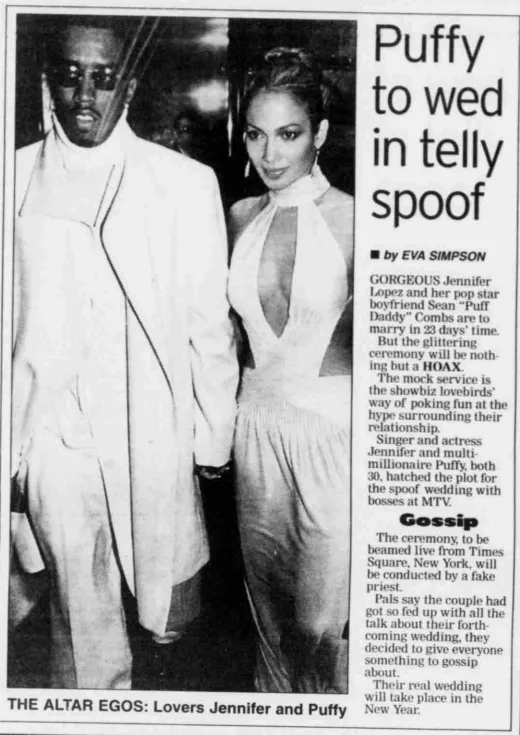
The Daily Star continued to publish gossip articles that highlighted celebrity weddings, crime verdicts, and career-ending controversies. Attempts to quash theories published in the paper only spurred further reports, constructing a flourishing environment that fed on contention.
Beau Peep: the Daily Star‘s beloved cartoon
The Daily Star became a space in which significant British events were reported on in a humorous and attainable manner, crafting an approach in which news reporting could become a strong source of entertainment. This thriving mixture of amusement and news documentation also encompassed artistic expression, exemplified by the popularity of the Daily Star‘s comic, Beau Peep.
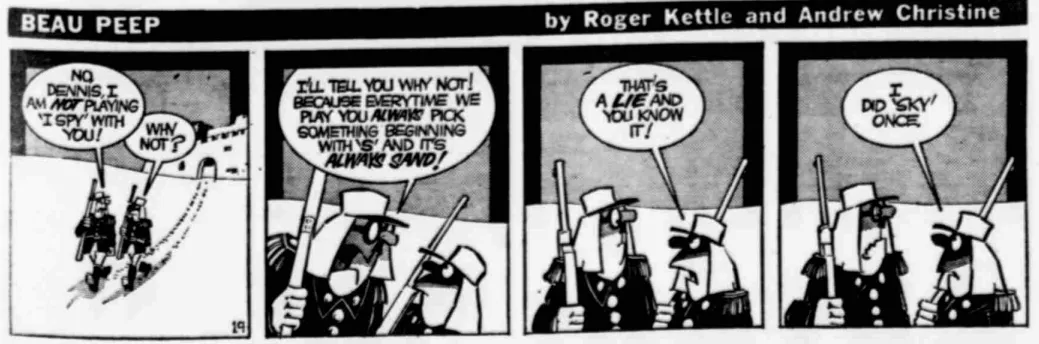
In 1975, Roger Kettle and Andrew Christine left their jobs at D.C. Thomson to work freelance, with the eventual hope of creating a strip for a national newspaper. The pair contributed cartoons for several men’s magazines under the signature, ‘Randy’. For roughly twenty weeks after departing from D.C. Thomson, Roger wrote and Andrew drew “Blubba and the Bear” for the children’s comic, Nutty. Andrew also drew “The Benny Hill Page” for the magazine, Look-In.
While completing various smaller jobs, the pair continued to dream of publishing a strip in a national newspaper, and during a brainstorming session, they came up with the name ‘Beau Peep’ (inspired by the 1924 British novel, Beau Geste, by P.C. Wren.) They began submitting Beau Peep strips to various newspapers, and were rejected by almost every British publication, including The Sun and Woman’s Own.
After two years of near constant rejection, the breakthrough finally occurred. Beau Peep was given a six-month contract in a brand new newspaper, the Daily Star. The first Beau Peep strip featured in the launch issue of the paper, although notably, Kettle and Christine were not credited.
Nonetheless, support for the Beau Peep comic climbed in conjunction with the increased circulation of the Daily Star, and for many, the strip became their favourite part of the newspaper.
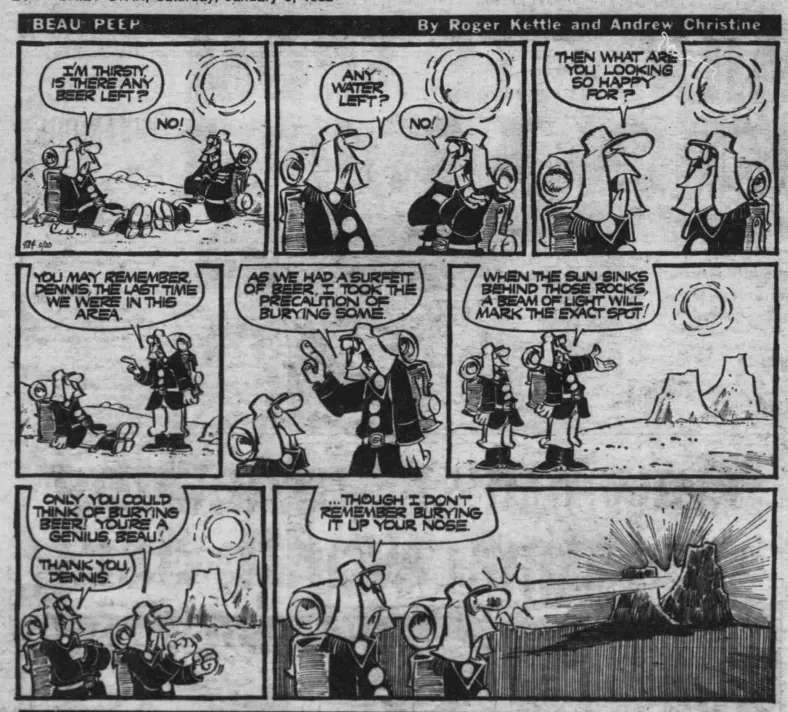
In July 1987, the Daily Star was ordered to pay out a record-breaking £500,000 in damages (plus £700,000 in costs) to Tory MP, Jeffrey Archer. As a result, the editor at the time, Lloyd Turner, a great fan and promoter of Beau Peep, was sacked. Following this event, the paper’s reputation plummeted, and many lucrative advertising partnerships were lost. Despite a shift in public opinion, the Daily Star continued to publish, and Beau Peep became its saving grace.
The comic strip maintained its popularity up until October 1997, when Kettle and Christine received news that it was to be dropped from the paper. The pair were swiftly snatched up by The Mirror Group, and published colour strips in The Sunday People newspaper.
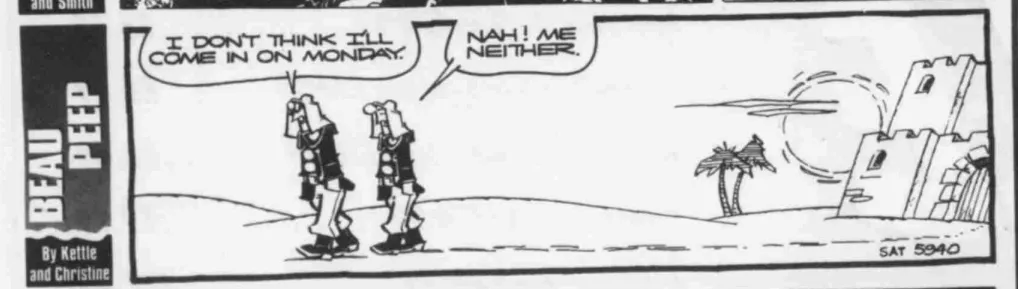
Beau Peep’s final strip | Daily Star | 27 December 1997
However, this would not be the end for Beau Peep.
On 26th March 1999, the Daily Star ran a full page article with the headline, “Peep Peep! Beau’s Back”. Mike Ward, the paper’s TV critic, ‘interviewed’ the comic’s beloved characters, Beau and Dennis.
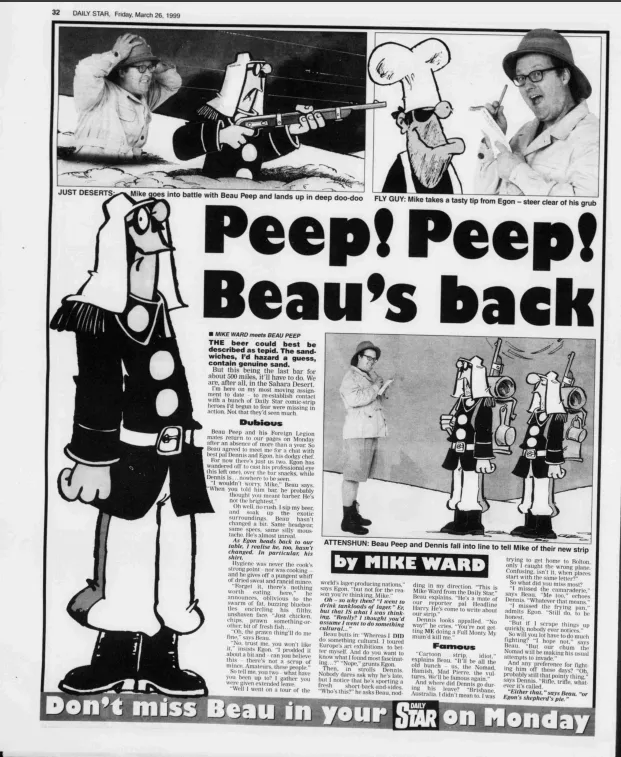
Less than two years after initially being dropped, Beau Peep would return in full force. It continued to feature in the Daily Star until one unassuming day in November 2016, when Roger Kettle posted on the Beau Peep website that the comic had once more been dropped from the paper. On Friday 02 December, 2016, the final strip would appear, and after 36 years and 11,270 strips, Beau Peep was put to rest (for the second and final time).
The comic strip allowed creativity and artistic freedom the opportunity to exist in newspapers for decades, and the stylistic changes noted within Beau Peep reflect pivotal moments not only within the Daily Star’s social and cultural trajectory, but also within wider British history.
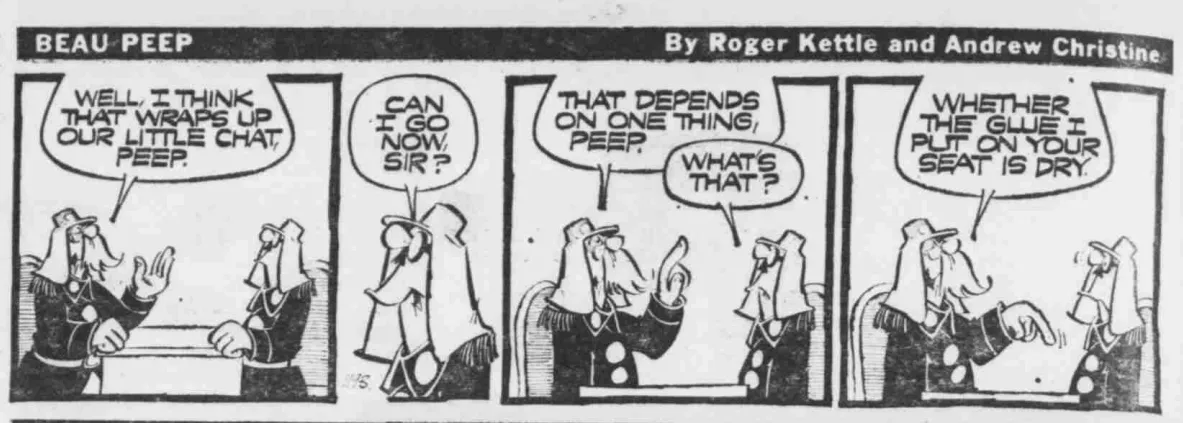
Daily Star | 10 September 1982
The Daily Star continues to offer a lasting and unique perspective on the British lived experience, and holding its pages on The Archive allows us to examine history through the lens of individual-centred, entertainment-oriented journalism. We now have available 1978 through to 1999, covering both the title’s inception and its subsequent evolution.
Discover more of the Daily Star‘s early issues, laugh at the Beau Peep comic strips, or attempt one of the many crossword puzzles, by searching The Archive today.
New Titles
Title | Years Added |
1978-1999 |
You can keep up to date with all the latest additions by visiting the recently added page. You can even look ahead to see what we’re going to add tomorrow.
More on this topic:
Share this article
About the author

Molly Pearce
Data Operations Executive
Published on Tue, 21 April 2026.