
Frantic Mirth and Wild Festivities: Celebrating the Summer Solstice
Published on 16 June 2025 by Rose Staveley-Wadham
With the Summer Solstice fast approaching, as well as the midpoint of the year and Midsummer’s Day, we at The Archive were keen to delve into the traditions and superstitions surrounding this time of year.
With a history of celebration in Britain and Ireland that predates Christianity and the Roman invasion, in this special blog we are going to take a look at the history and origins of Summer Solstice celebrations, as well as investigating the range of traditions that surround Midsummer’s Eve and Midsummer’s Day, all using newspapers sourced from our collection.
Register now and explore the Archive
Tip: although the Summer Solstice falls on the 20, 21 or 22 June in the Northern Hemisphere, traditionally, it was celebrated on either the 23 or 24 June. Thus Midsummer’s Day this year falls on 24 June, and the Summer Solstice on the 21 June.
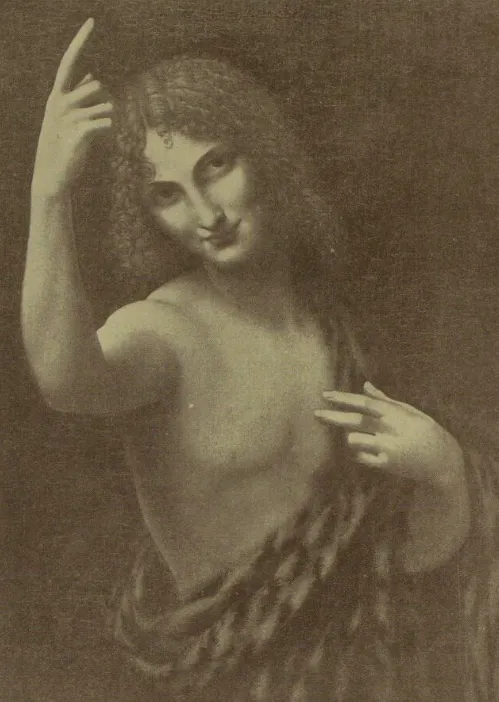
St. John the Baptist & St. John’s Eve
The origins of Summer Solstice celebrations have a saintly tie, as 18th century poet Mark Akenside observed, his words reprinted by the Coventry Standard on 29 June 1855:
The Summer solstice has been celebrated in all ages and in various countries by the lighting up of fires, and hence on ‘St John’s eve,’ or the vigil of the festival of St. John the Baptist, there have been popular ceremonials of this kind from the earliest time in the Romish Church.
St. John the Baptist’s date of birth is marked on 24 June, and hence, St. John’s Eve, became a focal point of celebration.
As a piece printed in the Gloucestershire Echo on 10 July 1914 explained, ‘observances connected with’ the celebration of the nativity of St. John the Baptist ‘began, as was usual, the evening before, on what was then and still is known as the Eve, or Vigil, of St. John, and also as Midsummer Eve.’
Pagan and Christian Customs
But as the Gloucestershire Echo relates, celebrations around the Summer Solstice and Midsummer Eve existed before Christianity, as it was a ‘pagan festival,’ and ‘one of the greatest sessions of sun-worship.’
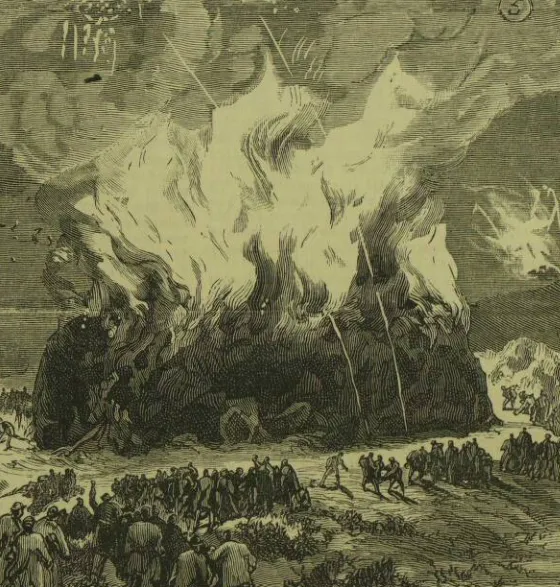
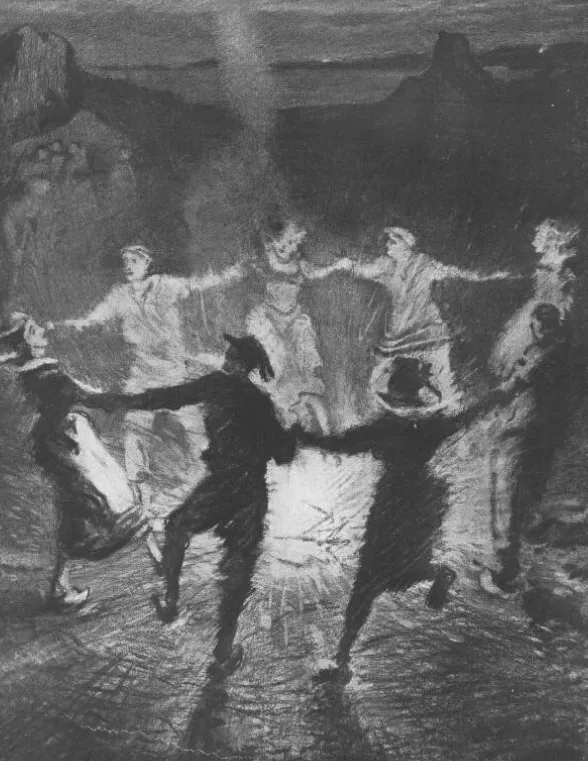
Such ‘sun-worship’ often involved the building of bonfires to mark the Summer Solstice, as we shall see. Indeed, Northumbrian poet and historian Roland Bibby, in his column for the Morpeth Herald on 23 June 1978, explained how:
In the Druidic religion, older than the Roman conquest of Britain, the great bonfires represented the life-giving sun, and inspired rites, which lingered on as traditions without meaning, and some largely expressions of excitement, which persisted as traditional games, deep into Christian times.
Therefore, as the Gloucestershire Echo puts it, the celebration of St. John’s Eve or Midsummer Eve represent a ‘curious’ mingling of ‘Pagan and Christian customs.’ Meanwhile, Roland Bibby neatly sums up this unlikely intermarriage in his Morpeth Herald column from 1978:
Midsummer Day is the Nativity of St. John the Baptist, whose life was a prelude to that of Christ, and so shares the joy of the greater Nativity. It is hardly surprising to find it associated with the occasion of ancient celebration of midsummer.
‘O Thin Crust of Time’
Consequently, given this tie between the pagan and Christian that permeates other aspects of British and Irish culture, a great deal of superstition exists around the Summer Solstice period.
From the St. Helen’s Examiner, 18 April 1914, we learn of some ‘lovers’ superstitions’ that surrounded St. John’s Eve:
St. John’s Eve was a specially appropriate time on which to consult the oracles because on that evening, the souls of all people left their bodies and wandered to the place where they should finally be liberated from their home of clay. Hence, in many cases, young men came to visit those who would be their partners through life.
This eerie image of souls walking free around Midsummer’s Eve is echoed in the final stanza of a poem entitled ‘St John’s Eve,’ which was penned by Penzance poet Michael Gardener and reprinted by the Cornishman on 30 June 1949:
St John’s Eve! O thin crust of time!
A step breaks time in two:
The least of nights, no more than shade,
The lightest soul steps through.
The flotsam ghosts are with us, sing
One dirge for all old suffering.
Not only was there a sense of joy around the Summer Solstice, and of celebration, with ‘ancients actively rejoicing in the occasion’ of seeing the sun, there is the sense of the veil thinning between two worlds, something perhaps more associated with festivals like Halloween.
A Midsummer Eve custom
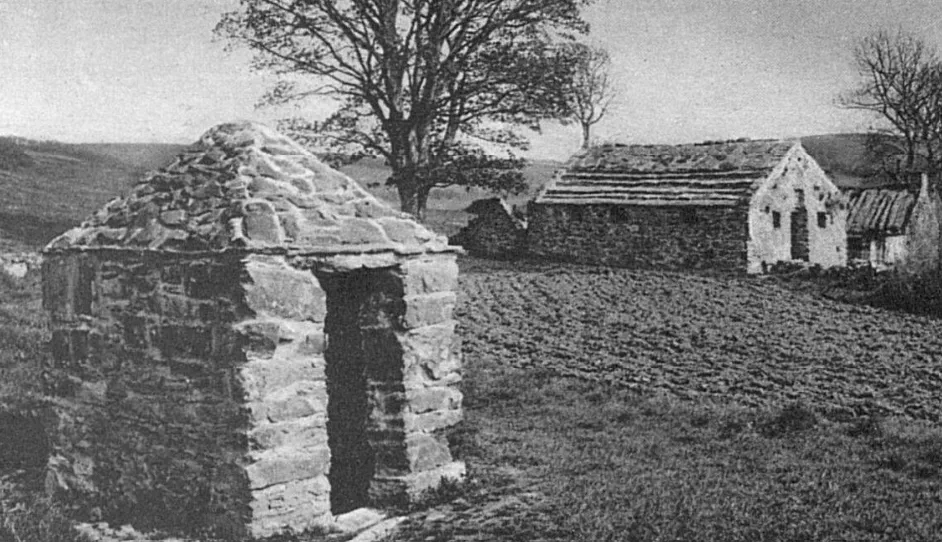
So how was the Summer Solstice, or St. John’s Eve as it was more often called, celebrated? Eighteenth-century poet Mark Akenside vividly described the scene in Struell, Downpatrick, where there ‘is a ceremony commencing at 12 o’clock every night on every Midsummer eve.’
The ceremony was held at a ‘sacred mount… consecrated to St. Patrick,’ where there were three wells, ‘to which the most extraordinary virtues are attributed,’ and ‘heaps of stones.’ And so, every midsummer’s eve, great numbers of people would run around the stones ‘with as much speed as possible,’ whilst others would kneel ‘with bare legs and feet.’
Akenside’s account continues:
While the busy scene of superstition continues, the wells and streams issuing from them are thronged by crowds of the halt, maimed, and blind, pressing to wash away their infirmities with the water consecrated by their patron saint.
One can only imagine the frenetic scene, and as we shall see, freneticism sits at the heart of celebrations of the Summer Solstice.
‘Time-honoured’ customs in Ireland
St. John’s Eve was an important part of Irish culture, as our newspapers reveal.
On 30 June 1888 County Mayo paper the Ballinrobe and Mayo Advertiser reported how:
Much disappointment was felt on Saturday night, which nearly resulted in a collision between the police and the people, owing to the former preventing the time-honoured custom of this night’s ‘Bonfires’ in the principal streets.
This ‘time-honoured’ custom was of course to celebrate St. John’s Eve, and thankfully for the citizens of Ballinrobe that year, local resident Mr. C. Mayne provided a bonfire on the green, ’round which the people amused themselves until the small hours of the morning.’
As we shall see, clashes between authorities and those looking to celebrate the Summer Solstice is a theme that echoes through the years. The same Ballinrobe and Mayo Advertiser report discusses troubles in Limerick and Castlebar over the lighting of bonfires for St. John’s Eve, and the summoning of a ‘large number of people by the police for lighting bonfires for the same occasion’ to the Westport Petty Sessions.
These people, as the paper describes, were acting ‘in accordance with an old established custom.’ They found support in the Rev. Father Begley, who pointed out how the ‘bonfires never gave the least inconvenience; that they were a source of innocent amusement to the people throughout the country.’ Indeed, Begley condemned the ‘unjustifiable interference on the part of the local police officers,’ and the cases of those brought to court were unanimously dismissed by the bench.
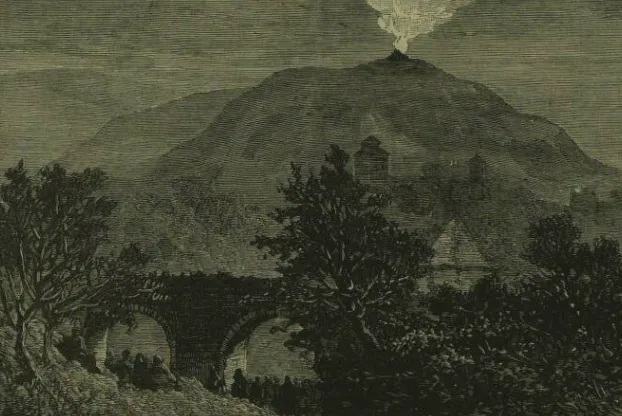
Two years later, the Kerry Evening Post on 25 June 1890 described the St. John’s Eve celebrations in Tralee, where again were ‘in accordance with the time honoured custom bonfires were lighted around in the bye streets of this town.’ The report details how ‘juvenile members of the community congregated’ around the bonfires, providing this vivid description of the scene:
Several fires were also lighted on the mountains which gave them a weird look when viewed at dusk from the outskirts of the town.
Pageants and armed guards
Meanwhile, how was the Summer Solstice celebrated across the Irish sea?
The Daily Express, on 25 June 1901, has it that:
In merry England’s romantic past Midsummer Day, or more particularly Midsummer Night, was celebrated by quaint superstitious practices and wild festivities; fires were kindled on the hills and watchmen paraded the streets in celebration of the summer solstice.
Bonfires again were an intrinsic part of midsummer celebrations, as was the brewing of ‘Midsummer Day ale.’
The Cornishman, meanwhile, reveals some more nuanced celebrations around St. John’s Eve, which it published on 4 July 1901:
St John’s Eve was, in olden days, celebrated in Chester by curious ceremonies attendant on ‘the setting of the watch.’ By an ordinance of the corporation, dated 1564, and now in the possession of the authorities of the British Museum, a pageant is ordained to consist of four giants, one unicorn, one dromedary, one camel, one luce, one dragon, and six hobby-horses, with other figures.
The Cornishman explained how these revelries were banned under ‘the stern hand of the Commonwealth,’ but revived under the rule of Charles II, ‘with greater magnificence than before.’ These festivities, however, did not last, with the traditions around the Summer Solstice sadly dying out.
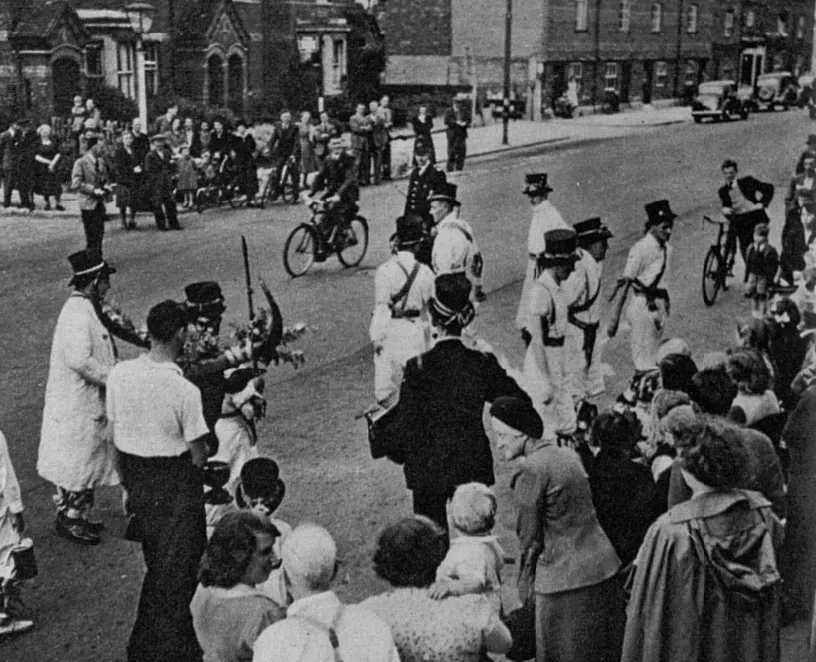
Another St. John’s Eve tradition was described by the Guernsey Evening Press and Star on 4 February 1914. This custom involved ‘the march of an armed guard, not less than two thousand strong,’ through the City of London. According to this piece, Henry VIII took part in one of these midsummer marches incognito, although ‘later in his reign he thought proper to abolish it.’ However, the custom did endure in Nottingham.
Love spells and superstitions
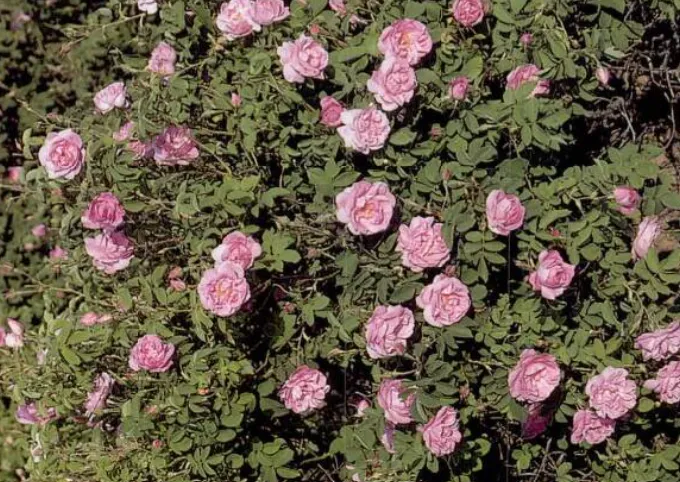
Aside from such celebrations around the Summer Solstice, the midsummer period was a time of great superstition. As the Gloucestershire Echo, 10 July 1914, outlines, Midsummer Eve saw ‘the gathering of certain plants and herbs that were thought to be endowed with magical qualities.’ These magical qualities were often used as ‘tests of love’s faithfulness,’ as was the case with the midsummer rose.
The Gloucestershire Echo describes how:
Of the rose it was believed that, if gathered in silence on Midsummer Eve, and kept ‘guarded from the piercing air,’ it would, if the lover were true, be as fresh on the following Christmas Day as on the evening in June that it had been picked.
Meanwhile, the ‘orpine was also used for the same purpose, in what was known as the test of ‘Midsummer men.’ An orpine plant would be placed in a pot and left overnight, and ‘if on the following morning, the orpine bent to the right, it was a sign that the lover was faithful; if to the left, that he was faithless.’
The Gloucestershire Echo reveals that whilst women were trying to divine who could be counted on for their faithfulness, men were in search of something else on Midsummer’s Eve: invisibility. Apparently, they needed to collect fern seeds without touching the fern in order to earn the ‘power of invisibility.’ This unusual custom is backed up by a Shakespearean quote from Henry IV Part 1: ‘We have the receipt of fern seed. We walk invisible.’
‘The Greatest Festival’
In the early 20th century, celebrations around the Summer Solstice continued. One W. Fitzpatrick, from Annalong in County Down, writing to Belfast’s Irish Weekly and Ulster Examiner in June 1921, described how ‘bonfire night, or St. John’s Eve, is still the greatest outdoor festival in Irish rural life.’
Fitzpatrick describes the ‘pleasing sight’ of the bonfires, revealing more traditions around the celebrations:
Cattle were driven with hazel switches through the smoke of the bonfire, as a supposed preventative against disease, the switches afterwards being consigned to the flames.
Furthermore, Fitzpatrick ties the ‘progress of the Gaelic movement’ with the ‘commendable and successful effort’ in reviving the ancient custom.’ Indeed, the very Irishness of the celebration most likely set off the authorities in the decades before, and so the celebration of St. John’s Eve represented an important tie to Irish nationalism.
Cornish bonfires
This was echoed in Cornwall, another Celtic heartland. On 2 July 1931 the Cornishman reported on a Midsummer Eve bonfire at Castle an Dinas, an iron age hillfort near St. Columb Major. This had been organised by the Old Cornwall Societies, in an effort to resurrect old Cornish traditions.
A large gathering, numbering ‘eight well-laden Western National buses’ and ‘scores of motor cars as well as motor cycles’ were addressed by Mr. Walter H. Eva, the president of the local Old Cornwall Society. Eva spoke of his memories of Cornish Summer Solstice traditions:
I well remember the tar barrels and bonfires in the main streets of Penzance on Midsummer Eve, and the fair on Midsummer Day on the Quay…a line of tar barrels relieved occasionally by a large bonfire which would be in the centre of the street, while young men and women passed up and down on either side swinging torches, which were made of large pieces of hessian, fixed to a pole or chain, and, after having a 2d. dip of tar at the Gas works were set alight: the flames of some of these almost equalling the bonfires.
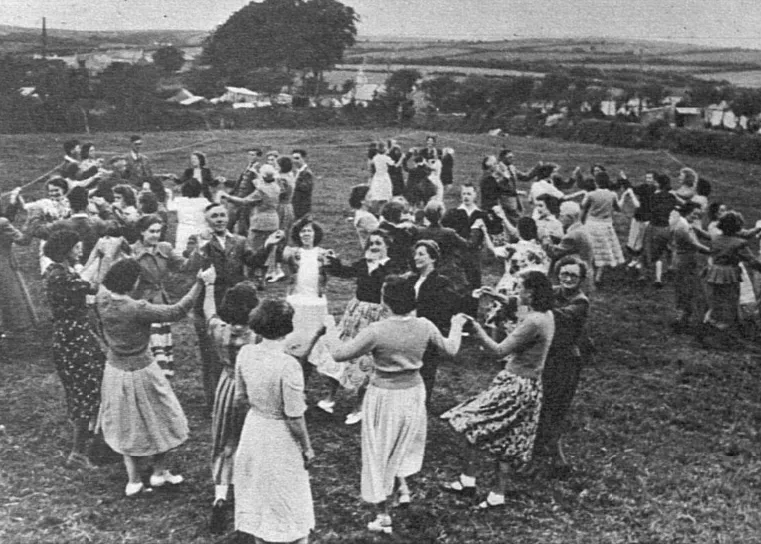
After the fireworks, Eva tells of how the crowd joined hands to dance, as they chanted ‘an eye, an eye.’
The Cornishmen then takes us back to the present, with another evocative description:
Sharp at 10.15 the mist was pierced by a bright light on Madron Carn. A few seconds later the Castle-an-Dinas bonfire was blazing merrily.
The Bale at Whalton
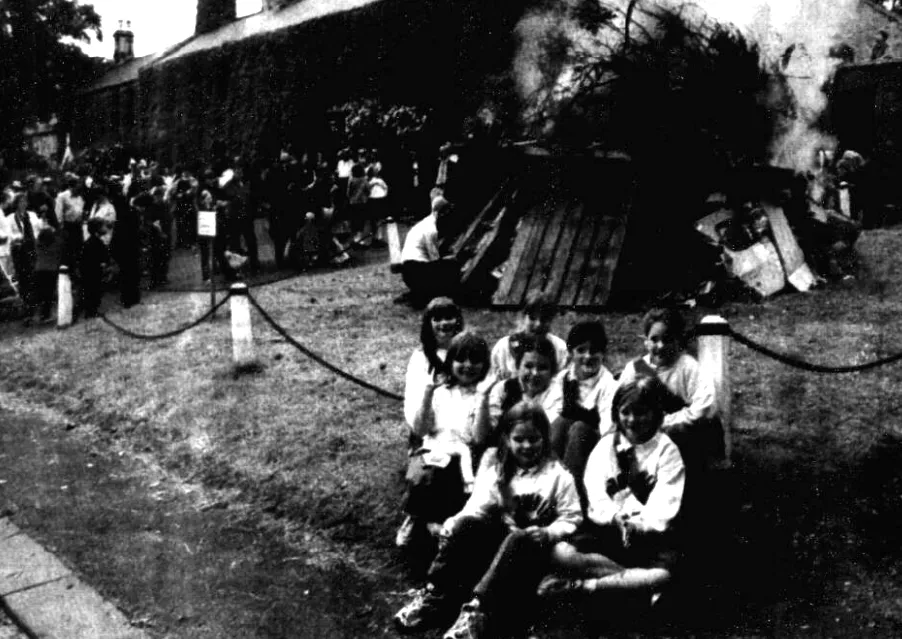
We do find evidence of bonfires being lit to mark the Summer Solstice in other parts of Britain, too. Roland Bibby, in his 1978 Morpeth Herald piece describes how it is ‘only the village of Whalton which refuses to give up its bonfire’ in the Northumberland area.
The village of Whalton, for its midsummer celebrations, used the name ‘bale.’ As Bibby explains:
It is an old word for a great fire, here in the Borderland, used for beacons which were kept ready on hill-tops and, in huge braziers, on castle turrets, ready to warn the countryside that raiders were stirring. It is frequently confused with Baal, an ancient god imported long ago, and much involved with fire and things nasty in the woodshed, and certainly far less worthy of commemoration by a tradition as old as and as near to the hearts of the sun-starved Northumbrians at the Whalton Bale.
Druids and Stonehenge
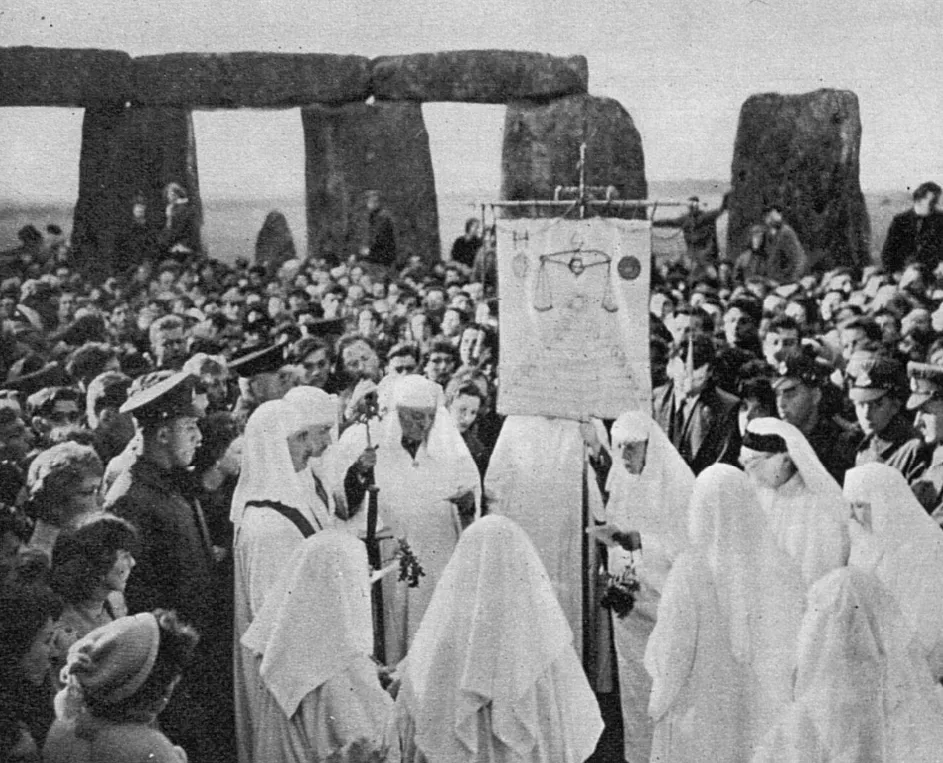
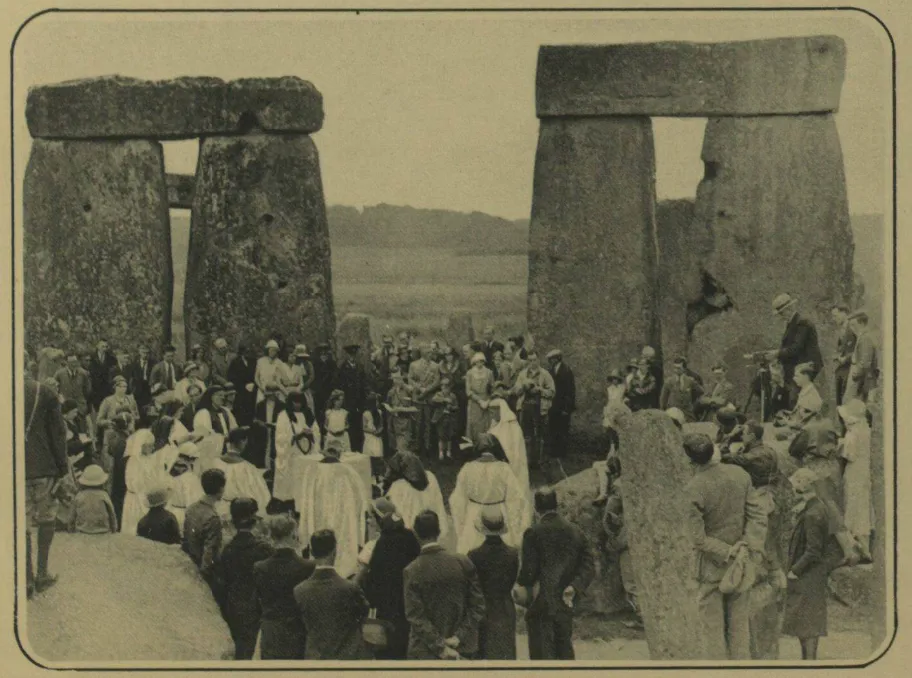
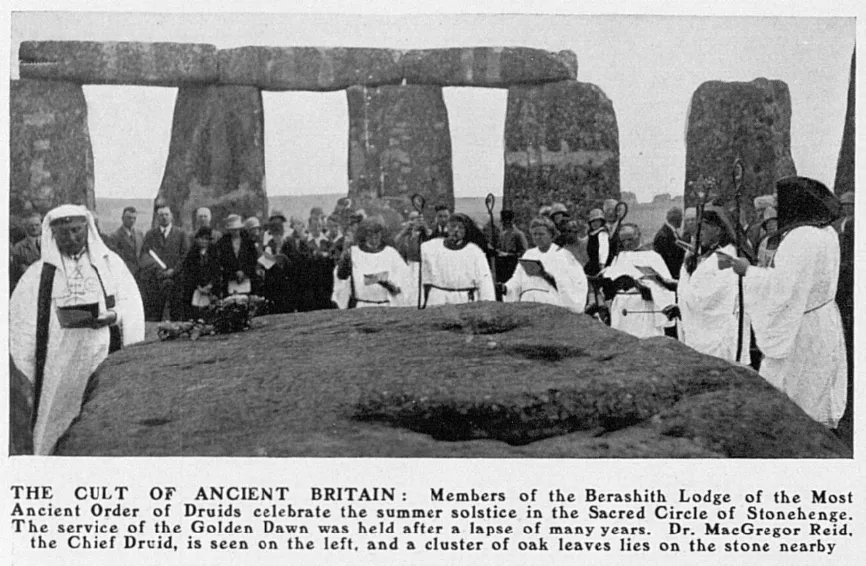
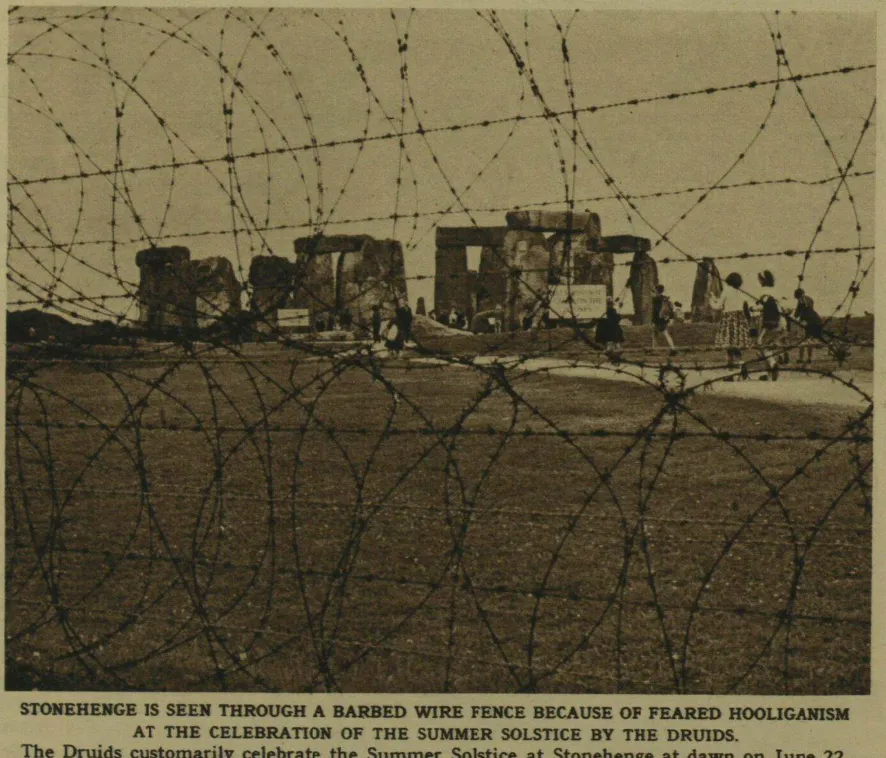
As we move into more modern times, we encounter in our papers more familiar notions of Summer Solstice celebrations, which involve druids and Stonehenge.
On 20 June 1942 the Taunton Courier and Western Advertiser reported on a ‘Summer Solstice Druidical Ceremony at Stonehenge.’ Owing to the war, activities of the Ancient Order of Druid Hermetists were suspended, but delegates were allowed to visit ‘the Double Circle near Stonehenge at sunrise to celebrate…the summer solstice.’
Some forty years later the Gloucestershire Echo, 27 June 1986, reported how ‘druids and flute-playing hippies greeted the summer solstice at Stonehenge today, watched by helicopters and lines of police.’ The paper reported how ‘nobody was allowed access to the ring of stones,’ with ’50 white-robed celebrants’ being joined by ‘about 150 hippies, who arrived peacefully on foot.’
Not quite rock and roll
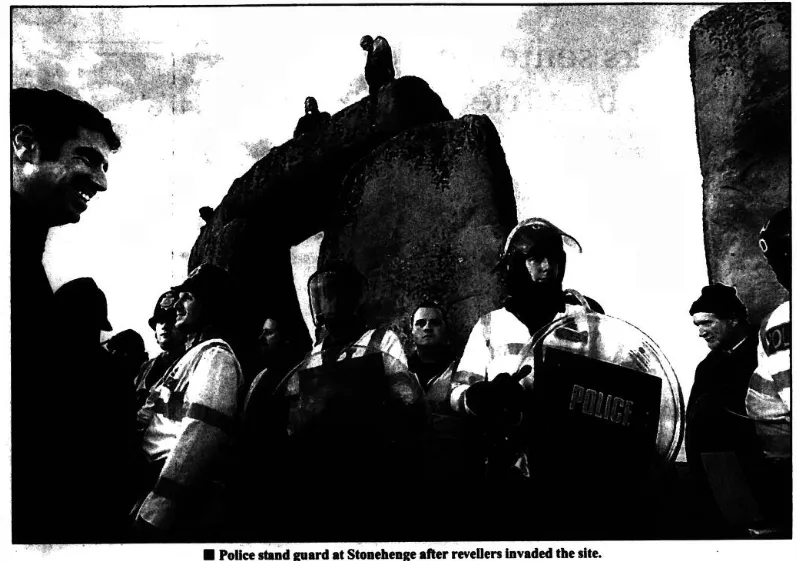
The issue of peace at the Stonehenge Summer Solstice celebrations would be an ongoing issue in the decades to come. On 22 June 1999 the Aberdeen Press and Journal reported how the ‘Henge’ was ‘peaceful after solstice disturbances.’
Summer Solstice celebrations had been disturbed by ‘several hundred demonstrators,’ who had torn down ‘more than 20 metres of perimeter fence’ and charged upon the stones. The Aberdeen Press and Journal relates how ‘it was the first major disorder at the stones for many years and followed the lifting of the routine four-mile exclusion order.’
The paper featured an interview with Mr. Kevin Carlyon, the head of the British White Witches, who said:
We had heard a CB message saying: ‘Let’s go and do Stonehenge, rip up the fences and take the place apart.’ It was obvious something was going to happen. The police should have taken more action. The fence was broken and a woman danced nude on top of the stones. Stonehenge should be a place of worship. It is not for sex, drugs, and rock ‘n’ roll.’
Celebrations of the Summer Solstice have always been representative, however, of a type of rock ‘n’ roll culture. From expressions of Irish nationalism, to the continuing of ancient pagan traditions, no other cultural celebration holds the same kind of mysticism, the ‘frantic mirth,’ as described by Roland Bibby. Midsummer was a time of celebration, a time of sun worship, a time of abandonment, which we are privileged to trace through the pages of our newspapers.
Discover more about the Summer Solstice, British and Irish traditions, and much more, in the pages of our newspapers today.
More on this topic:
Share this article
About the author

Rose Staveley-Wadham
Newspaper Licensing Manager
Published on Mon, 16 June 2025.