Hot Off The Press – New Titles This Week
Published on 5 August 2025 by Rose Staveley-Wadham
This week at The Archive we are breaking all records, as we have added a staggering 80 brand new newspaper titles to our collection. You read that right! Over the last seven days 80 brand new newspaper titles have joined us from across the United Kingdom, Ireland and the Isle of Man, covering diverse subjects like sport, religion, prisons, Irish nationalism, funfairs and marriage.
It really is a smorgasbord of social history that we are serving you this week, as we have added a total of 217,313 brand new pages in all, meaning that we have now reached over 94 million pages all available to search on The Archive.
You can find a list of all the 80 brand new newspaper titles added to our collection at the end of this blog, but meanwhile, we thought we’d take you through a whistlestop tour of all 80 publications, starting in Barnstaple and finishing in Yorkshire.
Register now and explore The Archive
1 to 8 – the Barnstaple Times to the Bury Guardian
We begin our list of 80 brand new newspaper titles with the Barnstaple Times, which was founded in the Devon river port town of Barnstaple in 1868. Independent in its politics, it circulated in Barnstaple and District.
Next up is the Birmingham Daily Times, a Conservative publication which was established in 1885 and claimed to have an extensive circulation of some 40,000 copies. Heading back to the West Country, we’re delighted to welcome the Blandford Express to our holdings, which occupied the ambiguous political territory of Liberal/Conservative, as it served the Dorset market town of Blandford Forum.
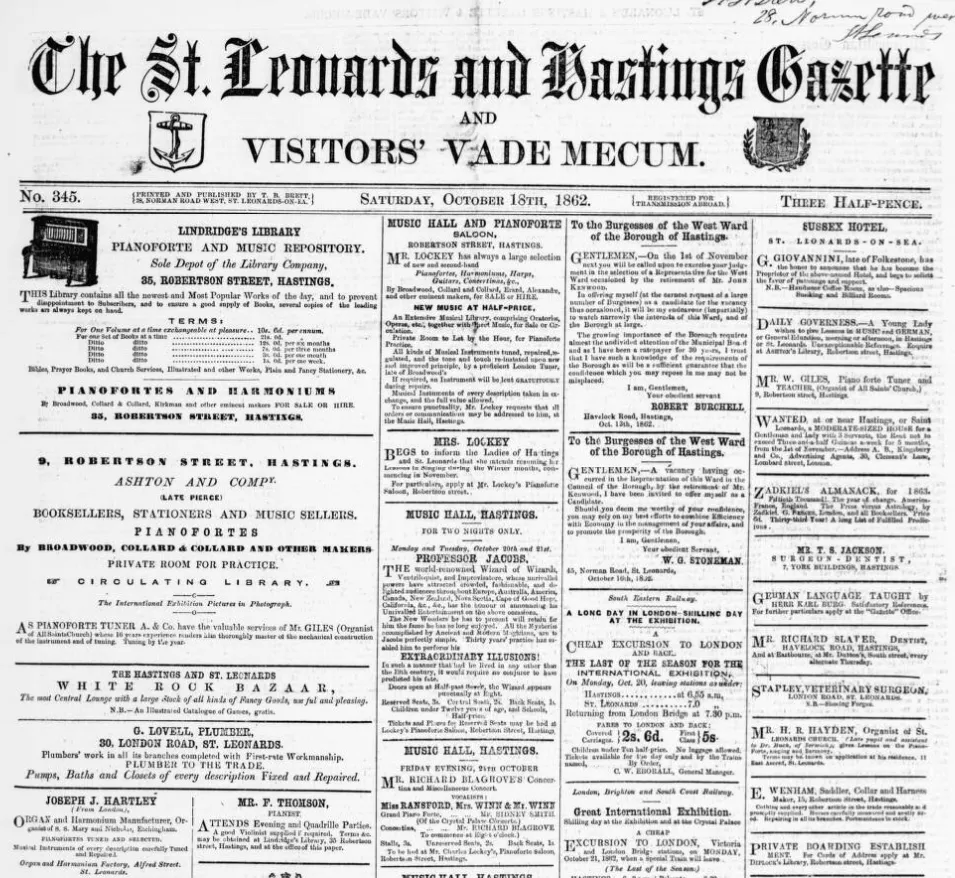
Moving along the south coast, we’re delighted to welcome a duo of Sussex seaside titles, the Brett’s St. Leonards and Hastings Gazette & Visitors’ Vade Mecum and the Brighton Standard and Fashionable Visitors’ List. The former title, founded in 1855, was independent in its politics, whilst the latter title, founded in 1865, featured visitors’ lists for the popular resort town of Brighton.
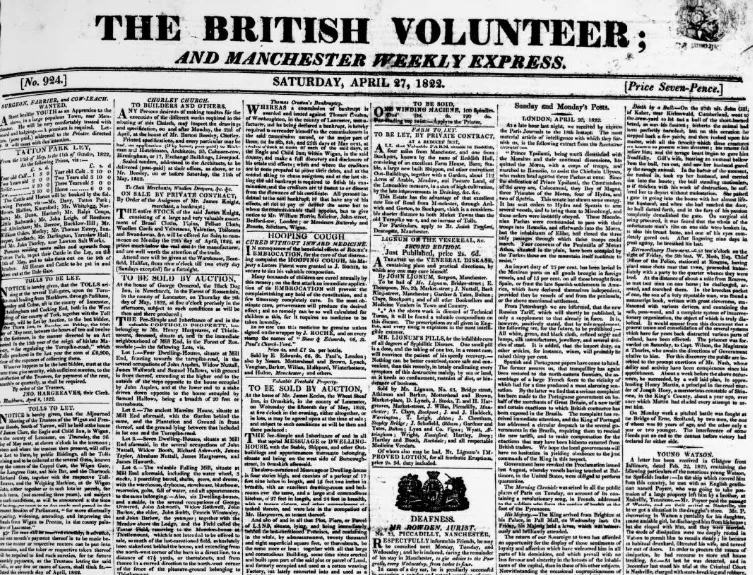
Next we have the British Volunteer and Manchester Weekly Express. Established in 1805, this title is one of the earliest newspapers to use the ‘Express’ moniker.
Staying in the north, we round off this selection from our 80 brand new newspaper titles with the Burton Evening Gazette, a Liberal title founded in 1879, and the Bury Guardian, a Conservative title that was established in 1857 and circulated throughout east and west Lancashire.
9 to 15 – the Camberwell News and South London Advertiser to the Cricketers’ Herald, Athletic & Football Times
Kicking off our next selection from our 80 brand new newspaper titles we have South London’s Camberwell News and South London Advertiser, which was established in the 1870s. Zigzagging across the country, we find ourselves now in the West Yorkshire town of Castleford, with the Castleford Gazette. A Liberal title, the Castleford Gazette first appeared in 1871.
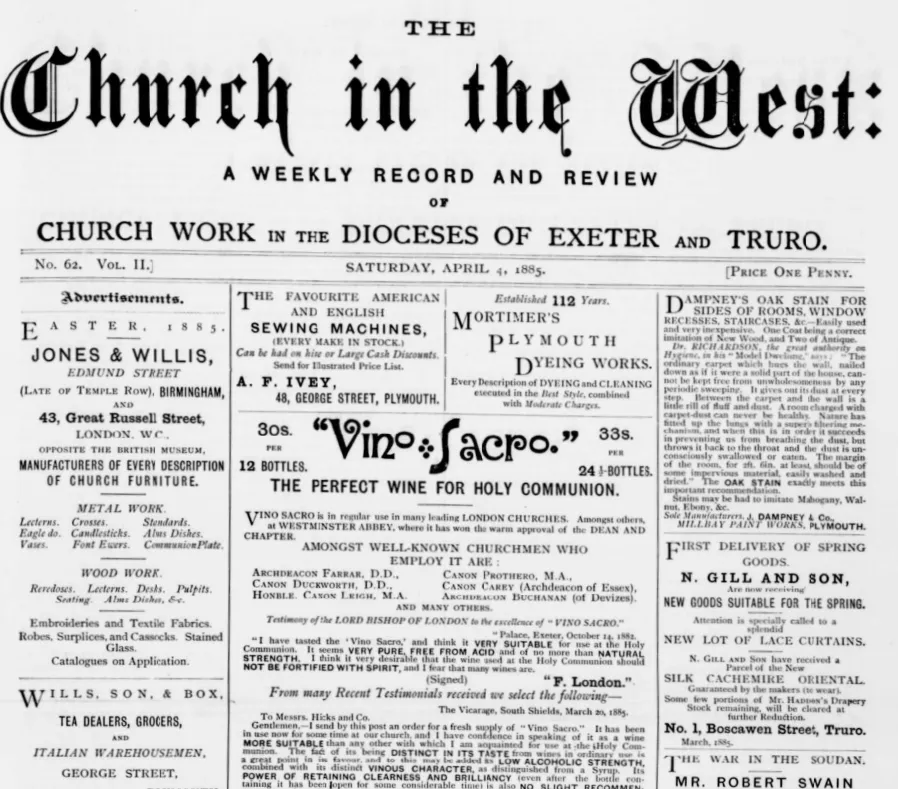
The first of our new special interest titles this week is the Church in the West, which was established in the Devon city of Plymouth in 1884. Appearing every Saturday at the cost of one penny, this title circulated ‘amongst Churchmen in Devon and Cornwall.’ Indeed, with a circulation of some 2,000 copies, it was ‘the recognised organ of the Church in the district,’ featuring ‘the Church news and announcements and notes on all topics interesting to Churchmen.’
Moving to the Midlands now and the Codnor Park and Ironville Telegraph, which was established in 1854 to serve the mining district of Alfreton, Derbyshire. Meanwhile, making its debut over a decade later on 29 June 1867 was independent Essex title the Colchester Mercury and North Essex Express, which aimed to ‘advance the moral, social and material interests of the nation.’
Providing local news and advertisements, we have the Colne & Nelson Times, which was founded in the Lancashire town of Colne in 1863 with an independent Liberal outlook.
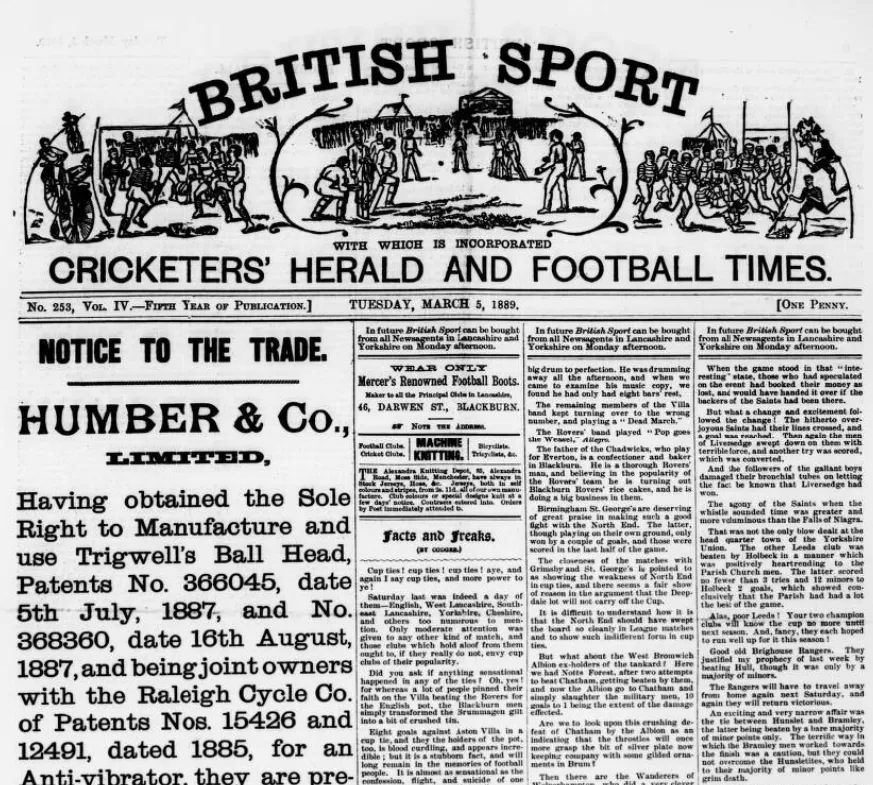
Rounding off this selection of our 80 brand new newspaper titles is another specialist title, namely the Cricketers’ Herald, Athletic & Football Times. Originally published in Blackburn, this title was founded in 1884 before publication was moved to Manchester in 1889. Appearing every Tuesday, this lively publication followed a range of sports in the Lancashire and Yorkshire area, complete with illustrations.
16 to 19 – the Deptford Chronicle to the Eastern European Review
Another title from South London, the next of our 80 brand new newspaper titles is the Deptford Chronicle. Founded in 1862, this newspaper later was amalgamated into the Kentish Mail.
Moving back up north, we’re delighted to welcome the Doncaster Chronicle to our collection. Representing the South Yorkshire city of Doncaster, the Doncaster Chronicle was founded in 1836. Conservative in its politics, it circulated in the counties of Yorkshire, Nottinghamshire, and Lincolnshire.
We travel now to Carlisle to welcome the East Cumberland News to The Archive. Published in Carlisle from 1883 onwards, this title was also Conversative in its outlook, appearing every Friday.
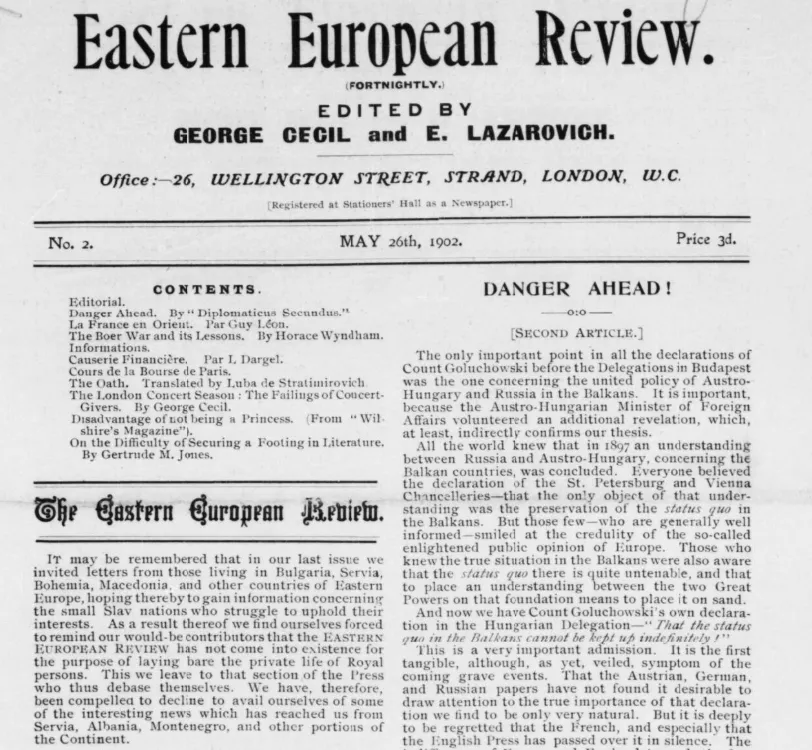
From East Cumberland now to Eastern Europe with the Eastern European Review. Published fortnightly from London, this title was edited by George Cecil and E. Lazarovich. It aimed to provide ‘news of Eastern Europe which will be somewhat out of the ordinary,’ as well as to uphold ‘the interests of those small Slav nations struggling for their national independence.’
To that end, ‘letters from those living in Bulgaria, Serbia, Macedonia, Albania, Bohemia, Croatia, Bosnia, and Montenegro’ were desired by the editors, in order to shine a light on ‘the struggles of the small Slav nations.’
Contributions to the Eastern European Review were written in both French and English, and ‘questions of the day affecting the lesser known European countries are discussed in readable fashion, whilst affairs of interest at home are also brightly treated.’
20 to 24 – the Folkestone News & East Kent Chronicle to the Fort-William News
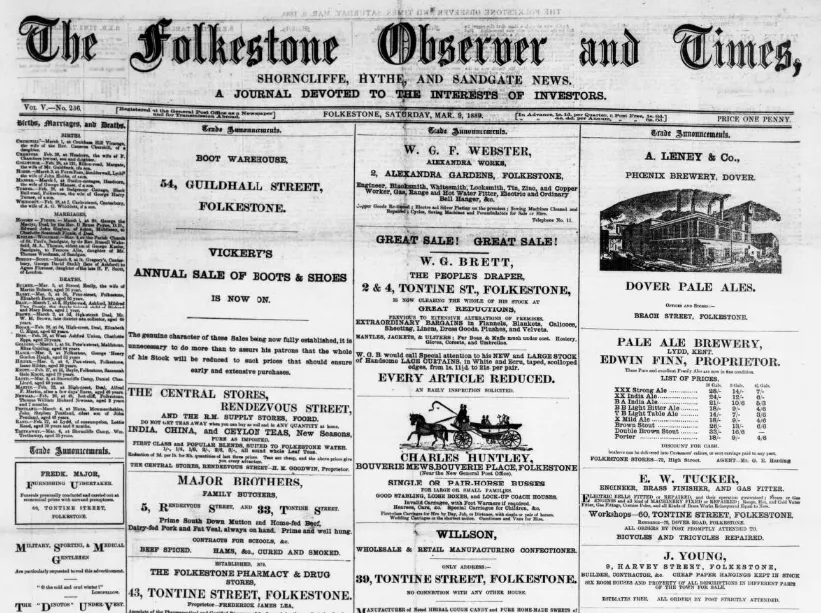
Now we welcome a duo of new publications from our collection of 80 brand new newspaper titles from the Kent seaside town of Folkestone. First up is the Folkestone News & East Kent Chronicle, which was founded in 1875 and was Liberal in its outlook. This title covered the news from Folkestone, Sandgate and Shorncliffe Camp.
Meanwhile, the Folkestone Observer was founded in 1884. Independent in its politics, it was a localised edition of the Kent Examiner.
Next up is the Forest Gate Gazette and Upton Chronicle, which covered the West Ham district of East London. This independent title came into being in 1888, and was known for its ‘progressive politics.’ From one forest to another, we have the Forester’s Free Press, which was established in the Gloucestershire market town of Coleford in 1862. Politically neutral, it circulated throughout the Forest of Dean.
Rounding off this section is our first new Scottish title of the week, which is the Fort-William News. This title, which appeared every Thursday, served the western Highlands.
25 – the General Strike
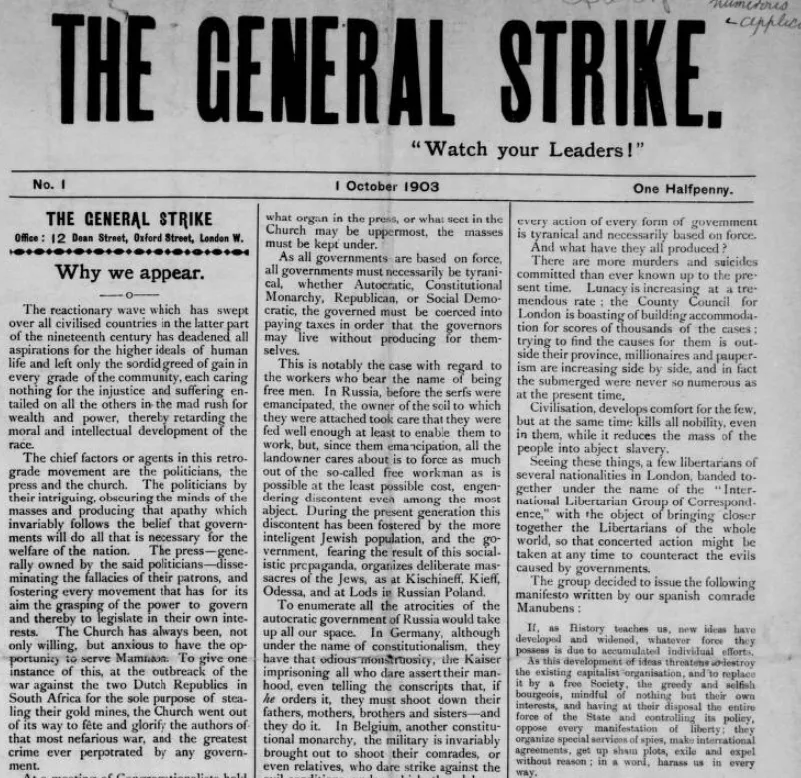
Our next new newspaper title may only fill four pages but it is a truly fascinating one. Appearing on 1 October 1903, and published in London with the tagline ‘Watch your leaders!,’ the General Strike was a Libertarian title.
Indeed, its debut editorial described how:
The reactionary wave which has swept over all civilised countries in the latter part of the nineteenth century has deadened all aspirations for the higher ideals of human life and left only the sordid greed of gain in every grade of the community, each caring nothing for the injustice and suffering entailed on all others in the mad rush for wealth and power, thereby retarding the moral and intellectual development of the race.
This led to ‘a few libertarians of several nationalities, [banding] together under the name of the ‘International Libertarian Group of Correspondence;’ with the object of bringing closer the Libertarians of the whole world, so that concerted action might be taken at any time to counteract the evils caused by governments.’
The General Strike was to be the British organ of this Libertarian group, which prioritised individual freedom and liberty and advocated for a limited role to be held by governments. Supportive of trade unions, the title took its name from strike action initiated by such groups.
26 to 32 – the Glasgow Examiner to the Illustrated Bridport News
We’ve got more new Scottish newspapers for you now, with a Glaswegian duo of the Glasgow Examiner, which appeared every Saturday, and the Glasgow Times, which appeared every Wednesday.
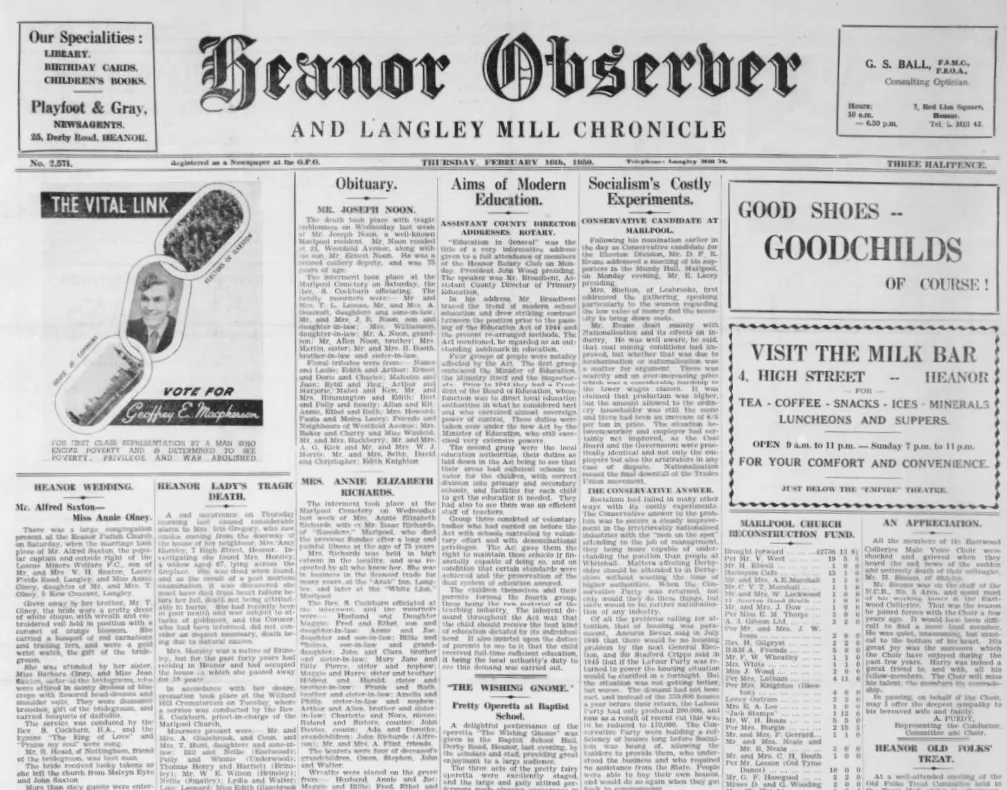
Heading back to Derbyshire, we’re delighted to welcome the Heanor Observer as one of our 80 brand new newspaper titles. Published in the Derbyshire town of Heanor, this newspaper was founded in 1900 and was independent in its politics.
Next up we have a duo of new titles from the West Yorkshire town of Heckmondwike. Both Liberal in their orientation, the Heckmondwike Herald first appeared in 1877, whist the Heckmondwike Reporter made its debut a decade before in 1867, as a localised version of the Dewsbury Reporter.
We return to the West Country now to welcome the Ilfracombe Gazette to our holdings. Founded in 1875, this Liberal title included lists of those arriving in the North Devon seaside town. Meanwhile, the Illustrated Bridport News, which was established in 1855, soon after losing its ‘illustrated’ description, concentrated on the ‘local matter’ concerning the Dorset market town of Bridport.
33 to 35 – the Irish Jurist to the Irish Tribune
We’re over the moon now to welcome our first Irish publications as a part of our 80 brand new newspaper titles, however, only three of this trio were actually published in Ireland.
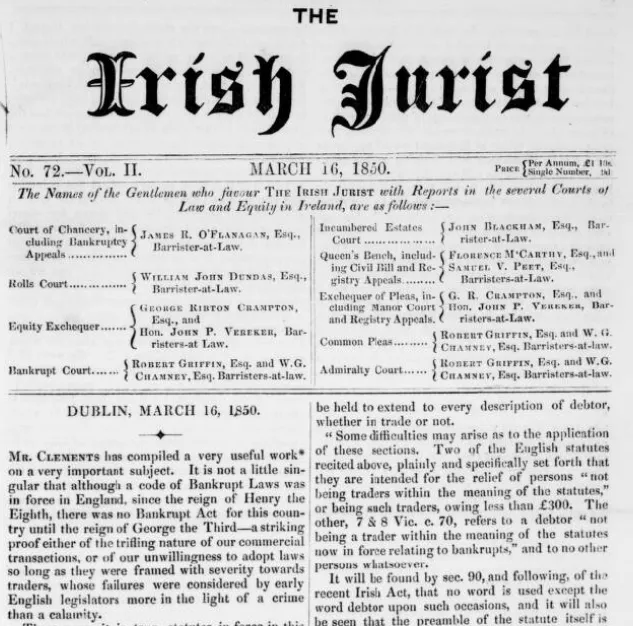
This is true of the Irish Jurist, which appeared every Saturday in Dublin. This title was aimed at the Irish legal profession, and featured reports from the Courts of Law and Equity in Ireland. Indeed, the title printed reports from barristers associated with the Court of Chancery, the Rolls Court, the Equity Exchequer, the Bankrupt Court, the Incumbered Estates Court, the Queen’s Bench, the Exchequer of Pleas and the Admiralty Court. Indeed, the paper printed the latest legal advice and legislations, featuring a legal calendar for the year.
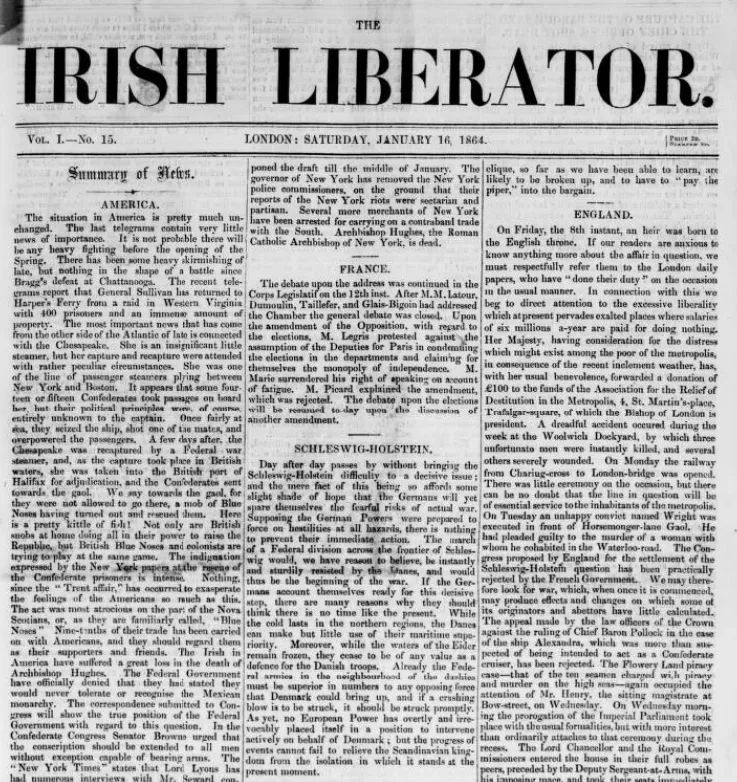
Next up we have the London published Irish Liberator, which was founded in 1863. This title was established in support of the National Brotherhood of St Patrick, itself founded in Dublin in 1861. As Gerard Moran writes in his article The National Brotherhood of St Patrick in Britain in the 1860s, the objectives of the organisation ‘included the arrangement of nationalist functions, the co-ordination of the efforts of all who advocated such policies, and the celebration of the national festival of St. Patrick.’
This movement soon spread from Ireland to Britain, where, as Moran writes, there were some 806,000 Irish-born residents. Many of these were emigrants from the Irish Famine, and found themselves in the lowliest of jobs. Anger and discontent soon grew, as did the belief in the Irish Nationalist movement.
The Irish Liberator, therefore, covered the Irish Nationalist movement in Britain, with reports from the different branches of the Brotherhood of St Patrick, from Rotherham to Marylebone, from Fulham to Manchester.
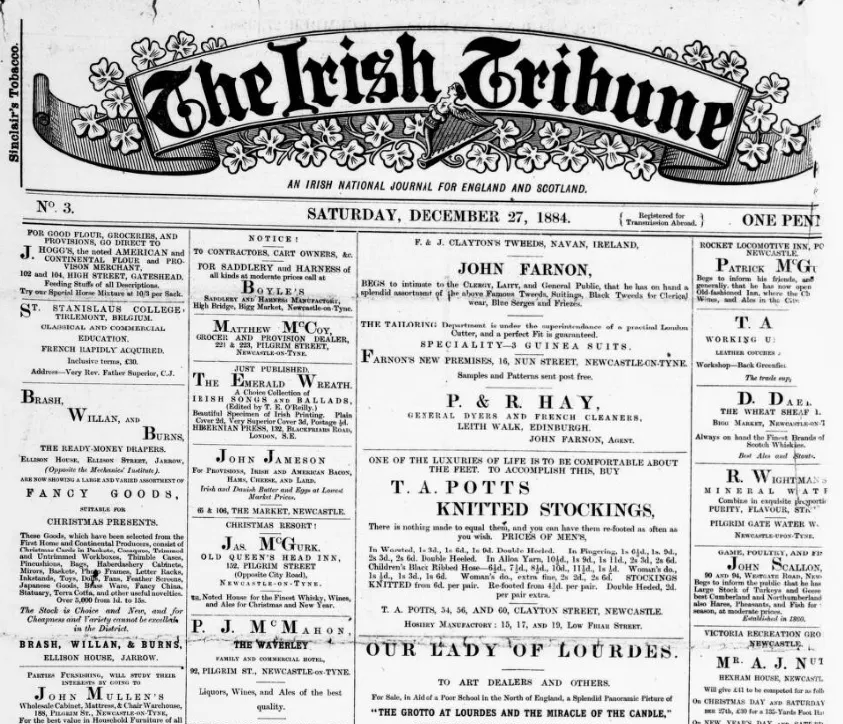
Following in the footsteps of the Irish Liberator was the Irish Tribune, which was first published in Newcastle on 13 December 1884. An ‘Irish National Journal for England and Scotland,’ this title circulated throughout both countries, advocating ‘Irish National Independence’ and providing ‘full reports of Irish news from all parts.’
Indeed, with the circulation of some 20,000 copies, the Irish Tribune intended to served the ‘millions’ of Irish emigrants living across the British Isles, guided by the need to entrench the desire for Irish independence in the next generation:
The glorious traditions of Irish struggles for freedom, and the unconquerable determination to persevere in these struggles, while liberty is denied our country, must be handed to these young exiles as fresh and vigorous as if they were receiving in their native land an education in harmony with its history and the aspirations of its people.
36 to 42 – the Kent Herald to the Liverpool Catholic Herald
This next selection takes us to the halfway point of our 80 brand new newspaper titles, all added hot off the press this week. We now turn our attention to the Kent Herald, which was established in Canterbury in 1792. Liberal in its politics, it appeared every Thursday and circulated throughout the county of Kent.
Next up we have the Knaresborough Advertiser, representing the North Yorkshire market town of Knaresborough, alongside the Knutsford Guardian. The Knutsford Guardian was founded in the Cheshire market town of Knutsford in 1860. Politically neutral, it appeared every Tuesday at the cost of one penny.
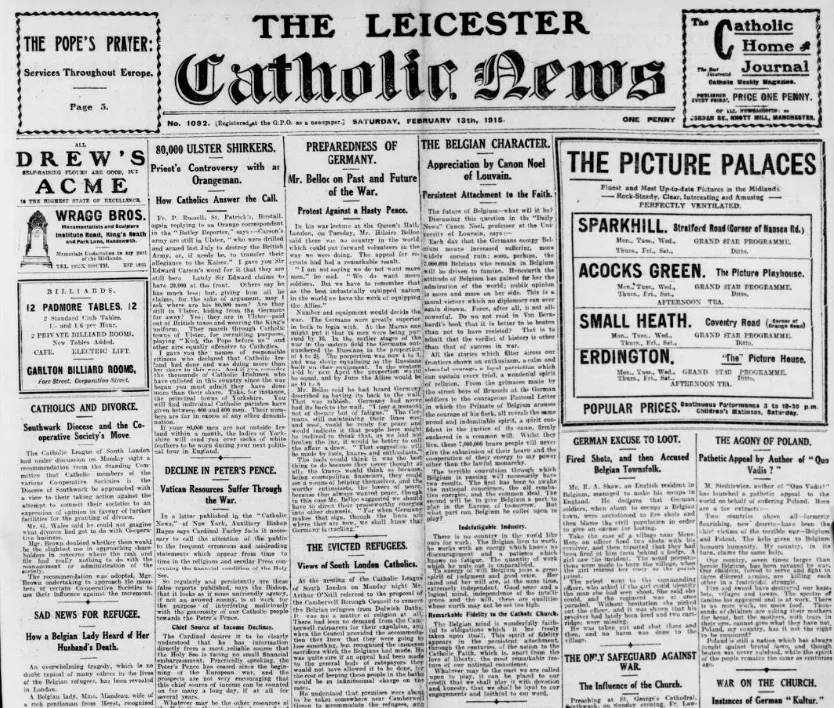
The first of our Catholic titles this week, the Leicester Catholic News appeared every Saturday at the cost of one penny. Part of the Catholic Herald, Glasgow Observer and Catholic News series of newspapers, this Leicester-based newspaper printed news from across the Roman Catholic church and even printed a special Flemish column during the First World War for Belgian refugees.
Another Leicester-based title joining The Archive this week is the Leicester Sporting News. Founded in 1878, it is the 40th new title of the week.
Coming up for air now as we pass the halfway point, we welcome the Lincolnshire Star to our collection. Founded in 1889 as the North Lindsey Star in the north Lincolnshire market town of Brigg, this newspaper was independent in its politics.
We hinted at more Catholic titles for you this week, and we are glad not to disappoint, with the addition of the Liverpool Catholic Herald. From the same stable as the Leicester Catholic News, the Liverpool Catholic Herald was founded in 1890. Appearing every Saturday and filling a weighty 16 pages, the Liverpool Catholic News featured the latest news from Catholic dioceses and parishes, alongside illustrations, and more general fare, like a ladies’ column and recipe suggestions.
43 to 48 – the Mansfield and North Notts Advertiser to the Northamptonshire Guardian
Our next stop is the Nottinghamshire market town of Mansfield and the Mansfield and North Notts Advertiser. Founded in 1871, this Liberal title claimed to publish ‘all important news…with great promptitude.’
We now pause to introduce the first of our new titles this week from the Isle of Man, which is the Mona’s Herald. Founded in the capital of the Isle of Man, Douglas, in 1833, this Liberal title circulated throughout the island.
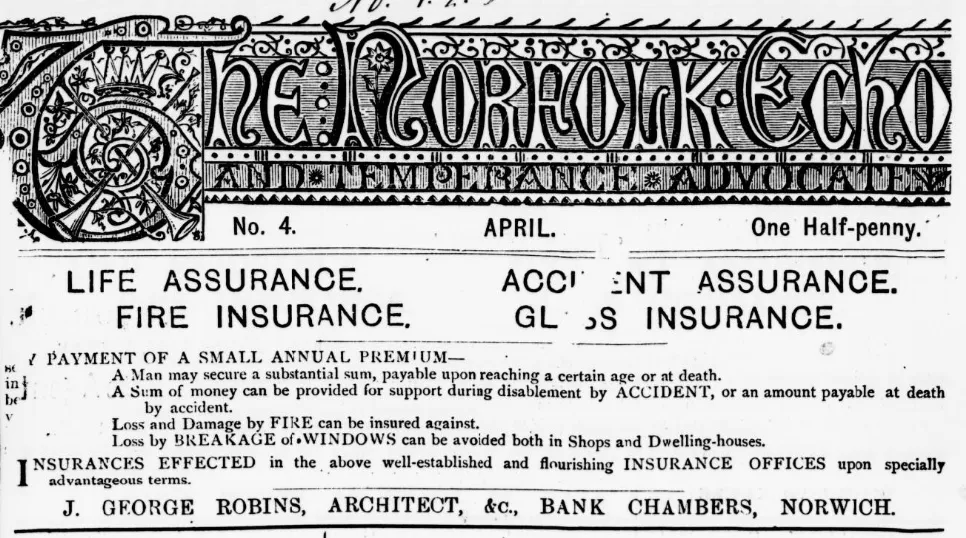
Our next title, meanwhile, hails from Norwich, and it is the Norfolk Echo and Temperance Advocate. This monthly title was founded in 1880s and appears to reflect the views and interests of the International Organisation of Good Templars. This organisation modelled its setup on Freemasonry, gaining its name from the legend that the original Knights Templar drank sour milk in their crusade against alcohol.
Indeed, a passage from the Norfolk Echo and Temperance Advocate runs as follows:
Now, in Temperance and Templar organization, there is this fact clearly standing out from all others – it is a great, social, philanthropic, and Christian scheme for the regeneration of the world to reclaim the drunkard and uplift the lost. This is our mission.
The Norfolk Echo and Temperance Advocate therefore provided updates from the different ‘lodges’ in the county of Norfolk, in the crusade to promote temperance.
Now we turn to our first new title from Northern Ireland this week, which is the North Antrim Standard. Founded in 1877 in the County Antrim town of Ballymoney, this newspaper appeared every Saturday.
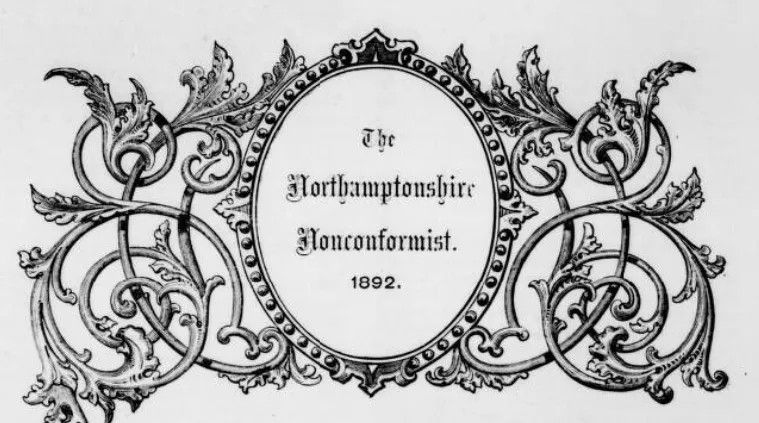
We travel back across the Irish Sea to welcome a duo of new titles from Northampton, the first of which is the Northampton Nonconformist. Established in the 1880s, this was a monthly title produced by the Young Men’s Society of the Baptists of College Street, Northampton. The paper printed not only Baptist news, but also news from the Congregational, Primitive Methodist and Wesleyan Methodist chapels in Northampton, as well as providing a list of nonconformist churches in Northampton.
Finally, we have the Northamptonshire Guardian, a Radical title that began life in 1876 and circulated throughout Northamptonshire and north Bedfordshire.
49 to 50 – the Northern Star (Belfast) and the Northern Star 1792
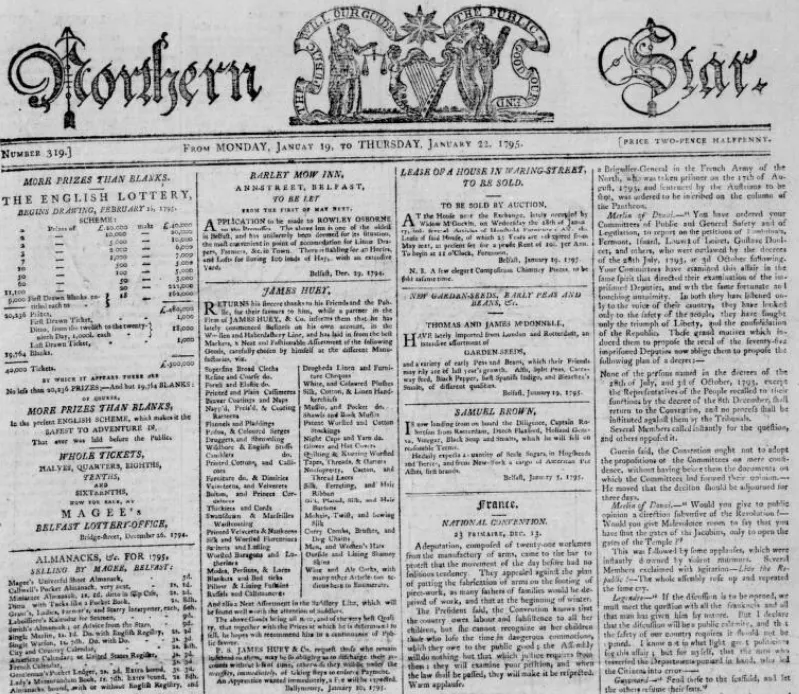
We have a duo of new Northern Stars now as part of our 80 brand new newspaper titles this week. The first is the later incarnation of the name, the Northern Star (Belfast) and it was a Nationalist title published in Belfast from 1897 onwards.
The second version, the Northern Star 1792, is perhaps the more well known. It was the organ of the Society of United Irishmen, which was a sworn organisation that was established in the wake of the French Revolution. The Society of United Irishmen was an important Irish Nationalist group that aimed to secure representative government in Ireland, and its organ, the Northern Star, was established in 1792.
Edited by Samuel Neilson (1761-1803), the Northern Star was an incredibly important tool in spreading the beliefs and opinions of the Society of United Irishmen. Leading members of the society, like William Orr (1766-1797), contributed to its pages, all serving to alarm British authorities.
Things came to a head in 1797 when a rumour emerged that the Society of United Irishmen had infiltrated the Monaghan Militia in Belfast. Soon, members of the Monaghan Militia, desperate to prove their loyalty to the British authorities, stormed the offices of the Northern Star on 19 May 1797 and destroyed its printing presses and building. Editor of the title, Samuel Neilson, was arrested and died in exile in the United States, whilst William Orr was controversially executed.
Whilst the Northern Star‘s days were up, the Society of United Irishmen continued to agitate for freedom. In 1798 the group instigated a republican rebellion, with the call of ‘Remember Orr’ rallying the rebels. In 1804 the Society of United Irishmen was suppressed by British authorities, only before the Irish Parliament was abolished.
51 to 55 – the Oldham Daily Standard and Northern Times to the Pick-me-up
We have a duo of new titles from Oldham now, beginning with the Oldham Daily Standard and Northern Times. This Conservative title was founded in 1877, and gave ‘particular attention to local events.’ Meanwhile, its fellow Conservative title the Oldham Standard was established in 1859, having an impressive circulation of some 30,000 copies.
We’re back in Devon for our 53rd new title of the week, which is the Paignton Observer and Echo. Published in the seaside resort town of Paignton, this politically independent title made its debut in 1892 and appeared every Thursday.
Next up is the Peeblesshire Monthly Advertiser, which covered the news from the Scottish border town of Peebles.
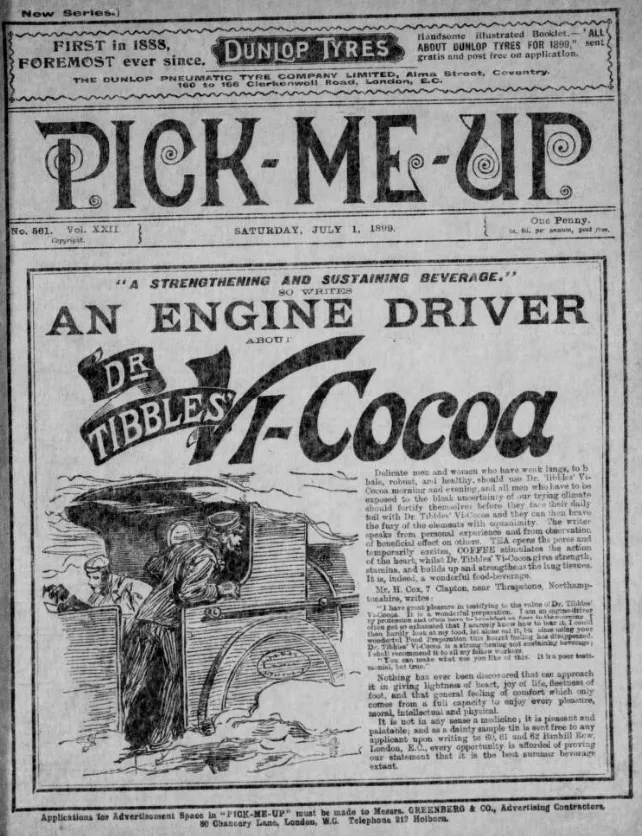
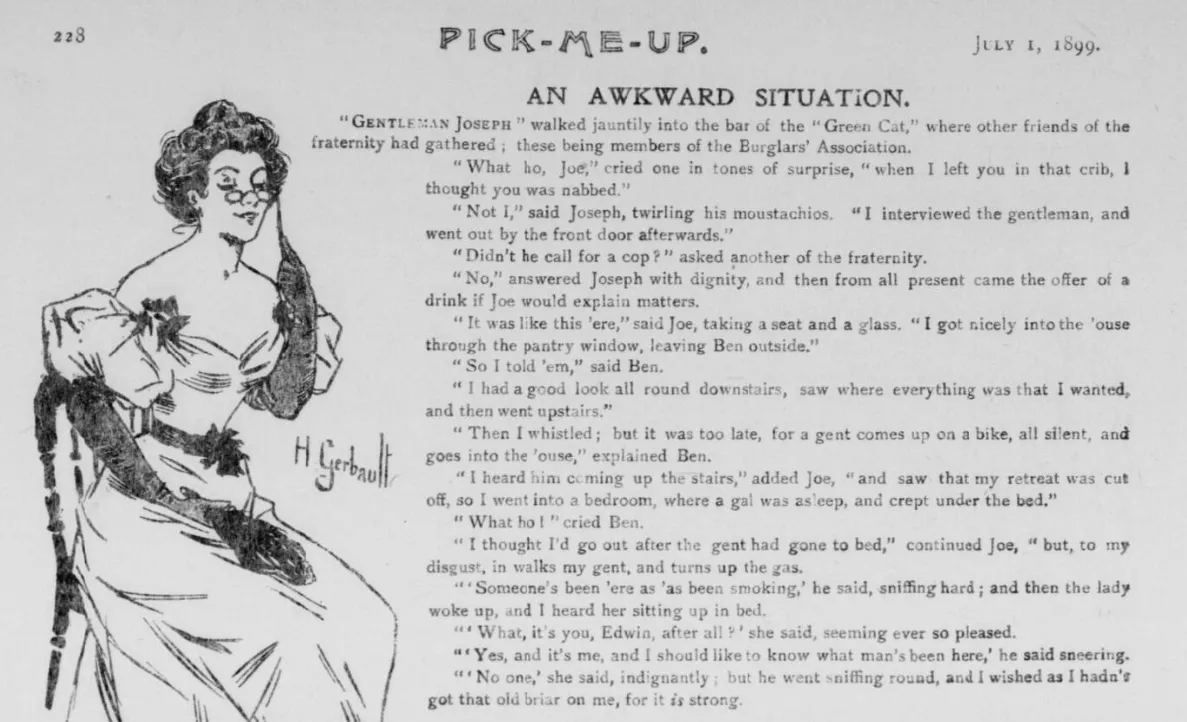
If you’re looking for a little Pick-me-up as we traverse through this list than look no further! ‘A literary and artistic tonic for the mind,’ this London-based glossy illustrated title was ‘designed to cheer you up,’ as John Adcock describes in his wonderful blog. Indeed, as Huib van Opstal explains:
It may not be coincidental that PICK-ME-UP and the earlier Punch both picked a title that also stood for a nice alcoholic drink. Both intended to stimulate as well as intoxicate their readers. Self-labelled ‘A Literary and Artistic Tonic for the Mind,’ PICK-ME-UP in particular had the changing role of the turn-of-the-century woman on its mind.
Indeed, as you browse through the pages of Pick-me-up you will notice strikingly modern depictions of women – gone are the Victorian wallflowers to be replaced by dynamic and often flirtatious figures, occupying positions of power and mystery. Pick-me-up, with its lively gossip columns, humorous stories and sketches, poetry and cartoons, ran from 1888 to 1909.
56 to 60 – the Plymouth Herald and Devonshire Freeholder to the Public Opinion
As we race towards the end of our introduction to our 80 brand new newspaper titles this week, we return to Plymouth to welcome the Plymouth Herald and Devonshire Freeholder. This historical Devon title was established all the way back in 1821.
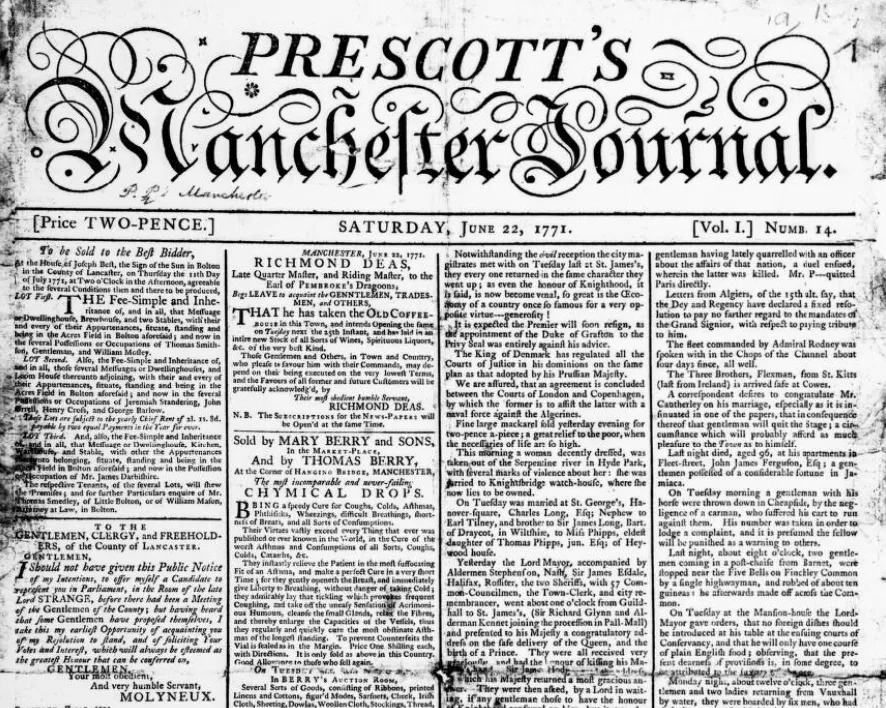
Meanwhile, we have another important historical title in the shape of Prescott’s Manchester Journal, an eighteenth century Mancunian title. This title is particularly notable as the editor was assisted by his daughter, poet Rachel Prescott (1765/6-1824).
We’re back to Northampton with our next new title, the Pressland’s Gazette. Later the Provincial Gazette, it appeared weekly on a Tuesday.
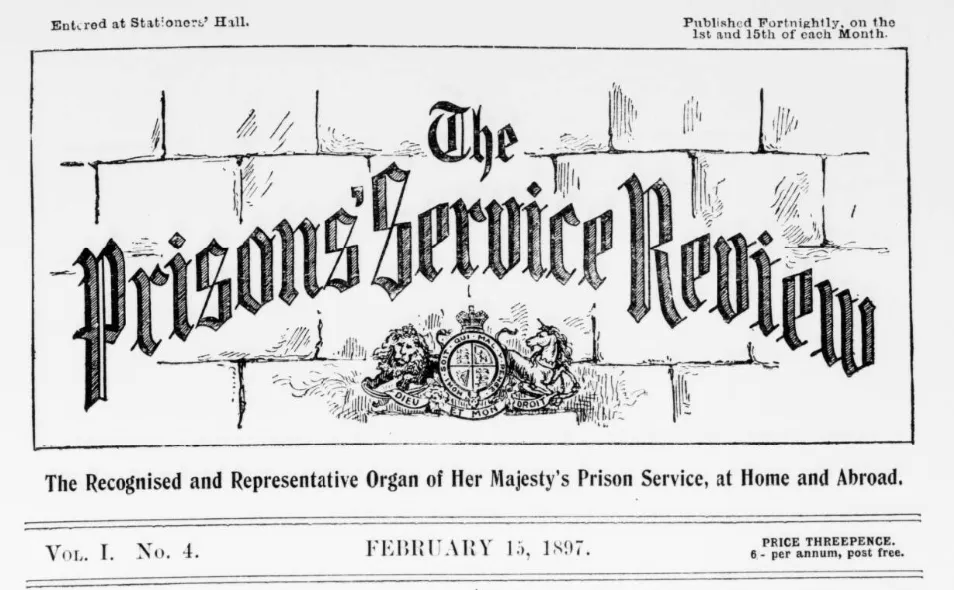
Now for something completely different with the Prisons’ Service Review. First published in London in 1896, it was ‘The recognised and representative organ of Her Majesty’s Prison Service.’ Appearing every month, and filling some 26 pages, it featured notes from prison officers, doctors, and chaplains from across the country, as well as descriptions of prisons across the world. The title, meanwhile, published a prize competition, correspondence, and news about prison officials and officers.
On 14 August 1897 the title became known as the Civil Service Review, although it continued to incorporate the Prisons’ Service Review. This title billed itself as a ‘Review of Her Majesty’s Civil Service at Home and Abroad.’
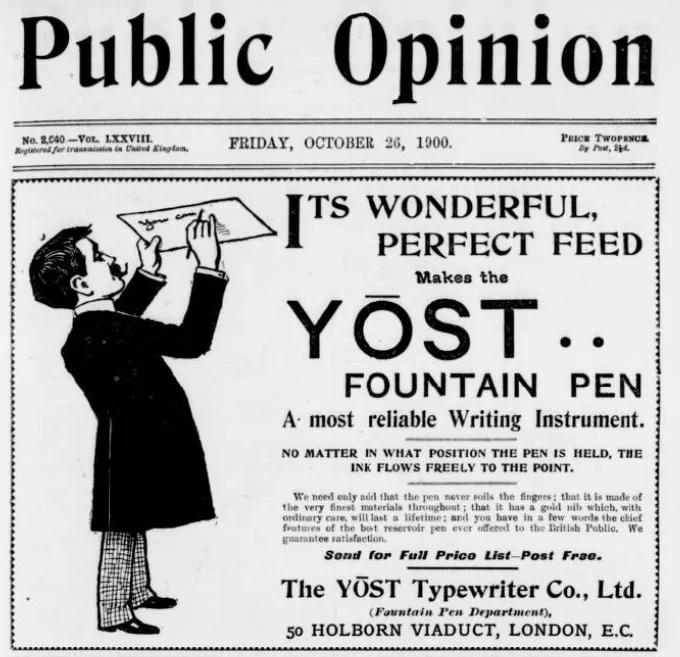
Next up we have Public Opinion. Established in 1862, this title represented ‘a comprehensive summary of the press throughout the world on all important current topics.’ Indeed, this lengthy Saturday title, which generally filled some 32 pages, claimed to be a ‘reflex of ‘public opinion’ as expressed by the British, Colonial, Continental, and American press.’
So Public Opinion represented a patchwork of clippings from newspapers like The Times, the Daily News (London), the Daily Telegraph, the New York Times, the New York Herald, Le Temps and La Patrie. Therefore, it asserted itself to be ‘the only Weekly Journal which contains the Opinions of the Press throughout the world on all great Political and Social Topics of the day, Home and Foreign, thereby giving the most varied and accurate information on all subjects of interest.’
61 to 70 – the Ramsey Weekly News and Northern Advertiser to The Forester (Coleford)
The next ten publications from our amazing 80 brand new newspaper titles come from the length and breadth of the United Kingdom and beyond. We have the Ramsey Weekly News, another new title from the Isle of Man, this time hailing from the town of Ramsey. This particular paper was established in 1889.
Next up we have the Rochdale Standard. This short-lived publication was established in the Lancashire town of Rochdale in 1856, before soon becoming known as the Rochdale Observer.
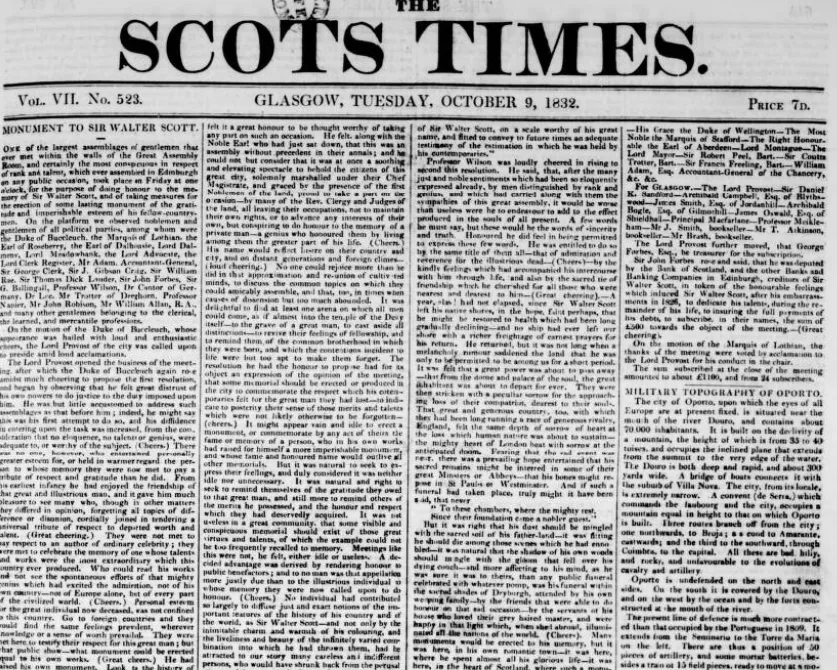
Moving up to Glasgow now, and we’re delighted to welcome the Scots Times to our holdings. This radical title was known for pushing for burgh reform. At the opposite end of the country and the political spectrum there is the Southern Daily Mail. Founded in Portsmouth in 1884, this title claimed to be the ‘only Tory paper in the south of England.’
A more recent arrival in the publishing world is the St. Austell Gazette and Cornwall County News. One of the Royal Cornwall Gazette series of newspapers, it was founded in 1926. Looking back into the nineteenth century, we’re delighted to welcome Bexley Heath’s St. Mary Cray & Swanley Express, which came into being in 1888.
Fellow London title, meanwhile, the St. Marylebone and Paddington Record, was founded in the west of the capital in 1914. This Conservative title appeared every Friday. Meanwhile, representing the County Durham market town of Stockton-on-Tees, we have the Stockton News and Advertiser.
We round this section off with two politically neutral titles, the first being the Swinton and Pendlebury Times. This Lancastrian title was established in 1872 and appeared every Wednesday, whilst its fellow neutral title The Forester (Coleford) came into being in 1852. Circulating throughout the Forest of Dean, The Forester was published in the Gloucestershire market town of Coleford.
71 to 72 – the Matrimonial Post and the Fashionable Marriage Advertiser and the Passing Show
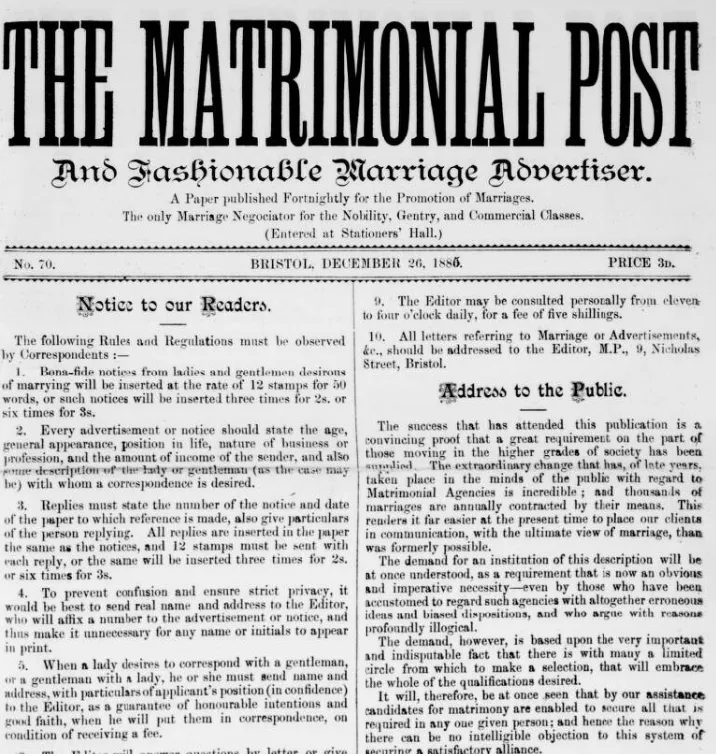
Of course we don’t have favourites here at The Archive, but if pushed, one of our favourites out of our 80 brand new newspaper titles would be The Matrimonial Post and the Fashionable Marriage Advertiser. Founded in 1882, this paper was published ‘fortnightly for the promotion of marriages.’ Indeed, the publication claimed to be the ‘only Marriage Negotiator for the Nobility, Gentry, and Commercial Classes.’
Printed with a set of rules for correspondents on the front page, this publication printed a series of ‘addresses to the Public,’ all from men and women searching for prospective spouses. These consisted of a few sentences briefly outlining the person’s situations and requirements, which could fall into the specific:
A lady of good family, aged 26, very fair, wishes to marry, would prefer an elderly gentleman.
Or:
A Clergyman, Church of England, who has a good vicarage and income of £500, is of the opinion that he would like to meet with an engaging lady, and who would be willing to marry. Replys must give full particulars of respondent, who must be highly connected, but means are of no consequence, the lady must not mind assisting in parish work.
The Tinder of its day, the Matrimonial Post and the Fashionable Marriage Advertiser attested that ‘the success that has attended this publication is a convincing proof that a great requirement on the part of those moving in the higher grades of society has been supplied.’ So successful was this title, that it ran into the 1950s.
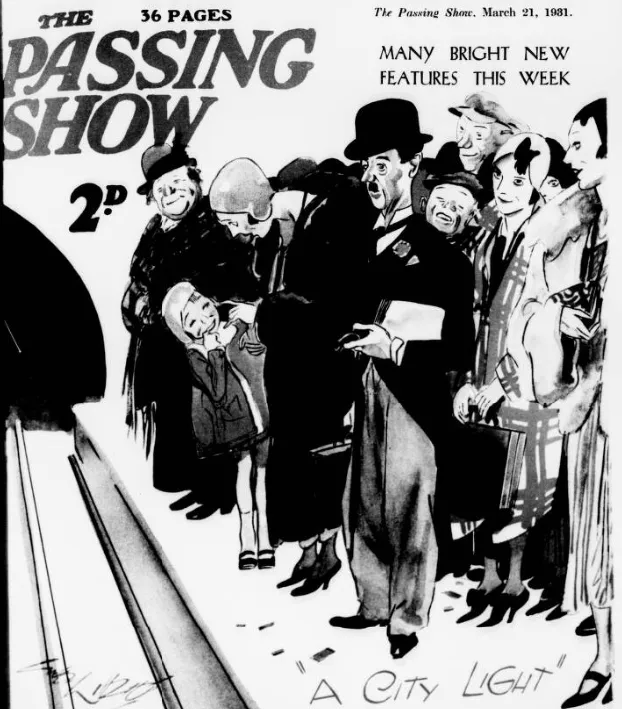
From marriage to music, and The Passing Show. First published on 20 March 1915 and named after the music revue, The Passing Show was an illustrated weekly magazine that appeared from 1915 to 1939. Known for its stories, and in particular, its science fiction stories, it featured an array of serialised fiction, like John Wyndham’s novel Stowaway to Mars and P.G. Wodehouse’s The Luck of the Bodkins.
Meanwhile, The Passing Show featured comic strips, like Bruce Bairnsfather’s cartoon strip Old Bill and Bert, which appeared in the publication from 1933 to 1936. The last edition of The Passing Show appeared on 25 February 1939, before it was merged with Weekly Illustrated, itself founded in 1934, the subsequent publication being named simply Illustrated.
73 to 78 – the Ulster Weekly News to the Workington News and West Cumberland Advertiser
We’re down to our penultimate selection of titles now, as we welcome the Ulster Weekly News to our holdings. This politically independent title began life in Belfast in 1855, and covered the news from the counties of Belfast, Antrim and Down.
Heading back to Yorkshire, our next new title is the Wakefield Evening Herald. A Conservative title, it covered the news from the East and West Ridings of Yorkshire. Meanwhile, the Wallasey and Wirral Chronicle was established in 1888, appearing every Saturday.
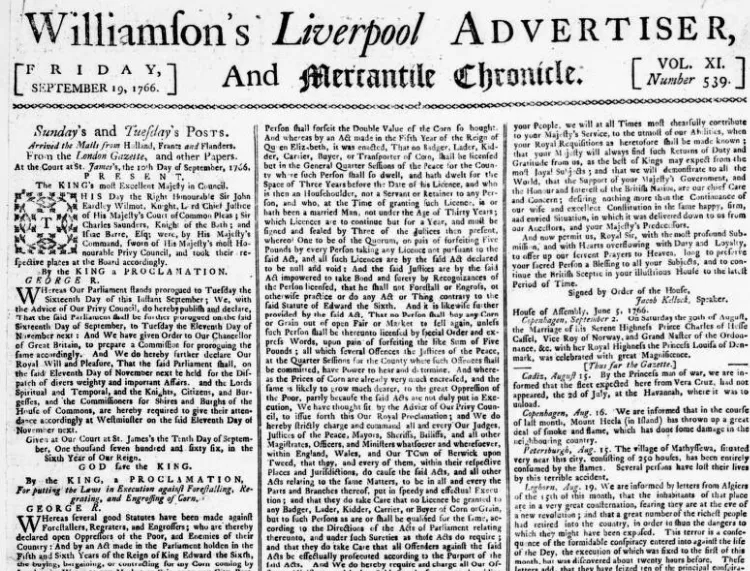
Staying in the area, we’re delighted to welcome Williamson’s Liverpool Advertiser and Mercantile Chronicle to our collection. This early Liverpudlian newspaper first appeared on 28 May 1756, before becoming the Liverpool Times.
We stay in the north west now to welcome a duo of titles from the coastal Cumbrian town of Workington. The Workington Free Press & Solway Pilot was founded in 1870 and was independent in its politics, circulating in the Workington and Solway districts. Meanwhile, fellow Workington paper the Workington News and West Cumberland Advertiser was founded in 1882. Liberal in its politics, it paid special attention to local news.
79 to 80 – the World’s Fair and Yorkshire Sports
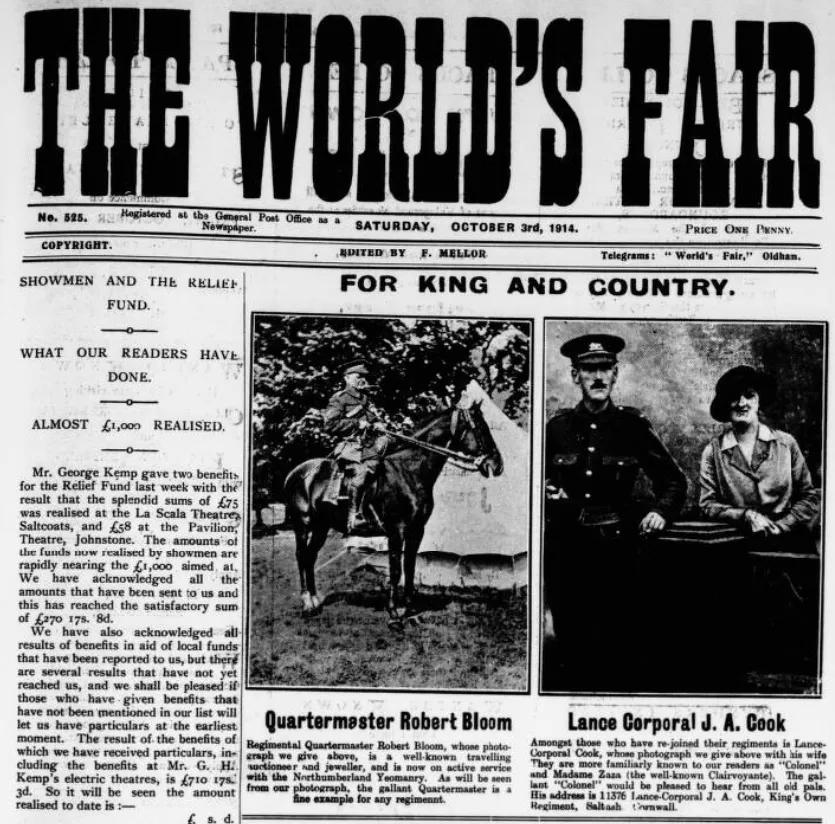
If you’ve made it this far, congratulations, we are now at the end of our list of our 80 brand new newspaper titles. In many ways, we’ve saved the best till last, with the addition of the World’s Fair. The ‘essential source of news and information on funfairs,’ the World’s Fair was launched in Oldham in 1904.
Still running to this day, the World’s Fair remains a print newspaper for the United Kingdom’s traveling fair industry, appearing every month instead of every week.
Within the pages of the World’s Fair you can find details about funfairs around the country, news of those involved in the industry, with headlines like ‘Lion Tamer in Trouble,’ as well as photographs of funfairs and funfair performers. Of particular interest are the advertising columns, which contain lists of items for sale, such as roundabouts and slides, as well as ads listing vacant situations, with positions including dancers, comedians, jugglers and contortionists all being featured within the pages of the World’s Fair.
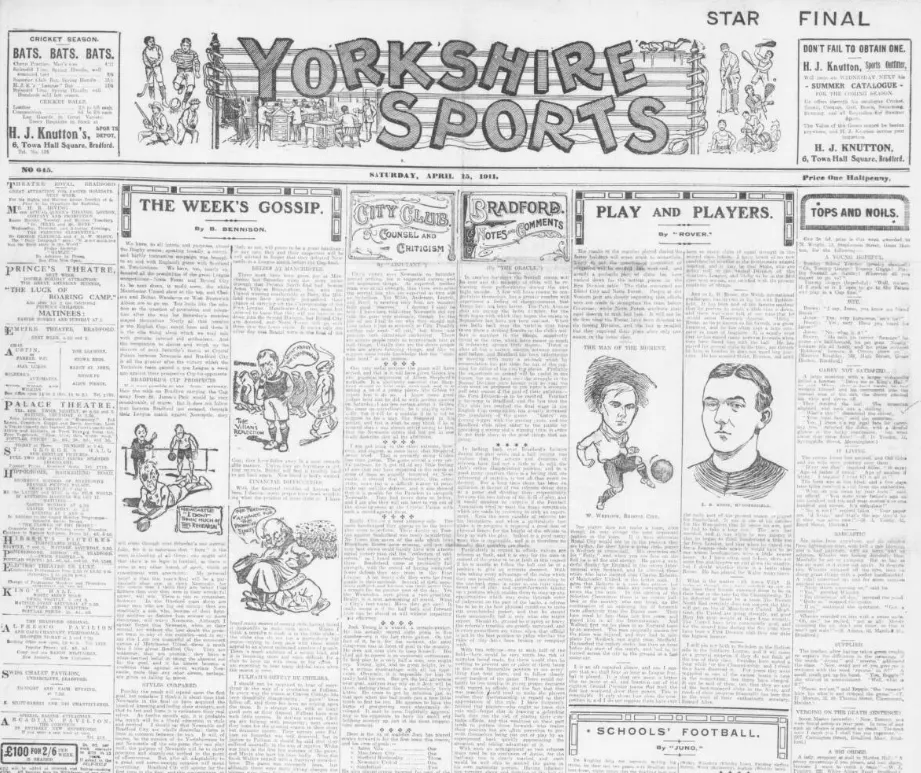
And now, our final, 80th brand new title, which is Bradford’s Yorkshire Sports. Founded in 1900, this Saturday paper reported on the sporting news from Bradford and Yorkshire more generally, with a specific focus on Bradford City Football Club. The paper also reported on boxing and swimming, and included photographs alongside its articles.
And there you have it, 80 brand new newspaper titles for you to enjoy! Happy browsing. What stories can you uncover within their pages?
New Titles
Title | Years Added |
1889 | |
1888 | |
1869-1895 | |
Brett’s St. Leonards and Hastings Gazette and Visitors’ Vade Mecum | 1857-1859, 1861-1864, 1866-1871, 1873, 1878-1882, 1884-1892, 1894-1896 |
1870, 1882, 1885, 1892-1893 | |
1822 | |
1889, 1896, 1911 | |
1888 | |
1876 | |
1878, 1889 | |
1885-1886 | |
1860-1867 | |
1889 | |
1897 | |
1889 | |
1895-1898 | |
1889 | |
1901 | |
1902 | |
1889-1890 | |
1889 | |
1888 | |
1889 | |
1898 | |
1903 | |
1846, 1848, 1851-1853, 1855-1856, 1858, 1860, 1862 | |
1857 | |
1950 | |
1889 | |
1880, 1889 | |
1877 | |
1855 | |
1850-1856, 1858-1865 | |
1863-1864 | |
1884 | |
1824-1852, 1889, 1940-1944 | |
1889 | |
1911 | |
1915-1934 | |
1898 | |
1889 | |
1908 | |
1889 | |
1885 | |
1884 | |
1880 | |
1921 | |
1891-1892 | |
1878 | |
1897-1908 | |
1795-1796 | |
1889 | |
1889 | |
1909, 1918 | |
1931 | |
1932-1952 | |
1899 | |
1839, 1869 | |
1771 | |
1882 | |
1897 | |
1865-1884, 1886-1911 | |
1889 | |
1856 | |
1832-1833 | |
1889 | |
1926-1946, 1948-1951 | |
1904-1909, 1913-1917 | |
1940 | |
1864-1865 | |
1889 | |
1875, 1881 | |
1882 | |
1889 | |
1889, 1893 | |
1766 | |
1870-1871, 1874-1876, 1878, 1880-1893 | |
1889, 1902 | |
1906-1917 | |
1911 |
You can keep up to date with all the latest additions by visiting the recently added page. You can even look ahead to see what we’re going to add tomorrow.
More on this topic:
Share this article
About the author

Rose Staveley-Wadham
Newspaper Licensing Manager
Published on Tue, 5 August 2025.