
Hot Off The Press – New Titles This Week
Published on 20 January 2026 by Rose Staveley-Wadham
This week at The Archive we are bringing the drama with the addition of a new title devoted to the theatre, as well as another new title which saw its owner get into hot water over his comments on the trial of Queen Caroline in 1820. In all, we have five brand new titles this week, as well as updates to 25 of our existing titles from across the UK and beyond, with 238,144 new pages added overall.
So read on to discover more about our brand new titles of the week, and also to learn about the trial of Queen Caroline, and one newspaper editor’s alleged attempts to ‘traduce, asperse, vilify, scandalize and calumniate her Majesty Caroline Amelia Elizabeth Queen Consort of the Realm.’
Register now and explore The Archive
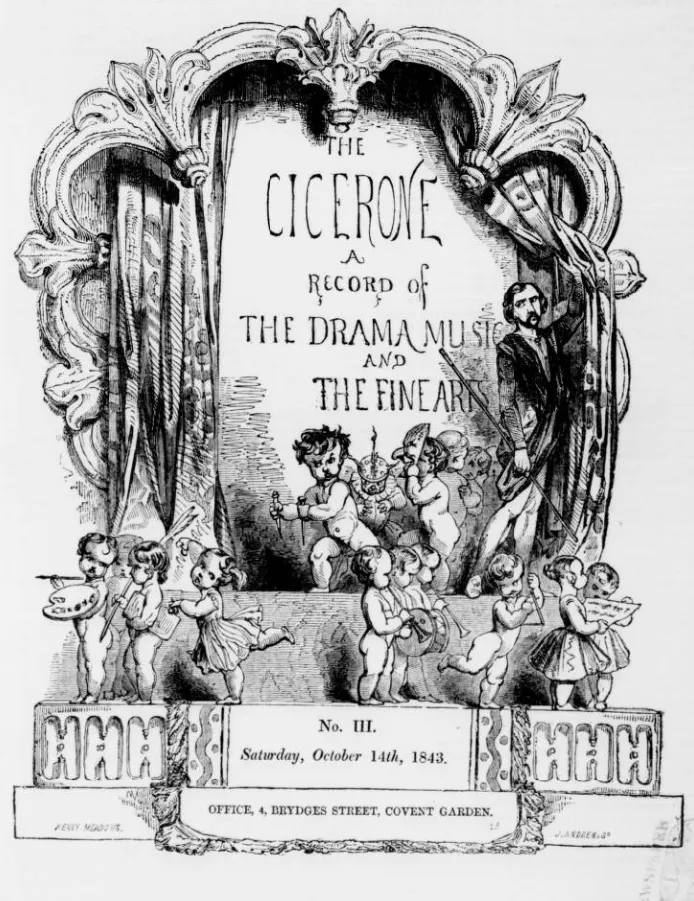
The Cicerone and Record of the Drama, Music and the Fine Arts
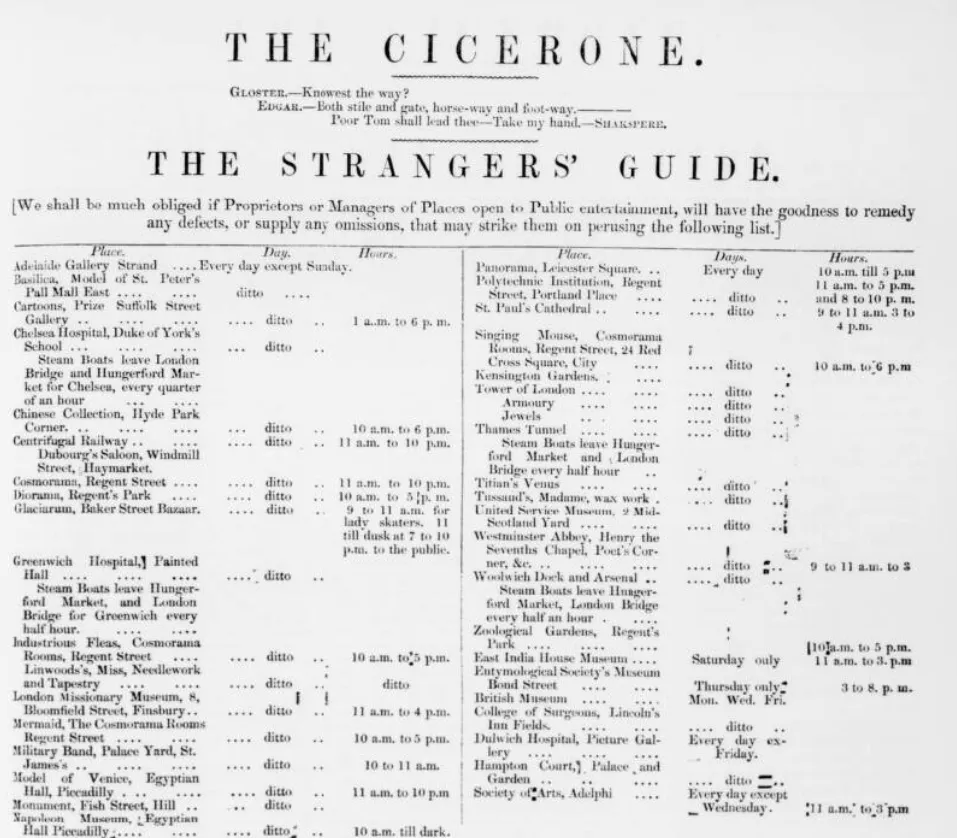
If the trial of Queen Caroline and the subsequent trial of newspaper editor Thomas Flindell isn’t quite enough drama for you, we have the solution. First published on 30 September 1843 was the Cicerone and Record of the Drama, Music and the Fine Arts. With the name of ‘Cicerone,’ a term for a guide who conducts visitors to cultural sites like museums and galleries, this newspaper was intended to be just that, a ‘stranger’s guide’ to those perhaps unfamiliar with the amusements offered throughout the city of London.
To that end, the Cicerone and Record of the Drama, Music and the Fine Arts printed a list of openings of different attractions, such as Westminster Abbey and Madame Tussauds. What is fascinating about the latter is the lateness of its opening times in the 1840s, as it stayed open to 10 pm. You can also find more novelties like the ‘Singer Mouse’ at the Cosmorama, Regent Street, being advertised by this title.
As the Monthly Times put it in October 1843, following the release of the new paper, ‘the publication answers the purpose of a guide to all public amusements, an arrangement which will be particularly useful to the sight-seers in general.’ Meanwhile, the Atlas noted how the Cicerone ‘may fill up a vacuum as a complete stranger’s guide to the various sights of the metropolis.’
However, the Cicerone and Record of the Drama, Music and the Fine Arts did not just provide a surface level guide to London’s many attractions. It published reviews of plays and ballets, with the Atlas reporting how ‘it contains a very good description and analysis of the new ballet – the Peri, and altogether, its arrangements are judicious.’ Furthermore, the Monthly Times described how:
To the Indian reader it is especially interesting, inasmuch as it embraces the record of Indian as well as English theatricals…Indeed, it is rumoured that the editorial pilotage of this well-written weekly brochure, has fallen into the hands of a gentleman formerly connected with the press and stage in India.
The rumours were true. The Cicerone was edited by Joachim Hayward Stocqueler (1801-1886), a journalist who had spent time in India. Consequently, the Cicerone and Record of the Drama, Music and the Fine Arts had a wonderful view of theatre across the world, with reports from Italy, India, and Australia. Its contemporaries were impressed; the Monthly Times admiring how the title was conducted with ‘spirit and ability.’ Indeed, this paper provides a wonderful insight into the sphere of the arts in the early 1840s, with detailed pieces about musical intelligence, playwrights, and theatrical managers.
Flindell’s Western Luminary
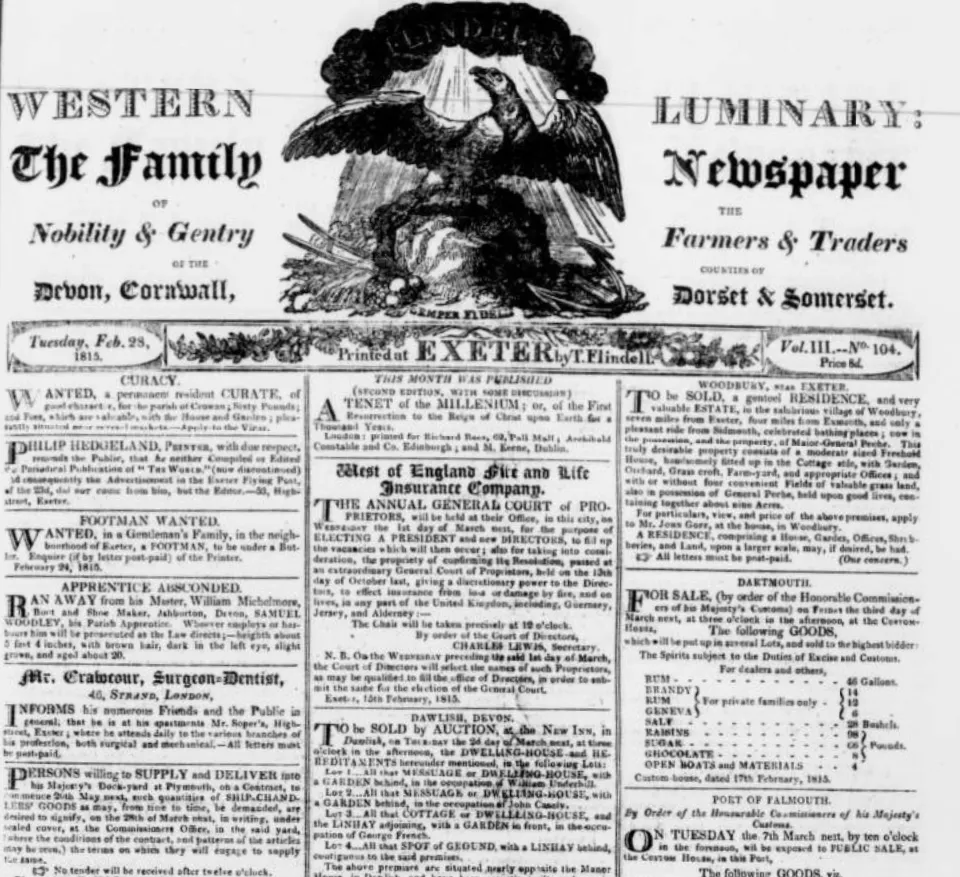
At the heart of our drama around the trial of Queen Caroline comes Flindell’s Western Luminary, and the man himself, Thomas Flindell. Thomas Flindell (1767-1824), a newspaper editor and printer, founded his Western Luminary in Exeter, Devon, in 1813. However, this wasn’t his first foray in the world of publishing, as he had founded the Royal Cornwall Gazette in 1803, before parting ways with that particular publication in 1811.
Established to compete with other Exeter publications like the Exeter Flying Post, Flindell’s Western Luminary espoused Tory principles. Appearing every Tuesday priced at 8 d, the newspaper filled eight pages, with a mix of local, national and international news. The paper, for example, printed a ‘Plymouth Weekly Trade Report,’ a tide timetable, a list of sailings from Falmouth, as well as a ‘Literary and Fashionable Repository’ and a ‘Meteorological Diary.’
A compelling read, this ‘family newspaper of nobility and gentry, farmers and traders, of the counties of Devon, Cornwall, Dorset and Somerset’ saw success in its early years. However, the fortunes of Thomas Flindell would become tied with his denunciation of Queen Caroline during her sensational trial, which you can discover more about later on in this blog.
The Govan Press and Weekly Advertiser for Govan & Kinning Park
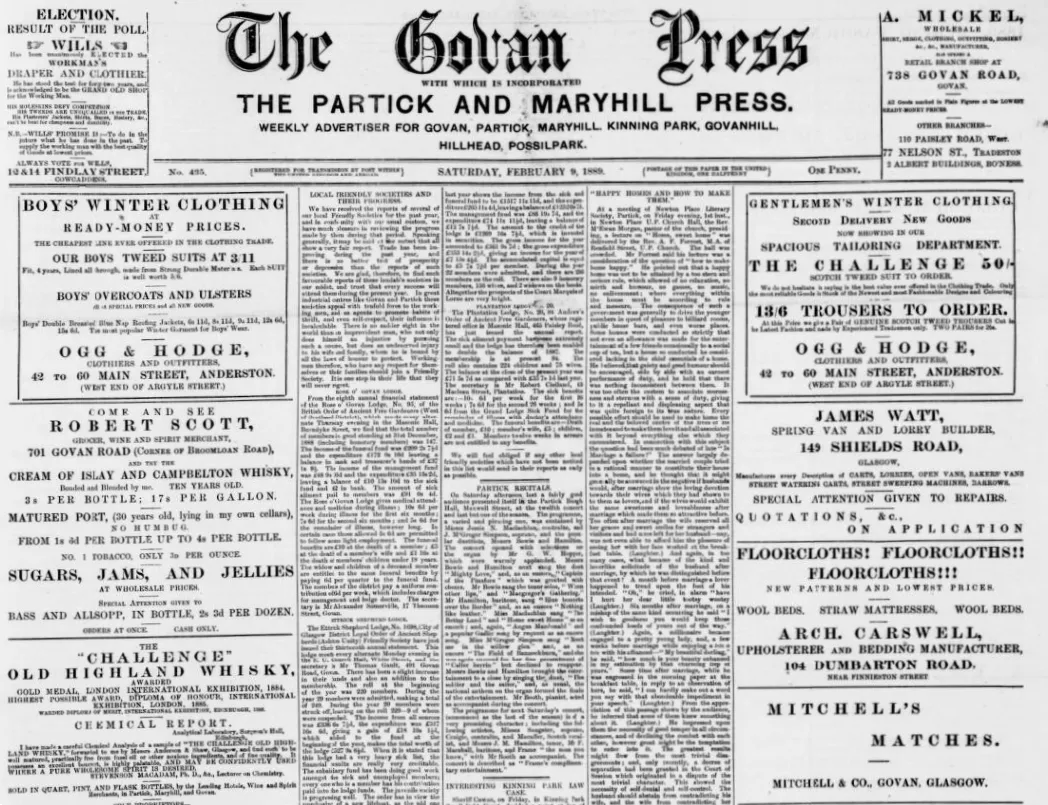
Printed by the Gossar family in Govan, a parish in southwest Glasgow, the Govan Press and Weekly Advertiser for Govan & Kinning Park was founded by John Gossar (1841-1890) in 1878. Later incorporating the Partick and Maryhill Press, the title covered the news from Partick, Maryhill, Kinning Park, Govanhill, Hillhead, and Possilpark.
Appearing every Saturday, the Govan Press was neutral in its politics, and cost only 1 d. Filling eight pages, it printed the news from the Govan Parochial Board, whilst also reporting on accidents and deaths in the area. Meanwhile, the paper focused on the important local industry of shipbuilding.
Thanks to the success of the Govan Press and Weekly Advertiser for Govan & Kinning Park , John Gossar and his wife Jane White Brown were able to build a new printing works for the concern. Construction began in 1888 and by 1890 the work was complete. However, tragedy struck just six months later, with Jane stepping in to take charge. With the support of her sons, she continued to run the Govan Press, and died aged 83 in 1926, as something of a local legend.
The Harwich & Dovercourt Newsman
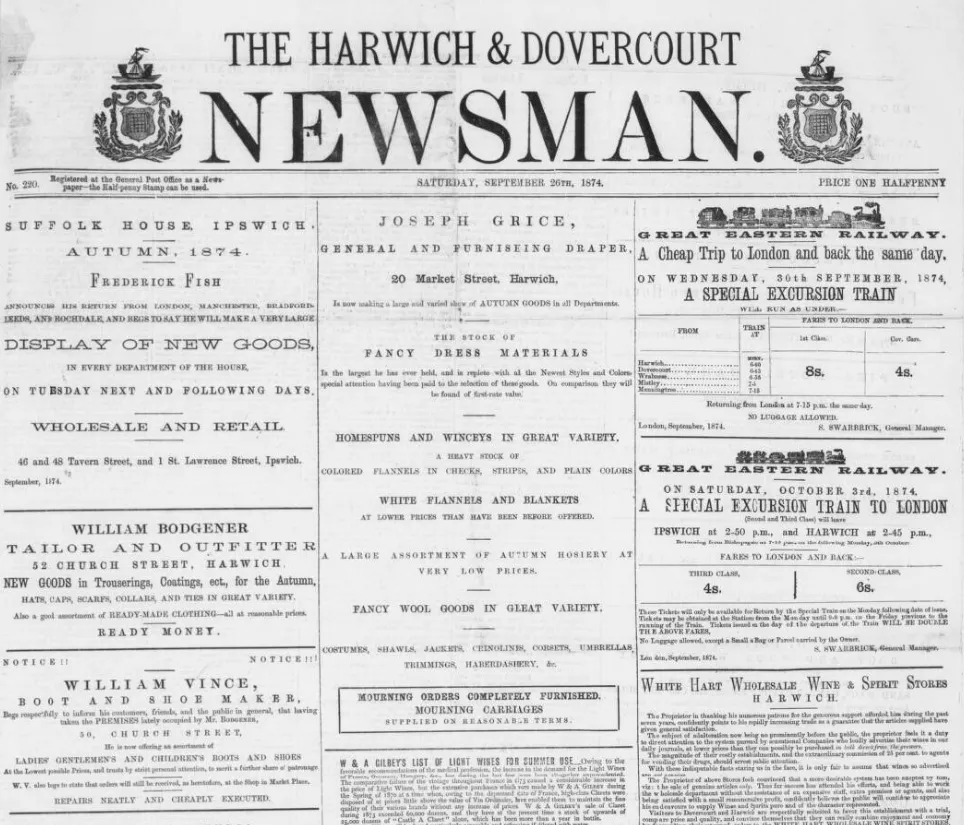
We travel to Essex for our next new title of the week, which is the Harwich & Dovercourt Newsman. Established in 1870 and owned by George Langley Jackson, the Harwich & Dovercourt Newsman appeared every Saturday priced at just one halfpenny.
Neutral in its politics, this newspaper filled four pages with the news from the historic port town of Harwich. Meanwhile, it also printed ‘General County News,’ alongside updates from the Colchester Borough Quarter Sessions.
Furthermore, within the pages of the Harwich & Dovercourt Newsman you can find religious readings, news of local deaths and accidents, and serialised fiction.
The Monitor and New Era
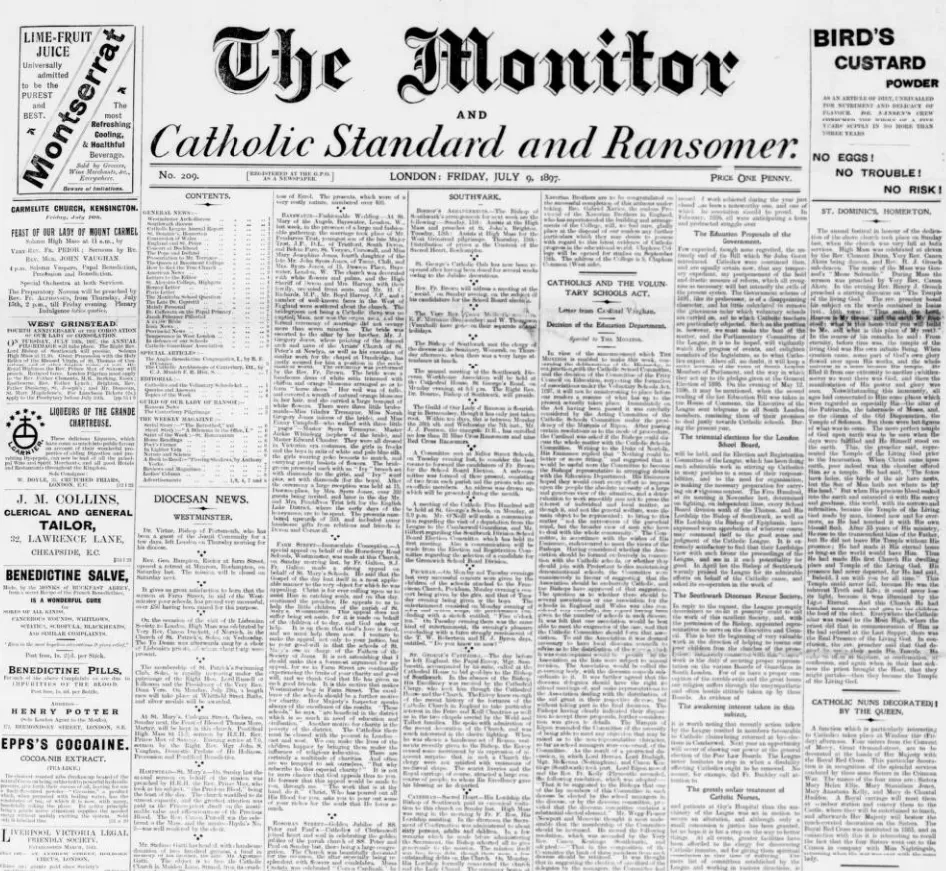
Our final new title of the week is the Monitor and New Era, which was first published on 5 March 1897. Dubbing itself as ‘The Catholic Organ for England,’ this London publication promised to ‘devote special attention to every aspect of importance to Catholics.’ Moreover, the title would be ‘distinctly a newspaper for Catholics, carefully watching over their interests, and entering fully into the public movements of the time, and the aspirations of the people.’
So what did the pages of this ‘family newspaper’ contain? Well, within its eight pages you can find diocesan news from Westminster and Southwark, letters from both Paris and Rome, and news from Ireland and America. Meanwhile, the Monitor and New Era offered some distinctively Roman Catholic content, for example printing a ‘Saint of the Week’ section, alongside more religious fare, such as news about clergy members, updates about new churches, and recommendations for Catholic literature.
Appearing every Friday at the cost of one penny, the Monitor and New Era also featured serialised fiction, a poetry corner, and a ladies’ column, making it an informative and well-balanced religious leaning newspaper.
Our updated titles
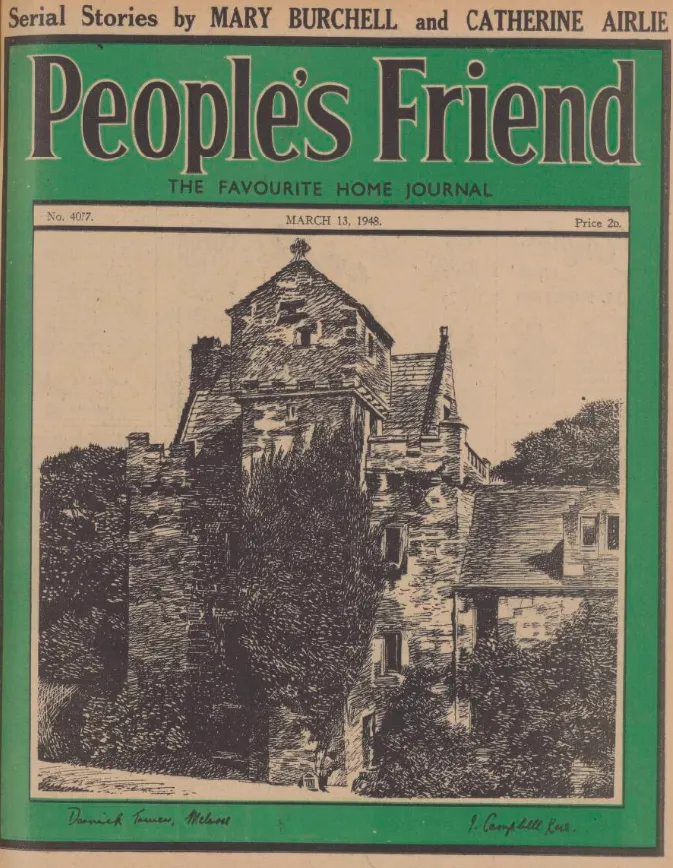
We have a feast of updated titles for you to enjoy this week. Our highlights include updates to a trio of our very special Scottish titles. We’ve added over 89,000 brand new pages to the Edinburgh Evening News, whilst over 23,000 brand new pages join one of Britain’s longest-running magazines the People’s Friend, and two more years join ‘Scotland’s favourite newspaper’ the Sunday Post.
Elsewhere, we’ve added over 26,000 brand new pages to the Nottingham Evening Post, whilst new pages also join policing title the Police Chronicle. Furthermore, new pages join one of our Welsh titles, the Caernarvon & Denbigh Herald, and there are new additions to one of our publications from the Isle of Man, the Ramsey Weekly News.
The trial of Queen Caroline and the trial of Thomas Flindell
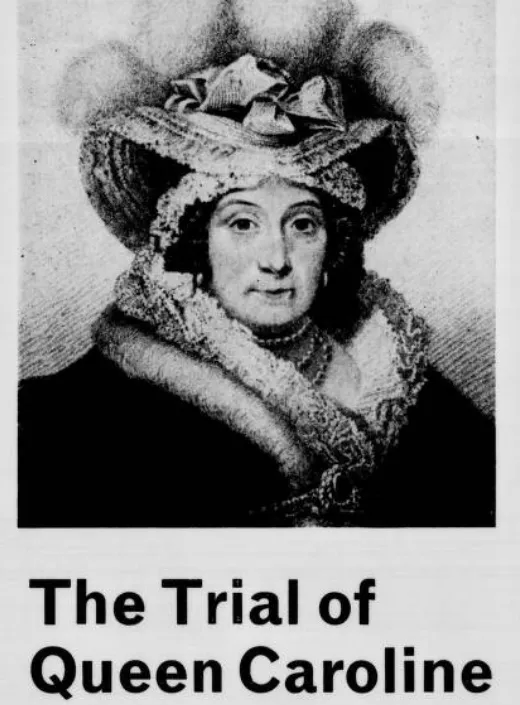
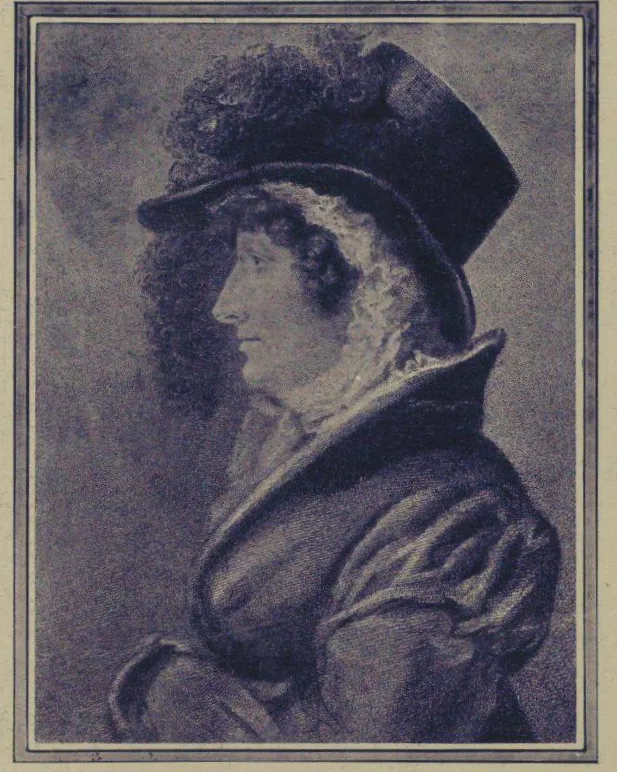
And now to the drama, the trial of Queen Caroline, and the trial of Thomas Flindell. After King George IV succeeded to the throne in 1820, he looked for a way to dissolve his marriage to his wife, Queen Caroline. Their union was not a happy one, and the only avenue available to the monarch was divorce. However, divorce meant proving an accusation of adultery, and rather conveniently, rumours swirled around Queen Caroline and her Italian head servant, Bartolomeo Pergami.
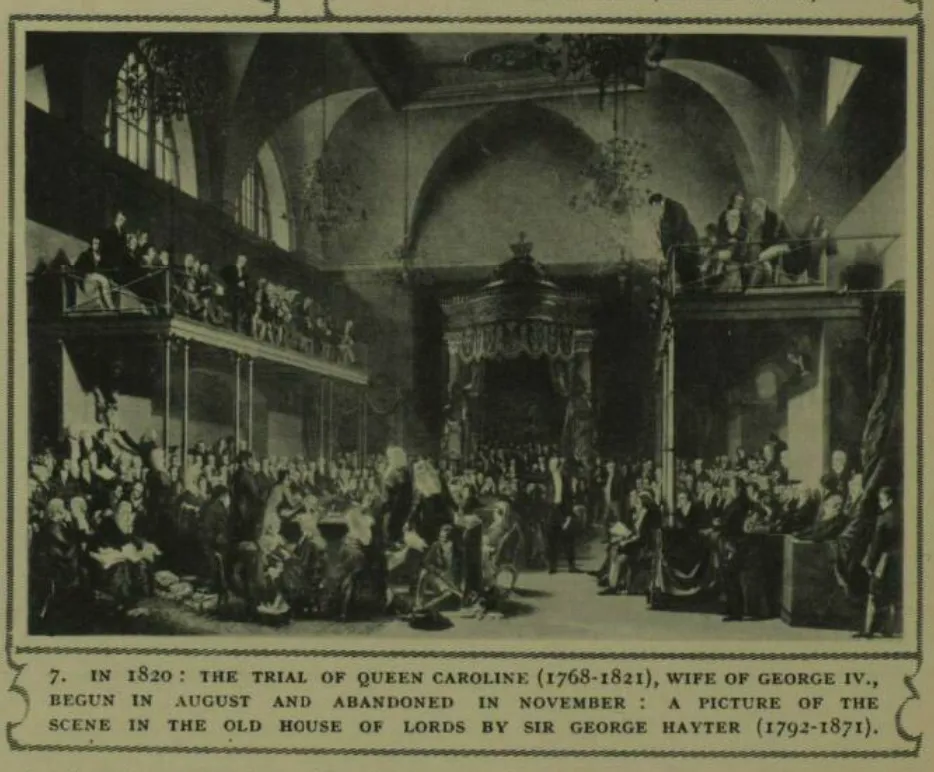
King George IV then took his Pains and Penalties Bill, which sort to dissolve his marriage, to parliament, where it was discussed by the House of Lords in July 1820. In August 1820 Queen Caroline attended parliament in what became known as the trial of Queen Caroline. Pitched against her unpopular husband, who was seen as the pinnacle of greed and excess, Queen Caroline gained the support not only of the general population, but also of the Liberal and Radical causes.
As this scandal raged, on 11 July 1820 the Conservative leaning and king-supporting Thomas Flindell published his thoughts on the matter in his paper Flindell’s Western Luminary. Flindell writes:
Even the unprincipled and insidious ‘Times,’ which has been imposing upon the honest sympathy of the people its audacious assertion of the Queen’s innocence, has now the modesty to comfort its readers, that the matter is no worse! that Ministers ‘only charge her, in their Bill, with adultery with one man!’ The ‘Morning Chronicle‘ has another ground of consolation; namely that the Queen will herself repel this charge, by a sort of plea too filthy to be named outside of an Italian brothel!
Flindell is clearly on King George IV’s side, as he continues:
And shall a people whose loyalty has been purified by a long reign of virtue – shall men who love and respect their mothers, wives, sisters, daughters, because of their honourable chastity, stifle their indigination and disgust as such exalted profligacy as this? – Shall a woman who is as notoriously devoted to Bacchus as to Venus – shall such an one as would, if found on our pavement, be committed to Bridewell and whipped, be held up the light of suffering in innocence, and enthroned in our hearts on the prostration of our boasted principles?
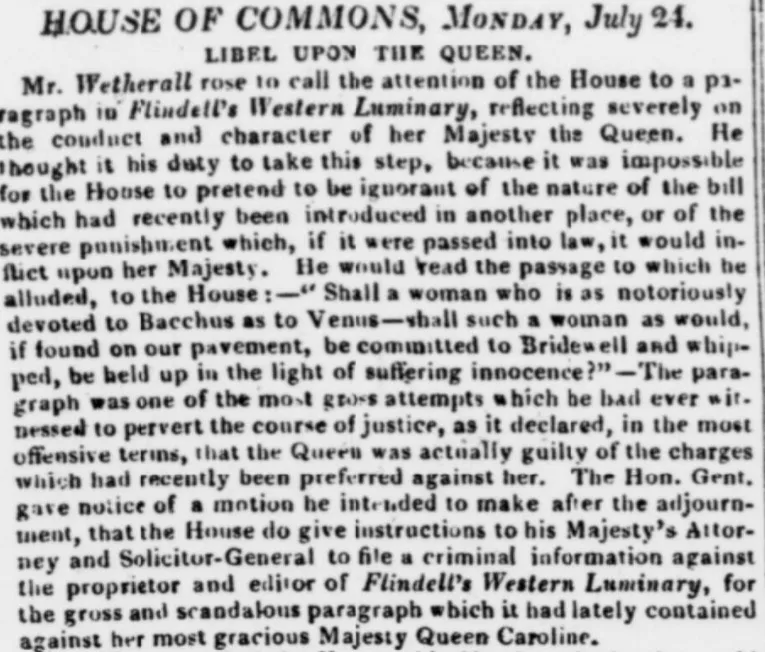
Little perhaps did Thomas Flindell know that his words would make waves, waves that would echo once more in his own paper. On 1 August 1820 Flindell’s Western Luminary published an article under the subheading ‘Libel upon the Queen,’ as it recorded proceedings in the House of Commons:
Mr. Wetherall rose to call the attention of the House to a paragraph in ‘Flindell’s Western Luminary,’ reflecting severely on the conduct and the character of her Majesty the Queen. He thought it his duty to take this step, because it was impossible for the House to pretend to be ignorant of the nature of the bill which had recently been introduced in another place, or of the severe punishment which, it it were passed into law, it would inflict upon her Majesty.
Flindell’s inflamed and derogatory words were then read to the House of Commons. Mr. Wetherall dubbed them as ‘one of the most gross attempts to which he had ever witnessed to pervert the course of justice, as it declared, in the most offensive terms, that the Queen was actually guilty of the charges which had recently been preferred against her.’ The M.P. then went on to recommend that ‘criminal information’ should be filed against the ‘proprietor and editor’ of Flindell’s Western Luminary.
We return to Flindell’s Western Luminary, which on 27 March 1821 provided its own unique assessment of the trial of the proprietor and editor of the paper’s owner at the Exeter County Assizes. Accused of ‘unlawfully wickedly and maliciously intending to traduce asperse vilify and calumniate her Majesty Caroline Amelia Queen Consort of the Realm and to bring her said Majesty into hatred and contempt amongst the liege subjects of said Lord the King,’ Thomas Flindell was found guilty by the jury after a few minutes, although they recommended ‘the defendant to the clemency and consideration of the Crown.’
This remarkable article contains a first person account authored by Thomas Flindell, which you can read in full here. In it, he expresses his wish that he may continue to run his newspaper from his prison cell in Exeter Gaol, ending his piece by stating that ‘may I cease to live, before I abandon my principles.’ Somewhat ironically, the Pains and Penalties Bill against Queen Caroline was dropped before it could be debated in the House of Commons, although she was not permitted entry to her husband’s coronation in July 1821.
Thomas Flindell would spend eight months in prison. On 11 July 1824 he passed away in Exeter. His story demonstrates the remarkable intersection of local journalism, national politics, and the morality of a nation stirred to either support or condemn its queen.
Discover more about Thomas Flindell, the trial of Queen Caroline, and much more besides, in the pages of our Archive today.
New Titles
Title | Years Added |
1843-1844 | |
1815-1828, 1833, 1848 | |
1889, 1891-1892 | |
1874-1875, 1877, 1880, 1889 | |
1897-1915 |
Updated Titles
This week we have updated 25 of our existing titles.
You can learn more about each of the titles we add to every week by clicking on their names. On each paper’s title page, you can read a free sample issue, learn more about our current holdings, and our plans for digitisation.
Title | Years Added |
1909-1912 | |
1874-1876, 1878-1879, 1893, 1900-1912 | |
1844 | |
1870, 1873-1879, 1919 | |
1985 | |
1983 | |
1996-2000 | |
1902, 1905-1909, 1911, 1913-1916, 1918-1923, 1925-1935, 1937-1949, 1951, 1953-1965 | |
1964 | |
1925 | |
1937, 1976, 1980 | |
1922, 1927-1929 | |
1910, 1913 | |
1873-1875, 1877-1883 | |
1998 | |
1930-1948 | |
1881, 1883, 1887, 1890 | |
1890-1904 | |
1860, 1864, 1881-1888, 1895-1896, 1898-1910 | |
1789 | |
1882-1895, 1897-1913 | |
1990 | |
1929, 1940 | |
1901-1910, 1912-1913 | |
1875-1882 |
You can keep up to date with all the latest additions by visiting the recently added page. You can even look ahead to see what we’re going to add tomorrow.
More on this topic:
Share this article
About the author

Rose Staveley-Wadham
Newspaper Licensing Manager
Published on Tue, 20 January 2026.