
Hot Off The Press – New Titles This Week
Published on 13 January 2026 by Rose Staveley-Wadham
This week the city of Hull is taking a starring role on The Archive, as we’ve added fifteen brand new Hull newspapers, as well as updating four more. Overall, we’ve added 204,393 brand new pages to The Archive, as we celebrate the Yorkshire port city of Hull, the UK’s City of Culture in 2017.
Stayed tuned as we dive into all of our brand new Hull newspapers of the week, and also to explore one of Hull’s claims to fame, being the birthplace of mass-produced boiled sweets.
Register now and explore The Archive
The Beverley & District Star and the Beverley Weekly Journal
Admittedly we start our foray through our new Hull newspapers this week a little outside of the city, in the market town of Beverley, which lies eight miles north west of Hull, although we do find connections to Hull everywhere.
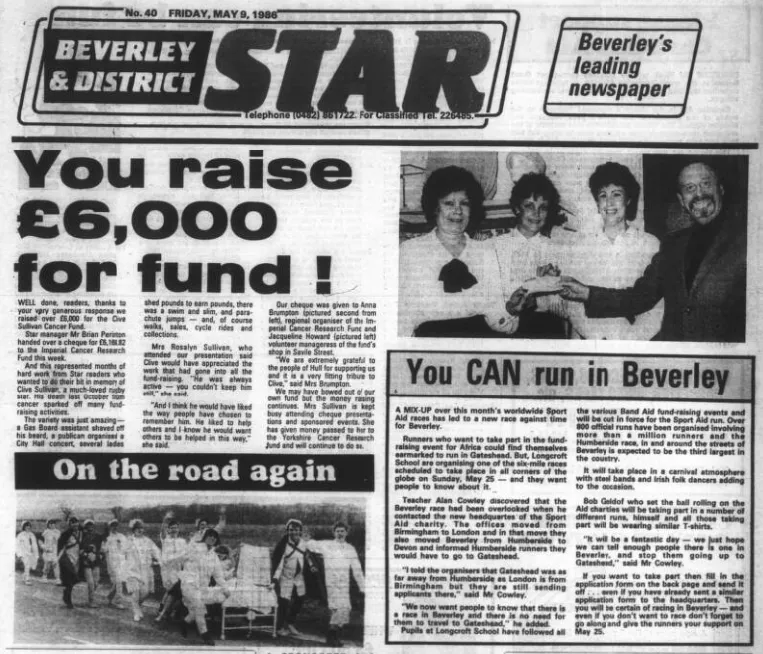
Our first new newspaper this week is the Beverley & District Star, which in the mid 1980s claimed to be ‘Beverley’s leading newspaper.’ Appearing every Thursday, it was later replaced by our next new newspaper of the week, the Beverley Weekly Journal.
Produced by the Hull Daily Mail, the Beverley Weekly Journal also appeared every Thursday, and first appeared on 19 May 1988. A freesheet, the Beverley Weekly Journal aimed to provide ‘the best local news service, but also unrivalled picture coverage and features, covering all aspects of life in Beverley and District.’
The Target series of newspapers
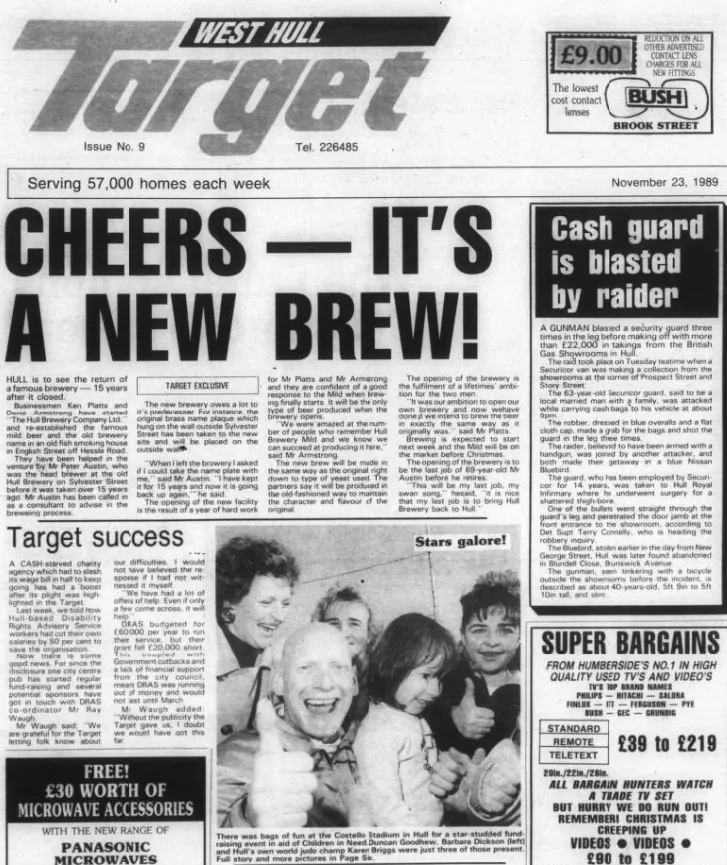
It’s little surprise that many of our new Hull newspapers this week were published by the Hull Daily Mail, the publishing powerhouse of the region. Our next five new newspapers formed part of the Hull region’s Target series of newspapers. Produced by the Hull Daily Mail, four out of five of these titles were first published on 28 September 1989.
One of these new newspapers was the Beverley Target, which served Beverley, Market Weighton, Leven, Brough and the surrounding villages. Next there was the East Hull Target, which served 52,000 homes every week, and then the West Hull Target, which was sent to some 57,000 homes every week. Finally, also appearing in September 1989 was the Haltemprice Target, which circulated in the area to the west of Hull, namely in Anlaby, Cottingham, Hessle, Kirkella, Willerby, Swanland, North Ferriby and Skidby.
All these Target sister newspapers were free, complimenting the daily paid-for Hull Daily News. Meanwhile, following the release of these four publications, the Holderness Target was first published on 3 October 1990. Appearing every Wednesday, the Holderness Target served over 16,500 homes in Holderness, an area between the River Hull and the North Sea.
The Bridlington Star and the Hull Star
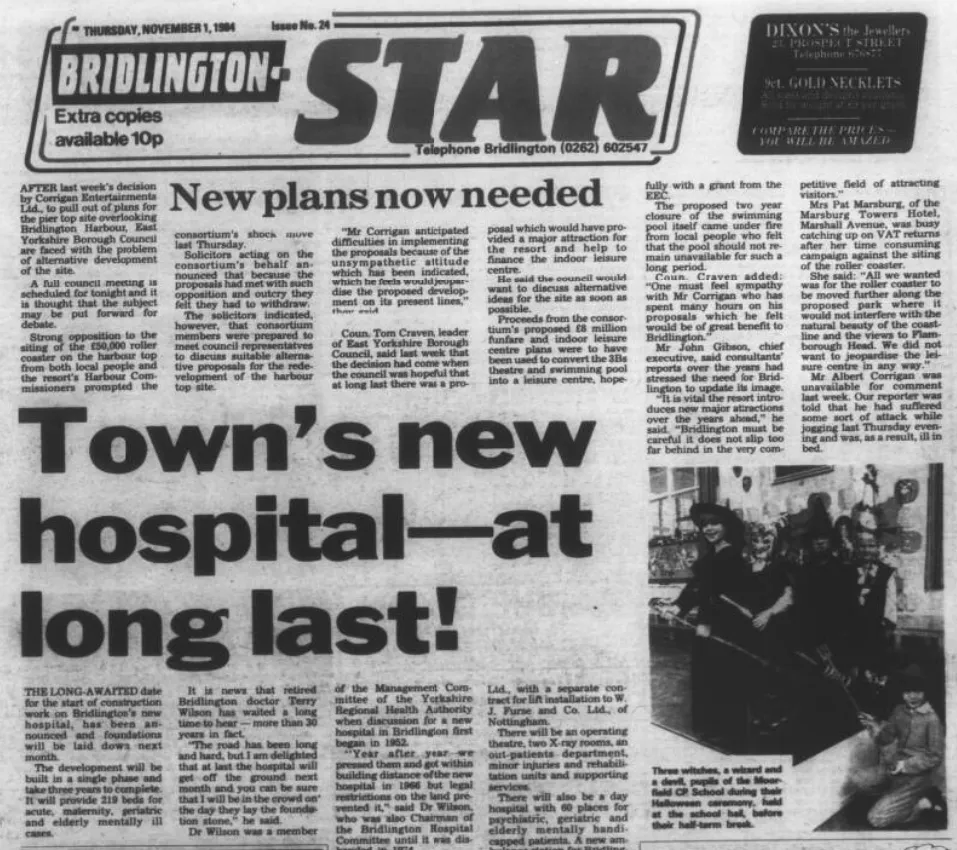
Next up we have two stars of our new Hull newspapers: the Bridlington Star and the Hull Star. A freesheet again produced by the Hull Daily Mail, the Bridlington Star was first published on 24 May 1984. ‘A long-awaited alternative local newspaper, produced by professionals,’ this newspaper was set to be the ‘biggest and best shop window’ in the seaside town of Bridlington, which lies to the north of Hull.
The Bridlington Star‘s mission statement was a clear one. It aimed to be ‘about the people of Bridlington,’ promising to bring readers ‘the local news, sports, features and pictures that really matter.’
Paving the way, meanwhile, for the Bridlington Star was the Hull Star, which was first published on 26 September 1980. Also produced by the Hull Daily Mail, it counted the Beverley & District Star as one of its sister papers.
A ‘bright little number,’ the Hull Star was ‘delivered free to more than 100,000 homes in Hull, Cottingham, Willerby, Anlaby, Kirkella, Hessle and Bilton.’ Appearing every Friday, the lively Hull Star promised to take ‘a lighter and brighter look at the city and its people, with the accent on entertaining and amusing you.’ Furthermore, the newspaper aimed to provide something for all of the family, as well as ‘for the home itself – not forgetting the garden and car.’
The Business Journal (Hull) and the Journal (Hull)
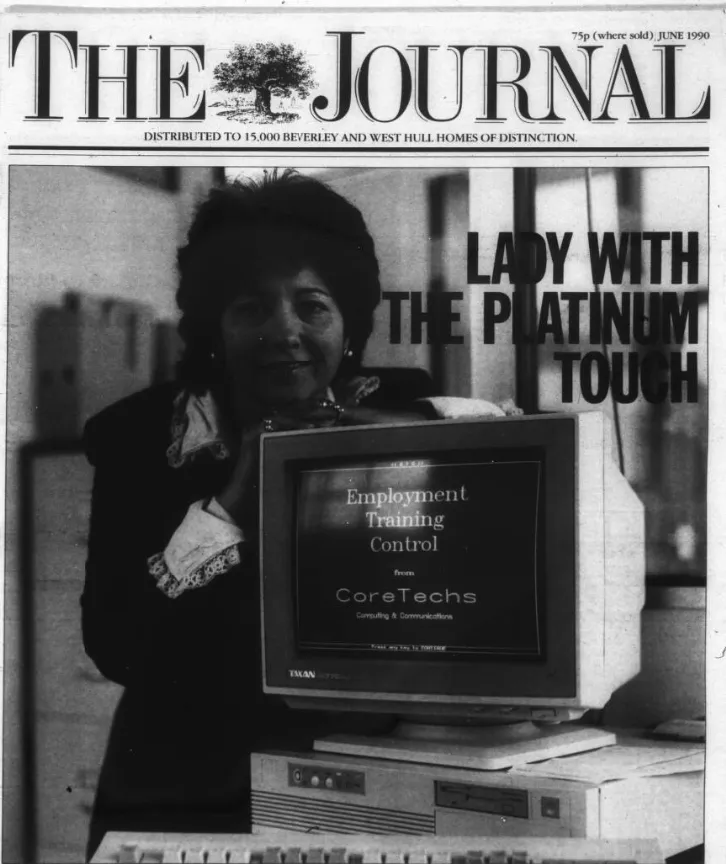
Next we have a duo of similarly named Hull newspapers, the Business Journal (Hull) and the Journal (Hull). We’ll start with the Journal (Hull), as this title came first, releasing in November 1989 as part of the ‘most creative and exciting publishing event to occur in the Beverley and West Hull area for many years.’
‘Distributed to 15,000 Beverley and West Hull homes of distinction,’ the Journal (Hull) was the ‘area’s first full-colour monthly magazine.’ It aimed to ‘focus attention on the people who make the news in this part of the district, and to highlight the positive aspect of their business and leisure activities.’ A monthly publication, the Journal (Hull) featured pieces on antiques, the Hull social scene, holidays, fashion, sport and the home.
Following on from the success of the Journal (Hull), along came the Business Journal (Hull). Another monthly magazine, this title was first published in October 1990, representing ‘a new concept in business magazine publishing for Hull and Humberside.’ Distributed free to 20,000 homes in Humberside, the Business Journal (Hull) promised to take a ‘positive look at business and industry in our area and, more specifically, at the men and women who are working to put Hull and North Humberside on the map as one of the most important commercial centres in Europe.’
The Business Journal (Hull) was set to feature expert contributions from the worlds of finance and law, whilst a diary column would ‘provide full, in-colour, photographic coverage of significant formal and informal occasions in the local business community.’ Furthermore, this publication also featured profiles of local Hull business owners, advice for small businesses, and opinions from shopkeepers and different unions.
The Hull Times, the Hull & Yorkshire Times and the Hull and East Yorkshire Times
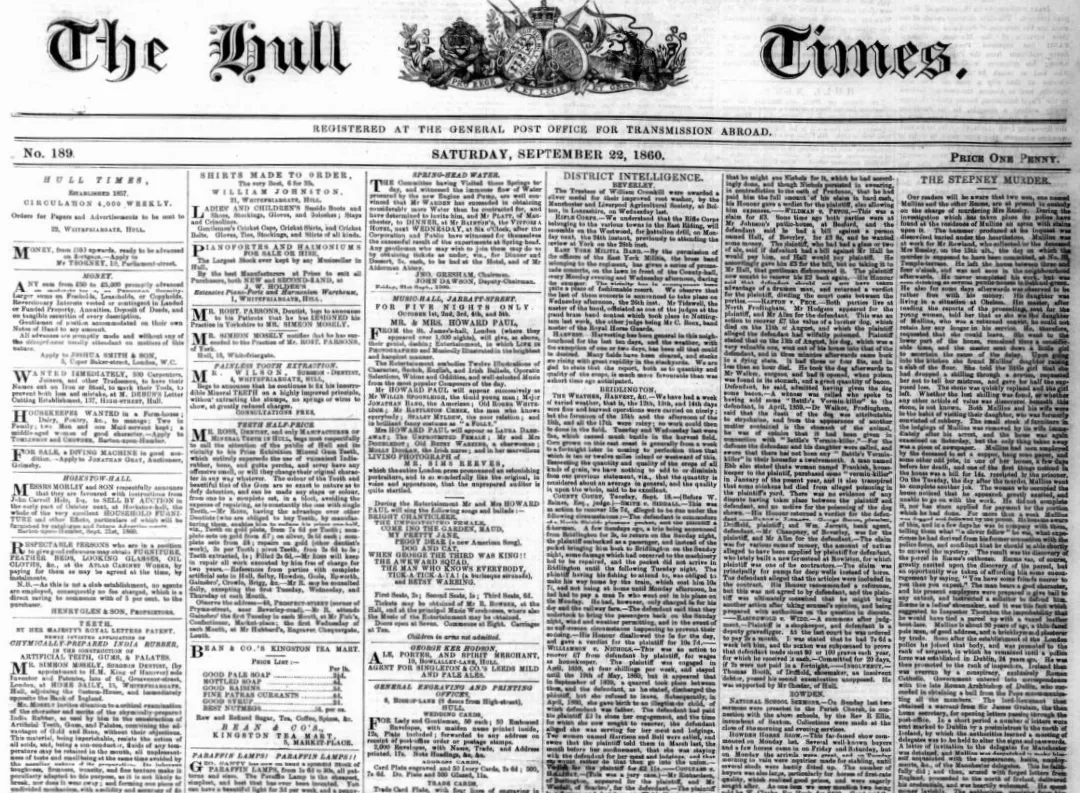
Our next three Hull newspaper titles stem from the Hull Times, a politically neutral publication that first appeared on 14 February 1857. Appearing every Saturday, and filling four pages, it soon grew to have several regional variations.
As an advert for the Hull Times explained in the 1930s, ‘the morning issues for North Lincolnshire and East Yorkshire are separate publications, followed on Saturday afternoon and evening by town editions in which all the news of the week-end appears.’ And so, the Hull Times as published on our Archive incorporates the Lincolnshire version of this title, with title variants being seen throughout its history, with the name the Hull & Lincolnshire Times perhaps being the most longstanding.
Meanwhile, the 1930s ad for the Hull Times papers explains how they were ‘the largest, best, and most widely read town or county weekly papers in Hull and the adjacent counties.’ As for the other Hull Times editions, this week we have published the Hull & Yorkshire Times, which appeared every Friday and covered the North Humberside region, the Hull and East Yorkshire Times being the East Yorkshire version.
The Hull Times closed in 1984.
Now, Then
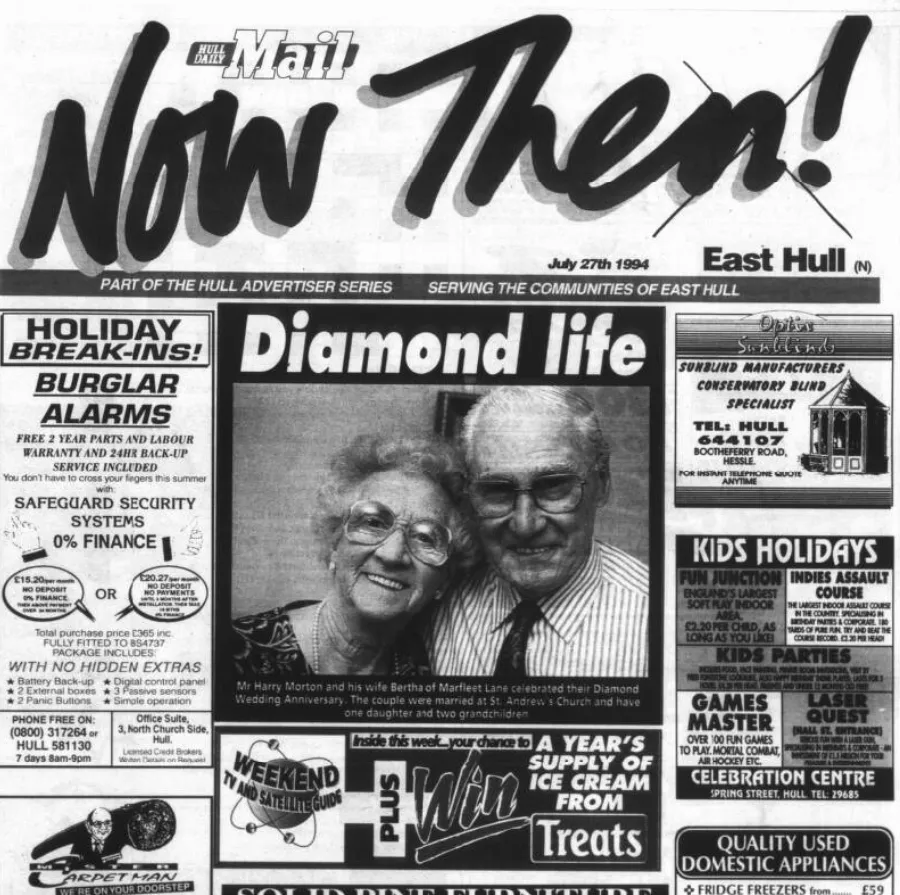
We now welcome the final of our new Hull newspapers this week, which is the wonderfully named ‘Now, Then.’ Part of the Hull Advertiser series, this title gets its name from a traditional Hull greeting, which usually takes the form of ‘Now then, how’re you doing?’ Indeed, such a greeting is said to be universal amongst strangers meeting each other in Hull, with the appropriate response being ‘now then.’
But back to Now, Then. Appearing every Wednesday, this local title served the communities of East Hull.
Our updated titles
We have still more Hull newspapers for you to enjoy, with updates to four of our Hull area titles, the Beverley Advertiser, the East Hull Advertiser, the Hull and Eastern Counties Herald, and the Hull Advertiser. The Hull Advertiser actually provides us with our earliest new pages this week, dating all the way back to 1815.
Made in Hull – Needler’s boiled sweets
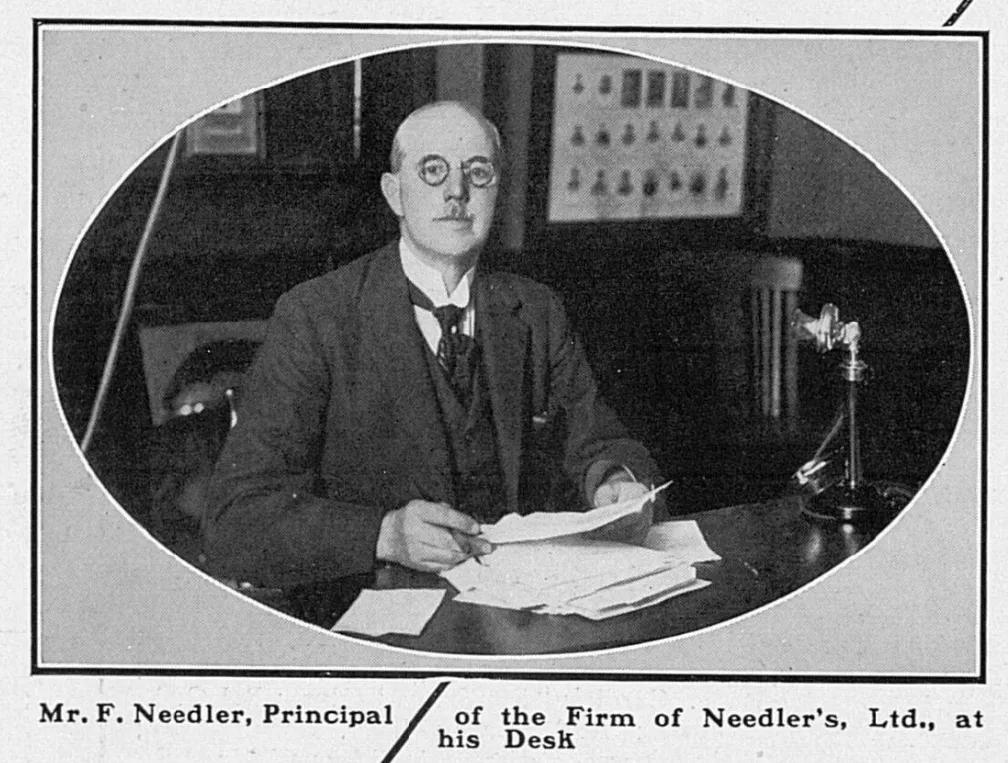
The city of Hull is home to many inventions and household names, with Liquid Crystal Display (LCD) technology, Lemsip, Bonjela and Gaviscon all originating in Hull. Another string to Hull’s bow is the development of the mass-production of boiled sweets, something that is inextricably tied to the career of confectioner Fred Needler.
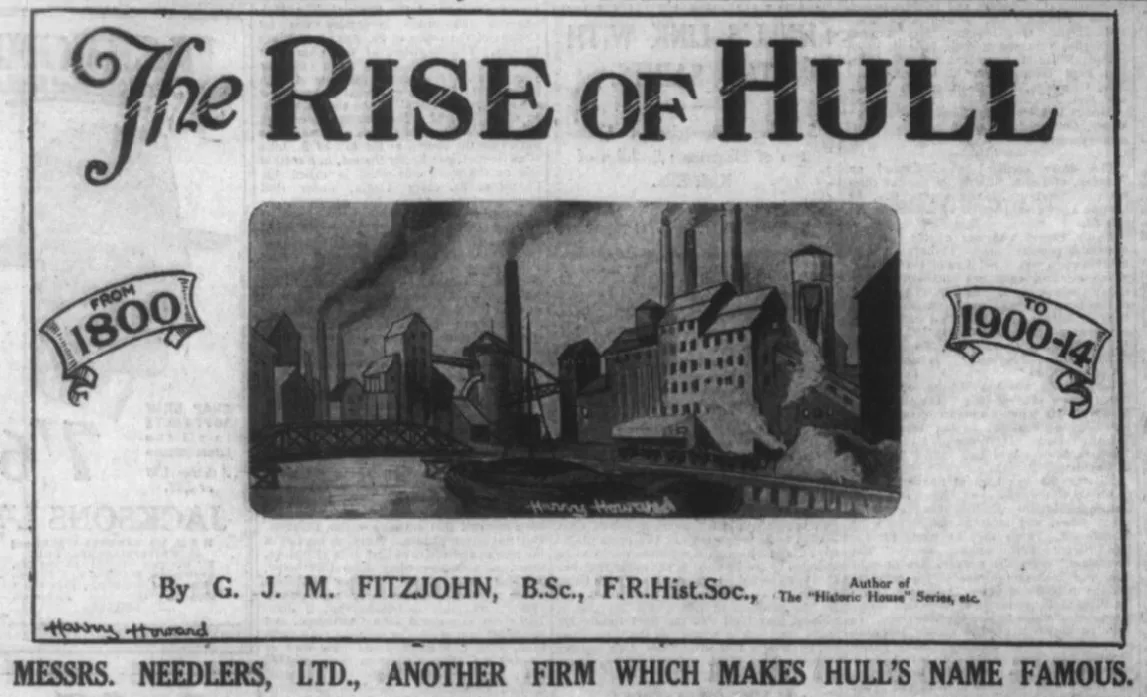
In the pages of one of our new Hull newspapers this week, the Hull and East Yorkshire Times, we found a piece printed on 31 March 1928 dedicated to ‘The Rise of Hull,’ and the career of Fred Needler. This article dubs Needler’s rise as ‘not only meteoric but romantic.’ Beginning in a tea warehouse, Fred Needler was offered the chance to work in a wholesale confectionery business, and some years later, in 1886, he took over the concern, which was situated at Osborne Street.
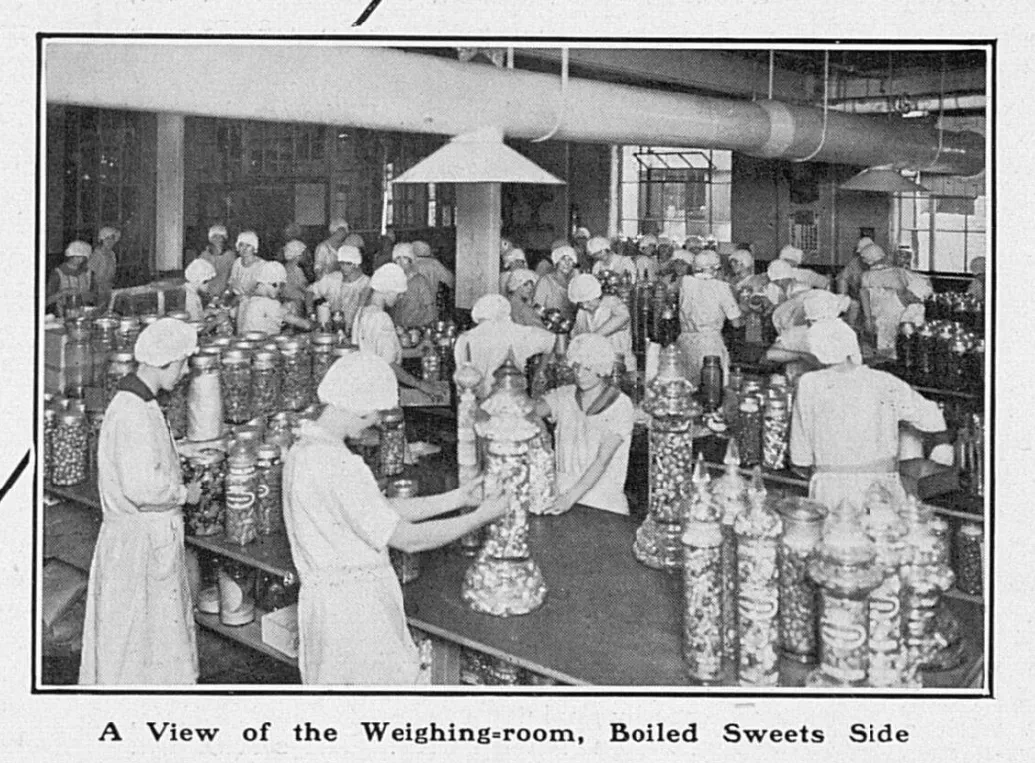
Moving from larger premises to larger premises, Needler’s business took off, such was the ‘wide demand for Needler’s sweets.’ An important part of Needler’s manufacturing process were the new hygienic methods implemented, which included ‘the introduction of the white flint jar with a glass stopper’ to store the sweets. This meant that sweets could be hygienically sold to retail dealers, and so, by 1902, Needler’s had transformed from a private concern to a limited company under the name of Messrs. Fred Needler, Ltd.
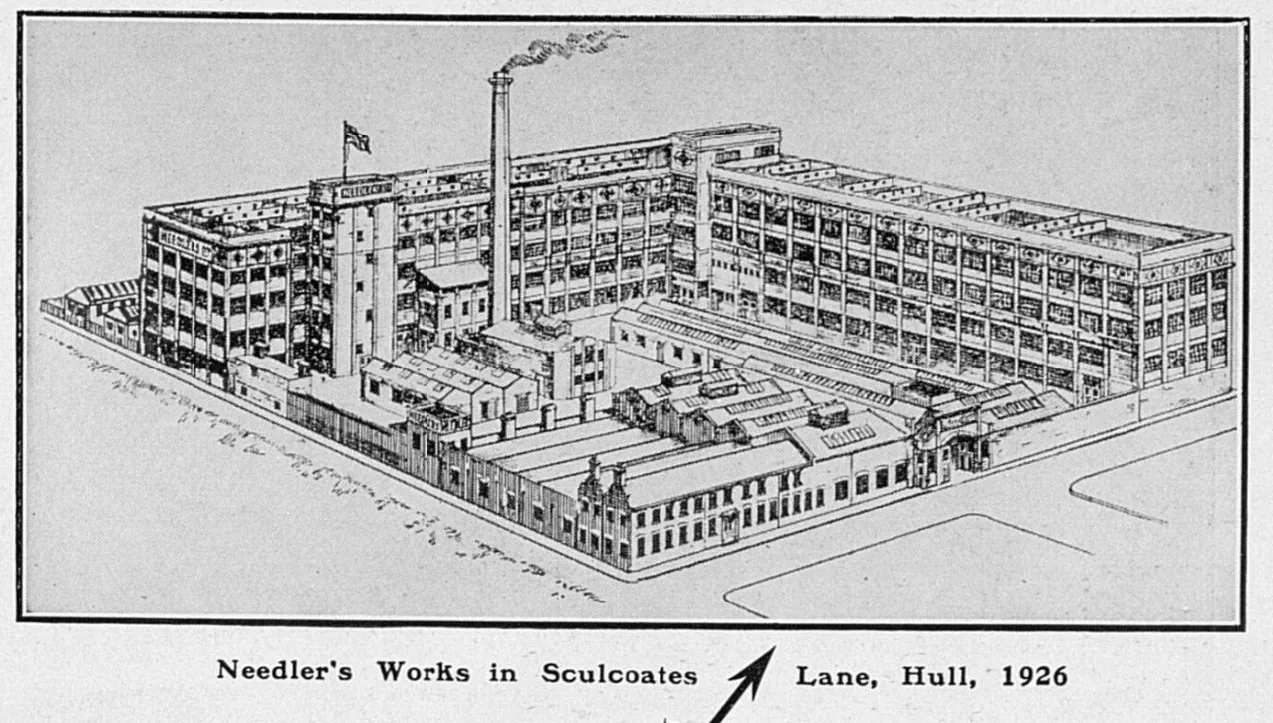
A new factory was built in Sculcoates Lane in 1906, where brand new technology was installed. Such technology included ‘the plastic process presses which had not previously been used in this country.’ As well as boiled sweets, Needler’s produced chocolate. Fast forward to 1926, and the popular Prince of Wales visited Needler’s factory, where he was presented with ‘a special casket of chocolates.’
By the 1920s, Needler’s chocolates and boiled sweets were being exported, so that ‘their famous products’ could be ‘obtained in nearly every country of the world.’ With such a cargo, Needler’s ensured that their products were stored ‘well away from the ship’s boilers.’
On 27 June 1914 the Hull Times listed some of the sweets made by Needler’s. There were ‘hundreds of varieties,’ including ‘chocolate, boiled sweets, toffee, caramels, lozenges, pastilles, etc.’ Amongst the toffee department, ‘Needler’s French almond rock’ was the most popular, whilst a new type of sweet, ‘in which pure fruit enters for the centre,’ was becoming popular.
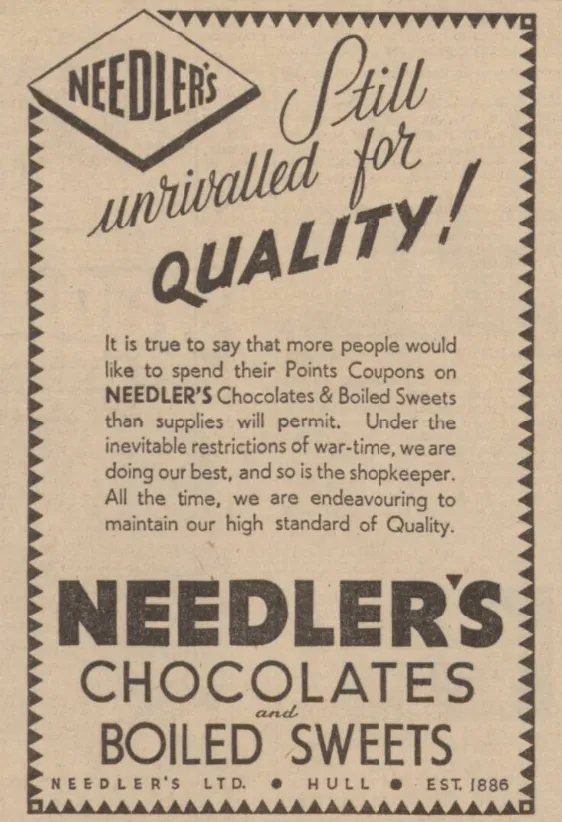
Indeed, as the 20th century progressed, Needler’s would concentrate on sweets, as competition amongst the chocolate industry intensified. It remained a family concern into the 1980s, with the business being sold several times after this period, the factory in Hull finally closing in the early 2000s.
Discover more about Needler’s, the story behind boiled sweets, and the history of food in the pages of our Archive today.
New Titles
Title | Years Added |
1985-1988 | |
1989-1992 | |
1988-1989 | |
1984-1986 | |
1990-1992 | |
1989-1993 | |
1989-1993 | |
1990-1993 | |
1974-1984 | |
1896-1899, 1901-1984 | |
1980-1989 | |
1857-1984 | |
1989-2000 | |
1993-1995 | |
1989-1993 |
Updated Titles
This week we have updated five of our existing titles.
You can learn more about each of the titles we add to every week by clicking on their names. On each paper’s title page, you can read a free sample issue, learn more about our current holdings, and our plans for digitisation.
Title | Years Added |
1990-1992 | |
1995 | |
1815-1820, 1823, 1826-1828 | |
1847, 1873-1875, 1879 | |
1973 |
You can keep up to date with all the latest additions by visiting the recently added page. You can even look ahead to see what we’re going to add tomorrow.
More on this topic:
Share this article
About the author

Rose Staveley-Wadham
Newspaper Licensing Manager
Published on Tue, 13 January 2026.