Brewing a strong cup of new titles at The Archive
Published on 23 June 2026 by Molly Pearce
Thanks to one of our five new titles this week, we will never again underestimate the power of a good cup of tea. Join us at The Archive as we remember the biggest tea party of the war – and the woman who made it happen. Additionally, we will uncover the birth of secularist thought with another of our new titles, the Freethinker’s Magazine. With a commendable 302,734 brand new pages added this week, and updates to twenty-eight of our pre-existing titles, we have a lot to catch you up on.
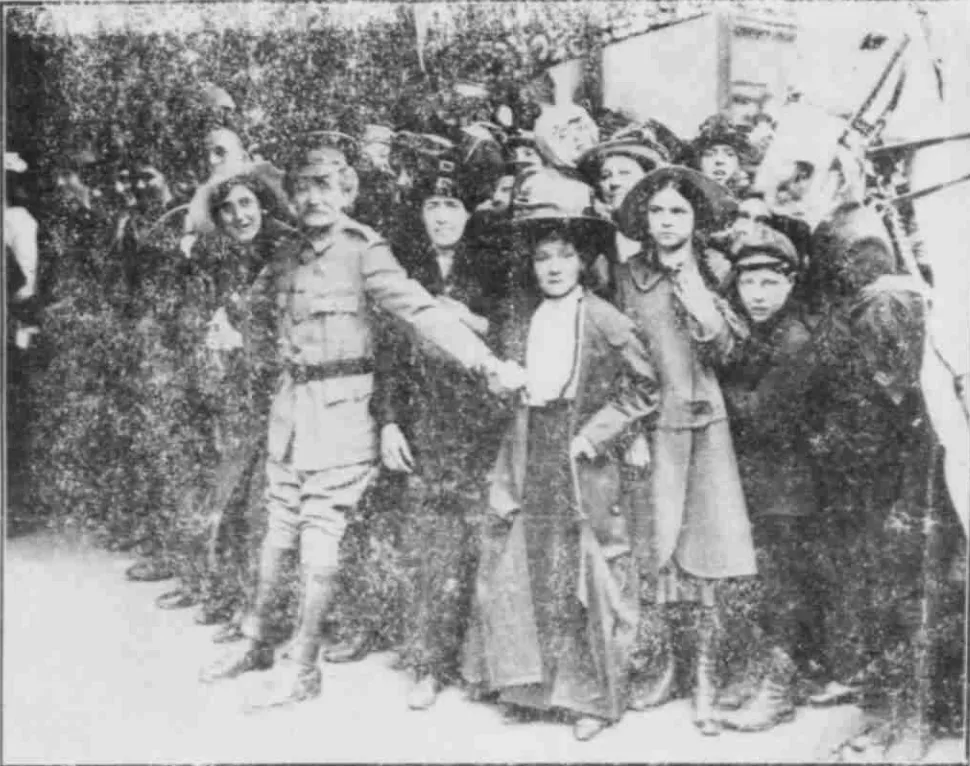
City of London Illustrated | 01 July 1918
So put the kettle on and let us take you to the Peak District, across to County Fermanagh, and back down to London with this week’s new titles.
Register now and explore The Archive
City of London Illustrated
Formerly known as the North London Illustrated and Ratepayers’ Guardian, our first new title for this week, City of London Illustrated, paints a striking picture of wartime Britain and its faithful allies. This eight page title was published at irregular monthly intervals, and primarily featured articles dedicated to specific influential individuals and their work.
One edition of the City of London Illustrated cost sixpence and gave detailed descriptions of mayors, secretaries, educationists, and upcoming political candidates. Each profile was accompanied by a formal photograph, giving readers a clear sense of who was being celebrated.
City of London Illustrated | 01 July 1918
The majority of profiles were of English high-ranking officials, although occasionally the publication would also feature noteworthy Australians. This title appeared to enjoy a success story, for several headings highlighted upwards social mobility. Examples included: ‘From Shop Assistant to War Councillor. Mr Edward Lucas.’ and ‘From Working Miner to Prime Minister. Mr Andrew Fisher.‘
The City of London Illustrated would continue to commemorate distinguished individuals until April 1921.
Fermanagh News and Enniskillen Press
The next title on our list takes us over to County Fermanagh, Northern Ireland. The Fermanagh and Enniskillen Press would provide local news, pioneering machinery updates, and product advertisements from within one of the six counties of Northern Ireland. Established in 1889, a weekly copy of the Fermanagh News and Enniskillen Press would cost you one penny.
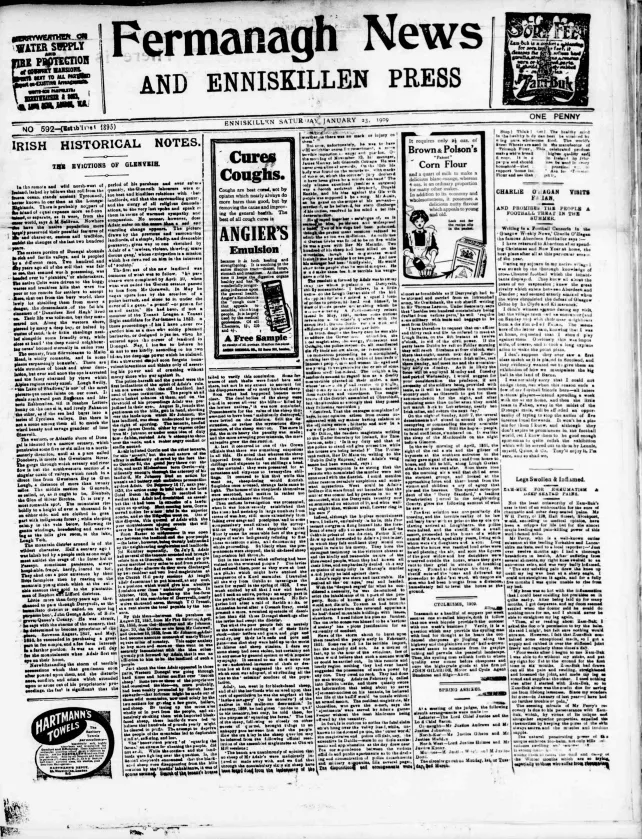
Fermanagh News and Enniskillen Press | 23 January 1909
This title reported on a variety of ongoing news events not only within Enniskillen, but also across Ireland more widely. As the Irish War of Independence erupted, an increasing number of conflicts were recorded.
The Fermanagh News and Enniskillen Press openly condemned growing violence in a report from 10 January, 1920, stating,
Apart from reporting on raging political conflicts, this title encouraged industry growth across Ireland through supporting local labour. An edition from 30 April 1910 featured ‘A New Industry In the District – Automatic Machine-made Bread’. This new method claimed that it was ‘Never Touched by Hand’ and showcased photographs of its machinery.
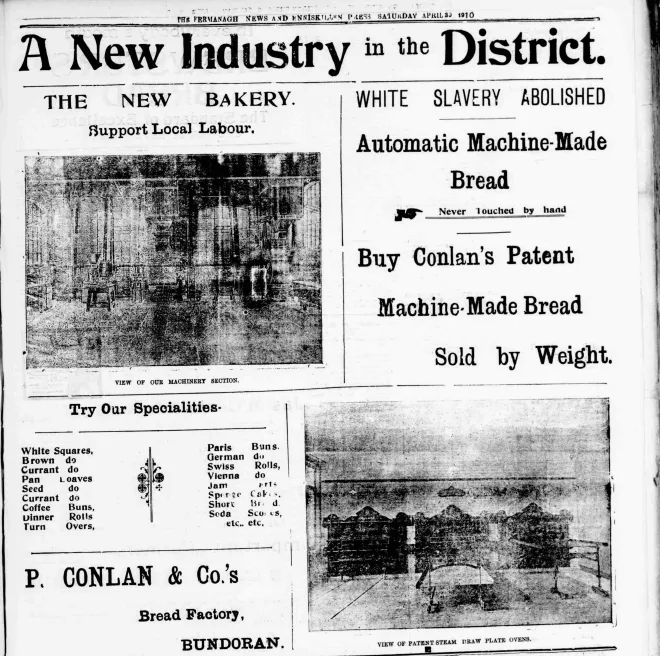
Fermanagh News and Enniskillen Press | 30 April 1910
P. Conlan & Co. was a prolific bakery brand throughout the twentieth century, and was recommended by both the public and medical professionals for its health benefits and hygienic preparation.
Freethinker’s Magazine
For our next title, we enter the contentious intersection of ‘Theology, Politics and Literature’ with the Freethinker’s Magazine. Predating the 1881 British secular magazine, The Freethinker, our new title provided a space for inquisitive Victorians who questioned religious authority and were curious about exploring scientific inquiry. It used plain and berating language to criticise and protest religious doctrine, expressing the importance of free will and self-governance.
On each title page, it featured a quote from Reverend Charles Caleb Colton (1777-1832):
Oceans of ink, and reams of paper, and disputes infinite might have been spared, if wranglers had avoided lighting the torch of strife at the wrong end; since a tenth part of the pains expended in attempting to prove the why, the where, and the when certain events have happened, would have been more than sufficient to prove that they never happened at all.
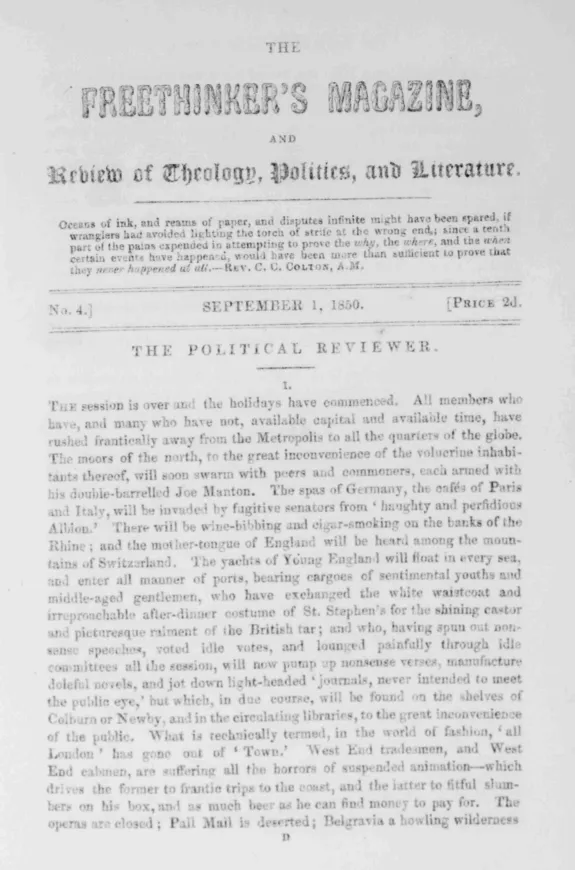
Freethinker’s Magazine | 01 September 1850
This monthly publication unpacked religious and political governance in a radical and confident manner, producing lengthy articles on subjects such as ‘The Inconsistencies of the Church’, in which it argues:
the church, as a body, do not believe a single word of the theories they teach; they view religion but as a means by and through which they fetter man’s intelligence, and are enabled to live in splendid idleness…By impotence they obtained their power and emoluments, and by ignorance they retain it. When will the time come that mankind will be mise enough to do without these theological go-betweens? Until that day comes, it is hopeless to expect harmony or concord in the world.
As well as calling religion, ‘a many-headed monster that there is no killing’, the Freethinker’s Magazine addresses the ‘Honest Reader’ questioned several Parliamentary decisions and authority figures, producing statistics on Church Benefices and closely monitoring finances across institutions.
The magazine was published by James Watson, a prominent nineteenth century British publisher, Chartist leader, and freethinker, who was involved in activism throughout his entire life. He was a founding member of the London Working Men’s Association and aided in drafting the instrumental People’s Charter. Our blog from April 28, 2026 delves into the rise and fall of Chartism.
The Freethinker’s Magazine provides fascinating insight into the growth of secularism and abolitionist thought across Britain during the Victorian period.
High Peak Chronicle
We turn now to the High Peak Chronicle, an area largely covering the Peak District, but also encompassing some of Derbyshire. This picturesque district encompasses the towns and villages of Buxton, Glossop, New Mills, Whaley Bridge, Chapel-en-le-Frith, and Castleton. Covering a large and scenic area in between Manchester and Sheffield, the High Peak Chronicle reported on a wide variety of events all within eight pages.
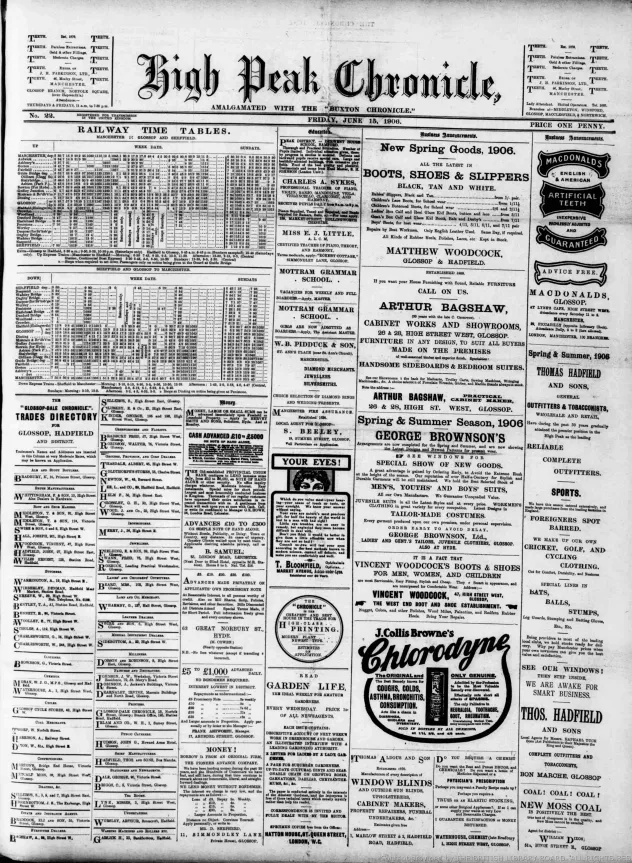
High Peak Chronicle |15 June 1906
This title informed its readers of criminal activity, local council meetings and election results, proposed works and infrastructure upgrades. Each issue also included several local business advertisements. The High Peak Chronicle tactfully balanced news from each of its towns and villages, communicating only the most necessary information to its large audience. On each title, an updated railway timetable, covering the journey from Manchester to Glossop and Sheffield, could be found.
It was published every Friday and cost just one penny.
Yorkshire Advertiser and General Intelligencer
The final title on our list for this week is the Yorkshire Advertiser and General Intelligencer. This four page title was established in 1859 and published in York by James Chapman, who would continue to publish the paper after it merged with the Yorkshire Telegraph in 1871.
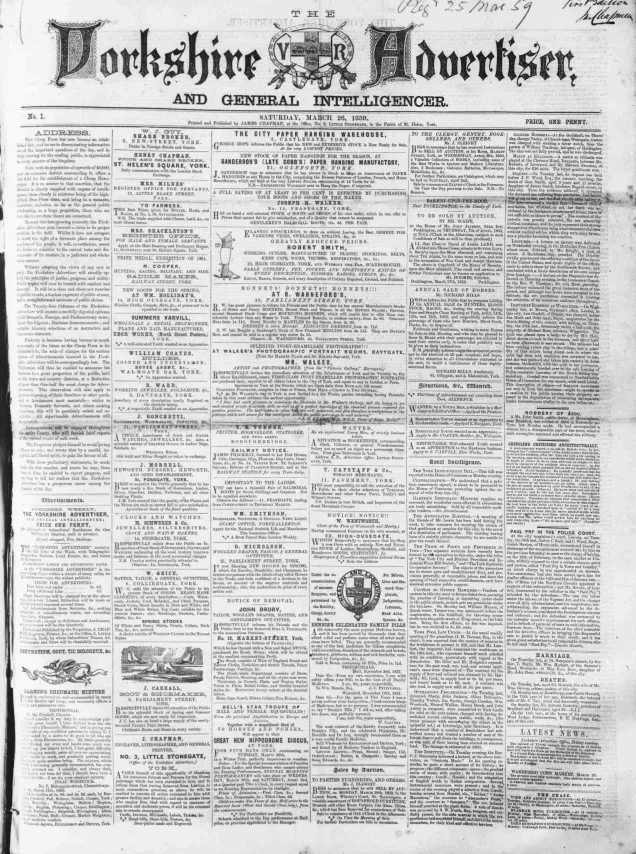
The first issue | Yorkshire Advertiser and General Intelligencer | 26 March 1859
In its very first issue, the editor of the Yorkshire Advertiser and General Intelligencer explained the need for a Yorkshire newspaper and set out its intentions:
Without adopting the views of any sect or party, the Yorkshire Advertiser will steadily uphold the principles of justice, progress and utility. Public topics will ever be treated with candour and honesty. It will be a close and observant recorder of public events, a fearless exponent of public abuses, and a straightforward advocate of public claims.
This address also highlighted the topics covered by the Yorkshire Advertiser, stating that it will ‘contain a carefully-digested epitome of all Domestic, Foreign, and Parliamentary News; Local Intelligence; Business Announcements, and suitable Literary selections of an instructive and humorous character.’
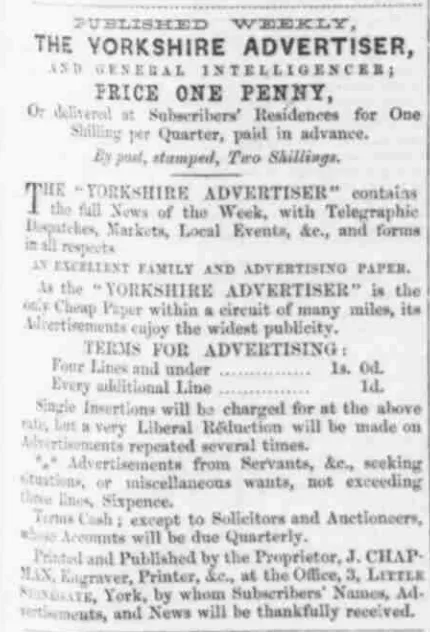
Yorkshire Advertiser and General Intelligencer | 26 March 1859
The aim of the Yorkshire Adviser was to inform, but not offend. It filled a gap in the mid-nineteenth century newspaper market that met the needs of the 40,000 individuals living in York at the time. It cost one penny and was published every Saturday.
Our Updated Titles
While we’ve covered all of our brand new titles of the week, we still have a lot to update you on. We have made significant updates to a whopping twenty-eight of our pre-existing titles. The largest of these was made to East Ayrshire title, Kilmarnock Standard, with 30,554 pages added. Only slightly behind this is the Birmingham Daily Post, with 29,412 new pages added.
Additionally, we’ve made considerable updates to the Ayrshire Post, with 27,356 new pages added, and to the Tamworth Herald, with 23,800 pages.
If you’re in the mood for some sporting news, we’ve now made available 9,700 new pages of the fascinating Cricket and Football Field.
The Fairy Godmother of Tea
While looking through the pages of our first new title, the City of London Illustrated, we stumbled across a multi-page dedication to “Australians’ Fairy God-mother and England’s Record Hostess,” Mrs. Rita Dennistoun Fiske.
She stood out from the title’s regular high-profile dedications, and her feature spanned several pages instead of the publication’s usual one-page tradition.
Rita Fiske was born in Geelong, just forty-five miles from Melbourne, Australia, and held a longstanding interest in Commonwealth affairs. It was her passion, and her warm hospitality, that rendered her a recognised and adored host among the British public. The City of London Illustrated recognised Fiske’s repeated efforts to care for an entertain injured British soldiers and sailors on several occasions throughout the war years.
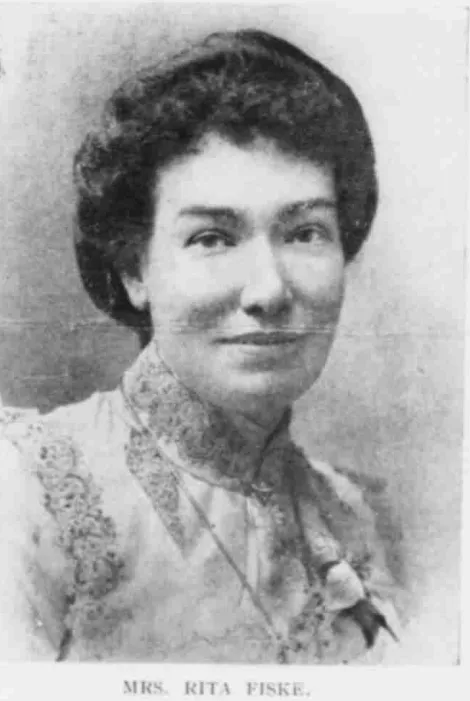
City of London Illustrated | 01 July 1918
The paper reported on Mrs. Fiske’s activities, stating,
At this time the British wounded were arriving in this country, and Mrs. Fiske conceived the idea of not only taking the Tommie’s for motor drives, but of entertaining them to a tea and concert, and very often to a visit to the pictures weekly, thereby giving them considerable pleasure to from 100 to 300 wounded soldiers weekly.
Her generosity and dedication to helping wounded men led to international recognition. Her offering of tea and public outings to concerts and cinemas helped heal not only the physical wounds present on the soldier’s bodies, but largely contributed to a better positive wellbeing among the men.
‘Besides these weekly teas, Mrs. Fiske provided tea for 350 wounded Australians at Harefield Park on July 8th, 1915. In February, 1916, an anniversary of her weekly teas at Stoke Newington was given to 420 wounded Australians, New Zealanders, Canadian Allies, and the British.’
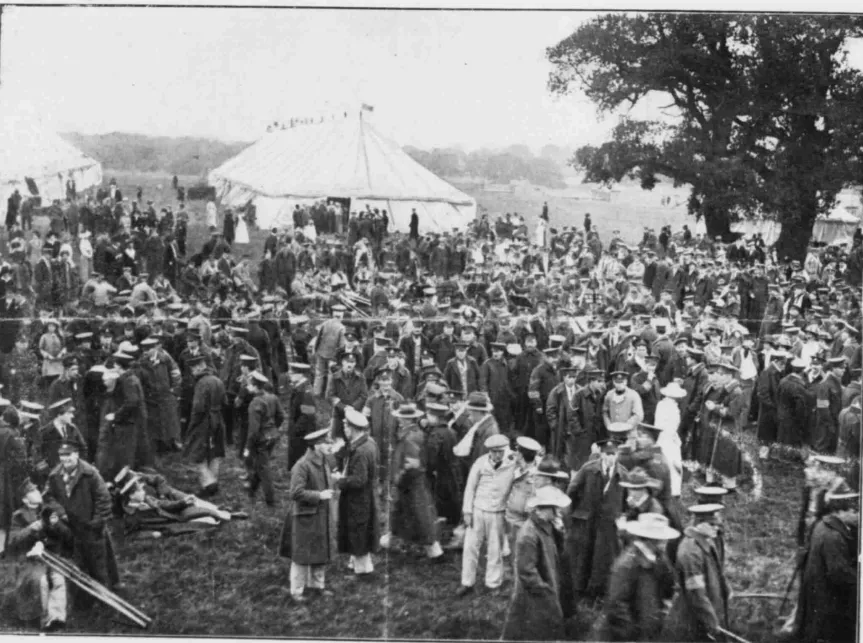
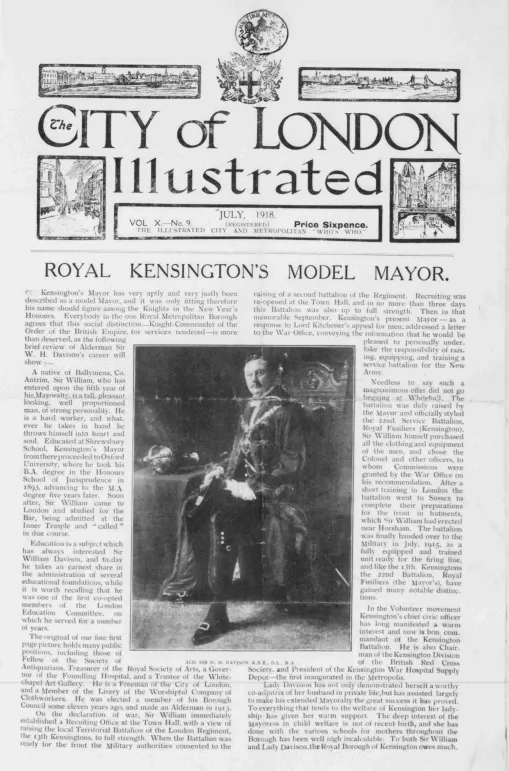
Windsor Park | City of London Illustrated | 01 July 1918
During a ‘Record Tea Party’ held on October 14th 1916, Mrs. Fiske was granted use of Windsor Park by His Majesty King George V, and the event was ‘the largest gathering of wounded ever called together in the British Empire.’
Eight thousand wounded soldiers were present during this mammoth tea party, and included men from Australia, New Zealand, Canada, South Africa, and England. Hundreds of cars, taxis, omnibuses and carriages were provided in order to transport the men from London, showcasing her widespread influence and support.
What really stood out during the tea parties organised and hosted by Mrs. Fiske was the joyous and hopeful atmosphere they brought about. Entertainment, socialisation, and warm bellies allowed traumatised soldiers and sailors the opportunity to realise they are not alone. The community built by Mrs. Fiske was a true sight to behold.
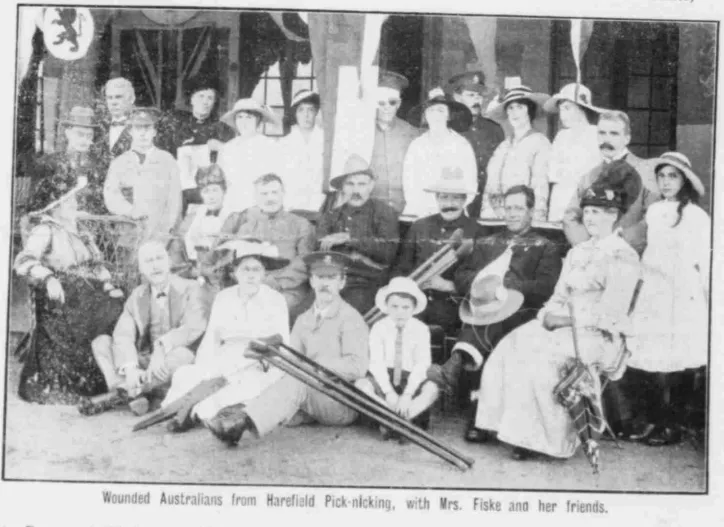
City of London Illustrated | 01 July 1918
Her family was a well-known one, and its history is stored in a large genealogical volume entitled “The Fiske Family – Papers by Henry Ffiske.” Additionally, the City of London Illustrated reported that the Fiske family were governed by the motto,
‘”Macte virtute-sic-itur-ad-adstra”‘
Translated, it reads ” Go on in virtue to immortal fame.”‘
Owing to newspaper preservation, the work of Mrs. Fiske in raising the morale of wounded soldiers and sailors across the Commonwealth has been cemented in history. Her endless cups of tea have had a lasting and powerful influence on wartime Britain, as we remember her warmth and kindness during a period of instability and violence. Although she was not alone in providing tea to soldiers during wartime Britain, her independence and royal recognition must never be forgotten.
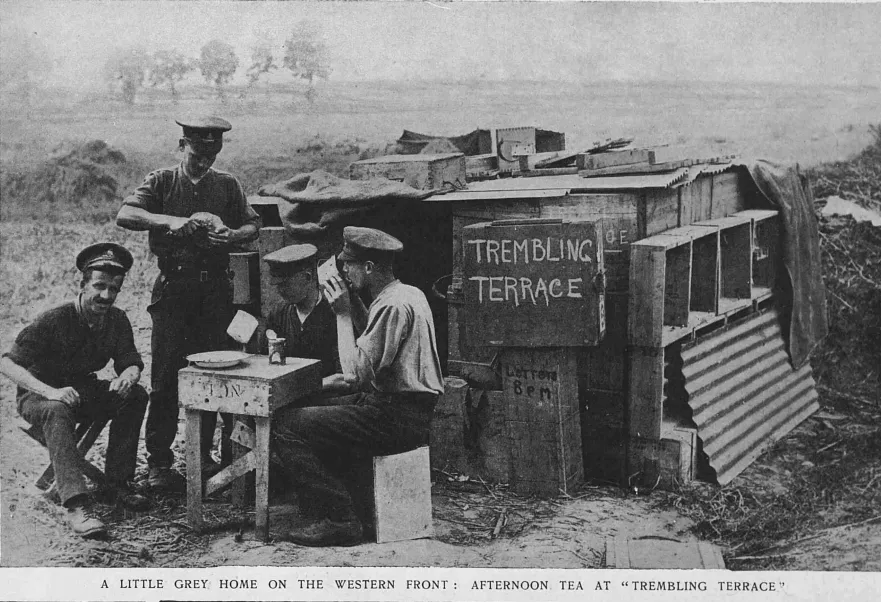
Learn more about Mrs. Rita Fiske, delve into the secularist writings of the Freethinker’s Magazine, or uncover newspaper reports from during the Irish War of Independence, all in the pages of The Archive today.
New Titles
Title | Years Added |
1918 | |
1901-1910, 1912-1920 | |
1850-1851 | |
1906, 1908, 1910-1919 | |
1859-1869 |
Updated Titles
This week, we have updated twenty-eight of our pre-existing titles.
You can learn more about each of the titles we add to every week by clicking on their names. On each paper’s title page, you can read a free sample issue, learn more about our current holdings, and our plans for digitisation.
Title | Years Added |
1894 | |
1913-1915, 1917-1919 | |
1890 | |
1986, 1988-1990, 1994 | |
1926, 1936, 1973, 1976-1978, 1982-1985 | |
1890 | |
2001-2002 | |
1951, 1953-1971 | |
1888 | |
1853, 1878, 1887, 1895 | |
1892-1911, 1935, 1951-1971 | |
1861-1862, 1864-1865, 1868-1871, 1873-1876, 1878-1879, 1881-1887, 1890-1896, 1898-1910, 1912-1918 | |
1884-1885, 1890-1891, 1894-1907, 1909, 1912-1915 | |
1995, 1997, 2003 | |
1996-1999 | |
1994 | |
1883-1884, 1887-1888, 1890-1892 | |
1998-1999 | |
1995-1999 | |
1986, 1990 | |
1899-1907 | |
1858-1870 | |
1873-1876, 1878-1879, 1881-1882, 1885 | |
1997-1999 | |
1836-1843, 1868-1874, 1878-1880, 1893-1901, 1903-1913, 1919-1938, 1946-1960, 1969-1970, 1975-1976, 1984-1985 | |
1989-1990, 1992 | |
2000, 2004-2005 | |
1995-1999 |
You can keep up to date with all the latest additions by visiting the recently added page. You can even look ahead to see what we’re going to add tomorrow.
More on this topic:
Share this article
About the author

Molly Pearce
Data Operations Executive
Published on Tue, 23 June 2026.