Skip to content

Search the blog

Tag: ocrTag: homosexualityTag: salvation-army
We’re delighted as we march on with The Salvation Army to welcome another of the worldwide Christian church and registered charity’s titles to our ranks, namely the Young Soldier. The longest running continuously published children’s periodical in the world, alongside this fascinating publication we’ve also added five other new titles, and updated 22 of our existing titles from across the UK and Ireland. In all, we’ve added 207,356 brand new pages to The Archive over the last seven days.And this week,
This week at The Archive we are sounding a War Cry, as we welcome the main UK and Irish periodical of The Salvation Army, the worldwide Christian church and a registered charity, to our collection. And that’s not all, as we’re also delighted to host updates to another The Salvation Army title, the Social Gazette. In all, we have 71,299 brand new pages for you to enjoy this week.In this week’s blog, we’ll take you through the fascinating history of
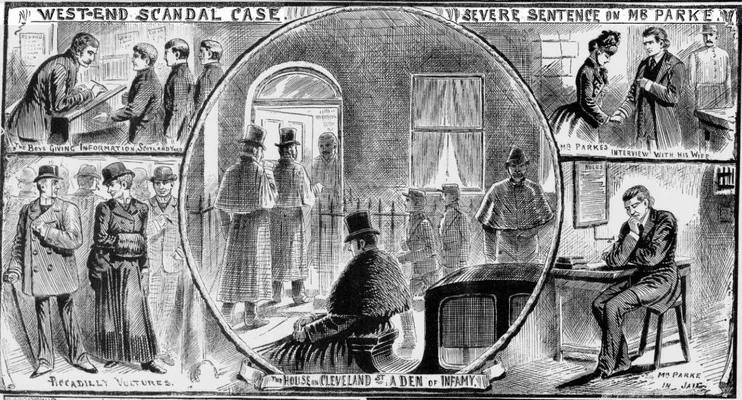
1889 was the year of the Cleveland Street scandal, in which a male brothel was raided in Cleveland Street, in London’s West End. At the time, sexual acts between men were illegal in Britain, and those who visited the house of assignation on Cleveland Street faced prosecution. However, due to the high social standing of many of the clientele of 19 Cleveland Street, only a few men faced prison time, as the British government were accused of covering up the scandal in
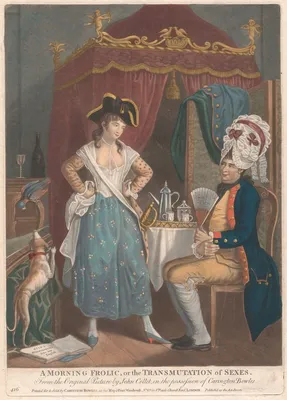
June is Pride Month. At The Archive, we are delving into the newspapers and pulling out the breadth of LGBTQ history available.Register now and explore The Archive18th Century Gay Subculture18th century London was home to a flourishing gay subculture with Molly Houses at the centre of the social scene. ‘Molly’ was a slur used for effeminate, homosexual men and the term was adopted to describe the clubs, taverns, inns, or coffee houses where they met up in
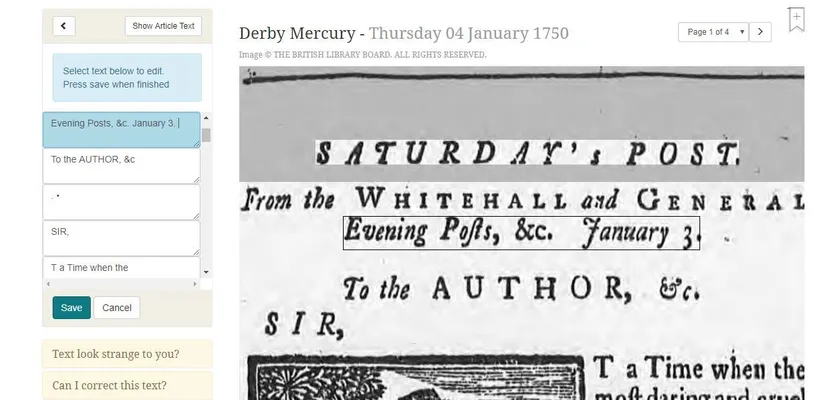
One of the features of The British Newspaper Archive is the OCR editing tool.  This allows every user to contribute to the improvement of The Archive.  OCR stands for Optical Character Recognition– the process we use to transform millions of digitised images into searchable text.   The computer takes an image of the page and then turns each line into text.  However, as many of us have encountered, the text is not always correct and needs improvement.  As a group, we