
Skip to content

Search the blog

Tag: murderTag: child-labourTag: blitzTag: pat
This week at The Archive we are marking St Patrick’s Day with the addition of five brand new Irish titles, and updates to 29 of our existing Irish titles, as we delve into a potential Oscar Wilde work, where all is not as it seems. Furthermore, in all, we’ve added 215,303 brand new pages to our collection, as The Archive continues to grow.So read on to discover more about our new and updated titles of the week, and also to read
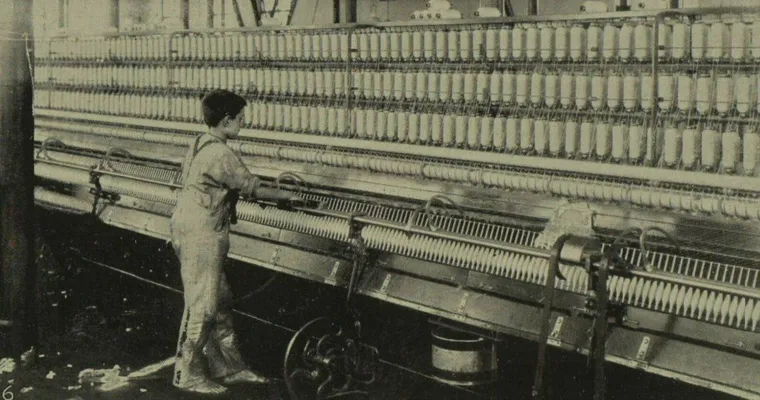
Here at The Archive we are delighted to welcome 204,443 brand new pages this week, as we mark 125 years since the passing of the Mines (Prohibition of Child Labour Underground) Act 1900, which banned children under the age of thirteen from working underground in mines. This act, following the raising of the school leaving age to twelve in 1899, represented an important milestone in the eradication of child labour.Meanwhile, we’ve added eight brand new titles this week, which span the length and
This week at The Archive we are delighted to welcome a brand new title from the sunny south coast, the Bournemouth Times and Directory, as we take a moment to remember the devastating Bournemouth Blitz. In all, over the last seven days, we’ve added 366,686 brand new pages to our collection, whilst we’ve updated 25 of our existing titles from across England, Scotland and Northern Ireland.So, from Buckingham to Burnley, from Dingwall to Driffield, from Mid Sussex to Mid Ulster, read
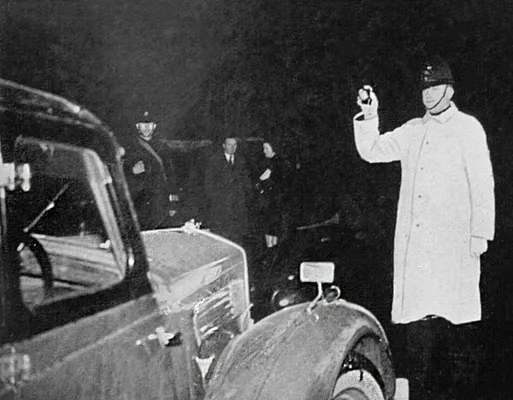
A walk along Piccadilly in the black-out is one of the many queer experiences of this war. The once brilliant centre of London’s night life is now as dark as any forest, and indeed, like a forest, the darkness is full of rustlings and whisperings, of half-seen shapes, and of a sinister feeling of eager, but invisible, life.So began a Daily Herald article on blackout crime in London during the Second World War. With blackouts imposed across the United
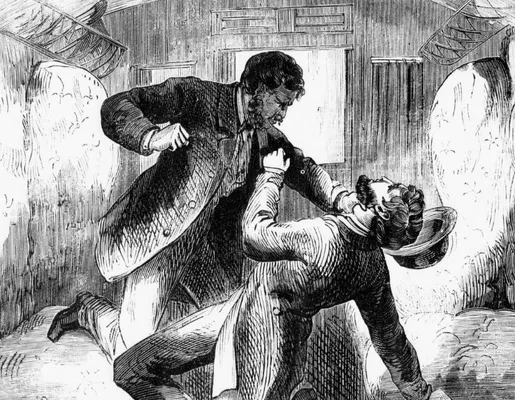
Long before Agatha Christie envisioned murder on the Orient Express, or before she wondered what might have taken place on the 4.50 from Paddington, murder, mystery and mayhem were already well established on the railways of Britain and beyond.The first victim of murder on British railways was 70-year-old Thomas Briggs. In this special blog, we will take a look at his story, as well as nine others sourced from the pages of our newspaper Archive, which tell the strange, the
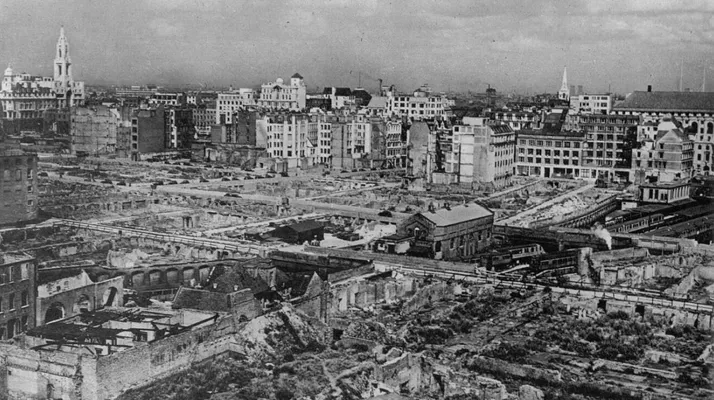
In the decade after the Second World War had come to an end, and indeed beyond, many communities across the United Kingdom were faced with very vivid reminders of the conflict: bomb sites, the country’s ‘war scars.’In this blog, we will examine how people in Britain lived alongside bomb sits in the 1950s, using newspapers taken from The Archive. We will explore how communities adapted to live beside bomb sites, and how they transformed them into gardens and playgrounds.
In October 1823, the Public Ledger and Daily Advertiser asserted:The charge and duty of Government are not merely to increase the numbers of men, but to promote and increase their happiness. Industry is the most powerful engine of this happiness, because it is the spring of all their riches. Government, then, should encourage labour, and by due reward, endeavour to avail of, and augment its useful products…The article, entitled ‘Political Economy,’ goes on to recommend how ‘the power of
This week at The Archive we have added nearly 180 years of historic headlines, with 167,302 brand new pages joining us, spanning the years 1820 all the way through to 1999. We have four very exciting new titles joining us this week too, with additions to our collection of international newspapers, as well as to our Irish and national holdings.Read on to discover more about our new titles, the updates we have made to our existing publications, as well as one of the
This week the presses continue to whir, and we have added 129,872 brand new pages to our collection. Our additions this week are to Britain’s longest-running tabloid newspaper the Daily Mirror, to which we have added over 100,000 colour pages spanning the years 1923 through to 1986, and to the Glamorgan Gazette, which covers the central Glamorgan area. Founded in 1894, it continues to be published to this day.Register now and explore the ArchiveFor anyone with an interest in crime history, the British
‘No more thrilling a tale of guilt and crime, and scarcely one so eloquent in its lessons and cautions to those who are in danger of entering upon a life of unbridled passion, is to be found in all the history of poor humanity than this story of William Palmer.’So reads an article in the Sheffield Independent, 17 September 1888, regarding one William Palmer, better known as the Rugeley Poisoner. William Palmer, a former doctor, was convicted in 1856 for the murder