
Skip to content

Search the blog

Tag: horoscopesTag: child-labourTag: industrial-revolution
This week at The Archive, we’re bringing you five fabulous new titles from the nineteenth century. We will uncover a period of rapid expansion and industrialisation as we navigate across Britain and Ireland. From Sheffield and Birmingham to Carlow and Clonmel, we’ll reveal how local papers dealt with turbulent political, economic, and religious transformations. With 300,944 new pages added, and updates to thirty-two of our pre-existing titles, we guarantee something will suit your taste this week.Illustrated Police News | 29 June 1867Join
This week at The Archive, we’re rewinding the clocks and stepping into the heart of the Industrial Revolution with our five brand new titles. From the rise and fall of Chartism, to the inception of the modern Co-operative Movement, this week’s pages present a tale told primarily from the worker’s perspective.We’ve added 340,466 brand new pages in total this week, and with updates to a noble twenty-one of our pre-existing titles, there’s plenty to explore. One of these updates pertains
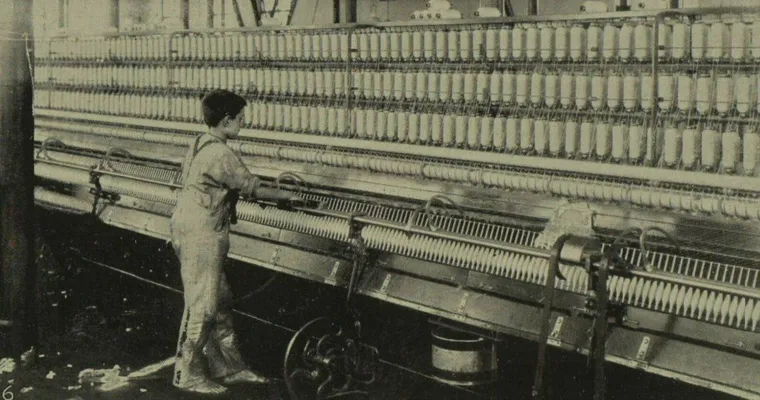
Here at The Archive we are delighted to welcome 204,443 brand new pages this week, as we mark 125 years since the passing of the Mines (Prohibition of Child Labour Underground) Act 1900, which banned children under the age of thirteen from working underground in mines. This act, following the raising of the school leaving age to twelve in 1899, represented an important milestone in the eradication of child labour.Meanwhile, we’ve added eight brand new titles this week, which span the length and
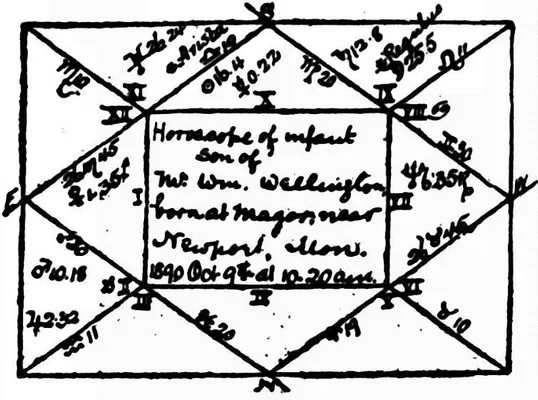
In this very special blog, Jessie O’Hara, from our sister site Findmypast, takes a fascinating look at astrology through the pages of our newspapers. Featuring articles all the way from the eighteenth century to the twentieth century, she traces the development of attitudes towards astrology across three centuries, from scepticism to horoscopes being a mainstay of mainstream media.Register with us today and see what stories you can discoverBeliever or non-believer, agnostic or sceptic, there is no denying that
This week The Archive has added 179,184 pages, including 13 brand new titles and additions to 26 existing titles.  Amongst the additions are thousands of pages that are now available to read for free.  You will find newspapers focused on the mining industry, shipping, potteries and more. Continue reading to explore more of our latest released.Register now and explore the ArchiveOur first new title of the week is the world famous Liverpool Journal of Commerce. This daily newspaper, which was established
In October 1823, the Public Ledger and Daily Advertiser asserted:The charge and duty of Government are not merely to increase the numbers of men, but to promote and increase their happiness. Industry is the most powerful engine of this happiness, because it is the spring of all their riches. Government, then, should encourage labour, and by due reward, endeavour to avail of, and augment its useful products…The article, entitled ‘Political Economy,’ goes on to recommend how ‘the power of
This week we have added a bumper crop of 165,856 brand new pages to The Archive. We are delighted to welcome a brand new Irish title to our collection – the Carlow Sentinel – as well as adding thousands of brand new pages to our existing publications from England, Wales and Ireland.Register now and explore the ArchiveThe Carlow Sentinel was established by Henry Malcomson in Tullow Street, Carlow, appearing every week on a Saturday. Meanwhile, we have published nearly 100 years of
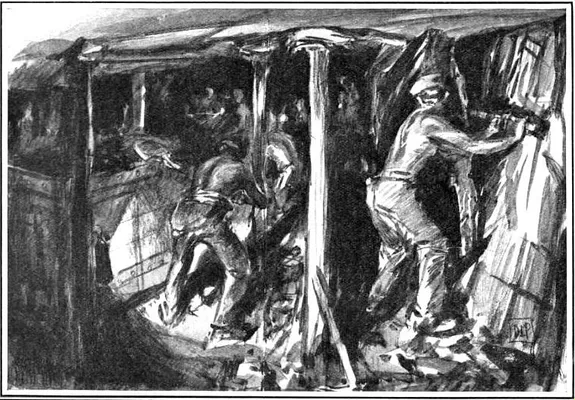
Derbyshire Miners Coal-getting at the Bolsover Face. Drawn by D Macpherson
In the month of August, we have looked at occupations and employment through the newspapers.  To finish our theme this month, we are taking a closer look at coal miners, specifically in the 19th century.  An initial search for miners reveals explosions, accidents, and strikes in the vast amount of mines operating across Great Britain.  We will look at these topics in closer detail.The first coal mine was sunk in Scotland, under the Firth of Forth in 1575.  As the
In last night’s episode, we learned that Danny Dyer is a direct descendant of King Edward III, his 15 times great-grandfather. Many of us lack such famous ancestors, but that doesn’t make ours – and the times they lived in – any less interesting. Let’s take a look at Danny Dyer’s working-class ancestors – some strong male figures that Danny was hoping to find – and learn how the British Newspaper Archive can help you flesh out the lives of our predecessors.Strong male figures