

Hot Off The Press – New Titles This Week
Published on 12 May 2025 by Rose Staveley-Wadham
This week at The Archive we have somewhat of a naval flavour, as we welcome brand new title the Naval & Military Record and Royal Dockyards Gazette to our collection, amongst seven other brand new titles. Here at The Archive we are dedicated to serving a range of research needs, and our new titles this week cover everything from the navy and military to the co-operative movement, from sport in the Midlands to religion in Liverpool.
So read on to discover more about the 116,803 pages we have added from across England, Ireland and beyond, and to learn which of our fourteen existing titles we have updated. We also delve into the pages of the Naval & Military Record and Royal Dockyards Gazette to uncover more about the history of H.M.S. Resolution.
Register now and explore the Archive
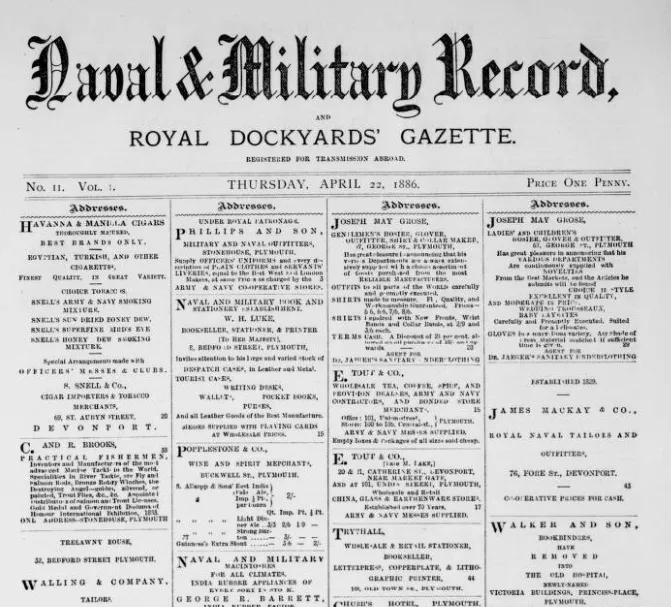
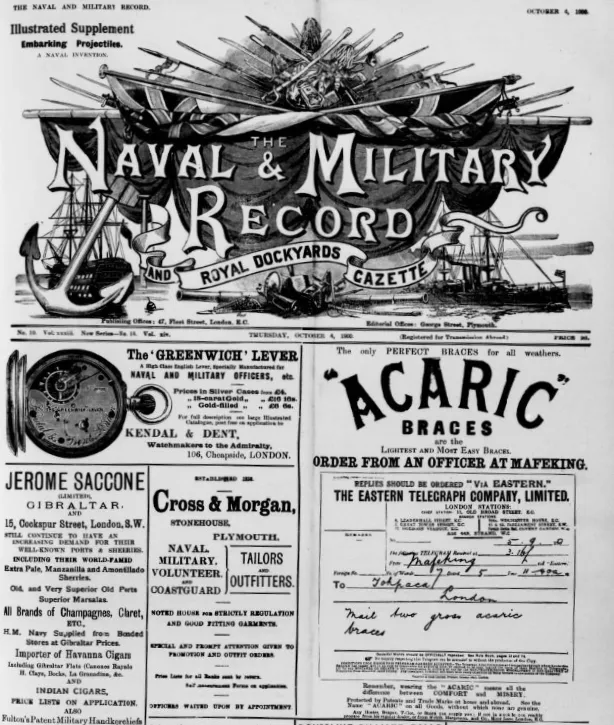
Naval & Military Record and Royal Dockyards Gazette
Let’s begin then by taking a look at the Naval & Military Record and Royal Dockyards Gazette, which was first published in the naval city of Plymouth on 15 April 1886. An offshoot of the Western Morning News, the first edition of the nascent navy paper explained how:
Plymouth is the only naval port and garrison town in Great Britain at which a daily morning newspaper is published… It occurred to the conductors of the Western Morning News that it would be acceptable to naval and military officers, their families and friends, if this special news were published weekly in a separate, convenient, and inexpensive form.
Thus the Naval & Military Record and Royal Dockyards Gazette became a standalone weekly newspaper dedicated to the dissemination of military and naval news. Filling eight pages, and appearing every Thursday, the paper printed ‘News from Abroad,’ which featured updates from the likes of the North American Station, the Channel Squadron, and the Mediterranean Squadron. Meanwhile the title provided updates on official appointments, news from the Royal Dockyards of Devonport, Portsmouth and Chatham, details of casualties, and notices of births, marriages, and deaths.
By 1904 the paper had become ‘the Largest and Cheapest Service Paper in the English Speaking World.’ Now published at the cost of twopence, the Naval & Military Record and Royal Dockyards Gazette claimed to be read by ‘Officers, Non-Commissioned Officers and Men of all Her Majesty’s Services all the world over,’ its circulation having ‘trebled during the past five years.’
Indeed, other advertisements for the Naval & Military Record and Royal Dockyards Gazette claimed that the publication was ‘the only weekly Service Newspaper (as distinct from a Review) with Correspondents in all the Royal Dockyards, Naval and Military Centres, and on all the Foreign Stations.’
In 1936 the Naval & Military Record and Royal Dockyards Gazette amalgamated with the Army, Navy and Air Force Gazette to form the United Services Review.
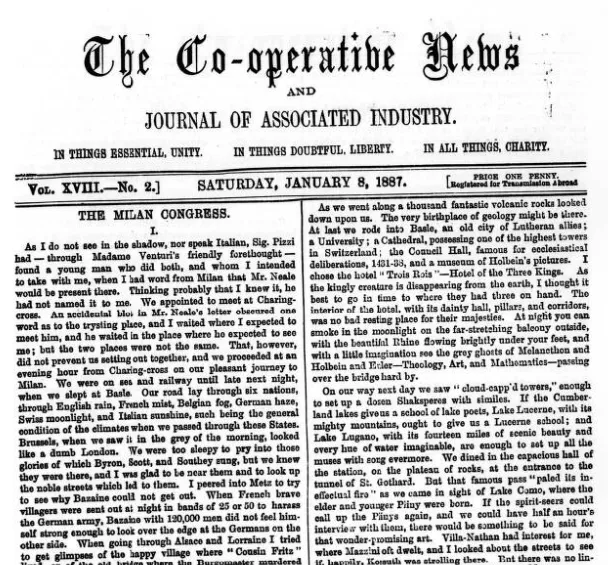
Co-operative News
Our next new title of the week is the world’s oldest co-operative newspaper, the Co-operative News. The Co-operative News was first published in Manchester in 1871 with the full name of the Co-operative News and Journal of Associated Industry. Representing the co-operative movement, which champions member owned businesses and organisations, the Co-operative News appeared every week and filled an impressive 32 pages, unusual for weekly publications of the time.
So what kind of content did the Co-operative News feature? Well, the title printed the latest from co-operative societies and organisations from across Britain, with often in-depth articles on subjects like ‘Home Industries – The Next Step in Co-operative Production.’ Meanwhile, the Co-operative News reported on business meetings, conferences, and legal issues, as well as printing correspondence from readers.
From 1881 onwards the Co-operative News featured a ‘Woman’s Column,’ which was edited by the founder and first president of the Co-operative Women’s Guild, Alice Acland (1849-1935).
The Co-operative News still runs today as the Co-op News.
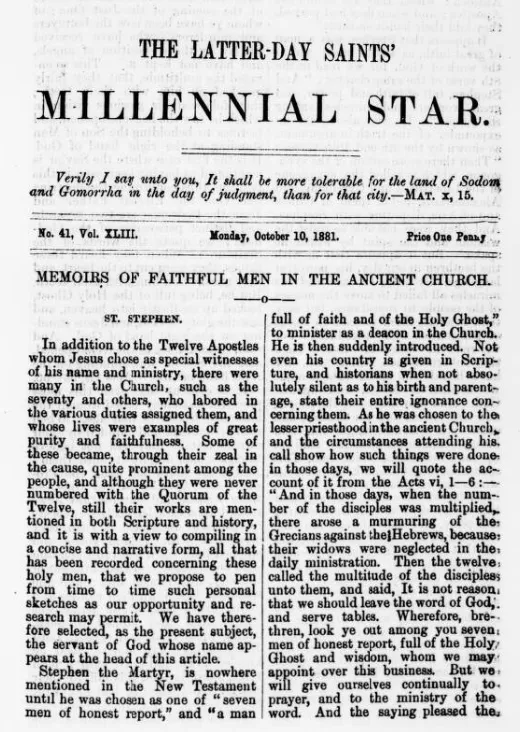
Latter-Day Saints’ Millennial Star
Our next new title of the week is another specialist one, and it is the Latter-Day Saints’ Millennial Star. The longest running continuously published periodical of the Church of Jesus Christ of Latter Day Saints, the Latter-Day Saints’ Millennial Star was first published in Manchester in 1840 by Parley P. Pratt (1808-1857), an Apostle of the Latter Day Saints.
However, publication of the Latter-Day Saints’ Millennial Star was later moved to Liverpool in 1842, where it was published initially on a monthly basis. Filling sixteen pages, the publication contained articles about the Church of Jesus Christ of Latter Day Saints, as well as teachings from the denomination. Meanwhile, the Latter-Day Saints’ Millennial Star contained news about the denomination from across the world, as well as printing correspondence, poetry, and notices of births, marriages and deaths.
In 1970 the Latter-Day Saints’ Millennial Star was replaced by the Ensign.
Midland Athlete
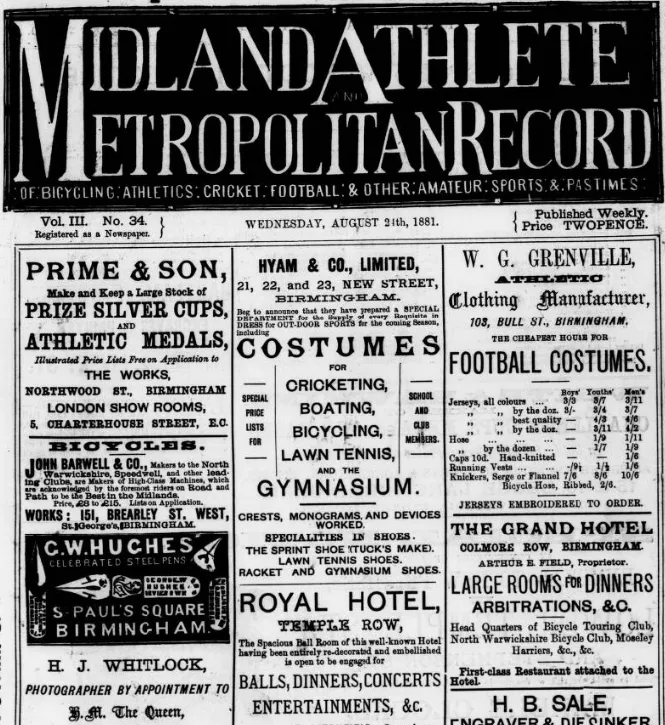
From the spiritual realm to the sporting realm now with the Midland Athlete, a publication that represented ‘various phases of sporting life.’ The Midland Athlete was established in Birmingham in 1878 with the full name of the Midland Athlete and Metropolitan Record of Bicycling, Cricket, Athletics, Sports and Pastimes.
Appearing every week at the cost of just one penny, its athletics and cycling sections were edited by H.M. Oliver, the Secretary of the Midland Counties Amateur Athletic Association, whilst its football and cricket sections were edited by J.C. Orr, Secretary of the Birmingham and District Football Association. Indeed, the Midland Athlete fast earned the reputation for being ‘The leading Journal for Athletics, Cricket, Football, Lawn Tennis, Cycling, Swimming, &C,’ with its particular focus being on the Midlands.
Consequently, the Midland Athlete thoroughly reported on football, cricket and rugby matches in the Midlands area, whilst also taking a look at sports news from London and Scotland. It printed athletic notes, and also reported on cross country running.
Midland Counties Herald, Birmingham and General Advertiser
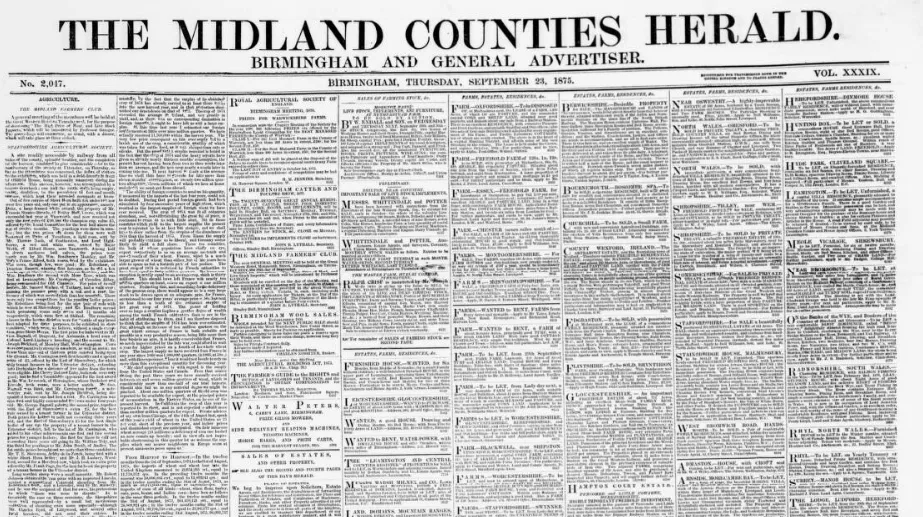
We stay in the Midlands now for our next new title of the week, which is the Midland Counties Herald, Birmingham and General Advertiser. First established in Birmingham in 1836, this politically neutral title appeared every Thursday and filled four pages.
Having a ‘large gratuitous and special circulation among the wealthy classes,’ the Midland Counties Herald, Birmingham and General Advertiser circulated in ‘Birmingham, and through the counties of Warwick, Worcester, Stafford, Salop, Gloucester, Hereford, Chester, Derby, Leicester, Oxford, Lincoln, York, and Lancaster, and most of the counties adjoining these; also in North and South Wales, Scotland and Ireland; but especially in the towns and districts within fifty miles of Birmingham.’
Therefore, the Midland Counties Herald, Birmingham and General Advertiser had a wide remit, covering the news from Warwickshire and its neighbouring counties. The title, meanwhile, also printed Press Association telegrams, notes on literature, and notices of births, marriages and deaths.
Berwick Warder
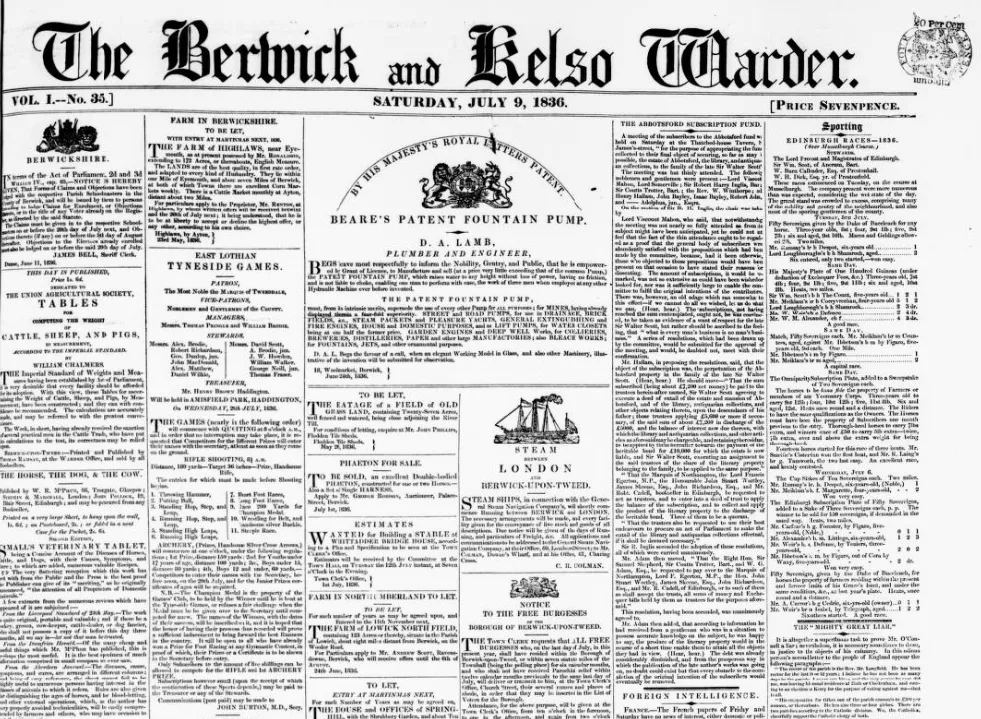
We travel north to introduce our next new title of the week, the wonderfully named Berwick Warder. First published on 14 November 1835 in Berwick-upon-Tweed, Northumberland, at the price of seven pence, the first edition laid out the background for the title in this ‘prospectus:’
It cannot be denied – nay, it has long been a Subject of Complaint – that great and influential Interests in these Districts have no adequate Representative in the Weekly Provincial Press – no Organ capable of speaking their Sentiments, and advocating their Cause, – Sentiments strictly in Union with the Principles of the British Constitution in Church and State, a cause which claims the regard of every good citizen and sincere lover of his country.
The Berwick Warder then circulated ‘chiefly in the important Agricultural Districts of which the Towns of Berwick-upon-Tweed and Kelso may be regarded as the Capitals.’ It printed both the latest and local intelligence, commercial and agricultural news, tidings from local societies like the Tweedside Physical and Antiquarian Society, and a ‘Compendium of General News.’
Bromley Record and Monthly Advertiser
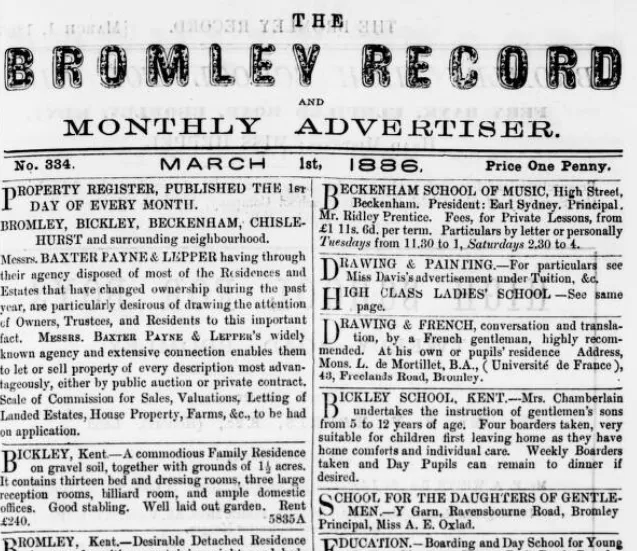
Our penultimate new title of the week is the Bromley Record and Monthly Advertiser. This South London monthly title was established in 1858, and unlike many of its contemporaries, it was published in a two column format. A sweet title with a local focus, the Bromley Record and Monthly Advertiser served the Bromley area, printing the latest from the Bromley Petty Sessions, the Bromley Literary Institute and the local Christian Association.
Costing just one penny, a key feature of the Bromley Record and Monthly Advertiser was the railway timetable it published, alongside news of railway intelligence. The title, meanwhile, printed in minutia news from Bromley, detailing all the latest accidents, thefts, and deaths to take place in the area.
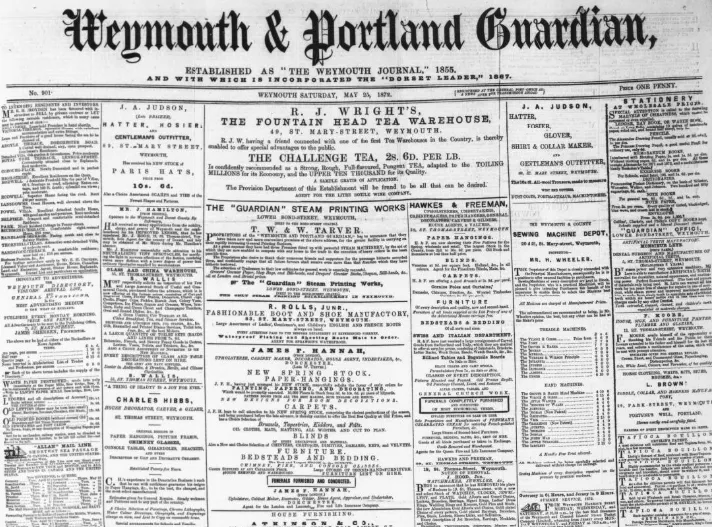
Weymouth & Portland Guardian
Our final new title of the week is the Weymouth & Portland Guardian. Established in 1855 in the Dorset seaside town of Weymouth as the Weymouth Journal, in 1867 the title incorporated the Dorset Leader.
Appearing every Saturday and filling four pages, the Weymouth & Portland Guardian printed the latest from Weymouth and the neighbouring Isle of Portland, as well as from other towns in Dorset. Indeed, the Weymouth & Portland Guardian once possessed ‘the largest circulation in Weymouth and Portland,’ being ‘THE paper for the district.’
A ‘first-class family newspaper,’ the Weymouth & Portland Guardian printed columns focussed on literature, the law and police matters.
Taking a look now at our updated titles of the week, and we’re delighted to announce that we’ve added over 25,000 brand new pages to the Morning Advertiser, one of the oldest continually produced newspapers in the United Kingdom. We’ve also updated some of our specialist titles this week, namely the Illustrated Police Budget and the Army and Navy Gazette, whilst one of our Irish titles, Roscrea’s Midland Counties Advertiser sees new pages join its ranks. From further afield, we’ve added new pages to the Jersey Express and the Channel Islands Advertiser, as well as to the Trinidad Royal Gazette.
Ships of the Royal Navy – HMS Resolution
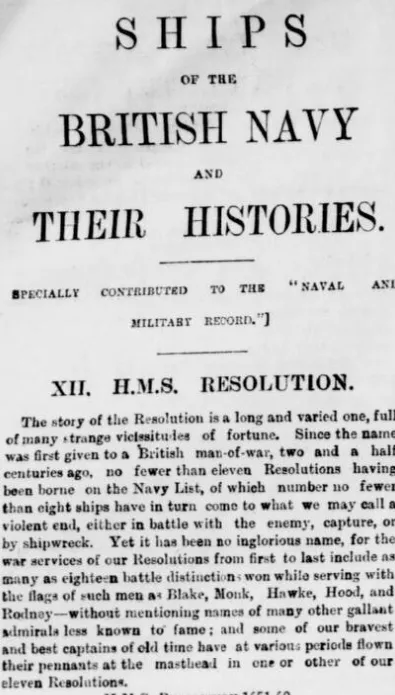
Our new title this week, the Naval & Military Record and Royal Dockyards Gazette, in the late nineteenth century printed a wonderful series entitled ‘Ships of the Royal Navy.’ This series, which provided histories of Royal Navy ships alongside photographs of the ship in question, is a valuable resource for those with ancestors who served in the Royal Navy, or simply those with a naval fascination.
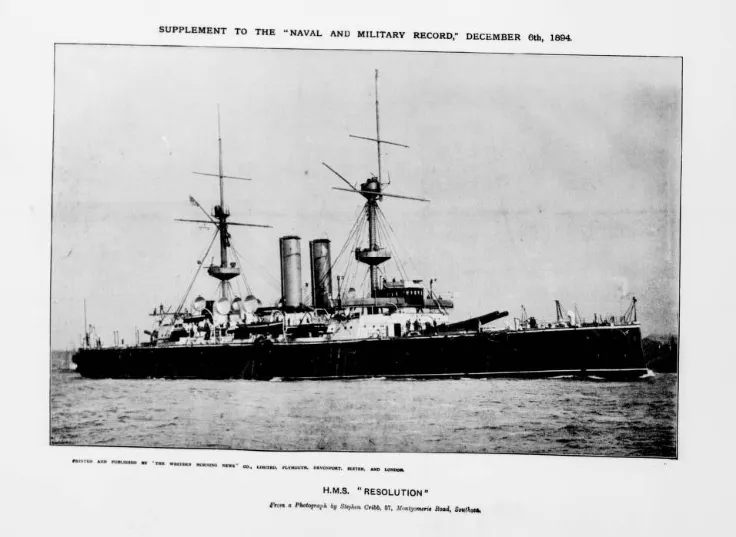
From the pages of the Naval & Military Record and Royal Dockyards Gazette, then, we’ve chosen to look at the history of HMS Resolution, which was published on 6 December 1894. What is wonderful about the histories published by the Naval & Military Record and Royal Dockyards Gazette is that they took a look at ships across their various incarnations, which in the case of HMS Resolution, spanned eleven instances by the late nineteenth century.
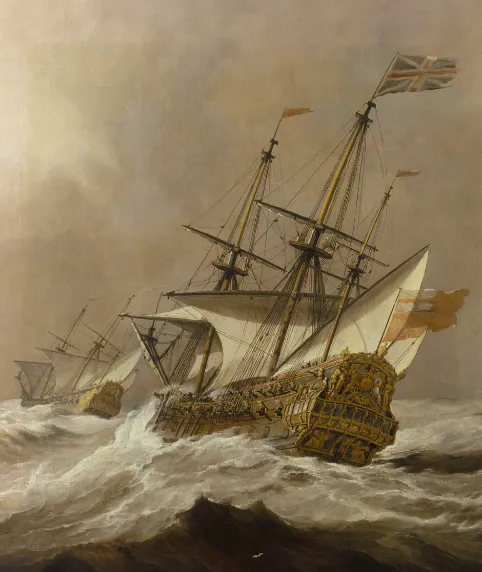
According to the Naval & Military Record and Royal Dockyards Gazette, Resolution first took her name in 1649. She wasn’t built then, however, having been launched as the Prince Royal in 1609, the establishment of the English Commonwealth putting paid to such royalist monikers. But under the name of Resolution she saw action in the Dutch War of 1652 to 1653, when, according to the Naval & Military Record and Royal Dockyards Gazette, she was ‘the second finest ship in our service at the time, of 100 guns and 1,251 tons, and the most powerful then ready for sea.’
However, with the restoration of the monarchy, Resolution lost her name. But it was given, as relates the Naval & Military Record and Royal Dockyards Gazette, to ‘one of Cromwell’s specially-named ships, whose original name of Tredagh or Drogheda… had naturally, under the circumstances, come under a ban’ in 1660. This Resolution, the first HMS Resolution, was ‘built at Deptford by Phineas Pett, the younger, in 1654, and was a fine third-rate of 770 tons and 50 guns.’
Moving on some seven years later, after HMS Resolution had been destroyed by a Dutch fireship in 1666, the Naval & Military Record and Royal Dockyards Gazette tell us how the ‘third Resolution – the first ship actually launched under that name – was laid down at Harwich immediately after her predecessor had met her untoward fate.’ Still a third rate, the third Resolution was ‘a bigger ship altogether,’ and she was launched on 7 December 1667, presenting ‘a fine sight in the water.’
This incarnation of HMS Resolution would have a long career, before being shipwrecked off the coast of Sussex in the ‘great storm’ of November 1705. The Naval & Military Record and Royal Dockyards Gazette then goes on to relate the much shorter career of the fourth HMS Resolution, which was commissioned in April 1705. Whilst cruising near Toulon, HMS Resolution and her group of ships encountered ‘six large French men-of-war, just out of port.’ HMS Resolution remained to make ‘retreating fight with the enemy’ as her fellow ships escaped. After putting up ‘a splendid fight,’ HMS Resolution’s captain, Henry Mordaunt, ran her ashore.
The fifth HMS Resolution had ‘a career very little longer than the career of Mordaunt’s Resolution,’ being built in 1708 and wrecked in a storm in 1711 near Barcelona, ‘notwithstanding all imaginary care to prevent it.’ The Naval & Military Record and Royal Dockyards Gazette then relates how ‘for nearly half a century no Resolution is found on the Royal Navy List, until in 1758 a fine seventy-four of 1,569 tons…was launched at Northam, on 14th of December.’ Having distinguished herself in the battle of Quiberon Bay on 20 November 1759, the sixth HMS Resolution ran aground during a storm.
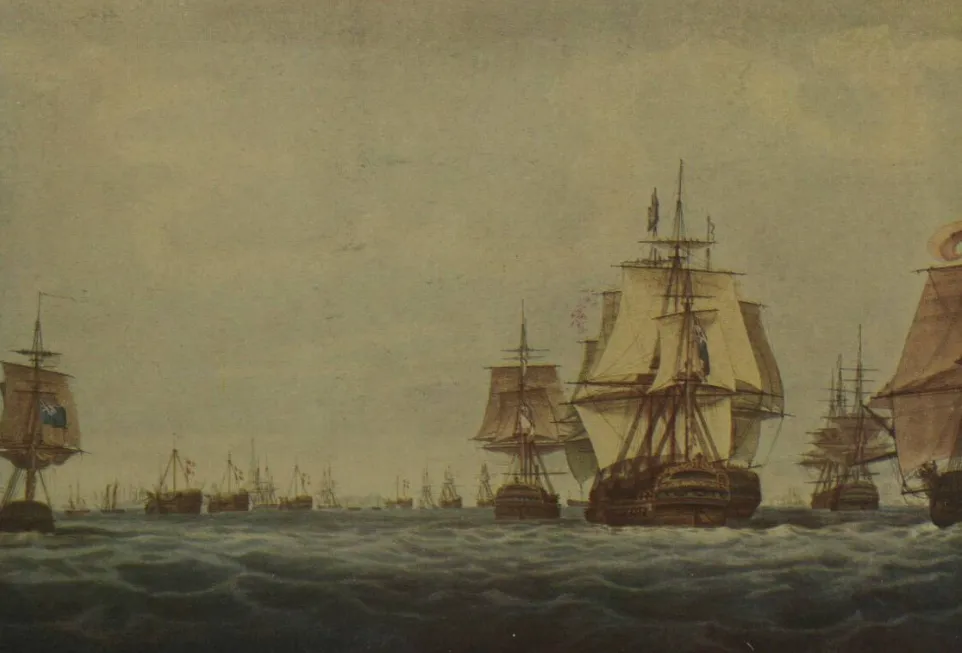
The next HMS Resolution, number seven, made her first appearance at the ‘great Royal Review at Spithead in 1773.’ She had a long illustrious life, participating in the Battle of Cape St. Vincent in 1780 and the Battle of Copenhagen in 1807, amongst other engagements. Meanwhile, as the Naval & Military Record and Royal Dockyards Gazette reports, ‘during the lifetime of the seventh Resolution, it must be noted, there were in the navy no fewer than three other Resolutions.’
The first of these Resolutions, and eighth overall, was Captain Cook’s, and ‘in this Resolution it was that Cook made his fatal third voyage in 1776, and from her he landed on the unfortunate morning in 1779, when Cook met his death.’ The Naval & Military Record and Royal Dockyards Gazette has it that ‘the ninth Resolution was a 14-gun brig,’ which ‘was lost with all hands’ in the same year, 1779, that it was purchased into the Navy. Meanwhile, the tenth Resolution was a ’14-gun transport ship,’ which was entered into the Royal Navy in 1782 and ‘was captured by the French in the East Indies in the same year.’
The final Resolution dealt with by the Naval & Military Record and Royal Dockyards Gazette is the eleventh one, which ‘was one of the eight ships of her rating laid down under the Naval Defence Act of 1889.’ Built in Jarrow, she was a ‘twin screw barbette ship of 14,150 tons displacement.’
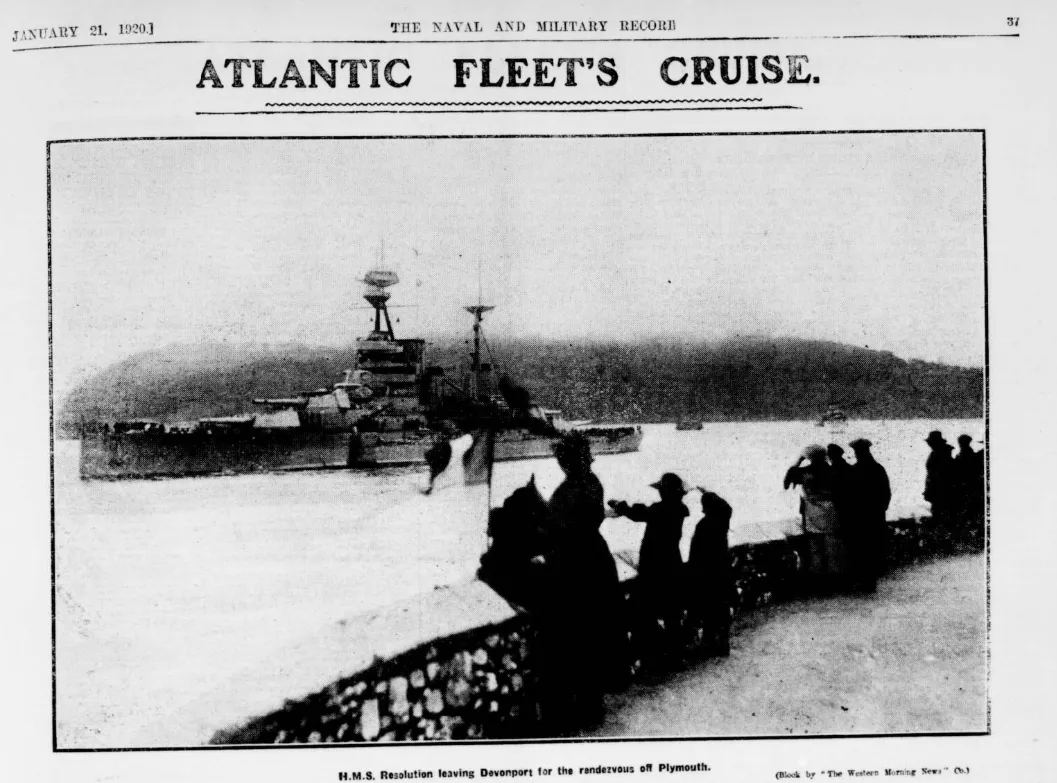
The Naval & Military Record and Royal Dockyards Gazette would go on to trace the career of the twelfth HMS Resolution, a Revenge-class battleship, which was launched in 1915.
New Titles
Title | Years Added |
1835-1837 | |
1859-1862, 1886, 1888-1890 | |
1887 | |
1881, 1887, 1918 | |
1881 | |
1875, 1877, 1879, 1883-1884, 1909 | |
1886-1896, 1898-1912, 1915, 1917, 1920, 1922-1936 | |
1872 |
Updated Titles
This week we have updated fourteen of our existing titles.
You can learn more about each of the titles we add to every week by clicking on their names. On each paper’s title page, you can read a free sample issue, learn more about our current holdings, and our plans for digitisation.
Title | Years Added |
1919 | |
1889, 1915-1918 | |
1940 | |
1980 | |
1900 | |
1896 | |
1913-1917 | |
1872-1873, 1875-1876, 1878-1879, 1890-1894, 1899, 1913, 1915-1916, 1919, 1930, 1950-1957 | |
1897-1899, 1901-1915 | |
1900-1909 | |
1912, 1914-1916, 1918, 1920 | |
1855, 1857 | |
1898-1899, 1904-1906 | |
1861-1864 |
You can keep up to date with all the latest additions by visiting the recently added page. You can even look ahead to see what we’re going to add tomorrow.
More on this topic:
Share this article
About the author

Rose Staveley-Wadham
Newspaper Licensing Manager
Published on Mon, 12 May 2025.