Hot Off The Press – New Titles This Week
Published on 26 August 2025 by Rose Staveley-Wadham
We are positively bustling with new titles this week, with five brand new titles for you to explore, including fashion favourite Le Follet. Meanwhile, we’ve added a grand total of 247,238 brand new pages to The Archive over the last seven days, with updates to eleven of our existing titles from across the United Kingdom and beyond.
So read on to discover more about our new and updated titles of the week, and also to learn about, through the stunning pages of Le Follet, the fashion must-have of the 1880s, the bustle.
Register now and explore The Archive
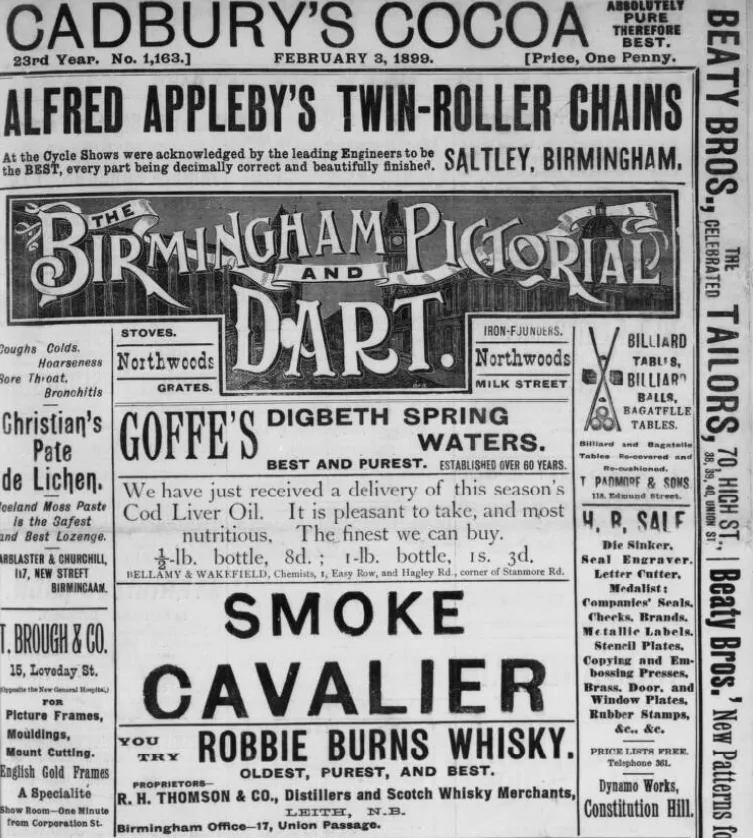
The Birmingham Pictorial and Dart
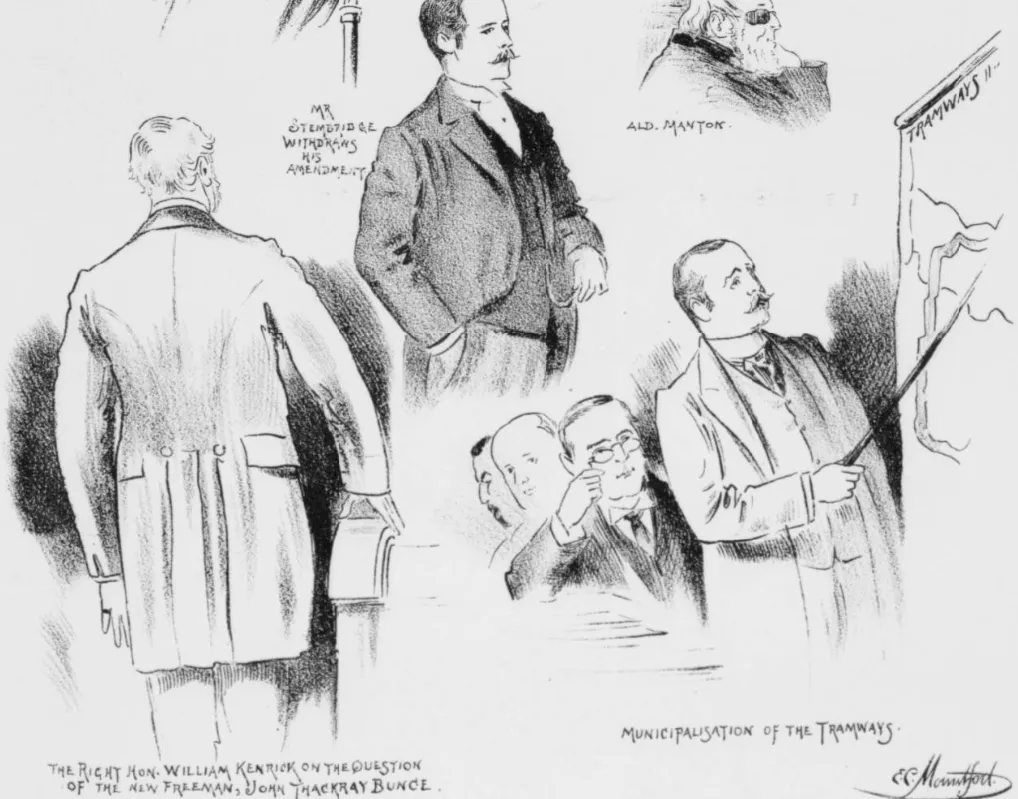
We start though with some Midlands-based satire, with ‘illustrated critical, local and satirical review’ the Birmingham Pictorial and Dart. Founded in Birmingham in 1876 as the Dart and Midland Figaro, this title featured satirical illustrations and cartoons by English cartoonist Ernest Chesmer Mountford (1844-1922).
Such cartoons lampooned politicians of the day, whilst the focus of the Birmingham Pictorial and Dart was split between local Birmingham and Warwickshire topics, and those relating to the national interest.
Appearing every Friday at the cost of one penny, the ‘local serio-comic’ was distributed ‘all over the United Kingdom.’ It could even be sent further afield, to the likes of Australia and the United States.
Filling around eighteen pages every week, the Birmingham Pictorial and Dart also focussed on theatrical matters, with illustrations of performers and sections like ‘Musical and Dramatic Gossip.’ The title, meanwhile, reported on the latest from a range of Birmingham organisations, before going out of print in 1911.
The Brighton Times
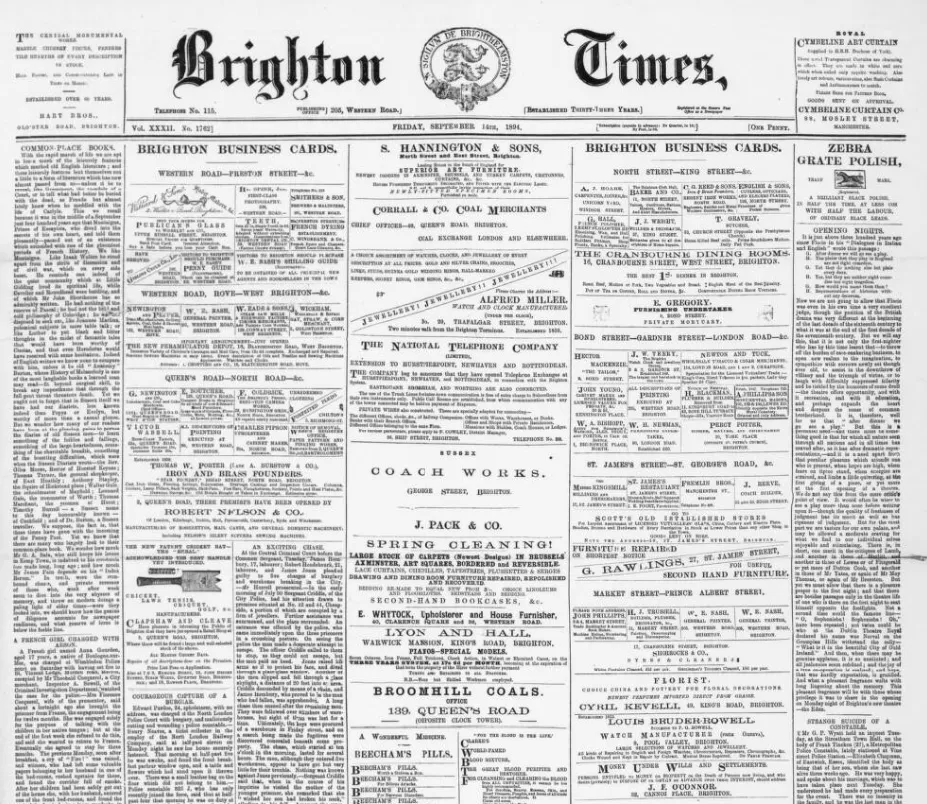
From Birmingham to Brighton now, with our next new title of the week, the Brighton Times. Established in the Sussex seaside resort of Brighton in 1860 with the full title of the Brighton Times and Fashionable Arrival List, this newspaper circulated in ‘Brighton, Hove, Cliftonville, and the county of Sussex generally.’
Published every Friday and costing one penny, ‘its dramatic and literary notices [were] made a prominent feature,’ whilst ‘reports of local meetings [were] given with accuracy and impartiality.’ Indeed, this Conversative independent newspaper aimed to advocate ‘local improvement and reform,’ all the while showcasing ‘the local and county news of the week.’
Indeed, the Brighton Times printed the latest news from the Brighton County Court, the Brighton Board of Guardians, the Brighton Quarter Sessions, the Brighton Police Court, and the Hove Police Court. It also published lists of ‘Fashionable Arrivals’ and ‘Latest Arrivals at the Hotels,’ featuring names of visitors to the resort town alongside the hotels at which they were staying.
As well as devoting columns to local topics and local notes, the four pages of the Brighton Times also featured correspondence, poetry, musical and dramatic notes, reviews of new books, and notices of births, marriages and deaths.
The Edmonton and Tottenham Weekly Guardian
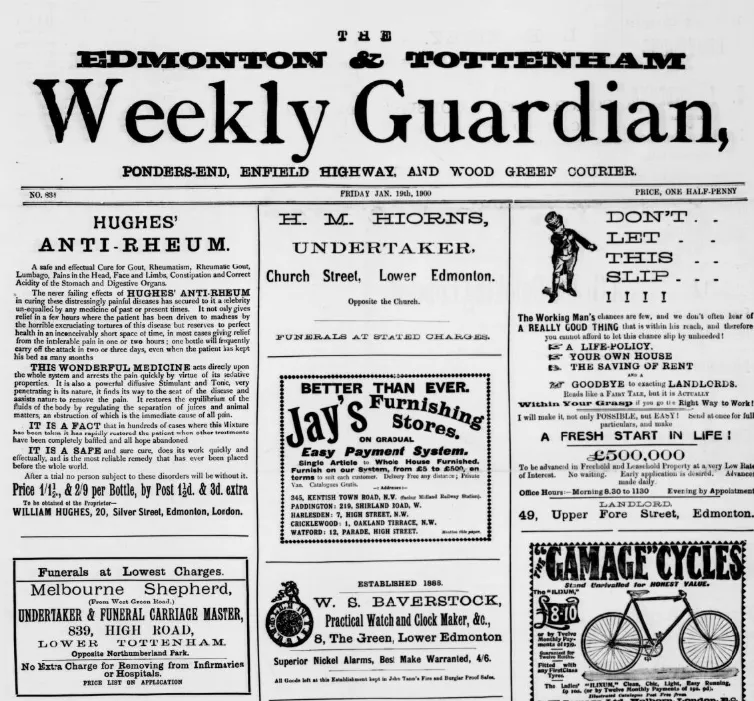
‘Circulating in Southgate, Wood Green, Ponders End, and Enfield,’ the Edmonton and Tottenham Weekly Guardian first hit the newsagents shelves on 3 January 1884. Costing just one halfpenny, this North London title was established to ‘fairly represent the interests of all classes.’
Indeed, a reforming agenda was very much at the forefront of this title, with the debut editorial of the Edmonton and Tottenham Weekly Guardian noting how ‘the overcrowding of the dwellings of the poor and its attendant evils, prove that to check the demoralization of those classes efficient and speedy measures need to be adopted.’
Appearing every Thursday and filling four pages, the Edmonton and Tottenham Weekly Guardian carried news from the local area, with reports from the Edmonton Board of Guardians and the Edmonton Petty Sessions. Meanwhile, the paper also featured a ‘Ladies’ Column,’ which included useful hints for the home alongside items regarding dress and fashion, as well as correspondence, a ‘London Letter’ and more general news.
Le Follet
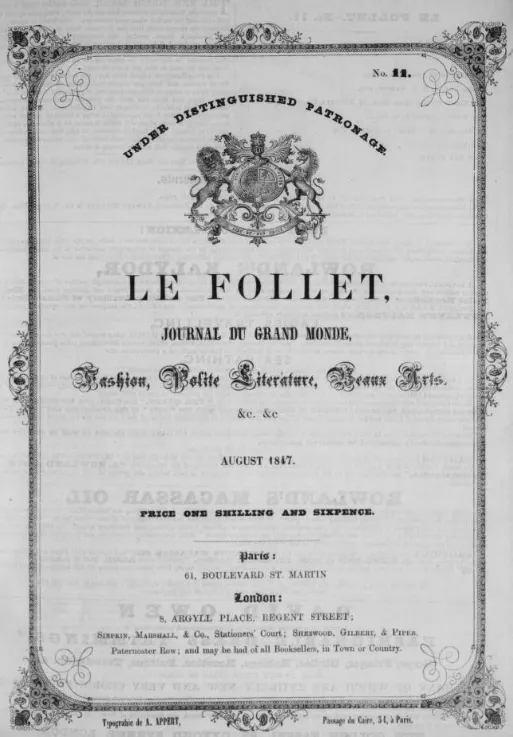
Taking its name from the famed Parisian fashion plate magazine Le Follet, which appeared weekly from 1829 through to 1892, the British version of Le Follet first appeared in October 1846, ‘under distinguished patronage.’ Indeed, this first edition of the London-based Le Follet announced how:
’Le Follet’ is already well known, and highly patronised, by the ‘grand monde’ of the United Kingdom, as the leading Parisian journal of fashion. In producing an English edition, the proprietors flatter themselves that they will be enabled to present the work in a still more generally attractive form, and such as to secure for it a far more extensive patronage.
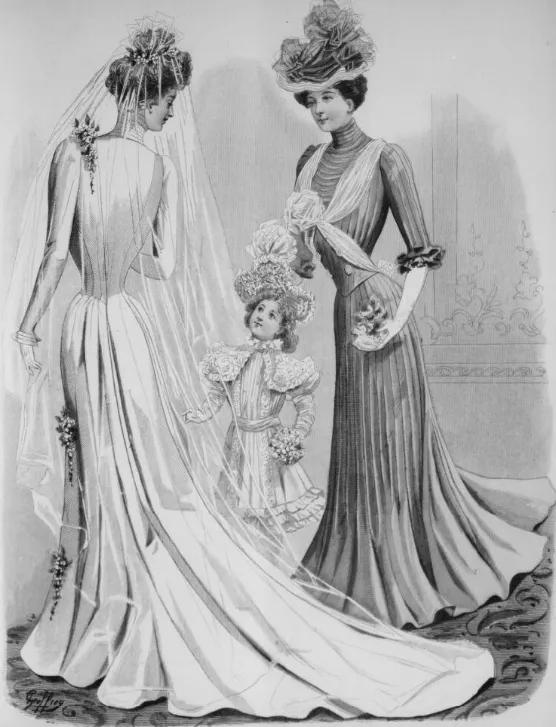
A journal du grand monde, or a high society newspaper, the new Le Follet would cover items such a fashion, polite literature, and the beaux arts. It would print three illustrated fashion plates in every issue, which would feature ‘the same exquisitely finished engravings as published at Paris.’ Furthermore, Le Follet would publish regular articles on fashions, as well as descriptions of the engravings published in each issue. Such descriptions would be ‘principally compiled from the French edition of the work, which is consulted throughout the courts of Europe, as the leading oracle of fashion.’
Another key element of Le Follet was its ‘literary department,’ which was set to feature ‘original and select compositions, in prose and verse.’
Published then every month and filling some twenty pages, Le Follet is a treasure trove for those interested in the history of fashion. Alongside articles on the latest styles, Le Follet also printed news from high society, with details of recent engagements. The magazine, very much aimed at women, printed recipes and extensive answers to correspondents, which covered subjects like beauty, house and home, decorations, and health. It also printed an ‘Exchange’ section, the Vinted or Ebay of its day, where readers could sell or swap items.
By the turn of the century Le Follet was styling itself as ‘Madame de Lorraine’s Journal,’ with the patronage of no less than Queen Victoria herself, as well as that of the Princess of Wales.
Nowlen’s Weekly Chronicle
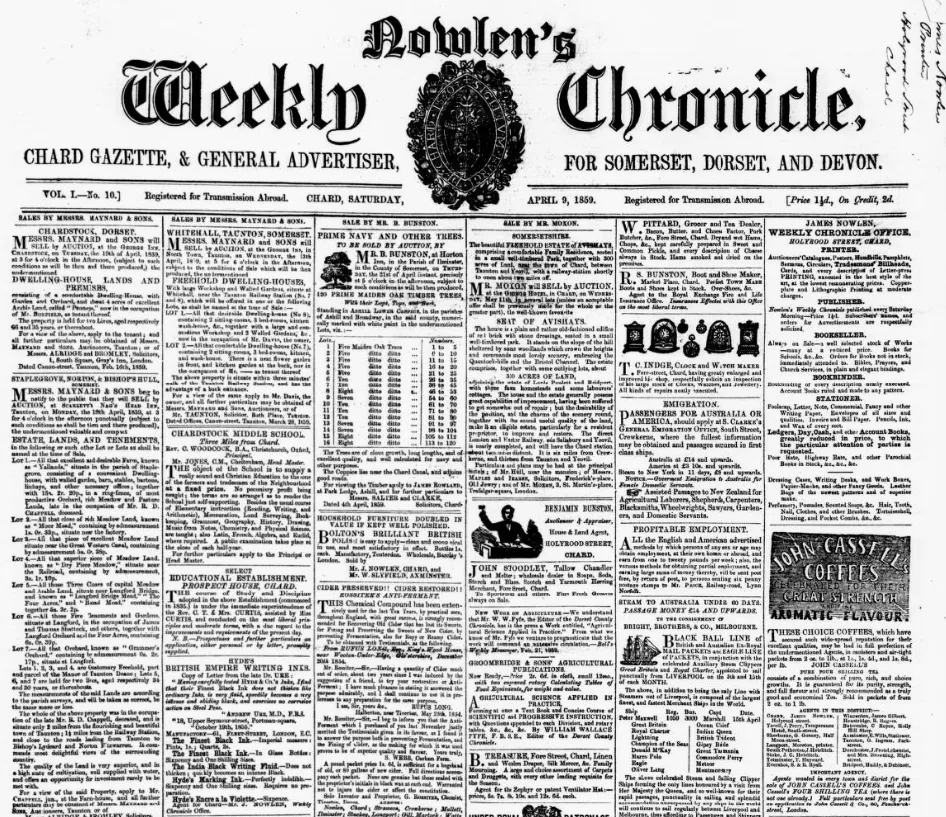
Our final new title of the week is Nowlen’s Weekly Chronicle. First published on 5 February 1859 in the Somerset town of Chard, this title appeared every Saturday at the cost of just one halfpenny.
With the full name of Nowlen’s Weekly Chronicle, Chard Gazette, and General Advertiser for Somerset, Dorset, and Devon, this publication advocated ‘Liberal-Conservative principles,’ as well as paying ‘great attention…to agricultural, commercial and local interests.’
The four pages of Nowlen’s Weekly Chronicle were filled with general news items, a London letter, ‘Remarks on Passing Events,’ as well as notices of births, marriages and deaths.
Our updated titles
We have been busy this week updating our existing titles too. We’ve added an impressive 38,000 brand new pages to the Wetherby News, whilst over 23,000 brand new pages have joined the Wiltshire News.
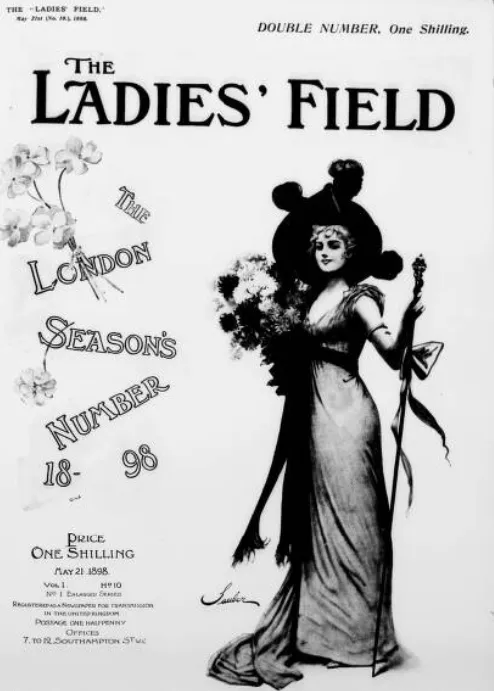
Other updates of note are to women’s title the Ladies’ Field, whilst new pages join Northern Ireland’s Londonderry Standard, and the week also sees updated from titles from further afield, such as to the Antigua Standard.
Bustles – the must-have undergarment of the 1880s
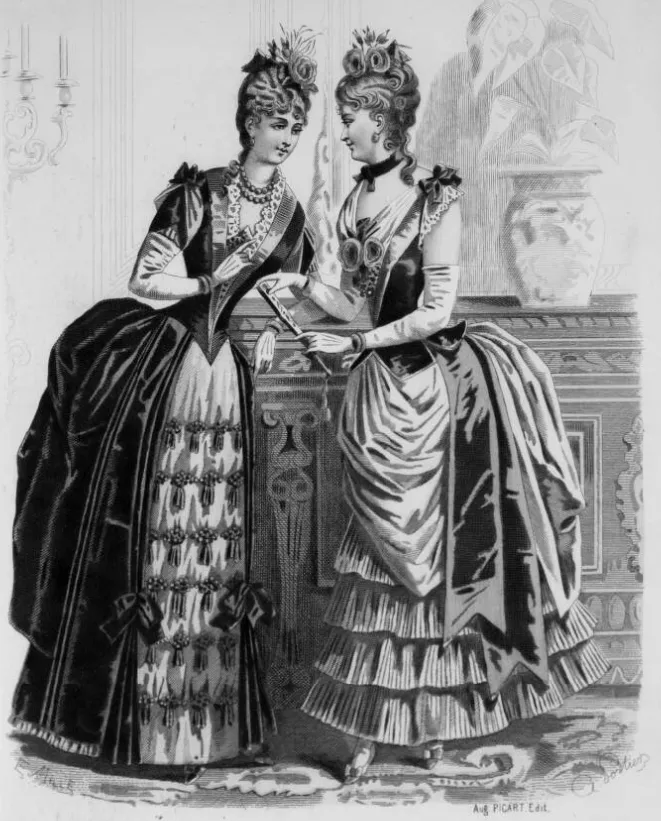
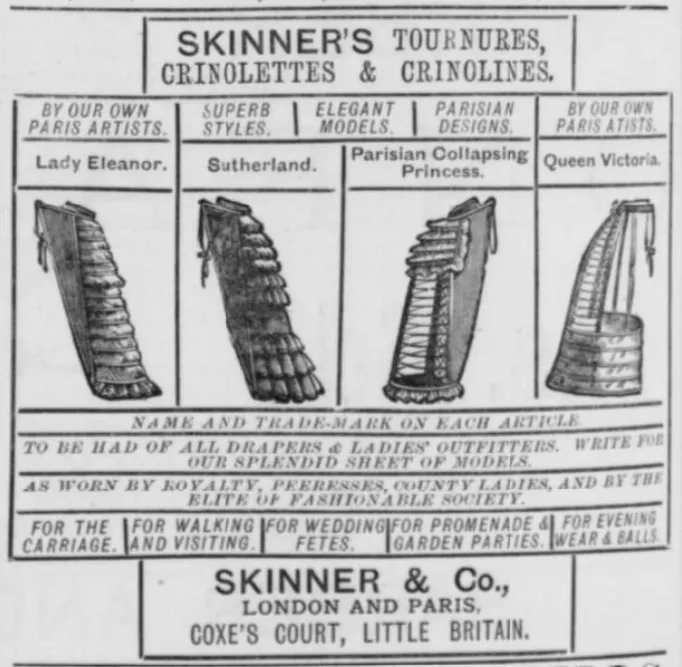
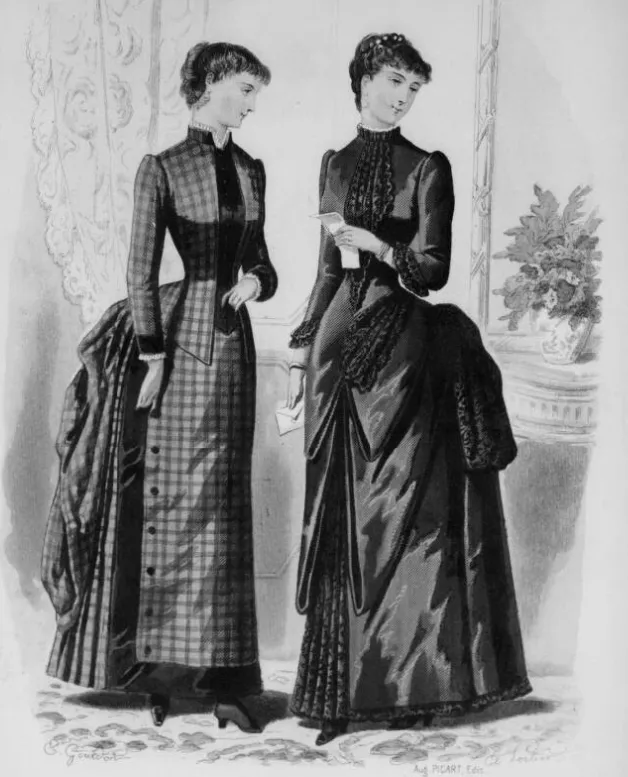
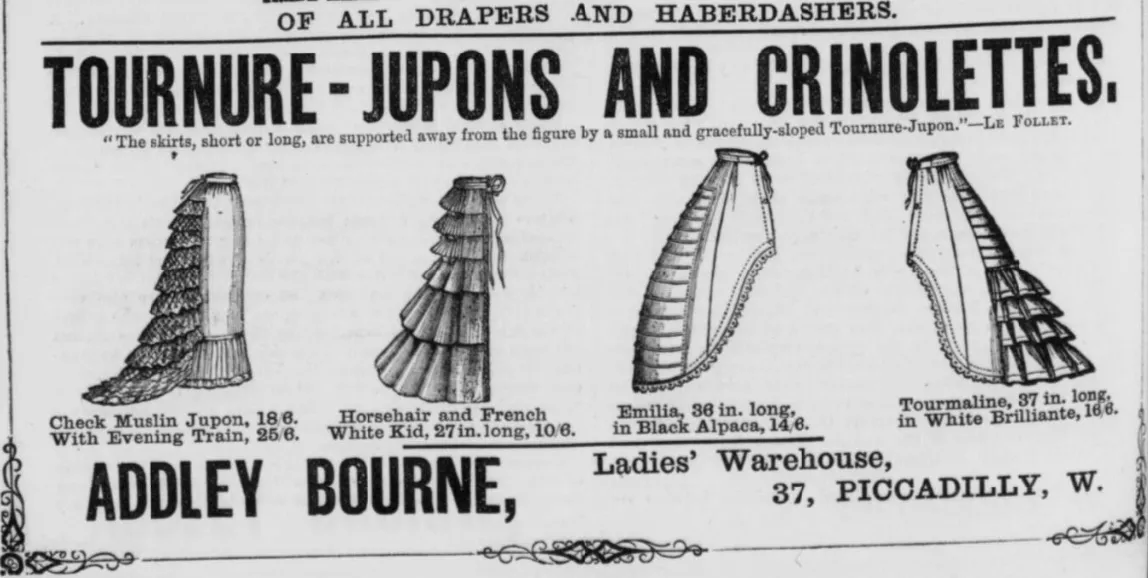
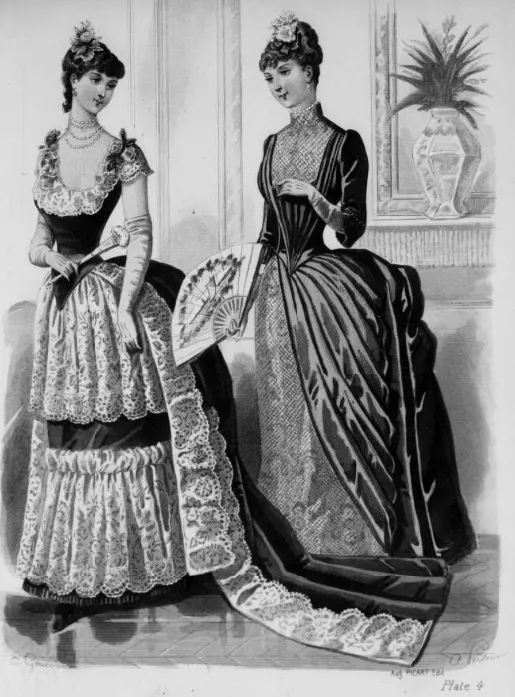
With the addition of new fashion title Le Follet this week, we’ve delved into the fascinating history of the bustle, also known as a tournure. Indeed, we were initially surprised to find few results for the word ‘bustle’ in Le Follet, given that it was the must-have garment through much of the Victorian period, reaching its particular peak in 1885.
Worn underneath a dress, the bustle gave shape to the wearer, whilst stopping the skirt from dragging. The bustle reached ridiculous proportions during the 1880s, but where could it be found in the pages of Le Follet?
This Le Follet piece from September 1889 was very helpful to the modern reader in supplying the answer:
We have been induced to make these rather lengthy remarks by the many letters we receive – some from very distant places – requesting information on the vexed subject of what is generally called tournure in England, and was in olden days recognised as ‘bustle.’
We had been using the wrong term for the period, and searching for ‘tournure’ was much more fruitful.
A piece in Le Follet in August 1882 describes the increase in popularity of the bustle, or, the tournure:
The fashion of wearing tournures seems to have been welcomed by all; and clearly there appeared some danger that long waists would gradually reach to the knees, their length was becoming so exaggerated.
This account of the tournure appears in Le Follet’s regular ‘La Mode’ column, and it goes on to describe how it should be worn:
The tournure small and narrow, as at present worn, certainly gives a grace to the figure, supporting and showing to effect the draperies of the pouf. The tournures, it may be remarked, do not give any development at all to the figure higher than four inches below the waist. This must be well borne in mind by all who wish to be elegantly and fashionably juponnées.
By December 1885 there was in update in Le Follet as to how tournures were changing:
The last few days the tournures worn by élégantes are improved in shape, giving a more graceful curve below the waist, instead of the sudden square line which was á la mode this last season. They are still narrow, and keep the drapery well to the back.
Just how ordinary women were wearing bustles, or tournures, is evidenced in the pages of Le Follet. In the paper’s ‘Exchange‘ section, one correspondent wrote how she had:
…two ‘braided wire’ bustles, very light and good shape, but too large for me. Will sell for 2s. 6d. and 2s. 11d. each or exchange for good pillow slips.
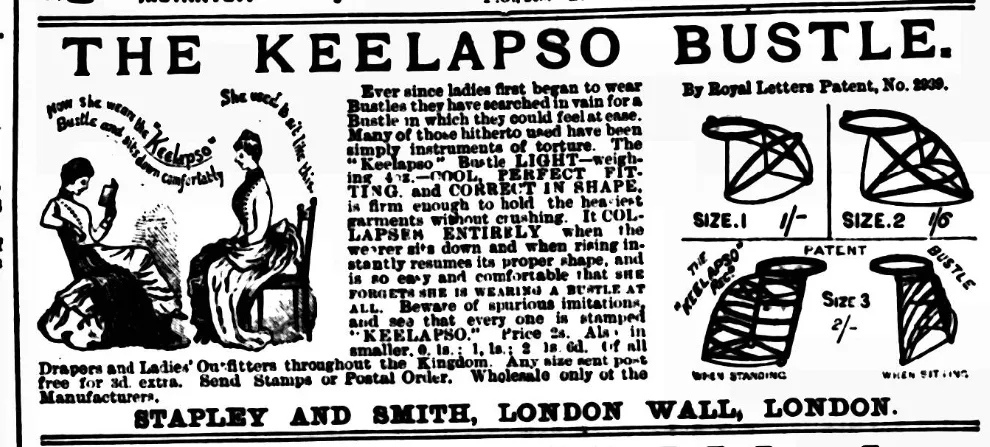
Meanwhile, Le Follet continued to track advances in the tournure realm. In July 1887, in the publication’s ‘Notices’ section, the paper described a new tournure designed by Messrs. Stapley and Smith. ‘Admirably shaped,’ it gave ‘the correct curve to the basque of the bodice’, as well as being ‘quite light in wear’ and ‘convenient.’ Its biggest advantage, as per Le Follet, was that if the wearer leant back, the bustle would ‘collapse all at once without inconvenience, or injury to the drapery over it,’ popping back into shape once the pressure was released.
Made from ‘steel and brass wire,’ this design was called the ‘Keelapso,’ and you can find it advertised across newspapers at the time. Meanwhile, Le Follet ended its description of the latest in bustle technology by cuttingly remarking:
it…is exceedingly inexpensive, it is made in three sizes, one extra large for the American market, our readers we have no doubt will prefer the smaller sizes.
Discover more about bustles, fashion history, and much more besides, in the pages of our Archive today.
New Titles
Title | Years Added |
1892-1895, 1897-1900 | |
1878-1880, 1885-1886, 1894, 1964 | |
1884-1886, 1888-1906 | |
1846-1900 | |
1859-1862, 1864-1871, 1873-1876, 1878-1879, 1881-1883 |
Updated Titles
This week we have updated eleven of our existing titles.
You can learn more about each of the titles we add to every week by clicking on their names. On each paper’s title page, you can read a free sample issue, learn more about our current holdings, and our plans for digitisation.
Title | Years Added |
1891-1908 | |
2003 | |
1898 | |
1888-1900, 1921-1922, 1926, 1963-1964 | |
1986 | |
1856, 1862-1864, 1867-1870 | |
1856, 1900 | |
1901-1915 | |
1990-1992, 1994-1996, 1998, 2002-2004 | |
1914-1915, 1917, 1930-1937, 1946-1948, 1950, 1952-1955, 1957-1959, 1961 | |
1882-1889 |
You can keep up to date with all the latest additions by visiting the recently added page. You can even look ahead to see what we’re going to add tomorrow.
More on this topic:
Share this article
About the author

Rose Staveley-Wadham
Newspaper Licensing Manager
Published on Tue, 26 August 2025.