Hot Off The Press – New Titles This Week
Published on 7 April 2025 by Rose Staveley-Wadham
This week at The Archive we have a bumper week for you, with the addition of new specialist titles the Financial News, the Jewish Echo and the Railway Times, alongside new newspaper titles representing the Channel Islands and the Isle of Wight. In all, we’ve added 259,482 brand new pages to our collection, with updates to 34 of our existing titles from across the United Kingdom and Ireland.
So read on to discover more about all of our new and updated titles of the week, and also to learn more about the experience of Jewish refugees in Glasgow during the Second World War, thanks to our brand new title the Jewish Echo.
Register now and explore the Archive
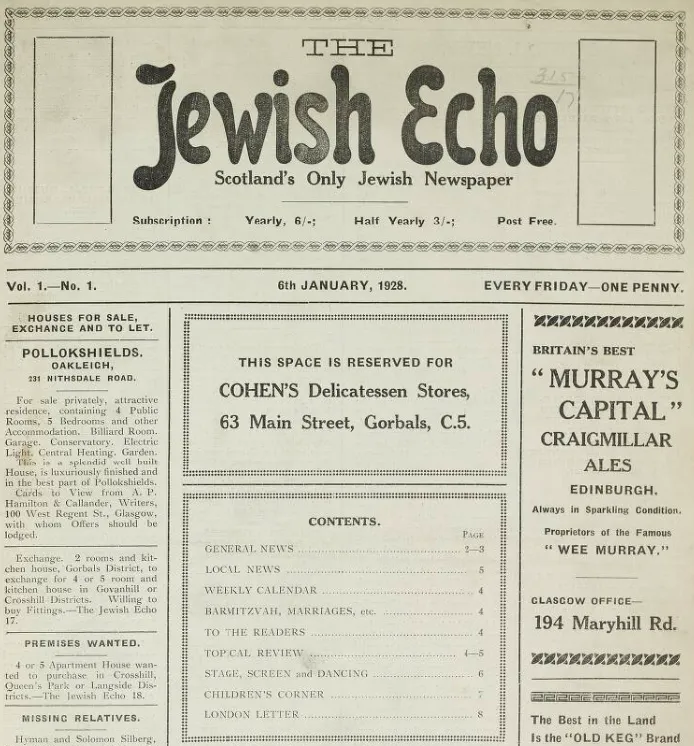
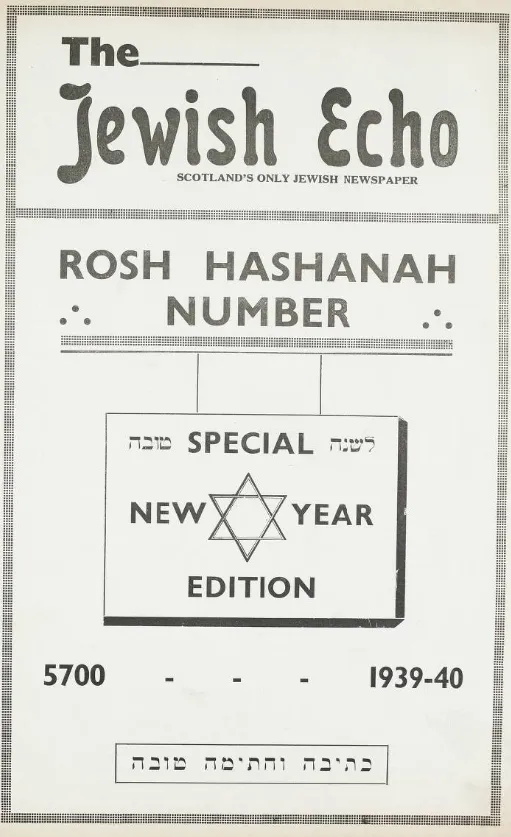
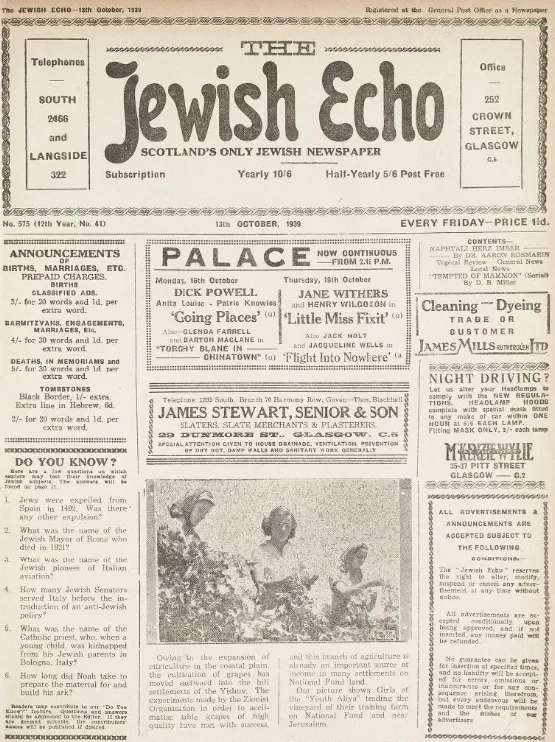
Let’s dive into our new newspaper titles of the week, and we begin with the Jewish Echo, which we are delighted to bring to you thanks to our partnership with the Scottish Jewish Archives Centre. The Jewish Echo was launched in Glasgow on 6 January 1928 at the cost of one penny, and it announced itself as ‘Scotland’s Only Jewish Newspaper.’ It wasn’t, however, Scotland’s, or indeed Glasgow’s, first Jewish newspaper.
The earliest known Glaswegian Jewish newspaper was published between 1901 and 1903 by a Lithuanian educationalist and printer Hillel Mayer Langman, and it was known as the Jewish Times. The Jewish association with Glasgow goes back longer than the early nineteenth century, however, with one of the earliest Jews (if not the earliest) to settle in the city being Israel Loeb Reiss in 1803.
In 1821 Glasgow got its first ever synagogue, and by 1831 there were 47 Jews living in the city. Six of this group had been born in Glasgow, with the others originating from Germany, the Netherlands, and Sheerness. Throughout the nineteenth century Glasgow’s Jewish population continued to grow; by 1850 there were 200 Jews in Glasgow, with a new synagogue (the Glasgow Hebrew Congregation) opening in 1858, and the Garnethill Synagogue opening in 1879.
Following the Russian persecution of Jews in the late nineteenth and early twentieth centuries, the numbers of Jews in Glasgow continued to swell, moving from 4,000 in 1897 to 7,900 in 1902. Many of these Jews worked as furriers or tailors, and they settled in the Gorbals district of Glasgow. Amongst these new arrivals were the Golombok family, who had arrived from Lithuania to Glasgow in 1900.
Brothers Israel and Zevi Golombok went on to set up a printing business in Gorbals. In 1914 they began the Yiddish-language Glasgow Evening Times, before moving on to publish the Jewish Weekly Times and Die Glasgow Yiddishe Shtimme (the Jewish Voice). However, by the late 1920s less Jewish people could read Yiddish, so Israel and Zevi Golombok made the decision to found the English-language Jewish Echo, with Zevi acting as its first editor.
The first edition of the Jewish Echo proclaimed how ‘The Jewish population of Glasgow is numerically quite an important one.’ With a ‘good number of Synagogues, Charitable Institutions, Educational Establishments, Literary and Social Societies, Zionist Organisations, Friendly Societies and Clubs,’ a ‘local organ’ was needed for the Jewish population of Glasgow. To this end, the Jewish Echo declared how:
Still what Glasgow needs is an organ devoted entirely to its local Jewish affairs; an organ which should mirror the public opinion of local Jewry; a paper which should serve as a platform open to all parties to express their views on the various problems of a specific Jewish nature.
Published every Friday then, the Jewish Echo featured news regarding Jewish issues from across the world, with articles like ‘Romanian Jewry’s Day of Fasting and Supplication.’ Such international news was provided by the Jewish Telegraphic Agency, whilst the title also focussed on items from closer to home, for example reporting on the local Jewish Lad’s Brigade and the Langside Hebrew Congregation. The paper also had a focus on entertainment, with a ‘Topical View,’ a look at Glasgow’s ‘Stage, Screen and Dancing’ scene, as well as a ‘Children’s Corner.’
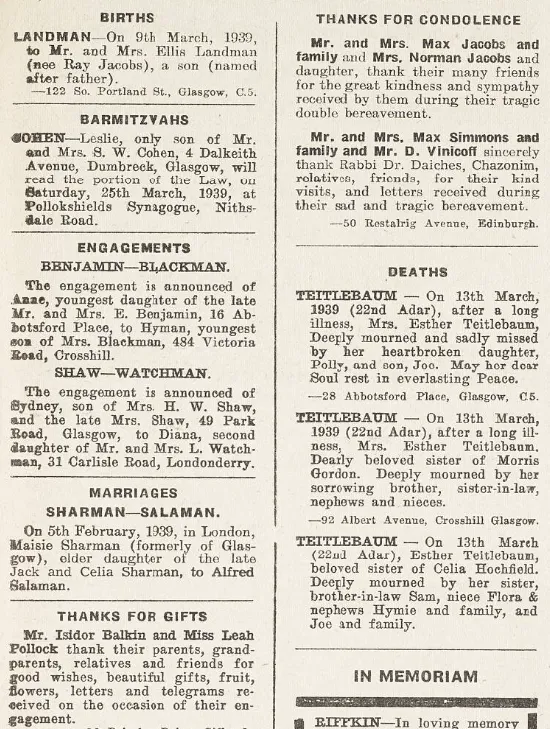
Meanwhile, the Jewish Echo shone a bright light on its local Jewish community, featuring personal announcements, membership lists, and records of congregations. Its columns featured the names of those celebrating their Bar and Bat Mitvahs, alongside news of births, marriages and deaths, as well as in memoriam notices, tidings of tombstones that were to be set, and letters of thanks for gifts.
The Jewish Echo continued as Scotland’s main Jewish newspaper until 1965, when the Jewish Times (later the Israel Times) was founded. The Jewish Echo went out of publication in 1992. It was edited by Dr Ezra Golombok, the son of Zevi Golombok, from 1950 until its closure.
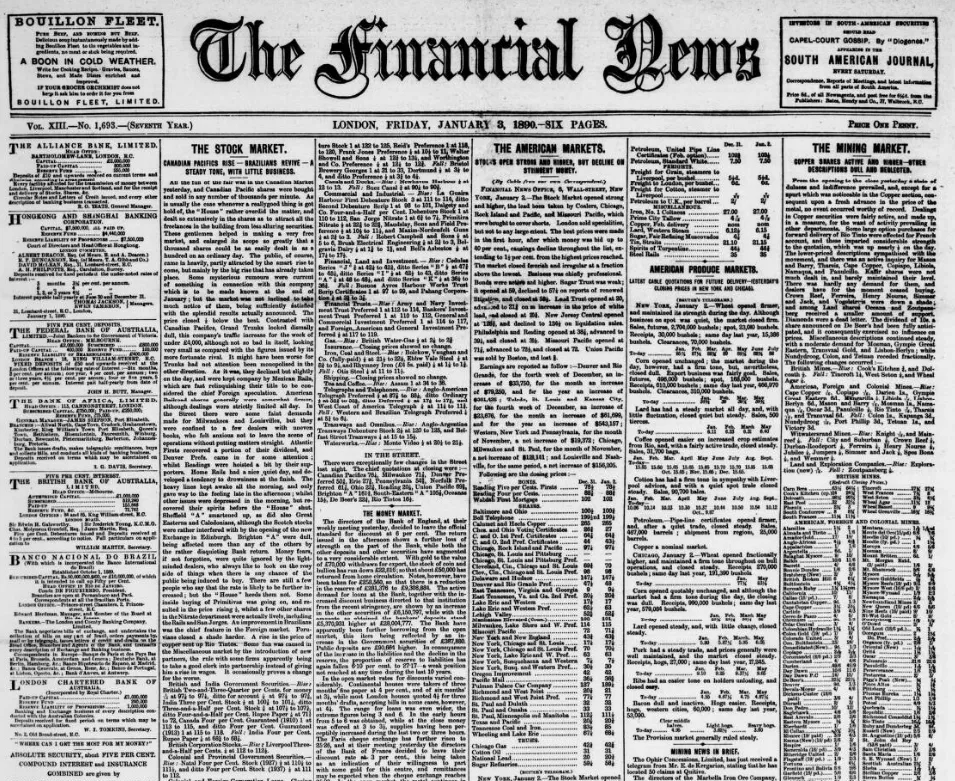
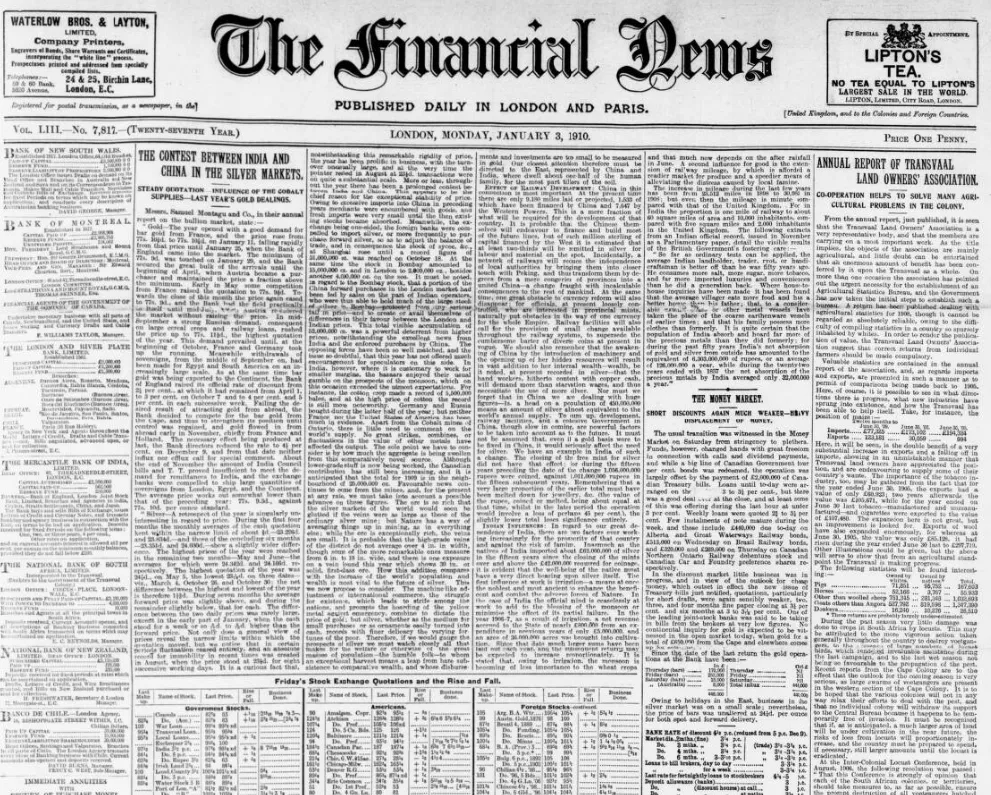
Our next new title of the week is another specialist one, and it is the Financial News. ‘A daily journal devoted to the interests of investors,’ the Financial News was founded in 1884 by British journalist and politician Harry Marks (1855-1916).
Marks had spent a great deal of time in the United States, and this American influence would shine through in the pages of the Financial News, London’s first financial paper to be published on a daily basis. With its accessible, American style, tone, the Financial News gave ‘a full record of financial intelligence,’ whilst also seeking to guard ‘the interests of the investor.’ These factors gave the title a wide appeal, as it found an audience amongst industry professionals and small private investors.
Soon the Financial News, which was independent in its politics, also became known for its unflinching investigative reporting. It gained a reputation for honesty and integrity; however, there was some irony in this, for its founder Harry Marks was a fraudster, for example, he sold stock in the Rae-Transvaal Gold Mining Company which was essentially worthless.
In 1888 the Financial News gained a competitor in the shape of the Financial Times, which was founded by Horatio Bottomley (1860-1933). Meanwhile, the Financial News’s six pages were filled with news of potential investment schemes; such opportunities lying in the Anglo-Mexican Mining Company and the opal mines of Queensland. The Financial News reported on business changes and removals, mining news, the latest from the produce markets, stocks and shares, whilst also featuring ‘answers to correspondents.’
In 1909 Harry Marks handed over editorship of the title to Ellis Powell, although he remained as the newspaper’s proprietor until his death in 1916. After his death the Financial News would be sold several times; in 1919, 1926 and finally in 1928, when Irish-born businessman Brendan Bracken (1901-1958) took over the helm. At this time, the Financial Times was outselling the Financial News by some three or four times, although in 1937 sales of the title briefly hit 10,000 copies.
A year later, in 1938, Hargreaves Parkinson (1896-1950), later editor of the Financial Times, took over as editor. Change again was on the cards when the two rival finance titles enacted a complex merger, which resulted in the last ever copy of the Financial News being published on 1 October 1945.
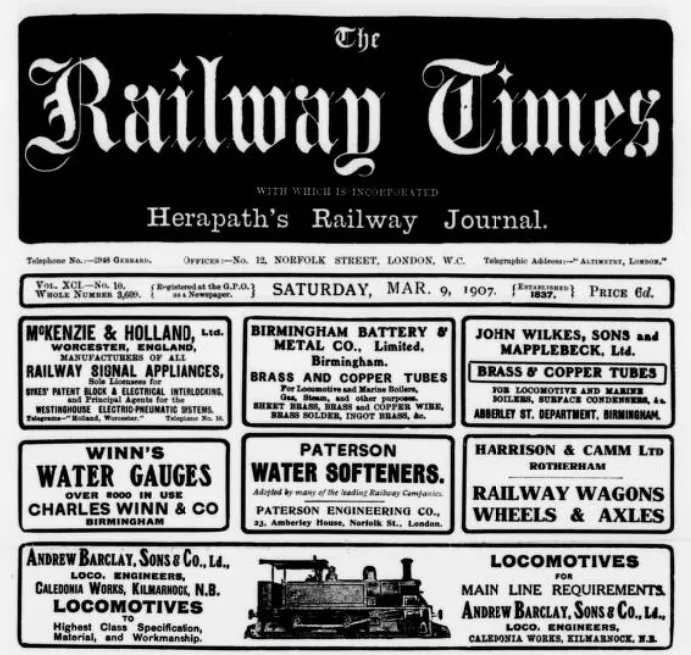
Our next new title of the week is another specialist one, and it is ‘Leading Railway Journal’ the Railway Times. Established in the early days of the railways in 1837, the title devoted ‘itself almost exclusively to railway interests.’ Indeed, the Railway Times took a global look at railway news and matters, making a ‘special feature of the affairs of North and South American Railways.’
Appearing every Saturday at the cost of 6d, and filling some 24 pages, the Railway Times provided a record of railway company meetings from across the world. It took a look at ‘Parliamentary Intelligence,’ where the focus was on railways, whilst also providing a railway stock and share list, alongside ‘official track returns’ from across the world. True to its claim of highlighting American railway interests, the title published an ‘American and Canadian Railways’ column.
The Railway Times later incorporated another railway title, namely Herapath’s Railway Journal.
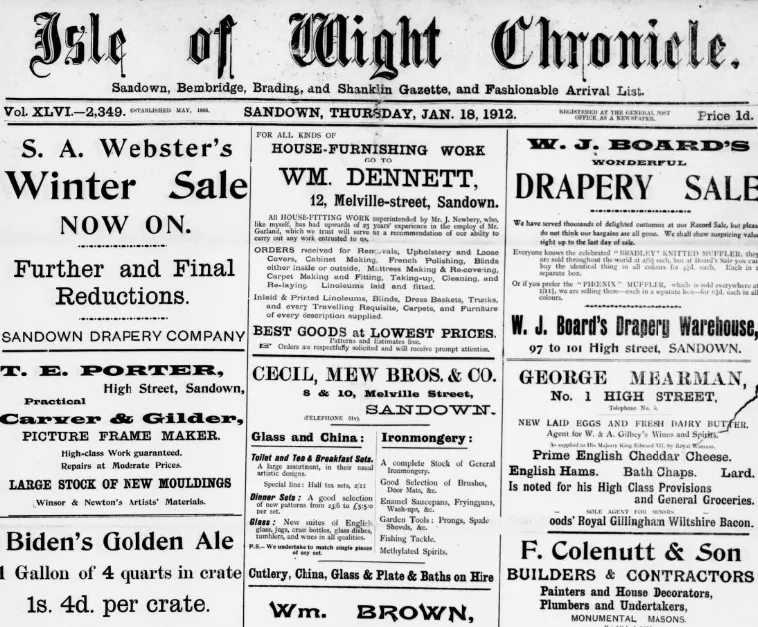
We now move on to look at some of our new island-themed new titles of the week. Let’s begin with the Isle of Wight Chronicle, which was founded in 1866. This Conversative weekly newspaper, which appeared every Friday, was published in Sandown, a seaside resort on the Isle of Wight. Filling eight pages, it covered the news from Sandown, Bembridge, Brading and Shanklin, as well as providing a ‘Fashionable Arrival List,’ a nod to the area’s popularity with tourists.
We travel across the English Channel now to the British Crown Dependency of Jersey, where we pause to welcome the Jersey Express and Channel Islands Advertiser to our collection. This Liberal newspaper was founded in 1860 in Saint Helier, the capital of Jersey, which is the largest island in the Channel Islands.
Purporting to be ‘the best local paper in the Channel Islands,’ the Jersey Express and Channel Islands Advertiser appeared every Friday, as it reported on the ‘most important home and foreign intelligence.’ Meanwhile, ‘particular attention’ was ‘given to all the local events as they transpire.’ Published by Edmund F. Carrel, it had a circulation of some 2,000 copies.
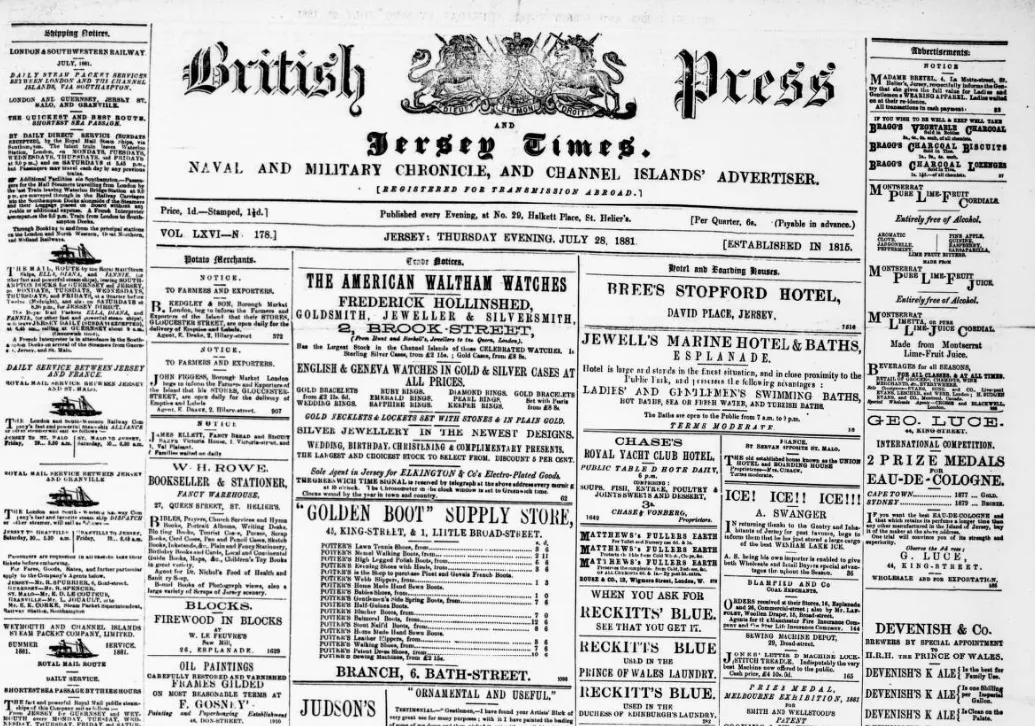
Our penultimate new title of the week is the Jersey Times and British Press, which was also published in Saint Helier. This particular newspaper traces its origins back to the British Press, which was founded in 1815 as Jersey’s first English-language newspaper. This daily newspaper, which was Conservative in its politics, ran until 1910.
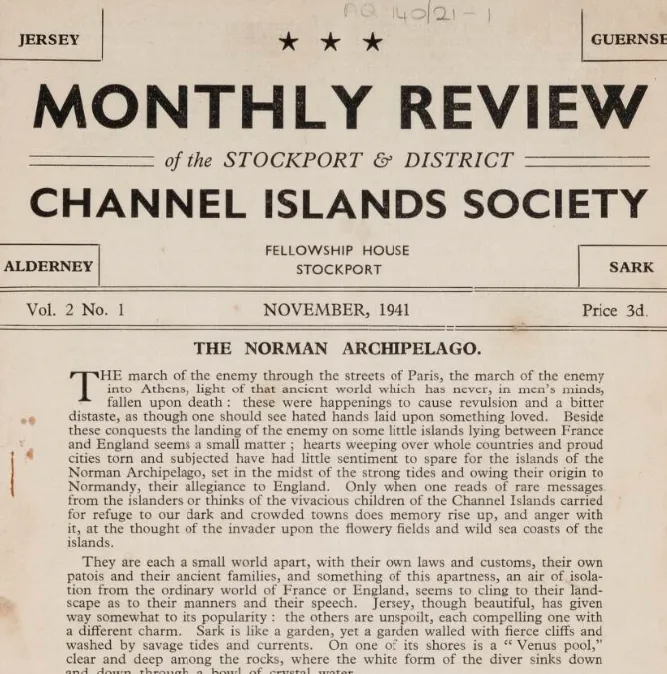
Our final new newspaper of the week is the Channel Islands Monthly Review. Despite its name, it wasn’t published in the Channel Islands, but in Stockport, as it was the ‘Journal of the Channel Islands Refugees in Great Britain.’ The publication of this unusual title, then, came about after the invasion of the Channel Islands Crown Dependencies in summer 1940 by Nazi Germany. By this point in the Second World War, some 25,000 people had been evacuated from the Channel Islands, but 66,000 people remained to endure Nazi oppression, which lasted until May 1945.
The Channel Islands Review, then, was published by the Stockport and District Channel Islands Society, and it contained news from similar societies set up across Britain, from Barnsley to Bath, from Exeter to Lewisham, from Hereford to Woolwich. But the title’s main focus of interest was the occupied islands of Jersey, Guernsey, Alderney, and Sark, and how the populations there were coping under Nazi control.
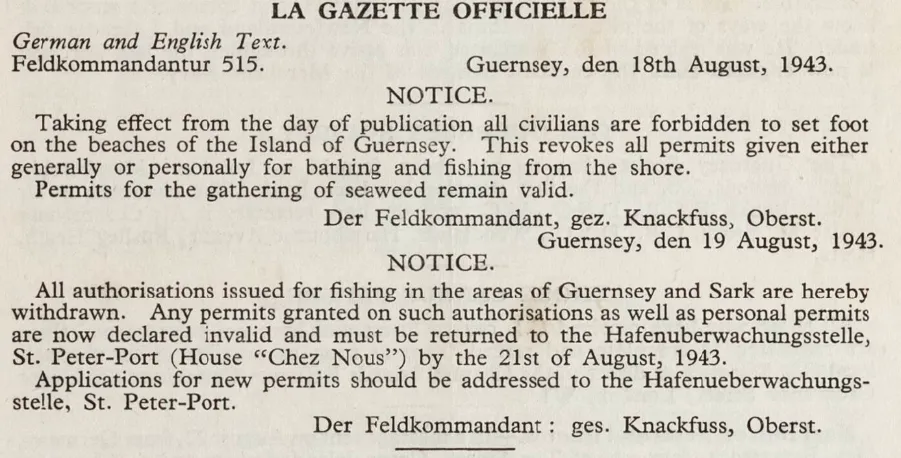
Indeed, the paper reports on the ‘Remarkable Cheerfulness Despite Restrictions’ amongst the Guernsey population. However, the darker side of Channel Islands life during this desperate time is revealed by ‘La Gazette Officielle’ part of the Channel Islands Review. This section featured notices from the German authorities, such as ‘Taking effect from the day of publication all civilians are forbidden to set foot on the beaches of the Island of Guernsey,’ a chilling insight into wartime day-to-day life on the islands.
Meanwhile, the Channel Islands Review contained personal insights into the occupation, with letters ‘From Our Post Bag’ sent from Jersey, Guernsey, Sark and even Germany, where approximately 2,300 Channel Islanders were sent and imprisoned. In more positive news, the paper featured news of repatriated prisoners, alongside the honours that had been received by Channel Islanders. In all, this publication represents a fascinating chronicle of the endurance enacted by Channel Islanders during the dark days of the Second World War.
We do hope you enjoyed the tour through our new newspapers this week. Before we dig a little more into the Jewish Echo and stories of Jewish refugees from the Second World War, we wanted to highlight some of the 34 existing newspaper titles we’ve updated this week. Some of our largest updates this week are to the Pall Mall Budget and the Saturday Review of Politics, Literature, Science and Art. Meanwhile, we’ve updated eleven of our titles from the Republic of Ireland, with updates to the likes of the Irish Homestead, the Irish Field and the Morning Mail (Dublin). Finally, we’ve updated one of our titles from Northern Ireland, the Londonderry Standard, and one of our Welsh titles, namely the South Wales Daily Post.
Jewish Refugees in Glasgow During the Second World War
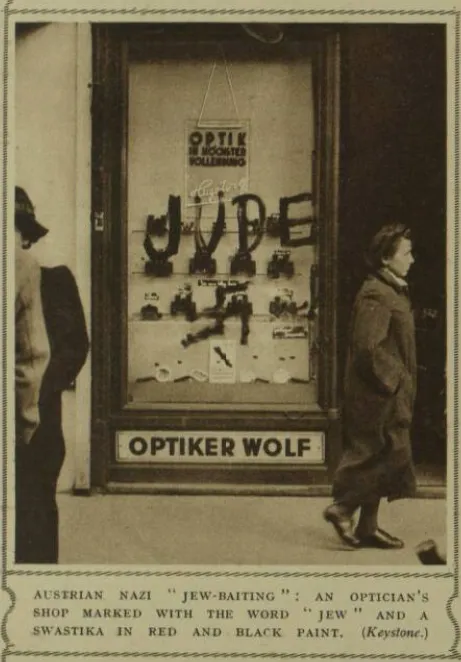
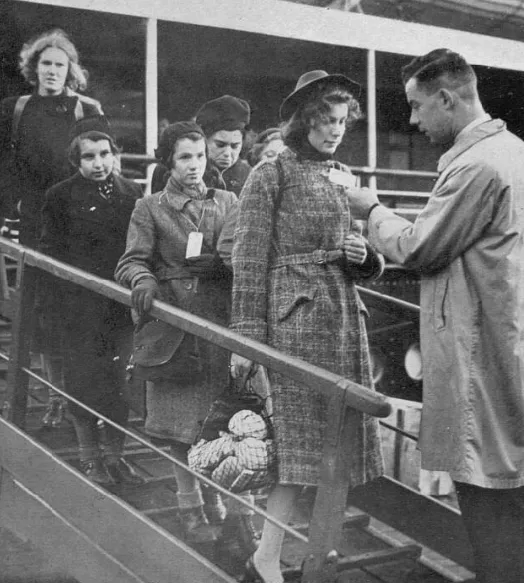
In the lead up to the Second World War, facing intense persecution by the Nazi party, hundreds of thousands of Jews fled from Germany and Austria, as well as from the likes of Czechoslovakia. These Jewish refugees arrived in countries across the world, with 52,000 of them seeking refuge in Great Britain.
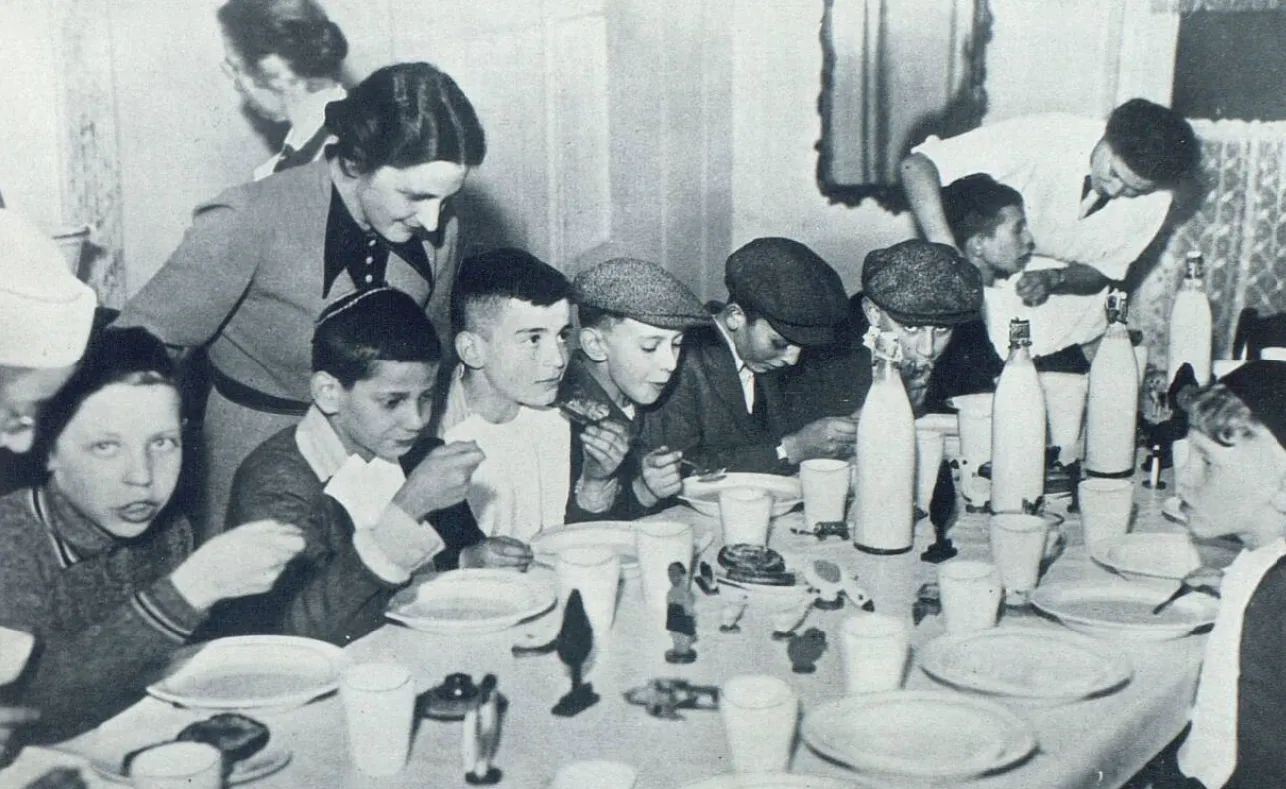
Our new title, the Jewish Echo, shines a light on those Jewish refugees who came to Glasgow, and what their lives were like after they had left their homes in search of safety.
On 28 February 1941 the Jewish Echo reported on the first anniversary of the Glasgow Society of Jewish Refugees. In the first year, some 200 people had joined the ranks of the club. The paper, aided by the president of the club, Dr E. Rosenberg, described the importance of society’s name:
She referred to the unanimous decision to call themselves ‘The Society of Jewish Refugees;’ practically all of their members had come from Germany, but as they had left that country, not as Germans, but as Jews, they had no desire to describe themselves as German refugees. They had wanted to unite all those who had come to this country as refugees from Nazi oppression, all those Jewish people who had suffered, whether in Germany, Austria, Czechoslovakia, Poland, or elsewhere.
The club, according to the Jewish Echo, met every Thursday night. Most meetings included a lecture on a range of subjects, such as Jewish history and literature, whilst ‘musical evenings were also held frequently.’ There was also some practical experience to be enjoyed through the club, as ‘members had taken a first-aid course under the tuition of a qualified Glasgow Hospital Matron.’ Meanwhile, the foundation of the club meant that ‘Jewish cultural life had been solemnly observed.’
Furthermore, the Jewish Echo described how life went on for those Jewish refugees in Glasgow. We found several accounts of marriages between Jewish refugees, who had only met on fleeing their homes. For example, on 20 February 1942 the Jewish Echo reported on the marriage of Gizella Wald, who ‘was born in Lodz and lived in Vienna for many years,’ and Fritz Grunberger, a ‘refugee from Vienna.’ Gizella had come to London, where, at ‘a refugee club she met her future husband.’
Gizella and Fritz were married at the South Portland Street Synagogue. During the reception, Fritz movingly expressed ‘his own and his bride’s heartfelt gratitude for all the kindness shown towards them which has done so much to alleviate the sadness and loneliness which they would otherwise have felt in being so far from their nearest and dearest ones on this occasion.’
On 29 May 1942 the Jewish Echo reported on another marriage of two Jewish refugees, who had met at ‘Whittingehame Farm School shortly after their arrival in this country in 1938.’ The pair, Gerd Mann and Lotchen Buchsbaum, were both from Berlin and only nineteen when they married at the Niddrie Road Synagogue in Glasgow.
Their marriage was attended by the Glasgow and Edinburgh Refugee Committees, and central to the subsequent reception was the support received by Gerd and Lotchen after they arrived in Scotland. Indeed, Lotchen spoke ‘of the kindness he had found since his arrival in this country,’ and of his and Gerd’s ‘very happy and pleasant life’ at the Whittingehame school. Finally, Lotchen ‘conveyed his appreciation to the Glasgow Committee for the assistance and guidance they had given him since he had come to this city.’
The Jewish Echo, therefore, tells us of some of the inspiring stories of hope which emerged within Jewish communities during the Second World War.
New Titles
Title | Years Added |
1941-1945 | |
1890-1899, 1910-1918 | |
1866, 1912 | |
1889 | |
1881, 1883, 1887, 1889, 1892, 1900-1901, 1904-1909 | |
1928-1950 | |
1901-1914 |
Updated Titles
This week we have updated 34 of our existing titles.
You can learn more about each of the titles we add to every week by clicking on their names. On each paper’s title page, you can read a free sample issue, learn more about our current holdings, and our plans for digitisation.
Title | Years Added |
1996 | |
1884-1889 | |
2003 | |
1891, 1907 | |
1900-1901 | |
1904-1909, 1918 | |
1920 | |
1900-1903, 1905-1906, 1920-1922 | |
2003 | |
1983 | |
1912-1914, 1916-1918 | |
1900-1909, 1912 | |
1900-1909, 1922 | |
1901-1904 | |
1898 | |
1869, 1910 | |
1884, 1922 | |
1906, 1927, 1929 | |
1912-1918 | |
1900, 1902-1903, 1905-1908, 1912 | |
1902, 1904-1906 | |
1924, 1928 | |
1868-1869, 1880-1888 | |
1901-1914 | |
1858-1859, 1880-1881, 1883, 1886-1889, 1902-1903, 1909, 1922-1923, 1927-1928 | |
1781-1786, 1788-1789, 1800, 1802, 1804-1808, 1823-1826, 1828-1829 | |
1912, 1919 | |
1992 | |
1889, 1893-1894, 1918-1919, 1922-1923, 1930 | |
1996 | |
1936, 1939 | |
1923-1924, 1926-1929 | |
1919-1920 | |
1906-1909 |
You can keep up to date with all the latest additions by visiting the recently added page. You can even look ahead to see what we’re going to add tomorrow.
More on this topic:
Share this article
About the author

Rose Staveley-Wadham
Newspaper Licensing Manager
Published on Mon, 7 April 2025.