
From search to story on the British Newspaper Archive
Published on 6 July 2026 by The BNA
In this special blog, we look how features on the new British Newspaper Archive can turn newspaper clippings into structured, shareable research.
Collections & Workspaces
Searching the British Newspaper Archive is often the starting point of discovery, a name, a place, a moment in time. But the real value emerges after the search, when individual clippings are brought together, shaped, and interpreted.
That’s where themed collections and workspaces come in. Used well, they transform isolated articles into structured research, coherent narratives, and insight worth sharing.
Searching is just the beginning
Newspaper research is rarely linear. You might begin with a family name, a local event, a historical theme, or a question you’re still figuring out how to ask. As you search, patterns emerge: recurring places, familiar names, shifting language, changing public attitudes.
Individual clippings hold value. But the connections between them hold meaning. Saving as you go lets you capture relevance in the moment, without losing context or momentum.
“You’re not just saving items — you’re making early decisions about relevance, scope, and interpretation.”
Curate as you discover
Themed collections let you group clippings around a shared idea, question, or story. Rather than bookmarking articles in isolation, this encourages active curation from the very beginning. Examples include:
- A family’s appearances across decades
- Reporting on a specific strike, election, or scandal
- Local reactions to national events
- The portrayal of a social issue over time
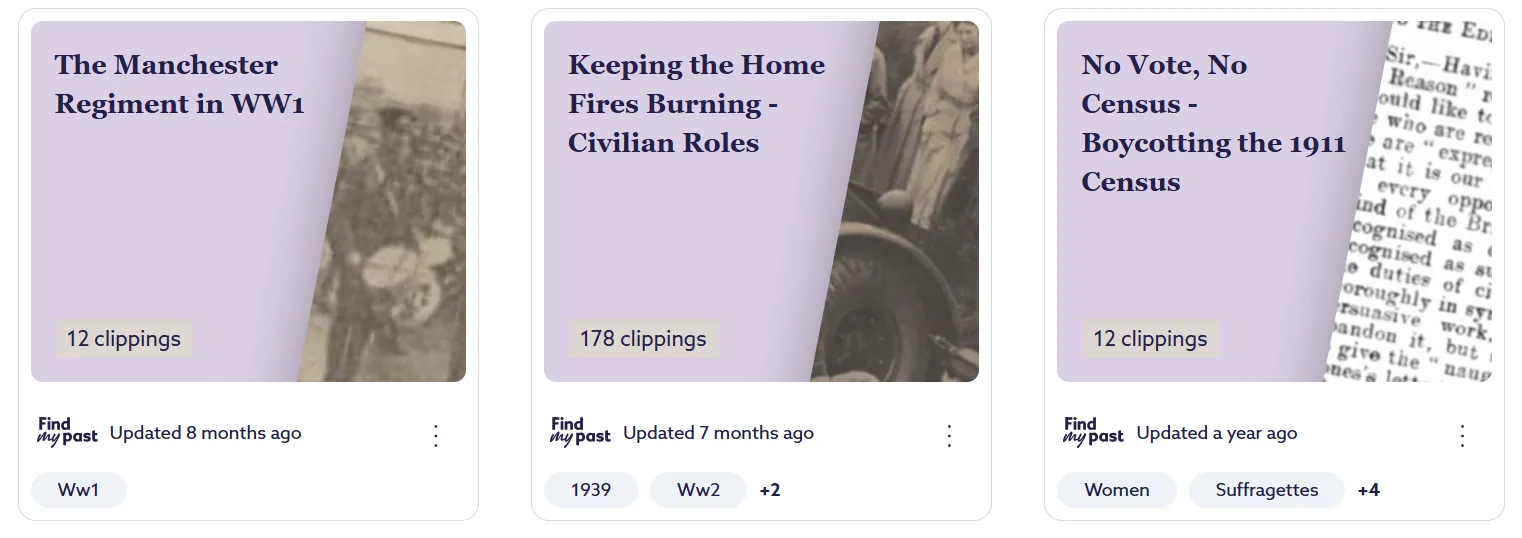
This approach is especially powerful for genealogists building evidence over time, local historians tracking change in a community, and researchers comparing coverage across titles or periods. Collections can also be shared, making them ideal for collaboration, presenting, teaching, or simply showing others the story you’re uncovering.
Develop your thinking in workspaces
As research deepens, collections often become inputs rather than endpoints. Workspaces give you room to bring multiple collections together, add notes and observations, and structure findings around themes or chapters. This is where searching turns into thinking.
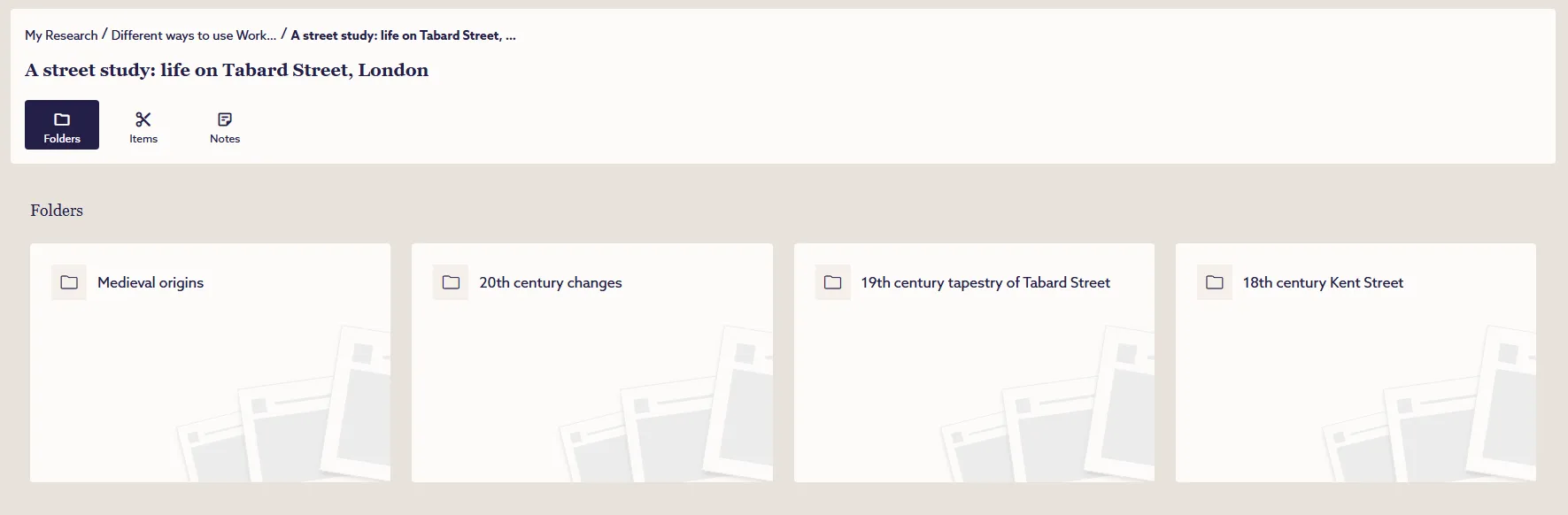
A workspace helps you step back and ask: what does this evidence collectively suggest? Where are the gaps? What should I search for next? For longer or more complex projects, workspaces act as a research spine, keeping everything connected as your understanding evolves.
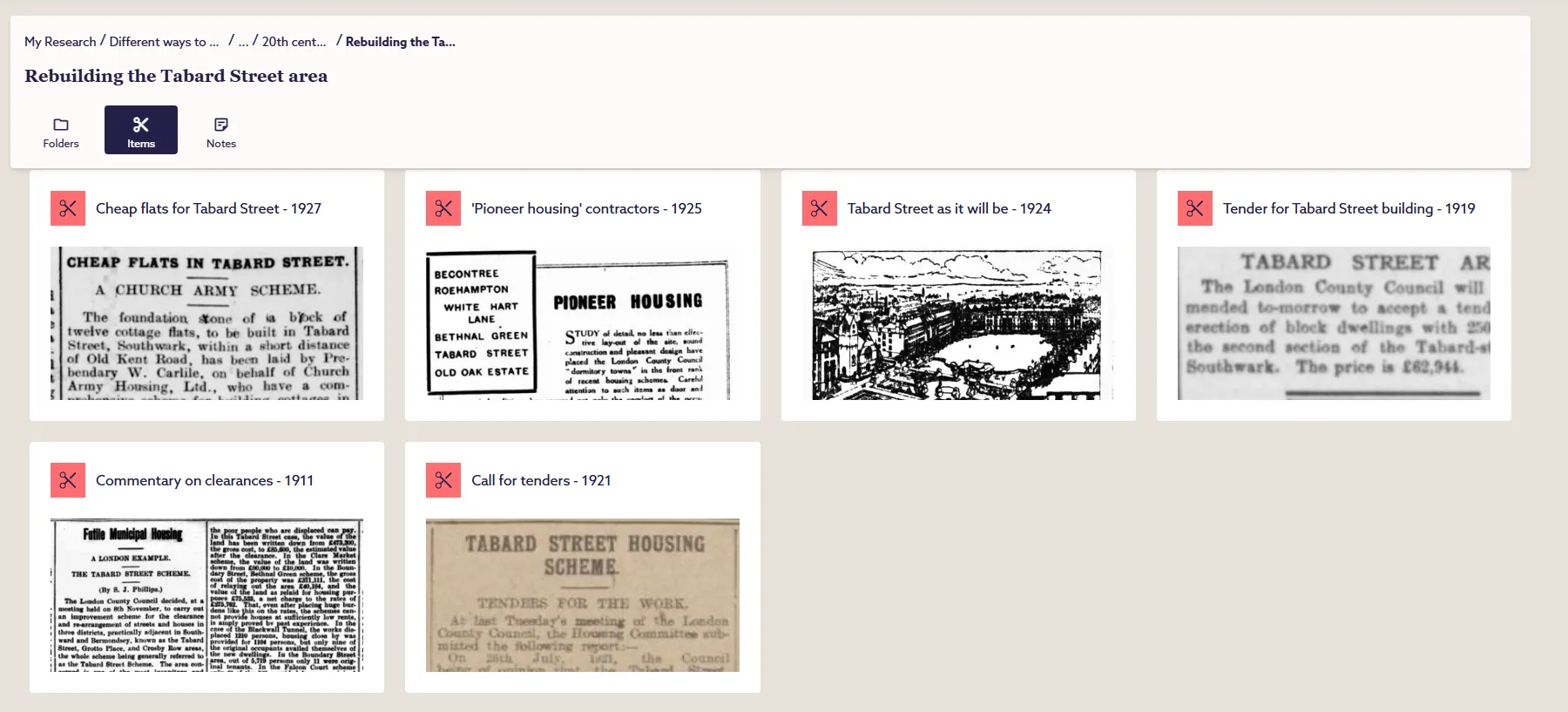
From clippings to insight
Newspapers capture everyday life as it was lived, opinions, assumptions, conflicts, and change as it happened. By collecting, grouping, and organising articles deliberately, you move beyond discovery into interpretation. Whether you’re building a family narrative, investigating a historical topic, or preparing research to share or publish, the process is the same.
Search widely. Save thoughtfully. Structure what you find. That’s how stories emerge from The Archive, and how the vast scale of the British Newspaper Archive becomes something focused, personal, and meaningful.
More on this topic:
Share this article
About the author

The BNA
News from the British Newspaper Archive
Published on Mon, 6 July 2026.