Celebrating Extraordinary Women at the Academy Awards.
Published on 2 March 2026 by Molly Pearce
For the first week of March we are celebrating women throughout history who have been honoured with Academy Awards for their work as directors, actresses, and pioneers of the film industry. With the 98th year of the Academy Awards Ceremony approaching on March 15, 2026, it’s important to showcase some of the individuals who have prevailed against the male-dominated narrative of the event. As such, this blog will use pages from The Archive to highlight the marvellous achievements of women who have won, or been nominated for, a prestigious Oscar.
Directors
It is well known that the Academy Awards have long since been centred around celebrating male success. It was not until the 45th year of the Oscars that a woman was even nominated for Best Picture, and not until the 48th year that Lina Wertmüller became the first woman nominated for Best Director. Women were allowed to be recognised as actresses, as a piece of the puzzle that made a film successful, but they were less likely to be recognised as the backbone of the entire process. The first woman to win an Oscar in any category was Janet Gaynor in 1929, at the first ever Ceremony. Gaynor won for the gendered category of Best Actress and was nominated for three of her performances across the last three years. Non-gendered categories are where female wins present themselves much less frequently, and where the split between male and female recognition becomes much more obvious. Indeed, the first woman to receive a nomination for Best Cinematography occurred only after 89 years of the Ceremony had passed, and no woman to this day has ever won in that category.
Kathryn Bigelow
The first woman on our list today is Kathryn Bigelow. On March 7, 2010, she obtained an Oscar for Best Director at the 82nd Academy Awards, marking her as the first ever woman to do so. It was her 2008 war thriller, The Hurt Locker, that prompted the nomination. Her name was featured alongside some already prominent celebrities, such as Quentin Tarantino (who had been nominated for Best Director in 1995 for cult classic Pulp Fiction and lost to Robert Zemeckis) and James Cameron, Bigelow’s ex-husband.
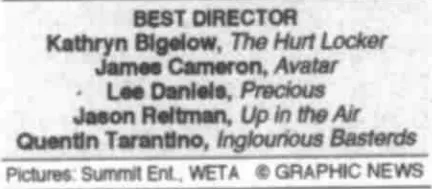
Belfast Telegraph | 03 February 2010
Following Bigelow’s significant win, many media outlets focused less on the implications for women in film, and more on the politics surrounding ‘the look on Avatar director James Cameron’s face when ex-wife Kathryn Bigelow snatched the top prize…’
News reports rushed to pivot the focus of Bigelow’s win onto a manufactured dynamic of tension and jealousy between the two directors, and many were critical of Bigelow’s success at the expense of Cameron’s ground-breaking picture, Avatar. Despite attempts to fabricate a dramatic conflict, Cameron was vocal in his championing of Bigelow’s film, and, as chronicled in the Belfast Telegraph on January 19, 2010, had already mentioned during his acceptance speech at the Golden Globes, ‘”Frankly I thought Kathryn was going to get this. She richly deserves it.”‘ Here is a prime example of when the momentousness of a woman’s success is somewhat overshadowed by her previous relationships with men, and in particular, a highly successful man operating in the same professional circles.
Bigelow was the first woman to win an Oscar for Best Director, but she was not the first to be nominated. In 1976, Lina Wertmüller was nominated for Seven Beauties, as was Jane Campion in 1993 for The Piano, and finally Sofia Coppola in 2003 for Lost In Translation. All three previous nominations lost out to male directors.
In an article featured in the Belfast Telegraph, Suzie Mesure emphasises the ongoing prejudice in Hollywood concerning female directors, with women expected to work within pre-established genre boundaries. Although Bigelow’s success at the Oscars cannot be understated, Mesure considers it unlikely that the win represented a wider ‘breaking-through’ for female directors in the film industry.
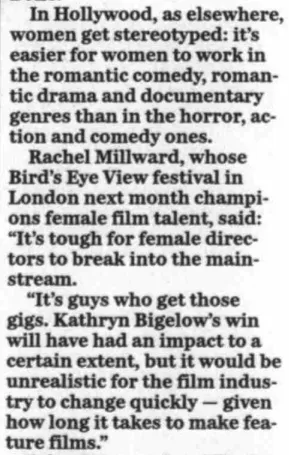
Belfast Telegraph | 10 February 2011
After Bigelow’s success at the 2010 Academy Awards, it took ten years for another woman to win for Best Director. In 2020, Chloé Zhao became the second woman, and the first woman of colour, to see victory in the category for her film, Nomadland.
In an article entitled ‘Reel Women’, written by Ciaran Carty in April 2004 for the Sunday Tribune, the underrepresentation of female directors is explored through the lens of successful women in the film industry. Carty writes of Betty Thomas, an American film director and actress, who is quoted as remarking, ‘”When I first got a directing job on the TV, the producer said ‘Oh good, now we’ve got our woman director for the year.”‘ This sardonic tone has followed female directors throughout history, and begets, for many, a sense of unease and hostility in the expression of female-generated ideas.
Nora Ephron
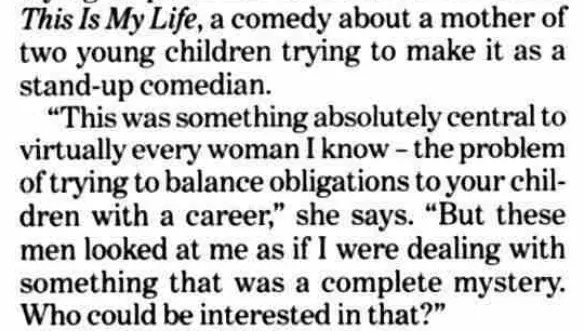
In the same article, ‘Reel Women’, Ciaran Carty discusses Nora Ephron’s experience when attempting to pitch her 1992 directorial debut, This Is My Life:
Sunday Tribune | 25 April 2004
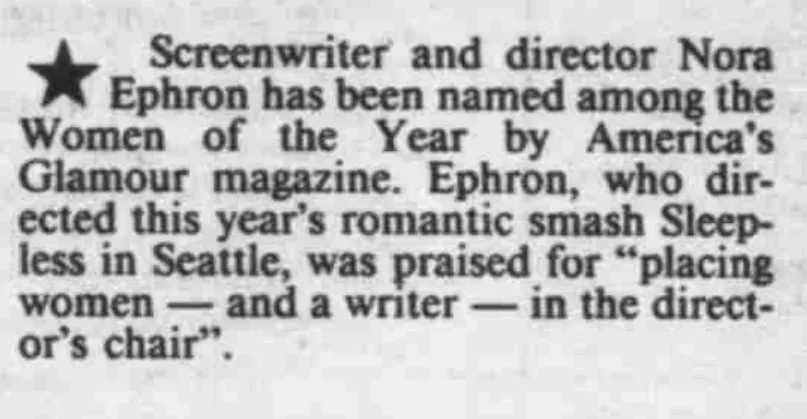
During her career, American screenwriter and director, Nora Ephron, won one BAFTA Award and received nominations for three Academy Awards, a Tony Award, a Golden Globe Award, and three Writers Guild of America Awards. Her Oscar nominations sprang from beloved romantic comedies, Silkwood, When Harry Met Sally, and Sleepless in Seattle. Ephron was known for her humorous and incredibly witty writing style, and is a huge part of why the characters in these films continue to feel so incredibly authentic, despite the passage of time. She used her craft in order to maintain a continued public love of the romantic comedy genre throughout history. Ephron was recognised as an influential figure within the film industry and commented publicly on the marginalisation of female directors.
Sunderland Daily Echo and Shipping Gazette | 13 November 1993
Ephron’s ability to write in such a witty and sharp manner likely stemmed from her many years as a journalist. In 1965, she and another woman, Susan Edmiston, interviewed Bob Dylan during the early stages of his career, not long after he had recorded cherished classic, ‘Like a Rolling Stone’. Her many years spent interviewing countless individuals contributed to her unique talent as a screenwriter. Ephron’s successful career has helped many women feel inspired to not only utilise their writing talent, but also to persist in bringing a project to life as a director. Although Ephron’s romantic comedies are her most popular, she also delved into more ‘masculine’ genres , such as war and thriller. Notably, these films received much less attention throughout her career, and speaks to Susie Mesure’s previously mentioned article in the Belfast Telegraph, in which she uncovers difficulties faced by female directors in transcending generic boundaries
Actors
We now turn our attention to women who’s faces have lit up the big screen on several occasions, and whose talent has been recognised by the Academy. The Ceremony has had separate categories for Best Actor and Best Actress since its inception in 1929, a decision that has spurred many debates surrounding gendered terminology within the industry. The first woman to win an Oscar was Janet Gaynor, honoured for her performances in 7th Heaven (1927), Street Angel (1928), and Sunrise: A Song of Two Humans (1927). Thousands have been nominated across all categories since 1929, but despite this, only around 20% of the almost 14,000 nominations have been women. Let’s take a look at two highly influential faces who have received well-deserved acknowledgement of their valuable work in the industry.
Frances McDormand
Frances McDormand is a relentless, powerful force and a voice of inclusion and feminist activism. She has won 3 Best Actress Oscars (the second most ever recorded) and 1 Best Picture Oscar for Nomadland. She is also one of the many few performers who have achieved, what is known in the American film industry as, the ‘Triple Crown of Acting’ – an Academy Award, an Emmy Award, and a Tony Award.
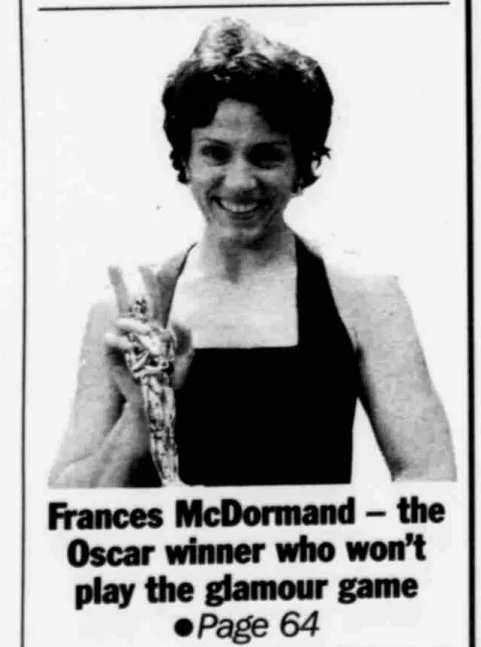
McDormand has received eight Oscar nominations across three separate categories, and almost 140 award nominations more broadly. Her career as an actor has been wildly successful, but what is almost as fascinating is the work she has done to uplift other women in the industry. During her speech at the 2018 Oscars Ceremony, she asked every single woman in the crowd who had been nominated that evening to stand up and share the moment with her. Many immediately recognisable faces included Meryl Streep, Margot Robbie, and Saoirse Ronan, but perhaps more potent were the unfamiliar faces; the brilliant women who support the film-making process from behind the camera. Alongside her support for institutional progression concerning women in the industry, McDormand also continues to champion natural aging, marking the liberation in choosing not to embody fears around getting older . What makes her talent so remarkable is her challenging of the notion that to be magnetic on screen is to be conventionally feminine or beautiful. Throughout her career, McDormand has performed in roles that challenge what it means to be elegant, funny, or gentle, as a woman. At the same time, her power and influence on the screen is both undeniable and admirable.
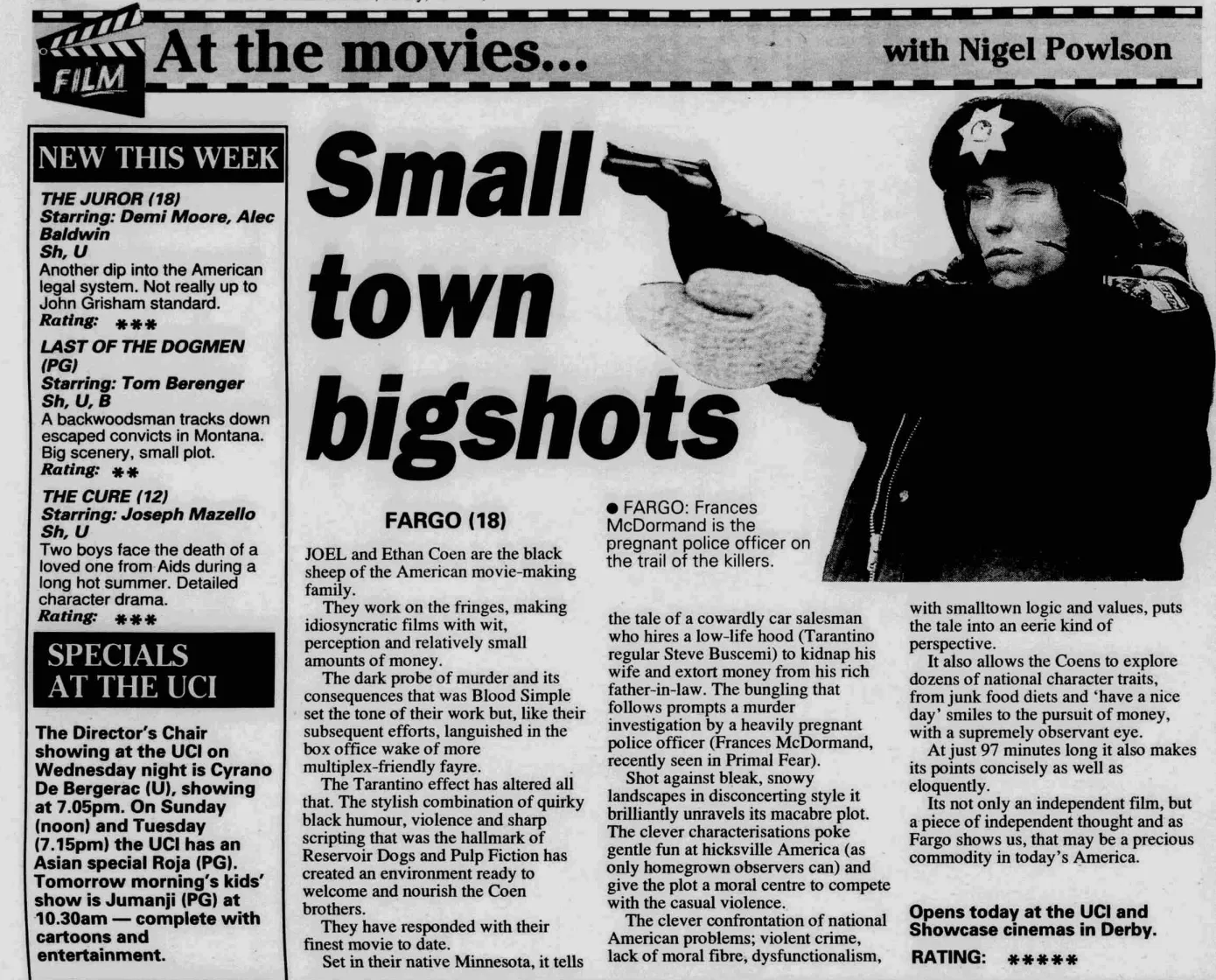
McDormand in Fargo | Derby Daily Telegraph | 14 June 1996
Jane Fonda
Another woman who deserves to be celebrated this International Women’s Day is actor, author, producer, and activist, Jane Fonda. Her long career in the film industry has earned her seven Academy Award nominations, winning two – Klute in 1971 and Coming Home in 1978. Fonda has spent much of her life advocating for minority inclusion and women’s justice. She delivered her 1978 Oscars speech using sign language, bringing awareness of the deaf community and sparking conversations about accessibility in the Ceremony.
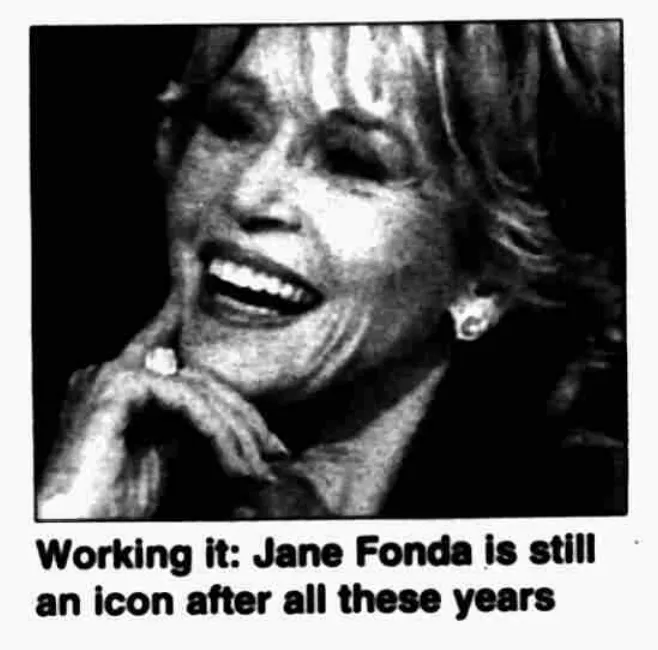
Irish Independent | 11 June 2005
Prior to becoming a women’s rights spokesperson, Fonda was vocal in activism spheres concerning civil and human rights, which included her infamous opposition of the Vietnam War. She has remained a controversial figure in the media throughout her life. In 1972, she visited Hanoi, North Vietnam. Many considered Fonda’s visit and actions in Hanoi to be an outright betrayal. She was dubbed ‘Hanoi Jane’ as a result of her visit, and the shadow of her choice has accompanied her along her career.
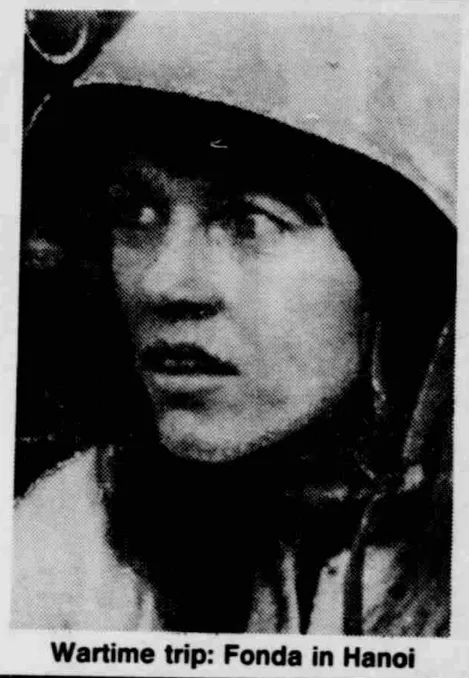
Fonda subsequently apologised for her actions in Hanoi on several occasions, and her supporters forgave the scandal. She has grown and developed in her activism, yet has consistently remained an outspoken and fierce voice on many human rights matters.
Jane Fonda is testament to the natural process of learning and the progression of opinion throughout a person’s life. She has been continually fighting to end violence against women, utilising her celebrity position to accentuate injustice. Fonda champions intersectional activism, viewing all inequalities as interlinked, and is constantly educating herself on the subject. Appreciation for Fonda stems from her ability to take accountability for her mistakes, and utilise negative media attention to bring awareness to what matters. Both Fonda and McDormand acquire their power from within themselves, and this is thus reflected in their acting performances.
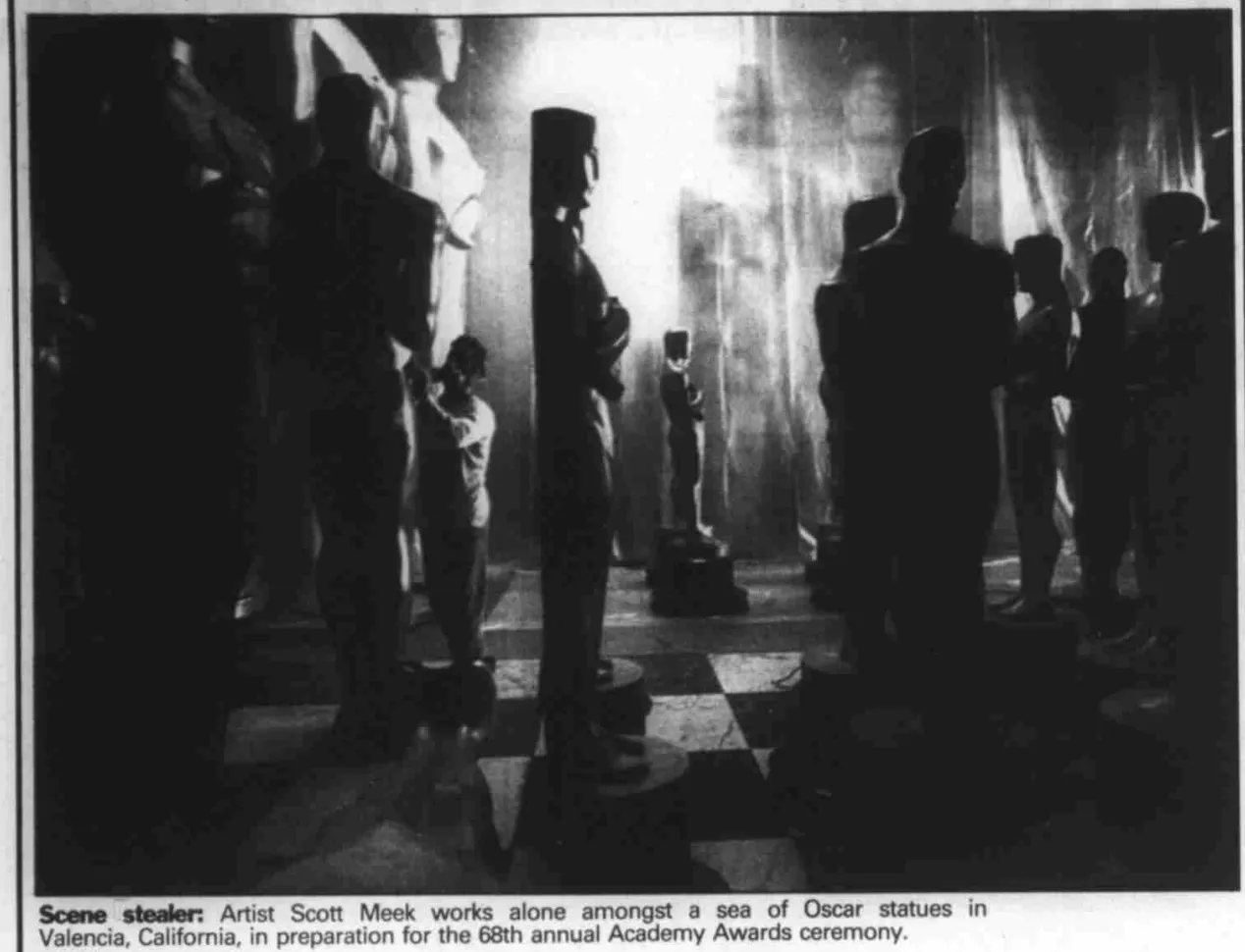
Belfast Telegraph | 08 February 1996
In this blog, we have looked at four influential and remarkable women who have exercised their talent within the film industry both behind, and in front of, the camera. Kathryn Bigelow, Nora Ephron, Frances McDormand, and Jane Fonda – each of these women represent something different for female recognition at the Oscars. There still exists a gap in celebration of female and male performances, and women directors continue to face opposition in crossing generic boundaries, yet much has changed since Bigelow’s revolutionary win in 2010. We must continue to celebrate our fantastic women at the Academy Awards as diversity and accessibility continues to advance, for each individual win symbolises a steady development within the industry.
Find out more about the history of the Academy Awards, or search for your favourite female actor in the pages of The Archive today.
More on this topic:
Share this article
About the author

Molly Pearce
Data Operations Executive
Published on Mon, 2 March 2026.