Hot Off The Press – New Titles This Week
Published on 5 November 2025 by Rose Staveley-Wadham
This week at The Archive we are marking this season of Remembrance by adding nine brand new titles from the First World War, as we take a look back at how the news of Armistice Day on 11 November 1918 was reported in these new newspaper pages. Meanwhile, we have updated 72 of our existing newspaper titles from across the United Kingdom and Ireland with pages from the First World War, as we have added a total of 116,576 brand new pages this week.
So read on to discover more about our new and updated titles of the week, and to learn how the news of Armistice Day was reported 107 years ago.
Register now and explore The Archive
The Brighouse Free Press and District Advertiser and the Chatham, Rochester and Brompton Observer
Our first new title of the week is the politically independent Brighouse Free Press and District Advertiser, which was first published in the West Yorkshire town of Brighouse in 1891. Appearing every Thursday and filling four pages, this title ran until 1941.
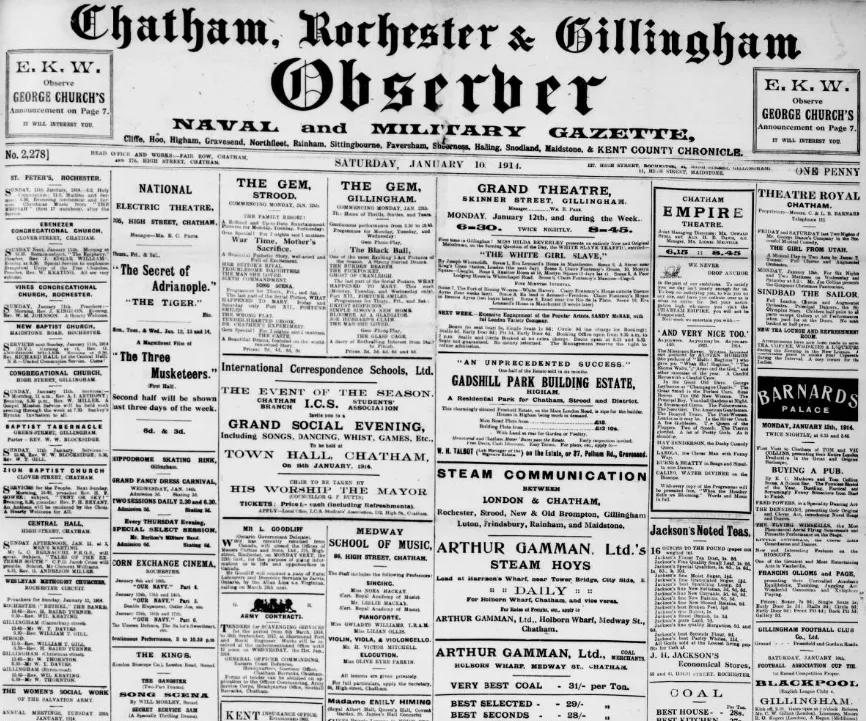
Next up is the Chatham, Rochester and Brompton Observer. This newspaper title, which was Liberal in its politics, was founded in the Kent town of Chatham in 1870. Chatham was founded around the Chatham Dockyards, and the town is famed for its connections to both the Royal Navy and the British Army. Somewhat unsurprisingly, therefore, the Chatham, Rochester and Brompton Observer was subtitled as the Naval and Military Gazette.
The Chatham, Rochester and Brompton Observer, meanwhile, appeared every Saturday at the cost of just one penny. It filled some twelve pages with news from across Cliffe, Hoo, Higham, Gravesend, Northfleet, Rainham, Sittingbourne, Faversham, Sheerness, Halling, Snodland and Maidstone, alongside news from the Army and Royal Navy. Meanwhile, the paper featured a page of photographs, and dedicated sports reporting.
The Connaught Telegraph
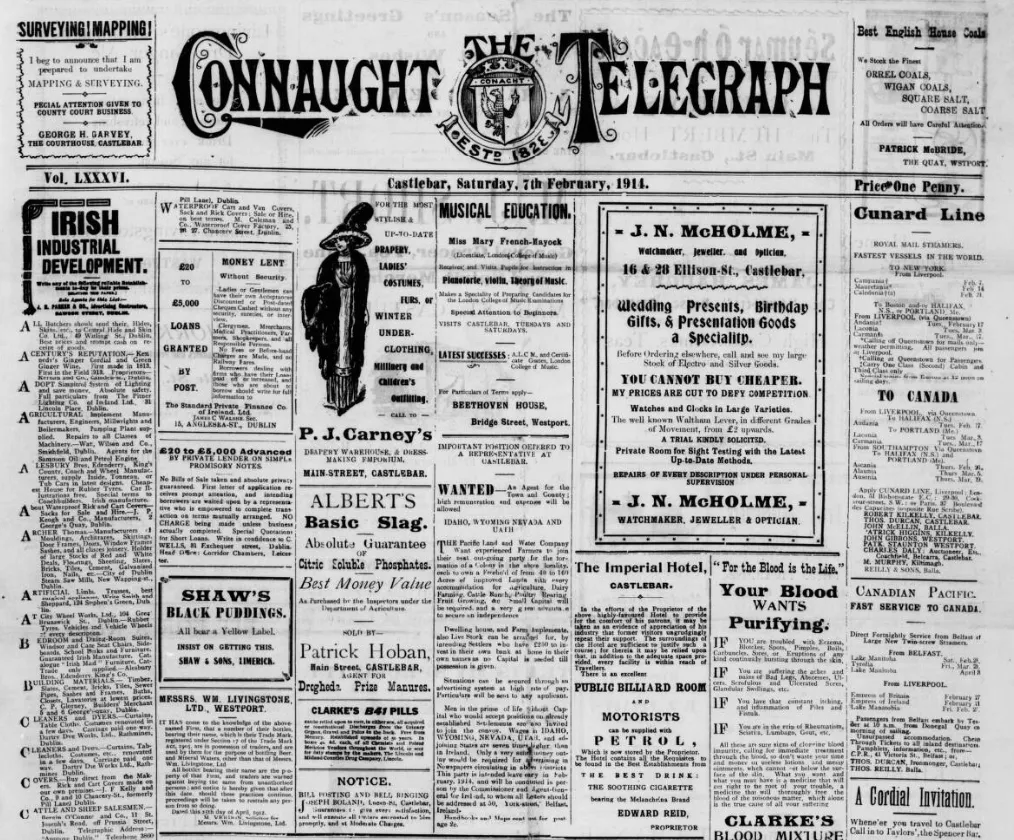
We cross the Irish Sea now to welcome the Connaught Telegraph to our collection. This eminently historical newspaper was founded in Castlebar, the county town of County Mayo, in 1828, by Frederick Cavendish. With the original name of the Mayo Telegraph, Frederick Cavendish used the newspaper to ‘fight the battles of the lower classes’ and to advocate for Home Rule.
By the early twentieth century the Connaught Telegraph was filling some eight pages at the cost of just one penny. It printed the latest from the likes of the Mayo County Infirmary and the Mayo County Council, alongside updates from the United Irish League and the Home Rule Fund. The Connaught Telegraph is still in print to this day, appearing every Tuesday.
The Citizen (London) and the Cumberland Evening News
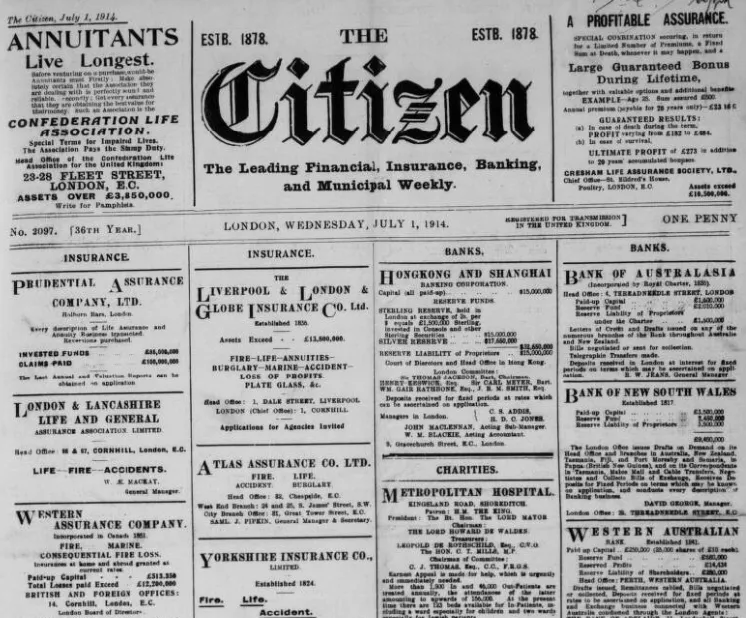
Our next new title of the week is London’s the Citizen, which was founded in 1878. The ‘Leading Financial, Insurance, Banking and Municipal Weekly,’ this title appeared every Wednesday at the cost of one penny.
Usually filling some twelve pages, the Citizen reported on ‘The Insurance World,’ stocks and shares, the ‘City and Financial World,’ and ‘The Banking World.’ Not just limited to the British financial world, the Citizen reported on global insurance and banking matters, as well as featuring portraits of key financial players.
Next up, we’re delighted to welcome the Cumberland Evening News to The Archive. Founded in Carlisle in 1914, initially this title filled two pages at the cost of one halfpenny. Featuring primarily news from the First World War, the Cumberland Evening News exists today as a local tabloid newspaper under the title the News and Star. Published daily barring Sundays, it can be bought across North and West Cumbria, as well as parts of Southern Scotland.
The Haltwhistle Echo and the Midland Free Press
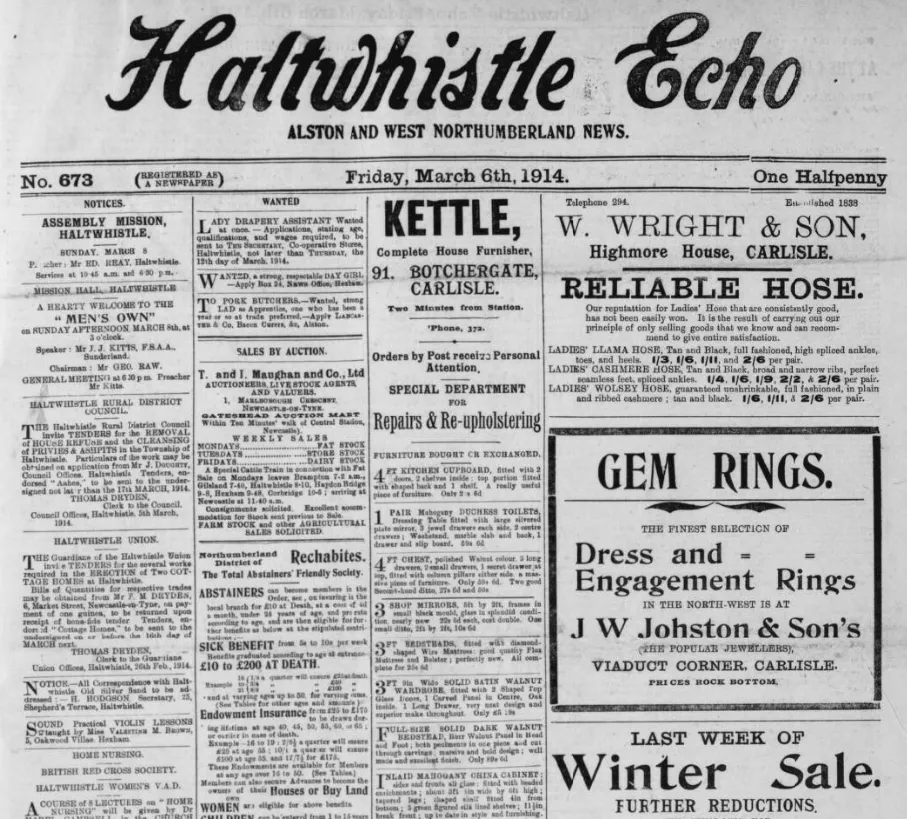
From the North West now to the North East, and the Haltwhistle Echo, or to give the title its full name, the Haltwhistle Echo, Alston and West Northumberland News. Established in the Northumberland market town of Haltwhistle in 1901, this newspaper bursts with local news from the Haltwhistle area.
Published every Friday at the cost of just one halfpenny, the Haltwhistle Echo had a focus on agricultural items, given its rural location. It also printed notices of births, marriages and deaths, alongside hints for the home.
We travel now to Leicester to welcome the Midland Free Press to our collection. Founded in 1855 and Liberal in its politics, it appeared every Saturday at the cost of one penny. Across its twelve pages it printed local news from the likes of the Borough Police Court, alongside letters to the editor, poetry, a lawyer’s column, an illustrated ‘page for the ladies,’ and notices of births, marriages and deaths.
The Skegness Herald and Western Express
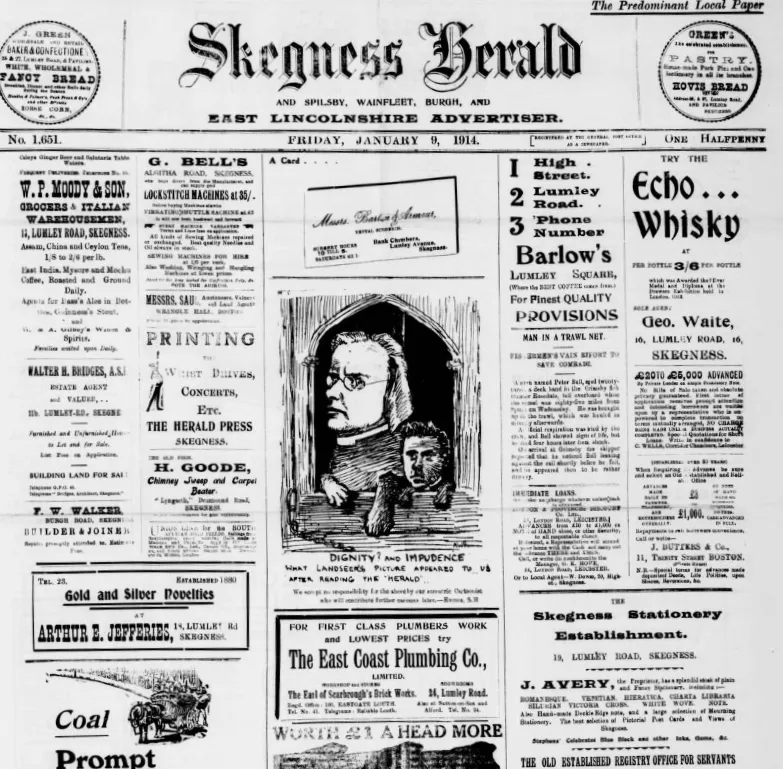
We come to our final duo of new newspapers this week, our penultimate new title being the Skegness Herald, or to give it its full title, the Skegness Herald, and Spilsby, Wainfleet, Burgh and East Lincolnshire Advertiser. Founded in the Lincolnshire seaside town of Skegness in 1882, the Skegness Herald appeared every Friday at the cost of one halfpenny.
Providing ‘full reports of meetings and events occurring the town and district, and during the season a complete list of visitors to the rising and fashionable watering-place of Skegness,’ this title had a ‘large circulation in East Lincolnshire.’ Meanwhile, the Skegness Herald filled four pages, printing correspondence from its readers alongside ‘brief bits’ of news.
Our final new title this week is the Western Express. First published in the Devon port town of Bideford in 1873, the Western Express was independent in its politics, later amalgamating with the Torrington Gazette and Weekly News.
Once appearing three times a week, by the First World War the Western Express was a weekly concern, being published every Saturday. Costing one penny, its eight pages were filled with a mixture of district news and news from further afield, alongside notices of births, marriages and deaths.
Our updated titles
With 72 titles updated for you this week, all covering years from the First World War, there is much more for you to explore. From across the length and breadth of the United Kingdom and the Republic of Ireland, our updates take in a range of communities, all of which were impacted by the devastating loss of the first global conflict.
Amongst these updates, you will also find new pages added to some of our more specialist titles from this time period. For example, you can discover updates to the likes of Boxing, the Boxing World and Mirror of Life, the Jewish World and the Pawnbrokers’ Gazette this week.
11 November 1918 – Breaking the News of The Armistice
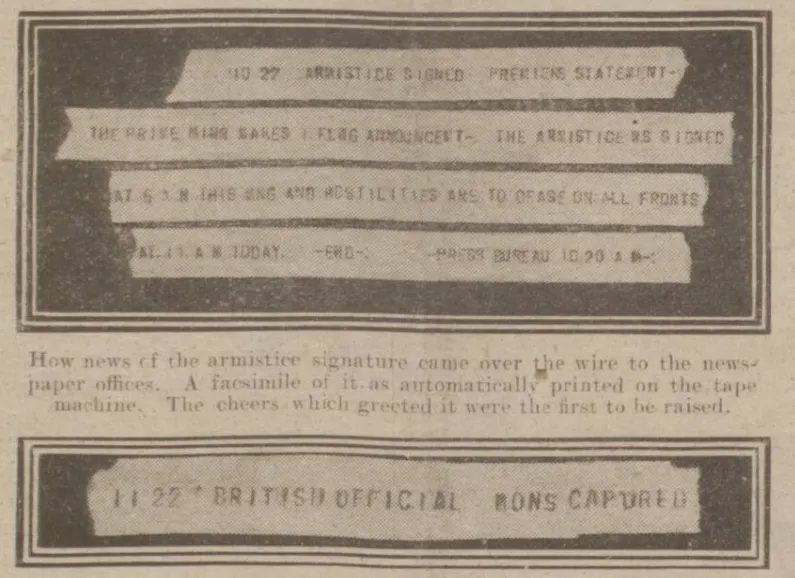
On 11 November 1918, after over four long years of war, the Armistice was signed between Germany and the Allies, bringing to end the conflict on the Western Front. Our newly added pages this week shine a light on how this momentous news was reported.
On 11 November 1918 the Cumberland Evening News ran a large headline reading ‘Victory – Armistice Signed.’ Underneath the headline, the article began by relating how:
The war ended at eleven o’clock this morning. As the Premier said to-day in addressing a crowd in Downing Street who gave him an enthusiastic ovation, ‘We have won a great victory and are entitled to a bit of shouting.’
Indeed, the Cumberland Evening News continued by relating how:
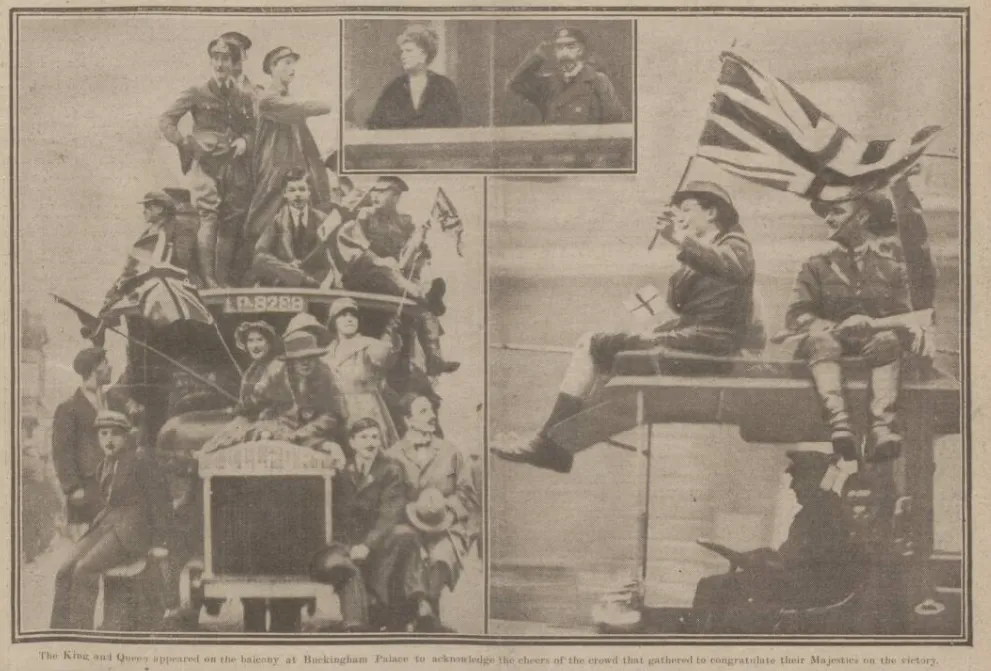
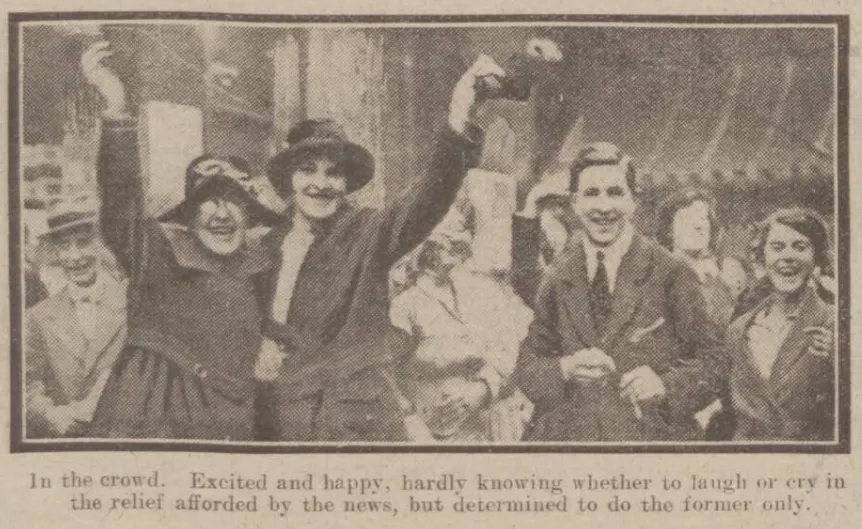
The whole country is in fact shouting for joy to-day. Britain watched with wonderful self-repression the course of the last victorious campaign, but to-day it is letting itself go. Locally we are ‘en fete’. Businesses closed down with one accord, patriotic colours appeared everywhere, and the streets are thronged with cheering, delighted crowds.
Where our newspapers shine is in this collision between the local and the national. The huge national news, of the Armistice being signed at 5 am on 11 November, and hostilities themselves ceasing at 11 am, alongside the local news of shops closing and crowds taking to the street, allows us to understand just how news of the Armistice was received across the country.
We can find similar reporting after the signing of the Armistice in the Chatham, Rochester and Brompton Observer, this time published on 16 November 1918. The headline describes ‘local scenes of rejoicing,’ and the abandonment of work, the article going on to report how:
The Three Towns received with fervent gratitude on Monday morning the glad news that the armistice terms had been signed and the end of the greatest war in history was in sight. The people at first could hardly credit the joyful intelligence that the time of stress and peril, of slaughter and devastation had ended, and peace was being ushered in.
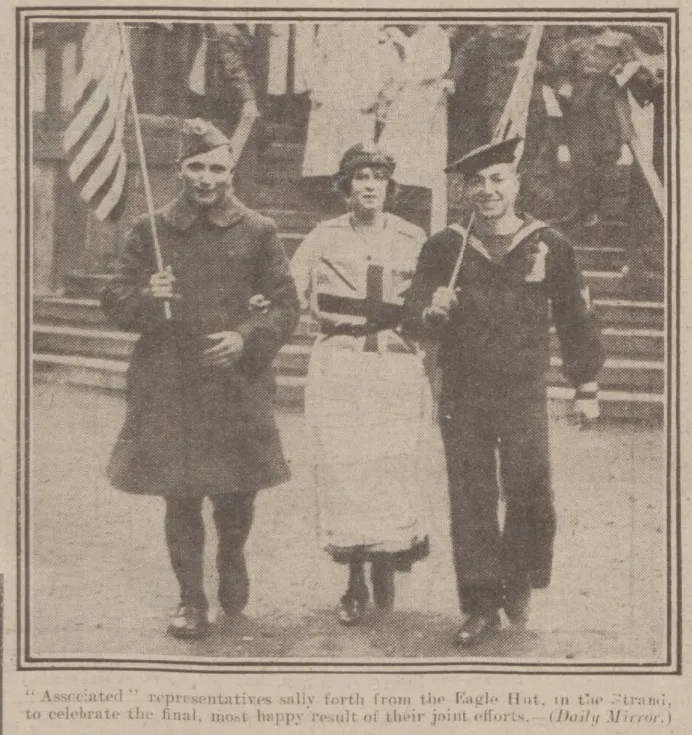
The Chatham, Rochester and Brompton Observer piece went on to describe the scene in Chatham’s main streets, as they were ‘thronged with people shouting and singing, and waving flags.’ Indeed, ‘there was hardly a pedestrian who did not sport a flag,’ whilst the soldiers were described as being ‘in their element,’ as ‘they paraded the streets arm-in-arm with small Union Jacks, singing snatches of popular songs and cheering again and again.’
One can only imagine the delight and the relief after such a long period of loss and grief.
However, other reporting at the time after the Armistice reveals other voices of caution. F. Dewhirst, in addressing the electors of the North Ward Bye-Election in Brighouse on 21 November 1918 through the pages of the Brighouse Free Press and District Advertiser, wrote:
Now that the Armistice is signed, we are face to face with the problems of peace. These will affect the Corporation to a large extent, and during the period of reconstruction, heavy responsibility will rest on the members of the Council.
This is where our newspapers again offer a fascinating insight into reactions after the Armistice. Relief, joy, but also a sense of what next? How could a world that had been shattered by so much destruction, both literal and emotional, be rebuilt?
Discover more reactions to the signing of the Armistice, more about the First World War, and much more besides, in the pages of our Archive today.
New Titles
Title | Years Added |
1914-1918, 1920 | |
1914-1920 | |
1914-1918 | |
1914-1917 | |
1914-1918 | |
1914-1918 | |
1914-1915 | |
1914-1916 | |
1917-1919 |
Updated Titles
This week we have updated 72 of our existing titles.
You can learn more about each of the titles we add to every week by clicking on their names. On each paper’s title page, you can read a free sample issue, learn more about our current holdings, and our plans for digitisation.
Title | Years Added |
1914-1915 | |
1920 | |
1914-1920 | |
1920 | |
1914-1919 | |
1914-1920 | |
1919-1920 | |
1917-1918 | |
1919 | |
1915 | |
1914-1915 | |
1917-1918 | |
1914-1919 | |
1920 | |
1914, 1916-1918 | |
1914-1920 | |
1917-1918 | |
1916 | |
1918 | |
1915 | |
1916-1920 | |
1915-1919 | |
1918 | |
1914-1918 | |
1918-1920 | |
1917-1920 | |
1916-1918 | |
1914-1920 | |
1914-1918 | |
1917-1918 | |
1914-1918 | |
1914-1918 | |
1918-1920 | |
1914-1916 | |
1916 | |
1916 | |
1917-1918 | |
1914-1918 | |
1918 | |
1917 | |
1914-1920 | |
Leominster News and North West Herefordshire & Radnorshire Advertiser | 1914-1918 |
1914-1917 | |
1916 | |
1914-1918 | |
1914-1918 | |
1914-1918 | |
1914-1918 | |
1917-1918 | |
1914-1919 | |
1918 | |
Peterhead Sentinel and General Advertiser for Buchan District | 1914 |
1914-1918 | |
1914-1920 | |
1914-1919 | |
1916-1918 | |
1916, 1920 | |
1914-1919 | |
1914-1916 | |
1917 | |
1914-1918 | |
1916-1918 | |
1915-1916 | |
1918-1919 | |
1914-1918 | |
1920 | |
1915, 1917 | |
Whitehaven Advertiser and Cleator Moor and Egremont Observer | 1915, 1919 |
1915-1918 | |
1916-1918 | |
1914 | |
1915, 1917-1918 |
You can keep up to date with all the latest additions by visiting the recently added page. You can even look ahead to see what we’re going to add tomorrow.
More on this topic:
Share this article
About the author

Rose Staveley-Wadham
Newspaper Licensing Manager
Published on Wed, 5 November 2025.