
Hot Off The Press – New Titles This Week
Published on 14 October 2025 by Rose Staveley-Wadham
This week at The Archive we’re delighted to welcome another 257,228 brand new pages to our holdings, as we say hello to five brand new newspapers in all, including specialist titles the Charity Record and the Ironworkers’ Journal (Darlington). That’s not all, we’ve made extensive updates to an important newspaper from Yorkshire, all the while having added more pages to a historic Belfast publication.
So read on to discover more about our new and updated pages of the week, and also to read our A-Z of charities in Britain in the 1880s, which run from the Aged Pilgrims’ Asylum to the Yorkshire Society’s School.
Register now and explore The Archive
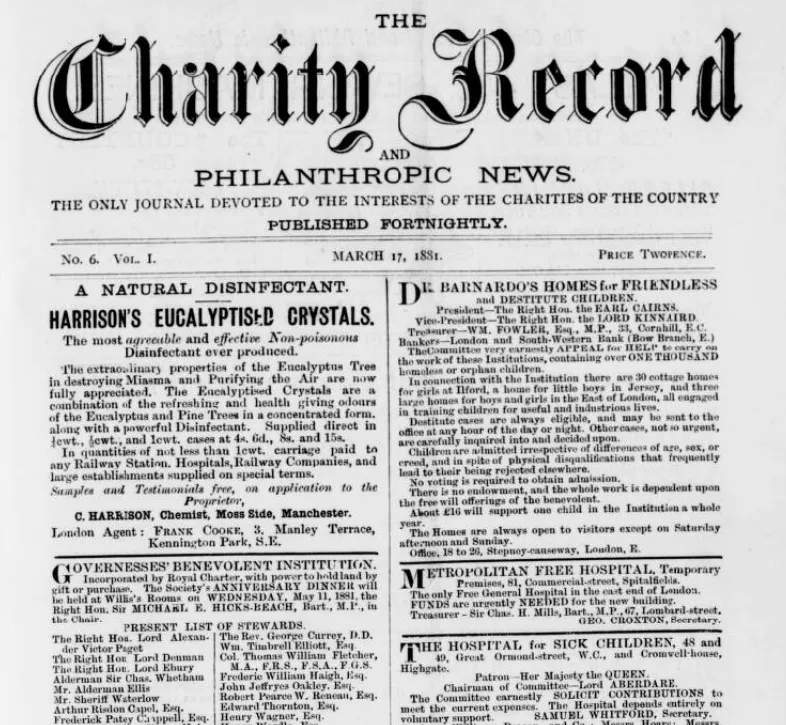
The Charity Record
The first of our new newspapers this week is the Charity Record. Founded in 1881 with the full title of the Charity Record and Philanthropic News, this title, which was published in London, represented ‘all charities’ and the ‘benevolent classes.’
Indeed, the Charity Record claimed to be the ‘only journal representing the Charities of the Country.’ In the early 1880s, some £6 million were being given to charities across Britain, which equates to £630 million in today’s money, and the Charity Record was set to represent the interests of such charities and more. Consequently, the publication appeared to:
…supply the want long felt by the numerous Charitable Institutions of some public channel by which they can advance their interests other than those now at their disposal. The regular Press, for obvious reasons, cannot undertake to ventilate the claims of all the deserving charities. There would be little room for any public matter.
Moreover, the Charity Record was on hand to provide a guiding hand to those wealthy philanthropists who might be ‘distracted by the seemingly endless number of appeals which the post brings him,’ aiming to aid them to ‘exercise some discrimination in the distribution of [their] bounty.’
Furthermore, the debut editorial of the Charity Record stated:
Despite the contribution of such an immense sum, many excellent Charities are now suffering from decreased and decreasing incomes, and are thus prevented from extending their sphere of usefulness; while in many instances the relief formerly administered has had to be diminished. English liberality, too, is frequently diverted into wrong channels, because the benevolently-disposed do not know – and in these high-pressure days have not the time to ascertain – where real need exists.
The piece continued:
‘The Charity Record’ will be to these persons a useful guide, and will also aid in securing the constant and increased support of the generous public for the numerous Charities, by reporting at length their proceedings, by giving information respecting them, and in other ways making their worth more widely known.
So what did the sixteen pages of the Charity Record contain? Appearing every fortnight, the Charity Record provided news and updates from a range of charities. For example, the debut edition of the Charity Record printed information about the Seamen’s Hospital Society, the Female Orphan Asylum, the Commercial Travellers’ Schools, and the Society for Supporting Aged and Needy Jews. The publication also provided more in depth looks at institutions and organisations, with detailed descriptions of the likes of the Brompton Hospital for Consumption.
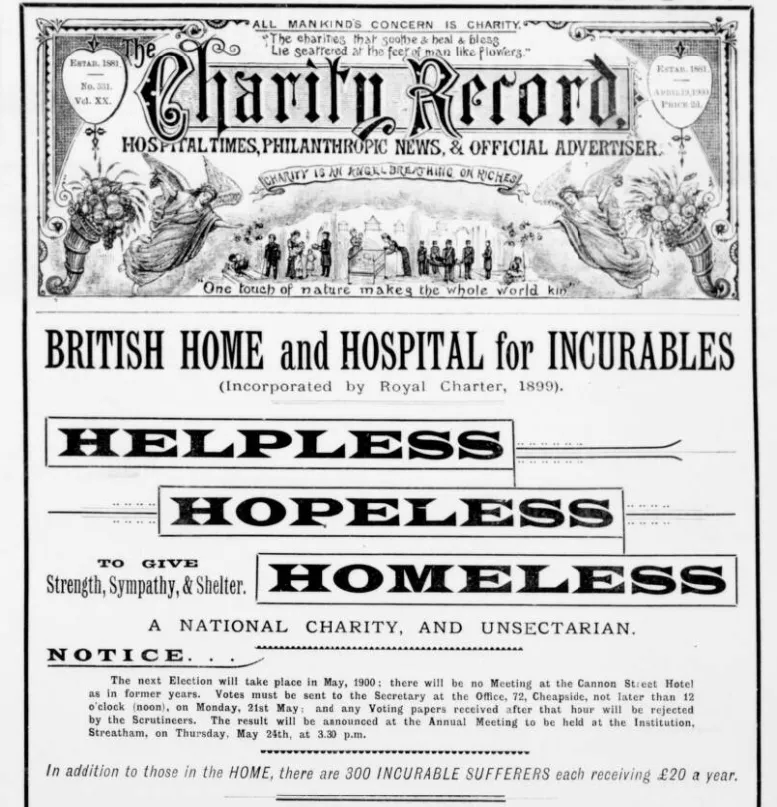
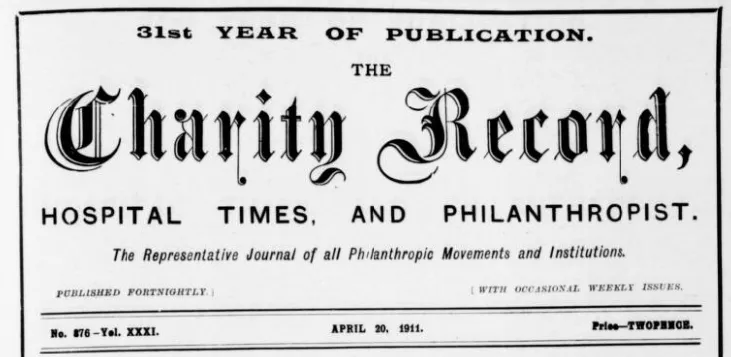
In 1890, the paper changed its name to the Charity Record, Hospital Times, Philanthropic News, and Official Advertiser. It continued well into the early 20th century.
The Ironworkers’ Journal (Darlington)
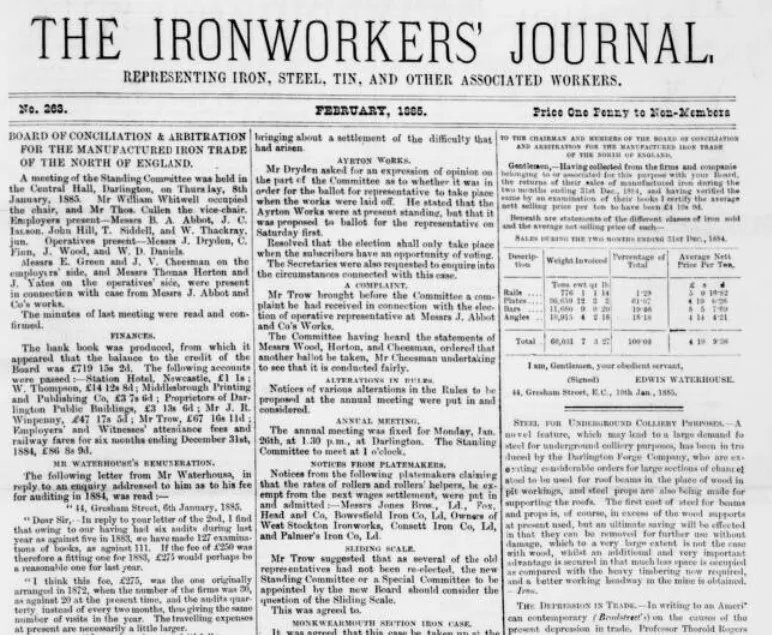
From charity work to ironwork now and the Ironworkers’ Journal (Darlington), a periodical founded in 1869 by trade unionist John Kane (1819-1876). Some years previously in 1862 Kane had founded the Amalgamated Malleable Ironworkers union, and the Ironworkers’ Journal was the organ of this organisation, which later became known as the Amalgamated Malleable Ironworkers of Great Britain.
With a membership drawn from primarily the north of England, by 1872 membership of the Amalgamated Malleable Ironworkers of Great Britain had grown to 35,000. The union represented not only those from Darlington and the surrounding area, but members from Staffordshire, Wales and Scotland. The majority of members worked as puddlers. Puddlers worked to convert pig iron into wrought iron. An incredibly strenuous occupation, puddlers faced incredibly short life expectancies, often passing away in their thirties.
The Ironworkers’ Journal, then, appeared on the first and fifteenth of every month, representing ‘iron, steel, and tin workers.’ By 1887 the Amalgamated Malleable Ironworkers of Great Britain had been wound down and replaced by the Associated Iron and Steel Workers of Great Britain. Meanwhile, by the end of the mid 1880s, the Ironworkers’ Journal was appearing every month, and was distributed gratis to members, costing one penny for non-members.
Filling eight pages, the Ironworkers’ Journal printed the news from meetings pertaining to the iron and steel trades, for example detailing the proceedings of the Board of Conciliation and Arbitration For Manufactured Iron Trade of the North of England, as well as reporting on meetings of local workers in and around Darlington. The title also printed various general interest pieces, with titles like ‘The Introduction of Steel Rails in America,’ and the ‘History of Modern Invention in the Manufacture of Iron.’
The Longford Leader
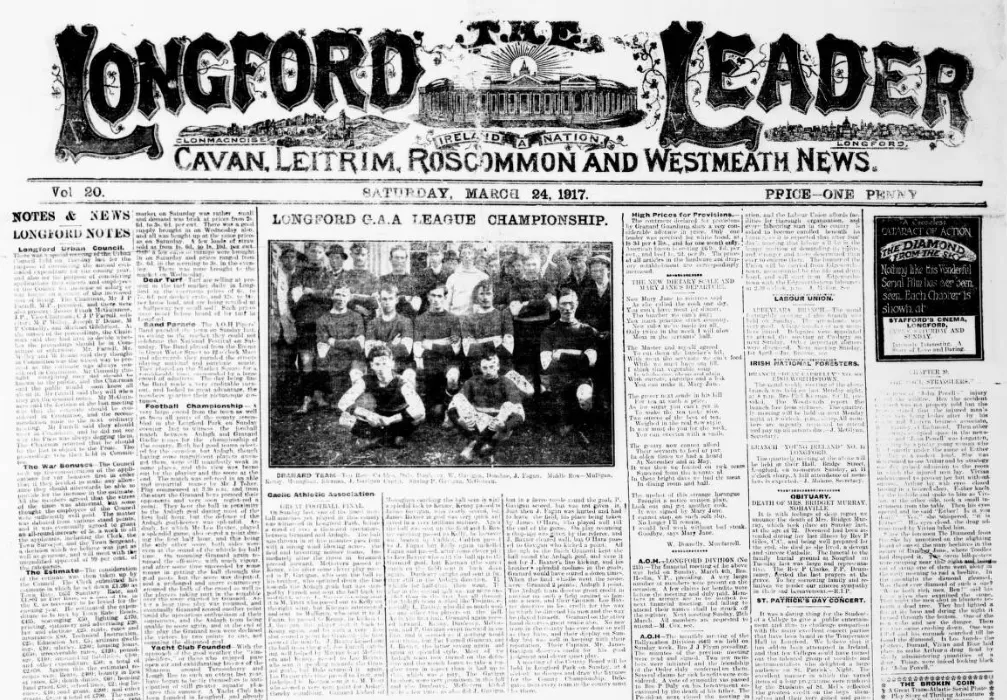
We cross the Irish Sea now to welcome the Longford Leader to our collection, which was founded in 1897 as the Longford Leader and Roscommon, Leitrim and Westmeath News. A paper with a fascinating history, the Longford Leader was established by two M.P.s, J.P. Farrell (1865-1921) and Jasper Tully (1859-1938). Both politicians were nationalists, and so it was natural that their paper, the Longford Leader, was also a nationalist publication.
Serving as an M.P. from 1895 to 1918, J.P. Farrell was also the editor of the Longford Leader. For his nationalist activism, he was imprisoned four times between 1890 and 1910. Sadly, his last imprisonment in Kilmainham Gaol may have led to his death, as it is thought he became sick there before he died aged 56 in 1921.
Appearing every Saturday at the cost of 1d., and filling eight pages, the Longford Leader featured the latest news from the town, as well as printing detailed reports from the Longford Petty Sessions. Meanwhile, the paper printed correspondence, poetry, obituaries, and serialised fiction, the latter having such titles as ‘The Ghost Baby.’
Serving the town of Longford, which is the county town of County Longford, and the surrounding towns and villages, the Longford Leader is still in print to this day.
Seren (Bala, Wales)
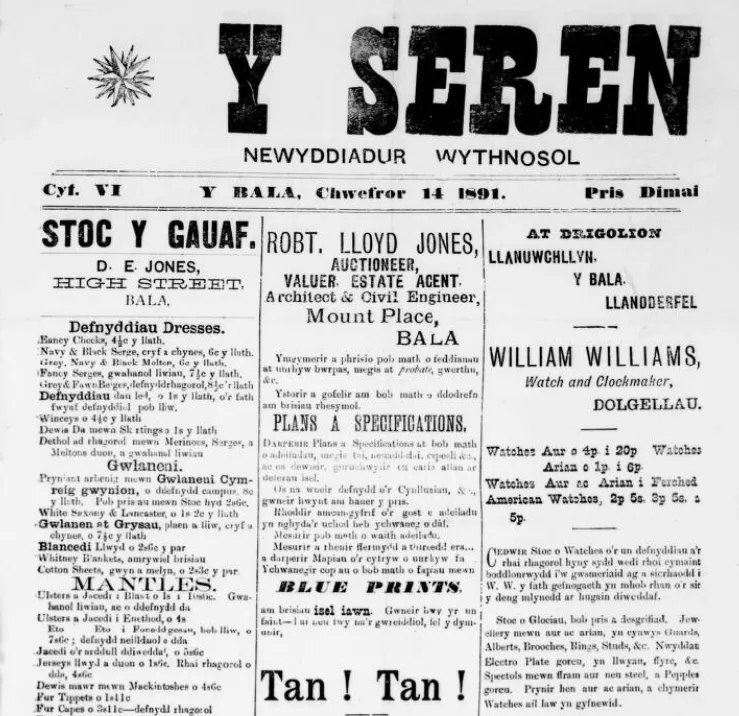
And now to Wales, from where our next new title of the week, Seren, hails. Welsh for ‘star,’ Seren was founded as a radical title in the town of Bala, a part of the historic county of Merionethshire. With a high proportion of Welsh speakers, it is only fitting that the local newspaper was a Welsh language title.
Appearing every Saturday at the cost of 1d, Seren fully reported ‘all events in the county of Merioneth,’ as well as advertising ‘every announcement of importance in the county.’ Furthermore, Seren’s reporting was not just confined to Merionethshire, with the paper circulating ‘extensively not only in Merionethshire, but also in the adjacent counties.’
The Highlander
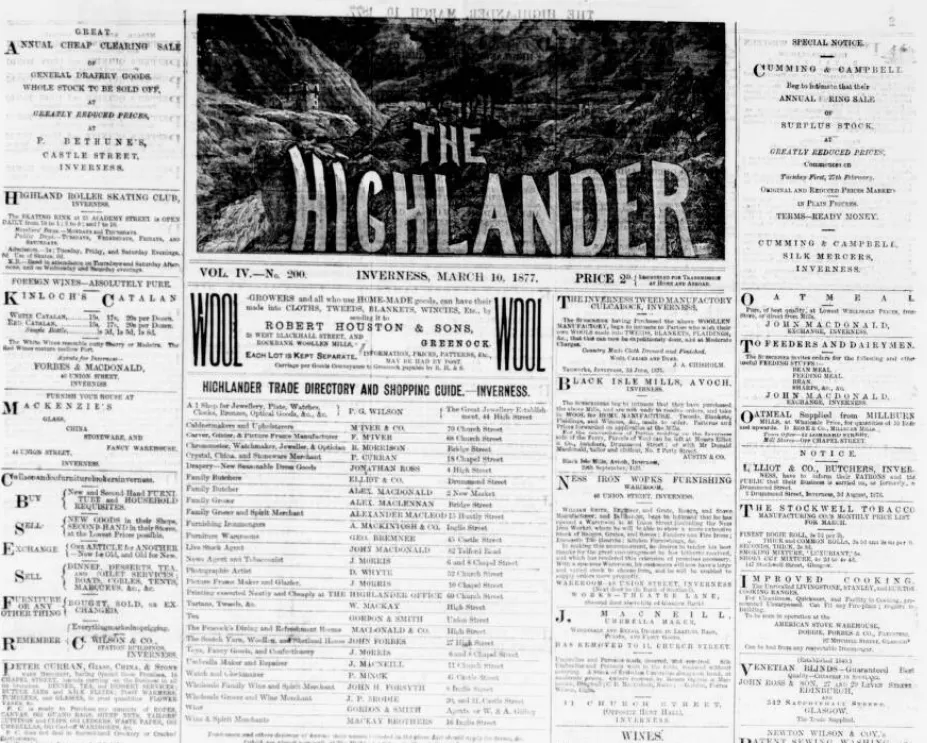
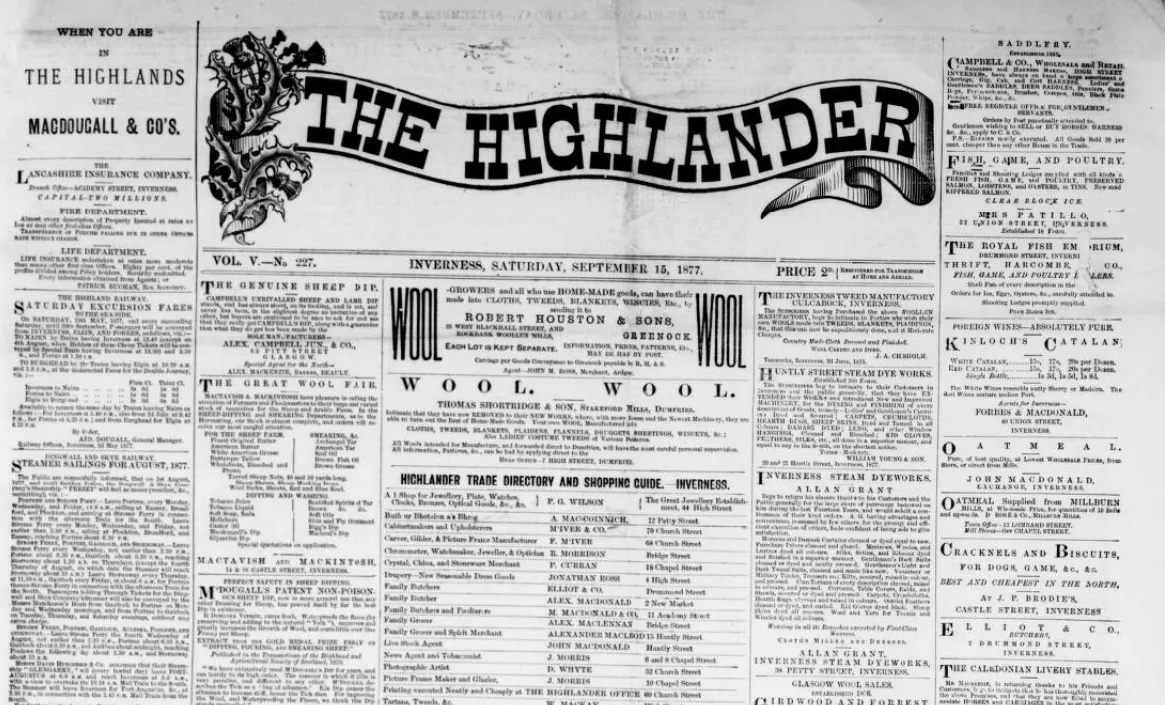
Our final new title of the week is the stridently named The Highlander, which was founded in 1873 in Inverness. ‘A repertory of Celtic literature and Highland economics,’ this politically independent title appeared every Saturday at the cost of 2d.
A richly detailed title, The Highlander featured poetry and articles printed in Scottish Gaelic, with discussions around translation, as well as the teaching of the language in Highland schools. Meanwhile, the title printed the local news from Inverness, reporting from the Inverness Town Council and churches in the city. Furthermore, The Highlander took in news from the district, from the likes of Thurso, Lismore and Tobermory, alongside more general news from further afield.
True to its literary bent, the publication also published notes on literature, whilst also staying true to its Highland bent, it featured a piece on ‘Highlanders from Home,’ which covered the latest from those who had left the Highlands.
Our updated titles
This week, we have added a staggering 233,634 brand new pages to the Yorkshire Post and Leeds Intelligencer. With the slogan of ‘Yorkshire’s National Newspaper,’ this title traces its history all the way back to 1754, with the foundation of the Leeds Intelligencer, one of Britain’s first daily newspapers. In 1865 the Leeds Intelligencer was purchased by a group of Conservatives, who began to issue the title as the Yorkshire Post and Leeds Intelligencer. One of Yorkshire’s most popular newspapers, we have added pages from the 1980s, 1990s and 2000s to this title.
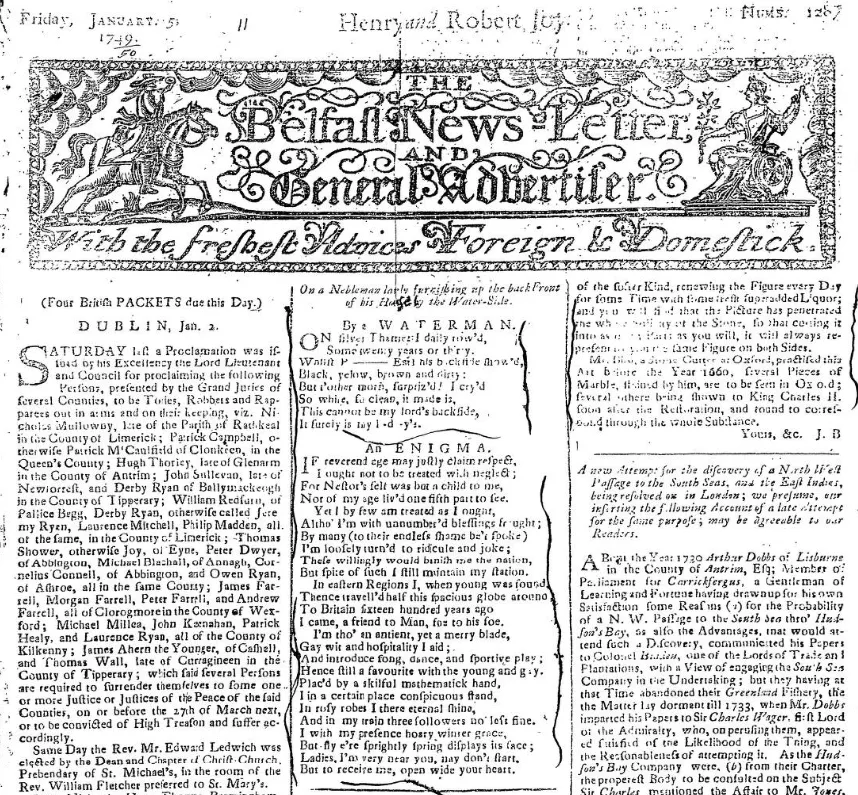
Meanwhile, we’ve also added two brand new years to the historic Belfast News-Letter, which has the honour of being the world’s oldest English language general daily newspaper still in circulation. The years we have added to this title are 1749 and 1826.
Charities in the 1880s – an A to Z
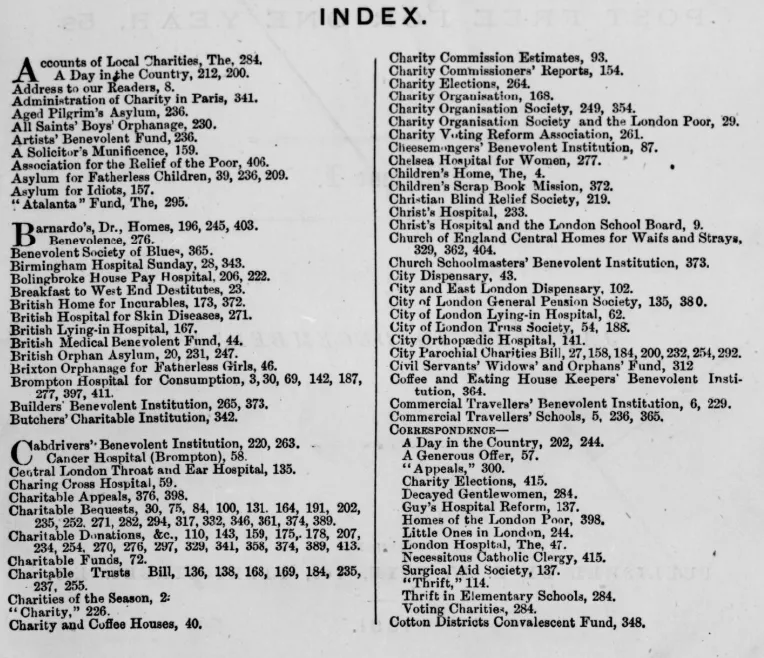
Browsing the pages of the Charity Record, we found a handy index of charities mentioned by the title in the year 1881. We thought it would be fascinating to pull out a charity for every letter of the alphabet, and whilst we are missing ‘Q, ‘X’ and ‘Z,’ we think this list provides a wonderful window into the philanthropic landscape of Britain during the 1880s.
To begin our list, we have the Aged Pilgrims’ Asylum. This institution consisted of a home for ‘120 poor and aged ‘pilgrims” in Hornsey Rise, where each inmate was supplied with a ‘separate room and pension,’ as per the 1 August 1889 edition of the Charity Record.
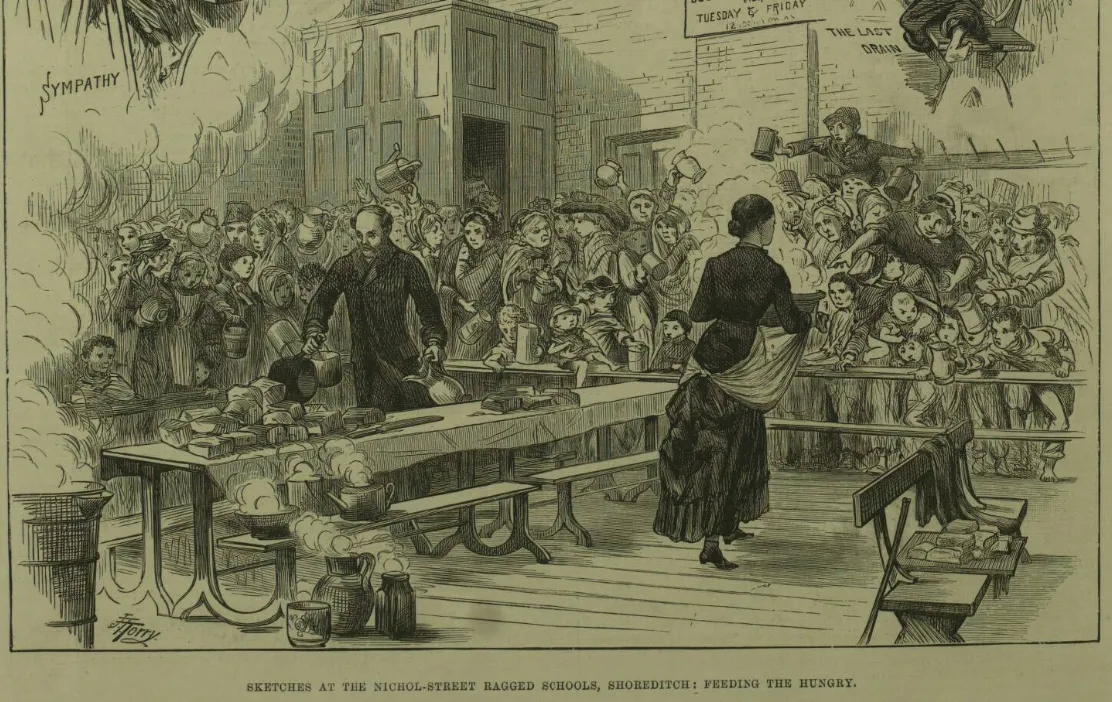
Staying in the capital, our next charitable endeavour is entitled Breakfast to West End Destitutes. The Charity Record, 20 January 1881 describes the weekly distribution of breakfasts from the Gray’s-yard Ragged Church near Oxford Street, which fed some 800 men, women and children with a meat pie, a piece of cake, and some coffee.
Other charities covered by the Charity Record pertain to different occupations, one such organisation being the Cheesemongers’ Benevolent Institution. The newspaper on 17 March 1881 described the 87th annual meeting of this charity, in which it was decided to ‘grant to very necessitous candidates a sum not exceeding £5 between any two elections.’
Another such benevolent institution was the Drovers’ Benevolent Institution. The Charity Record on16 June 1881 explains how this institution ‘dated back to 1844, when there was founded by the drovers themselves a sick club or friendly benefit society.’ The Drovers’ Benevolent Institution had gone on to build almshouses for its beneficiaries.
Next we have the Establishment for Invalid Gentlewomen, as detailed by the Charity Record on 20 January 1881. This establishment in Harley Street had made the decision to ‘open one room for the reception of patients who are too well off to need charitable help in the time of illness.’ In return for a fee, such patients would receive ‘the advantages of skilled nursing, thoroughly ventilated rooms and good cooking.’
Meanwhile in the Charity Record we see appeals from different institutions on behalf of their causes. On 15 June 1882 the paper included a letter from one Thomas Fagg, which asked, on behalf of the Committee of the Fox-court Ragged Schools, for contributions to ‘take 400 children from their overcrowded and unhealthy dwellings for a day’s recreation in the fresh air.’
The Charity Record also provided a place for charitable organisations to publish their aims. On 15 December 1887 the publication printed an overview of the Governesses’ Benevolent Association, which aimed to provide ‘temporary assistance of governesses in distress,’ an annuity and provident fund, a ‘home for governesses during the intervals between their engagements,’ and an ‘asylum for the aged.’
From governesses now to working boys, and the Homes for Working Boys scheme funded by Lord Jersey. On 21 July 1881 the Charity Record detailed how a new home had been opened at Woolwich, the sixth of such institution across the capital. The aim of the homes was to provide ‘board and lodging and supervision for boys who earn their livelihood, but having no homes to go to, are liable to mix with the criminal classes and drift into evil courses.’
Our next charity is the Indigent Blind Visiting Society, indigent being another word for poor or needy. The 30 June 1881 edition of the Charity Record described the annual meeting of this society, which was seeking funds to support 88 visually impaired people. The society was also paying for ‘268 blind persons of all ages’ to receive education in day classes.
For ‘J’ comes the catch all of Jewish Charities, which were covered by the Charity Record on 20 October 1881. This article describes how ‘the Jews of London do not possess a special hospital for the use of their sick,’ although the piece relates how hospitals in London had set up special wards for their Jewish patients. Meanwhile, the Jewish communities of London had also set up a ‘Jews’ Deaf and Dumb Home.’
The Charity Record also provided lengthy descriptions of institutions like King’s College Hospital. A 20 January 1881 piece in the paper relates how the doors of this hospital are open night and day ‘to receive the sick, the maimed, and the diseased; not only from the surrounding parishes but from the whole of the Metropolis, and even from all England.’ You can read the full piece here.
Hospitals are particularly well reported on in the Charity Record, as borne out by its later moniker. On 6 October 1887 the paper printed an article which had previously appeared in the Nonconformist about a visit to the London Fever Hospital, during ‘a critical moment in the history of a terrible epidemic,’ an outbreak of scarlet fever. The London Fever Hospital found itself subject to high praise, the writer noting how ‘if all the fever hospitals are as well managed as the one in Liverpool-road, no one, whether rich or poor, need shrink from claiming their help in case of need.’
We’re halfway through our list and find ourselves learning more about the Milliners’ and Dressmakers’ Provident Fund. The Charity Record on 3 March 1881 detailed how the fund had been in existence for some 33 years, and was able to provide ‘substantial pecuniary aid and medical advice to its members.’
Meanwhile, seeking aid for Necessitous Catholic Clergy was one Tracy Turnerelli. Writing to the Charity Record in December 1881, Turnerelli described how he had ‘tried all that private supplication could do to induce our Catholic aristocracy to form ‘A Fund for Sick Priests in Poor Missions,’ so many of whom are suffering at this moment in various dioceses.’ He wrote to raise awareness of the priests’ plight and seek guarantee of aid.
With a rich history of support, however, was the Orphan Working School, which as the Charity Record relates on 21 April 1881, was established on 10 May 1758. Having done ‘an immense amount of good for a class in society whose condition and position were much to be deplored,’ the Orphan Working School by 1881 had several branches and was supporting hundreds of boys and girls.
For ‘P’ comes another hospital, namely the Poplar Hospital for Accidents. A piece in the Charity Record on 18 August 1881 describes how the Poplar Hospital had benefited from a donation from one Miss. M. M. Turner, who had once lived in the area, of £500.
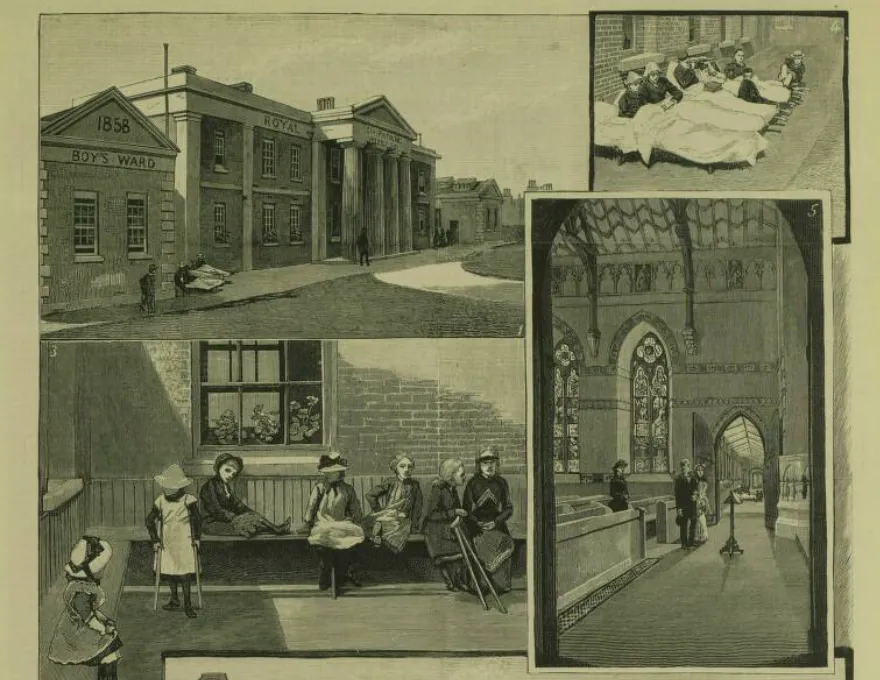
Moving away from London to the Royal Sea Bathing Infirmary in Margate. Founded in 1791, the Charity Record on 7 April 1881 notes how the institution had ‘steadily pursued its course of usefulness.’
Another long lived and ‘flourishing’ organisation was the Shipwrecked Mariners’ Society. In June 1881 the Charity Record described how the year 1880 had been a ‘disastrous one’ for ships. Indeed, 4,804 shipwrecked fishermen had been helped by the society, which assisted such stricken mariners to get back to their homes, gave them new clothes and supported them in the restoration of their vessels.
Meanwhile celebrating its ‘forty-third anniversary’ in July 1881 was the Tailors’ Benevolent Society. Founded to provide ‘a fund for the relief of aged and infirm journeymen tailors and the widows of pensioners, and for the support of an asylum for the reception of journeymen tailors,’ the Charity Record related how the society had helped some 348 pensioners since its inception.
It’s another hospital now, namely University College Hospital, which was covered by the Charity Record on 7 April 1881. Like many such reports, it detailed the institution’s annual general meeting, which in turn relayed the legacies that the organisation had received throughout the past year. It also outlined how 2,632 patients had been admitted into the hospital throughout the previous twelve months, with 22,184 outpatients attending the hospital.
Our final trip to hospital now comes now with a visit to the Victoria Hospital for Children. On 5 May 1881 the Charity Record outlined ‘a special appeal’ which was being made on behalf of the hospital, which had been established some fifteen years before in Chelsea. Accepting children aged between two and sixteen from all over the country, the hospital in the year 1880 treated 525 inpatients, of which ‘420 were cured and relieved.’
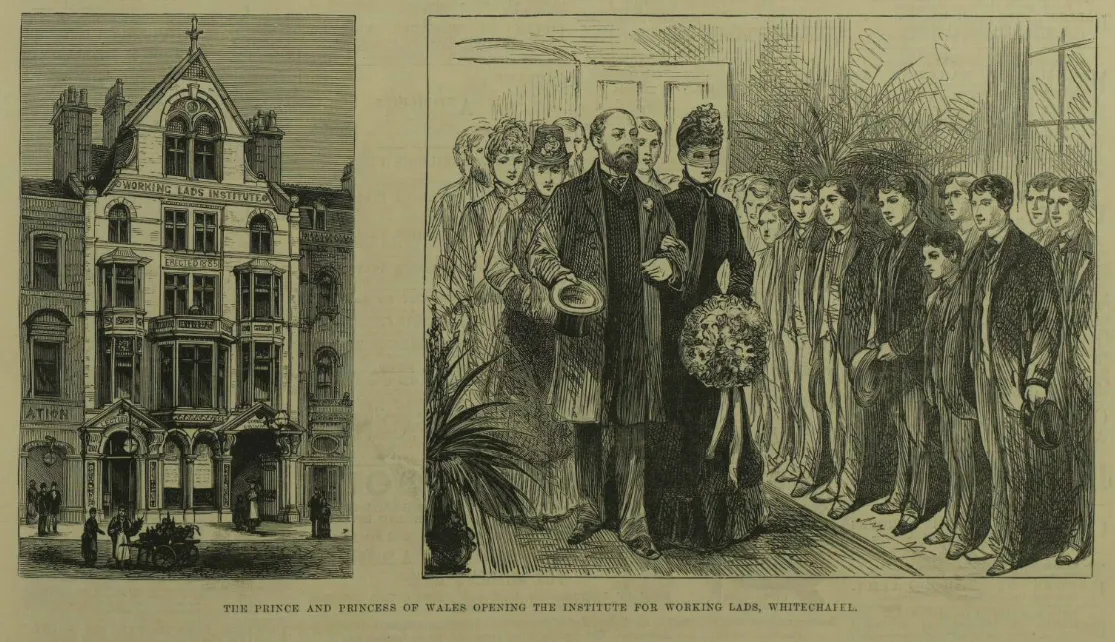
We’re arrived at our penultimate entry which is for the Working Lads’ Institute. On 3 February 1881 the Charity Record reported how ‘the efforts for the welfare of the working lads of London were stated to have been very successful, but the present premises were totally inadequate.’ The organisation, therefore, hoped to raise £25 towards the purchase of ‘additional premises in Whitechapel to accommodate 300 or 400 lads.’
Our final charitable organisation today is the Yorkshire Society’s School. The Charity Record on 6 January 1881 described how ‘the object of the Yorkshire Society is to board, clothe, and educate boys born in Yorkshire, or whose parents may have been born there. The parents of all such boys must have been in a respectable line of life, and reduced either by misfortune or dead.’
Discover more about charitable operations in the UK from the 1880s into the 1920s through the pages of the Charity Record today.
New Titles
Title | Years Added |
1881-1921 | |
1884-1885 | |
1916-1917 | |
1891-1892 | |
1877 |
Updated Titles
This week we have updated two of our existing titles.
You can learn more about each of the titles we add to every week by clicking on their names. On each paper’s title page, you can read a free sample issue, learn more about our current holdings, and our plans for digitisation.
Title | Years Added |
1749, 1826 | |
1981, 1986-1991, 1993-2004 |
You can keep up to date with all the latest additions by visiting the recently added page. You can even look ahead to see what we’re going to add tomorrow.
More on this topic:
Share this article
About the author

Rose Staveley-Wadham
Newspaper Licensing Manager
Published on Tue, 14 October 2025.