
Skip to content

Search the blog

Tag: west-yorkshireTag: dundee-courier
Today is a momentous day in the history of the British Newspaper Archive – we have reached 100 million newspaper pages – all available for you to search at the click of a button. Indeed, to be accurate, we now have over 100 million newspaper pages for you to enjoy, as we tipped over this incredible figure with the addition of 206,718 brand new newspaper pages this week.Our 100 millionth newspaper page comes from none other than the wonderfully historic Dundee Courier. Read on to
We’ve added 153,774 pages to 10 regional titles to The Archive this week. We have added seventy-five years worth of material from between 1911 and 2003. Our additions focus on augmenting existing titles including the West Lancashire Evening Gazette which we first added in September of this year, and the Sussex Express which we first added to in 2013.The Sussex Express which first joined The Archive in 2013 has undergone many title changes. In 1857 it was The Sussex Agricultural Express, but as it masthead showed
If you’re interested in the history of Yorkshire, you’ve come to the right place. The Archive currently holds over 70 titles from ‘God’s Own County.’From Barnsley to Batley, from Ilkley to Keighley, from Sheffield to Wakefield, The Archive has 76 historic Yorkshire newspapers all available to search, which works out at being over 300,000 pages in all. These newspapers range from those that cover the entire county (like the Yorkshire Evening Post), to those with a more regional focus (take for example,
We are delighted this week to feature a very special blog post from the High School of Dundee, written by Niall Joss, which explores how pupils connected with the First World War through the British Newspaper Archive and a war memorial.How did the British Newspaper Archive and a war memorial inspire primary school children to connect with the First World War?With the centenary of the end of First World War just passed, how can children born in the
Haunted
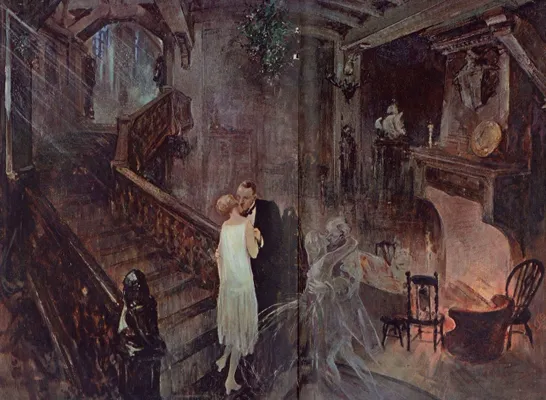
With Halloween approaching, we wanted to see what we could find related to the topic of hauntings in The British Newspaper Archive.Of children and hauntingsOften the origins of a haunting myth are rooted in death and loss. Sometimes the myth grows and morphs to such a point where its origin is indeterminate. Other times, the sad truth of its origin is unexpectedly revealed, as with the ‘grim discovery’ at a ‘haunted house’ in 1921, reported in The Scotsman.This
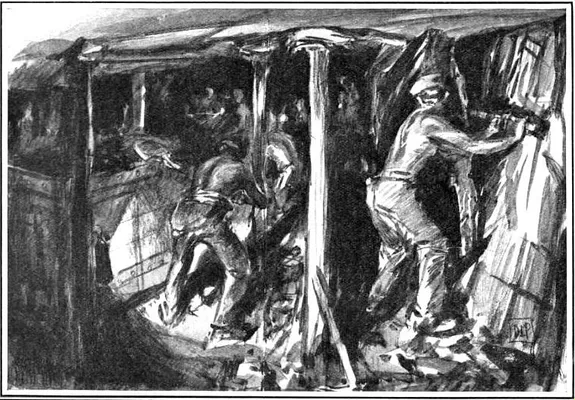
Derbyshire Miners Coal-getting at the Bolsover Face. Drawn by D Macpherson
In the month of August, we have looked at occupations and employment through the newspapers.  To finish our theme this month, we are taking a closer look at coal miners, specifically in the 19th century.  An initial search for miners reveals explosions, accidents, and strikes in the vast amount of mines operating across Great Britain.  We will look at these topics in closer detail.The first coal mine was sunk in Scotland, under the Firth of Forth in 1575.  As the
We have all fallen victim to superstitions.  I avoid walking under ladders, never open an umbrella indoors, and dread spilling salt at the table.  Even Napoleon was influenced by superstitions.  Once when he was separated from his beloved Josephine, a picture of her fell over, and with haste, Napoleon sent a message to Josephine to make sure she was well.  A look through The British Newspaper Archive proves that people of all walks of life have been touched by fear
In case you’re tempted to take out a “Lonely Hearts” ad this Valentine’s Day, be warned: according to the newspaper archive you’d be wise to stay vigilant.Search the newspapersIn fact, as the Aberdeen Journal suggested in 1949: Aberdeen Journal – Monday 07 March 1949© THE BRITISH LIBRARY BOARD. ALL RIGHTS RESERVED. Unfortunately, the famous Lonely Hearts murders in New York were not an isolated incident.William Sanchez d’Epina Hepper was born in Gibraltar in 1891. He spent most of his life living in
A recent study showed that 44% of people in Britain people think that “we should be proud of British colonialism”. Considering the Empire’s sketchy past of violence and massacres, this was a shock result.Subscribe for just £12.95 –>At the time, as today, people were mainly supportive of British rule overseas, though it would be fair to assume they didn’t know the full extent of the chaos it wrought. For some, the empire’s steady decline after World War 2 would have been incomprehensible.
On the night of the 19th January 1915, two German Zeppelins appeared out of the dark on the Norfolk coast and conducted the first airship attack on British soil. They had set out for Humberside, but strong winds had seen them divert to the areas around Great Yarmouth, Sheringham and King’s Lynn.It would be the first of over 50 Zeppelin attacks on the UK. Strategically, they proved largely ineffective, with night raids and bad weather conditions making it difficult to target