Hot Off The Press – New Pages This Week
Published on 16 February 2026 by Rose Staveley-Wadham
Today is a momentous day in the history of the British Newspaper Archive – we have reached 100 million newspaper pages – all available for you to search at the click of a button. Indeed, to be accurate, we now have over 100 million newspaper pages for you to enjoy, as we tipped over this incredible figure with the addition of 206,718 brand new newspaper pages this week.
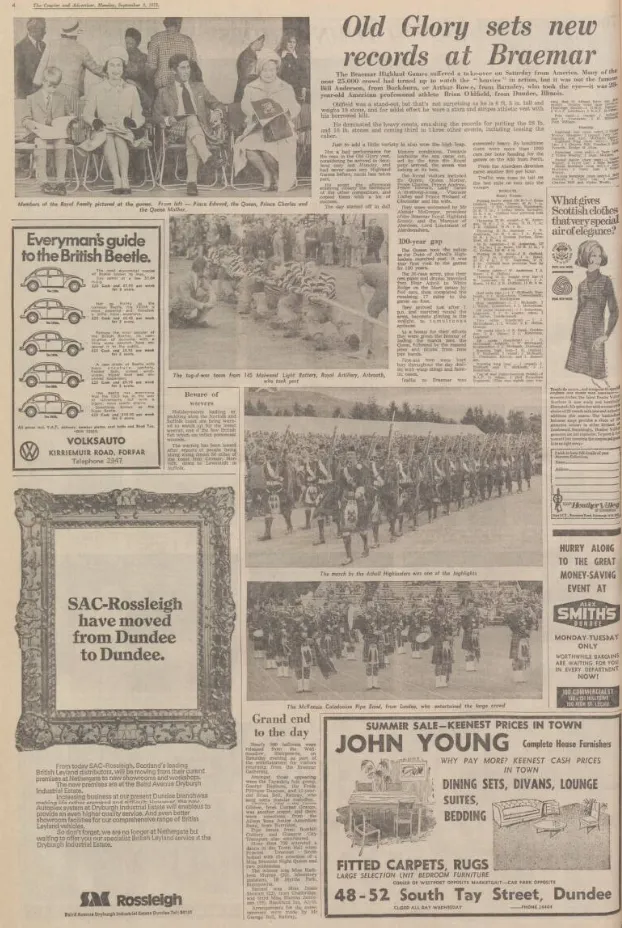
Our 100 millionth newspaper page comes from none other than the wonderfully historic Dundee Courier. Read on to discover more about the history of this special Scottish paper, and also to learn which of its pages is our 100 millionth. Meanwhile, you can learn more about the road to 100 million pages, made possible thanks to our partnership with the British Library, in our special celebratory blog.
Register now and explore The Archive
The early days of the Dundee Courier
All of our newspapers here at The Archive sit very close to our hearts in one way or another, but perhaps none so much as the Dundee Courier. There is a strong Dundee connection here at the British Newspaper Archive. The home of The Archive’s parent company D.C. Thomson, Dundee is also home to many of the operations that make the running of site possible. Dundee is where our digitised images are processed, and of course, our connection to the Dundee Courier is further solidified as it is owned by D.C. Thomson.
The Dundee Courier has a long and fascinating history. First published on 20 September 1816 and edited by printer Thomas Colville, the paper at this time cost 7 d. It ran with the title of the Dundee Weekly Courier and Forfarshire Agricultural and Commercial Advertiser, although like many of our newspapers, the Dundee Courier went through many name changes, but it was the Courier moniker that stuck.
In 1823 David Hill took ownership of the paper when the Colville family went bankrupt. Fast forward to 1849, when Charles Alexander became managing director. Alexander would oversee many changes: in 1853 the paper shifted news from its front page to its inside pages, to be replaced by advertisements. Meanwhile, in 1858 the paper moved to larger printing premises, and in 1860, the Dundee Courier shifted to a tri-weekly publication pattern.
The Dundee Courier and D.C. Thomson
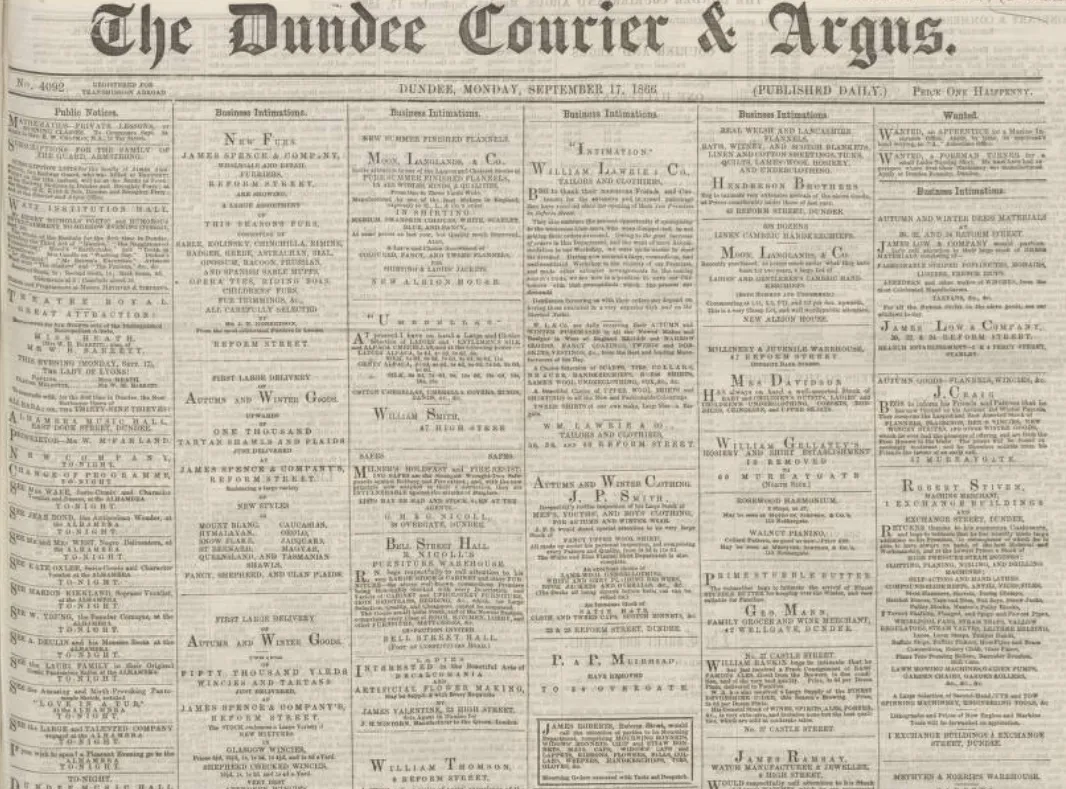
Still under the auspices of Charles Alexander, on 17 September 1866, fifty years since its first publication, the Dundee Courier made history by becoming Britain’s first ever halfpenny morning daily. And by 1872, the paper moved to new offices at North Lindsay Street.
Now, upon Alexander’s death, merchant shipowner William Thomson in 1884 bought out control of the title. In 1886, he invested his son, David Couper Thomson, as partner with the full responsibility for the publishing concern. W. & D.C. Thomson was formed in 1886, with the Dundee Courier and the Dundee Weekly News as the two newspaper titles under the company’s ownership.
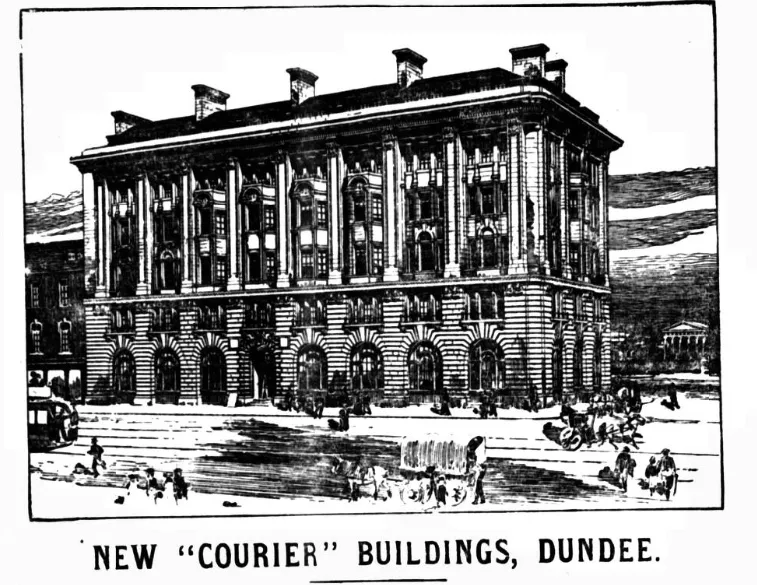
By the 1870s the Dundee Courier had a circulation of some 10,000 copies. By the 1880s, it became Dundee’s bestselling title, overtaking rival publication the Dundee Advertiser. Change was afoot in the new century, as the new ‘Courier Buildings’ were erected at Albert Square between 1902 and 1906.
In 1905 the company assumed the new name of D.C Thomson & Co.
The Dundee Courier in the twentieth century
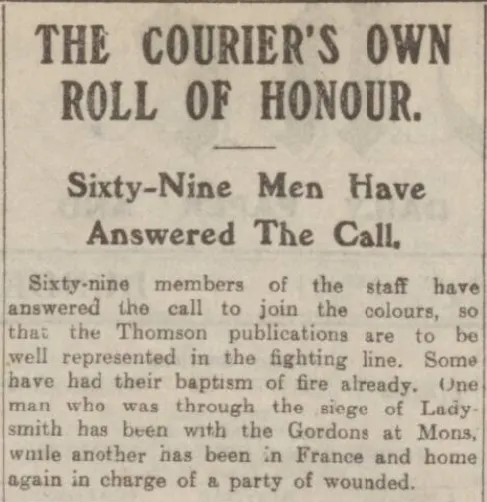
As the First World War erupted across Europe, the Dundee Courier reported how 69 of its staff ‘immediately answered the call to join the colours.’ By 1917, the number of staff members serving reached 260, made up of journalists, cashiers, etchers, printers, linotypists and other roles across the paper. The First World War also saw the publication of the title’s centenary issue.
Moving forward a decade, and the General Strike saw the amalgamation of Dundee’s two morning papers, the Courier and the Advertiser, the merged paper first appearing on 28 May 1926.
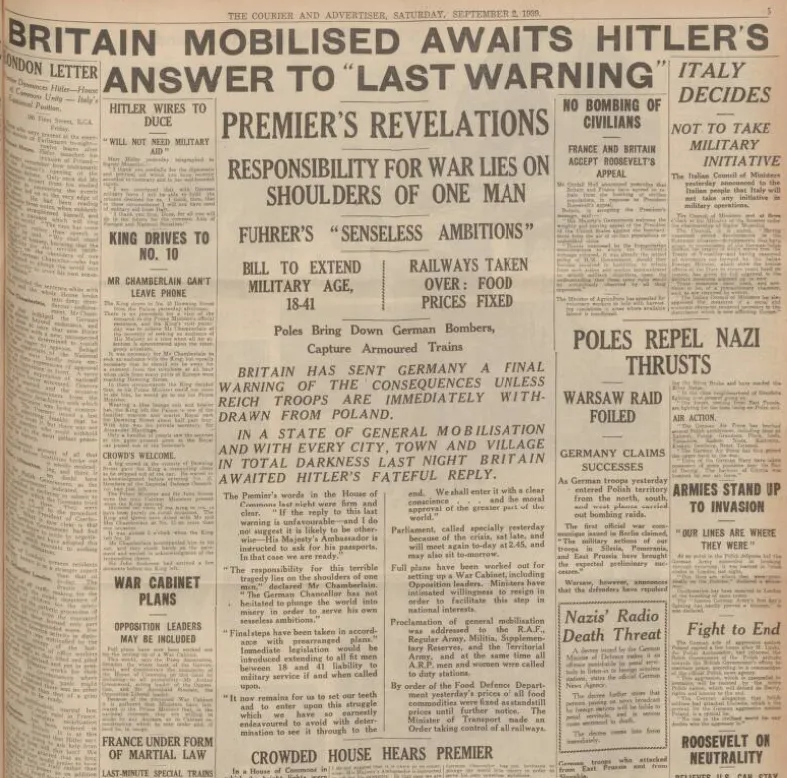
By the time the Second World War broke out, the Courier cost one penny, and filled eight pages. Wartime restrictions on paper brought this number down to four. And like the previous conflict, hundreds of staff from the Dundee Courier and D.C. Thomson as a whole volunteered for the war effort.
The paper celebrated another significant landmark on 20 September 1965, its 150th anniversary, and by the early 1980s, it had become Britain’s biggest-selling regional morning daily newspaper. By 1992, the paper saw the introduction of colour to its pages for the very first time. And by 1992, the Dundee Courier became the last major newspaper in Britain to remove adverts from the front page.
The twenty-first century and beyond
On 21 January 2012 the Dundee Courier switched from a broadsheet to tabloid form, with its bicentenary being celebrated a few days later on 20 September 2016. To crown a special year, the title was named UK Regional Newspaper of the Year at the Society of Editors’ Awards and at the ‘Newsawards 2016.’
This week, the Dundee Courier again is at the forefront of history, as it makes up the 100 millionth page on the British Newspaper Archive, with over 200,000 brand new pages in all being added to the publication over the last seven days. But what exactly does the 100 millionth page consist of?
Our 100 millionth page
In addition to local connections and history, we’re delighted that our 100 millionth page comes from a paper like the Dundee Courier. Whilst we feast upon our all of our specialist, niche and glossy titles, the lifeblood of The Archive is the patchwork of the regional and local newspapers that tells the stories of communities across the country. The Dundee Courier is one such paper.
Our 100 millionth page is page four of the 3 September 1973 issue of the Dundee Courier. Its main headline covers the Braemar Highland Games, which had been taken over by ’28-year-old American professional athlete Brian Oldfield, from Dundee, Illinois.’ Despite never having seen any Highland Games before, and only arriving in Scotland days before, Oldfield broke records, winning such events as the 28 and 16 lb. stones and the high leap.
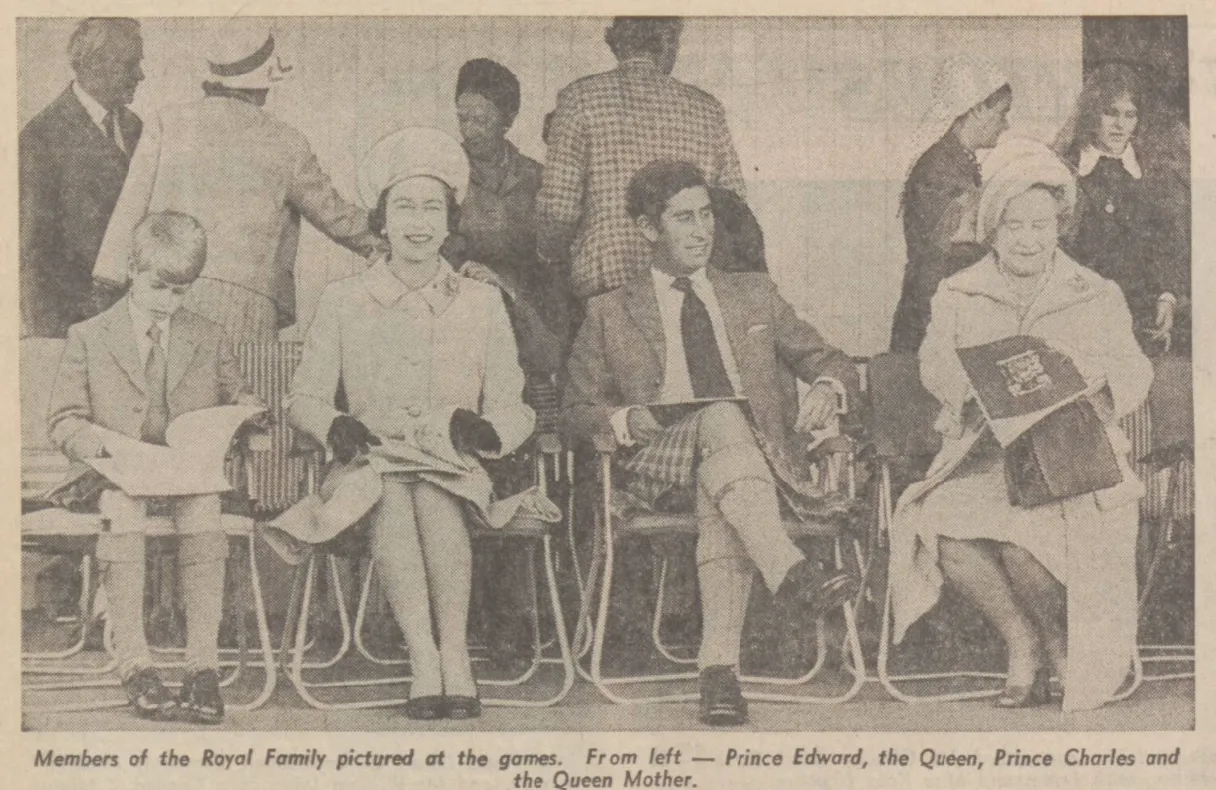
Representing a wonderful collision between the tradition of the Highland Games with the new world, the story is accompanied by photographs of the royal family, including the late Queen, the Prince of Wales, the Queen Mother and Prince Edward, the tug-of-war team from the 145 Maiwand Light Battery, Arbroath, the march past by the Atholl Highlanders and Dundee’s McKenzie Caledonian Pipe Band.
Our 100 millionth newspaper page is a busy one. Blink and you’ll miss it, there’s a few short paragraphs devoted to the danger of the lesser weever along the coast of Norfolk and Suffolk, which could ‘inflict poisonous wounds.’
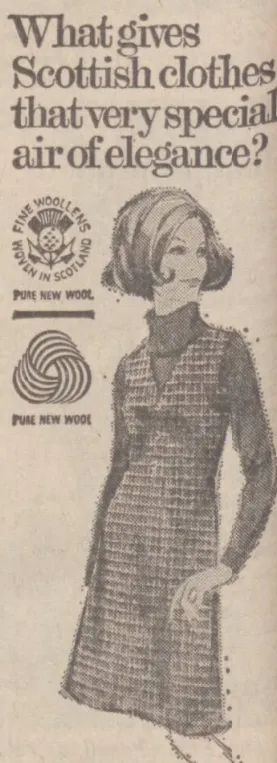
The page also buzzes with advertisements, giving a sense of what was in vogue or desirable in 1973. One such ad asks ‘what gives Scottish clothes that very special elegance?,’ whilst encouraging readers to write off for their ‘latest Heather Valley Brochure.’ From weevers to Beetles, the Volksauto dealer on the Kirriemuir Road, Forfar, provides the ‘Everyman’s guide to the British Beetle,’ whilst SAC-Rossleigh, ‘Scotland’s leading British Leyland distributors,’ advises customers of its change of premises. Finally, Dundee businesses Alex Smith’s and John Young both advertise sales.
There’s a lot of information contained across this very special page. Now multiply that across 100 million pages. Get exploring them today and see what you can discover.
Our updated titles
This week we have updated two of our existing titles.
You can learn more about each of the titles we add to every week by clicking on their names. On each paper’s title page, you can read a free sample issue, learn more about our current holdings, and our plans for digitisation.
Title | Years Added |
1956-1985, 1998-2004 | |
1857 |
You can keep up to date with all the latest additions by visiting the recently added page. You can even look ahead to see what we’re going to add tomorrow.
More on this topic:
Share this article
About the author

Rose Staveley-Wadham
Newspaper Licensing Manager
Published on Mon, 16 February 2026.