Skip to content

Search the blog

Tag: ocrTag: suffragettesTag: child-labourTag: colindale
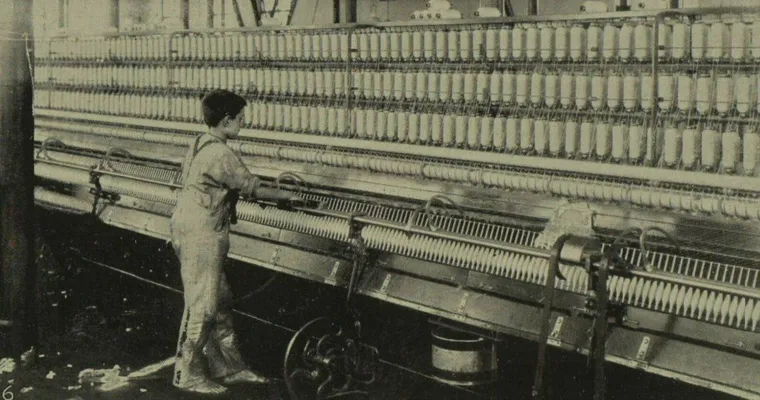
Here at The Archive we are delighted to welcome 204,443 brand new pages this week, as we mark 125 years since the passing of the Mines (Prohibition of Child Labour Underground) Act 1900, which banned children under the age of thirteen from working underground in mines. This act, following the raising of the school leaving age to twelve in 1899, represented an important milestone in the eradication of child labour.Meanwhile, we’ve added eight brand new titles this week, which span the length and
Here at The Archive, we love to learn of the discoveries you have made through our newspaper pages, and how you have used them, whether they have influenced novels, or provided information for dissertations. We were incredibly grateful, therefore, when crime writer and athletics historian Peter Lovesey contacted us with his account of sixty years of researching newspapers. From accessing historical newspapers in their original form, to scrolling through microfilm reels, and finally to searching newspapers digitally on the British
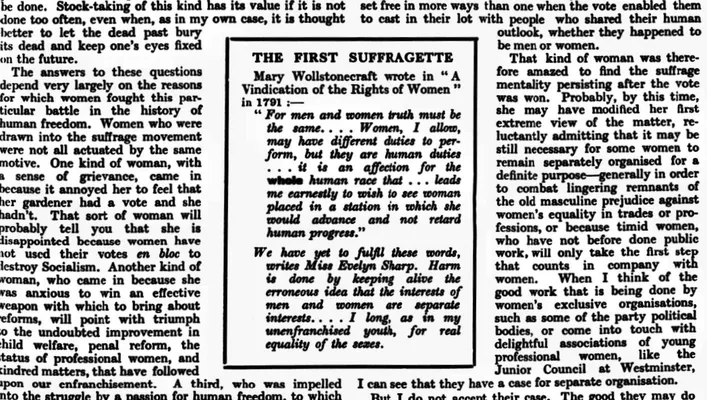
Eighteenth century writer, philosopher and early feminist Mary Wollstonecraft faced censure in her lifetime, not just for her radical beliefs, but also for her rejection of societal norms. Long after her death, however, attitudes began to shift, as she gained recognition as a trailblazing fighter for women’s equality and became an inspirational figure in the women’s suffrage movement.Following on from our blog on the life of Mary Wollstonecraft, in this second and final blog we shall examine the writer’s
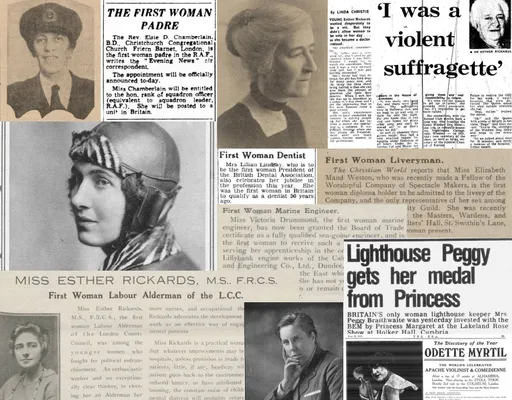
This March at The Archive we are celebrating inspiring women from history, who broke boundaries across different fields, whether they be medical, sporting, political and much more besides. We will be highlighting those inspiring women who broke the mould, and we will be showcasing the achievements of some lesser known women along the way, who deserve recognition for their trailblazing lives and careers.And in this special blog, we will be looking at ten inspiring women from history who you
In October 1823, the Public Ledger and Daily Advertiser asserted:The charge and duty of Government are not merely to increase the numbers of men, but to promote and increase their happiness. Industry is the most powerful engine of this happiness, because it is the spring of all their riches. Government, then, should encourage labour, and by due reward, endeavour to avail of, and augment its useful products…The article, entitled ‘Political Economy,’ goes on to recommend how ‘the power of
This past week we released 105,098 pages to The Archive.  In time for International Women’s Day we are thrilled to add nine new titles to our Suffragette Collection.  We have also  updated four existing titles including The Globe for which we now have editions spanning 1804 to 1921, and our recently added Scottish title The North Star and Farmer’s Chronicle for which we now have a run from 1893 to 1911.Our new titles represent the full spectrum of the feminist and suffrage movements, from
Alice Maud Mary Arncliffe-Sennett was an energetic militant suffragette, determined to fight for women’s suffrage even if that meant getting arrested and going against prominent leaders such as Emmeline Pankhurst and Milicent Fawcett.  Through the newspapers, we can find details about Arncliffe-Sennett’s life, career, and activism.Alice, or Maud as she was often called, lived in London and worked as an actress.  Her stage name was Mary Kingsley.  Here is a review by The Era of her performance as Lady
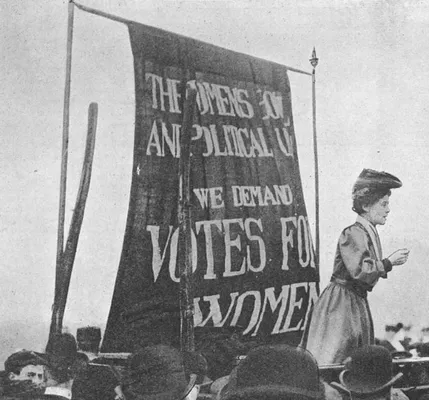
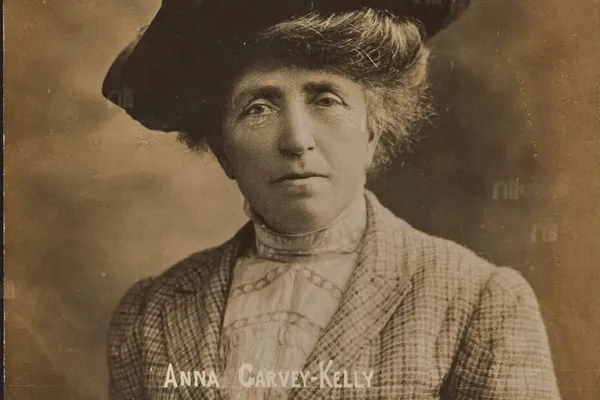
This year, in recognition of the centenary of the Representation of the People Act 1918, we will showcase the lives and activities of women involved in the Suffrage movement of the late nineteenth and early twentieth century.Despite making headlines for their activities many of these women are now forgotten.In this blog post we will revive the memory of Irish Suffragette, Anna Garvey Kelly, whose support of the cause of Suffrage saw her spend a month in Holloway prison in
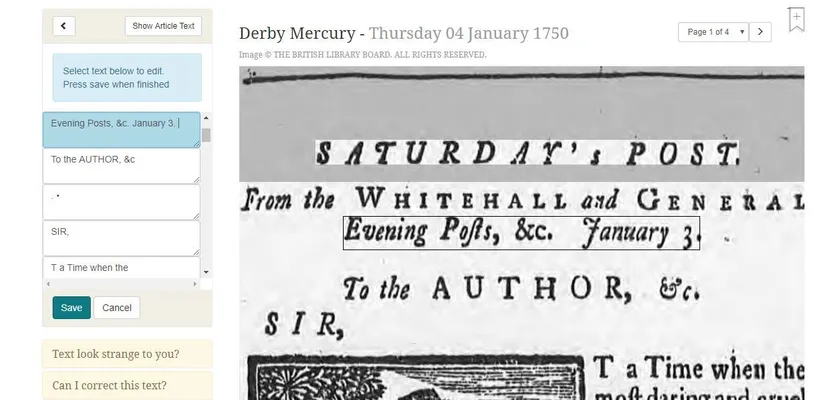
One of the features of The British Newspaper Archive is the OCR editing tool.  This allows every user to contribute to the improvement of The Archive.  OCR stands for Optical Character Recognition– the process we use to transform millions of digitised images into searchable text.   The computer takes an image of the page and then turns each line into text.  However, as many of us have encountered, the text is not always correct and needs improvement.  As a group, we
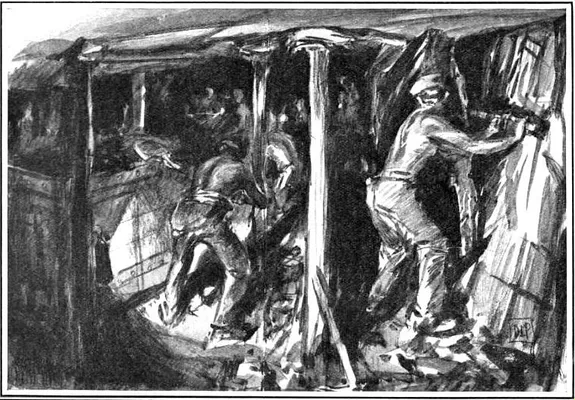
Derbyshire Miners Coal-getting at the Bolsover Face. Drawn by D Macpherson
In the month of August, we have looked at occupations and employment through the newspapers.  To finish our theme this month, we are taking a closer look at coal miners, specifically in the 19th century.  An initial search for miners reveals explosions, accidents, and strikes in the vast amount of mines operating across Great Britain.  We will look at these topics in closer detail.The first coal mine was sunk in Scotland, under the Firth of Forth in 1575.  As the