
Skip to content

Search the blog

Tag: ghostsTag: child-labourTag: lusitania
A montage of different newspaper titles with the British Newspaper Archive logo
Fittingly for our brand new platform, this week we are delighted to welcome five brand new titles to The Archive, with a total of 261,496 pages joining us in all. That's not it either, from across the UK and Ireland and even further afield, we've updated 46 of our existing titles. And as we voyage into these new waters, using our brand new shipping title, we explore the launches of some notable liners and merchant vessels from the late 19th and early
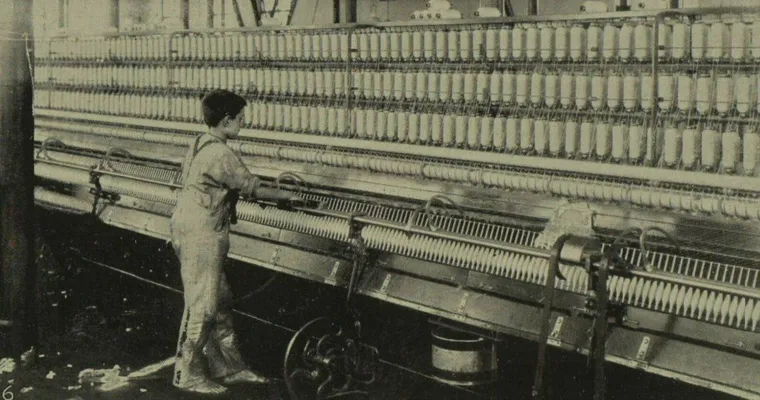
Here at The Archive we are delighted to welcome 204,443 brand new pages this week, as we mark 125 years since the passing of the Mines (Prohibition of Child Labour Underground) Act 1900, which banned children under the age of thirteen from working underground in mines. This act, following the raising of the school leaving age to twelve in 1899, represented an important milestone in the eradication of child labour.Meanwhile, we’ve added eight brand new titles this week, which span the length and
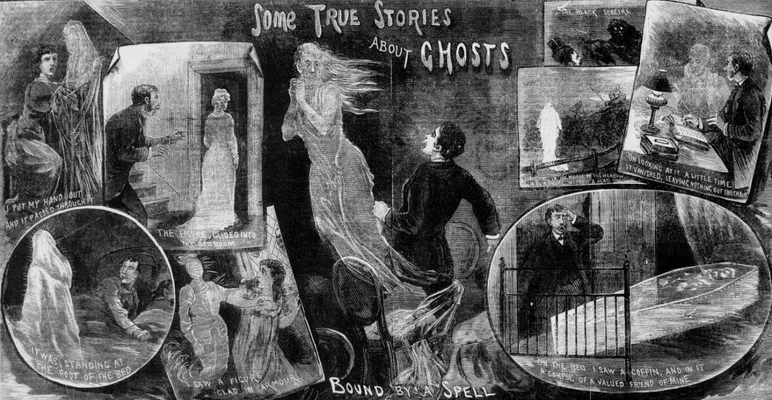
With spooky season now upon us, we thought we’d scour the pages of The Archive to find some of the most spine-chilling ghost stories ever published in our newspapers.So settle in and prepare to be scared by tales of ghostly armies, inexplicable apparitions and portents from the afterlife, all of which have been featured in the pages of the newspapers to be found on The Archive.Want to learn more? Register now and explore The Archive1. An Army of
In October 1823, the Public Ledger and Daily Advertiser asserted:The charge and duty of Government are not merely to increase the numbers of men, but to promote and increase their happiness. Industry is the most powerful engine of this happiness, because it is the spring of all their riches. Government, then, should encourage labour, and by due reward, endeavour to avail of, and augment its useful products…The article, entitled ‘Political Economy,’ goes on to recommend how ‘the power of
This week we have added 48,988 pages to The Archive, with new pages covering both England and Scotland. We’re delighted to have updated four of our Scottish titles, with additions spanning the years between 1879 to 1981. We’ve also updated the Newcastle Journal, the Manchester Evening News, the Lichfield Mercury, the Wells Journal, and finally the Reading Evening Post.One of our Scottish titles to be updated this week is the Aberdeen Evening Express, to which we have added the years 1939-1945 and 1980-1981.Eighty
Haunted
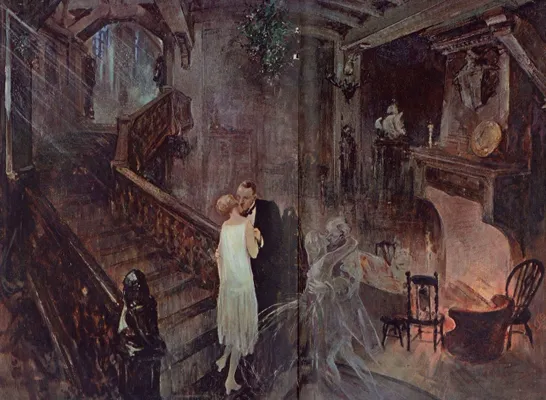
With Halloween approaching, we wanted to see what we could find related to the topic of hauntings in The British Newspaper Archive.Of children and hauntingsOften the origins of a haunting myth are rooted in death and loss. Sometimes the myth grows and morphs to such a point where its origin is indeterminate. Other times, the sad truth of its origin is unexpectedly revealed, as with the ‘grim discovery’ at a ‘haunted house’ in 1921, reported in The Scotsman.This
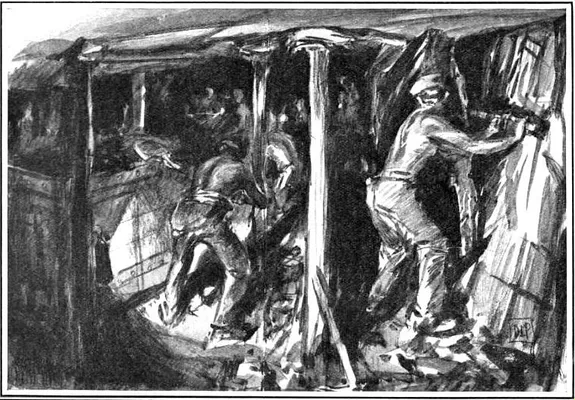
Derbyshire Miners Coal-getting at the Bolsover Face. Drawn by D Macpherson
In the month of August, we have looked at occupations and employment through the newspapers.  To finish our theme this month, we are taking a closer look at coal miners, specifically in the 19th century.  An initial search for miners reveals explosions, accidents, and strikes in the vast amount of mines operating across Great Britain.  We will look at these topics in closer detail.The first coal mine was sunk in Scotland, under the Firth of Forth in 1575.  As the
As we welcome a new month, we at the Archive take the opportunity to delve into historical events that have occurred in the month of May over the years.Lewis and ClarkOn 14 May 1804, Lewis and Clark departed St Louis on their expedition west. It was the first American expedition to explore the western half of the United States. The expedition was ordered by President Jefferson following the Louisiana Purchase to, in part, map this newly acquired territory. The journey
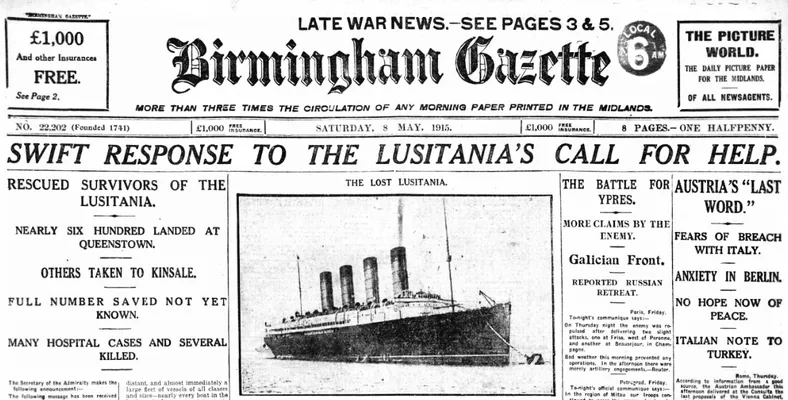
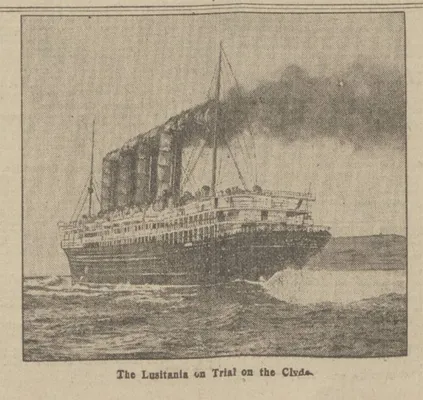
Historical newspaper reports on the sinking of the LusitaniaOn 7 May 1915, the Lusitania was hit by torpedoes fired by the German U-boat U-20, and sank in 20 minutes with the loss of 1,198 lives.To mark the day, here are some newspaper reports about the tragedy.