Skip to content

Search the blog

Tag: british-empireTag: child-labour
Here at The Archive we are delighted to welcome 204,443 brand new pages this week, as we mark 125 years since the passing of the Mines (Prohibition of Child Labour Underground) Act 1900, which banned children under the age of thirteen from working underground in mines. This act, following the raising of the school leaving age to twelve in 1899, represented an important milestone in the eradication of child labour.Meanwhile, we’ve added eight brand new titles this week, which span the length and
Over the past seven days at The Archive we have added 199,758 brand new pages to our collection, including updates to 18 of our existing titles from England, Scotland, Wales and beyond.Meanwhile, we have added an amazing 140,396 new pages to our special international title the Civil & Military Gazette (Lahore), which traces its origins all the way back to 1845. Read on to find out more about this newspaper title that helps us to tell the story of India and Pakistan under British
This week at The Archive we are excited to bring you 95,362 brand new pages, which span over 200 years of headlines. Meanwhile, we have added five new titles, from Swanage to Sheffield, and South London, and we continue to tell the story of the British Empire, and the struggle for independence from the Empire, with the addition of India, the original organ of the Indian National Congress.So read on to discover more about our new titles of the week, as
In October 1823, the Public Ledger and Daily Advertiser asserted:The charge and duty of Government are not merely to increase the numbers of men, but to promote and increase their happiness. Industry is the most powerful engine of this happiness, because it is the spring of all their riches. Government, then, should encourage labour, and by due reward, endeavour to avail of, and augment its useful products…The article, entitled ‘Political Economy,’ goes on to recommend how ‘the power of
This week at The Archive we have been immensely busy adding 173,282 brand new pages to our collection. We have added an incredible 11 brand new titles over the past seven days, spanning such diverse countries as India, China, Dominica and Antigua, as well as some towns and cities slightly closer to home, like Beverley, Birkenhead and Blandford.Here at The Archive we don’t like to neglect our existing titles either, and so in this vein, we have added new pages to 19
This week at The Archive has been an especially busy one, as we have added 150,624 brand new pages from titles to be found across the world! Not only have these 150,624 new pages joined us this week, we have added nearly 150 years’ worth of headlines, from 1771 to 1920.Furthermore, this week sees the continuation of our commitment to publish the international titles held by the British Library. To this end, new titles join our collection from the Caribbean, including Barbados, Jamaica and
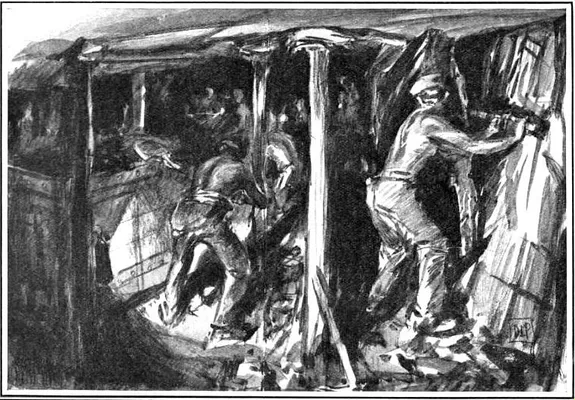
Derbyshire Miners Coal-getting at the Bolsover Face. Drawn by D Macpherson
In the month of August, we have looked at occupations and employment through the newspapers.  To finish our theme this month, we are taking a closer look at coal miners, specifically in the 19th century.  An initial search for miners reveals explosions, accidents, and strikes in the vast amount of mines operating across Great Britain.  We will look at these topics in closer detail.The first coal mine was sunk in Scotland, under the Firth of Forth in 1575.  As the
With summer well underway and a new month dawning, we take a look at the month of July with the help of The British Newspaper Archive. What events and holidays of significance took place in July? How have our newspapers covered such happenings? Join us as we explore the history and newspaper coverage of Canada Day, the Battle of the Somme, and Independence Day.Canada DayThe national holiday celebrates the anniversary of the enactment of the Constitution Act, which
The British Newspaper Archive brings you news from India, China, and further East during the height of the British Empire.  The Homeward Mail from India, China and the East was first published in 1857 by Messrs. Smith, Elder, & Co. and provided Britain with news from its colonies in the East.  The publishing company also produced the first Dictionary of National Biography and worked with major authors such as Charlotte Brontë, George Eliot, Alfred Tennyson, and Arthur Conan Doyle.  Along with The
The slave trade was abolished in the British Empire on this day in 1807.The Bury and Norwich Post reported that the Bishop of Landaff thought slavery was ‘so barbarous and inhumane that the abolition of it would be recorded in Heaven.’Bury and Norwich Post – Wednesday 01 April 1807Image © THE BRITISH LIBRARY BOARD. ALL RIGHTS RESERVED.View the whole newspaper page