Skip to content

Search the blog

Tag: 1920sTag: black-historyTag: british-library
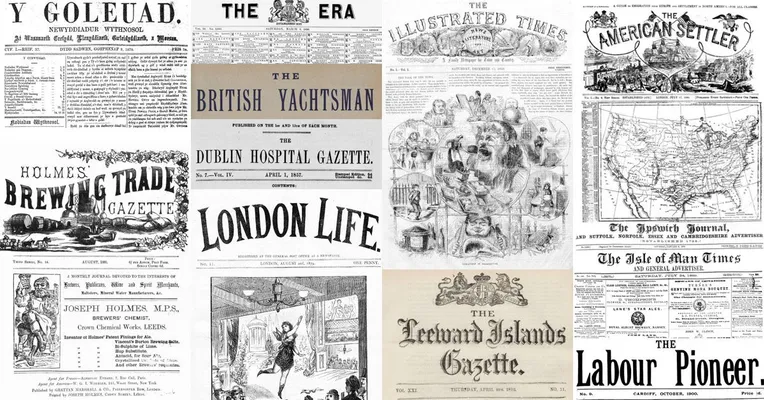
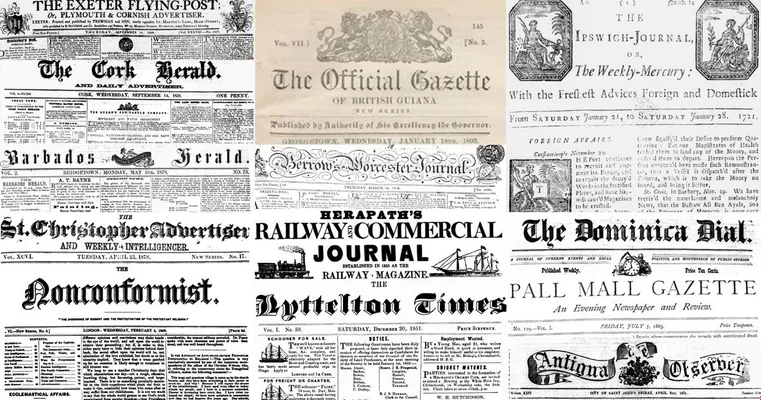
Today is a momentous day. Some fifteen years after the launch of the British Newspaper Archive, we have achieved the milestone of 100 million newspaper pages available to search as part of our collection. 100 million pages of stories waiting for you to uncover, from the length and the breadth of the United Kingdom, Ireland and beyond, covering five centuries of news.To celebrate this remarkable achievement, we’ll take a look at how we reached our 100 million newspaper pages landmark, exploring the
Here at The Archive, we love to learn of the discoveries you have made through our newspaper pages, and how you have used them, whether they have influenced novels, or provided information for dissertations. We were incredibly grateful, therefore, when crime writer and athletics historian Peter Lovesey contacted us with his account of sixty years of researching newspapers. From accessing historical newspapers in their original form, to scrolling through microfilm reels, and finally to searching newspapers digitally on the British
Since August 2021, the Archive has been working in partnership with the British Library to build a collection of free to view newspaper pages. This collection enables enhanced access to the diverse newspaper holdings of the British Library, with the titles, which have carefully curated by the British Library, spanning four centuries of news and covering not just Britain and Ireland, but the Caribbean, India, and beyond.You can search our free to view pages by creating a free account with
Today marks the release of over one million new free to view pages on the British Newspaper Archive. Thanks to our ongoing partnership with the British Library, we have now made over four million newspaper pages freely accessible since 2021.Our collection of over four million free to view newspaper pages represents a significant step in making historical resources available to more and more people, an effort to which the British Newspaper Archive and the British Library are firmly committed.As
Today we have released one million new free to view pages on The Archive, meaning that we now have a total of nearly 3.5 million free to view pages all now available as part of our collection.These pages have been brought to you thanks to our partnership with the British Library. Both the British Newspaper Archive and the British Library are committed to making historic resources available to more and more people, and these 3.4 million free to view pages represent
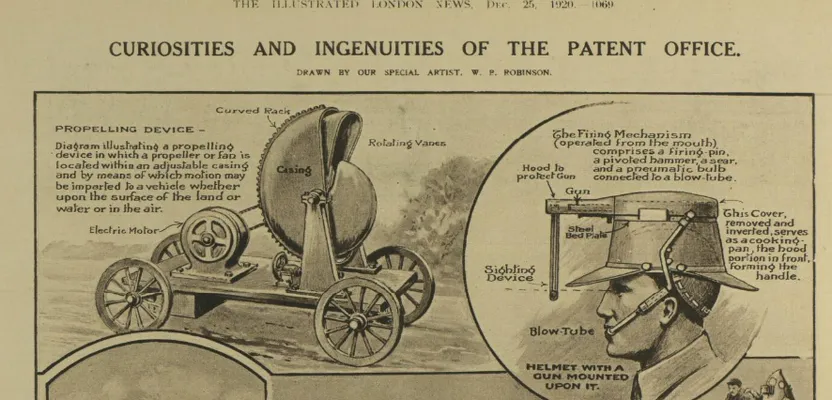
In December 1920 the world’s first illustrated weekly news magazine the Illustrated London News delved into the ‘curiosities and ingenuities‘ of the Patent Office, featuring some of Britain’s most unusual rejected patents.Illustrated by the publication’s own artist W.B. Robinson, the Illustrated London News presented a series of the bizarre designs that had been submitted to the Patent Office, but had since ‘lain dormant.’We at The Archive were keen to delve into our collection’s cabinet of curiosities, and these rejected
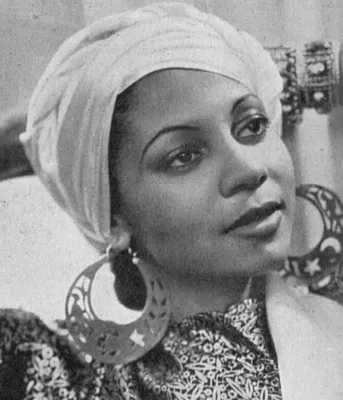
In the late 1930s a newcomer made her way onto British cinema screens: Princess Kouka. From Sudan, Princess Kouka, born Tahia Ibrahim Belal, had been spotted by film producer Walter Futter, who was determined for her to appear in his next film.Using newspapers from the time, we uncover the legacy of this largely forgotten film star, who travelled to Britain and impressed audiences across the country.‘A Notable Newcomer’On 18 December 1936 London’s Daily News reported on the impending arrival
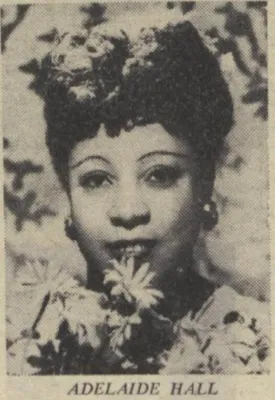
American-born jazz age superstar Adelaide Hall (1901-1993) was a Black music legend, who from 1938 onwards made Britain her home. She went on to have a long and successful career in the UK.In this very special blog, as part of Black History Month on The Archive, we will celebrate this jazz age queen who came to Britain and entertained thousands of people via her stage and radio performances, using newspapers taken from our Archive.A Star Is BornTo go back
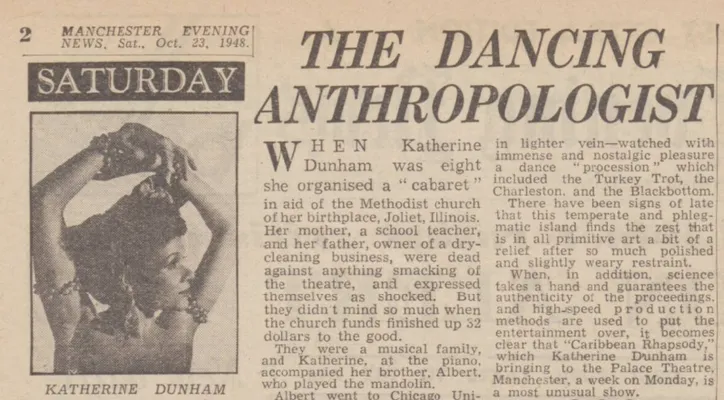
Born in 1909 in Chicago, ‘dancing anthropologist’ Katherine Dunham was known as the ‘matriarch and queen mother of Black dance.’ Her father was a descendant of enslaved West Africans and Madagascans, whilst her mother hailed from Canada.A multitalented artist, academic and activist, for many years Katherine Dunham ran the Katherine Dunham Dance Company, the only self-supporting African-American dance troupe in the mid-twentieth century. It was during this time that Dunham toured the United Kingdom, and in this special blog, we
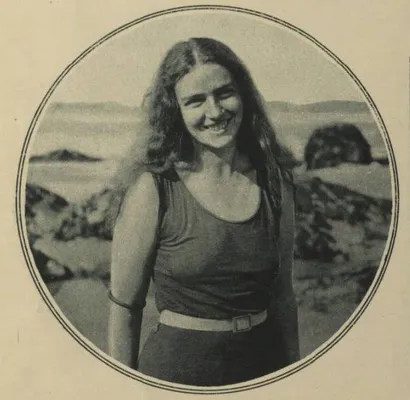
Mercedes Gleitze (1900-1981) was the first British woman to swim the English Channel, and the first person to swim the Straits of Gibraltar. In an amazing career that spanned the 1920s and 1930s, Mercedes captured the imagination of the British public and became a household name.Born to German parents in Brighton, Mercedes was one of three sisters. Skilled in languages, she moved to London where she worked as a secretary and stenographer. Whilst living in London she began swimming in