
Hot Off The Press – New Titles This Week
Published on 8 August 2022 by Rose Staveley-Wadham
We are delighted this week at The Archive to have reached yet another milestone, as we’ve reached 55 million pages, just under fourth months since we reached 50 million pages in April. Furthermore, we’ve added an incredible 308,283 brand new pages to our newspaper collection, with four brand new titles joining us this week, which hail from London and the Caribbean, and also include a specialist religious title.
Meanwhile, we’ve updated an amazing 57 of our existing titles this week, with updates to our newspapers from across the world, from Birmingham to Barbados, from Ealing to Ellesmere Port, from Lahore to Long Eaton, from Solihull to Strathearn.
So read on to discover more about all of our new and updated titles of the week, and also to find out more about how Tunbridge Wells developed as a fashionable spa town, with its origins all the way back in the seventeenth century.
Register now and explore the Archive
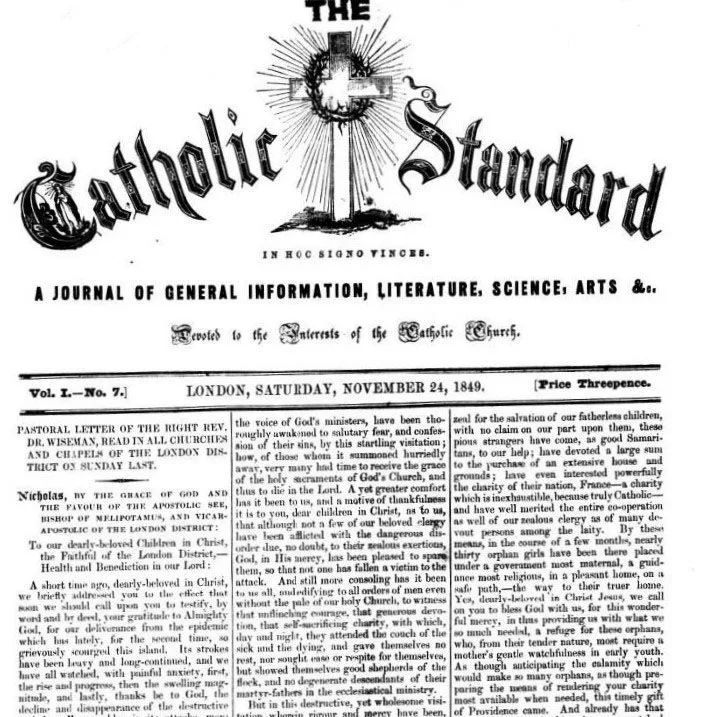
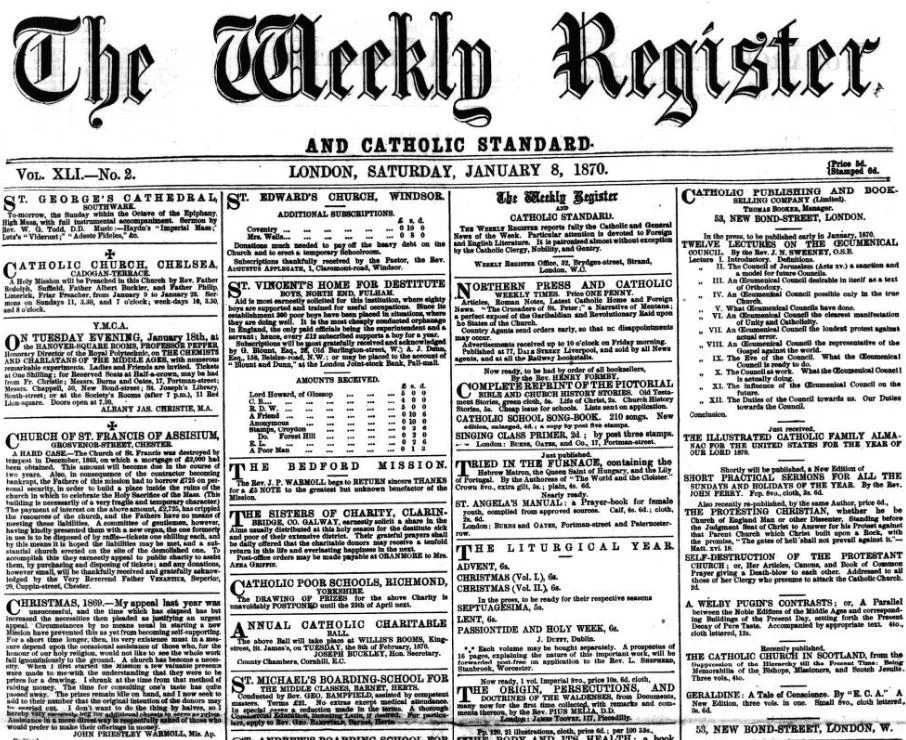
But without any further ado we’re delighted to welcome our first brand new title of the week to The Archive, which is specialist religious title the Weekly Register and Catholic Standard. First published on 13 October 1849, as the numbers of Catholics in Britain were doubling, partly thanks to increased immigration from Ireland, the Weekly Register and Catholic Standard promised to be a ‘Journal of General information, Literature, Science, Arts &c – Devoted to the Interests of the Catholic Church.’
Indeed, in an advert in the Dublin Weekly Nation on the same day, the proprietors of the new Catholic newspaper boasted how they had ‘secured correspondents in all parts of the globe,’ as well as how they would ‘spare no expense in making it one of the best Family Papers of the day.’
So what type of content did the Weekly Register and Catholic Standard contain? Filling its twelve pages, you could find general news from Britain and further afield, from the likes of France, Hanover and Prussia. However, at the core of this publication was its faith, and as such, an important section of the newspaper was its ‘Catholic Records.’ Here you could find reports on issues relating to Roman Catholicism from across Britain, Europe and North America, whilst the Weekly Register and Catholic Standard also contained details of those who had converted to the faith, and a look at different matters regarding the faith, with articles including a look at ‘Catholic Children in the Workhouse’ and ‘Deptford Catholic Schools.’
Meanwhile, the Weekly Register and Catholic Standard, which cost four pence and appeared every Saturday, also contained correspondence direct from important Catholic centres, such as from Rome and Paris. The newspaper also included special religious themed fiction, whilst it also took a look at other denominations, with a column devoted to ‘Protestantism.’ It took a look too at more general news, with reports on law, police, and parliamentary intelligence, also featuring notices of the deaths that had occurred during the week.
Indeed, Irish newspaper the Weekly Vindicator on 29 December 1849 described how the Weekly Register and Catholic Standard was the ‘only newspaper published in London containing the latest Catholic news from Great Britain, France, Italy, Rome, [and] the United States,’ in a clear push to appeal to the ‘Catholics of Ireland.’ Perhaps the resurgent Catholicism in England was not enough to support the sales of the newspaper, hence the appeal to an Irish audience, with the same advert announcing how:
The Catholic Standard, on and after the 5th of January, 1850, will be ENLARGED from three to four folio columns on the page, thus giving one-fourth more matter for the extra charge of one penny. The Edition for Ireland is forwarded by Friday night’s post, and delivered in Dublin and the neighbourhood on Saturday, and all parts of Ireland on Sunday morning.
Indeed, the Weekly Register and Catholic Standard had the reputation amongst the English press as the ‘popish paper’ (Lancaster Gazette, 1 March 1851). As such, this title is an vitally important one in tracing the resurgence of Roman Catholicism in Britain, as Catholic dioceses were created, and a Catholic hierarchy once more established by the Pope.
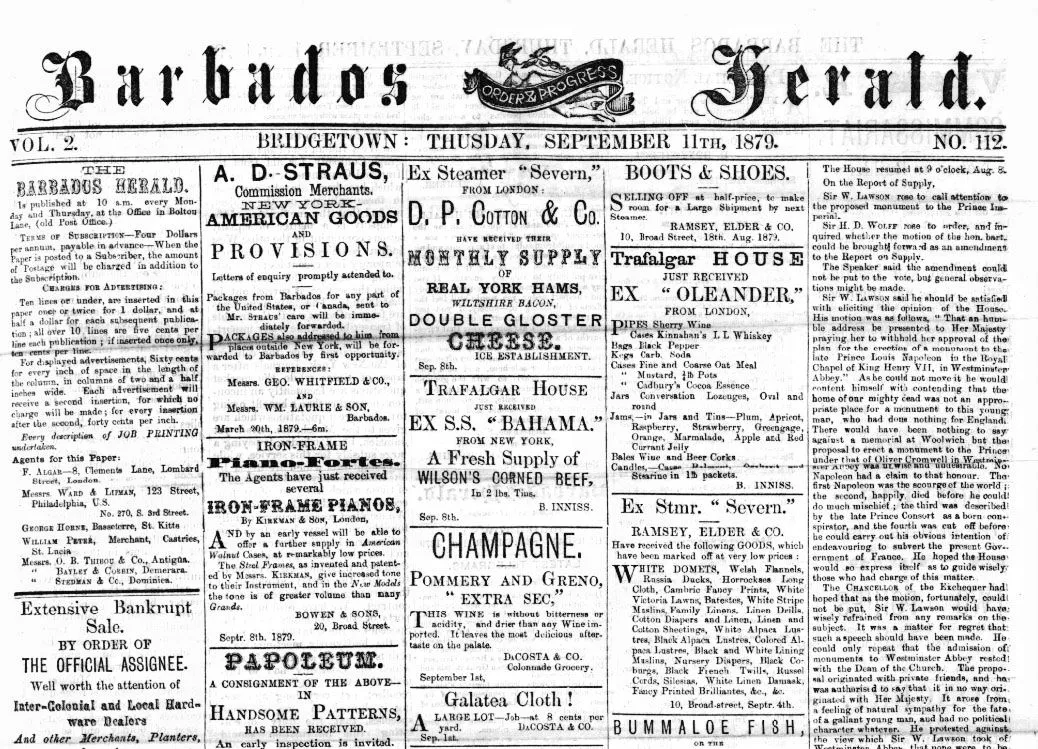
Our next new title of the week hails from the Caribbean, and is the Barbados Herald, our fifth Barbadian title to join The Archive. First published on 31 March 1879 in Bridgetown, the capital of Barbados, the Barbados Herald appeared every Monday and Thursday, filling four pages.
Established by Arthur H. Bispham, a writer and a member of the Commissariat Department, the Barbados Herald contained news of arrivals on the island, with ‘ship news’ detailing those vessels being ‘loaded for Barbados.’ Meanwhile, the newspaper looked further afield, detailing ‘English News,’ as well as containing the latest telegrams from across the world. The Barbados Herald also contained a look at naval and military news, as well as a ‘legislative summary.’
Indeed, in October 1889 the Colonies and India newspaper dubbed the Barbados Herald as a ‘well-known and well-conducted journal,’ with Bispham at is helm as a ‘good writer,’ who was ‘forcible, honest, and fearless in his style.’
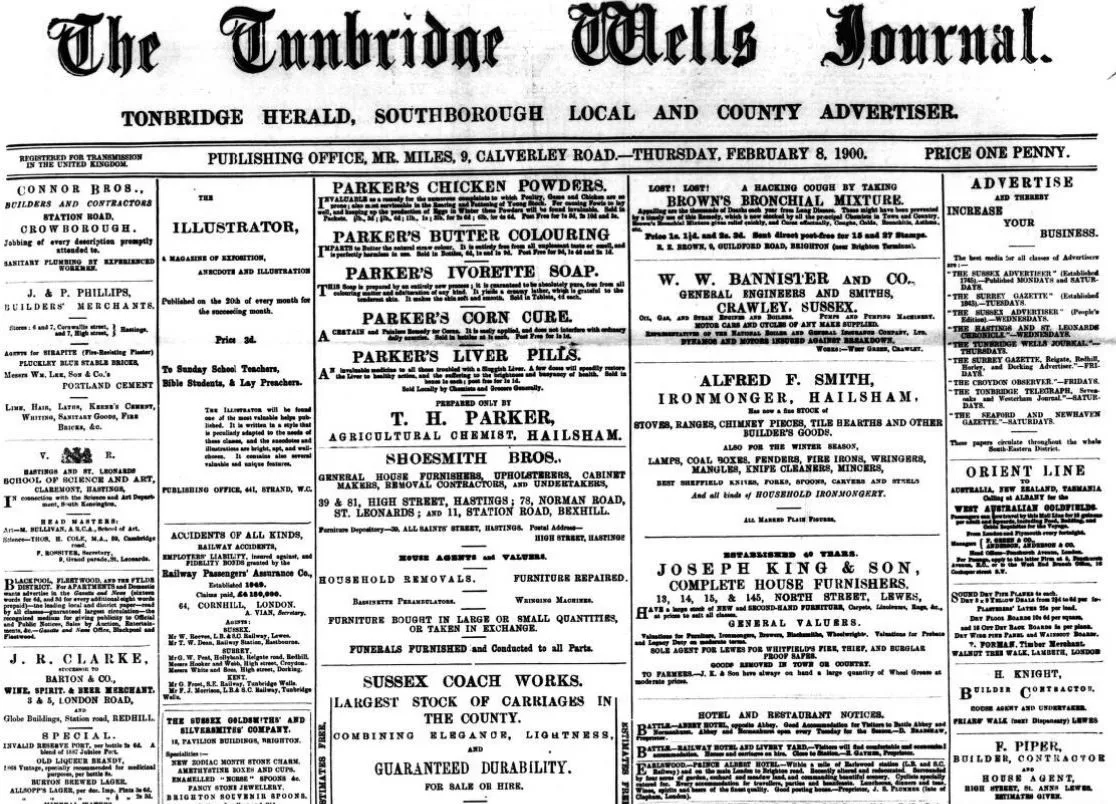
Back to Britain now and to the slightly less exotic climes of Tunbridge Wells, and we’re delighted to welcome the Tunbridge Wells Journal to our collection of Kentish newspapers. A thorough local newspaper, which also reported on national and international news, the Tunbridge Wells Journal was established in 1862 and was Liberal in its politics.
With a ‘Large Town and County Circulation,’ the Tunbridge Wells Journal initially appeared every Wednesday before moving to a Thursday publication schedule. Filling four pages, it circulated in Tunbridge Wells, Tonbridge and the surrounding area, with the ‘local news of the town and district’ being ‘full and complete.’
Indeed, this title is very well described as being ‘full and complete,’ with international news sourced from the United States, Mexico, France, Prussia, Russia, Japan and China, and ‘Provincial News’ from Cranbrook, Lewes, Sevenoaks, Eastbourne, Westerham, Falmer, Hastings, Haywards Heath, Horsham, Rye, Tichehurst, Tenderden, and Uckfield. Furthermore, the Tunbridge Wells Journal was an important local guide, offering a ‘Tunbridge Wells and Tonbridge Directory,’ which listed local places of worship, postal arrangements, banks, medical institutions and names of public officers.
The Tunbridge Wells Journal also contained the latest news from the local Petty Sessions, as well as discussing local matters like a proposed public hall and a proposed new railway station. Meanwhile, the thorough little newspaper also contained a parliamentary summary, and ‘Court and Fashionable’ intelligence.
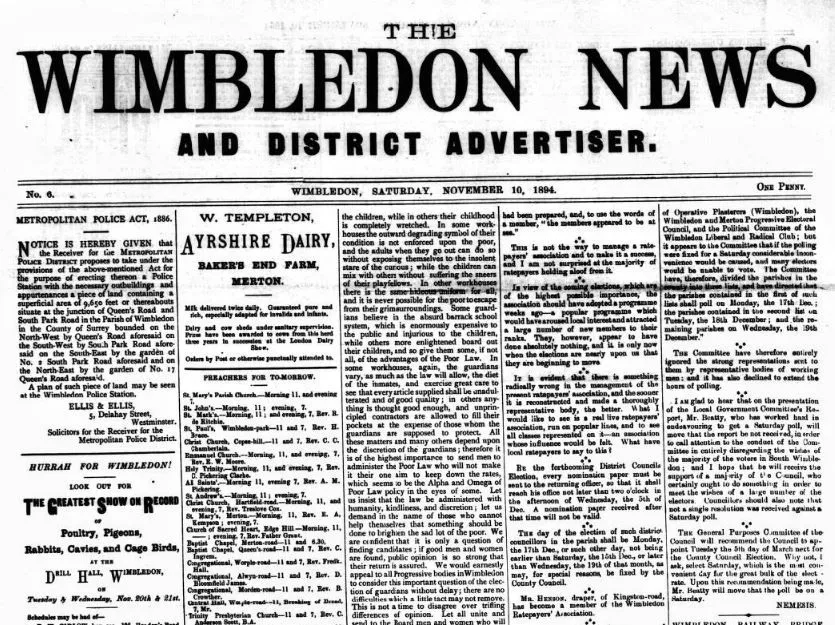
Our final new title of the week hails from South West London and is the Wimbledon News. ‘Circulating in Wimbledon, Merton, Tooting, Morden, Mitcham, Singlegate, Raynes Park, [and] Worcester Park,’ the Wimbledon News was first published on 6 October 1894 at the cost of just one penny, and it would go on to appear every Saturday.
Neutral in its politics, the first edition of the newspaper stated how:
While not in any way casting any reflections on our contemporaries, we believe that there is room for a journal which will promote interest in local affairs, and not hesitate to express its views whether they be popular or the reverse. We do not desire to be the mouthpiece of any party, still less of any religious sect, and our columns will always be kept free from coarse and ignorant attacks upon any who hold different religious views to our own.
Indeed, the aim of the new Wimbledon title was to represent ‘the public benefit, not the interests of individuals and sections,’ doing this through ‘honest straightforwardness.’ The Wimbledon News, therefore, promised to offer ‘thoroughly up-to-date’ articles on ‘local affairs,’ not allowing ‘anything of importance to Wimbledon to escape comment.’
To this end, the eight page newspaper contained news from the local area, reporting on the Wimbledon Police Court, as well as organisations like the Wimbledon Total Abstinence Society and the Worple Road Congregational Church. The Wimbledon News also featured an array of illustrations, illuminating national news stories and personalities of the day. The newspaper also featured special interest articles, focusing on sports like golf and football, art and literature, as well as ‘Readings for the Young.’
Meanwhile, the Wimbledon News had a particular focus on religious matters, with reports from local churches, as well as a section entitled ‘Preachers for Tomorrow,’ which gave the names of those due to be taking to the local pulpits that Sunday.
That’s it from our four wonderful new titles of the week. Meanwhile, we’ve updated 57 of our existing titles, with over 17,000 pages from 1939 to 1945 joining theCivil & Military Gazette(Lahore), and over 13,000 pages joining the Grimsby Daily Telegraph. We’ve also made updates to regional newspapers across England, Wales and Scotland, full details of which you can find at the end of this blog.
Tunbridge Wells – The Birth of Spa Town
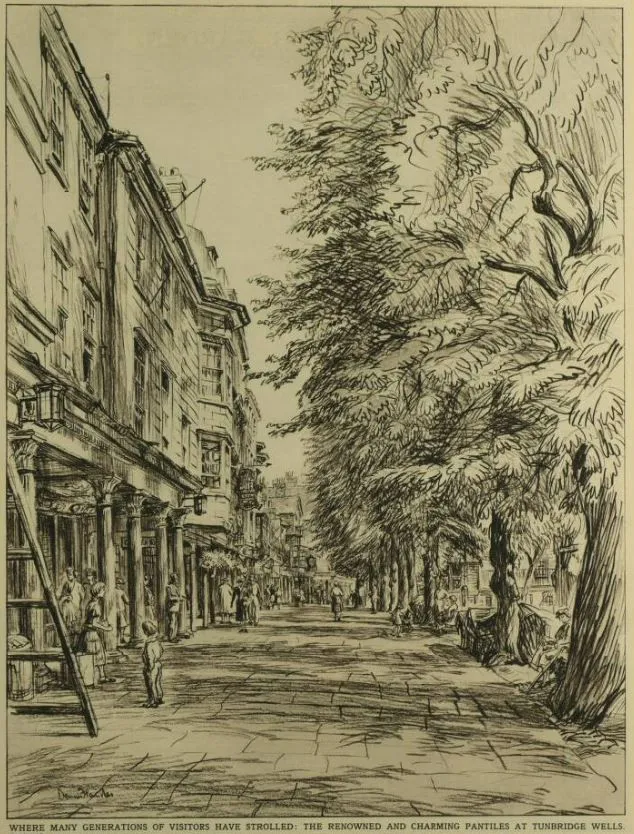
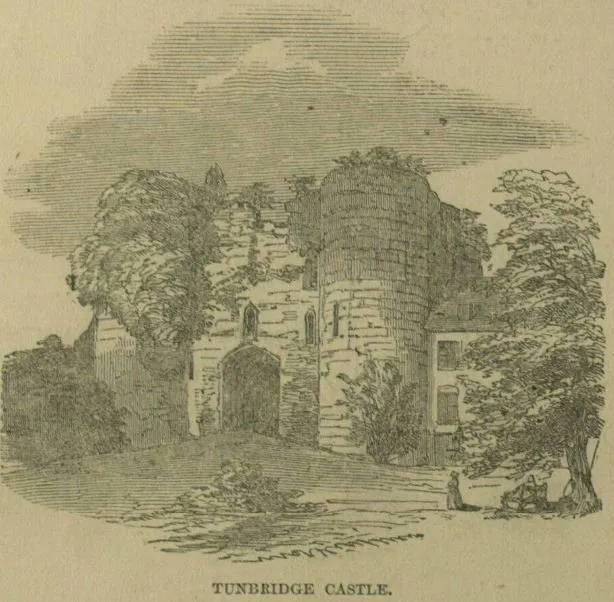
A fashionable resort since the seventeenth century, Tunbridge Wells found fame as a spa town as early as 1606. Our new newspaper the Tunbridge Wells Journal shines a fascinating light onto the history of the town as a resort, showcasing how our newspapers can be used to unravel the stories from the past even before they were published.
On 17 December 1863 the Tunbridge Wells Journal published details of a lecture entitled ‘Beau Nash: Or, Tunbridge Wells A Hundred Years Ago,’ which was given by ‘respected’ townsman C.T. Dodd at the Swan Assembly Rooms, in front of a ‘large and fashionable audience.’
Dodd told the gathering how:
The early history of this locality as a watering place dated as far back as 1606. When Dudley Lord North, a distinguished young nobleman in the court of King James 1st, had greatly debilitated his constitution, change of air was prescribed by his physicians as the only mode of re-establishing his health. Accordingly he came down to Eridge house, a hunting seat of Baron Bergavenny.
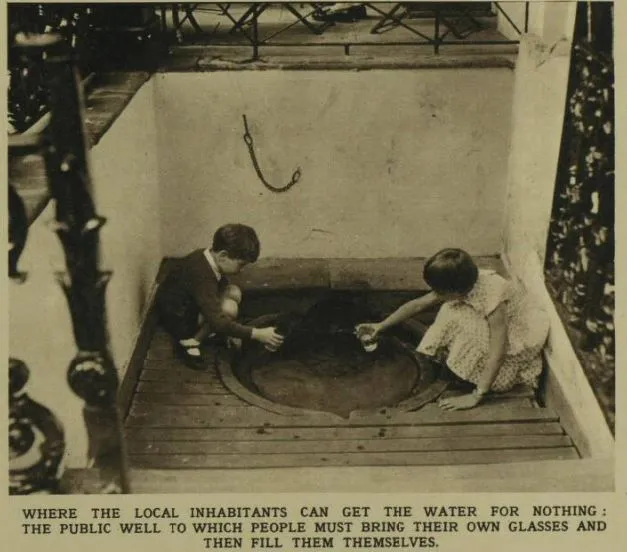
On one ‘fine summer’s day’ Lord Dudley went for a walk, and his attention was soon attracted by ‘a bubbling of water among the bushes.’ What he did next would transform Tunbridge Wells into the spa town it became:
He observed a singular scum at the top [of the water] and deposit at the bottom. He drank of it and was refreshed, and during his three months’ stay frequently drank of the water. His health became better, and he returned to London thoroughly renovated.
Once in London, ‘he made known the mineral virtues of the water, and from that time it became occasionally a place of resort.’ Meanwhile the enterprising Lord Bergavenny cleared the wood around the spring, and added a stone pavement to it, enclosing the whole ‘in a triangular form.’
And in 1630 ‘new impetus’ was leant to the town as a resort by the visit of Queen Henrietta Maria, who ‘was sent to the Wells by her physicians for the re-establishment of her health.’ She stayed in Tunbridge Wells for six weeks, bringing masquerades and dancing along with her.
Six years later the first buildings were constructed around the springs. These consisted of two cottages, Dodd says, ‘one of which was appropriated to the ladies, and the other called the pipe office, in which the gentlemen were accustomed to smoke and chat over their coffee.’
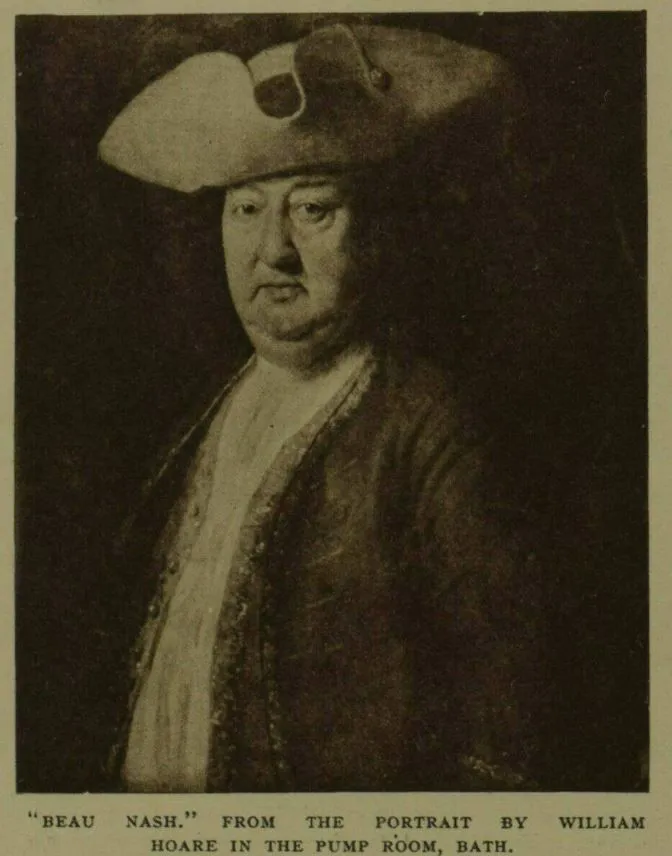
With Tunbridge Wells firmly positioned, therefore, as a spa resort in the Restoration period, new glamour was to come to the town in 1710, when Beau Nash, the celebrated fashion leader and darling of Bath, arrived. Dodd describes this moment in vivid detail:
It was on a fine morning in June, of the year 1710, when nature was teeming with vernal beauty, that the sound of wheels might have been heard on the London Road…A man alights from the carriage, scarcely past the prime of life, with florid complexion, prominent features, rather above the average height, and well rounded figure. This was Richard Nash, the King of Bath.
At this moment in Dodd’s talk a ‘tableau vivant of Beau Nash’ was unveiled, depicting the dandy as he stood and observed Tunbridge Wells beneath him, ‘hat in hand.’ Dodd then described Nash’s plans for the town of Tunbridge Wells:
Nash’s object had to been to bring about a free and unrestrained intercourse between persons separated by the common principal of society. By a mixture of talent and decision, and great knowledge of human nature, he effected this, and established a system peculiarly of his own. His local influence existed for a long time after he ceased to be a guide in its diversions.
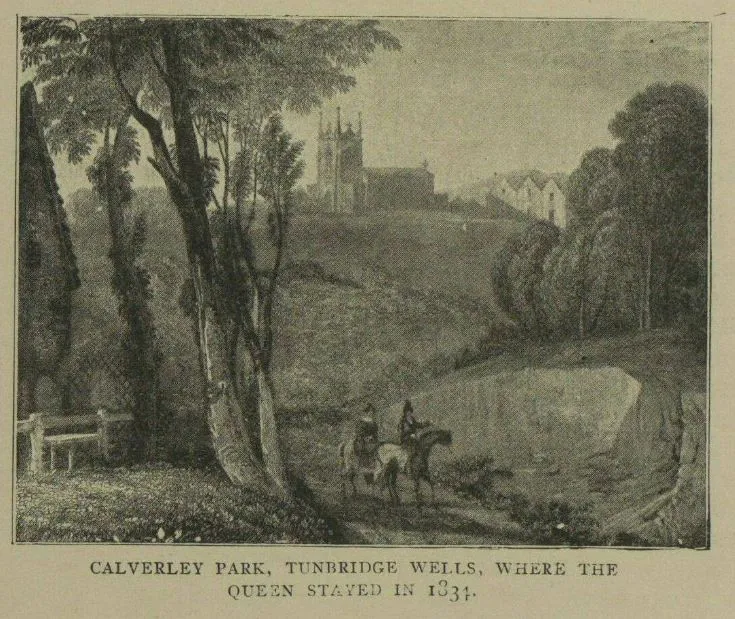
Tunbridge Wells, like Bath, was again at the forefront of fashionable society. The Tunbridge Wells Journal tells of how the the town, ‘in every period of its celebrity,’ had ‘been the resort of the most fashionable.’ Following Beau Nash were King George III and King George IV, and Queen Adelaide, the wife of King William IV. And perhaps amongst one of its most famous visitors was the young Princess Victoria, then aged 16, who as ‘a private young lady visited and sketched many of the objects of local interest.’
We love how the Tunbridge Wells Journal provides such a vivid snapshot of life in the town over one hundred years before the newspaper was even founded. What stories from the past can you discover in our Archive today?
New Titles
Title | Years Added |
1879-1896 | |
1862-1904 | |
1849-1870 | |
1894-1915 |
Updated Titles
This week we have updated 57 of our existing titles.
You can learn more about each of the titles we add to every week by clicking on their names. On each paper’s title page, you can read a FREE sample issue, learn more about our current holdings, and our plans for digitisation.
Title | Years Added |
1988, 1995 | |
1994 | |
1910 | |
1969, 1971, 1998 | |
1963, 1980 | |
1980 | |
1999 | |
1994 | |
1989 | |
1987 | |
1998 | |
1939-1945 | |
1988 | |
1922, 1931 | |
1991 | |
1993 | |
1920-1936 | |
1930-1931, 1936 | |
1993, 1995 | |
1894 | |
1993 | |
1969 | |
1993 | |
1989 | |
1994 | |
1999 | |
1987, 1994 | |
1968 | |
1872 | |
1994 | |
1891-1892, 1902, 1905-1909, 1911-1912 | |
1998-1999 | |
1991 | |
1993 | |
1986 | |
1988, 1990 | |
1999 | |
1897, 1995 | |
1993 | |
1989, 1994 | |
1905 | |
1993 | |
1993 | |
1993, 1999 | |
1993, 1999 | |
1998 | |
1993 | |
1993 | |
1994 | |
1993 | |
1988 | |
1822 | |
1990 | |
1991 | |
1990, 1993 | |
1913 | |
1994 |
You can keep up to date with all the latest additions by visiting the recently added page. You can even look ahead to see what we’re going to add tomorrow.
Share this article
About the author

Rose Staveley-Wadham
Newspaper Licensing Manager
Published on Mon, 8 August 2022.