
Hot Off The Press – New Titles This Week
Published on 28 April 2025 by Rose Staveley-Wadham
This week at The Archive we are marking May Day and its associated customs, as we welcome six new titles to our collection. Meanwhile we’ve added 55,867 brand new pages to our holdings this week, whilst we’ve updated 32 of our existing titles from across the United Kingdom, the Republic of Ireland, and even further afield.
So read on to discover more about our new and updated titles of the week, and also to learn more about May Day and how it was celebrated in days gone by.
Register now and explore the Archive
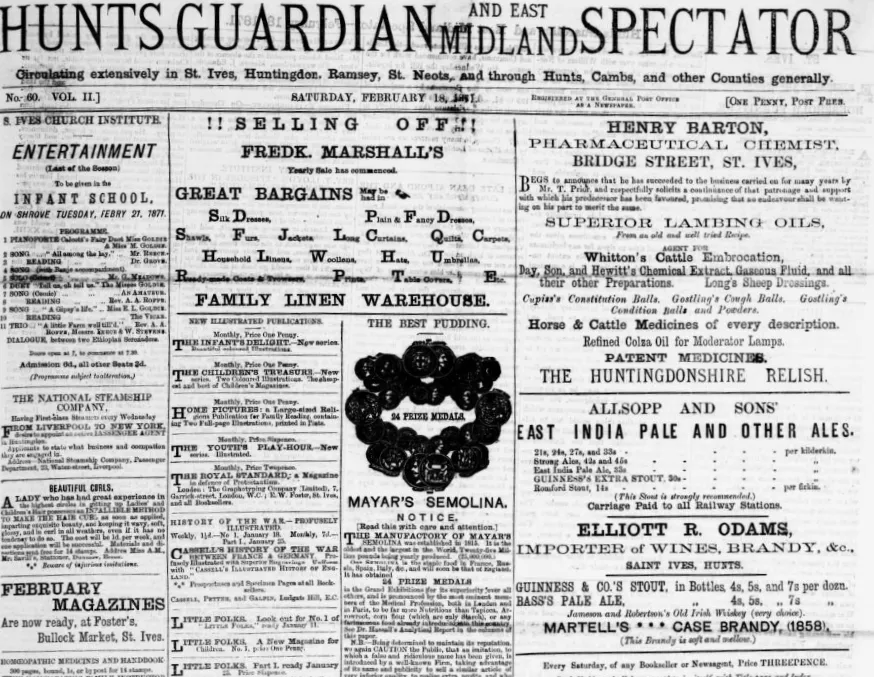
Our first new title of the week is the Hunts Guardian. Founded in the medieval market town of St Ives in 1860, in what was then the county of Huntingdonshire, the Hunts Guardian appeared every Saturday.
During the Victorian period, the town of St Ives had ‘one of the largest weekly cattle markets in the Kingdom,’ and this would have played an important part in the reporting of the Hunts Guardian. Costing only one penny, this publication was Conservative in its politics, circulating in the town of St Ives, as well as throughout Huntingdonshire and ‘a parts of Cambridgeshire, Northamptonshire, and Bedfordshire.’
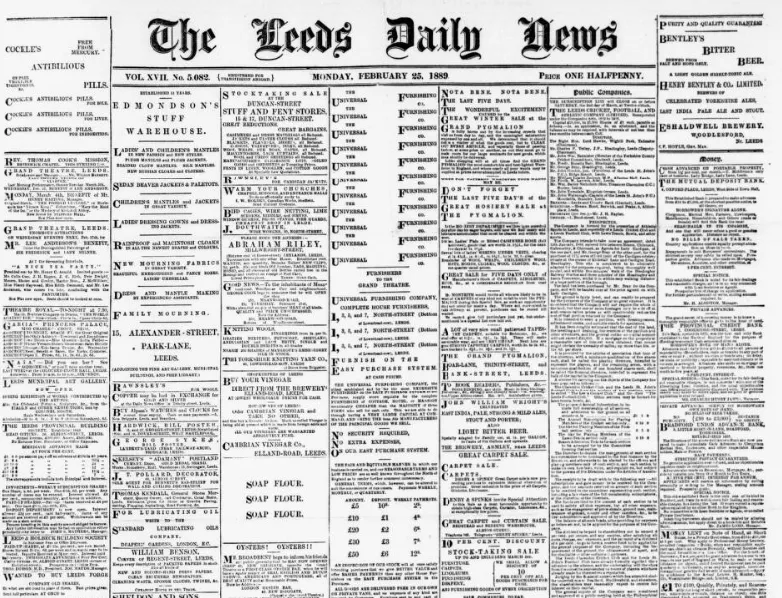
We’re off north now for our next new title of the week, which is the Leeds Daily News. This daily Yorkshire paper was established in 1872, and like the Hunts Guardian, it was also Conservative in its politics. The Leeds Daily News, however, was cheaper than its Huntingdonshire counterpart, as it sold for the modest price of just one halfpenny.
A popular paper, it had a guaranteed circulation of some 28,600 copies, and it was sold throughout Leeds and Yorkshire, as well as in Lancashire and Lincolnshire.
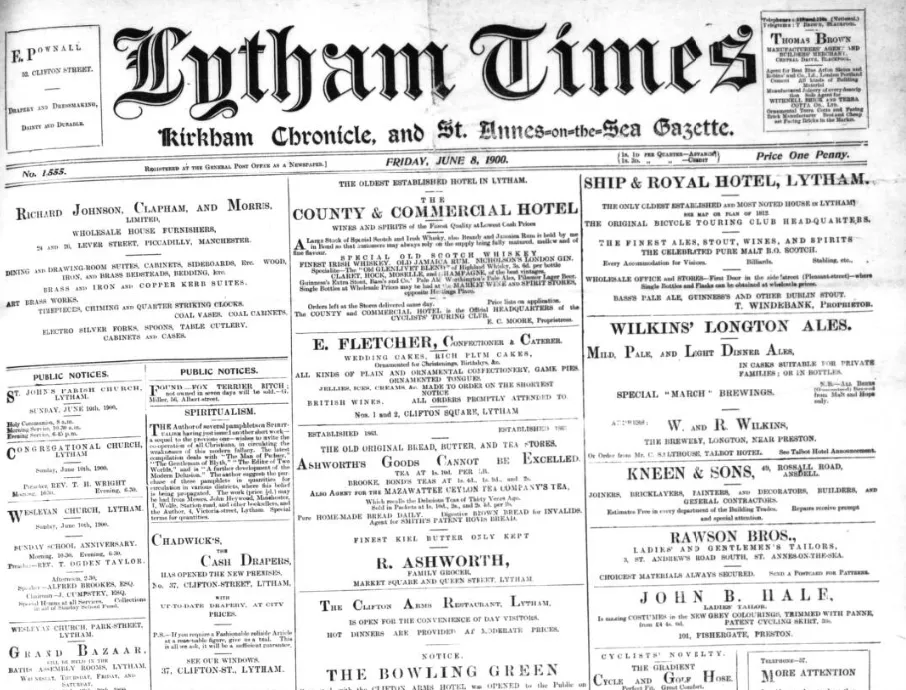
We’re off across to Lancashire now to introduce the next of our new titles, which is the Lytham Times. Published in Lytham St Anne’s, a seaside town in Lancashire, which was a ‘favourite summer resort of visitors from Lancashire and Yorkshire’ during the Victorian era and beyond, the Lytham Times was established in 1870 with the full name of the Lytham and Kirkham Times.
Neutral in its politics, the Lytham Times appeared every Wednesday at the cost of two pence. Circulating mainly in the town of Lytham, it was printed and published by one Robert Clarke of 14 Queen Street, Lytham.
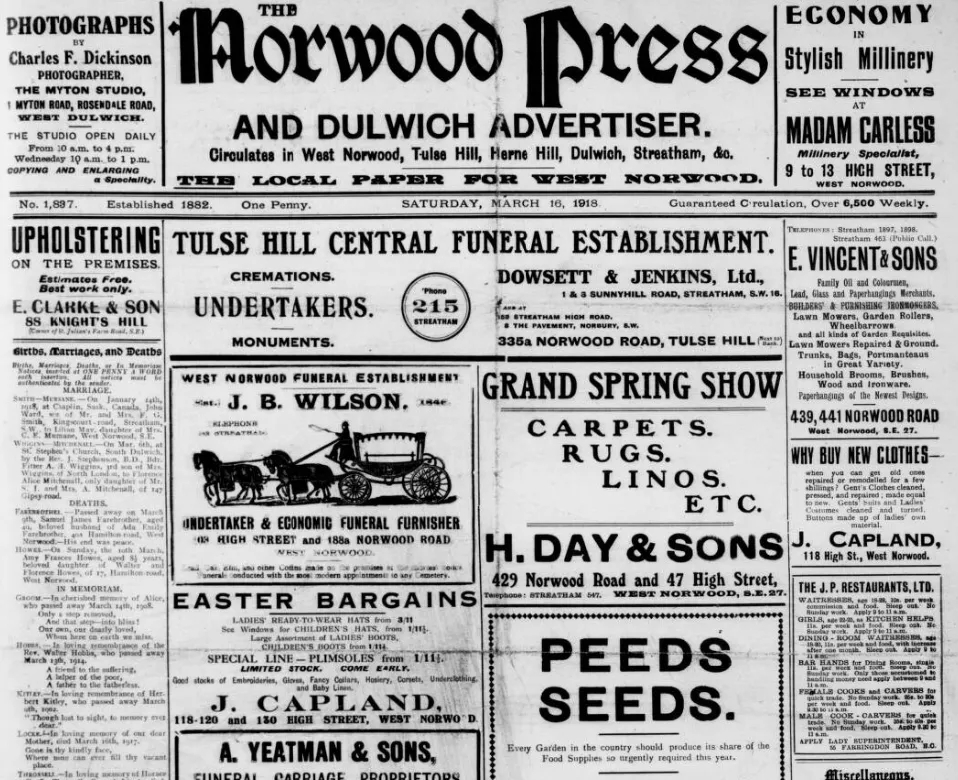
Let’s take a trip south now to the capital to meet the Norwood Press and Dulwich Advertiser, which was established in 1882 with the wonderful name of the Ye Olde Norwode Press. This fanciful name was changed just a year later in 1883.
Published in Norwood, a ‘pleasant suburban parish a few miles from the metropolis,’ the Norwood Press and Dulwich Advertiser appeared every Friday at the cost of just one penny. Claiming both independence and neutrality from the issue of politics, this paper was published by Truslove & Bray Limited, from their premises in West Norwood.
Furthermore, the Norwood Press and Dulwich Advertiser circulated throughout Norwood, Dulwich and the area. The paper ‘fully and well reported’ on the ‘local and district news of the neighbourhood.’
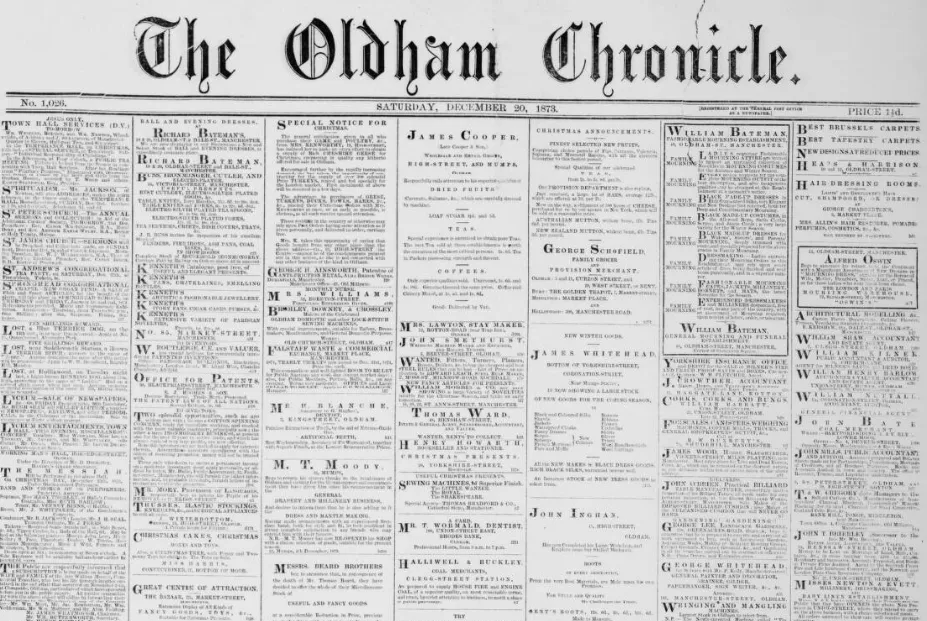
We’ve been criss-crossing the country so far as we introduce this week’s new titles, and we’re back up north now to welcome the Oldham Chronicle to our collection. Established in May 1854, this Liberal weekly title appeared every Saturday at the modest cost of one penny.
During the following decades the Oldham Chronicle saw a circulation of some 17,000 copies, and its success endures to this day, the paper being ‘at the heart of Oldham since 1854.’
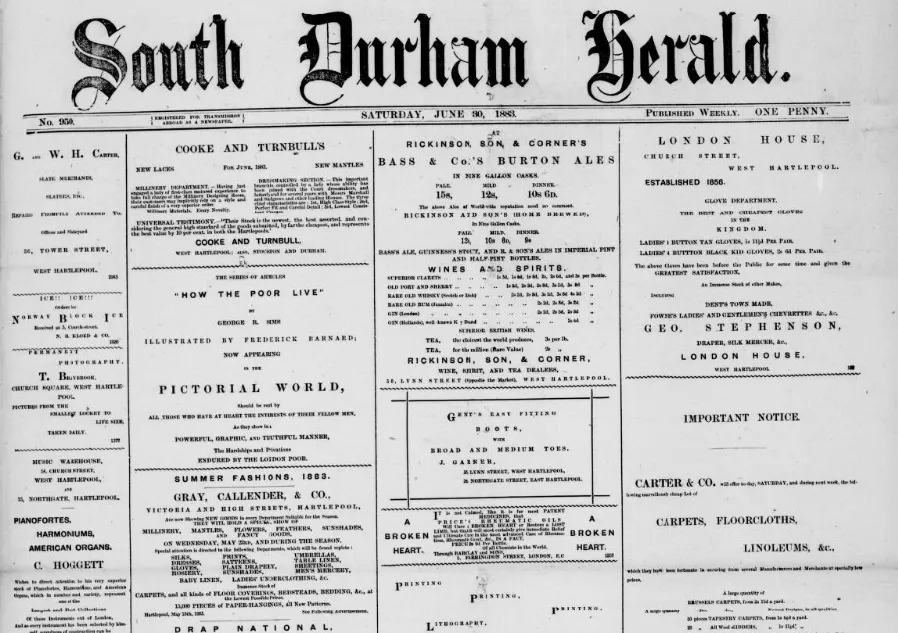
Our final new title of the week is the South Durham Herald, which was founded in the seaside and port town of Hartlepool, County Durham, in May 1866. This weekly paper also cost one penny, and was published specifically in West Hartlepool.
With its principle circulation being ‘in the chief towns of Durham and North Yorkshire,’ the South Durham Herald addressed ‘the commercial, professional, and agricultural classes of the district.’ Indeed, in an advert for the paper, we learn how the publication ‘reckons among its subscribers the most influential professional and commercial men of the county of Durham, and of North Yorkshire, including merchants, shippers, brokers, coal-owners, iron-masters, and solicitors.’
Adopting a ‘liberal-conservative’ political stance, the South Durham Herald was known as ‘a high-class local and literary journal.’ In November 1884 the paper merged with the Stockton Journal, which was itself established in 1880.
That’s it from our new titles of the week. Moving on to our updated titles, a particular highlight are the over 20,000 brand new pages we’ve added to the Louth and North Lincolnshire Advertiser, whilst we’ve added new pages to titles from Wales (the Montgomery County Times and Shropshire and Mid-Wales Advertiser and the Prestatyn Weekly), Scotland (the Banffshire Journal, the Dundee Weekly News and the Perthshire Courier), Northern Ireland (the Lurgan Mail) and the Republic of Ireland (the Kilkenny Moderator and the Waterford Standard).
From even further afield, we’ve added new pages to the Trinidad Royal Gazette, whilst the Isle of Man Daily Times has also been updated this week.
Marking the May Day in Days Gone By
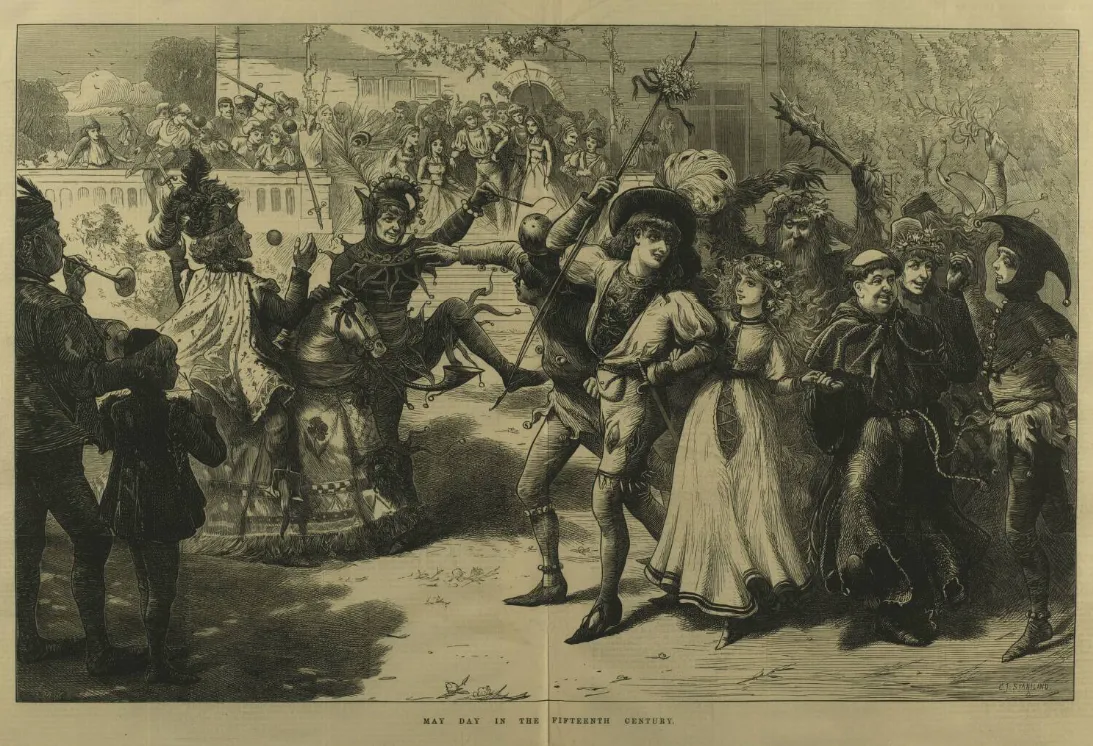
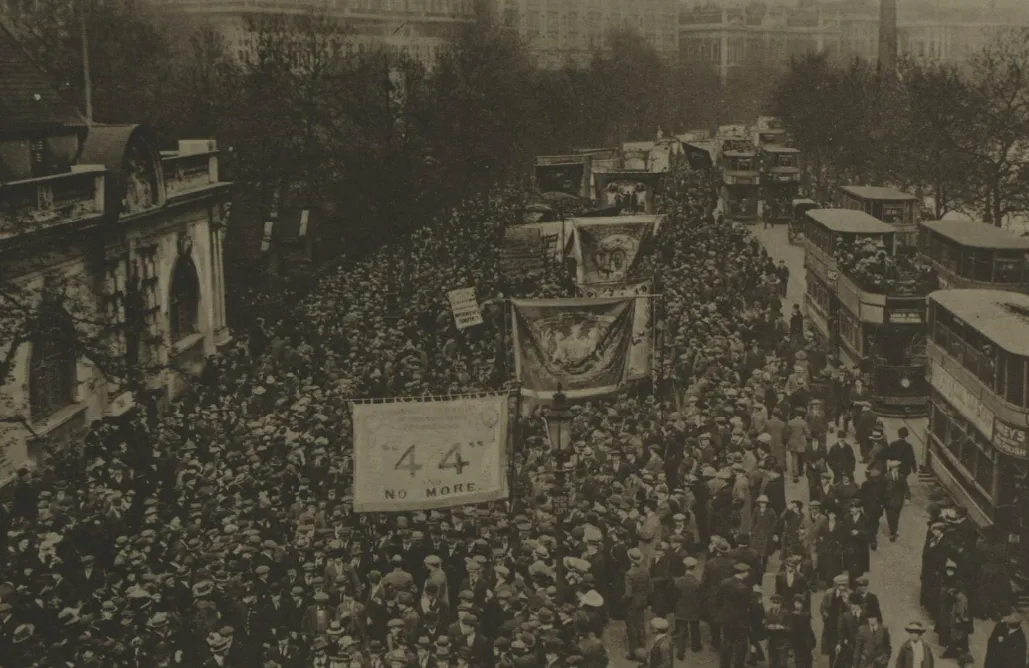
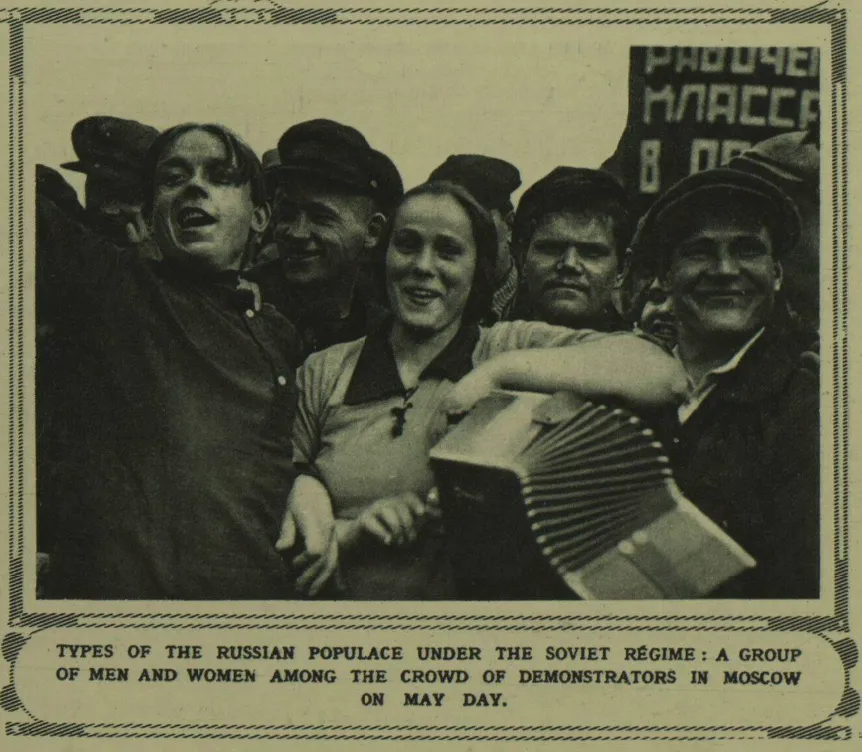
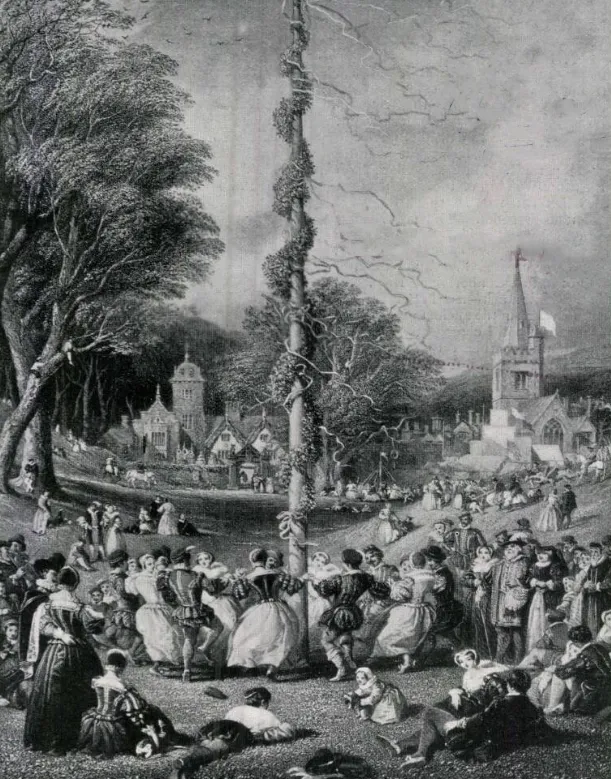
As the years have gone by, the May Day has meant different things throughout history. Springing from the pagan practice of celebrating the final banishment of winter, and welcoming warmer days, the May Day is associated with the crowning of the May Queen, dancing around the maypole, and other traditions. From the late nineteenth century, it also become interwoven with the global labour movement, when in 1889 the day was declared to be the International Workers’ Day by the Second International Socialist Workers Congress.
Pages from our new titles reveal these variations in how May Day was marked. For example, on 10 May 1884 the Hunts Guardian described how May Day is ‘always looked forward to’ in the village of Hemingford Abbots. The village marked the May Day with its own customs, for example with the placing of a ‘May bush before people’s doors,’ and the honouring of a ‘May garland.’ The May Day was also marked by a dinner held by the Hemingford Abbots Benefit Club.
Meanwhile, an article from the Norwood Press and Dulwich Advertiser published on 22 May 1926 reveals the changing nature of the marking of May Day. In a front page article entitled ‘The Soviet and British Miners,’ the paper discussed the meeting of the Executive Bureau of the Soviet Trade Union International at Moscow, which addressed ‘in what form and and in what degree it is possible to support the British miners in a possible conflict with the mine owners.’
But where did the May Day come in? It was essential for the Executive Bureau of the Soviet Trade Union International’s so-called ‘propaganda’ mission:
As far as can be ascertained, [Lozovsky’s] immediate task consists in agitating among the English trade unions, and especially in gaining influence in the General Council of the Trades Union of Congress. Further efforts are to be made to involve the transport workers, particularly the railwaymen. The prevailing idea in Moscow is to promote a general strike. An appeal by the Trade Union International to the workers of the world laying down a programme for May Day celebrations lays stress on the necessity for the workers in every country to do their utmost to back up the ‘miners, metal workers, and others of the English proletariat.’
Moving forward nearly 20 years, and the Lytham Times on 4 May 1945 reported on the ‘May Day Festival at St. Annes.’ Here, ‘according to true tradition and style,’ the May Day Festival was held on the grounds of the Alicia School of Dancing.
So what did these May Day celebrations involve? The Lytham Times reports how there ‘was Maypole dancing,’ whilst ‘sweet little’ Wendy Gains was crowned May Queen. After the traditional May Day customs were performed, there ‘was a display of ballet, national, tap and character dancing on the open-air stage, amid the beautiful natural setting of the green foliage.’
Discover more about May Day customs and traditions in the pages of our Archive today.
New Titles
Title | Years Added |
1871-1872, 1874-1884 | |
1889, 1898 | |
1870, 1880-1888, 1900-1909, 1920-1929, 1932-1949 | |
1918-1929 | |
1873, 1897 | |
1883-1891 |
Updated Titles
This week we have updated 32 of our existing titles.
You can learn more about each of the titles we add to every week by clicking on their names. On each paper’s title page, you can read a free sample issue, learn more about our current holdings, and our plans for digitisation.
Title | Years Added |
1948-1949 | |
1895, 1900-1901, 1904, 1908 | |
1995 | |
1998 | |
1914-1917 | |
1891, 1948 | |
1913-1919 | |
1896 | |
Cumberland and Westmorland Advertiser, and Penrith Literary Chronicle | 1882, 1884-1886, 1897 |
1994 | |
2002 | |
1964-1965 | |
1904, 1907 | |
1923 | |
1889-1896, 1899-1903, 1915-1919, 1926-1938, 1951, 1953-1957 | |
1985 | |
1870, 1875, 1877, 1889, 1899 | |
Montgomery County Times and Shropshire and Mid-Wales Advertiser | 1920-1921 |
1927-1928 | |
1938-1939 | |
1994, 1998 | |
1856, 1874, 1878, 1889 | |
1987 | |
1870-1875 | |
1992 | |
1818, 1913, 1915-1917 | |
1900-1903 | |
1912-1917, 1919, 1927 | |
Whitehaven Advertiser and Cleator Moor and Egremont Observer | 1891, 1910-1911, 1913-1914 |
1882, 1886-1888, 1902-1910, 1912, 1915-1918 | |
1965 | |
1916, 1918 |
You can keep up to date with all the latest additions by visiting the recently added page. You can even look ahead to see what we’re going to add tomorrow.
More on this topic:
Share this article
About the author

Rose Staveley-Wadham
Newspaper Licensing Manager
Published on Mon, 28 April 2025.