Hot Off The Press – New Titles This Week
Published on 9 December 2025 by Rose Staveley-Wadham
With the addition of brand new title the Transport Worker, alongside three other brand new newspapers, this week at The Archive we are looking back at the 1911 Liverpool general transport strike. Meanwhile, we are excited to celebrate reaching a landmark 98 million pages, as we get ever closer to that 100 million pages milestone.
That’s not all, in total we’ve added 203,148 brand new pages to our collection, with updates to eight of our existing titles. So read on to discover more about our new and updated titles, and also to learn about the Liverpool general transport strike, which reached a violent climax in August 1911.
Register now and explore The Archive
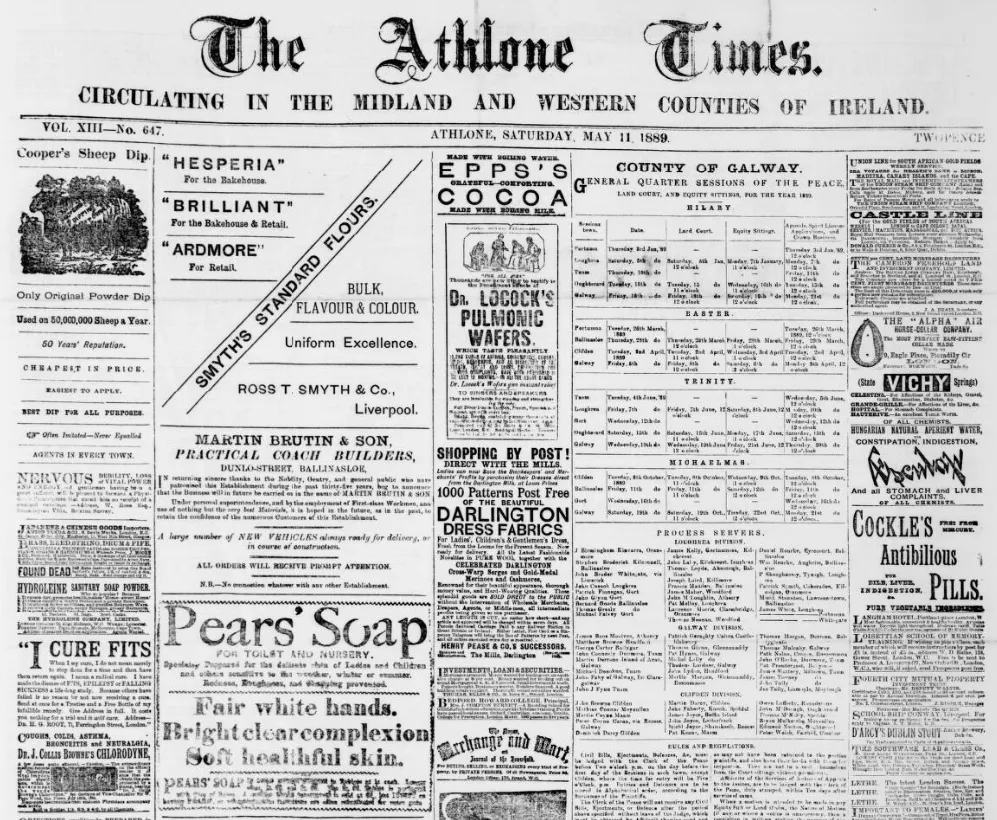
The Athlone Times
First up we travel to Ireland to welcome the Athlone Times to our Archive. Established in 1877 in Athlone, which lies partly in County Westmeath and partly in County Roscommon, the Athlone Times was politically independent, appearing every Saturday at the cost of 2 d.
Soon gaining the reputation of being a ‘well-known and ably-edited journal,’ with a ‘beneficial influence upon the affairs of the area,’ as per The Industries of Ireland (1891), the Athlone Times circulated in the ‘Midland and Western Counties of Ireland.’ Printed and published by Henry McClenaghan, the paper filled four pages and reported from the Athlone Town board, the Ballinasloe Board of Guardians, and the Ballinasloe Petty Sessions.
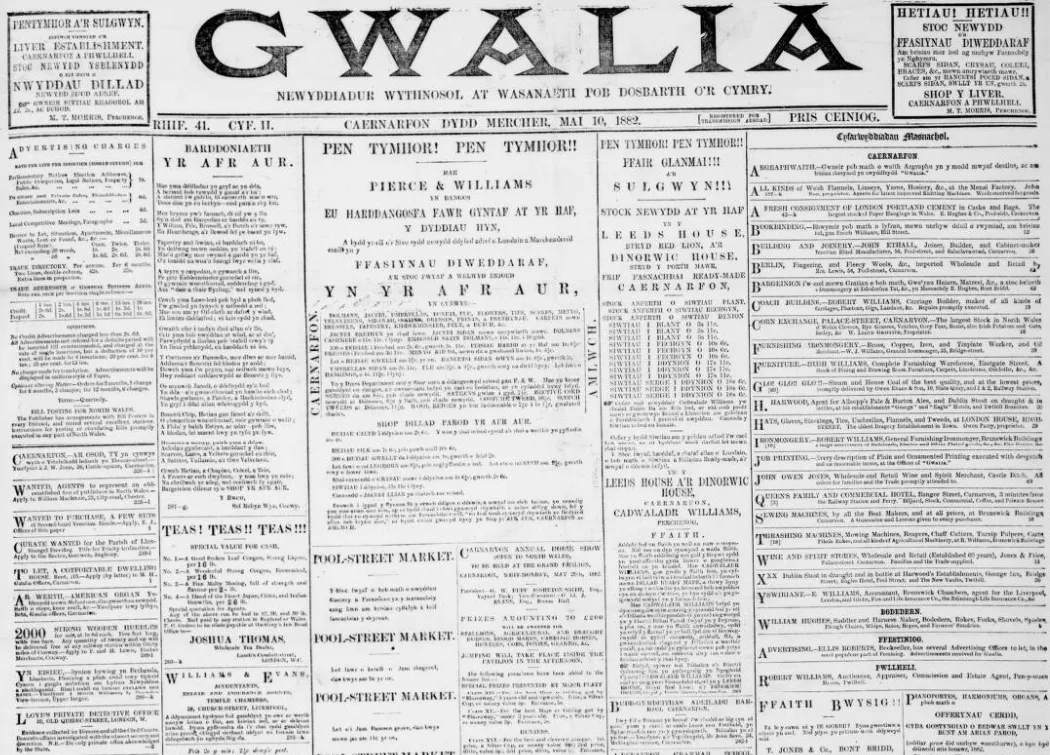
Gwalia
From one Celtic nation to another now with our next new title, which is Gwalia. Borrowing from the archaic name for Wales, which was popularised during the nineteenth century, Gwalia was a Welsh-language title published in Bangor, North Wales.
First appearing on 3 August 1881, and subsequently being sold every Tuesday, Gwalia had the reputation of being a ‘high class Welsh newspaper.’ Circulating ‘in Wales and the North and West of England,’ all stories were printed in Welsh, with the paper publishing ‘authentic reports of political, social, and religious movements.’
Indeed, it was said that Gwalia was ‘sold regularly in every Town and Village throughout Wales, and in Liverpool and Manchester.’ Furthermore, the ‘contents of this paper [were] particularly directed to the landed gentry and farmer, the industrial and general working classes, the literary classes – especially clergy and minister.’ Filling some eight pages, this Conservative newspaper cost just 1 d.
The Transport Worker
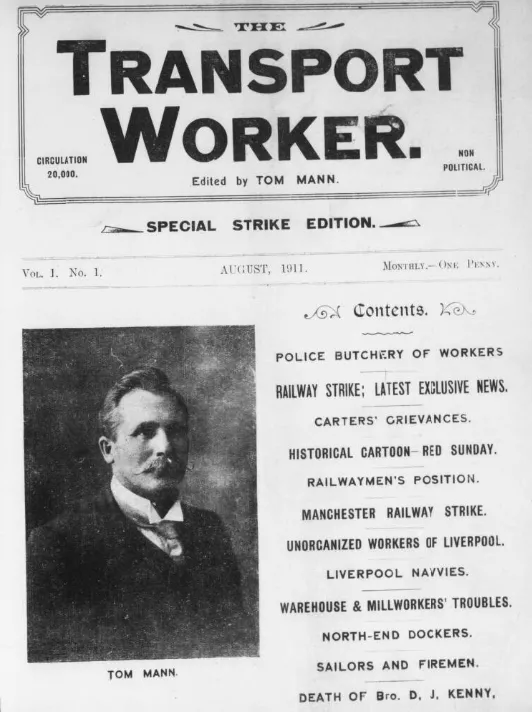
Continuing our exploration of trade union papers, this week we have added the Transport Worker to our holdings. First published in August 1911 with trade unionist Tom Mann (1856-1941) as its editor, the Transport Worker aimed to ‘raise the standard of life of the workers by means of Industrial Organisation.’
Mann was the perfect figurehead for such industrial organisation. During this period, he led the Liverpool general transport strike, which began some months before the debut of the Transport Worker, in June 1911. The strike itself, meanwhile, followed the first annual congress of the National Transport Workers’ Federation, which was held on 1 June 1911, and fittingly, the Transport Worker was published in the city of Liverpool.
With Mann editing as well as contributing to the paper, which deemed itself to be ‘non-political,’ the Transport Worker aimed to ‘perfectly organise Liverpool and District to bring all into the National Transport Workers’ Federation.’ Preaching industrial solidarity, Mann appealed directly to the 28,000 dockers of Liverpool to support his cause.
Meanwhile, Mann in his debut editorial was nothing if not eloquent, penning how:
The efficiency of the working class in producing wealth is increasing constantly. The conditions under which millions live and work keeps them always below the poverty line. Luxuries unexampled enjoyed by one class, whilst millions of the class that creates these luxuries are incapable of adequately feeding their own children.
So what did the 24 pages of the Transport Worker contain? The paper printed articles on a range of occupations in Liverpool, on the railway workers and the navvies, as well as looking at other professions like warehouse workers and millworkers. It also covered in depth, as we shall see, the Liverpool general transport strike.
The Walton Gazette and Harwich and Dovercourt Advertiser
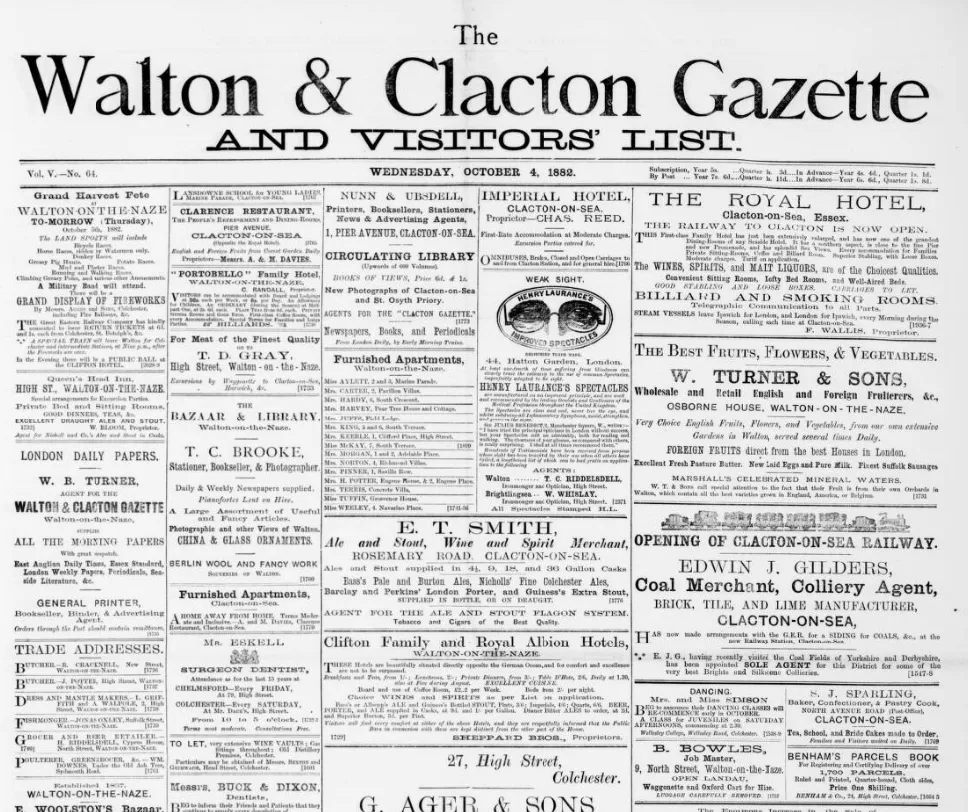
Our final new title of the week is the Walton Gazette and Harwich and Dovercourt Advertiser. Published in the Essex seaside town of Walton-on-the-Naze, this newspaper first appeared in 1878 before being relaunched in 1881.
Circulating in ‘Walton-on-the-Naze and neighbourhood,’ the Walton Gazette and Harwich and Dovercourt Advertiser appeared every Wednesday at the cost of one pence. Its four pages were filled with news from the likes of Walton-on-the-Naze, Ardleigh, Stanway, Great Holland, Wyvenhoe, Brightlingson, Clacton-on-Sea, and Earls Colne, whilst the politically neutral paper also printed updates from the Colchester Board of Guardians.
Furthermore, the Essex newspaper published notices of births, marriages and deaths, alongside a Colchester Directory, and a column dedicated to ‘fun and gossip.’
Our updated titles
This week we continue to augment the pages of the Yorkshire Evening Post, with another 111,728 brand new pages joining this title’s ranks. An honourable mention also goes to the Harrogate Advertiser and Weekly List of Visitors, to which we have added over 22,000 brand new pages. Meanwhile, we have also added more pages to the Republic of Ireland’s Connaught Telegraph.
The Liverpool general transport strike – 1911
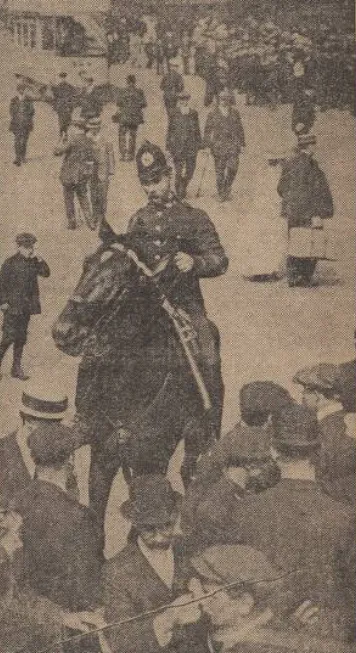
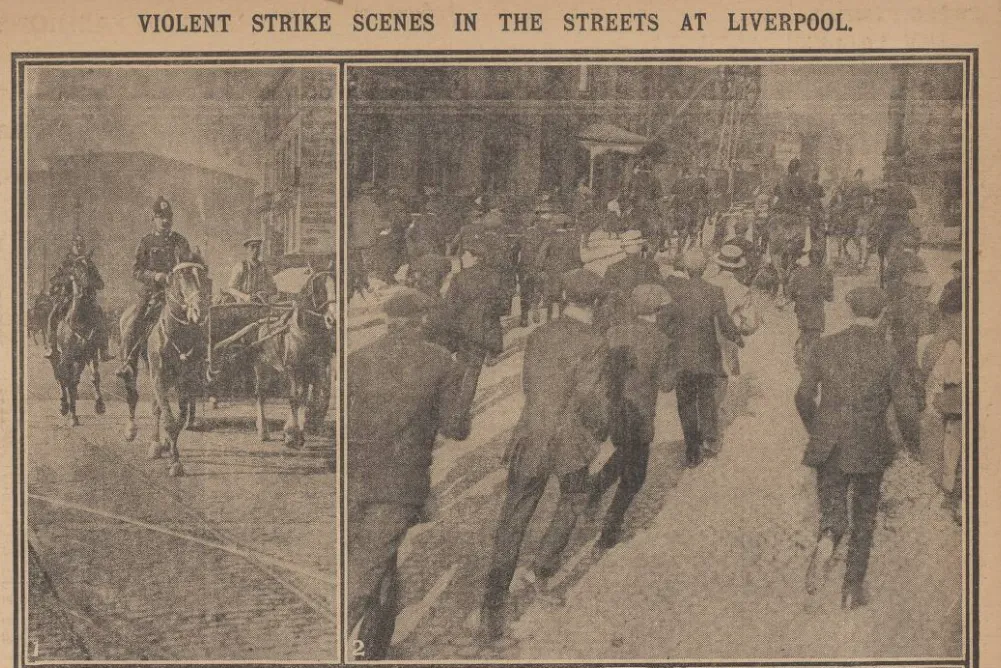
Following the announcement of strike action by the National Sailors’ and Fireman’s Union on 14 June 1911, solidarity action in the form of a strike committee, which was based in Liverpool, was set up by none other than Transport Worker editor Tom Mann. Liverpudlian dockers, railway workers, sailors and other workers took part in the strike action, which meant commerce in Liverpool came to a standstill, whilst rallies were held at St. George’s Plateau, beside St. George’s Hall on Lime Street.
On 13 August 1911 a large crowd, estimated to number some 85,000 people, gathered to hear Tom Mann speak. The Transport Worker, in a ‘special strike edition,’ describes what happened next, under a headline that ran ‘Liverpool Trades Union Rally – Police Run Amok – Hundreds of Wounded Workmen.’
With ‘a large number of sailors, fireman, ship’s stewards, cooks, butchers, and bakers, engine men, crane men, tram men, railway workers, mill and warehouse workers, canal men, flat men, and in fact every conceivable branch and section of the transport industry’ gathered, and signalling their assent to continue strike action, ‘three huge burly policemen’ dragged three youths from their sitting positions on a window sill of the North Western Hotel.
Despite Tom Mann securing the promise that ‘there would be no display of police more than was sufficient to be ready in case peace was broken,’ ‘these three policemen continued their foolishness.’ According to the Transport Worker, they drew their truncheons and knocked ‘the crowd about with severe blows left and right.’ After these three police officers were forced back by the crowd to their station beside the hotel, ‘one hundred of the City police’ rushed ‘madly into the crowd without rhyme or reason.’
The Transport Worker describes what happened next, as the Liverpool general transport strike devolved into violence:
Such a scene of brutal butchery never was witnessed in Liverpool before. Defenceless men and women, several of whom were infirm, and many of whom were aged, were deliberately knocked down by heavy blows from the truncheons of powerful men…
The article wholeheartedly condemns the scene:
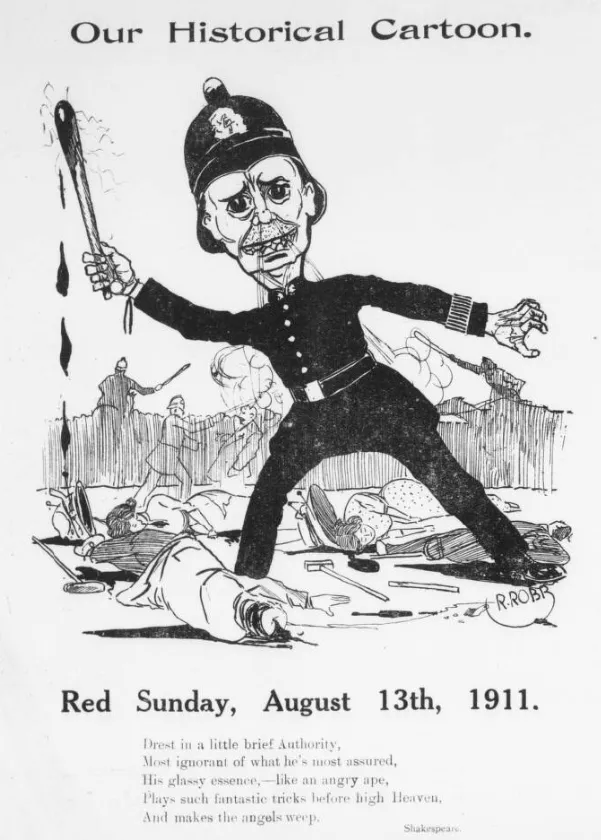
It was not a question of the police using their batons to protect themselves, but utterly and entirely a savage and monstrous attack by well trained men in such a manner as left its severe effect upon the heads of hundreds of people. Covered with blood the poor wretches were falling down stunned all over the street – at least 3,000 men and women…were lying on the ground either helpless or unconscious.
The baton charge led to, in the end, injuries to 350 people, in what the Transport Worker dubbed ‘Red Sunday.’ The event is also known by ‘Bloody Sunday.’
Just two days later, Liverpool saw more violence. On 15 August 1911 soldiers from the 18th Hussars opened fire on a crowd gathered on the Vauxhall Road. Two men died as a result: 19-year-old carter John Sutcliffe and 30-year-old docker Michael Prendergast. In the end, the Liverpool general transport strike was supressed, with Home Secretary Winston Churchill sending in the military to the city, and stationing the cruiser HMS Antrim in the Mersey.
Discover more about the Liverpool general transport strike, trade unionist history, and much more besides, in the pages of our Archive today.
New Titles
Title | Years Added |
1889-1902 | |
1881-1882, 1884-1896, 1898 | |
1911-1912 | |
1881-1895, 1897-1899 |
Updated Titles
This week we have updated 8 of our existing titles.
You can learn more about each of the titles we add to every week by clicking on their names. On each paper’s title page, you can read a free sample issue, learn more about our current holdings, and our plans for digitisation.
Title | Years Added |
1898-1911, 1913, 1919, 1921-1941 | |
1870, 1873, 1911, 1930, 1946-1965 | |
1876-1913 | |
1921-1950, 1986-1987 | |
1989-1990 | |
1850-1851, 1858-1860, 1871, 1886, 1909, 1912 | |
1885 | |
1993-1997, 2002-2003 |
You can keep up to date with all the latest additions by visiting the recently added page. You can even look ahead to see what we’re going to add tomorrow.
More on this topic:
Share this article
About the author

Rose Staveley-Wadham
Newspaper Licensing Manager
Published on Tue, 9 December 2025.