Hot Off The Press – New Titles This Week
Published on 25 November 2025 by Rose Staveley-Wadham
This week at The Archive we have been busy adding 204,327 brand new pages, as we remember the Great Fire of Edinburgh, which took place in November 1824. Meanwhile, we’ve added four brand new titles to The Archive, with one being dedicated to financial reform and another being dedicated to society gossip. Moreover, we’ve updated twelve titles from across the United Kingdom and Ireland.
So read on to discover more about our new and updated titles this week, and also to learn about the Great Fire of Edinburgh.
Register now and explore The Archive
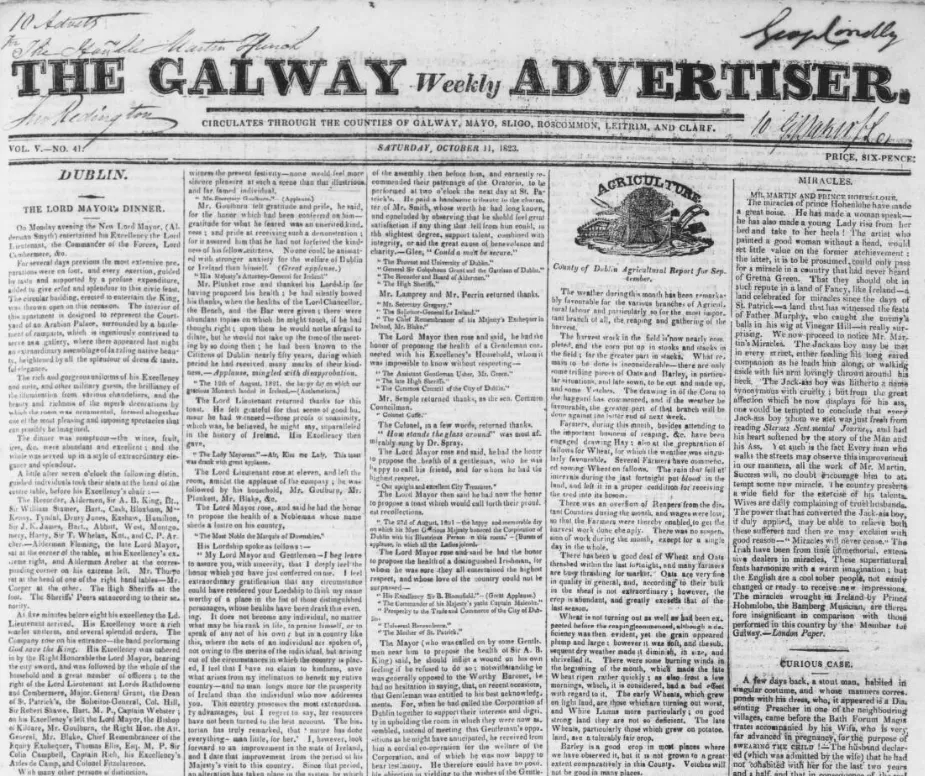
The Galway Weekly Advertiser
We begin in Ireland this week for our tour through our new titles. Following the rich early publishing tradition of Galway, the county town of County Galway, the Galway Weekly Advertiser was established in 1819. Circulating in the counties of Galway, Mayo, Sligo, Roscommon, Leitrim and Clare, this Irish newspaper appeared every Saturday at the cost of six pence.
Featuring the news from Dublin and London, alongside updates from the provinces and further afield, the Galway Weekly Advertiser also printed the latest shipping news and information from Galway’s docks and quays.
Printed and published by George Connolly, within the four pages of the Galway Weekly Advertiser you could also find poetry.
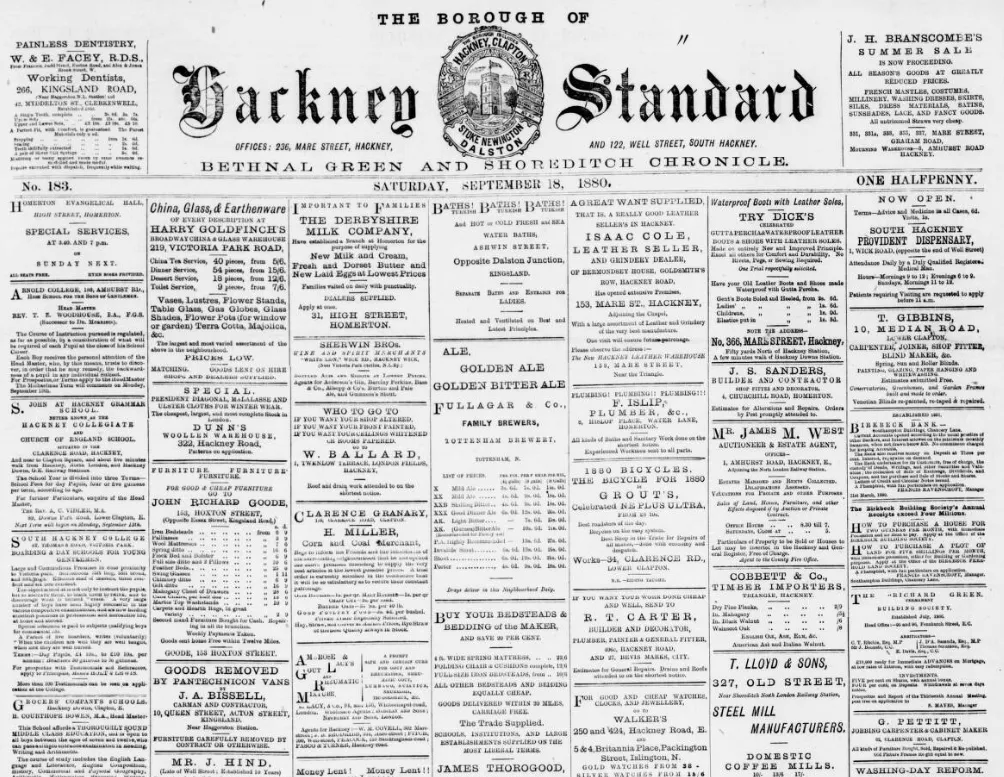
The Hackney Standard, Bethnal Green and Shoreditch Chronicle
Next up, East London. Beginning life in 1857, the Hackney Standard, Bethnal Green and Shoreditch Chronicle cost a modest one halfpenny. Positioning itself as ‘independent liberal,’ it was published from Mare Street, Hackney, and circulated throughout the parishes of Hackney, Shoreditch and Bethnal Green.
Selling some 4,000 copies every week, the Hackney Standard, Bethnal Green and Shoreditch Chronicle appeared every Saturday. Its four pages were filled with local news from the likes of the police and the Hackney Guardians, as well as correspondence and more miscellaneous news items.
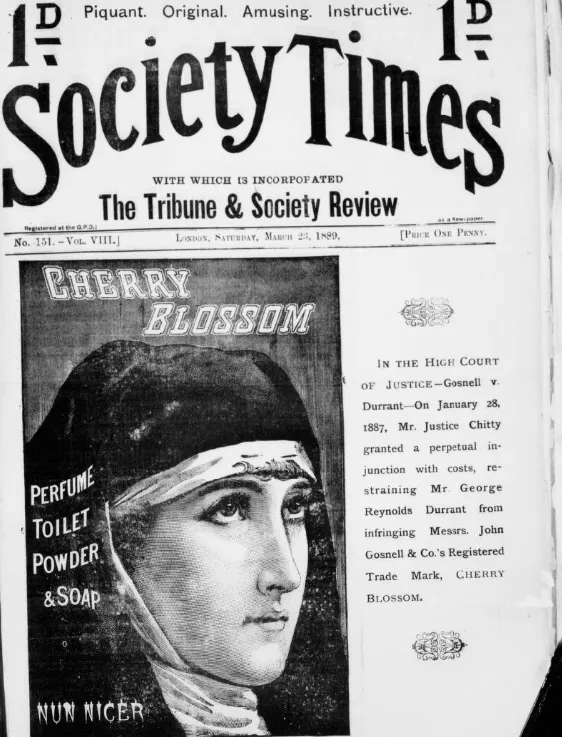
The Society Times
Our next title of the week is the Society Times. Published in London, the Society Times claimed to be the ‘most marvellous paper ever published in this or any other country.’ So what made the Society Times quite so marvellous? Well, in the words of its own advertisement, it published the ‘brightest court and society gossip,’ ‘thrilling stories by the most eminent writers,’ as well as ‘clever skits on passing events.’
Nothing if not lively, the Society Times also published news about the theatre, fashion and finance, alongside ‘the most exclusive information from numerous correspondents in all parts of the world.’ Appearing every Thursday, the paper cost a modest one penny.
Filling 20 pages, an 1888 advert for the paper claimed how the Society Times had ‘outdistanced its rivals in a way as complete as it is unique.’ With some advertising copy that reads in a remarkably modern way, potential readers were instructed to ‘get a copy at once. You want it.’
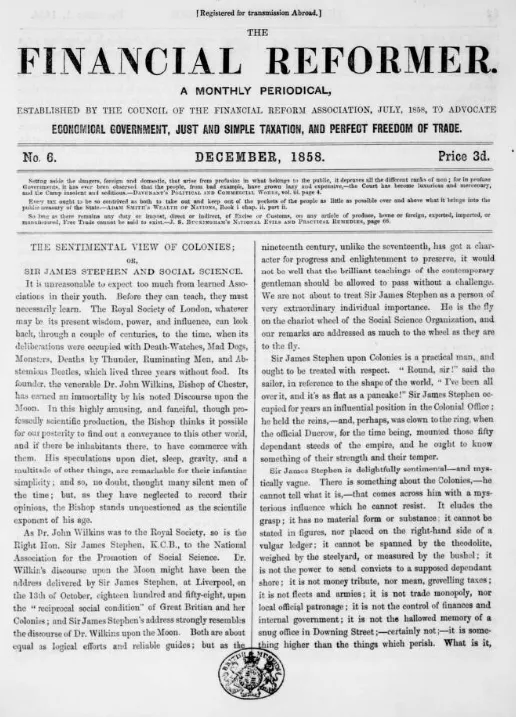
The Financial Reformer
Our final new title of the week is The Financial Reformer. First published in July 1858, The Financial Reformer was a monthly periodical established by the Council of the Financial Reform Association. The Council of the Financial Reform Association was itself established in Liverpool in 1848, and its aims were to ‘promote by all legal and constitutional means… the most rigid economy, consistent with efficiency, in the expenditure of the government… a simple and equitable system of direct taxation, in lieu of duties upon commodities, and… as a consequence, perfect freedom of trade.’
In the mode of the Manchester School of the nineteenth century, the Council of the Financial Reform Association espoused a type of economic liberalism as advocated by Adam Smith. The Financial Reformer, therefore, followed suite, arguing for ‘economical government, just and simple taxation, and perfect freedom of trade,’ with the watch words of ‘wise economy and just taxation.’
Filling sixteen pages, The Financial Reformer took a look at the financial proceedings in parliament, public expenditure, and official bookkeeping. Moreover, the title printed news on the proceedings of the Council of the Financial Reform Association, alongside reviews of works on financial matters, and correspondence from readers.
Our updated titles
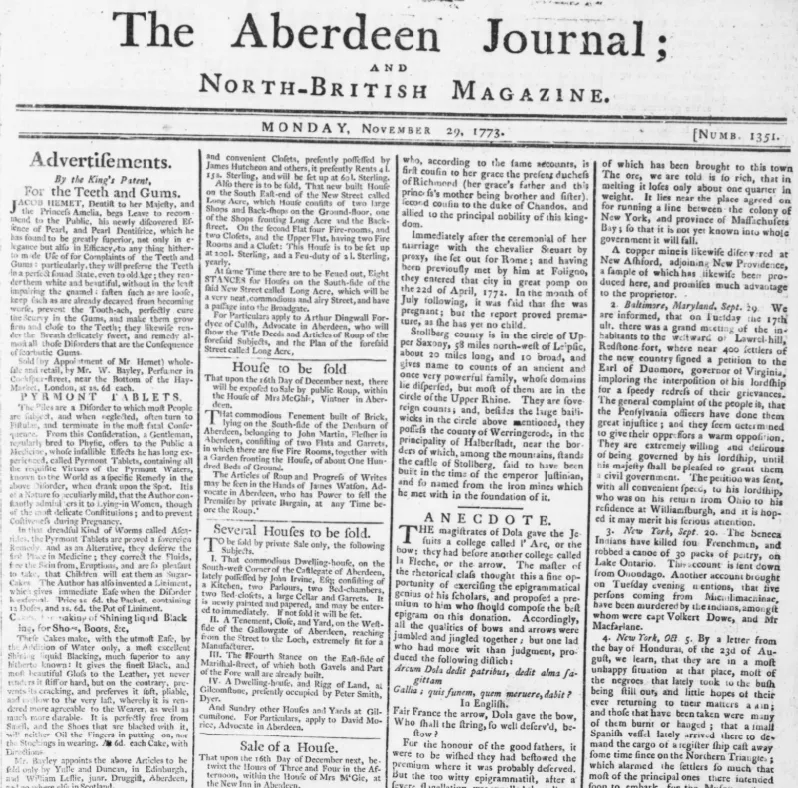
We’ve updated twelve of our existing titles this week. Leading the charge with over 86,000 brand new pages is the Yorkshire Evening News. Meanwhile, we’ve updated four of our Scottish titles, with notable early years being added to the Aberdeen Press and Journal, with other updates to the Banffshire Journal, the Bo’ness Journal and Linlithgow Advertiser and the Fife News.
Across the Irish Sea, we’ve also updated the Belfast Morning News and the Dublin Evening Post.
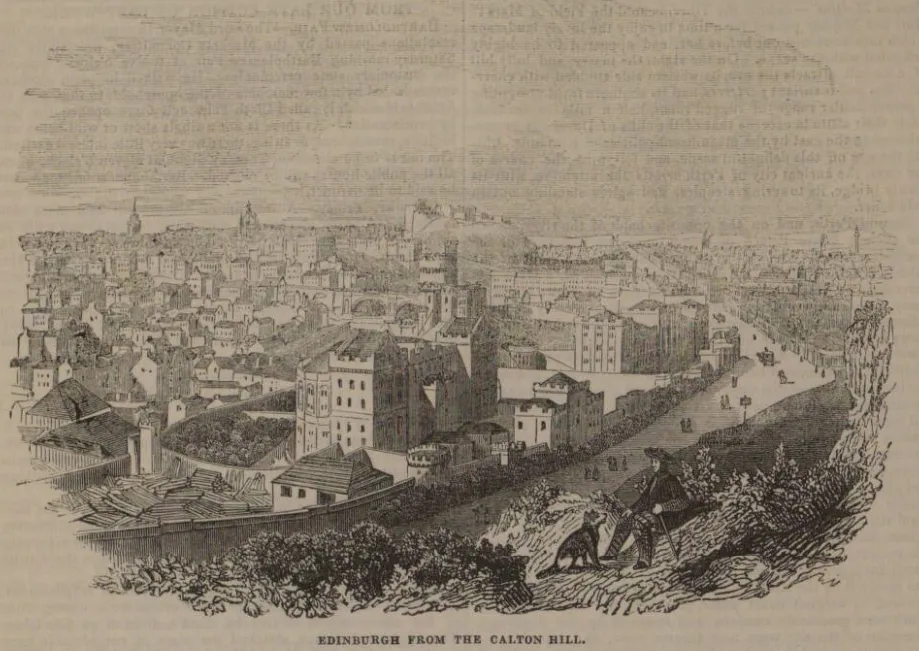
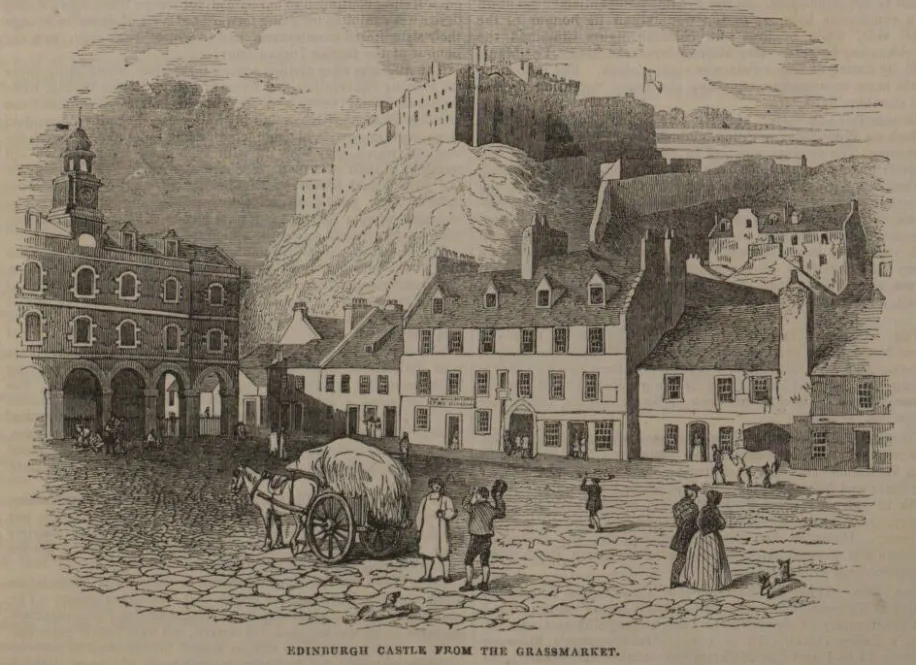
The Great Fire of Edinburgh
On 4 December 1824, our new title the Galway Weekly Advertiser reported on some ‘dreadful fires in Edinburgh.’ It described a ‘calamitous and destructive fire,’ which broke out on 15 November 1824 ‘in a tenement at the head of the Old Assembly Close, High-street, and in the premises, as we are informed, occupied by Mr. Kirwood, the engraver.’
Despite the alarm being quickly raised, and fire engines attending the scene, the fire was difficult to access because of its height. The Galway Weekly Advertiser described how, at about eleven o’clock, ‘flames appeared in the windows of the third flat, and spread with such rapidity that before 12, it blazed out in immense volumes from all the windows, and when the roof afterwards began to fall in, the building, with the exception of the ground flat, presented one most terrific mass of flame.’
The Great Fire of Edinburgh had begun.
The Galway Weekly Advertiser paints an evocative picture of the spread of the fire. On a cool night, the fire spread, ‘the moon and the stars seen through the whirling clouds of firey sparks.’ ‘Wafted by the wind over the town,’ the fire spread through the wooden tenements, spreading ‘terror even among those who lived at some distance.’
By the early hours of the 16 November the Great Fire of Edinburgh had spread to a fourth tenement, ‘the tenement next the Old Fish market Close, the first flat of which is the publishing office of The Edinburgh Courant.’ And by the afternoon, ‘a cry bursting from the crowd in the street, announced that the spire of the Tron Church was set on fire by the flying brands.’ As the spire was ‘entirely composed of wood, the flames soon made their way through it, while the lead covering was seen pouring down its sides.’
It must have been a terrifying sight. By the time the Great Fire of Edinburgh had burned its last, on 21 November 1824, 24 tenements had been destroyed, with 400 families being left homeless. The Galway Weekly Advertiser describes the ‘pitiable’ scenes at the Police Office, where:
…the upper court was filled with moveables of every description… women and children seeking shelter; the wounded seeking help; constables seeking flambeaus; the owners and occupiers of destroyed houses, seeking space and security for books, papers, and valuable property; the curious and officious, the destitute, the criminal, the alarmed, the intoxicated, and the temporarily deranged, were all congregated together.
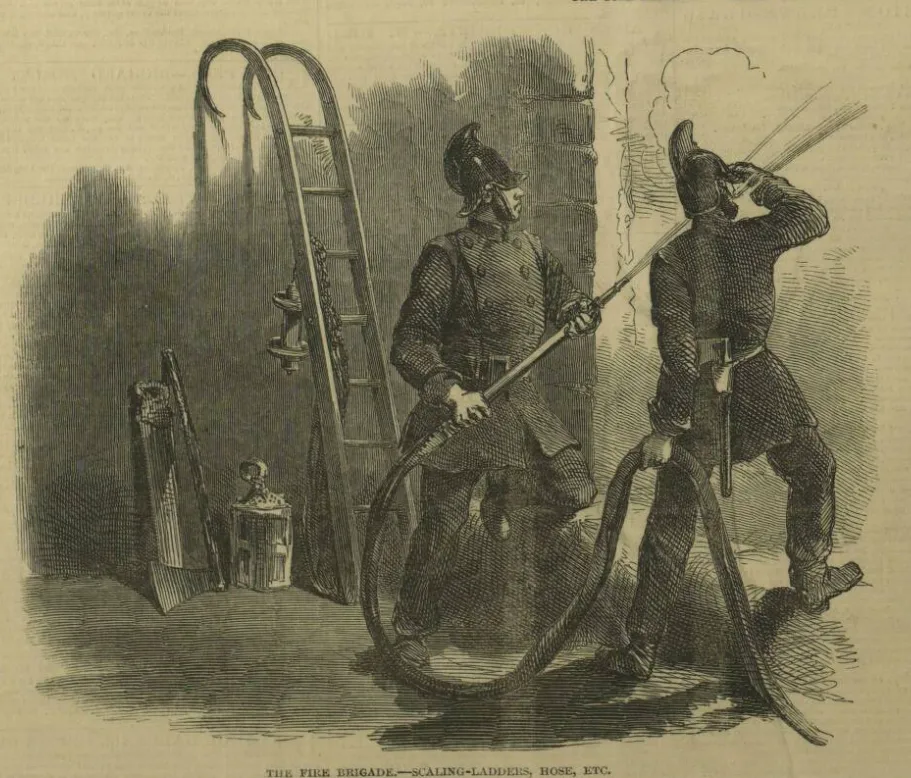
The Great Fire of Edinburgh also took a toll on the lives of the city’s inhabitants. The Galway Weekly Advertiser describes how 17 people received ‘bodily injuries’ from the fire on the 15th November. Tragically, eleven residents lost their lives, alongside two firemen.
Find out more about the Great Fire of Edinburgh, other destructive historical fires, and much more besides in the pages of our Archive today.
New Titles
Title | Years Added |
1823-1829, 1840-1843 | |
1880-1889, 1900-1907 | |
1889-1891 | |
1858, 1860-1868, 1871-1873 |
Updated Titles
This week we have updated twelve of our existing titles.
You can learn more about each of the titles we add to every week by clicking on their names. On each paper’s title page, you can read a free sample issue, learn more about our current holdings, and our plans for digitisation.
Title | Years Added |
1773-1782 | |
1947-1949, 1986-1992 | |
1913, 1921-1947 | |
1873-1878 | |
1879-1883, 1892-1895, 1897-1913, 1921-1939 | |
1903-1909, 1911-1912, 1925-1954, 1962-1965 | |
1871-1875 | |
1889 | |
1870-1874, 1878, 1891-1913, 1921-1950 | |
1822-1824, 1861-1862 | |
1897-1898, 1901-1904 | |
1999-2001, 2004 |
You can keep up to date with all the latest additions by visiting the recently added page. You can even look ahead to see what we’re going to add tomorrow.
More on this topic:
Share this article
About the author

Rose Staveley-Wadham
Newspaper Licensing Manager
Published on Tue, 25 November 2025.