Your BNA Family History Stories – Millers, Bakers, Blacksmiths and Firemen in Lincolnshire in the 18th and 19th Centuries
Published on 19 December 2013 by The BNA
Introduction and background
We love hearing about your discoveries in The British Newspaper Archive.
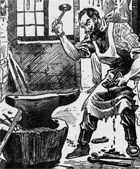
John Bland of the Lincolnshire Family History Society dropped us a line to tell us about his family history research in The British Newspaper Archive. John has been researching the millers and blacksmiths in his family (research that involves learning about major legislation such as the Enclosures and the Corn Laws) and, thanks to The British Newspaper Archive, has just learned that one of his ancestors also worked as a fireman in the early 1840s. Through his reading of historical newspapers, John has also learned that the method (official paperwork was required before the fire engine was called into action) for calling out the fire brigade at this time was far from straightforward – indeed, it conjures up images of ‘The Keystone Cops’.
John has very kindly written a fascinating article about his ancestral and historical research in The British Newspaper Archive, and you can read his article below.
Researching my Lincolnshire ancestors
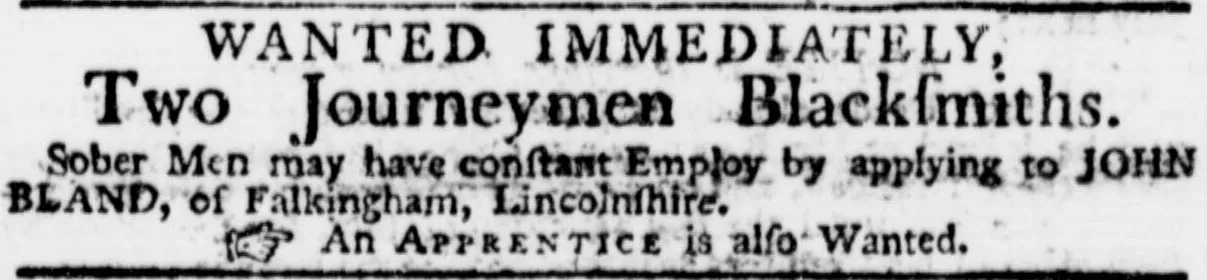
I have been researching my family tree on and off for many years. For a long while I have known that my ancestor and namesake John Bland was a miller & baker in Sleaford, Lincolnshire. This was not his first trade. His father, grandfather and at least one great-grandfather were blacksmiths and, as evidenced by the family being listed in the Universal British Directory of 1791 and an early advert in the Stamford Mercury placed by his grandfather, the concern was a sizable one.
Blacksmiths and bakers
John was born in the village of Folkingham to the south of Sleaford and was baptised on 26 February 1807. He had an older half-brother, William, who was born illegitimate in 1785, but his parents William Bland and Sarah Maltby went on to marry and baptise him at St Andrew’s Church, Holborn, on 1 May 1786. St Andrews was apparently doing a roaring trade in “no questions asked” marriages at the time. Sarah died at the age of 31 in 1794. William went on to remarry Mary Harrison at Folkingham in 1796, and the couple had four daughters before producing John, the youngest of the children. When John was born, his half-brother would have been a grown man working in the family business and would eventually inherit their father’s blacksmith tools in 1831. Whether John took to blacksmithing naturally is of course not known, but a marriage to Sophia, the daughter of George Glenday, miller & baker in Sleaford, was to act as a significant career change.
The history of milling in Sleaford
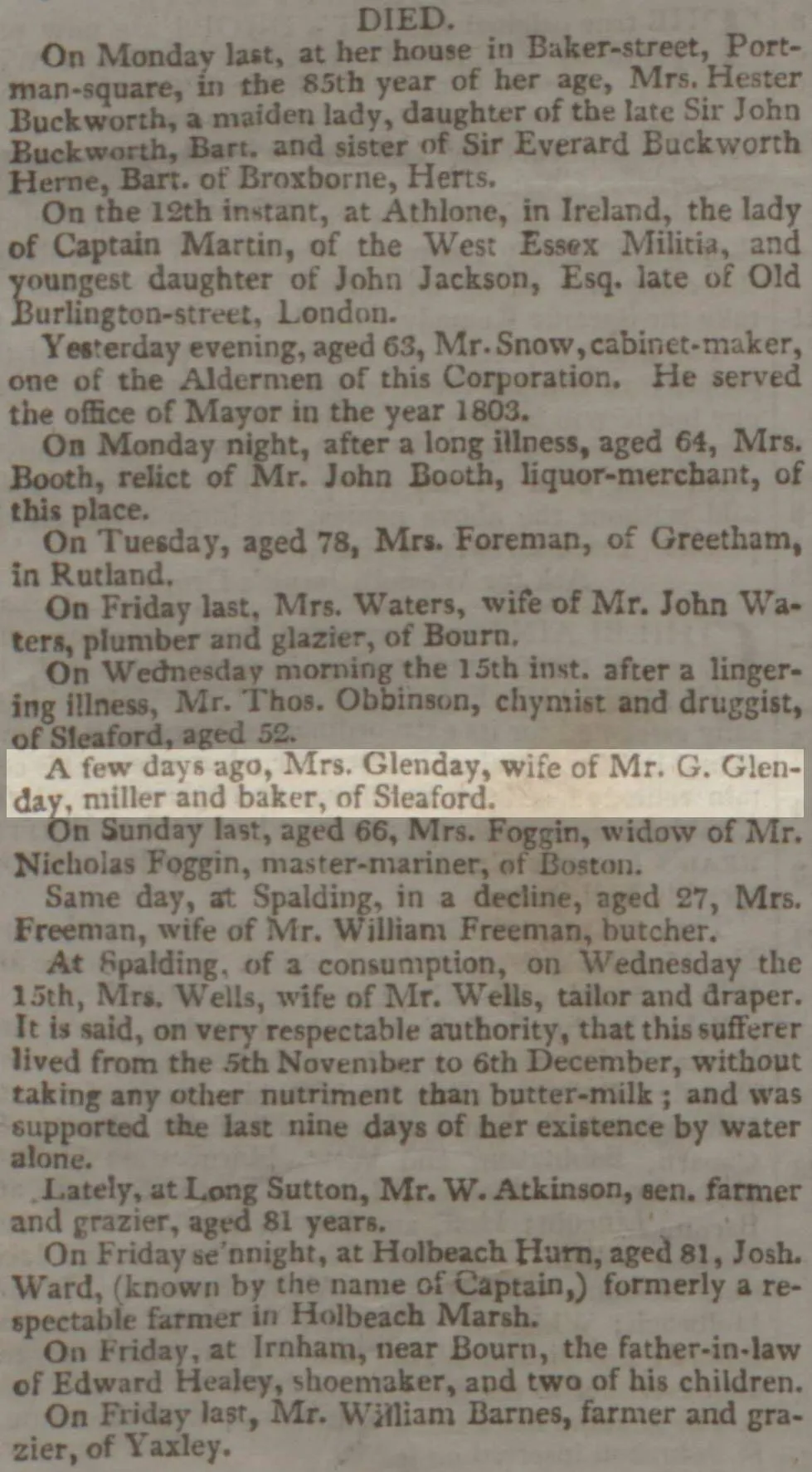
Sleaford and the surrounding area has had a long association with milling thanks to the fast flowing River Slea that never freezes in the winter. By the time of the Sleaford enclosure map of 1794, there were two Windmills in the town, a Post Mill at Galley Hill and a Tower Mill on the Tattershall Road. In addition there was Cogglesford Water Mill, still in existence. Shortly after Money’s Tower Mill was built in in the centre of Sleaford in 1796 and by the time the 1824 Ordnance Survey map was surveyed in 1814, a further Post Mill was recorded further out of town on the Tattershall Road. It is this mill that I am interested in as this was the Royal Oak Mill which was owned by George Glenday and later John Bland. One of the earliest references to George being a miller can be found in the Stamford Mercury on 24 December 1813 with the death announcement of the first of his three wives Anne.
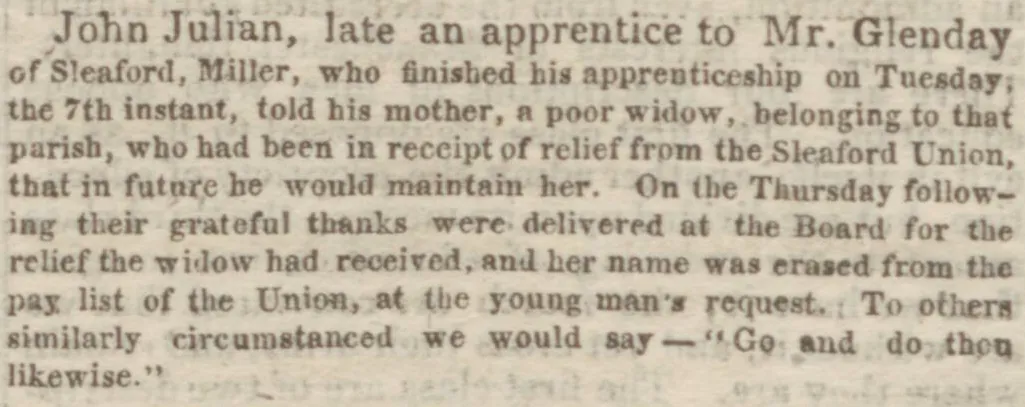
George was still in charge in the late 1830s with the following article of praise appearing in a newspaper miles away from Sleaford (I doubt anyone would have thought of looking in this newspaper for a Sleaford resident!).
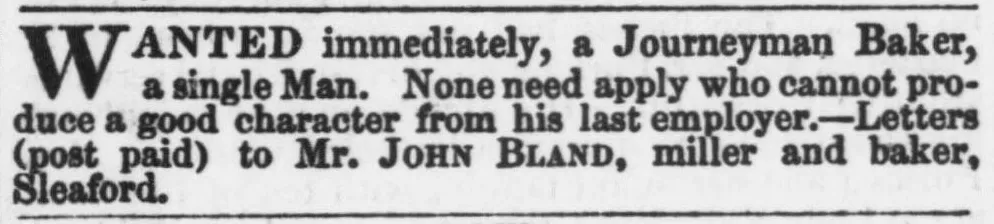
It is apparent that John was beginning to take over the running of the business with an advert for a further apprentice appearing in the Stamford Mercury:
This along with another advert, this time for a Journeyman Baker, support this conclusion:
The effects of the Corn Laws (and their repeal) and mechanisation
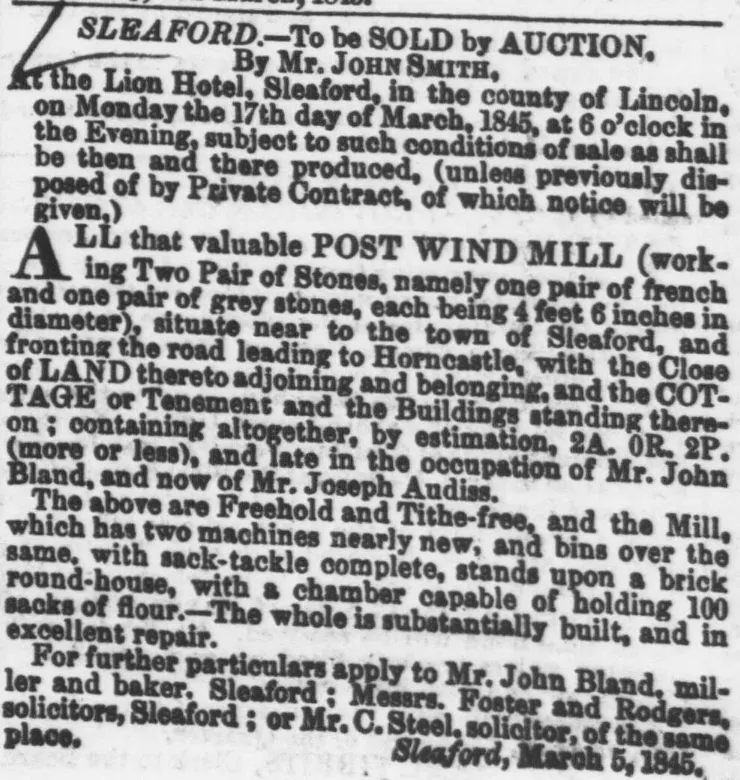
Following George Glenday’s death in 1840, the mill was left to his daughter Sophia, the wife of John Bland. All looked bright on the horizon, the business was apparently more than a one-man band, and there is evidence that John had built a seven bedroom house on Westgate, Sleaford. However, storm clouds began to appear with a raging national debate over the future of the Corn Laws, which had protected British farmers from cheap imports since 1804. The Corn Laws were eventually repealed in January 1846. This led to a fall in the price of corn and, subsequently, in the profits for millers, bakers, and farmers and was to trigger significant changes in rural life. These changes were further driven by increased mechanisation. This was to have a major effect on the fortunes of John Bland and also on other milling families in the town as evidenced by an early attempt in March 1845 to sell the mill.
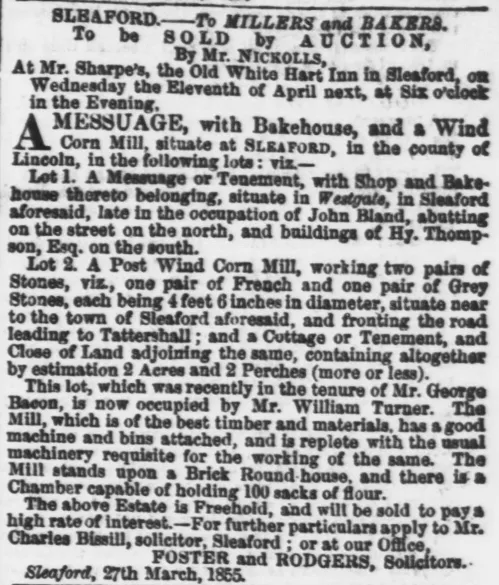
This attempt failed as John Bland was still in business as a Baker in the census of 1851. However, there were later attempts that culminated in a final, and apparently successful, attempt in 1855.
A storm blows down the mill
I know that either this attempt was successful or that the named occupier approached John Bland to buy it as I have been in correspondence with a descendent of William Turner who did buy the mill and owned it for many years. The Turner family owned the mill until it blew down in a gale circa 1896. Between us we are, therefore, collating the history of this mill and the influence our respective families had on the town of Sleaford.
Many of the above articles in the Stamford Mercury (and more) have been known about for years as numerous eyes have been picking out anything to do with Sleaford Milling, but digitisation gives the opportunity to pick out anything that might have been missed. Boy was something missed!
The early days of the fire brigade in Sleaford
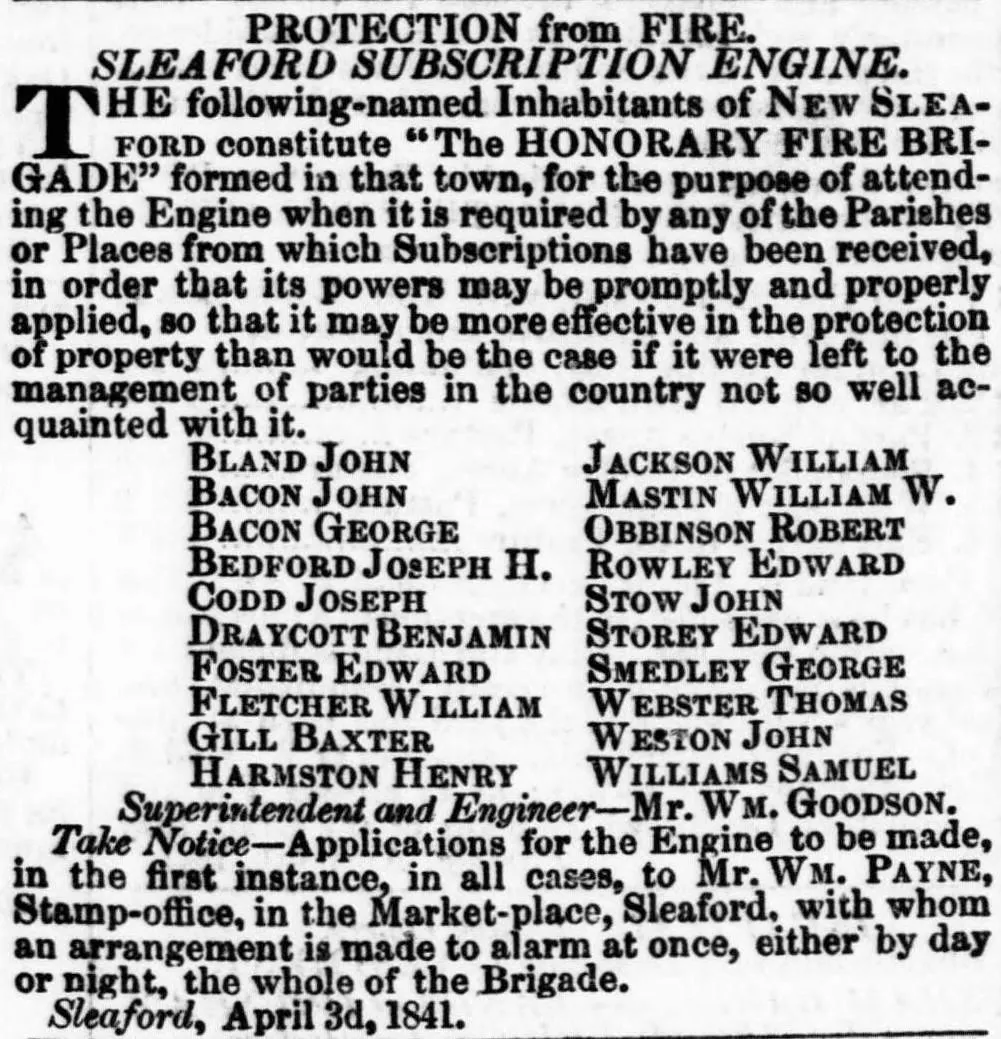
It appears that for a time, my ancestor was not only helping to feed the good townsfolk of Sleaford, he was also putting out fires! Whilst I was simply looking for the words Bland and Sleaford on the same page, I came across this little snippet from the Stamford Mercury.
The arrangements for calling out the brigade do not appear to be straightforward. By the time someone had headed to the Market Place, presumably proved that they had subscribed, and the various members of the brigade were called to alarm, many a fire would well and truly be out of control!
The Sleaford Subscription Engine
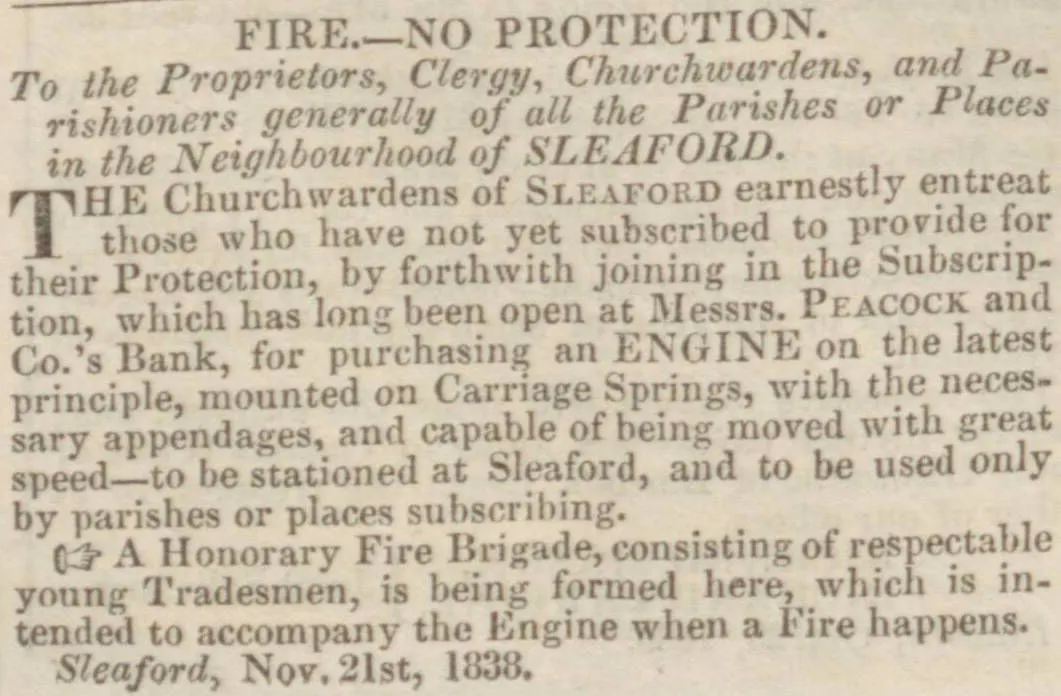
Curious to add a bit to Sleaford’s history, I have done some delving on the Sleaford Subscription Engine. It appears that efforts to raise funds to buy the Fire Engine got underway during the late 1830s from a notice located in the Lincolnshire Chronicle.
How much one would have cost and what it would look like can only be conjecture, although no doubt a museum will have an example of a similar device. How fast was ‘great speed’? Even if it was drawn by horse, I suspect that 10 miles an hour would have been a maximum.
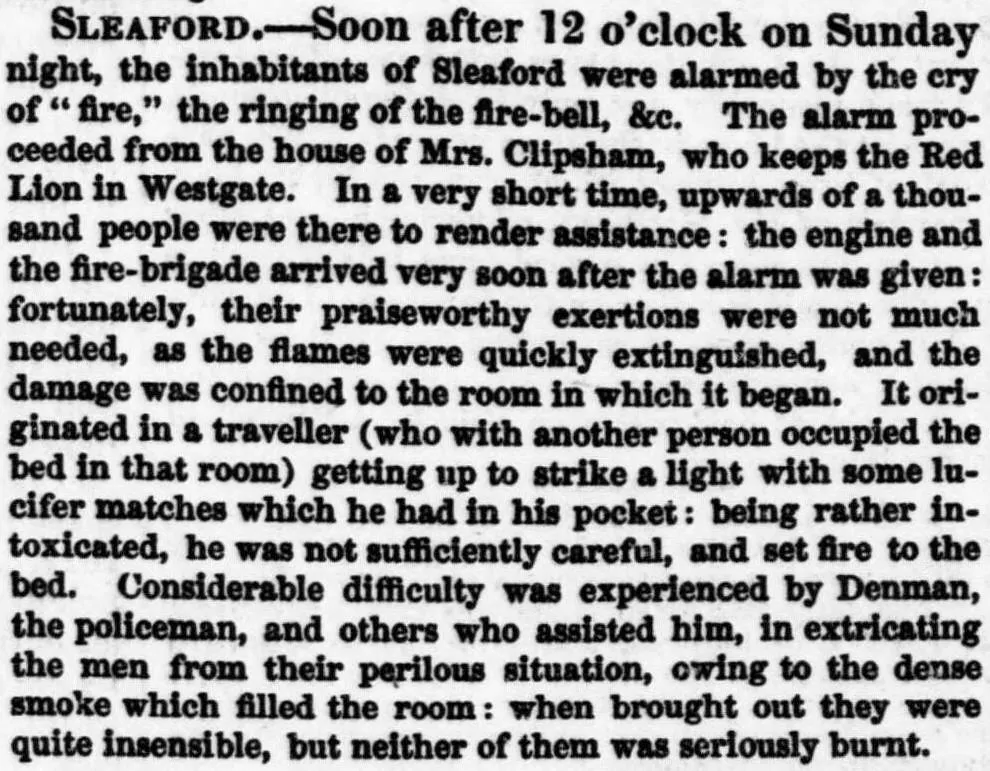
Nonetheless, the contraption was used and used very quickly. One of their early shouts was reported in both the Stamford Mercury and Lincolnshire Chronicle.
John Bland actually lived on Westgate so probably was first on the scene – it really reads as if over half the town came to watch – the population at this time was less that 2,000!
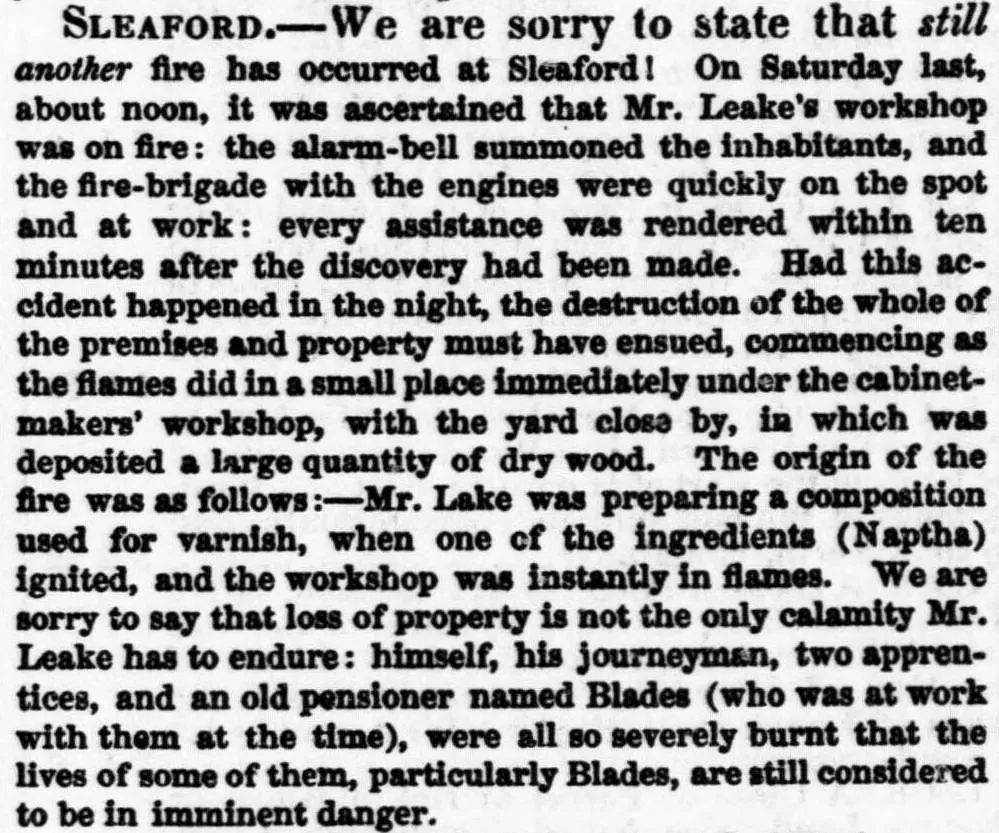
However, my first thought that such a contraption would be pointless in the event of a more serious fire was demonstrated by a report of a serious fire in November 1841:
My search for all things milling continues as I will be looking at some of the other milling families that John Bland was related to, either by marriage or by way of a business association. However, finding something that you are not looking for adds much to what you can learn from other family history sources such as wills and census returns.
The search continues…
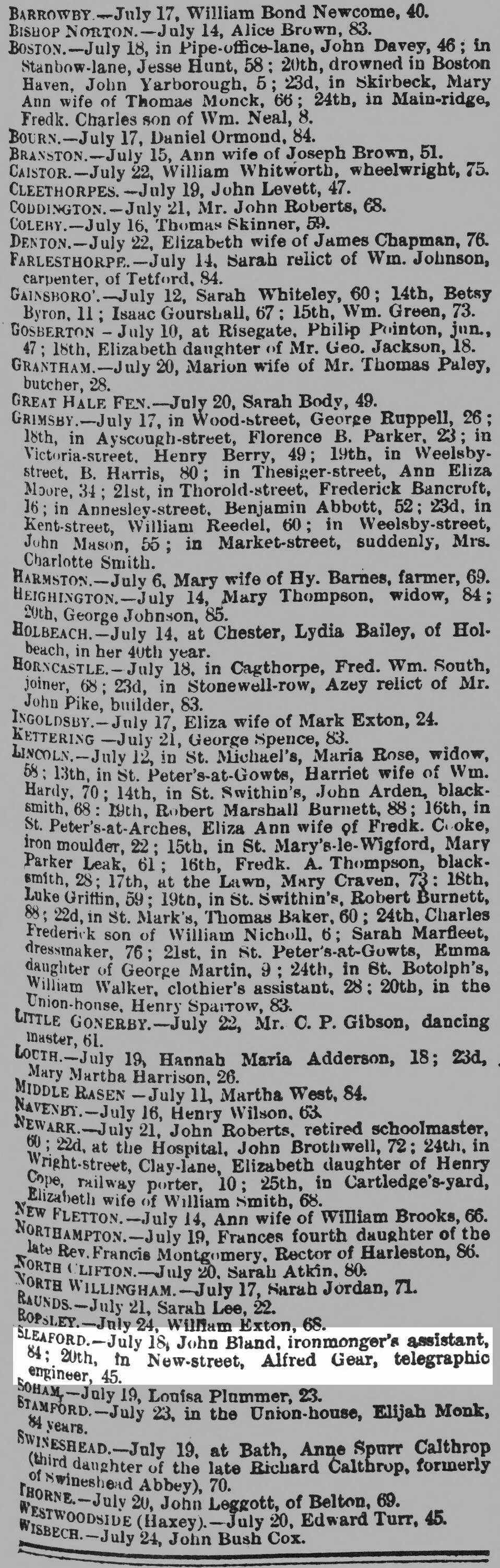
My quest for what happened to John Bland’s fortunes continue. Whilst it is pleasing to be certain that he never had to face the stigma of bankruptcy, it does upset me that he had to end his days working for someone else, as can be gathered from his death notice appearing in the Stamford Mercury:
Baking in Thorney, Cambridgeshire
His son, my great-grandfather, John Glenday Bland continued the trade of baking and gained employment as a Journeyman Baker in Thorney, Cambridgeshire, eventually buying out his employer’s business. He went on buy a mill at Gedney Hill, Lincolnshire, and it is pleasing to see that John Bland lived long enough to witness this as he was at Thorney at the time of the 1881 census. There is no doubt in my mind that his decision to marry a baker’s daughter was the right one as bread is needed by far more people than ironwork! The fact that he married a Glenday, enabling the name to be passed down the generations as a forename, is also partly responsible for me taking up family history research in the first place! Life would be rather boring without it!
Using historucal newspapers for genealogy research
The fact that so much of my ancestry comes from Lincolnshire in an area covered by the Stamford Mercury, the oldest local newspaper, has always made me realise the importance of newspapers in family history research. This has also been recognised by other Lincolnshire Family History Researchers, one in particular Teresa Williams has been ferreting out articles for years and the page on the Lincolnshire Family History website will hopefully be helpful to new researchers in seeing just how wide the range of articles are that can aid family history research.
John R G Bland
More on this topic:
Share this article
About the author

The BNA
News from the British Newspaper Archive
Published on Thu, 19 December 2013.