Six stellar titles join The Archive
Published on 3 August 2026 by Molly Pearce
As we settle into the new chapter of the British Newspaper Archive, we bring you six standout new titles this week. With 262,076 pages added in total, we will take you on a journey from important resort society in Bournemouth to the Victorian Temperance movement in London. On top of our new titles, we have made updates to forty-three of our pre-existing titles.
So keep reading to discover more about our exciting new and updated titles, as you familiarise yourself with the new British Newspaper Archive platform.
Bournemouth Observer and Fashionable Visitors' List
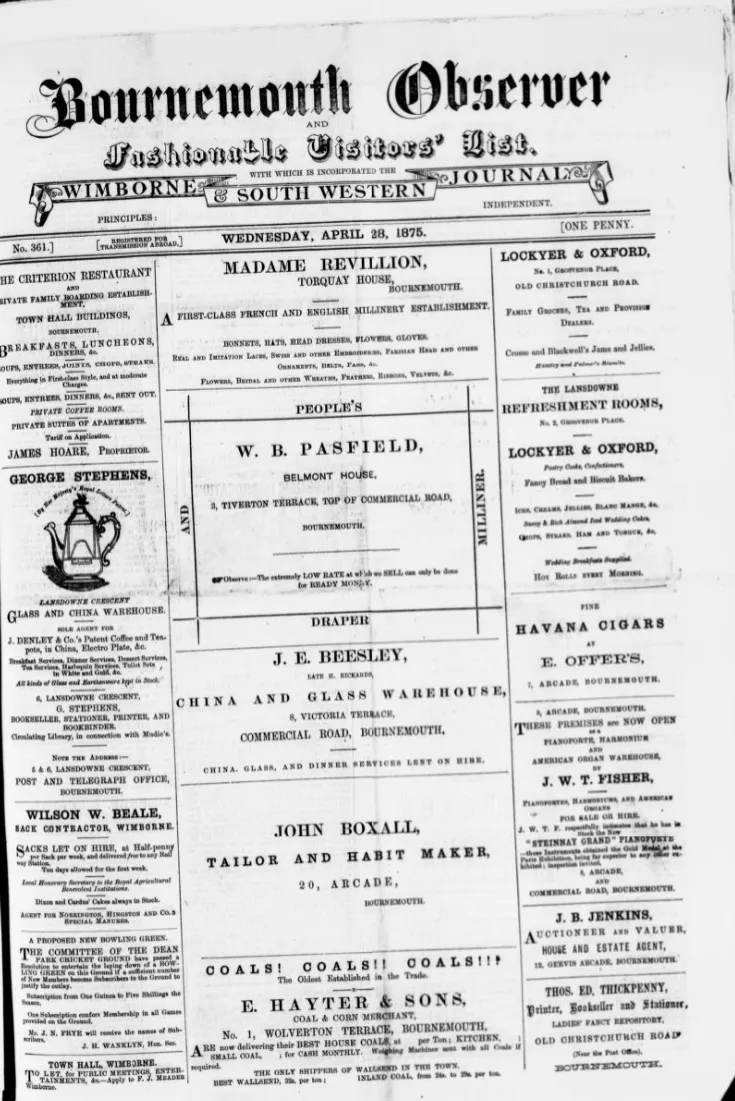
First on our list of new titles for this week is the intriguingly-named Bournemouth Observer and Fashionable Visitors' List. This Victorian newspaper recorded local and regional agricultural news, as well as community events. Notably, it documented the arrival and movements of important visitors to the resort town, crafting a substantial record of resort society during the late nineteenth-century.
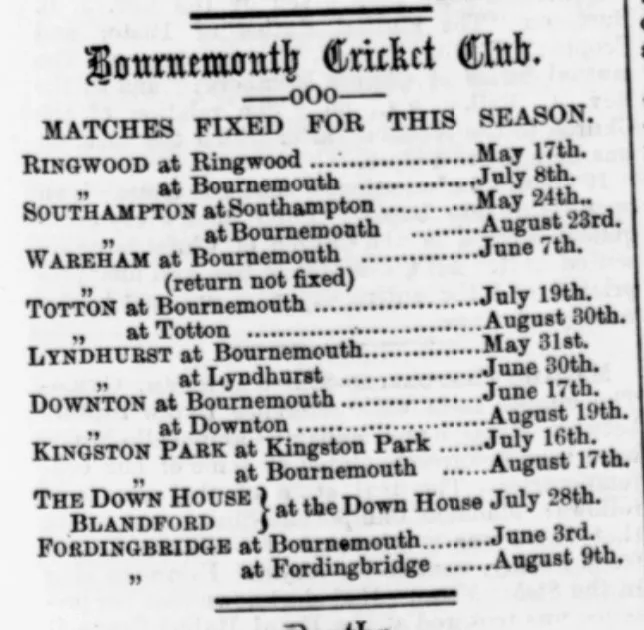
Among its many lists were rare accounts of early organised sports, such as the fixture list below, which documented the cricket matches for the season.
This twelve-page paper was packed full of information on resort society. Not only did the 'Alphabetical List of Latest Arrivals' inform readers of who exactly had entered the town that week, but the 'General List of Visitors and Residents' saw each major street in Bournemouth separated alphabetically, with a list of visitors present underneath. Every arrival, visitor, and resident was accounted for. If an 'inaccuracies' did occur, the paper vowed to 'promptly rectify' these, with 'corrections being forwarded to the Office, Lansdowne Road.'
Each issue of the Bournemouth Observer and Fashionable Visitor's List cost one penny, and was made available every Wednesday.
Carlow Independent and Leinster Agricultural Journal
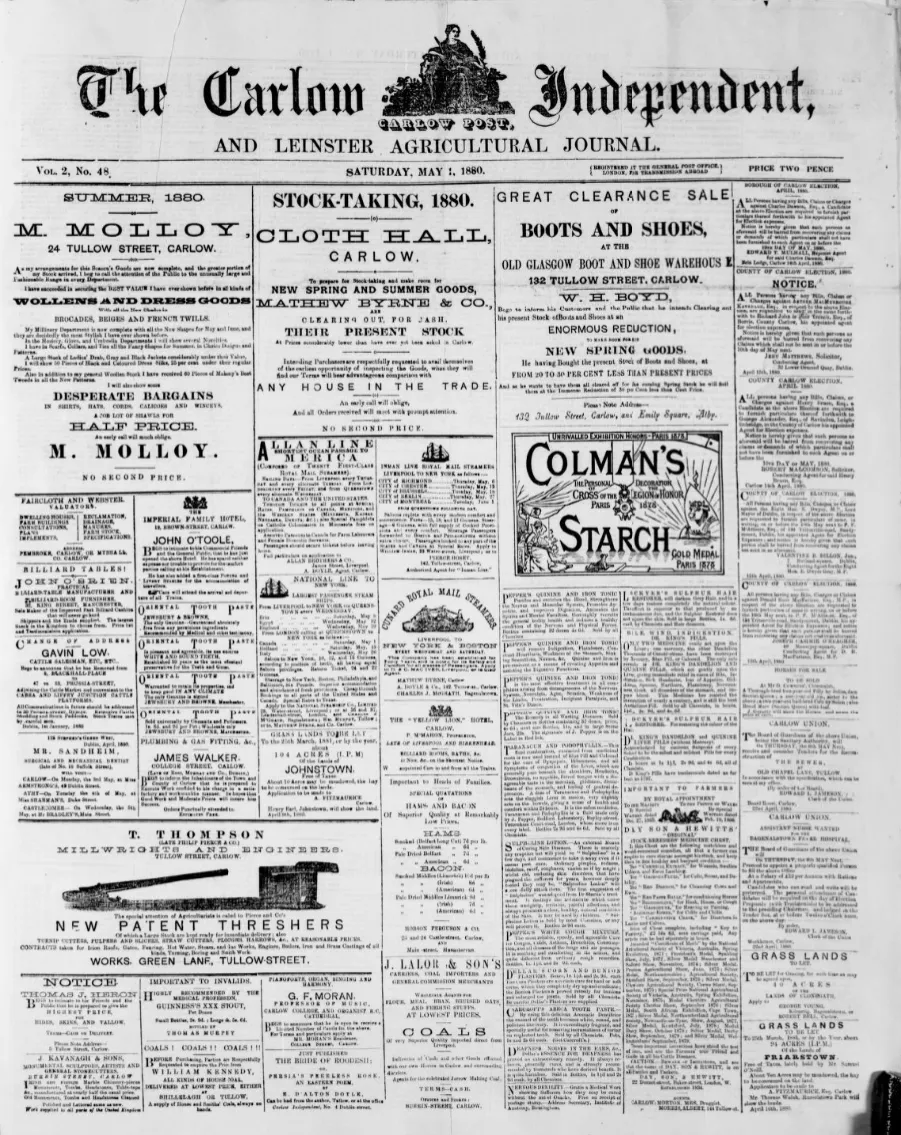
Next on our list for this week is the Carlow Independent and Leinster Agricultural Journal, as we travel across the water to Ireland. This title ran from May 1878 - May 1882, and contained local news, as well as political and economic correspondence from London and beyond. Accounts of battles raging across the world were detailed in full in this title, with its third page dedicated entirely to political affairs.
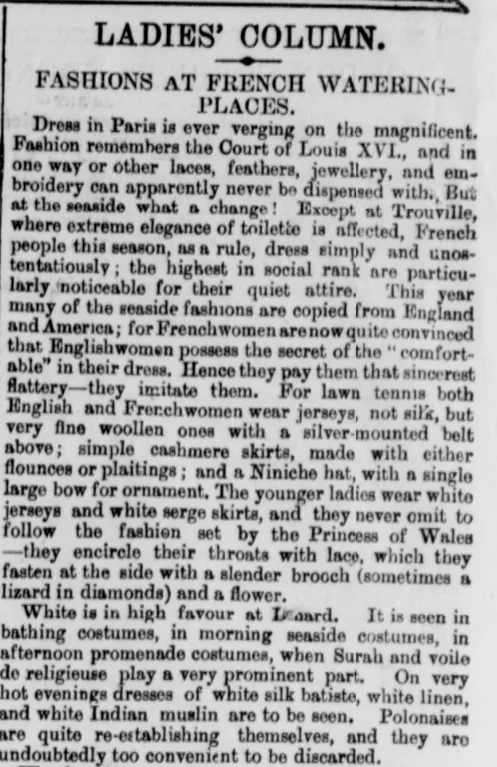
The Carlow Independent and Leinster Agricultural Journal covered an impressively large number of topics within each four page issue, with its final page containing literature of some variation and, on occasion, a 'Ladies' Column'. In an issue from 28 August 1880, the column was centred on 'Fashions at French Watering Places', with its author stating:
This year, many of the seaside fashions are copied from England and America; for Frenchwomen are now quite convinced that Englishwomen possess the "secret" of the "comfortable in their dress". Hence they pay them the sincerest flattery - they imitate them.
Each issue of the Carlow Independent and Leinster Agricultural Journal cost two pence and was published every Saturday.
North Middlesex Weekly Standard
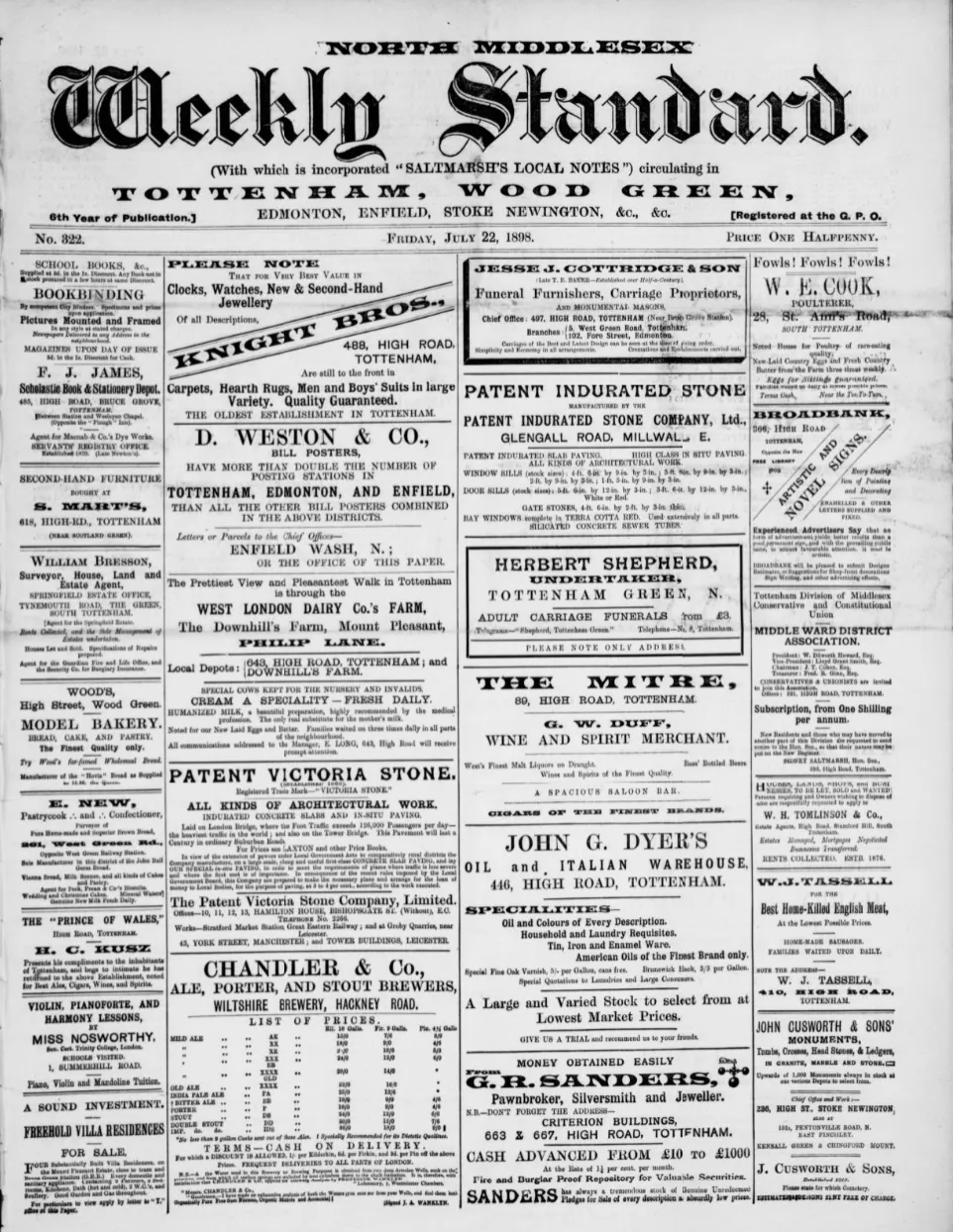
Next up is the North Middlesex Weekly Standard. This weekly publication captured local affairs, community notices, and local advertisements.
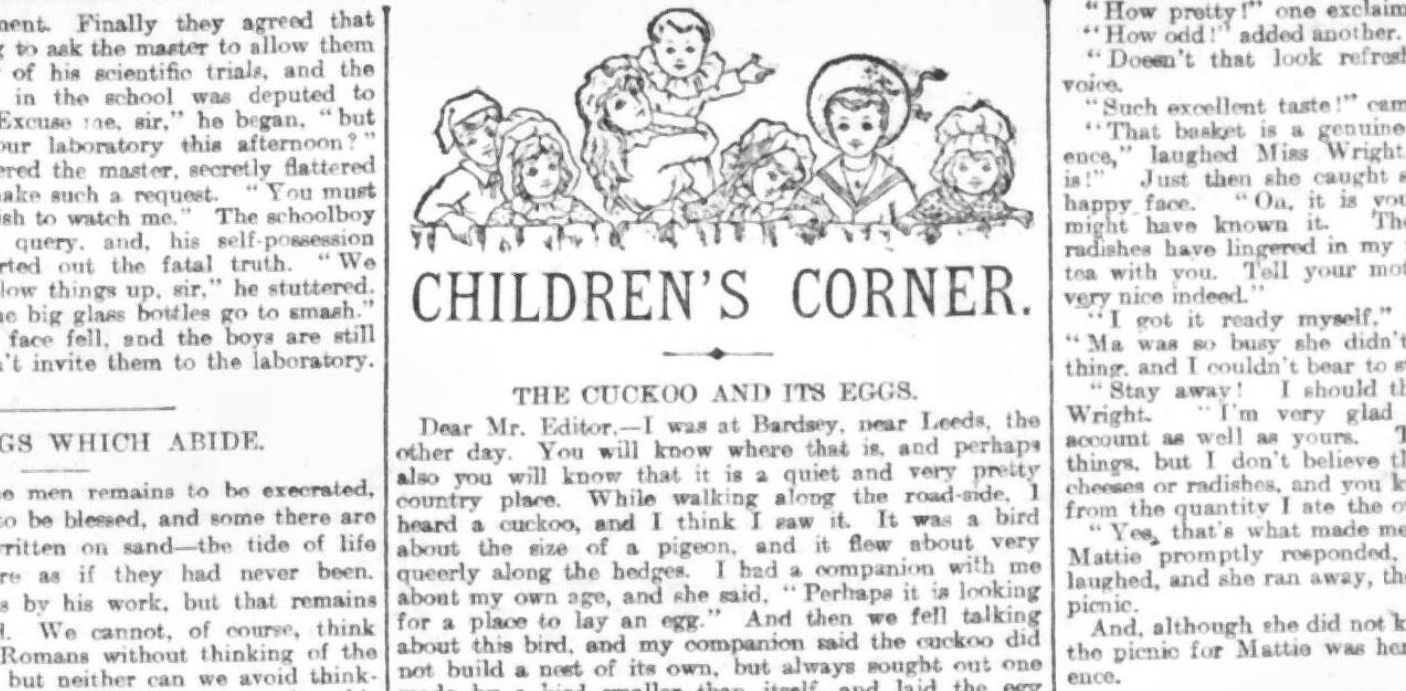
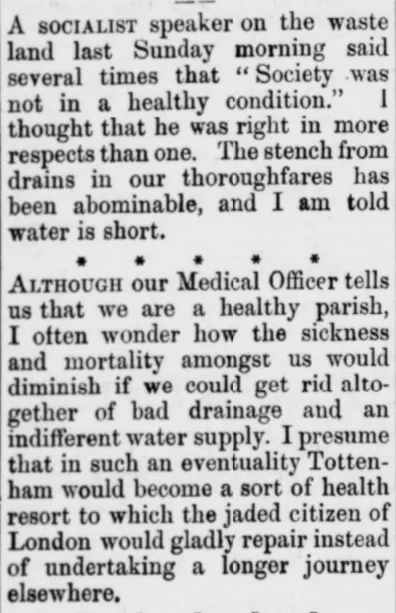
The North Middlesex Weekly Standard describes itself as 'The Recognised Unionist Organ for the Tottenham Division of Middlesex', speaking for the community and reporting truthfully on ongoing problems within the historic county. Each issue featured a 'Notes By The Way' section, in which local parish events were reported and opinions were shared. In an issue from 22 July 1898, one of these notes featured an interesting query:
Such inquiries tell us a lot about the state of public health in the late nineteenth-century. As communities began to question the conditions in which they lived, calls for improved waste systems and cleaner water would increase. Local Unionist newspapers that overtly criticised poor living and working conditions spoke for the community as a whole, and largely contributed to future public health enhancements.
The North Middlesex Weekly Standard was published every Friday and cost one halfpenny per issue.
Wimbledon Times and Mitcham Advertiser
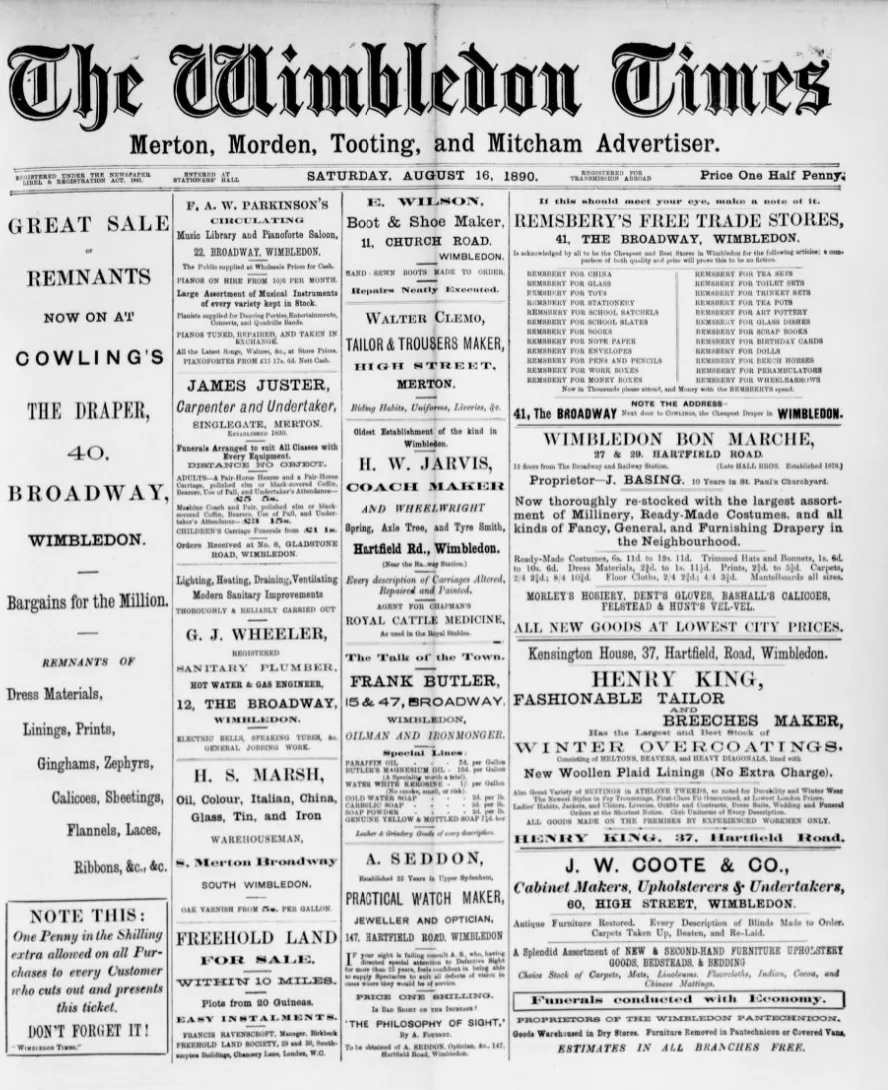
Fourth on our list for this week is the London-based Wimbledon Times and Mitcham Advertiser. This title promised, 'The Proprietor of this Newspaper guarantees the Largest Circulation of any paper printed or published in the Town. This he is prepared to prove before any competent authority.' From this declaration, it is evident that our next title took their reputation seriously. It is no surprise, then, that the Wimbledon Times and Mitcham Advertiser provided detailed local news updates, local business advertisements, and ongoing legal cases.
Alongside local updates, this title also featured short stories and poems spliced throughout its pages, for those inspired by the written word. News updates came from other areas of London, such as Croydon and South Norwood.
Each issue of this brand new title was published every single Saturday and cost its large readership one halfpenny.
Wimbledon, Tooting and Merton Temperance Gazette
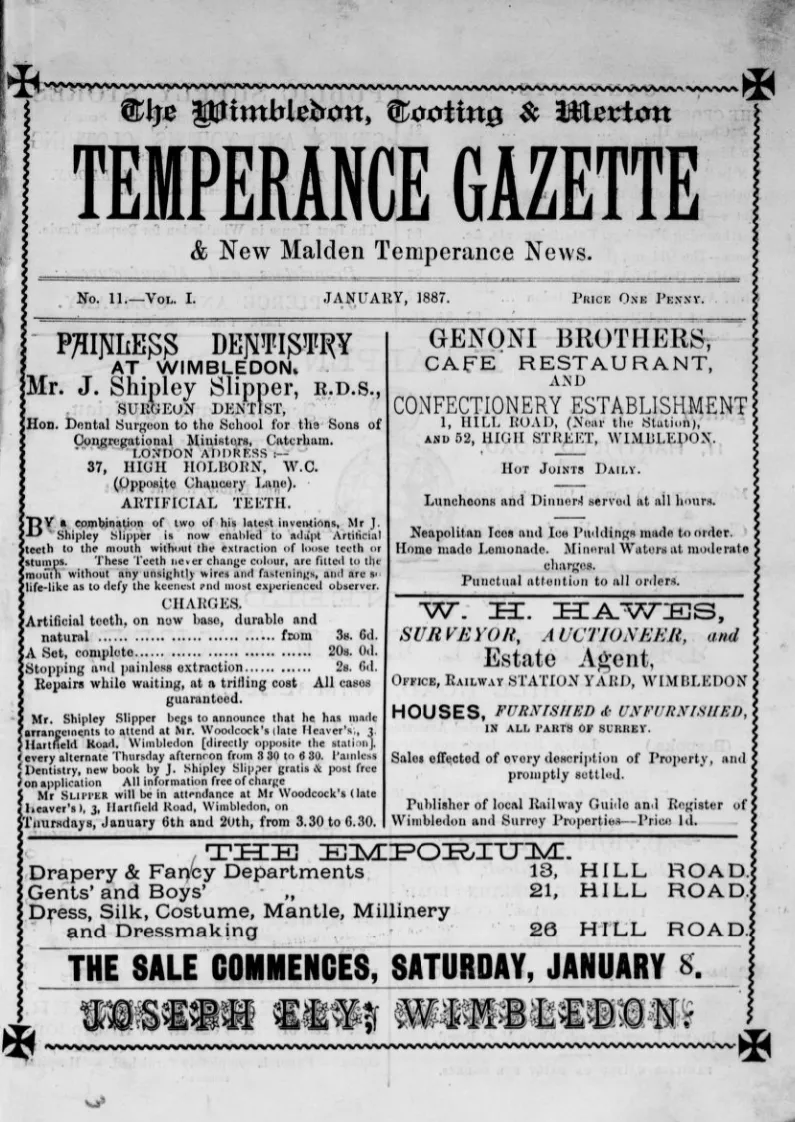
We're staying in London for our fifth new title this week, the fascinating Wimbledon, Tooting and Merton Temperance Gazette. This paper documented local and national developments in the late nineteenth-century Temperance movement, which promoted total abstinence from alcohol, blaming drinking for societal disruptions such as poverty, crime, and domestic violence. It operated alongside several other 'Temperance' papers during the late 1800s, such as The United Temperance Gazette, The Dublin Temperance Gazette, and The British Temperance Advocate, all working to spread the evils caused by drinking alcoholic beverages.
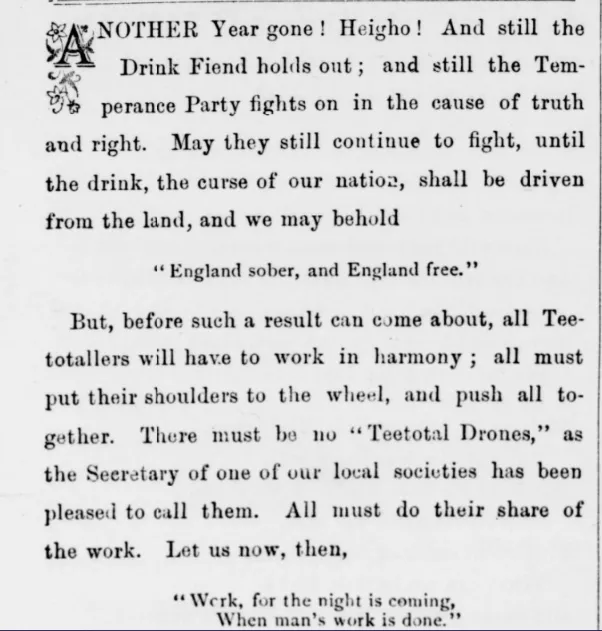
This paper urged its readers to forfeit alcohol and abstain from temptation, claiming that doing so would lead to improved family and working atmospheres. In an issue from 1 January 1887, this title spoke directly to its readers:
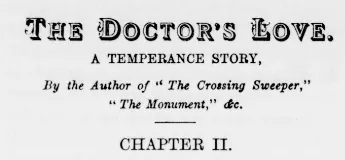
The language used in the notice speaks to the passionate beliefs of the Temperance movement, calling drink 'the curse of our nation' . This title announced and documented local Temperance meetings, recounted drink-related criminal charges, and spelt out their mission in various creative ways. Frequently, its front page would feature a story with a connection to abstinence. The stories would paint alcohol as the root of all problems, and was split by chapter across several issues.
The Wimbledon, Tooting and Merton Temperance Gazette is a captivating snapshot of the Temperance movement in Britain during the late nineteenth century.
It was published on the 1st of every month and cost one penny per issue.
Yorkshire Observer Budget
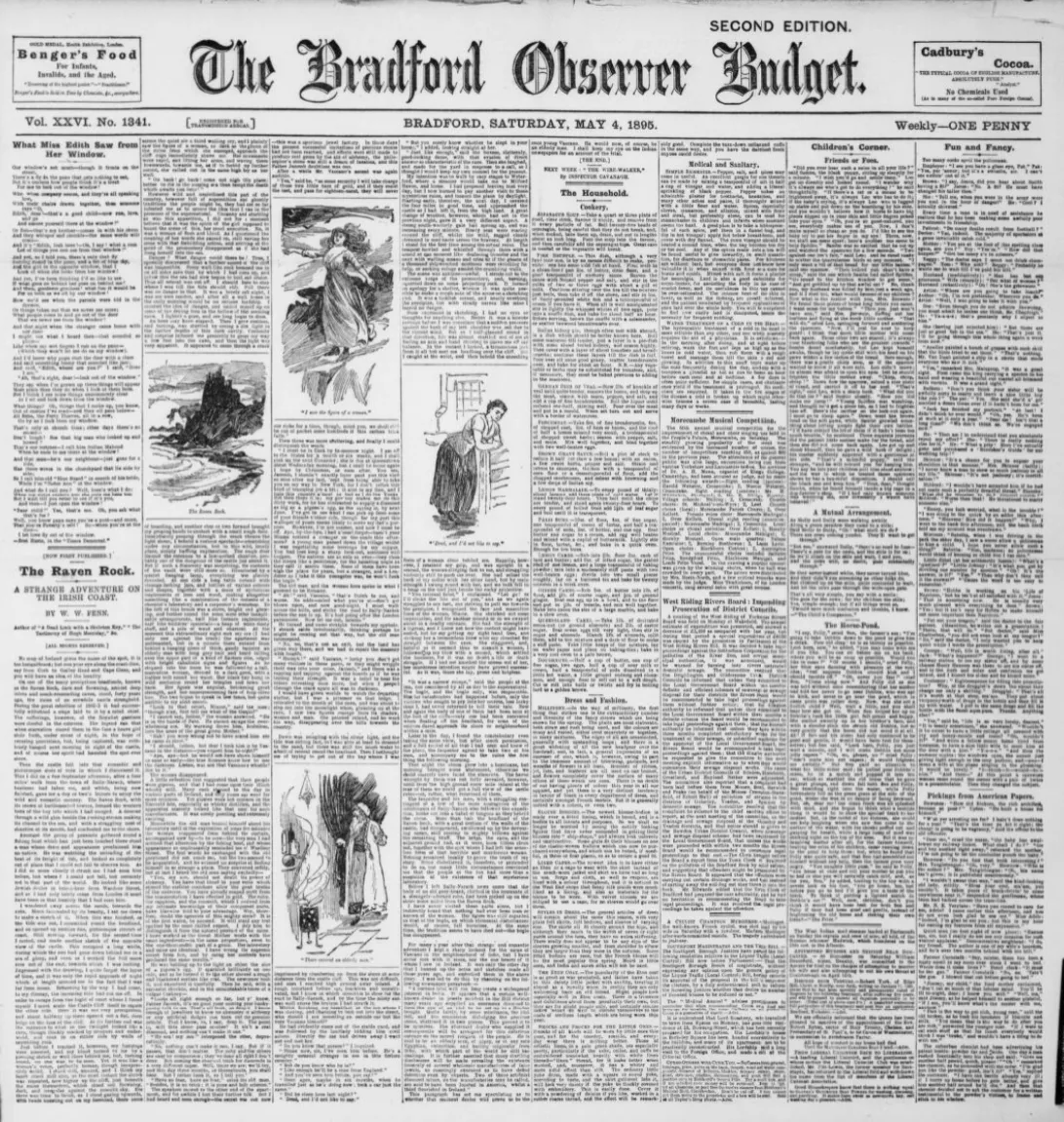
Our final title this week takes us up to Yorkshire, with the Yorkshire Observer Budget. This weekly title was based in Braford, and was originally known as The Observer Budget. At the end of its first year, it changed its name to The Bradford Observer Budget before later settling on the Yorkshire Observer Budget. It was a companion to the parent paper, the Bradford Observer, which commenced publication in 1834.
This title catered towards working and middle-class families, providing friendly local and district news in the Bradford area, as well as local society pitches, football results, recipes, and ladies columns. It's politics were liberal, with Bradford being the home of the first Independent Labour Party (ILP) in 1893.
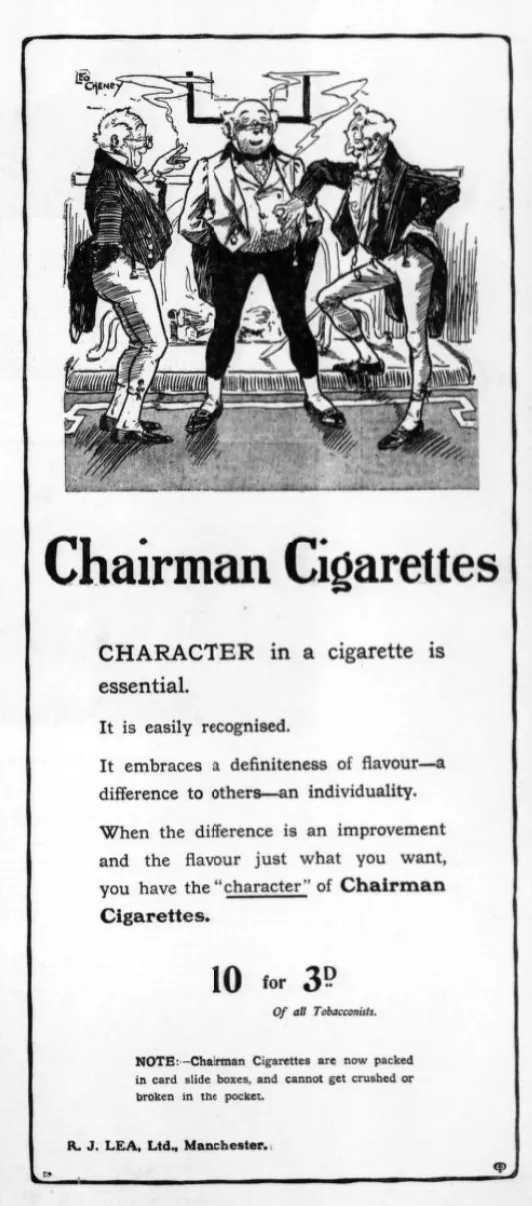
As well as documenting news, it also contained several local advertisements.
The Yorkshire Observer Budget was published every Saturday and cost one penny.
Our updated titles
While that's all from our brand new titles, but we've got plenty to update you on. With updates to forty-three pre-existing titles, there's definitely something that will tickle your fancy!
Our biggest update this week was made to the Western Daily Press, with 51,472 new pages. While that takes the top spot, it is followed shortly by the Sandwell Evening Mail, with 41,190 new pages now available.
If you're after something a bit more visually striking, we've got you covered. We've added 1903 of the Illustrated Police Budget, and 1874 of the Illustrated Berwick Journal. Alongside this, updates have been made to Fairplay, Catholic Times and Catholic Opinion, and the Orkney Herald.
The Temperance movement
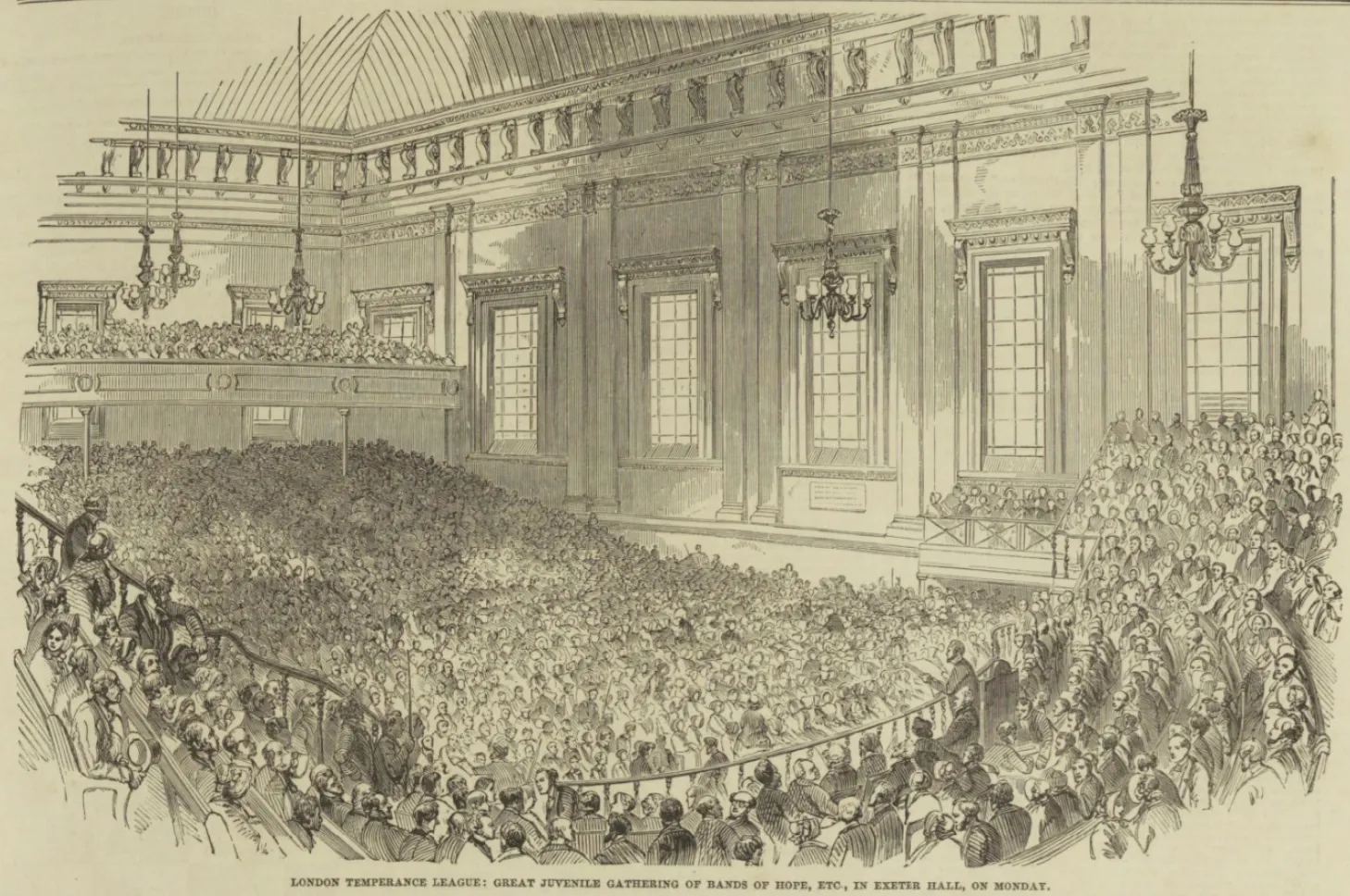
While looking at one of our new titles this week, the Wimbledon, Tooting and Merton Temperance Gazette, we found ourselves intrigued by the late nineteenth-century Temperance movement in Britain. Prior to the rise of the movement, alcoholism and drunkenness were ravaging the streets of many cities across the nation. In the eighteenth century, the period known as the 'Gin Craze' increased consumption of gin in Britain, following legislation that restricted imports on brandy and encouraged the sale of the spirit. This craze brought only problems, and the Temperance movement emerged gradually from the mess caused by excessive drinking.
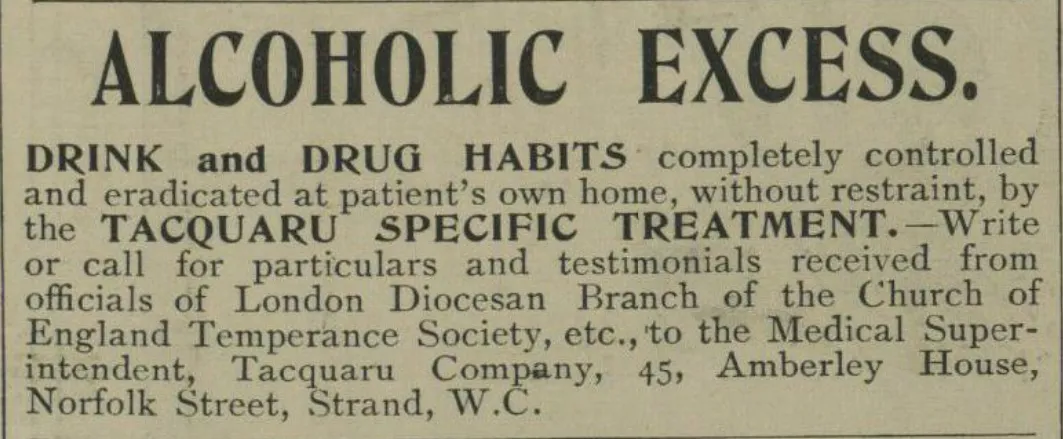
Temperance societies began to pop up in the 1830s, spreading the belief that consumption of alcohol led directly to several societal problems, including poverty, crime, child neglect, and domestic violence. As the movement grew, groups such as the Band of Hope were formed with the aim of turning new generations away from drinking. According to members of the Temperance movement, the only way forward was total absenteeism.
The growth in teetotalism across various parts of Britain successfully deterred many individuals from drinking. Towns and villages built community spaces intentionally away from pubs, while alcohol-free venues hosted evenings of music, reading, and rest. Cocoa rooms and coffee houses appeared across the nation. Millions of people saw the benefits of absenteeism, taking the pledge to stop drinking. Merchandise was made, and included items such as badges, medals, and mugs.
the Temperance movement and efforts taken to curb the consumption of alcohol among the general population were by no means limited to Britain. America saw a gigantic push for absenteeism and prohibition in the early 1800s, and by 1835, the American Temperance Union had 1.5 million members.
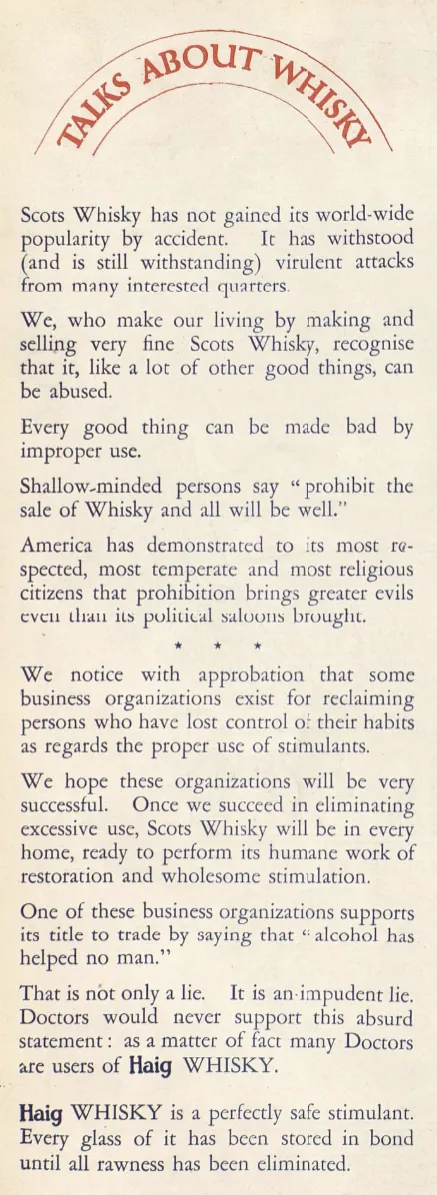
Despite many people advocating for the cause, there was large resistance against the movement. Several spirit advertisers blatantly objected absenteeism and claimed it caused more issues than drinking.
The British Temperance movement, although undoubtably effective at raising awareness of excessive drinking, would eventually die out during the Second World War. As societal and economic priorities shifted, the campaign slowly began to lose momentum. The language of drinking was changed, however, and the movement succeeded in creating discourse on the consequences of excessive drinking.
Discover more about the Temperance Movement in The Archive todayNew titles
Title | Years Added |
|---|---|
1875, 1889 | |
1879-1882 | |
1893-1901 | |
1886-1887 | |
1886-1887 | |
1879,1895-1896, 1912 |
Updated titles
This week we have updated 43 of our existing titles.
You can learn more about each of the titles we add to every week by clicking on their names. On each paper’s title page, you can read a free sample issue, learn more about our current holdings, and our plans for digitisation.
Title | Years Added |
|---|---|
1991-1993 | |
1889 | |
1912 | |
1889,1898 | |
2002 | |
1858 | |
1880 | |
1874-1876,1879,1911-1920 | |
1877,1889 | |
1877,1889,1912-1913,1915-1919 | |
1891 | |
1855, 1885 | |
1877 | |
1915 | |
1857 | |
1852 | |
1919 | |
1864 | |
1874 | |
1903 | |
1859 | |
1917-1918 | |
2005 | |
2005 | |
1901-1902,1904,1917-1918 | |
1858,1889 | |
1863 | |
2004-2005 | |
2000-2002 | |
1875 | |
1951-1961 | |
1881 | |
2000, 2003 | |
1901 | |
2000-2002 | |
2002-2003 | |
1878 | |
1896,1899-1900,1905 | |
1872 | |
2004 | |
1889 | |
1966 | |
2002,2004 |
More on this topic:
Share this article
About the author

Molly Pearce
Data Operations Executive
Published on Mon, 3 August 2026.