Skip to content

Search the blog

Tag: victorianTag: otdTag: blitzTag: ve-day
This week at The Archive we’re excited to welcome five brand new titles to our collection, and we’re especially delighted to welcome one of the longest running Free Church newspapers to our holdings, namely the Baptist Times. Meanwhile, we’ve added 125,635 brand new pages to The Archive in all over the past seven days, with updates to eleven of our existing titles, including to the world’s oldest English language general daily newspaper still in circulation, the Belfast News-Letter.So read on
This week at The Archive we are marking the 80th anniversary of VE Day by examining the striking front pages of our newspapers. We’re also continuing to add new pages to our collection, with 125,548 brand new pages joining us over the last seven days, which includes the addition of five brand new newspaper titles and the updating of eighteen of our existing titles from across the United Kingdom and the Republic of Ireland.So read on to see the headlines
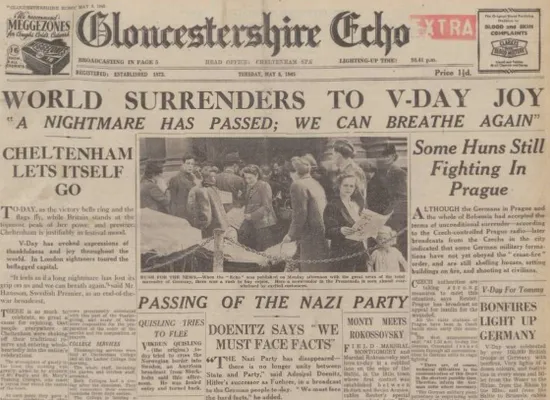
This month marks the 80th anniversary of VE Day – the day that peace in Europe was finally declared. After nearly six years of conflict – how did the newspapers of the time report the momentous news? How did the people of Britain react?Gloucestershire Echo | 8 May 1945Using the front pages from the 8 May 1945, VE Day itself, we take a step back in time to discover just how the joyous news spread, and how it was reacted to.Register now and explore
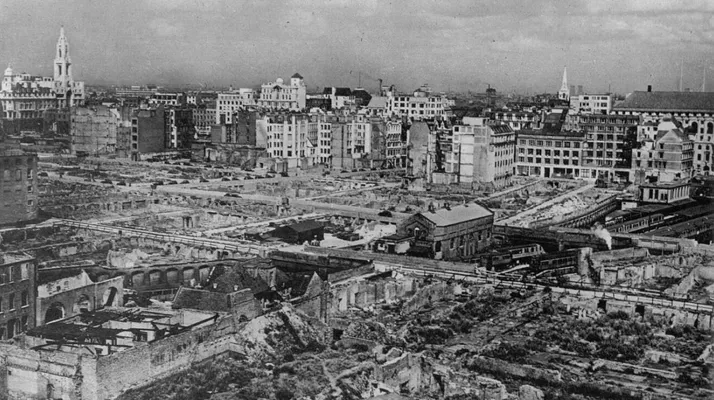
This week at The Archive we are delighted to welcome a brand new title from the sunny south coast, the Bournemouth Times and Directory, as we take a moment to remember the devastating Bournemouth Blitz. In all, over the last seven days, we’ve added 366,686 brand new pages to our collection, whilst we’ve updated 25 of our existing titles from across England, Scotland and Northern Ireland.So, from Buckingham to Burnley, from Dingwall to Driffield, from Mid Sussex to Mid Ulster, read
In the decade after the Second World War had come to an end, and indeed beyond, many communities across the United Kingdom were faced with very vivid reminders of the conflict: bomb sites, the country’s ‘war scars.’In this blog, we will examine how people in Britain lived alongside bomb sits in the 1950s, using newspapers taken from The Archive. We will explore how communities adapted to live beside bomb sites, and how they transformed them into gardens and playgrounds.
As we move now into February we have been extremely busy here at The Archive, adding 139,438 brand new pages to our collection, with the addition of two brand new titles over the past seven days. Meanwhile, we have made significant updates to a range of our existing titles, with 26 titles updated in all.So read on to discover more about our two new titles of the week, one of which represented the interests of the various Nonconformist Protestant groups of
‘No more thrilling a tale of guilt and crime, and scarcely one so eloquent in its lessons and cautions to those who are in danger of entering upon a life of unbridled passion, is to be found in all the history of poor humanity than this story of William Palmer.’So reads an article in the Sheffield Independent, 17 September 1888, regarding one William Palmer, better known as the Rugeley Poisoner. William Palmer, a former doctor, was convicted in 1856 for the murder
This week on The Archive we have added 20,428 brand new pages, encompassing seven new titles, which cover England and Wales, as well as a brand new title from Jamaica, a first for the British Newspaper Archive.Register now and explore the ArchiveWe have three new titles joining us this week from Yorkshire, strengthening our collection of newspapers from England’s largest county. We have two new titles from the West Yorkshire town of Batley, including the Batley Reporter and Guardian,
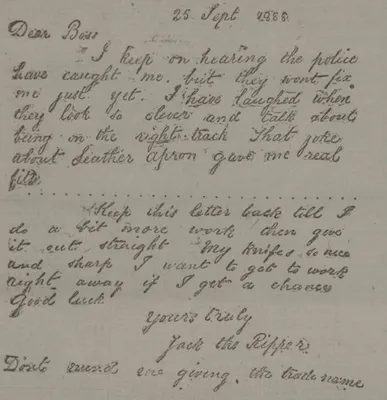
On 27 September 1888, in the midst of a series of horrific murders in Whitechapel, the Central News Office in London received a letter, signed by ‘Jack the Ripper’.Known as the ‘Dear Boss’ letter because of the way it was addressed, the letter changed the way British newspapers reported the Ripper murders.Read newspapers from 1888Facsimiles of the ‘Dear Boss’ letter in the newspapersThe name ‘Jack the Ripper’ reached the British press and general public on 3 October 1888, when Scotland Yard
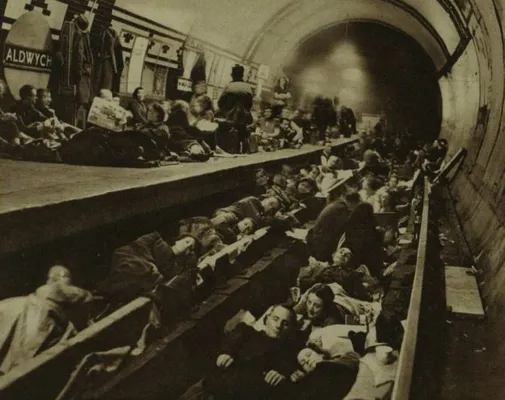
When the Blitz began on 7 September 1940, ‘It was the people of London who took command…Men, women, and children went straight to the safest place they could think of – the Underground stations.’In this special blog, over 80 years after the beginning of the Blitz, we take a look at how London’s main transport system – the Underground –  became a popular place of shelter for those seeking protection from the German bombing campaign, using an assortment of articles and photographs all to be