
Skip to content

Search the blog

Tag: sportTag: blitzTag: black-history
This week at The Archive we are delighted to welcome a brand new title from the sunny south coast, the Bournemouth Times and Directory, as we take a moment to remember the devastating Bournemouth Blitz. In all, over the last seven days, we’ve added 366,686 brand new pages to our collection, whilst we’ve updated 25 of our existing titles from across England, Scotland and Northern Ireland.So, from Buckingham to Burnley, from Dingwall to Driffield, from Mid Sussex to Mid Ulster, read
Here at The Archive, we love to learn of the discoveries you have made through our newspaper pages, and how you have used them, whether they have influenced novels, or provided information for dissertations. We were incredibly grateful, therefore, when crime writer and athletics historian Peter Lovesey contacted us with his account of sixty years of researching newspapers. From accessing historical newspapers in their original form, to scrolling through microfilm reels, and finally to searching newspapers digitally on the British
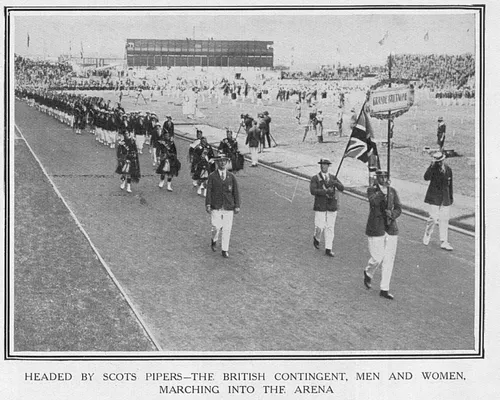
As the 2024 Paris Olympics begin, we at the British Newspaper Archive could not help but look back at the 1924 Paris Olympics, with the same city playing host to the summer Olympic Games exactly one hundred years ago. Paris had also hosted the Olympics in 1900, and so this year will be the third time that the city hosts the iconic sporting tournament.And the 1924 Paris Olympics would prove an iconic one for Britain, with gold medal wins by sprinters Harold
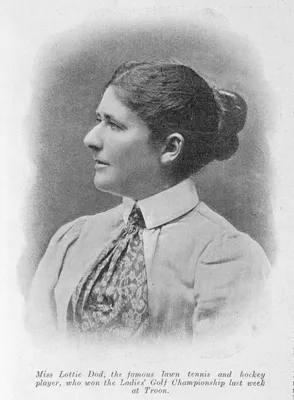
Merseyside-born, Charlotte ‘Lottie’ Dod, is the youngest ever winner of the Wimbledon Ladies Singles Championship, achieving her triumph in 1887 at the tender age of 15 years and 285 days.She won the singles title a remarkable five times in total, between the years 1887 and 1893.An article in the Sheffield Independent chronicles Lottie’s first ever Wimbledon victory in 1887.About the ladies’ singles there is little to be said – only five entered as against eight last year. Miss Lottie Dod simply “cantered” through the
This week at The Archive we are delighted to welcome brand new Scottish sports paper the Sporting Post to our collection, as we welcome a whopping 417,546 brand new pages in total. Meanwhile, from Belfast to Beverley, from Melton Mowbray to Motherwell, from Selkirk to Sleaford, we’ve updated 44 of our existing titles from across the United Kingdom.So read on to discover more about our new and updated titles of the week. We also travel back to the year 1986 using pages
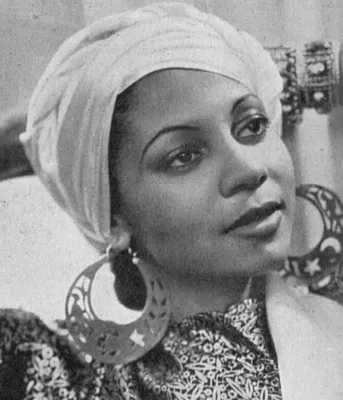
In the late 1930s a newcomer made her way onto British cinema screens: Princess Kouka. From Sudan, Princess Kouka, born Tahia Ibrahim Belal, had been spotted by film producer Walter Futter, who was determined for her to appear in his next film.Using newspapers from the time, we uncover the legacy of this largely forgotten film star, who travelled to Britain and impressed audiences across the country.‘A Notable Newcomer’On 18 December 1936 London’s Daily News reported on the impending arrival
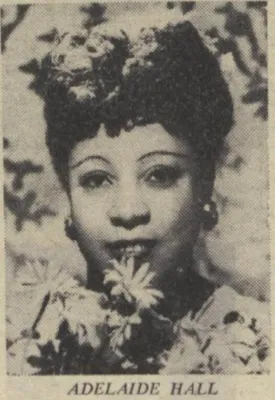
American-born jazz age superstar Adelaide Hall (1901-1993) was a Black music legend, who from 1938 onwards made Britain her home. She went on to have a long and successful career in the UK.In this very special blog, as part of Black History Month on The Archive, we will celebrate this jazz age queen who came to Britain and entertained thousands of people via her stage and radio performances, using newspapers taken from our Archive.A Star Is BornTo go back
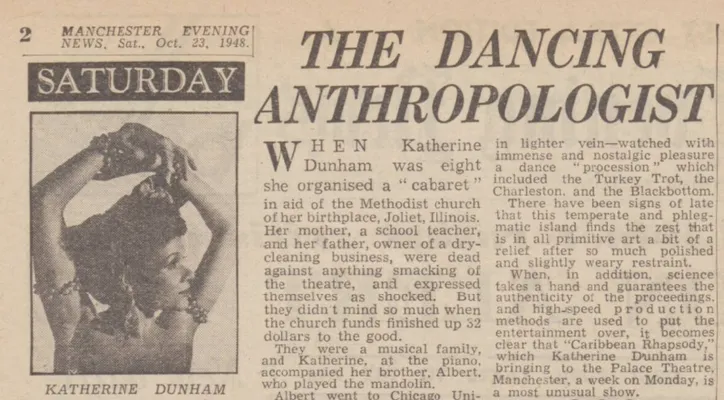
Born in 1909 in Chicago, ‘dancing anthropologist’ Katherine Dunham was known as the ‘matriarch and queen mother of Black dance.’ Her father was a descendant of enslaved West Africans and Madagascans, whilst her mother hailed from Canada.A multitalented artist, academic and activist, for many years Katherine Dunham ran the Katherine Dunham Dance Company, the only self-supporting African-American dance troupe in the mid-twentieth century. It was during this time that Dunham toured the United Kingdom, and in this special blog, we
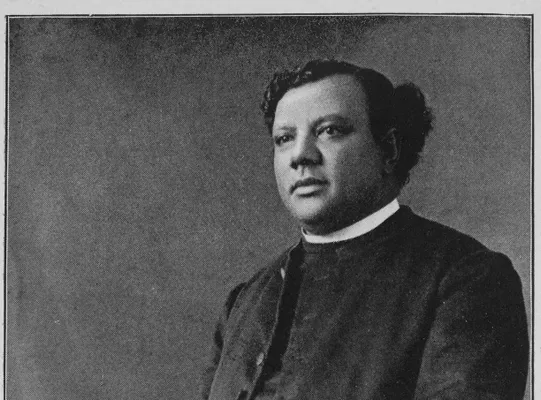
At the British Newspaper Archive we are always delighted to hear how The Archive has been used to inform a range of different research interests. In this very special guest blog, Sidonia Serafini of Georgia College & State University and Barbara McCaskill of the University of Georgia take a look at the work of the Reverend Peter Thomas Stanford, Birmingham’s first Black minister, as reported in the British press, through the newspapers to be found in our collection.In March 1883, Reverend
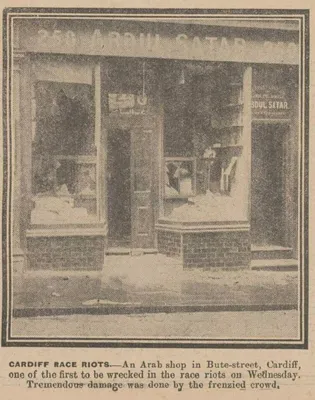
In the aftermath of the First World War, severe competition for jobs, especially in the ports of the United Kingdom, became widespread. Alongside this competition, a new awareness of Britain’s Black and minority ethnic population arose, fuelling the perception that such so-called ‘foreigners’ were stealing the scarcely available jobs.This toxic atmosphere would ultimately lead to the race riots of 1919, which began in January and lasted until August of that year. Violence broke out in cities across the United Kingdom,