
Skip to content

Search the blog

Tag: ocrTag: canadaTag: blitzTag: youth-culture
This week we have added an icon of British teenage life to our Archive, DC Thomson’s best-selling teen magazine, none other than Jackie. A weekly magazine for girls, Jackie was a cultural phenomenon.We’ve published every single edition of Jackie here at The Archive, running from 1964 through to 1993. That means we’ve added 51,474 pages of purely Jackie this week, a lively and bright smorgasbord of everything that appealed to a young teenage girl in the latter half of the twentieth century.
This week at The Archive we are delighted to welcome a brand new title from the sunny south coast, the Bournemouth Times and Directory, as we take a moment to remember the devastating Bournemouth Blitz. In all, over the last seven days, we’ve added 366,686 brand new pages to our collection, whilst we’ve updated 25 of our existing titles from across England, Scotland and Northern Ireland.So, from Buckingham to Burnley, from Dingwall to Driffield, from Mid Sussex to Mid Ulster, read
We’re starting this week off with a bang as we have added 218,828 brand new pages to The Archive, as we investigate the 1964 ‘Battle of Pier Gap,’ in which mods and rockers clashed in Clacton-on-Sea, Essex. Meanwhile, we’ve added one brand new title to The Archive, the East Essex Advertiser and Clacton News, as well as making extensive updates to our existing titles from across England, Wales, and Northern Ireland.From Croydon to Clacton, from South Bank to South Devon, read
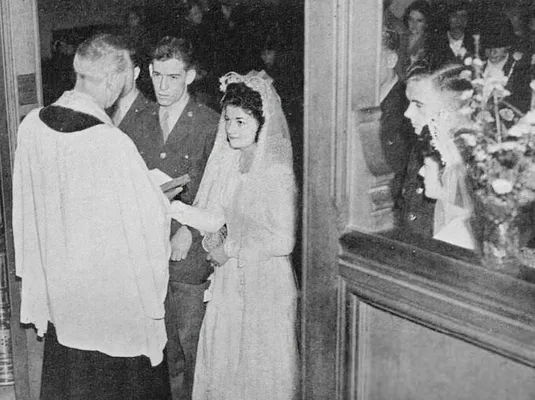
As a result of the Second World War, over 60,000 British women married American soldiers (colloquially known as GIs), many of them returning with their new husbands to live in the United States once the war ended.In this special blog, we are going to take a look at how the so-called GI brides were reported on by the press of the United Kingdom. We will examine how they faced warnings over their choice of husbands, and how they were prepared
In spite of the hot weather here at The Archive we are delighted to bring you 209,493 brand new pages from across the world, with new pages joining publications from the likes of England, Ireland, Scotland, Wales, Canada and Barbados. We have extensive and exciting updates to some of our wonderful regional titles, which span the years 1742 to 1997, as well as to one of our special illustrated titles, Black & White.So read on to discover more about our updated titles of
This week at The Archive we have been beavering away to bring you 266,469 brand new pages from across the world, from Canada to Ireland, from the United States to Wales. We are delighted to introduce six brand new titles to our collection, including our first ever title from the United States, alongside another new title that was exclusively devoted to all things Anglo-American. Meanwhile, we welcome a brand new Canadian title to our collection, just in time for Canada Day,
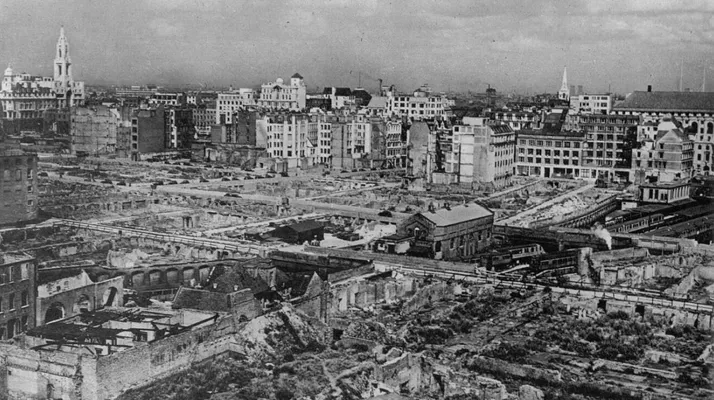
In the decade after the Second World War had come to an end, and indeed beyond, many communities across the United Kingdom were faced with very vivid reminders of the conflict: bomb sites, the country’s ‘war scars.’In this blog, we will examine how people in Britain lived alongside bomb sits in the 1950s, using newspapers taken from The Archive. We will explore how communities adapted to live beside bomb sites, and how they transformed them into gardens and playgrounds.
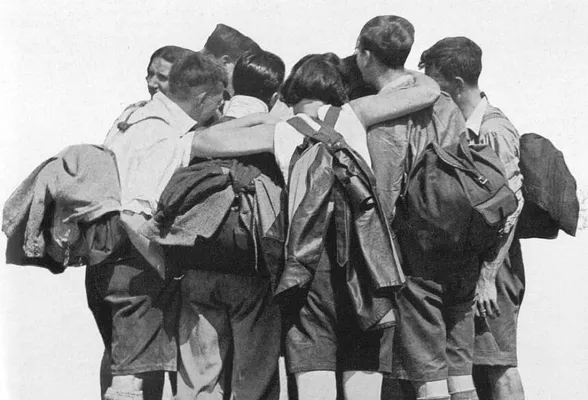
The popularity of walking or ‘hiking,’ as it is termed, is amazingly on the increase. ‘Sabbath day journeys’ are undertaken by the youth of both sexes, armed with knapsacks. Starting from Waterloo to the Surrey hills and commons, where they walk, either in clubs or in private companies, or alone, all day, to return by train at night.So relates The Sphere in the September of 1930 in an article entitled ‘Knapsackery on the Surrey Hills.’ Regarded as the ‘Phenomenon of
At the British Newspaper Archive, we have started to digitize international newspapers from the British Library.  These rich titles explore the story of the British Commonwealth, from the time when the sun didn’t set on the British Empire through to states gaining their independence.   At times, the subject of the newspapers brings us face to face with the stark and sometimes inhuman reality of colonialism and the legacy of the British Empire across the world.Below we will explore some
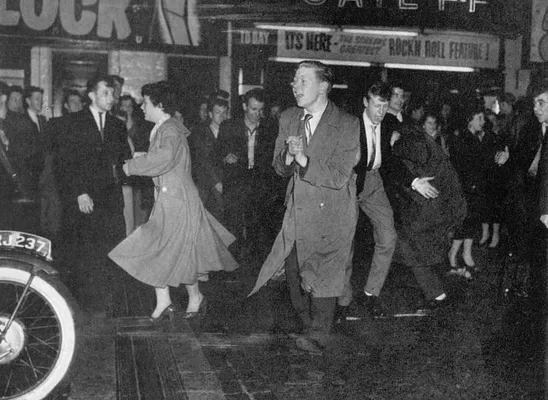
‘…coloured velvet collars and cuffs, trousers that were so tight they couldn’t sit down in them, belts on the back of their jackets, long narrow ties like bootlaces,’  this is of course the style of the Teddy Boys, the British youth subculture which defined the 1950s, as described in the Londonderry Sentinel.The Sphere | 22 September 1956The Teddy Boys, embracing the Edwardian style of decades before, were a threat to the status quo in a way that Britain had never quite