Skip to content

Search the blog

Tag: murderTag: 1920sTag: ve-dayTag: blitz
This week at The Archive we’re excited to welcome five brand new titles to our collection, and we’re especially delighted to welcome one of the longest running Free Church newspapers to our holdings, namely the Baptist Times. Meanwhile, we’ve added 125,635 brand new pages to The Archive in all over the past seven days, with updates to eleven of our existing titles, including to the world’s oldest English language general daily newspaper still in circulation, the Belfast News-Letter.So read on
This week at The Archive we are marking the 80th anniversary of VE Day by examining the striking front pages of our newspapers. We’re also continuing to add new pages to our collection, with 125,548 brand new pages joining us over the last seven days, which includes the addition of five brand new newspaper titles and the updating of eighteen of our existing titles from across the United Kingdom and the Republic of Ireland.So read on to see the headlines
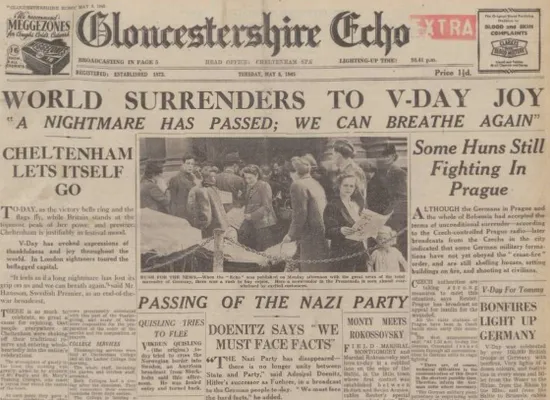
This month marks the 80th anniversary of VE Day – the day that peace in Europe was finally declared. After nearly six years of conflict – how did the newspapers of the time report the momentous news? How did the people of Britain react?Gloucestershire Echo | 8 May 1945Using the front pages from the 8 May 1945, VE Day itself, we take a step back in time to discover just how the joyous news spread, and how it was reacted to.Register now and explore
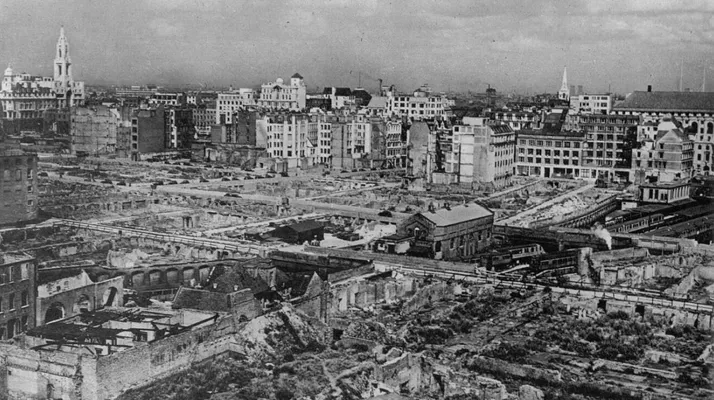
This week at The Archive we are delighted to welcome a brand new title from the sunny south coast, the Bournemouth Times and Directory, as we take a moment to remember the devastating Bournemouth Blitz. In all, over the last seven days, we’ve added 366,686 brand new pages to our collection, whilst we’ve updated 25 of our existing titles from across England, Scotland and Northern Ireland.So, from Buckingham to Burnley, from Dingwall to Driffield, from Mid Sussex to Mid Ulster, read
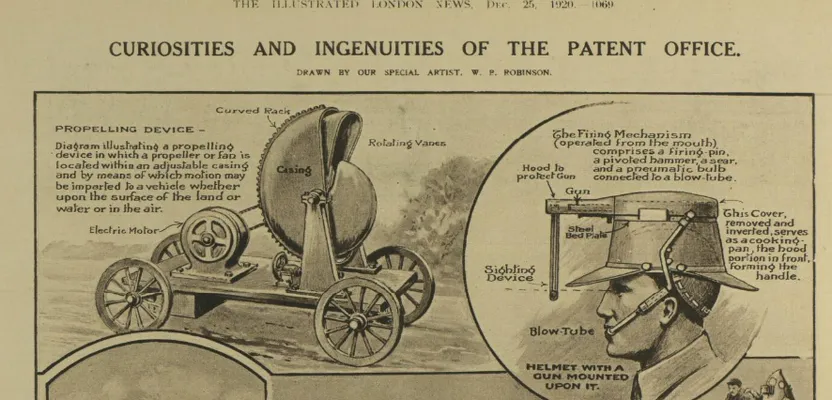
In December 1920 the world’s first illustrated weekly news magazine the Illustrated London News delved into the ‘curiosities and ingenuities‘ of the Patent Office, featuring some of Britain’s most unusual rejected patents.Illustrated by the publication’s own artist W.B. Robinson, the Illustrated London News presented a series of the bizarre designs that had been submitted to the Patent Office, but had since ‘lain dormant.’We at The Archive were keen to delve into our collection’s cabinet of curiosities, and these rejected
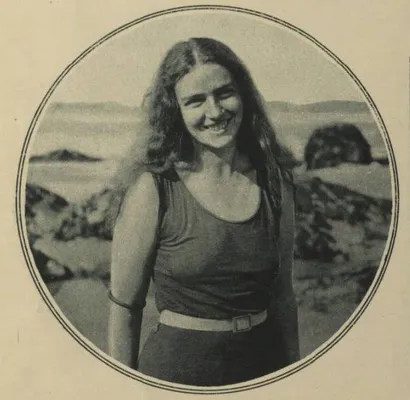
Mercedes Gleitze (1900-1981) was the first British woman to swim the English Channel, and the first person to swim the Straits of Gibraltar. In an amazing career that spanned the 1920s and 1930s, Mercedes captured the imagination of the British public and became a household name.Born to German parents in Brighton, Mercedes was one of three sisters. Skilled in languages, she moved to London where she worked as a secretary and stenographer. Whilst living in London she began swimming in
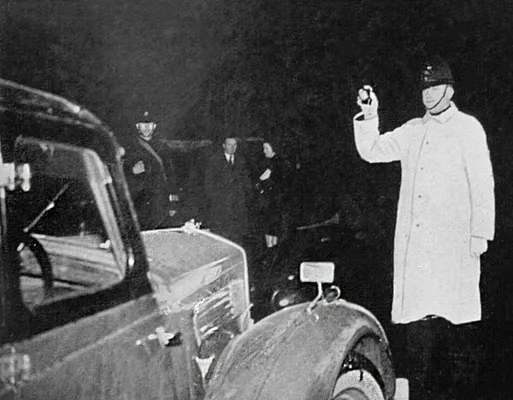
A walk along Piccadilly in the black-out is one of the many queer experiences of this war. The once brilliant centre of London’s night life is now as dark as any forest, and indeed, like a forest, the darkness is full of rustlings and whisperings, of half-seen shapes, and of a sinister feeling of eager, but invisible, life.So began a Daily Herald article on blackout crime in London during the Second World War. With blackouts imposed across the United
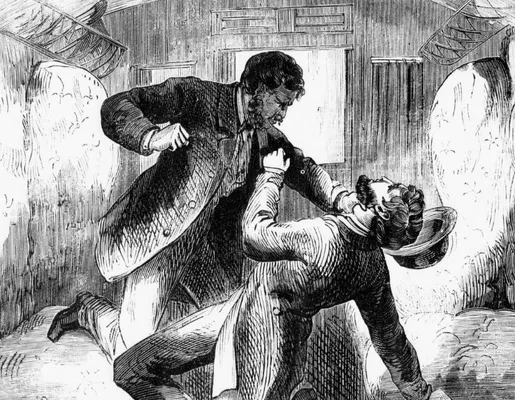
Long before Agatha Christie envisioned murder on the Orient Express, or before she wondered what might have taken place on the 4.50 from Paddington, murder, mystery and mayhem were already well established on the railways of Britain and beyond.The first victim of murder on British railways was 70-year-old Thomas Briggs. In this special blog, we will take a look at his story, as well as nine others sourced from the pages of our newspaper Archive, which tell the strange, the
In the decade after the Second World War had come to an end, and indeed beyond, many communities across the United Kingdom were faced with very vivid reminders of the conflict: bomb sites, the country’s ‘war scars.’In this blog, we will examine how people in Britain lived alongside bomb sits in the 1950s, using newspapers taken from The Archive. We will explore how communities adapted to live beside bomb sites, and how they transformed them into gardens and playgrounds.
This week you might just be able to witness steam coming off our presses, as we have added an impressive 343,381 brand new pages to The Archive, with 22 brand new titles joining us this week alone. Comprising of special interest titles devoted to music and the cinema, as well as to different spheres of employment, from postal work to pawnbroking, our new titles this week are an eclectic mix, comprising also the regional and the international, covering the latest from both