
Skip to content

Search the blog

Tag: ghostsTag: ocrTag: blitzTag: youth-culture
This week we have added an icon of British teenage life to our Archive, DC Thomson’s best-selling teen magazine, none other than Jackie. A weekly magazine for girls, Jackie was a cultural phenomenon.We’ve published every single edition of Jackie here at The Archive, running from 1964 through to 1993. That means we’ve added 51,474 pages of purely Jackie this week, a lively and bright smorgasbord of everything that appealed to a young teenage girl in the latter half of the twentieth century.
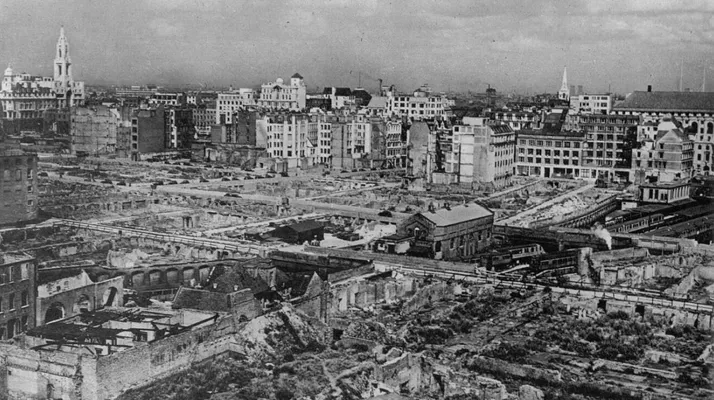
This week at The Archive we are delighted to welcome a brand new title from the sunny south coast, the Bournemouth Times and Directory, as we take a moment to remember the devastating Bournemouth Blitz. In all, over the last seven days, we’ve added 366,686 brand new pages to our collection, whilst we’ve updated 25 of our existing titles from across England, Scotland and Northern Ireland.So, from Buckingham to Burnley, from Dingwall to Driffield, from Mid Sussex to Mid Ulster, read
We’re starting this week off with a bang as we have added 218,828 brand new pages to The Archive, as we investigate the 1964 ‘Battle of Pier Gap,’ in which mods and rockers clashed in Clacton-on-Sea, Essex. Meanwhile, we’ve added one brand new title to The Archive, the East Essex Advertiser and Clacton News, as well as making extensive updates to our existing titles from across England, Wales, and Northern Ireland.From Croydon to Clacton, from South Bank to South Devon, read
In the decade after the Second World War had come to an end, and indeed beyond, many communities across the United Kingdom were faced with very vivid reminders of the conflict: bomb sites, the country’s ‘war scars.’In this blog, we will examine how people in Britain lived alongside bomb sits in the 1950s, using newspapers taken from The Archive. We will explore how communities adapted to live beside bomb sites, and how they transformed them into gardens and playgrounds.
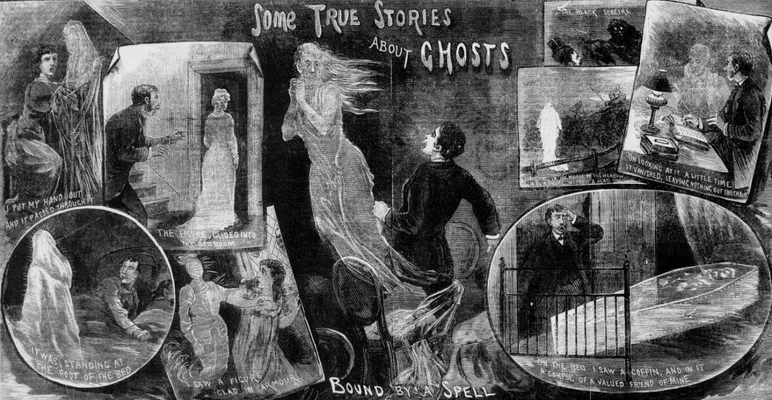
With spooky season now upon us, we thought we’d scour the pages of The Archive to find some of the most spine-chilling ghost stories ever published in our newspapers.So settle in and prepare to be scared by tales of ghostly armies, inexplicable apparitions and portents from the afterlife, all of which have been featured in the pages of the newspapers to be found on The Archive.Want to learn more? Register now and explore The Archive1. An Army of
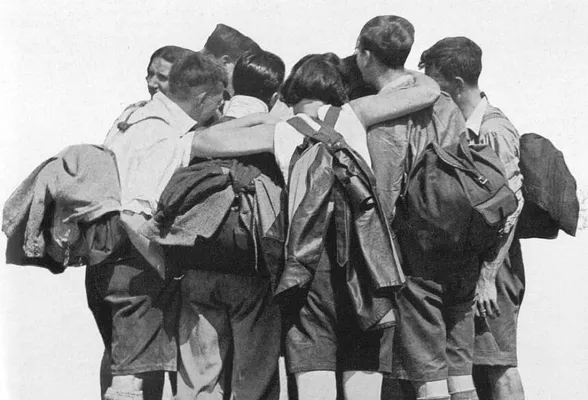
The popularity of walking or ‘hiking,’ as it is termed, is amazingly on the increase. ‘Sabbath day journeys’ are undertaken by the youth of both sexes, armed with knapsacks. Starting from Waterloo to the Surrey hills and commons, where they walk, either in clubs or in private companies, or alone, all day, to return by train at night.So relates The Sphere in the September of 1930 in an article entitled ‘Knapsackery on the Surrey Hills.’ Regarded as the ‘Phenomenon of
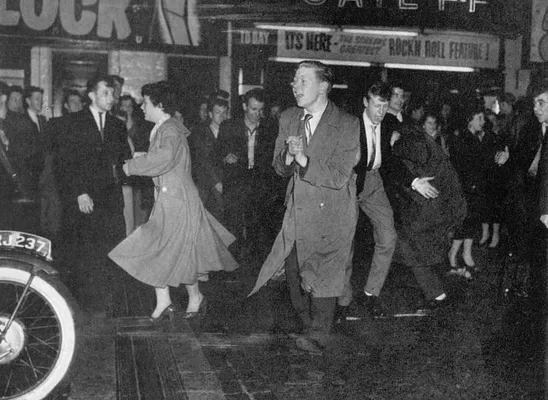
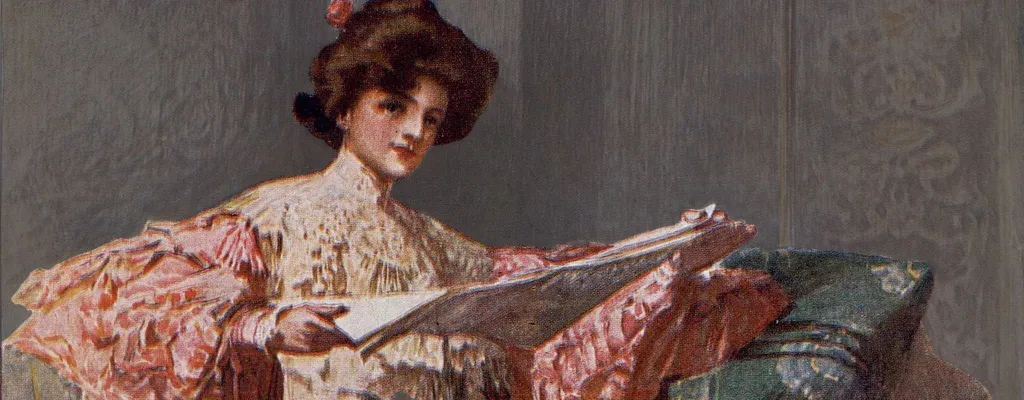
‘…coloured velvet collars and cuffs, trousers that were so tight they couldn’t sit down in them, belts on the back of their jackets, long narrow ties like bootlaces,’  this is of course the style of the Teddy Boys, the British youth subculture which defined the 1950s, as described in the Londonderry Sentinel.The Sphere | 22 September 1956The Teddy Boys, embracing the Edwardian style of decades before, were a threat to the status quo in a way that Britain had never quite
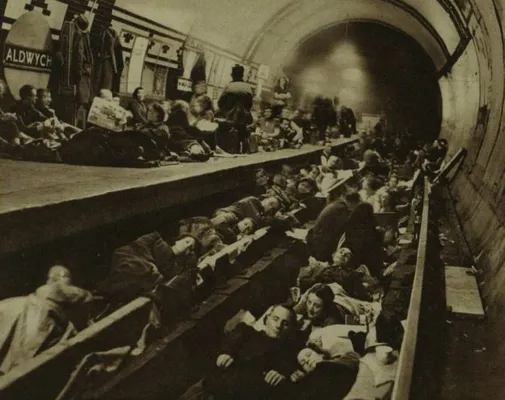
When the Blitz began on 7 September 1940, ‘It was the people of London who took command…Men, women, and children went straight to the safest place they could think of – the Underground stations.’In this special blog, over 80 years after the beginning of the Blitz, we take a look at how London’s main transport system – the Underground –  became a popular place of shelter for those seeking protection from the German bombing campaign, using an assortment of articles and photographs all to be
This week we have added 48,988 pages to The Archive, with new pages covering both England and Scotland. We’re delighted to have updated four of our Scottish titles, with additions spanning the years between 1879 to 1981. We’ve also updated the Newcastle Journal, the Manchester Evening News, the Lichfield Mercury, the Wells Journal, and finally the Reading Evening Post.One of our Scottish titles to be updated this week is the Aberdeen Evening Express, to which we have added the years 1939-1945 and 1980-1981.Eighty
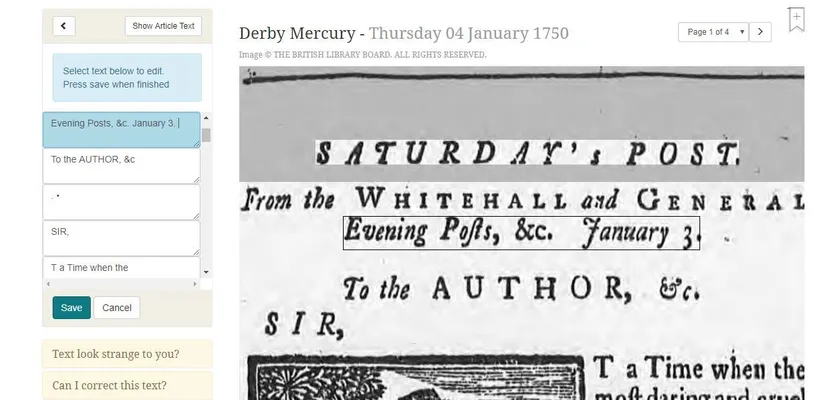
One of the features of The British Newspaper Archive is the OCR editing tool.  This allows every user to contribute to the improvement of The Archive.  OCR stands for Optical Character Recognition– the process we use to transform millions of digitised images into searchable text.   The computer takes an image of the page and then turns each line into text.  However, as many of us have encountered, the text is not always correct and needs improvement.  As a group, we