Skip to content

Search the blog

Tag: evening-despatchTag: newspapers
We were watching a TV programme on BBC4 last night about preserving heritage in the UK, and learned from this programme that Sir John Lubbock (a leading figure in the heritage movement during the Victorian and Edwardian eras) had a pet wasp.So, well, we were quite struck by this story.I mean, we’ve sometimes seen them in pet shop windows before, but have never gone in to ask if they make good pets, how much they cost, will they
The winter of 1946-47 was certainly a bad one.They had to send out search parties for missing trains and bus/train travellers were often stranded overnight (as happened in SE England last night).We’ve been reading about this epic winter in the Archive, and were amazed to see that flame-throwers were considered as a possible solution (and some tests were even carried out!) to counter the snow and ice.|Hull Daily Mail – Tuesday 11 February 1947Image © Northcliffe Media Limited. Image created courtesy
The Great Sheffield Flood took place on 11 March 1864, resulting in the loss of 238 lives.The tragedy occurred when the newly-built Dale Dyke Dam at the Bradfield Reservoir collapsed (it was being filled for the first time), thus releasing over 700 million gallons of water down the Loxley Valley and into the centre of Sheffield.So to mark the day, here is a report of the disaster that appeared in ‘The Manchester Times’ of Saturday 12 March 1864.Manchester Times – Saturday 12 March 1864Image © THE
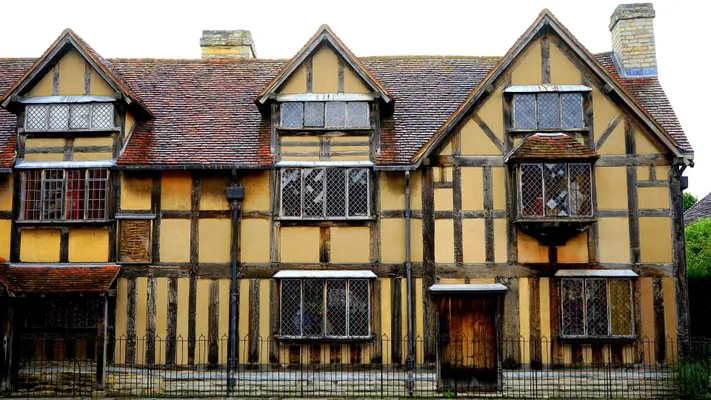
Shakespeare's house
Newspaper report from 1858 about Reverend Francis Gastrell being sent into exile by the good folk of Stratford-upon-AvonAs our curiosity was aroused by this BBC news article about Reverend Francis Gastrell demolishing Shakespeare’s house in 1759, we thought we’d do a quick search for this tale in the Archive.Our search was fruitful, as we found this newspaper report (published in 1858) that describes how Gastrell’s ‘cultural vandalism’ resulted in him being ‘sent to Coventry’ by the good folk of Stratford-upon-Avon.
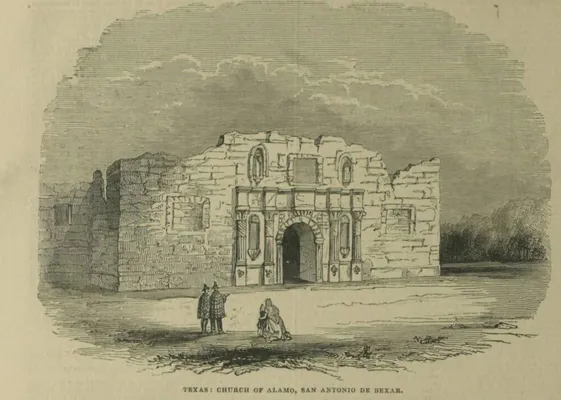
Church of Alamo
On 6 March 1836, the Battle of the Alamo ended, following a 12-day battle between the Texan rebels and President General Santa Anna’s Mexican army. The battle resulted in the death of all the Texian defenders.  To mark the day, we’ve posted below two newspaper stories from May 1836 that report on the end of the famous battle.The first tells us about the battle.A second article promoted the cause of Texas.Discover more about the Battle of the Alamo
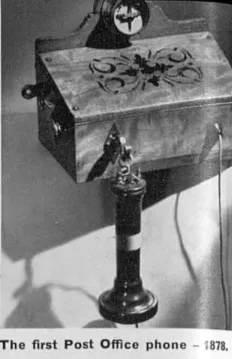
First post office phone 1878
To celebrate the birth date of Alexander Graham Bell (born in Edinburgh on this day in 1847), here is a newspaper report from 1878 about the interactive demo of the workings of the telephone, given by Alexander Graham Bell to Queen Victoria in 1878.Bell’s demo by royal appointment took place at Osborne House in January 1878, and it looks as though the experiment went very well – luckily for the Queen and Bell, PowerPoint hadn’t yet been invented to amuse.Especially interesting is the
We do love the quirky stories that the Archive contains.Indeed, on almost every Archive page that we look at, our attention will be diverted as we spot a story with a quirky headline.The Scanning Team at Colindale Library are world-leading experts in spotting quirky stories, and it was the ‘Scanners’ who passed on this wonderful “shaggy monkey’s tale” to us, so we could post it on the blog.It seems that the mass break-out took place from a
Historical newspaper report on the bread riots in Liverpool in February 1855On 19 February 1855, bread riots took place in Liverpool.As can be seen from this newspaper report, the riots appear to have occurred as a result of unemployment among the corn porters and dock labourers in the city, whose usual work and wages had been affected by the frost.That said, bread riots took place in other UK cities during the 18th and 19th centuries – just do a search on
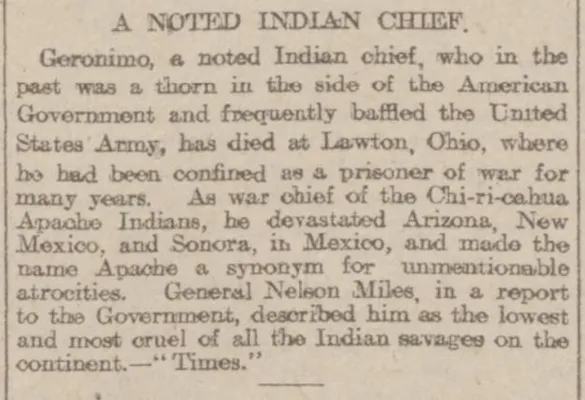
On 17 February 1909, the famous Apache warrior and chief, Geronimo, died of pneumonia (he had lain out in the cold all the previous night, following a fall from a horse) at Fort Sill, Oklahoma, aged 79.Despite being a prisoner of war since his surrender in 1886, Geronimo was still known and talked about across the Atlantic in Britain. Not long before his death, the Manchester Courier and Lancashire General Advertiser in 1908 celebrates the ‘Last Apache War Chief.’Manchester Courier and Lancashire General
Newspaper report from 1898 on the life and achievements of Sir Samuel PlimsollOn 10 February 1824, Sir Samuel Plimsoll, ‘the Sailors’ Friend’, was born in Bristol.The MP for Derby, philanthropist and social reformer had an amazing life, including a period of destitution in London, when he failed in business as a coal merchant.Today, he is mostly remembered for inventing ‘the Plimsoll Line’, which is a set of measurements and symbols on the side of ships indicating how much cargo can