Skip to content

Search the blog

Tag: blitzTag: suffrageTag: newspapers
In the UK on 24 April 1949, the post-war rationing of sweets finally came to an end.Understandably, this led to mega-long queues outside sweet shops, as years of repressed taste buds led to a gigantic sugar rush to the UK’s confectionery outlets.The rationing was reintroduced four months later, due to the sudden and unsustainable demand for soor plooms, never-ending gobstoppers, aniseed balls, etc…We are very struck by that word, ‘de-rationing’.Aberdeen Journal – Friday 22 April 1949Image © D.C.Thomson & Co. Ltd. Image
Manfred Albrecht Freiherr von Richthofen, ‘The Red Baron’, was shot down near the Somme River on the Western Front, on 21 April 1918.The newspapers of the time published numerous reports on the ‘dog fight’ which claimed the life of von Richthofen, highlighting the propaganda coup that the death of ‘The Red Baron’ represented.To mark the day, here is a newspaper report published the day after the Baron’s death, which reports on the action which saw the Baron show down, and
In 1933 and 1934, the Loch Ness ‘monster’ chose to resurface – following a hiatus of hundreds of years – to take its rightful place once again in mainstream Scottish society.We’re not sure about that ‘monster’ description, though. We mean, it’s just a matter of identification and classification, we feel (is just a case of ‘category confusion’, as the philosophers call it). Hmm, we would prefer ‘creature’.Also, we’re not sure about that description of ‘footprint’ – should that not be ‘clawprint’ or something?
On 19 April 1882, Charles Robert Darwin died at Down House in Downe, Kent – he was aged 73.As Darwin’s theory of evolution was, to put it mildly, something iof a controversial topic in Victorian society, we thought it would be interesting to see how his death was reported in the newspapers.We especially enjoyed reading the second newspaper report, which was written by Professsor Thomas Henry Huxley. A great friend and supporter of Darwin, Huxley was nicknamed “Darwin’s Bulldog” due to his
‘Oh, the sun shines bright on Charlie Chaplin’Charles Spencer ‘Charlie’ Chaplin, ‘the Little Fella’, was reportedly born in East Street, Walworth, South London, on 16 April 1889 – interestingly, there is no official document recording his birth.We’re MASSIVE Chaplin fans at the BNA, and love reading stories about him in the Archive. So to celebrate the date of his birth, here are three online newspaper clippings.We think that the first clipping is a music hall advert for Charlie’s father, Charles
At around 2.20am on 15 April 1912, RMS Titanic sank with the loss of over 1,500 lives, after hitting an iceberg during her maiden voyage.If you visit the 1900s section of the timeline on the BNA homepage, you can read a FREE newspaper report about the tragedy.If you haven’t registered on the BNA site, you just need to register – registration only takes a few seconds and is free.http://www.britishnewspaperarchive.co.uk/
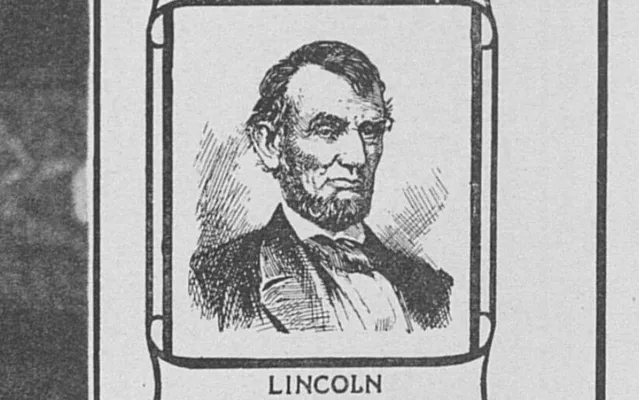
At Ford’s Theatre in Washington on 14 April 1865, Abraham Lincoln was shot in the back of the head by John Wilkes Booth.After shooting President Lincoln, Booth jumped down to the stage and shouted, ‘Sic temper tyrannis’ (‘thus always to tyrants’).Wilkes Booth was a member of one of America’s most famous acting families and was also fanatical in his support for the Confederacy.To mark the sad day, here are two early reports of the assassination, as carried by English
In Warm Springs, Georgia, on 12 April 1945, President Roosevelt, the 32nd President of the United States, died after suffering a stroke – he was aged 63.To mark the day, here are two historical newspaper articles that report on the death of ‘4-term Roosevelt’.Western Morning News – Friday 13 April 1945Image © Northcliffe Media Limited. Image created courtesy of THE BRITISH LIBRARY BOARD.http://www.britishnewspaperarchive.co.uk/viewer/bl/0000329/19450413/052/0003Dundee Courier – Saturday 14 April 1945Image © D.C.Thomson & Co. Ltd. Image created courtesy of THE BRITISH LIBRARY BOARD.http://www.britishnewspaperarchive.co.uk/viewer/bl/0000564/19450414/001/0002
As towns in Britain continued to grow, especially from the mid-eighteenth century onwards, street lighting at night became important. In the days before the invention of electricity and all of the systems that support street lighting today, it can be hard for us to imagine how much effort was needed to create lights in streets. Once installed, street lights had to be turned on at dusk and off again at dawn. There are numerous reports of lamplighters in British newspapers.
‘Who breaks a butterfly upon a wheel?’On 6 April 1895, Oscar Wilde was arrested at the Cadogan Hotel, London, after losing a libel case against the Marquess of Queensberry.How we wish he’d fled the country, instead of waiting to be arrested! But, no; instead, he took the Socratic route and that ultimately led to his ‘hard labour’ imprisonment (‘Who breaks a butterfly upon a wheel?’) and early death – but that was a very brave act.John Betjeman was so moved