Skip to content

Search the blog

Tag: blitzTag: suffrageTag: newspapers
Edward Grieg, the Norwegian composer famous for composing the music for Ibsen’s Peer Gynt, died in Bergen on 4 September 1907 – he was 64.To mark the day, here is a fascinating newspaper story that reports on Grieg’s death and also highlights the composer’s Scottish ancestry.Evening Telegraph – Thursday 05 September 1907Image © D.C.Thomson & Co. Ltd. Image created courtesy of THE BRITISH LIBRARY BOARD.http://www.britishnewspaperarchive.co.uk/viewer/bl/0000563/19070905/025/0002The Graphic – Saturday 02 March 1889Image © THE BRITISH LIBRARY BOARD. ALL RIGHTS RESERVED.http://www.britishnewspaperarchive.co.uk/viewer/bl/0000057/18890302/024/0013
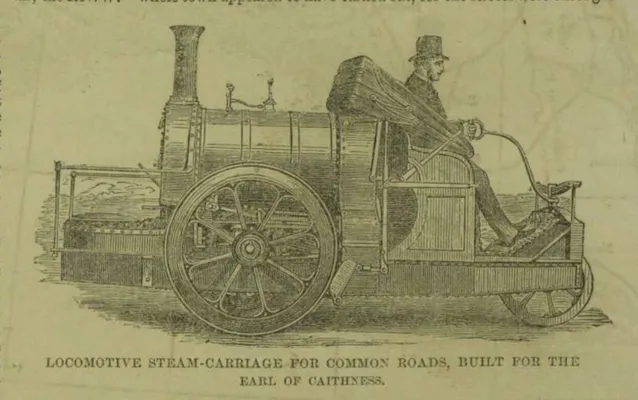
Locomotive steam carriage for common roads 1860
On 31 August 1869, Mary Ward (nee King) became the first person to die in a car accident in Ireland and Great Britain. The terrible accident occurred in County Offaly in Ireland.  Mary Ward, along with Captain the Honourable Henry Ward, Honourable Randal and Clare Parsons, were travelling on a road locomotive steam-engine when it turned a sharp corner leading to Cumberland Street near Parsonstown.  The sharp turn caused Mrs Ward to fall forward to the ground and the vehicle drove over
On 29 August 1782, HMS Royal George sank with the loss of more than 800 lives, while undergoing routine maintenance work at Spithead, by Portsmouth.HMS Royal George was the largest warship in the world at the time of her launch in 1756, and her sudden sinking remains one of the worst disasters ever to take place in UK waters.To mark the day, here are two newspaper articles from August 1782 that report on the tragedy – the second article is a letter written by
At 10am on 27 August 1883, the volcano on Krakatoa erupted with four massive explosions, which virtually destroyed the entire island.It’s estimated that the explosions and tidal waves killed at least 36,000 people.The explosions at Krakatoa are considered to be the loudest in history, and it’s claimed that the explosions were heard up to a distance of 3,000 miles.Included below is an early newspaper report on the disaster, and also some illustrations of the island.Morning Post – Thursday 30 August 1883Image © THE
We do love the many wonderful advice columns that can be found in the British Newspaper Archive.Perhaps it was all the time we spent poring over the problem pages in teenage magazines when we were stroppy and spotty adolescents that led to our ongoing obsession with agony aunts, agony uncles and, er, agony vicars.Yes, agony vicars! For our favourite type of advice column in the BNA at the moment are the gems of wisdom that were offered by
On 25 August 1942, Prince George, Duke of Kent, was killed when the Sutherland Flying Boat in which he was travelling to Iceland crashed into a hillside in Caithness, Scotland – he was 39.The Duke of Kent was the younger brother of George VI and Edward VIII, and had been fifth in line to the UK throne.Sadly, his wife, the Duchess of Kent, had given birth to their third child, Prince Michael of Kent, just seven weeks before the crash.Included below
On 24 and 25 August 1875, Captain Matthew Webb, a master mariner from Dawley in Shropshire, became the first person to swim the English Channel.He swam from Dover to Calais, and completed the swim in 21 hours and 45 minutes.Included below are two newspaper stories (published the day after his epic swim) that report on this historic feat.Dundee Courier – Thursday 26 August 1875Image © THE BRITISH LIBRARY BOARD. ALL RIGHTS RESERVED.http://www.britishnewspaperarchive.co.uk/viewer/bl/0000162/18750826/020/0003Staffordshire Sentinel – Thursday 26 August 1875Image © THE BRITISH LIBRARY BOARD. ALL RIGHTS RESERVED.
The BNA is a cornucopia of weird and wonderful stories.Truly, the Archive leaves us open-mouthed with its never-ending supply of stories – it really is like having your own online Scheherazade.The latest story that made us shake our heads in wonder and amazement is this report about the craze for ‘tortoise bling’ in Paris, during the finals years of the 19th Century.Our ‘O’ Level French is a wee bit weak and outdated, but we think this is what
Sir Oliver Joseph Lodge, the Penkhull-born physicist and writer who was a pioneer in the field of wireless telegraphy, died in Lake, Wiltshire, on 22 August 1940 – he was 89.After losing his son, Raymond, in World War One, Lodge became interested in spiritualism. This newspaper story (published the day after Oliver died) contains a very interesting summary of his scientific work, and also includes a fascinating outline of how he planned to contact people from ‘the other side’ via a ‘sealed message’.