Skip to content

Search the blog

Tag: blitzTag: newspapers
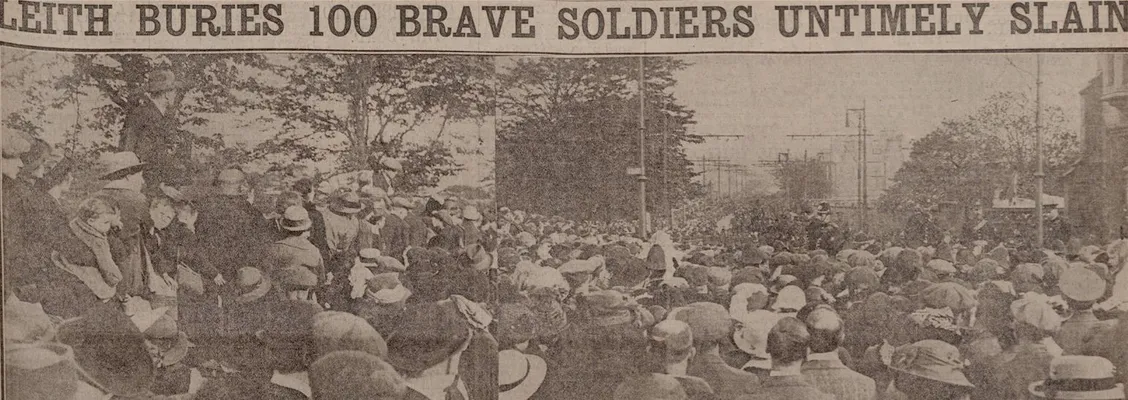
100 years ago today, the worst rail disaster in British history occurred at Quintinshill near Gretna Green in Dumfriesshire, Scotland.On May 22nd 1915, a devastating crash involving a total of five trains, killed 226 people and injured a further 246. The vast majority of those killed were territorial soldiers of the 1/7th (Leith) Battalion, Royal Scots, on their way to participate in the Gallipoli campaign.Disaster stuck when a troop train headed for Liverpool struck a passenger train that had been moved onto
This blog was submitted by Professor Brian Cathcart. Brian is a professor of journalism at Kingston University London. His book, The News From Waterloo: the race to tell Britain of Wellington’s victory, is published on 30 April by Faber & Faber, price £16.99How long did it take for the news of Waterloo to reach London? In this bicentenary year of the battle it is something we might expect to know, but the facts turned out to be surprisingly elusive and the newspapers
Ruth Small studied History at Newcastle University and recently got in touch to tell us all about her dissertation. She used The British Newspaper Archive in her research and was awarded a first-class mark, with some amazing comments about the originality of her work. ************** I wrote my History dissertation about the great fire of Newcastle and Gateshead, which occurred on 6 October 1854. It was a fire which led to an explosion in a warehouse of a magnitude that no one had
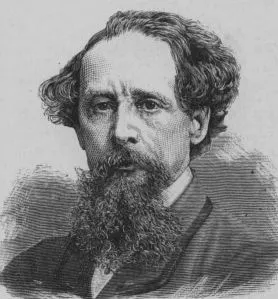
Charles Dickens
The lovely people at history magazine Bygone Kent got in touch to share the shocking stories they’ve uncovered about Charles Dickens’ life in Higham, Kent.We’d love to hear about your own discoveries – email [email protected] to tell us about them.A ‘diabolical attempt’ to overturn the carriage of Charles Dickens while it drove through his home village has been discovered by local historian and journalist Andrew Rootes, editor of Bygone Kent. The incident was uncovered in The British Newspaper Archive
Suzie Grogan used The British Newspaper Archive extensively while researching her book, Shell Shocked Britain: The First World War’s legacy for Britain’s mental health. She got in touch to show us the heart-breaking story she found about her own ancestors and some of the terrible accounts about life during World War One.**************My book is the product of two years of intensive research into the trauma of the Great War and its aftermath. But it was a chance find during
Caroline Rance, author of The Quack Doctor and What the Apothecary Ordered, got in touch to show us some of the shocking medical tales she’s unearthed. We’d love to hear about your own discoveries – email [email protected] to tell us about them. **************Whatever you search for in The British Newspaper Archive, chances are the articles you find will be close to adverts promoting cures for every kind of disease. Some brands were sold in good faith and became stalwarts of the
There are lots of new stories to explore at The British Newspaper Archive this month. More than 400,000 newspaper pages from 1745-1954 were added in January, helping us reach our 10 million page milestone.Search the newspapers –>39 new titles, including the Sunday Mirror from WW1The additions include copies of the Sunday Mirror from 1914-1918, then known as the Sunday Pictorial. The national newspaper printed fascinating weekly news, photographs and illustrations from World War One.The Dublin Evening Post, Oxford University and City Herald
Lonely hearts columns aren’t a modern phenomenon. Search our historical newspapers and you’ll find numerous examples of ‘matrimonial advertisements’ from the 1800s and 1900s.The notices can often make for amusing reading. We’ve collected together a few of our favourites to provide you with some tips for finding love. You may or may not want to take the advice…1) Be overly specific and insultingAn American woman advertised for a husband in 1920, advising that he ‘can have any colour hair
Just a month after hitting the 9.5 million page milestone, we’re very pleased to announce that there are now 10 million historic newspaper pages available at The British Newspaper Archive.The website launched with 4 million pages in November 2011, which means there’s now 150% more to explore. If you’ve not searched the collection for a while, it’s definitely time to try again.Search the newspapers –>More to search and a great-value subscriptionIt’s not just our coverage that has improved over the last few
Last year, we donated 100 subscriptions to Wikipedia’s volunteer editors to help expand public information about historical topics. Brian Chapman has worked with Wikipedia for over five years and made around 42,000 edits to the online encyclopedia. He got in touch to tell us about one of the pages he’s improved with the help of our newspapers.**************When I heard about the collaboration between The British Newspaper Archive and Wikipedia, I jumped at the chance to take part. I’ve long been fascinated