Skip to content

Search the blog

Tag: ocrTag: otdTag: literature
Anthony Trollope, author of the ‘Chronicles of Barsetshire’, died in London on 6 December 1882 – he was 67.Trollope was the inventor of the post-box, or rather perhaps a leading campaigner for the idea of establishing a post-box, in the UK – it’s a matter of ongoing debate regarding whether he actually invented the post-box. Whatever, the post office and postal system was certainly a major muse on his writing.Here is a detailed newspaper obituary of Trollope that was published just eight days
The brilliant English crime writer, Agatha Christie, disappeared on 3 December 1926, following a row with her husband, Archie.After a massive man hunt (or rather woman hunt) lasting ten days, Mrs Christie was found at a hotel in Harrogate, Yorkshire, where she had registered under the nom de plume, ‘Mrs Teresa Neele’ of Cape Town.Agatha Christie never explained anything about her sudden sabbatical – so it remains a mystery.Here are two newspaper stories: the first story reports on the disappearance
‘Give us also the right to our existence’At Bow Street in London on 16 November 1928, Miss Radclyffe Hall’s novel, ‘The Well of Loneliness’, found itself in the dock on a charge of obscenity.The powers-that-be had decided that they did not like the novel’s ‘unnatural offences’ – hence the decision to prosecute.The magistrate eventually decided that the book was obscene and ordered that it be destroyed.Here is a newspaper story that reports on this famous literary court case.Image ©
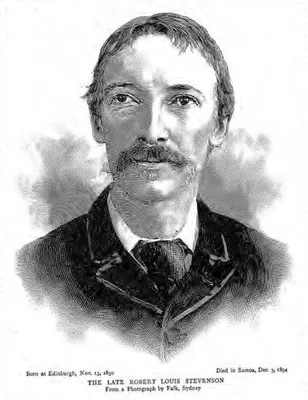
Robert Louis Stevenson
Robert Louis Stevenson was born at 8 Howard Place in Edinburgh on 13 November 1850.  To celebrate the day, here is an early newspaper review (from January 1886) of The Strange Case of Dr Jekyll and Mr Hyde – which was published on 5 January 1886.After his death in 1894, the Graphic published a retrospective look at the works of Robert Louis Stevenson and his contribution to literature.
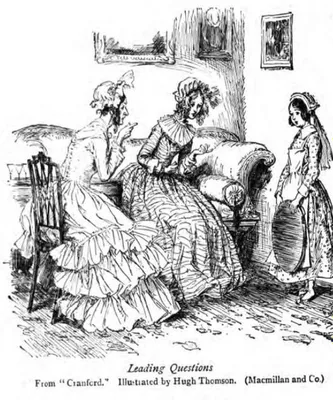
Elizabeth Gaskell (aka ‘Mrs Gaskell’), author of such classic Victorian and ‘Condition of England’ novels as North and South and Cranford, died in Holybourne, Hampshire, on 12 November 1865 – she was 55.The Illustrated London News did a feature on ‘The Secret of the Author of Cranford‘.To commemorate the day, here is a newspaper tribute to Mrs Gaskell that was published on 18 November 1865.We’ve also included three splendid illustrations for the novel, Cranford, which were published in The Graphic newspaper.
On 25 October 1854, Lord Cardigan led the charge of the Light Brigade againt the Russians in the Battle of Balaclava in the Crimea.The insane order to attack the gun positions arose due to a miscommunicated message somewhere along the chain of command.156 men of the Light Brigade were killed in the charge and 122 were wounded – 335 horses were also killed during the attack.Included below is a newspaper article from November 1854 that reports on the charge.Read a BNA blog post
On 30 September 1860, the first tram service in the UK started operating at Birkenhead on Merseyside.The tram service was the idea of the (aptly named) George Francis Train, an American entrepreneur who was a pioneer of innovative transport systems.To mark that historic day, here is a newspaper story from October 1860 that reports on the opening of the Birkenhead tram service.
The Somme Offensive commenced on 1 July 1916, as Allied forces attacked German positions by the River Somme on the Western Front in France.On the opening day of the battle, the British suffered 60,000 casualties – making it the worst day in the history of the British army.Here is an upbeat newspaper report of the battle, which was published on the first day of the battle – also included is a map of the area where the battle took place.Image © Northcliffe Media
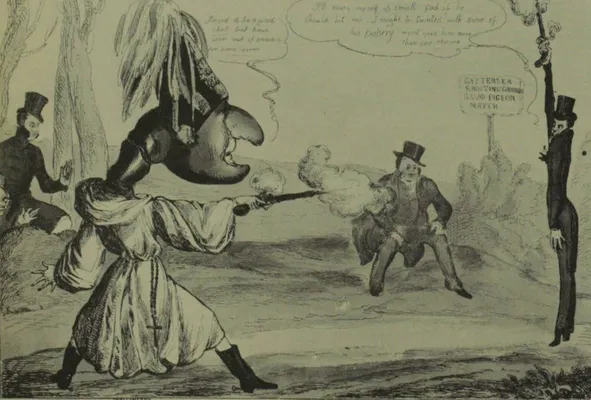
On 23 March 1829, the Duke of Wellington and Earl of Winchilsea fought a duel at Battersea Fields in South London.At this time, the Duke of Wellington was Prime Minster of Great Britain and Ireland, and his Tory Government had passed the Catholic Relief Bill. This act was represented the legislative move towards Catholic emancipation, and a section of the legislation would allow Catholics to take a seat in parliament.The Duke of Wellington | Illustrated London News | 24 June 1843Wellington (who had
On 30 January 1889, the bodies of Archduke Rudolf and his mistress, Baroness Mary Vetsera, were discovered in the royal hunting lodge at Mayerling.The official verdict is that the star-crossed lovers died in a suicide pact after Rudolf’s father, Franz Joseph I of Austria, demanded that he end the relationship. However, there are theories that Rudolf was murdered (Mary’s body was smuggled out of Mayerling in the middle of the night and Rudolf was described as being ‘mentally unbalanced’) because of