Skip to content

Search the blog

Tag: literatureTag: blitz
This week we have added 70,450 new pages to The Archive, with two new and very important titles joining us from home and abroad.We have added an extensive run of pages to the Westminster Gazette, which was seen by some as ‘the most powerful paper in Britain.’ Established in 1893 by E.T. Cook, the Westminster Gazette was a liberal newspaper, which found its audience in London’s gentlemen’s clubs and was consequently known as a ‘clubland paper.’ Despite this audience being small,
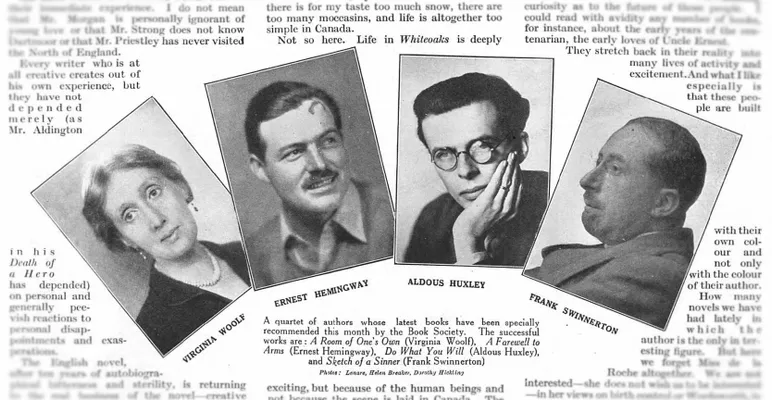
Novelist Edwin Muir attempted in 1926 to identify those writers who were ‘influencing the development of literature’ (Nottingham Journal, October 1926) in a series of essays entitled Transition. His choices, which included Virginia Woolf, James Joyce and D.H. Lawrence, amongst others, survived the test of time and as such represent the most celebrated authors of the modernist period.Graphic | 26 October 1929Using reviews taken from the pages of the British Newspaper Archive, and limiting our search to only those written in the 1920s,
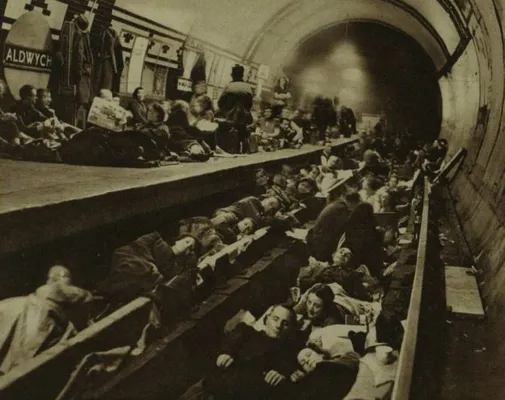
When the Blitz began on 7 September 1940, ‘It was the people of London who took command…Men, women, and children went straight to the safest place they could think of – the Underground stations.’In this special blog, over 80 years after the beginning of the Blitz, we take a look at how London’s main transport system – the Underground –  became a popular place of shelter for those seeking protection from the German bombing campaign, using an assortment of articles and photographs all to be
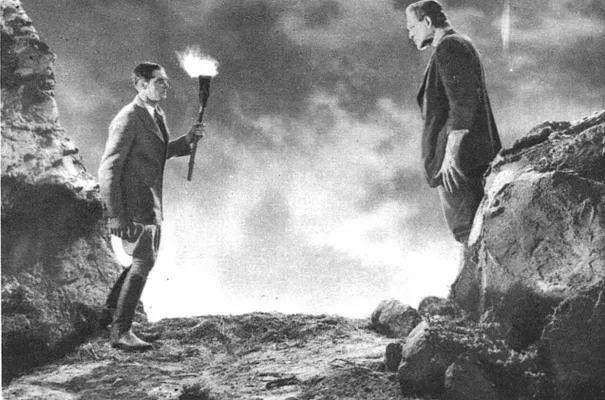
2018 marks the 200th anniversary of the publication of Mary Shelley’s Frankenstein, the iconic novel about the young scientist, Victor Frankenstein, and the monster he created in his laboratory.  In this post, we will take a look at the history of the novel, a critical early review, the novel’s origins, and its various adaptations for the stage and screen.PublicationThe Morning Post printed a notice of the publication of a new novel, ‘Frankenstein, or The Modern Prometheus’, by an anonymous
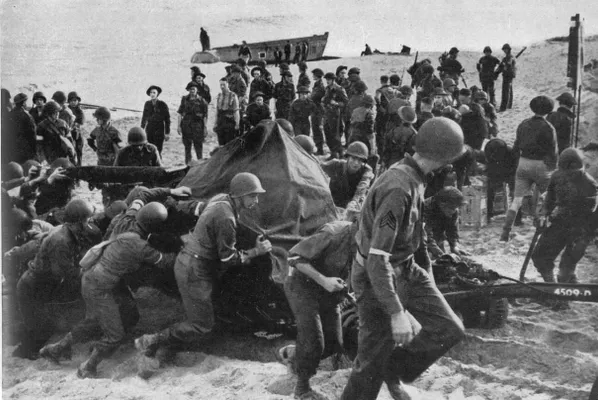
American troops
In honour of Remembrance Day, during the month of November, The British Newspaper Archive will be focusing our attention on military in the newspapers.  Coming up this month we will feature blogs about our special military titles, researching military history, women and war, and wartime rationing and fashion, as well as a guest blog about a remarkable Great War discovery from The Archive.  To begin our military month, we are delving into the newspaper headlines through the years for the
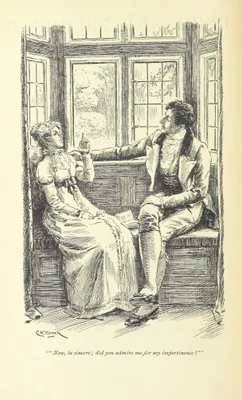
Elizabeth Bennet and Mr Darcy
This day marks the 200th anniversary of Jane Austen’s death. During the last two centuries, Jane Austen has become a household name. Austen and her modest-sized collection of works has enjoyed a vibrant presence in both academia and western culture, from quotes on magnets and clothing to movie adaptations and sequels to her novels. Austen’s name is equally as at home in highbrow literary essays and criticism as it is in contemporary periodicals meant for mass consumption, such as the
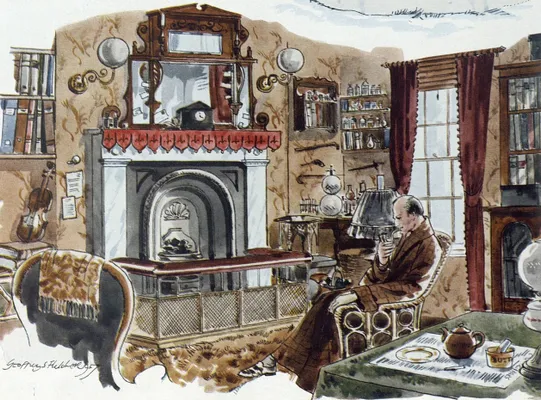
The Premiere of Sherlock HolmesWhat better way to ring in the New Year than with the premiere of the latest series of the BBC’s Sherlock?The hype generated by this latest iteration of the famed ‘consulting detective’ is far from unprecedented. From the first appearance of the sleuth at 221B Baker Street, audiences have been glued to the page and eager for more.Sherlock Holmes first graced the pages of Beeton’s Christmas Annual in the 1887 printing of A Study
Thomas Penson De Quincey, author of Confessions of an English Opium-Eater, died in Edinburgh on 8 December 1859 – he was 74.To mark the day, here is a newspaper obituary of De Quincey that was published two weeks after his death.Royal Cornwall Gazette – Friday 23 December 1859Image © THE BRITISH LIBRARY BOARD. ALL RIGHTS RESERVED.http://www.britishnewspaperarchive.co.uk/viewer/bl/0000180/18591223/036/0006Manchester Times – Friday 08 August 1890Image © THE BRITISH LIBRARY BOARD. ALL RIGHTS RESERVED.http://www.britishnewspaperarchive.co.uk/viewer/bl/0000504/18900808/030/0005
Anthony Trollope, author of the ‘Chronicles of Barsetshire’, died in London on 6 December 1882 – he was 67.Trollope was the inventor of the post-box, or rather perhaps a leading campaigner for the idea of establishing a post-box, in the UK – it’s a matter of ongoing debate regarding whether he actually invented the post-box. Whatever, the post office and postal system was certainly a major muse on his writing.Here is a detailed newspaper obituary of Trollope that was published just eight days
The brilliant English crime writer, Agatha Christie, disappeared on 3 December 1926, following a row with her husband, Archie.After a massive man hunt (or rather woman hunt) lasting ten days, Mrs Christie was found at a hotel in Harrogate, Yorkshire, where she had registered under the nom de plume, ‘Mrs Teresa Neele’ of Cape Town.Agatha Christie never explained anything about her sudden sabbatical – so it remains a mystery.Here are two newspaper stories: the first story reports on the disappearance